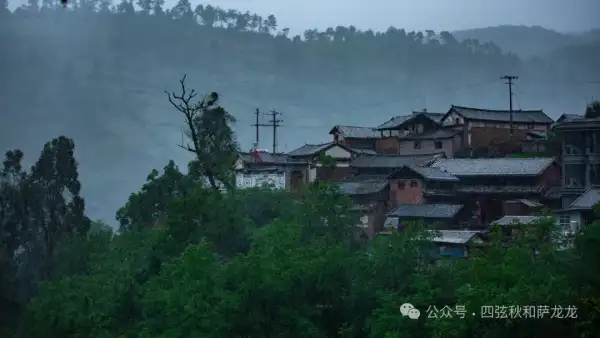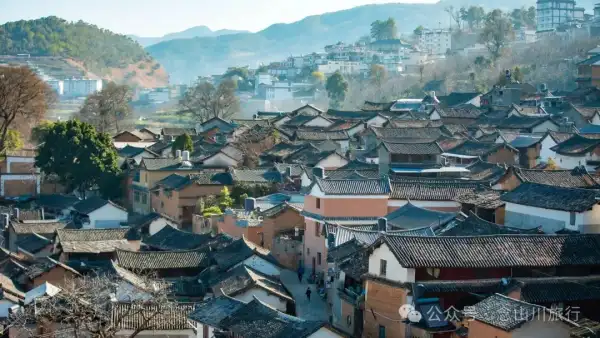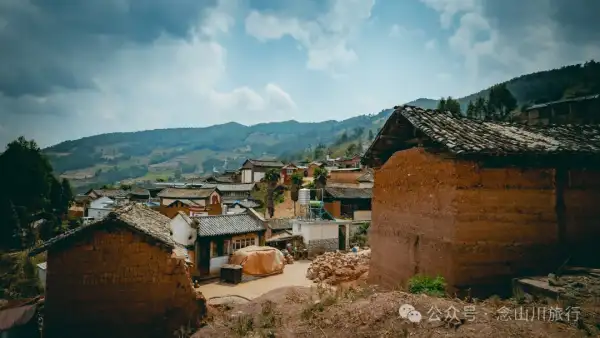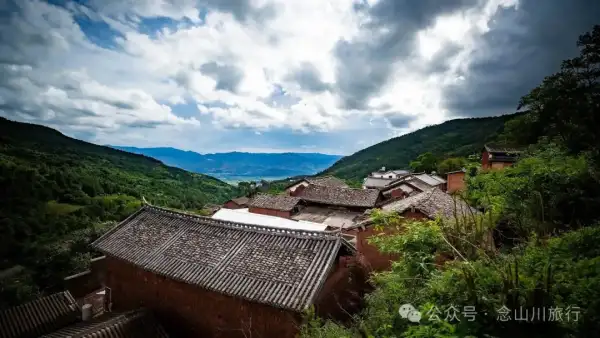

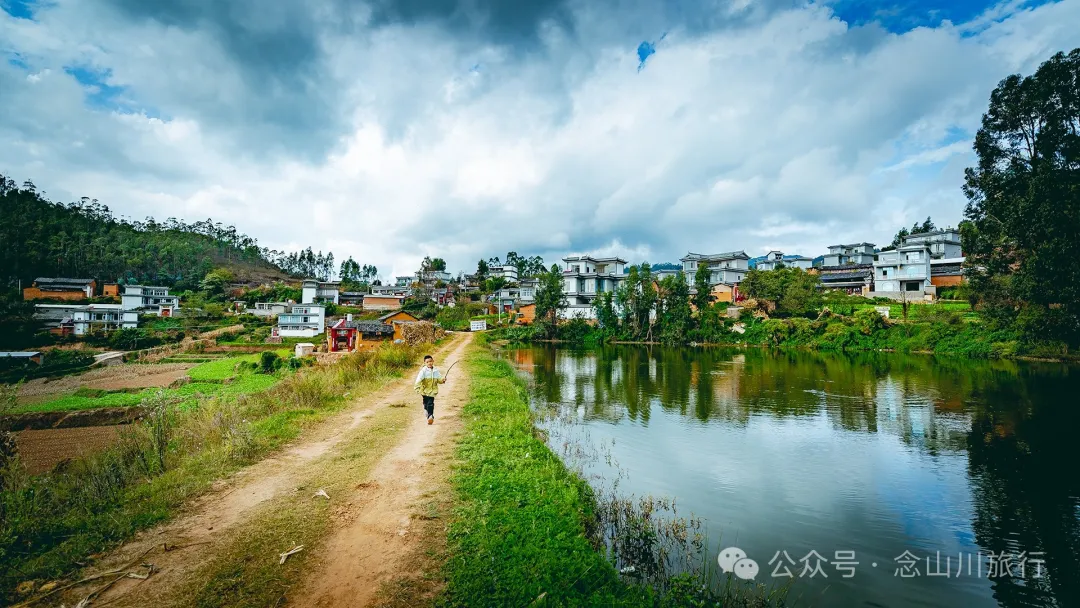
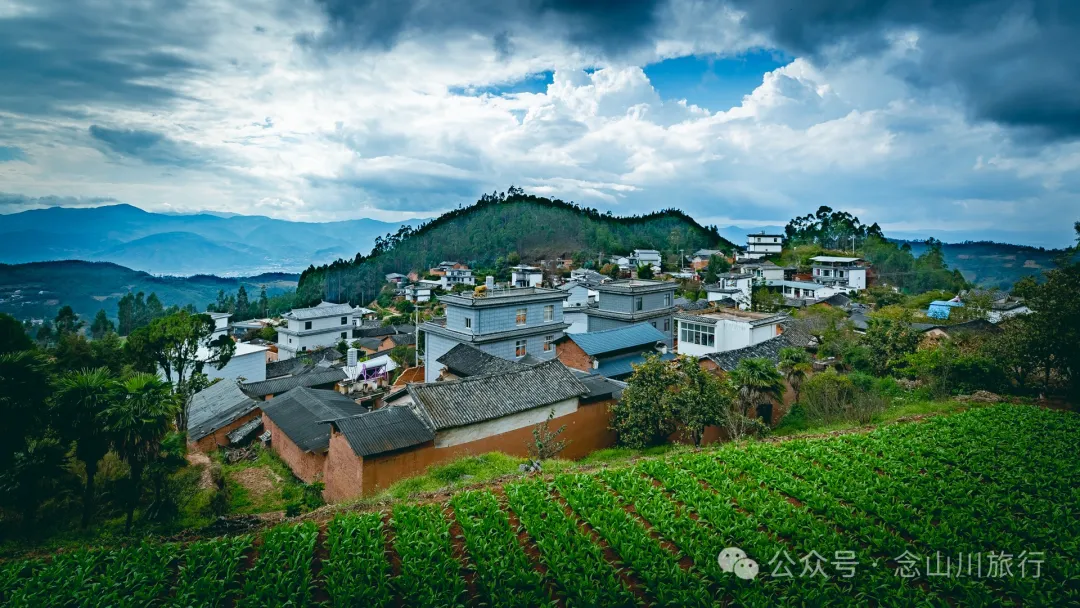
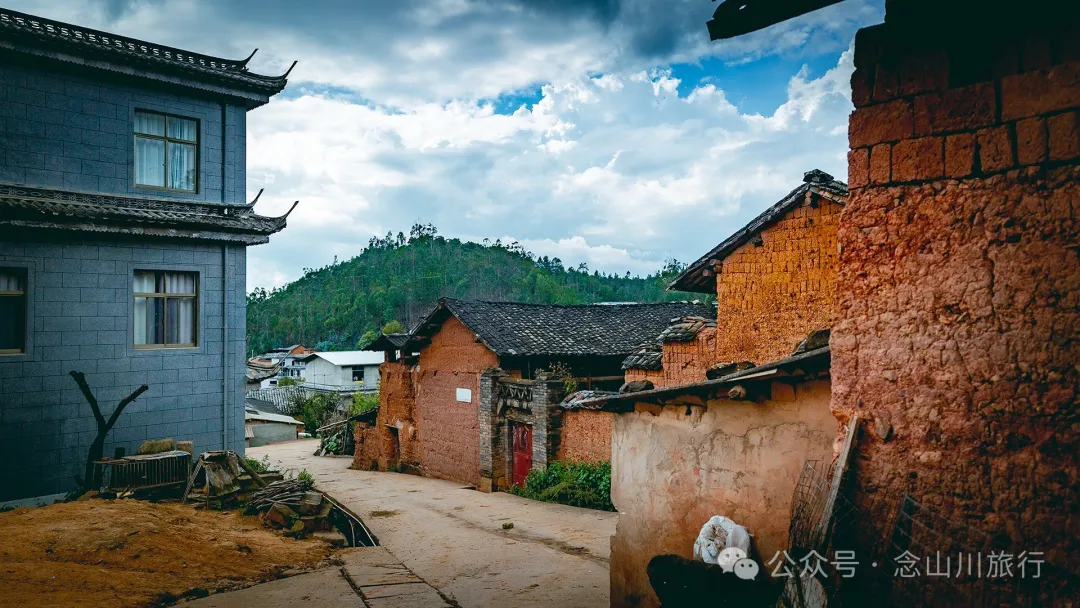
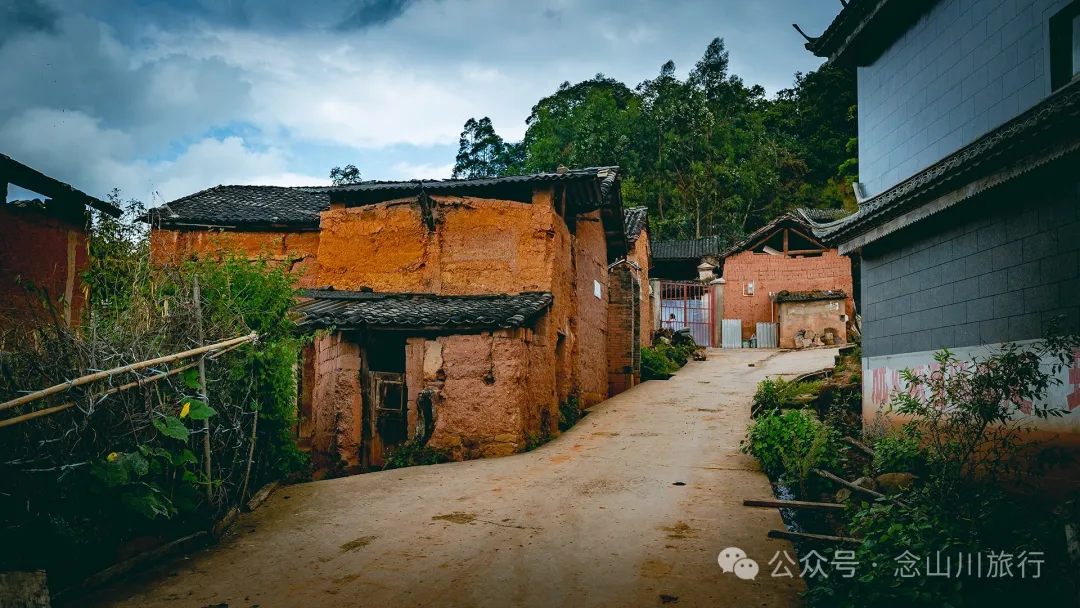
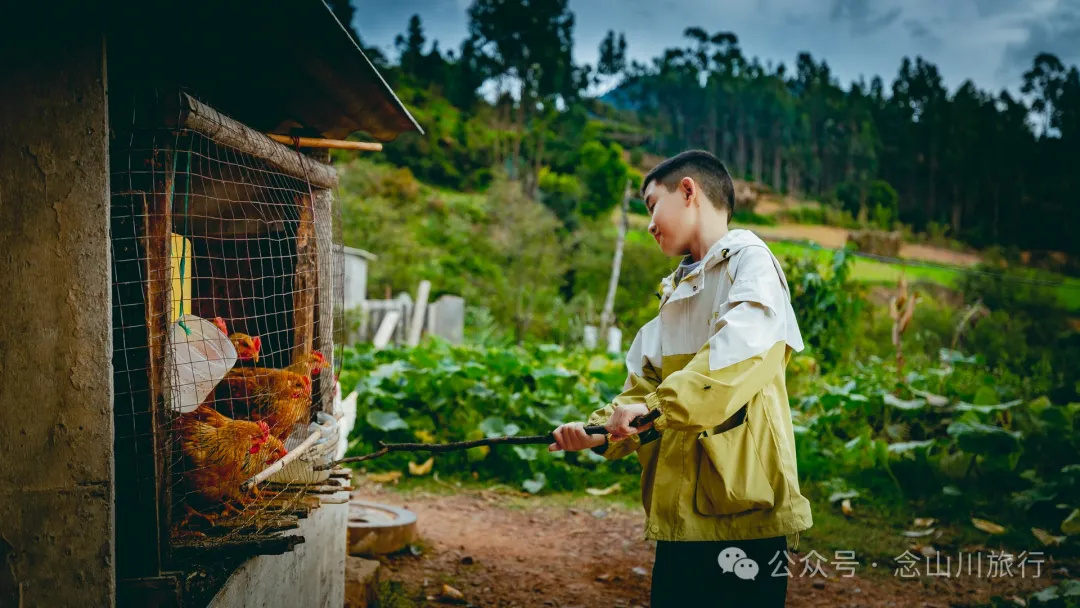
Stepping into Xiaotangzi Village, a tranquil and ancient Yi village in Weishan, a sense of freshness and serenity arises. The villagers are busy with their lives out of our sight, and even the poultry are quiet, either whispering or strolling slowly, without any trace of panic or urgency. No matter which old house the narrow village paths lead to, there is no litter discarded by the roadside to spoil the view, and the paths are always clean and tidy, with only the occasional fresh cow dung splattered like ink.
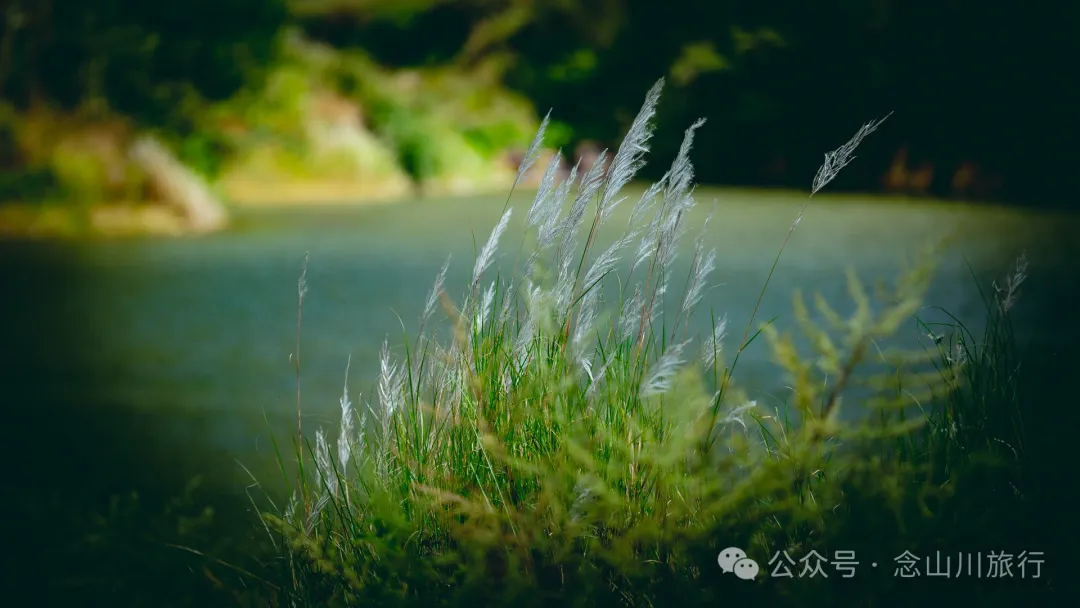
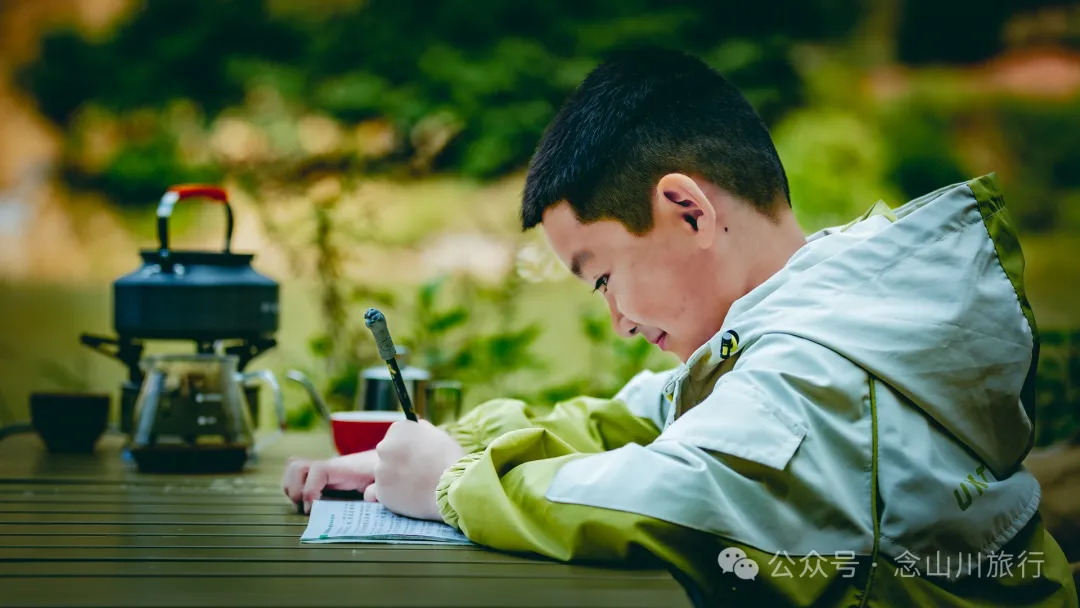
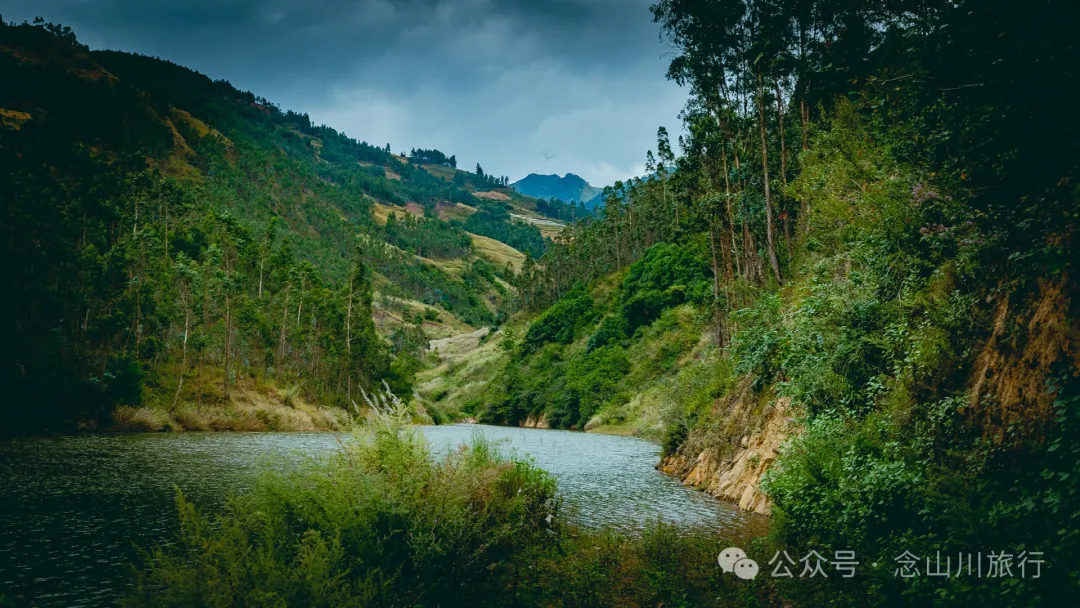
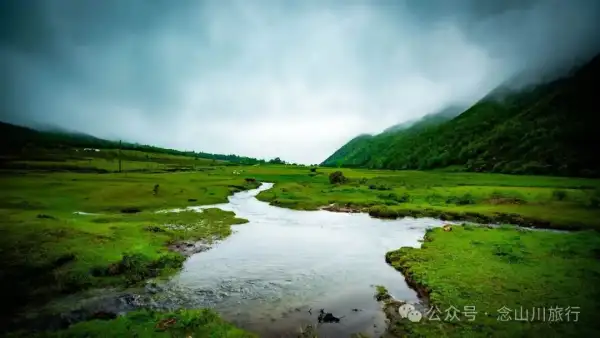
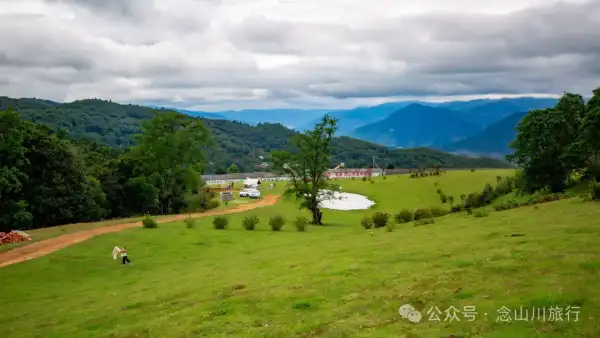
On the way from Duoyu Village to Xiaotangzi Village, we stopped to camp by a triangular pond in the valley. On the high ground across the pond, a brick house was hidden behind several large trees. The owner seemed to be away, and we heard no human voices. Only two white geese waited by the water for the rare sunlight, leisurely preening their feathers on the sandy shore and burying their heads under their wings for a nap. The water surface was also silent, as if everything was holding its breath, waiting for some important figure to appear.
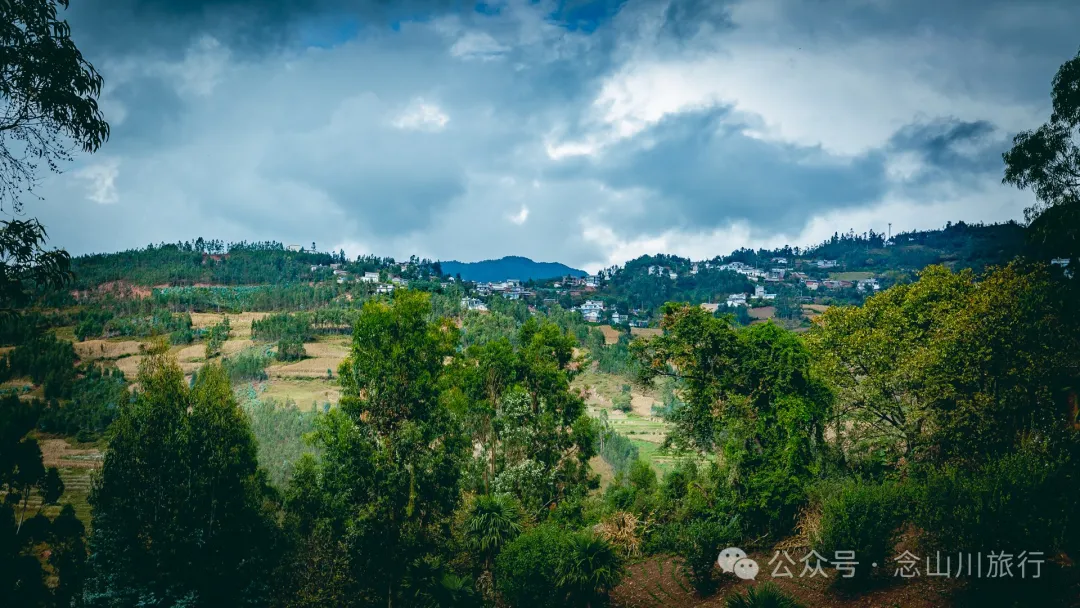
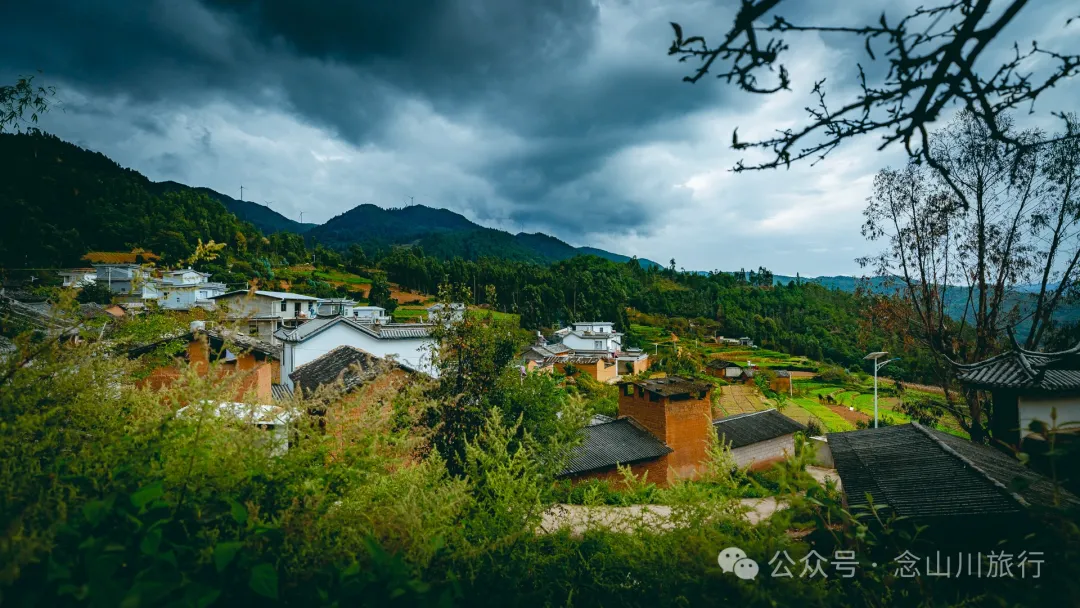
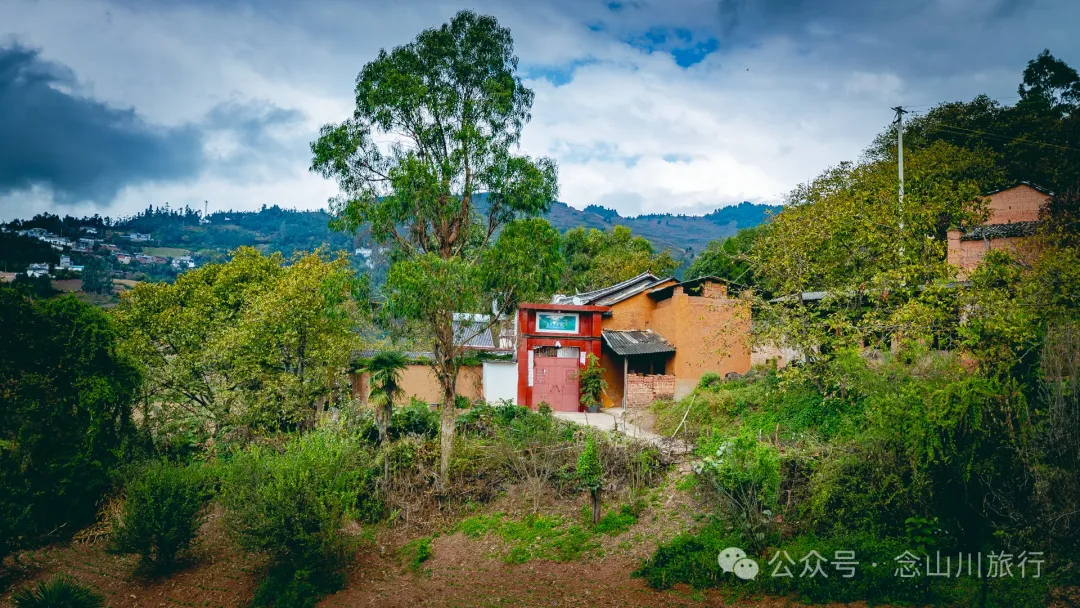
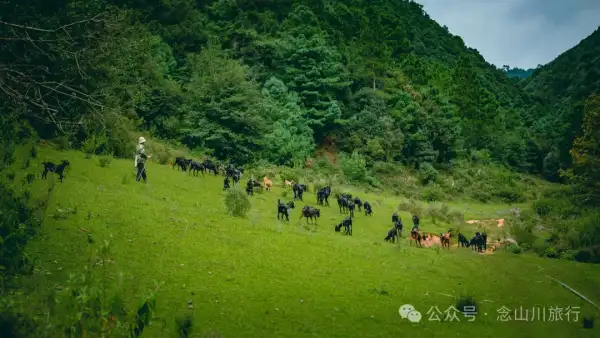
Every village built in the mountains not only possesses pristine landscapes rarely known to outsiders but also becomes part of the scenery itself, often unconsciously. If you follow the villagers herding cattle and sheep to more remote places, you can see even better views. It can always sense the changing seasons and the alternation of day and night, and always see the full face of the sun, moon, and stars. Villages understand how to converse with nature better than humans, even though villages are created by human hands. Xiaotangzi Village is such a village that understands nature. In appearance, it is no different from other villages, even featureless. It always follows the harmony of nature, never dominating it.
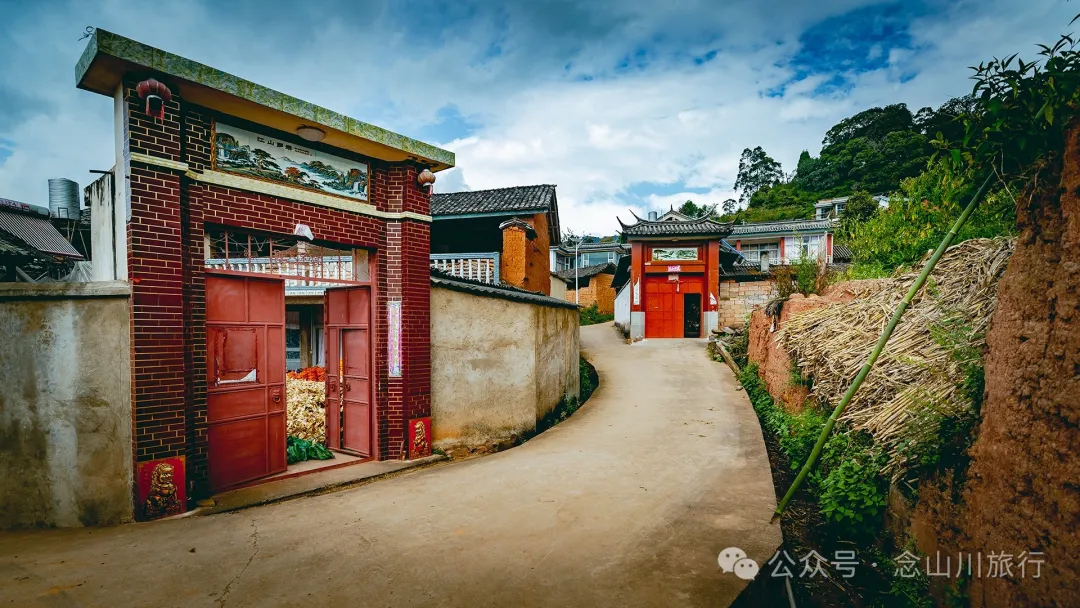
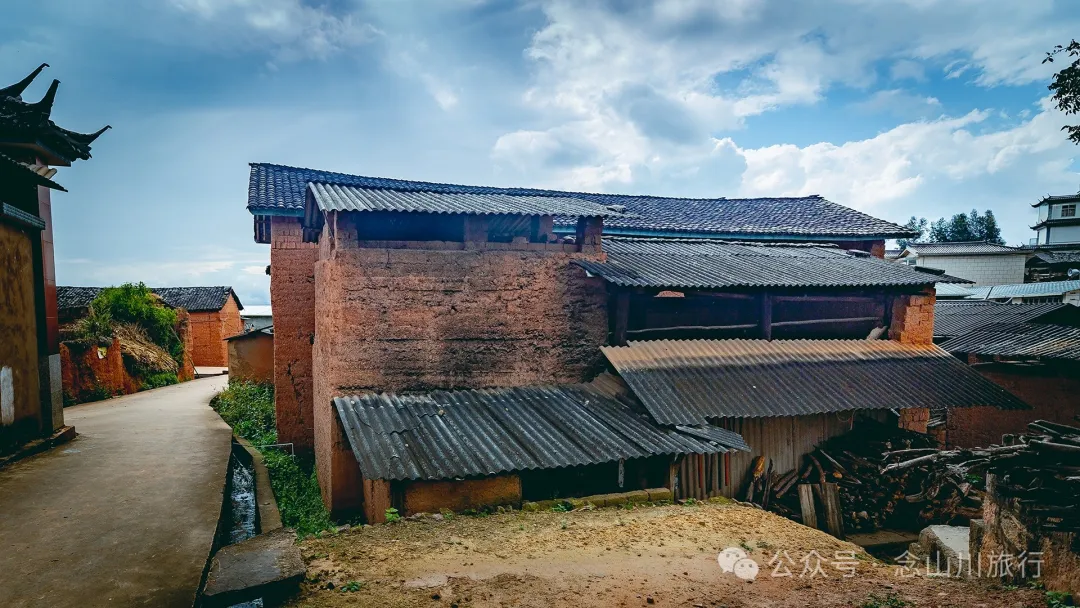
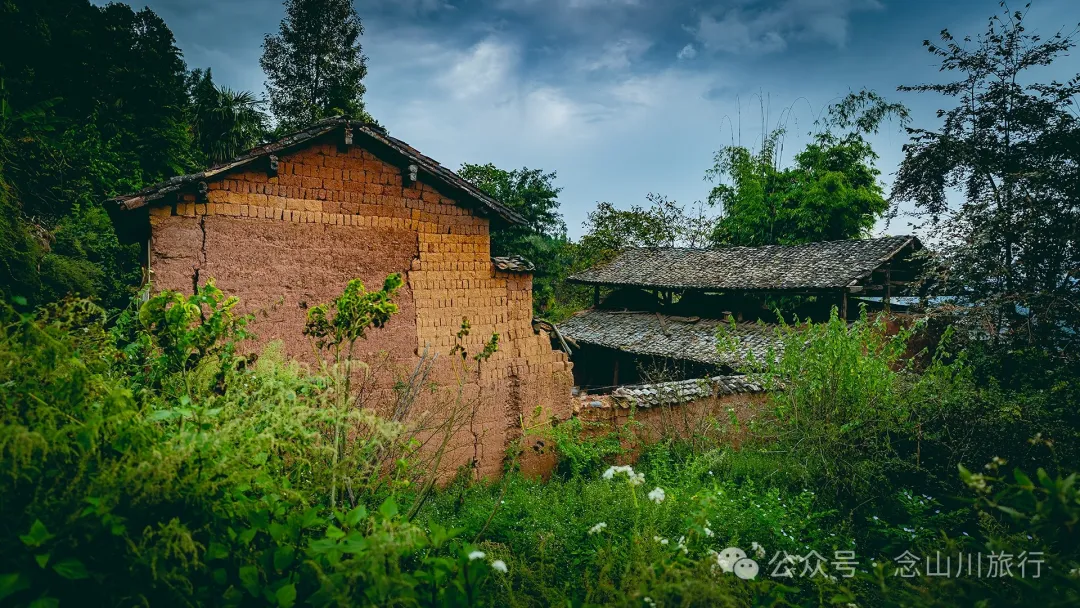
We quietly walked through the village, between new houses and old dwellings, along paths and deep alleys, seeking the leisurely comfort of village life. It was easy; no matter where we stood, a slow pace of life, like distant mountains sensing the change of seasons, was always gradual. No one was in a hurry, like the hurried pedestrians in the city. Here, there was nothing that required the villagers to do in a rush.
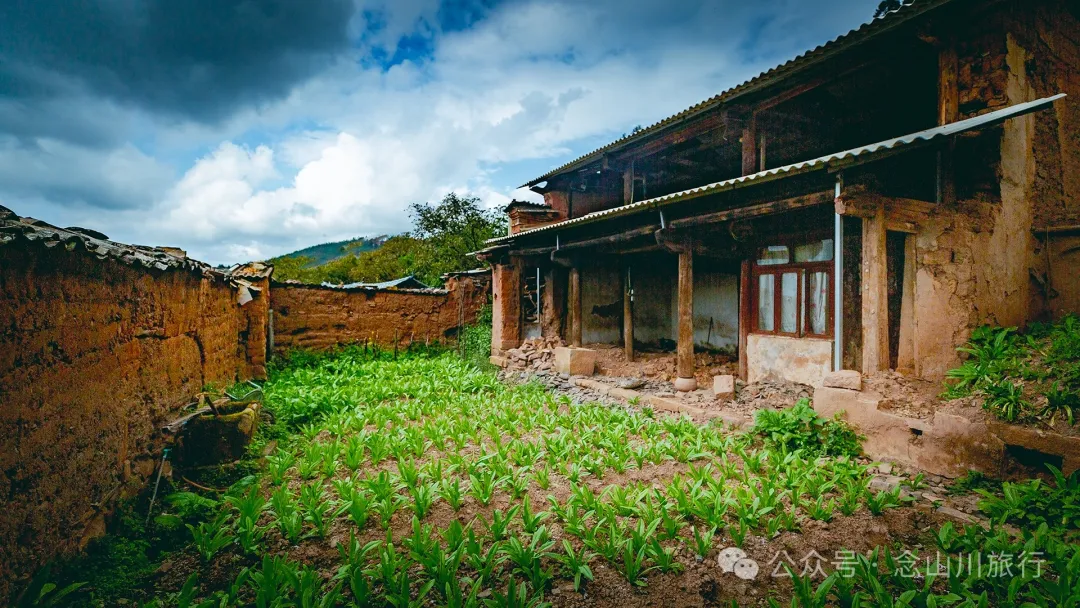
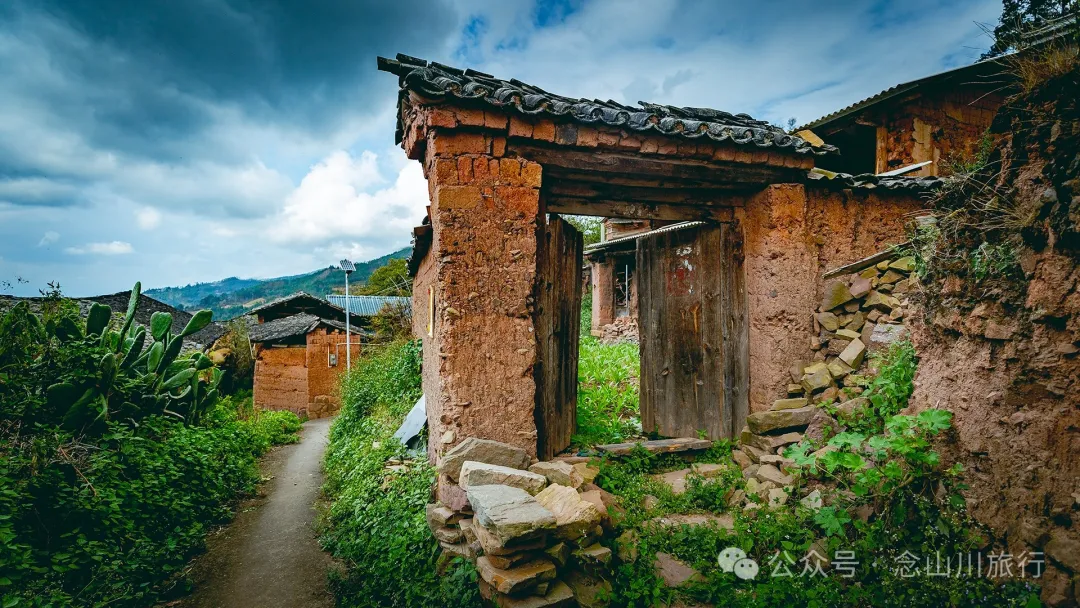
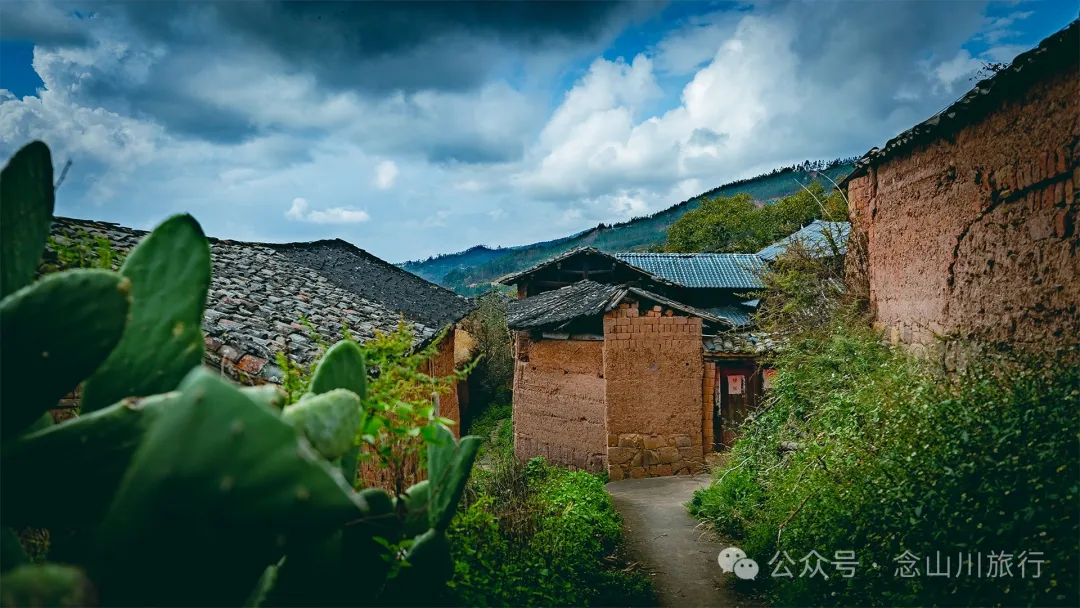
By the roadside, the gate of an idle old rammed-earth house was ajar, with a small twig inserted in the latch. Through the wide gap, we glimpsed the courtyard, which had been turned into neat rows of vegetable plots by industrious villagers, not a single weed in sight. Although the house was unused, the courtyard was still put to good use, making the most of everything.
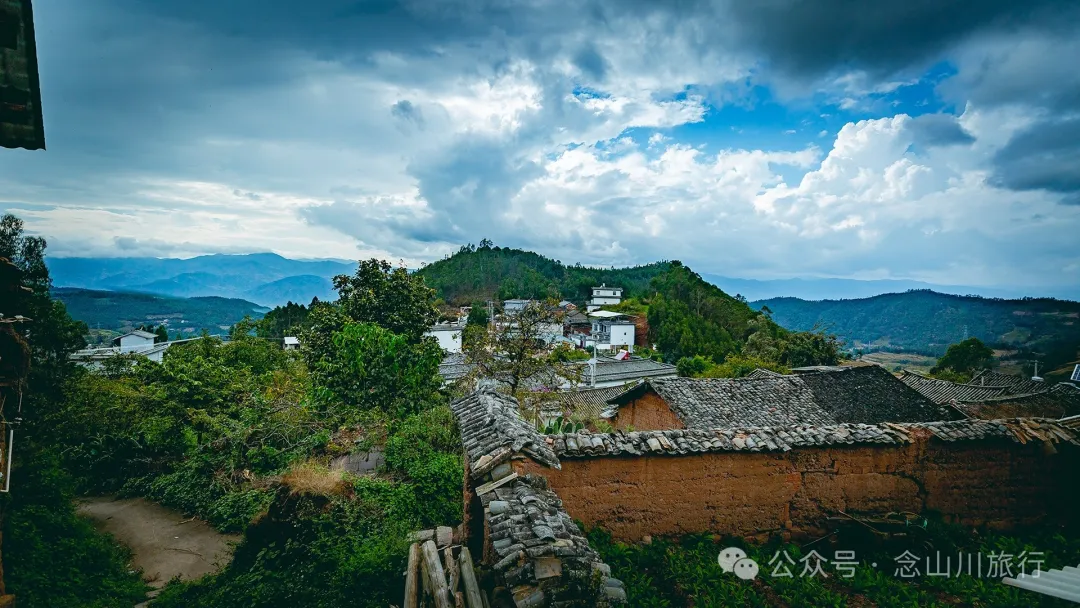
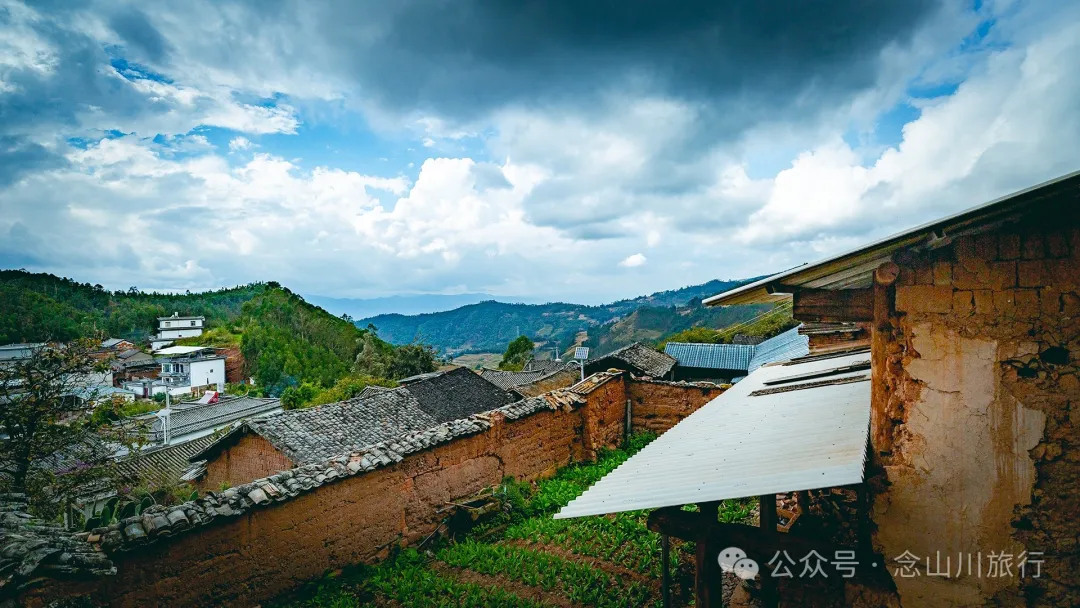
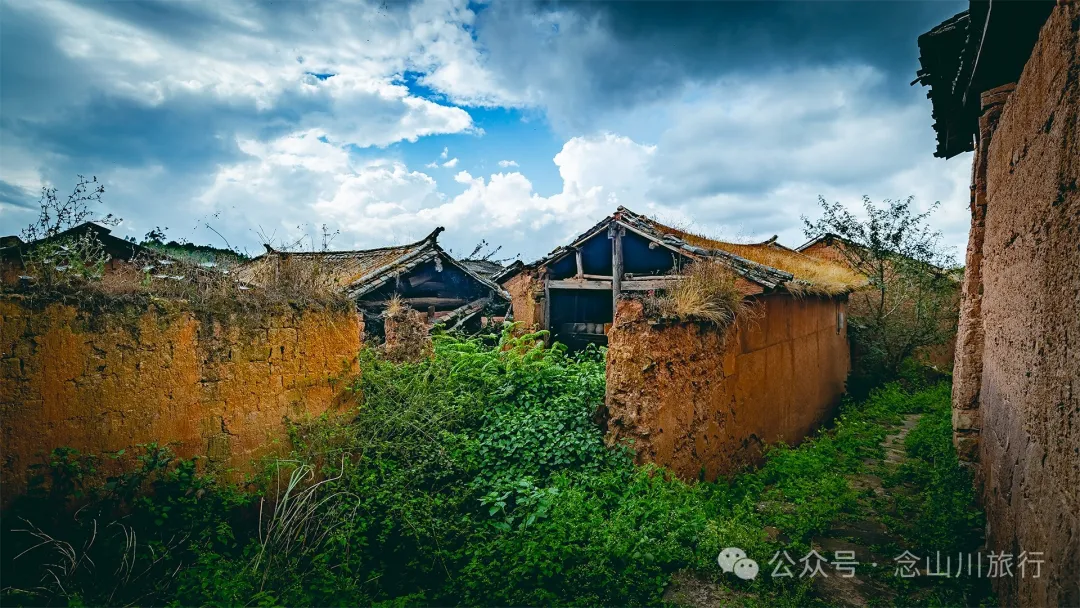
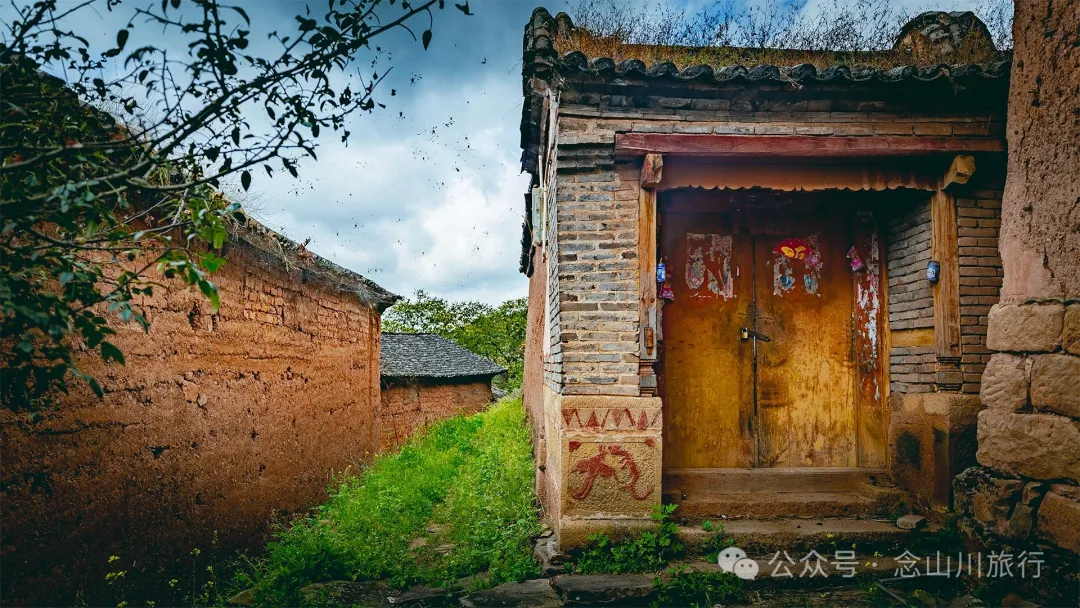
Many courtyards were locked. We saw a large group of people working in the fields outside the village. At such times, the houses were always quiet, only to become lively when dusk arrived.
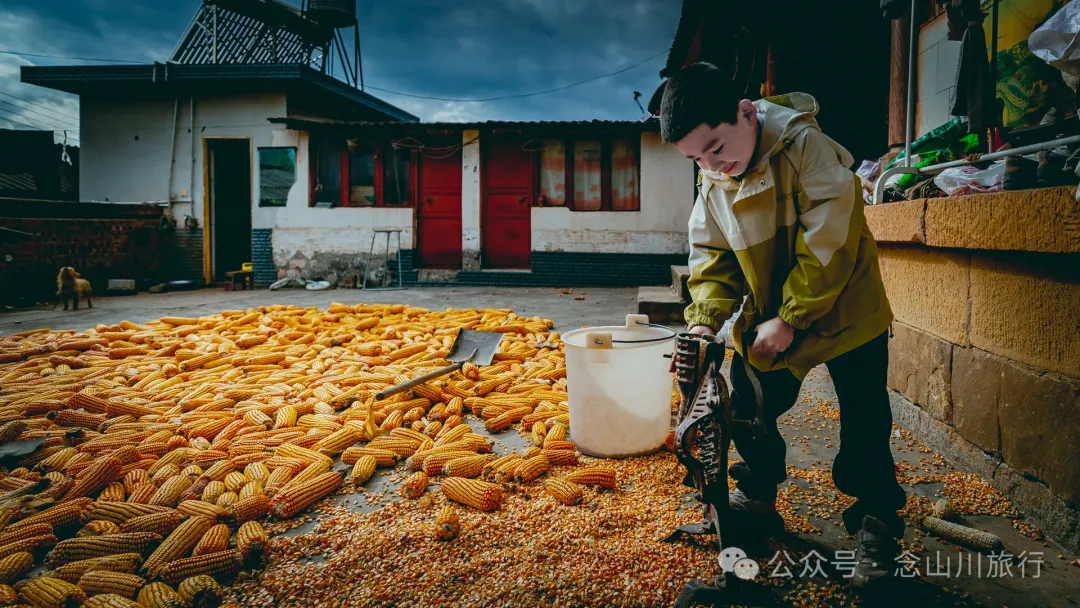
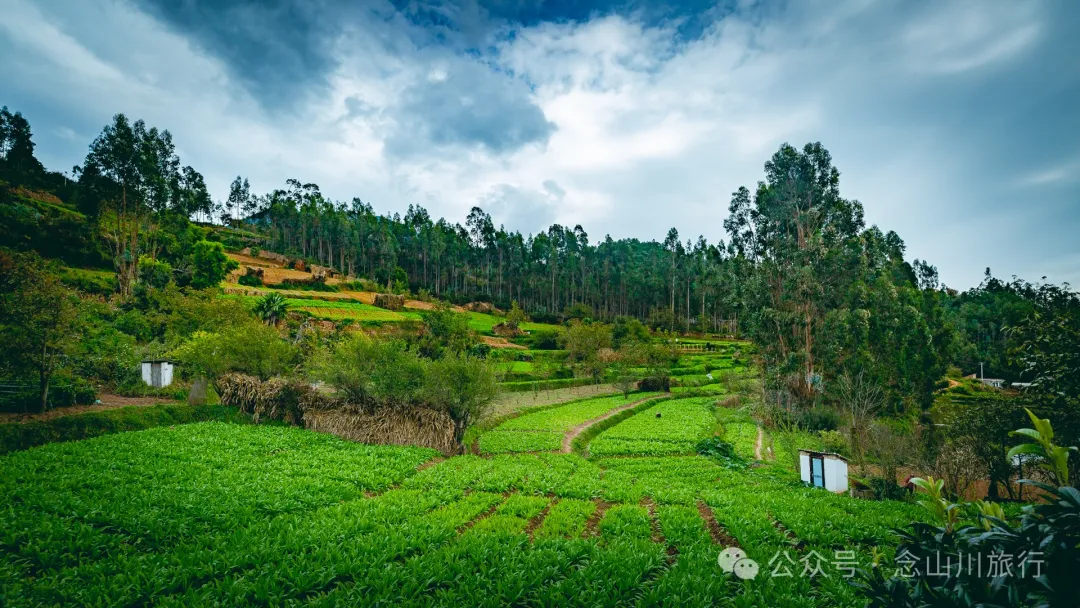
The mountain farmland is mostly dry and barren. Villagers often plant on steep slopes. This season, the corn stalks have turned yellow, and the corn has been harvested and brought home to dry. Most courtyards are covered with corn, and there is a manual threshing machine that looks like a strange weapon from outer space.

We walked into a narrow alley, and above our heads were thick cobwebs, impenetrable. There must have been dozens of such large spiders, living in two separate worlds with the villagers, coexisting peacefully.
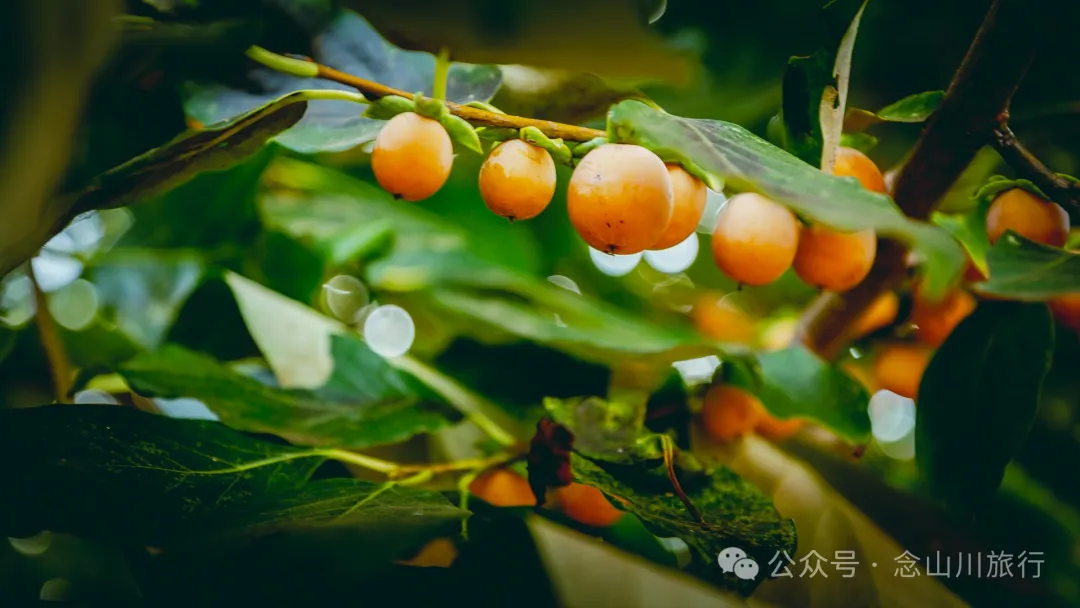
By the roadside, a wild persimmon tree was laden with these delicate fruits, soft to the touch. When we tasted them, they were only astringent. Such beautiful wild fruits hung on the branches without spoiling, clearly not good to eat. Even the birds knew this simple truth, but we didn't guess it.