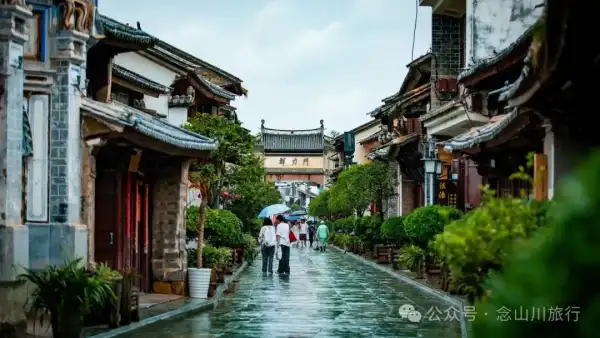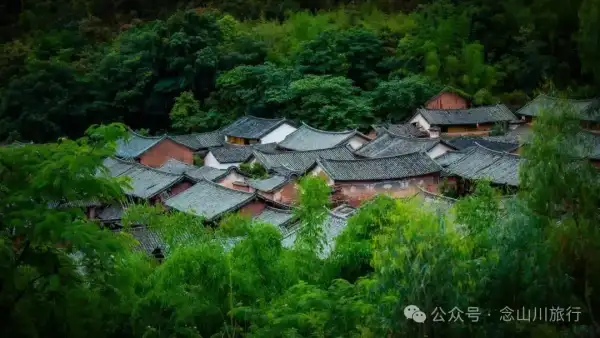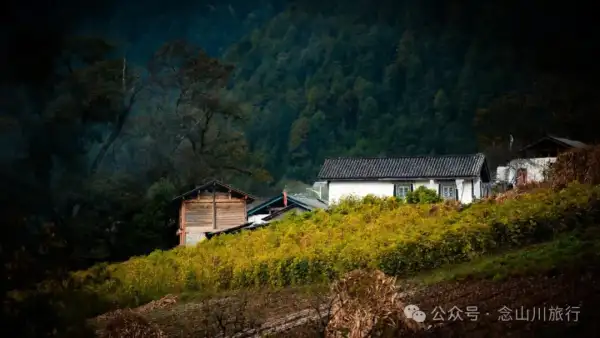

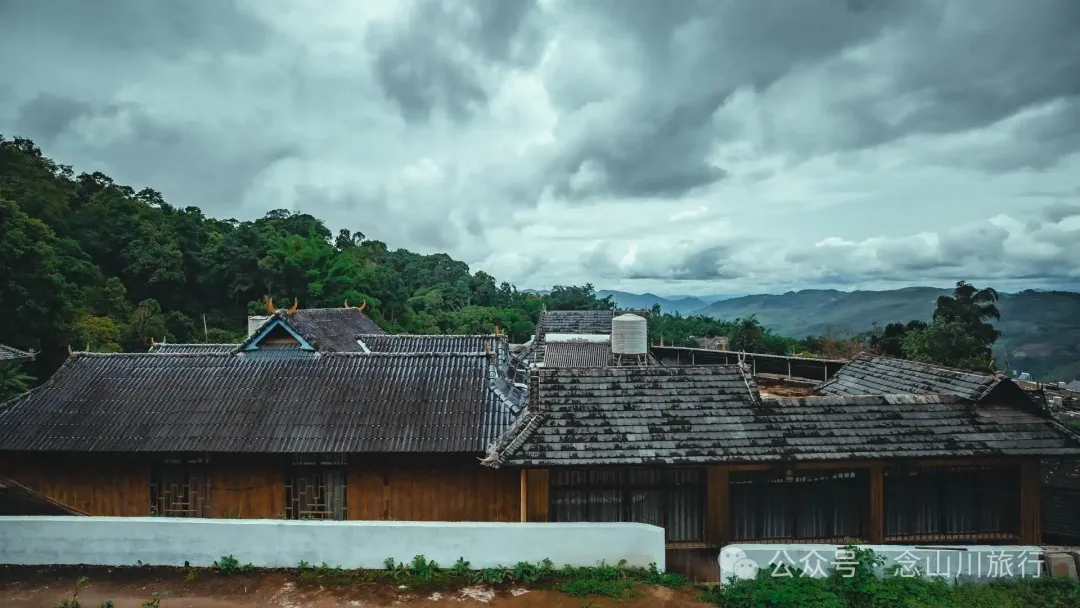
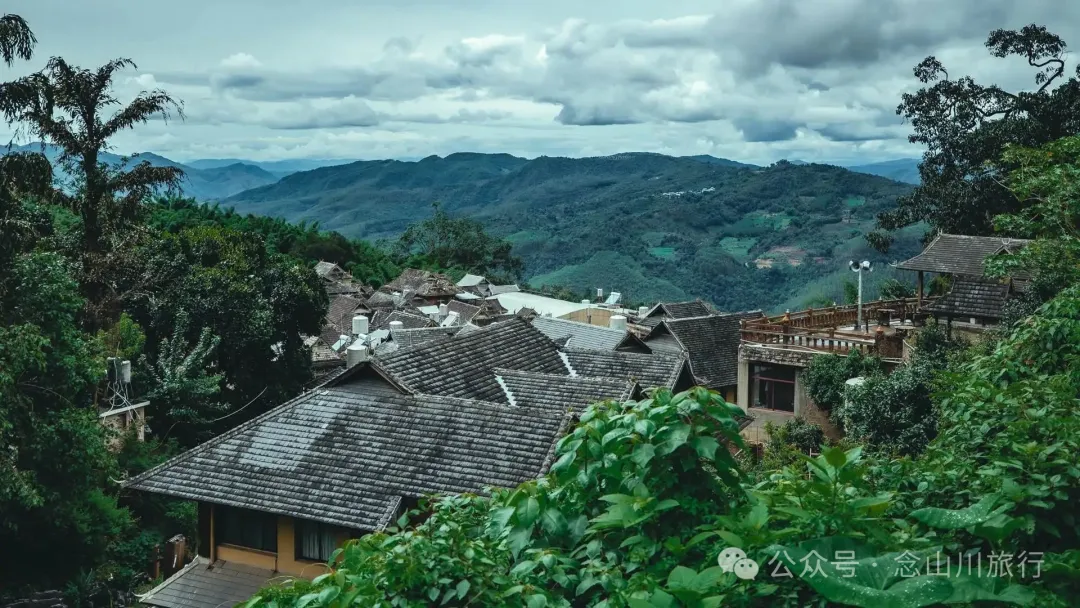
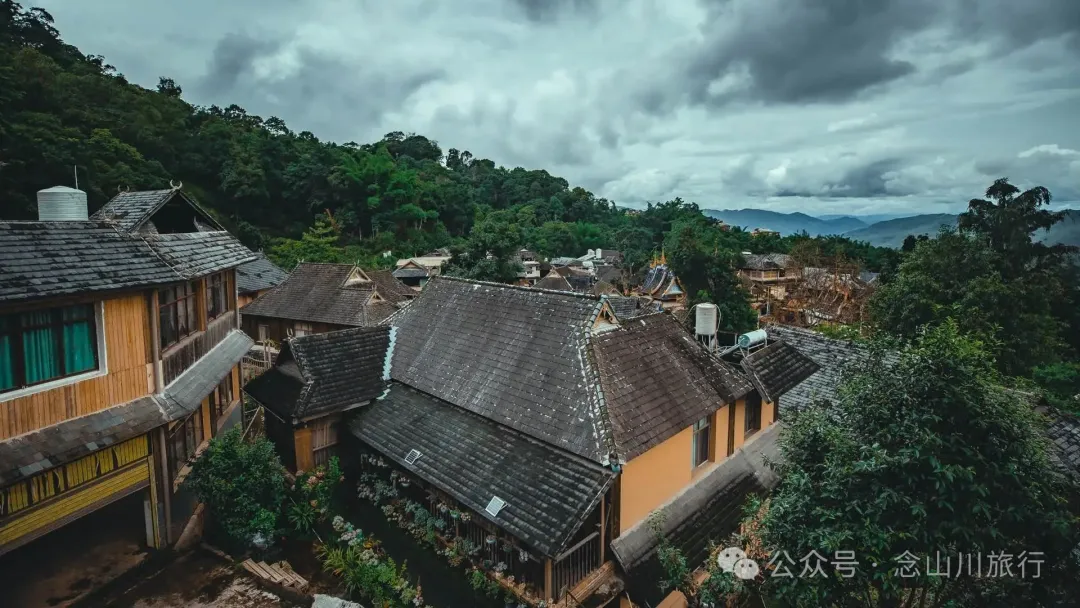
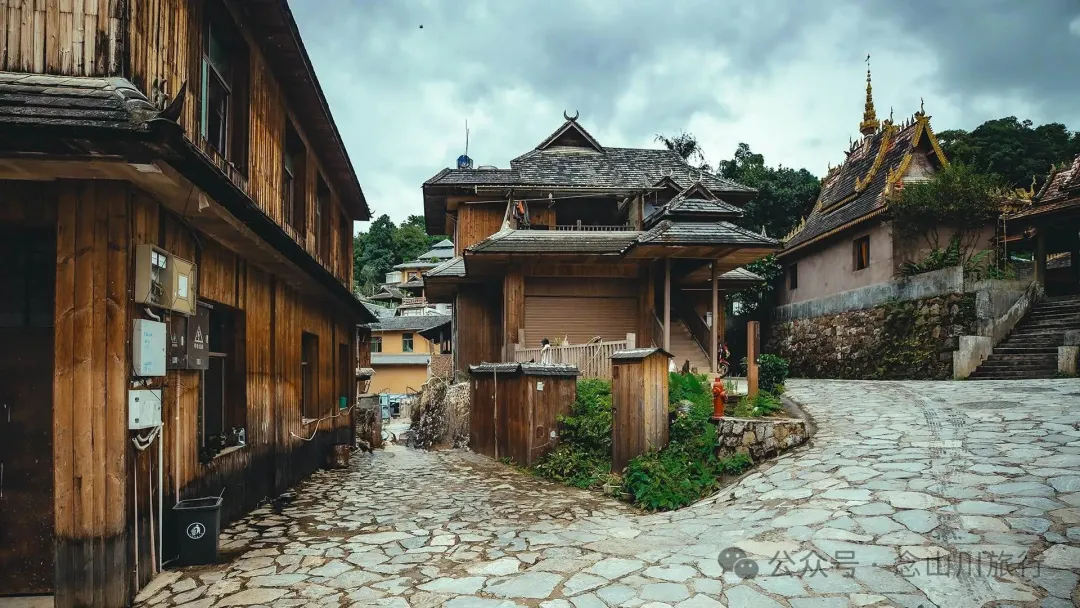
This is the first Dai village we entered in Jingmai Mountain, Manggeng Village. The dark gray tiled roofs are hidden in the dense greenery of the rainy season, resembling the low, gloomy sky above. The village looks like a squirrel perched on a thick branch of a jackfruit tree, carefree and undisturbed. Manggeng Village belongs to Jingmai Village, Huimin Town, Lancang Lahu Autonomous County, Pu'er City, Yunnan Province, with the main ethnic group being the Dai. It is part of the national key cultural relic protection unit 'Jingmai Ancient Tea Garden' and is one of the nine traditional villages listed as heritage elements of the 'Pu'er Jingmai Mountain Ancient Tea Forest Cultural Landscape'.
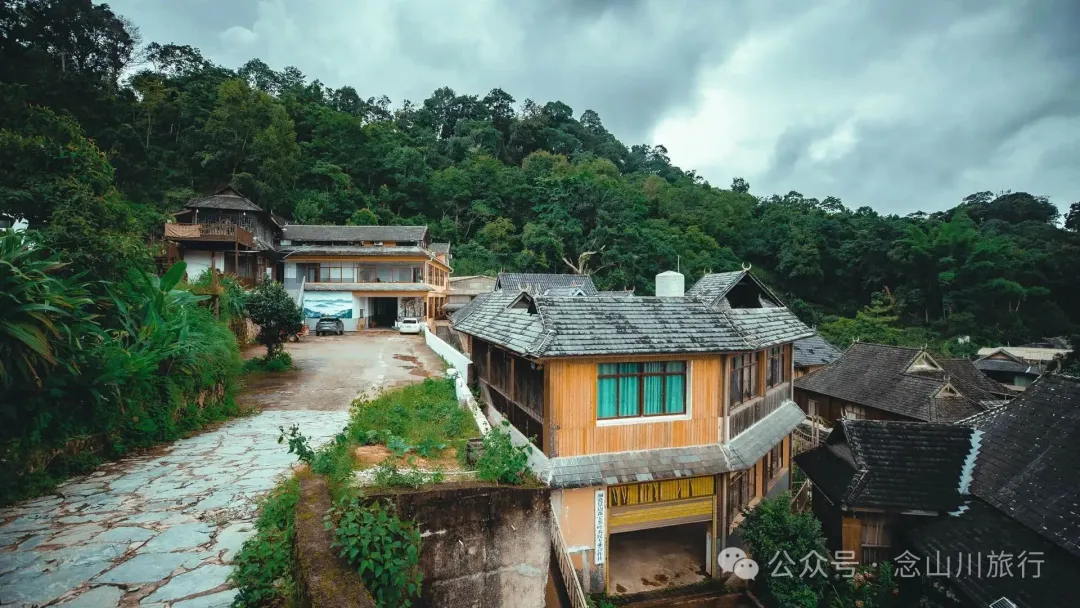
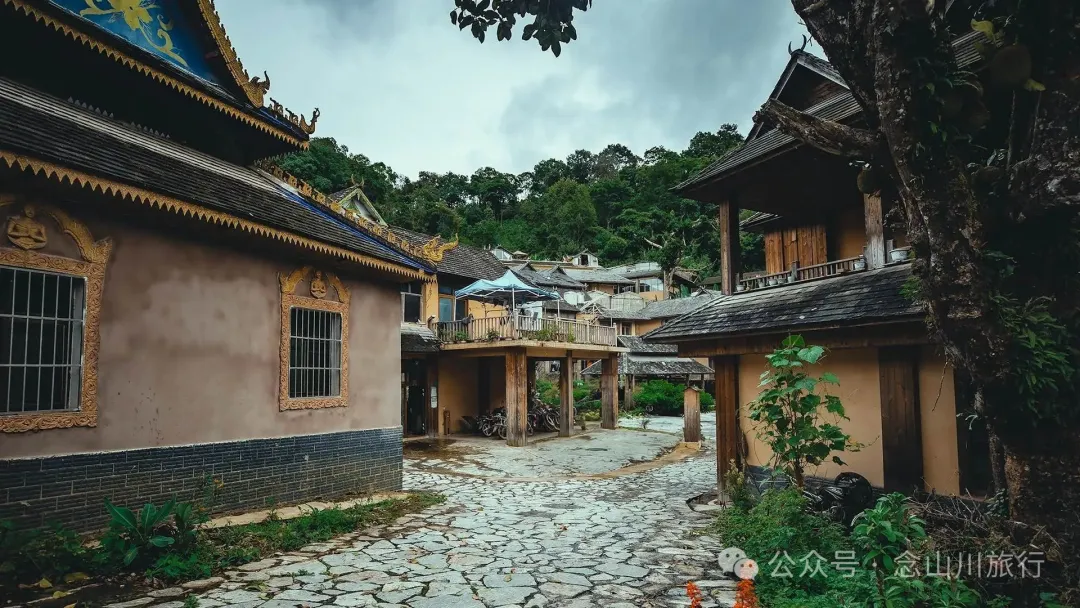
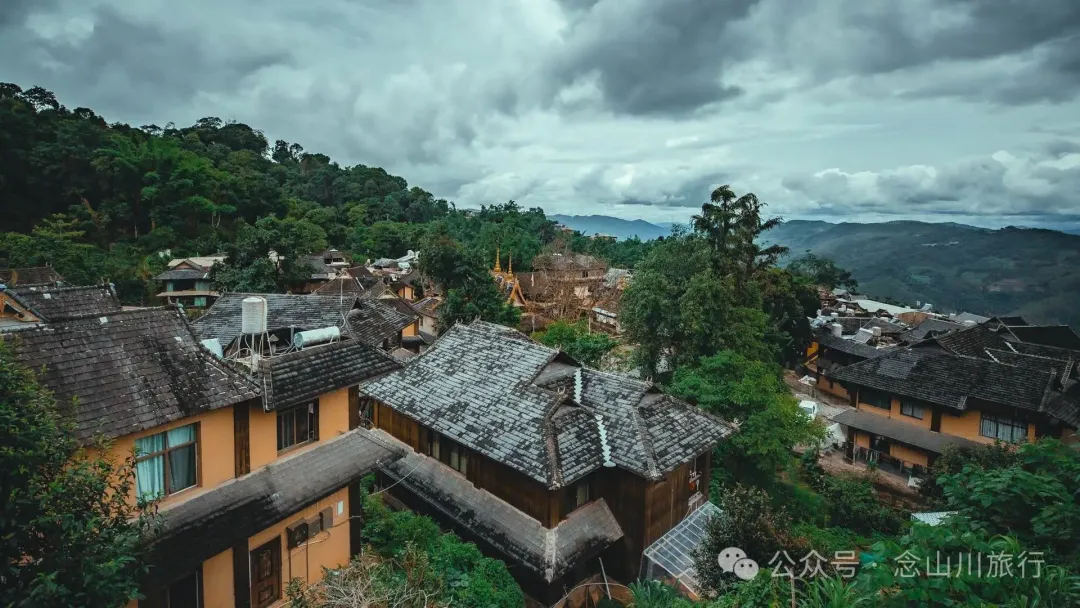
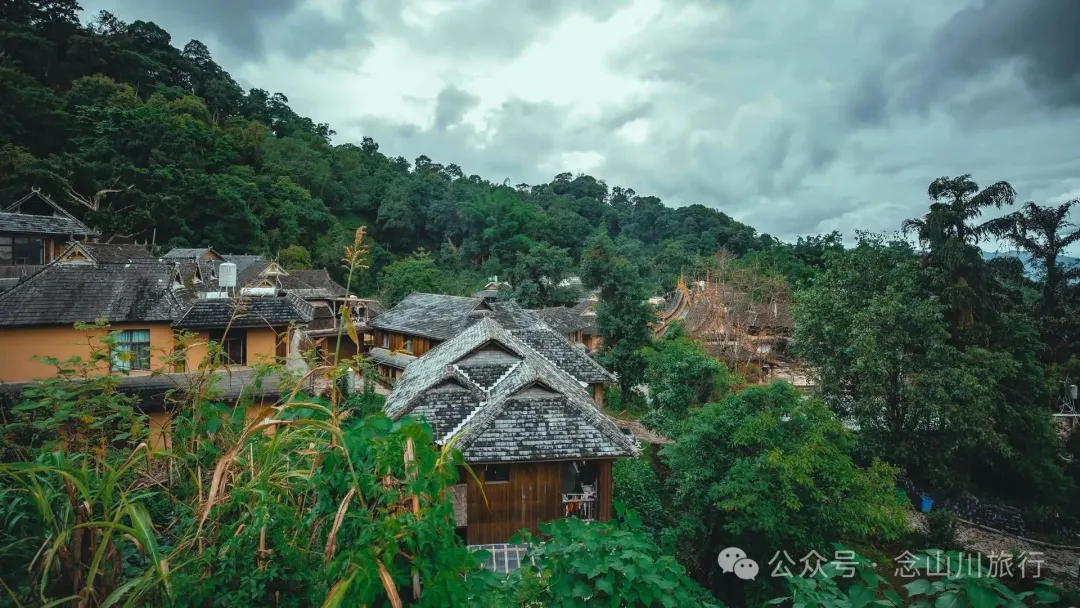
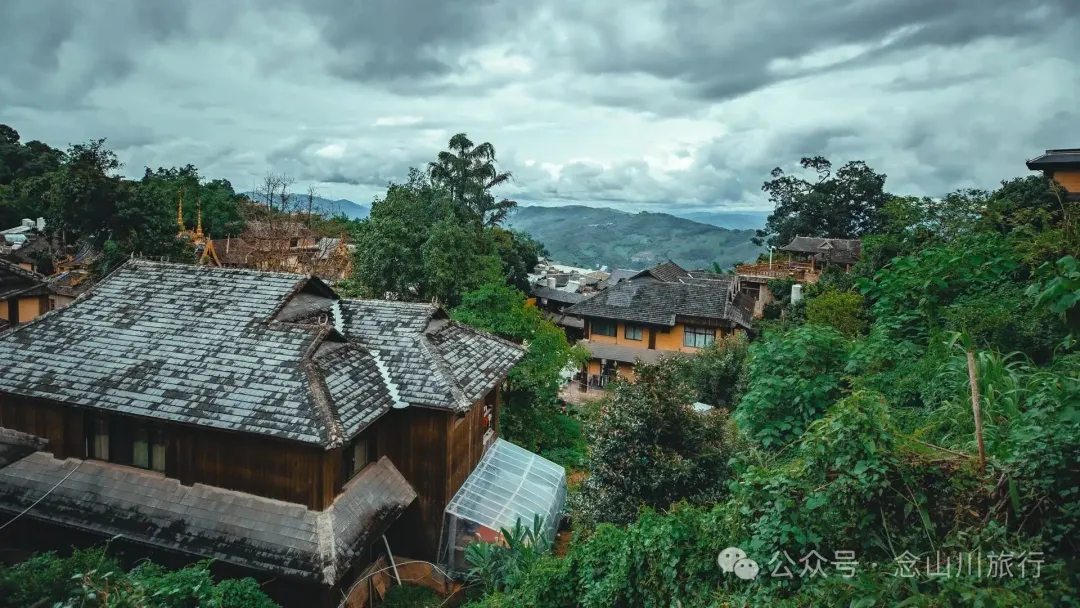
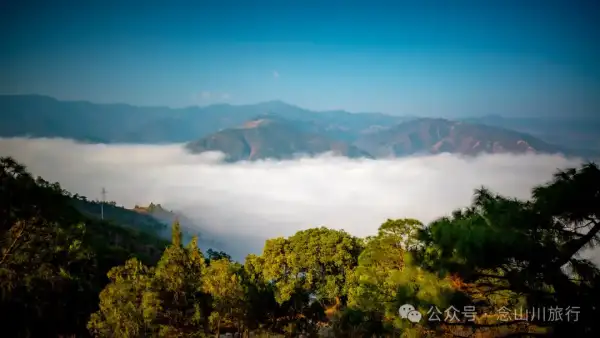
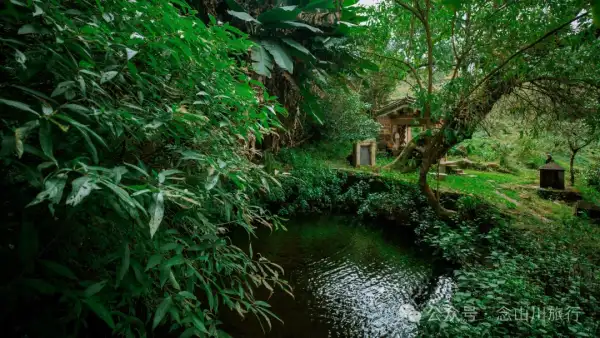
Manggeng Village is located on the northern slope of Baixiang Mountain, built along the terrain, surrounded by ancient tea forests, at an altitude of 1369-1386 meters, above the fog line. The village maintains the traditional layout of Dai villages in Jingmai Mountain, with the village center as the core, developing in a centripetal pattern. On the terrace near the village center stands Manggeng Buddhist Temple, a venue for religious activities and major festivals. According to local experts and oral accounts from villagers, this temple is the earliest built in Jingmai Mountain. The remains of Sadi Well and Sadi Tomb are related to monks who came to spread Buddhism in Jingmai Mountain, so Manggeng may be the first stop for Theravada Buddhism to enter Jingmai Mountain. Several large trees are planted artificially around the village, revered as village guardian trees, including the uniquely shaped 'Hand-in-Hand Tree'. To the west of the village is Jinshui Pond, reflecting the Dai people's emphasis on water sources in village site selection. The village center, Buddhist temple, Sadi Well, Sadi Tomb, guardian trees, and Jinshui Pond are all heritage value carriers of Manggeng traditional village.
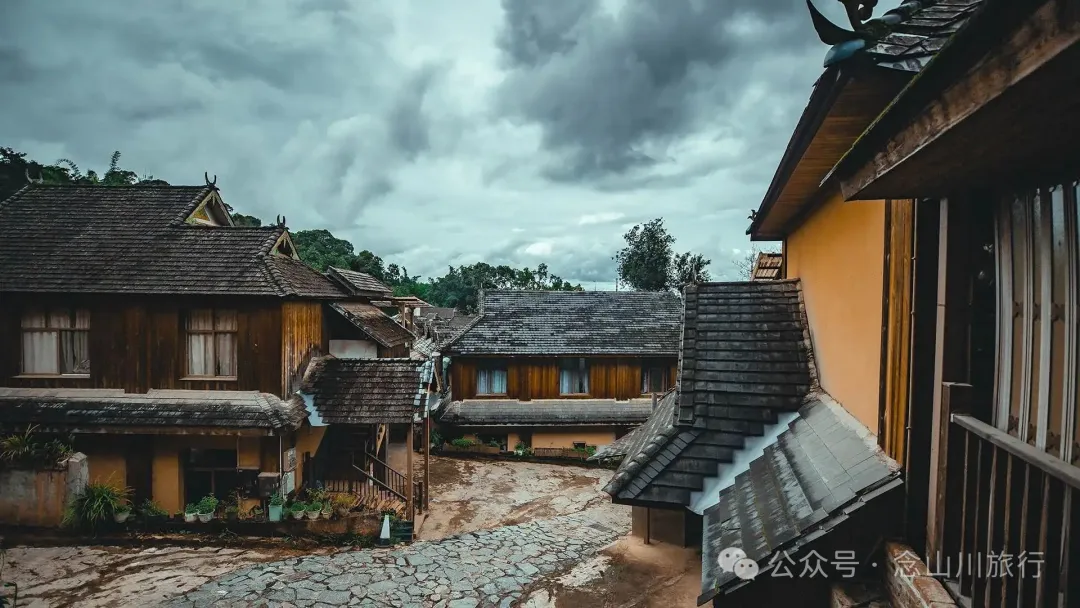
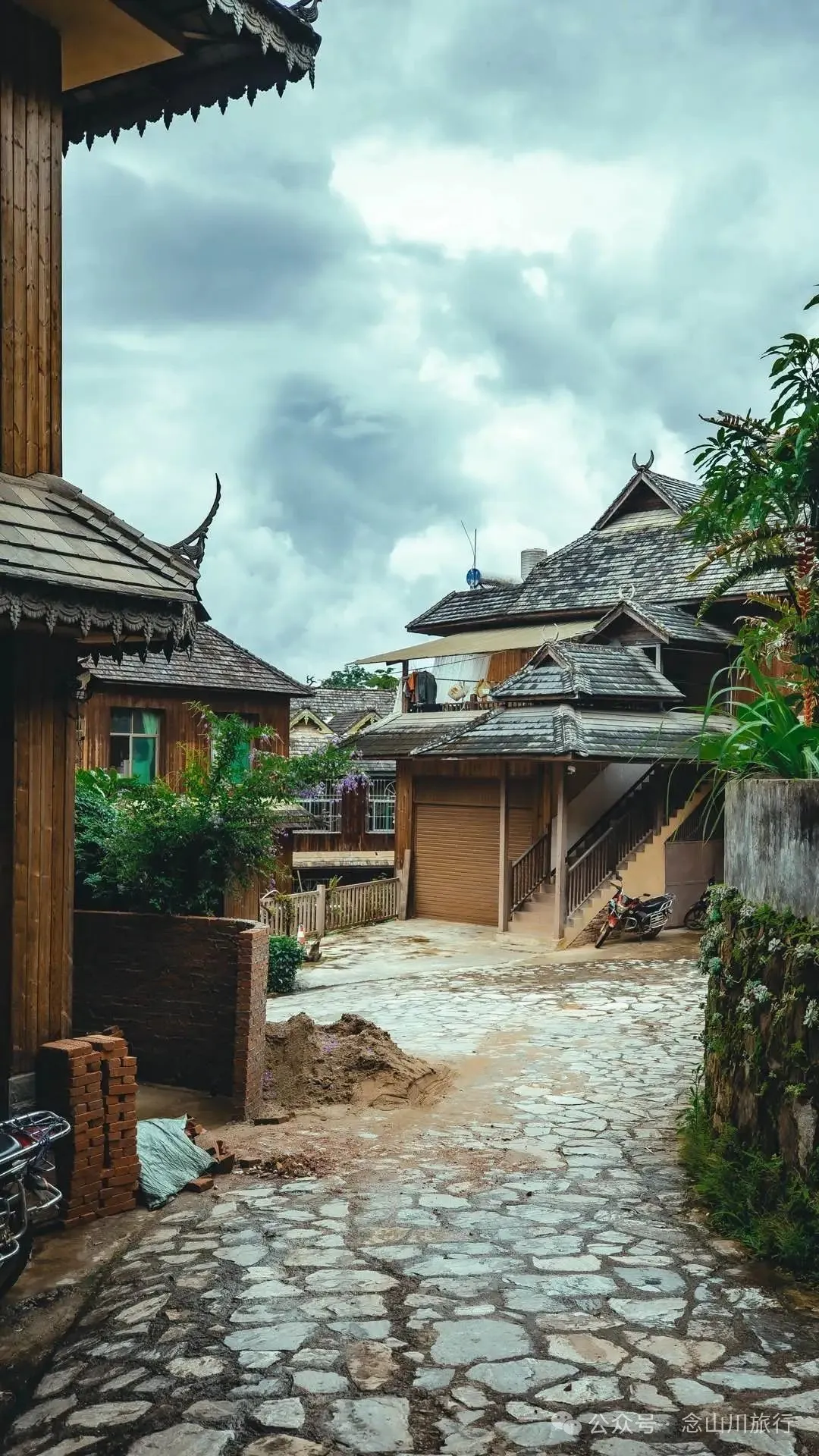
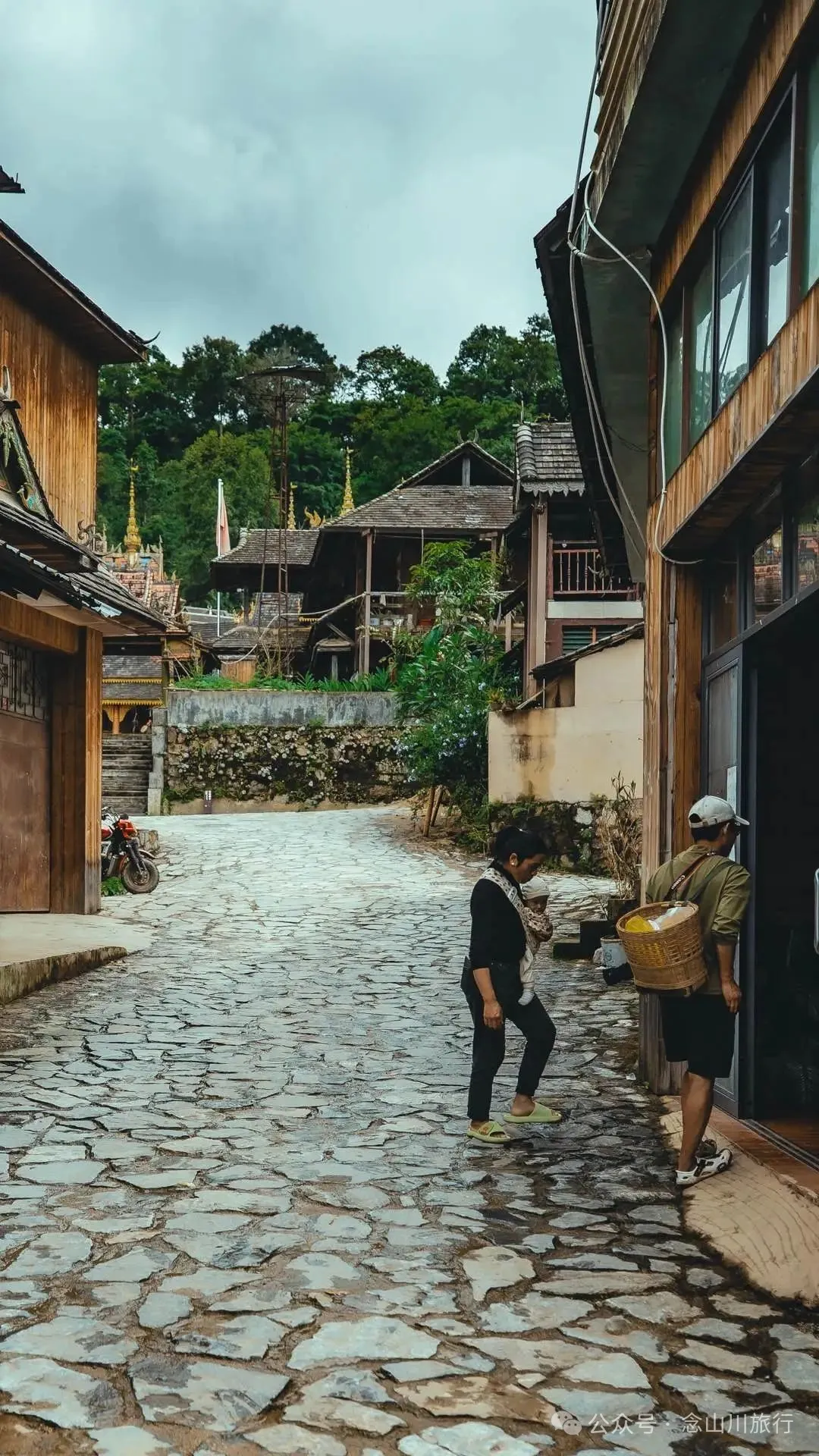
Compared to the nearby ancient villages of Nuogan and Wengji, Manggeng Village still maintains an authentic Dai village life, rarely disturbed by outsiders. After the rain, the leisurely Dai villagers come out, young and old, immersed in their own joys and busyness, as if separated from foreign strangers by a transparent barrier, visible but unnoticed.
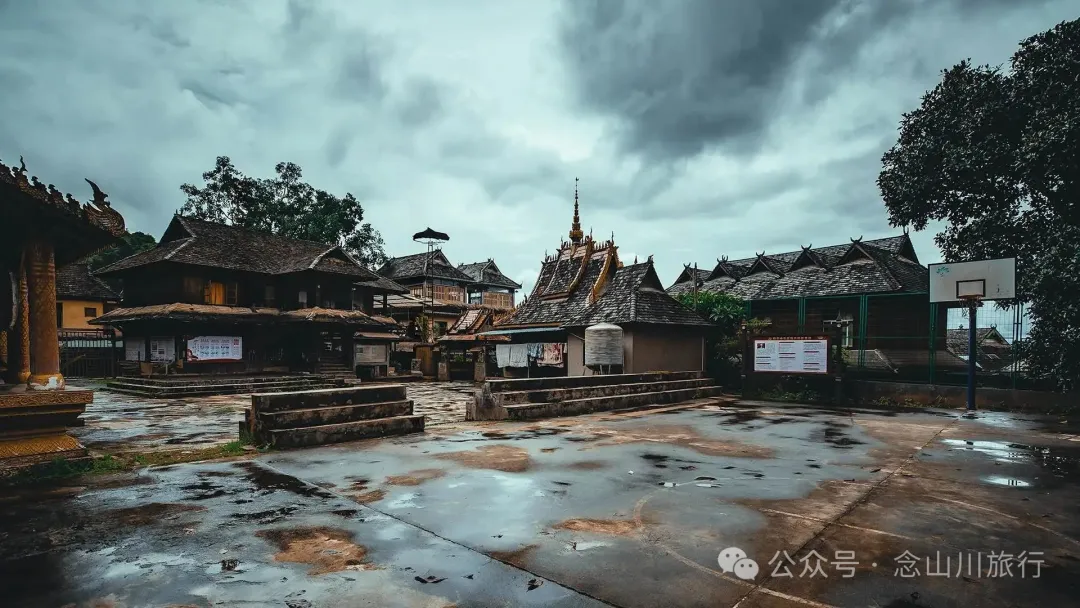
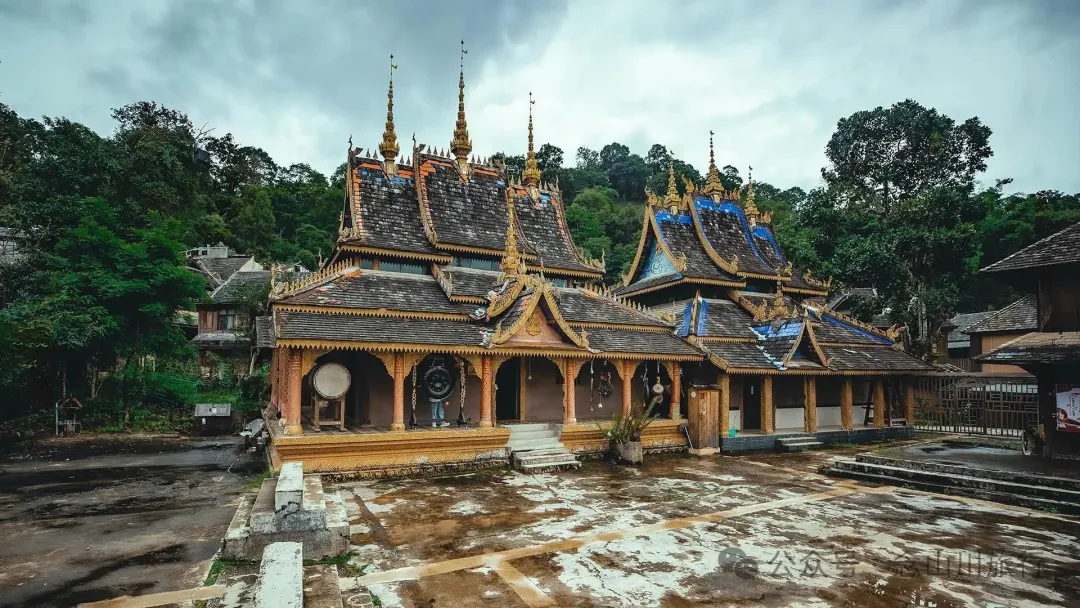
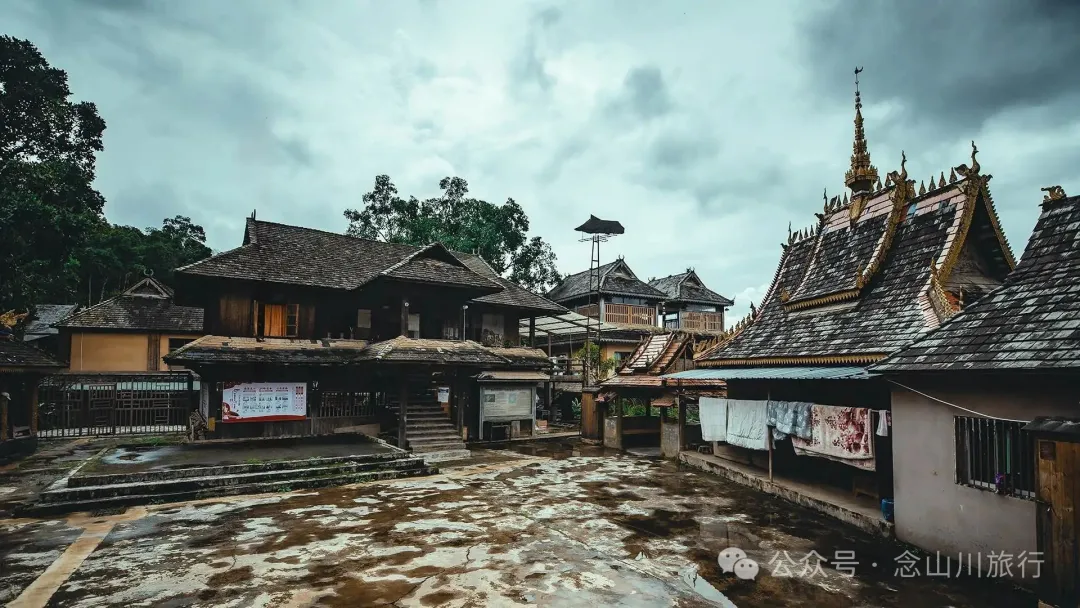
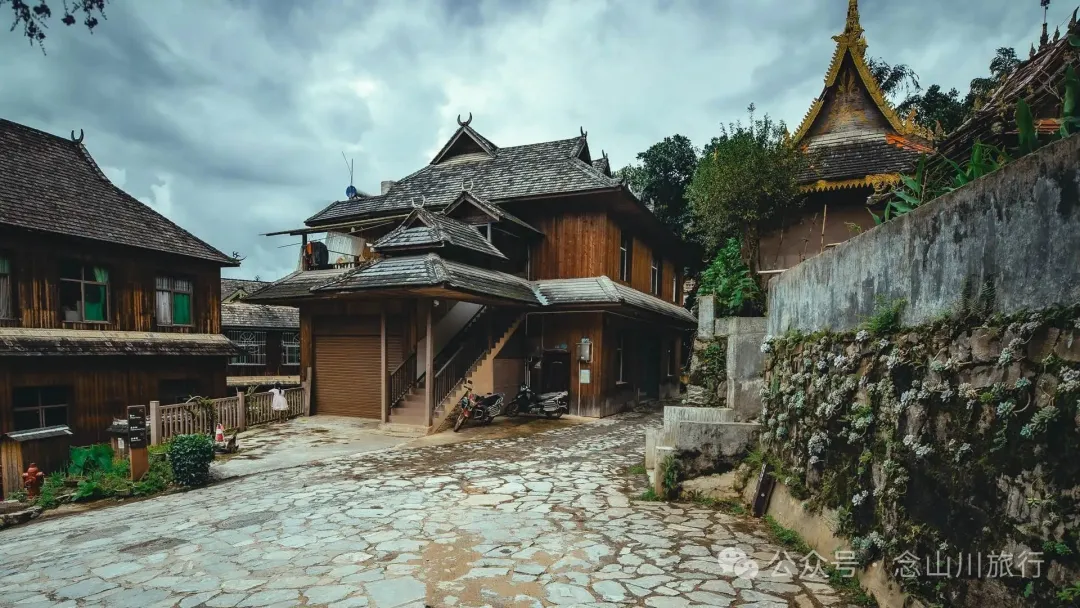
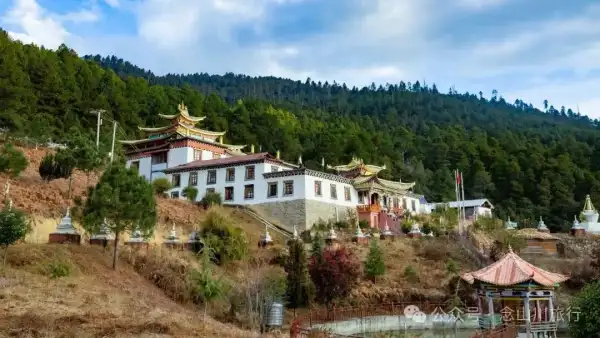
No matter where we walk in Manggeng Village, the uniquely ethnic Manggeng Buddhist Temple on the terrace near the village center is always visible. Manggeng Buddhist Temple is the first stop for Theravada Buddhism to enter Jingmai Mountain and the core carrier of local Dai religion and culture. The temple was built during the initial spread of Theravada Buddhism in Jingmai Mountain (specific date unknown) and underwent comprehensive renovation in 2001, becoming one of the earliest surviving Buddhist temples in Jingmai Mountain. As the 'first stop' for Buddhist cultural dissemination, its religious status is significant.
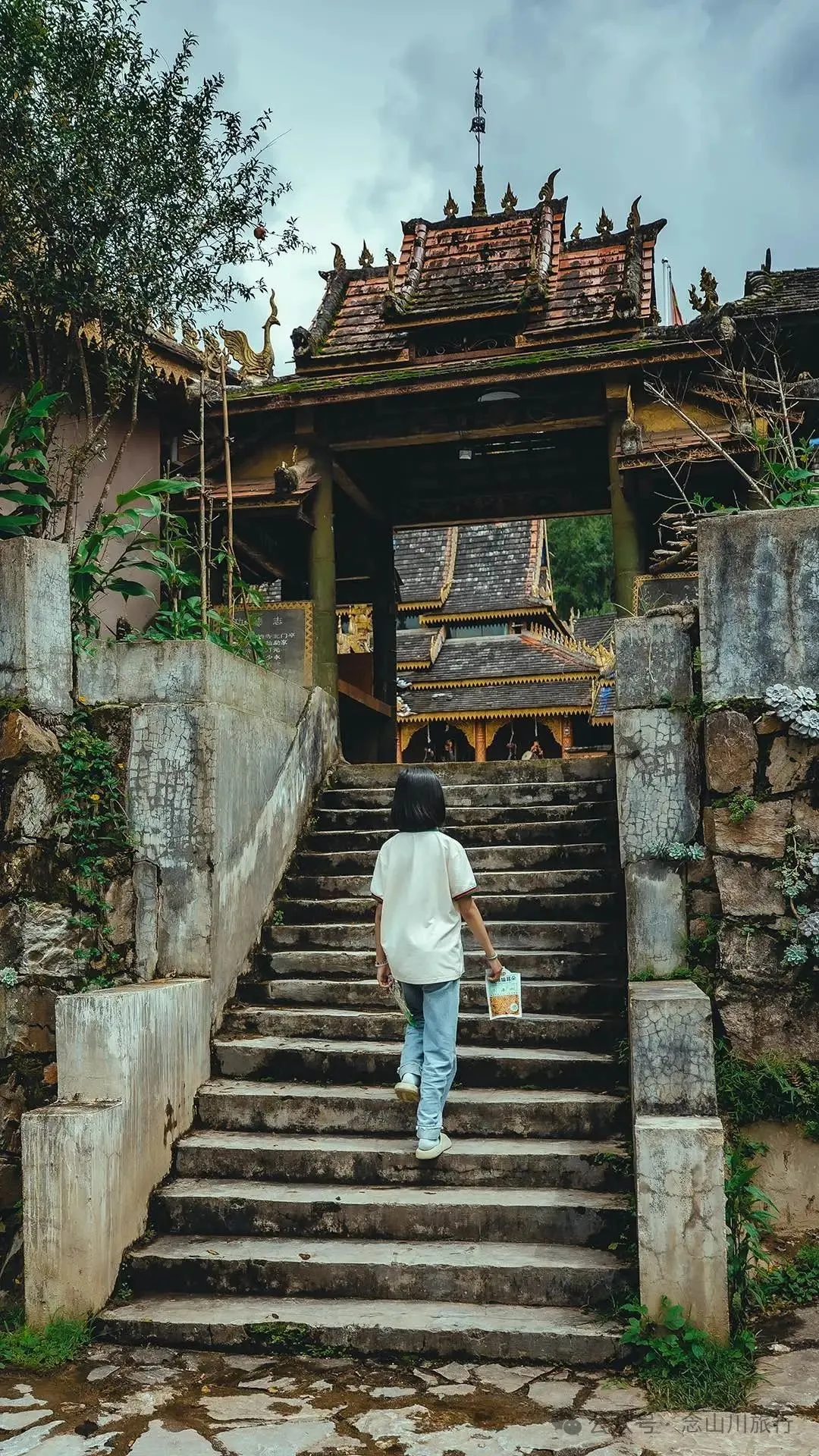
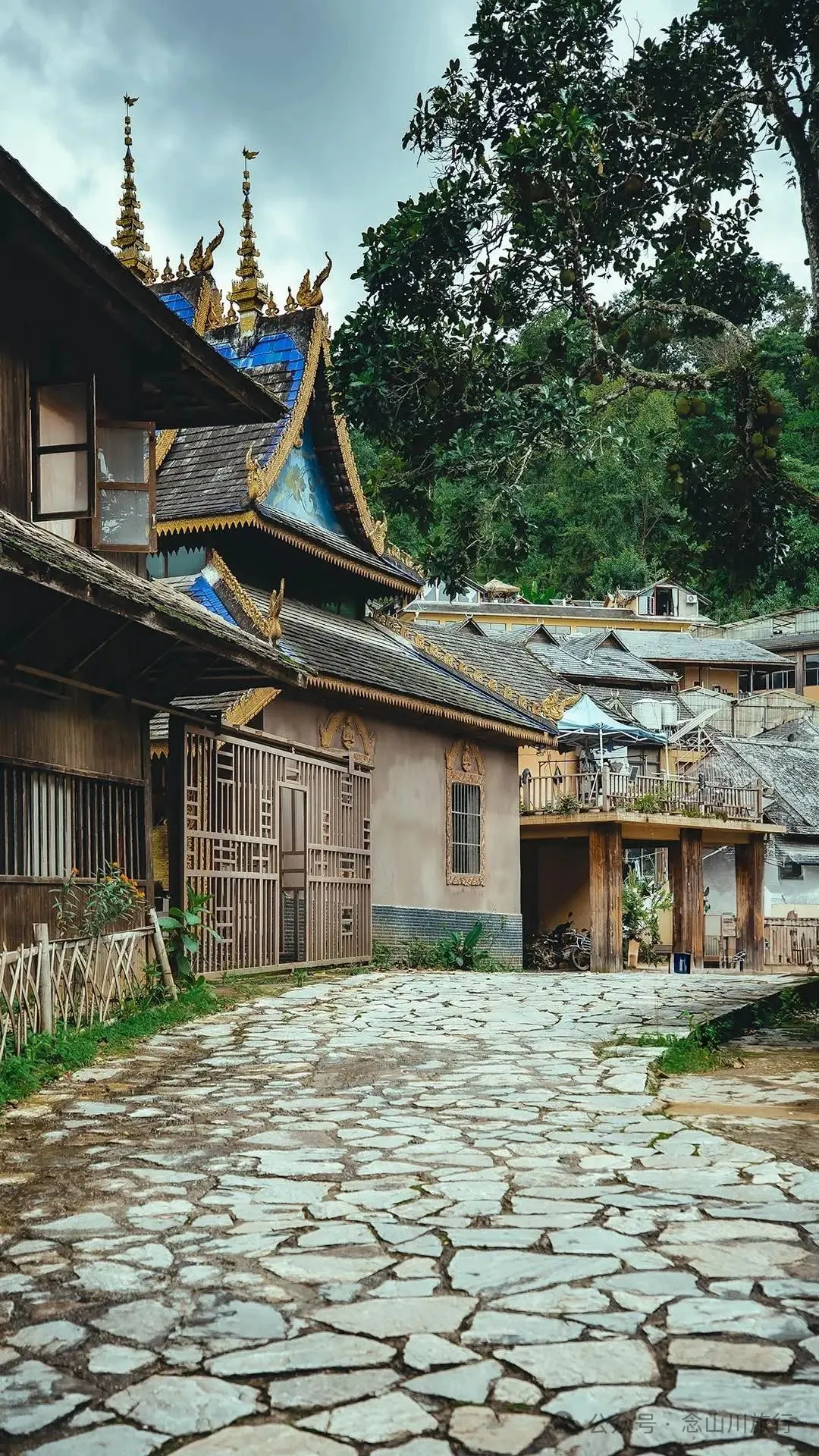
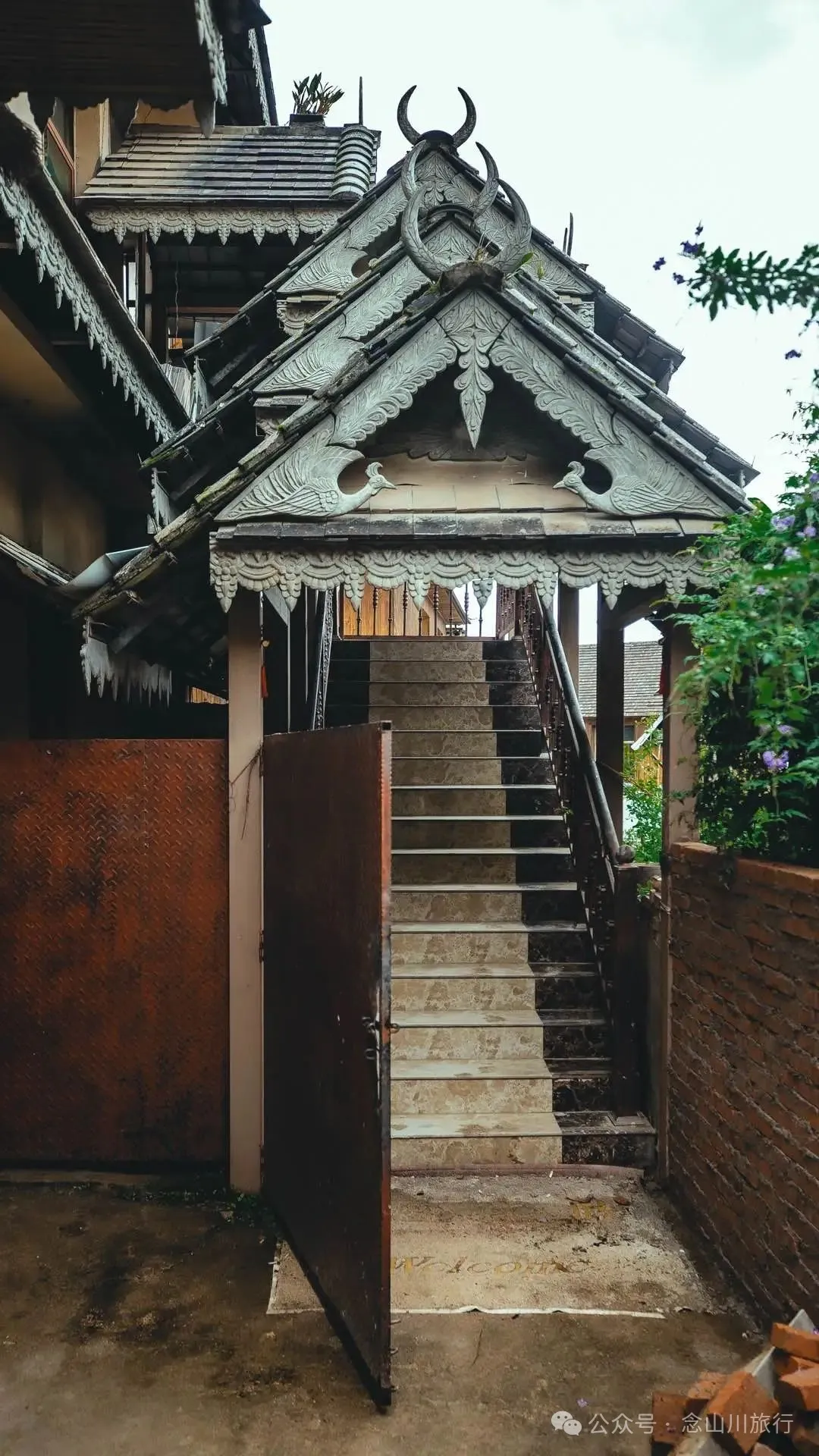
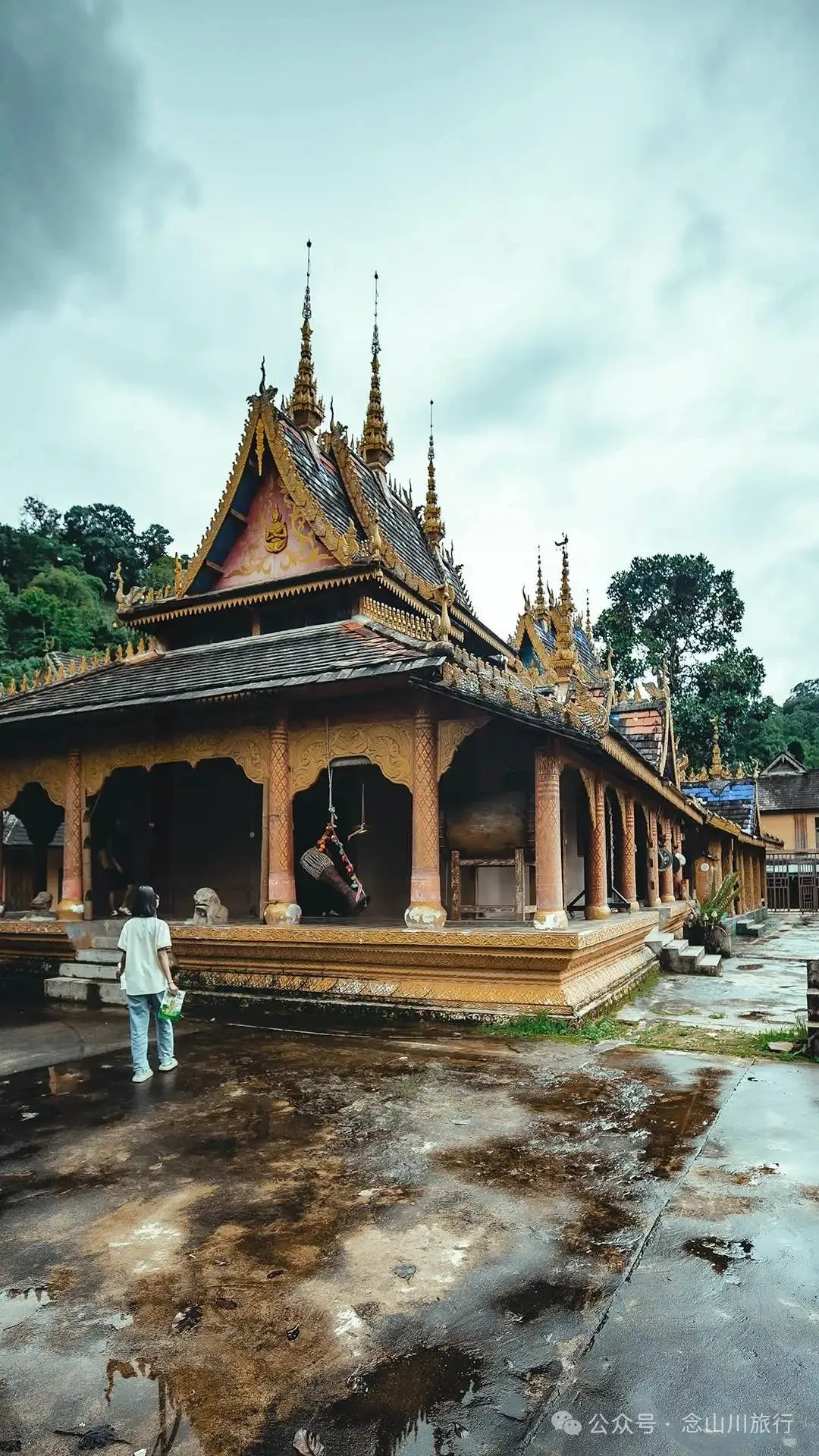
The main hall of the temple adopts the traditional Dai stilted structure, with an elevated ground floor for moisture prevention, and a Han-style hip-and-gable roof or double-eave design, reflecting a blend of Dai and Han styles (similar to the hip-and-gable roof of Jinggu Mangdao Temple). The beams, columns, and caissons are decorated with gold-leaf carvings of flowers, birds, and animals. The doors and windows feature colorful paintings combining Han meticulous brushwork techniques, with themes covering Buddhist symbols (lotus, golden elephant) and natural totems (peacock, ancient cypress), in intense colors. The walls use the unique Dai 'golden water leaking print' technique, applying gold paint through hollow templates to form intricate patterns. Murals often depict scenes of 'fairyland on earth' (such as white horses with golden umbrellas, flying celestial maidens), symbolizing the pure land of bliss. Manggeng Buddhist Temple, with its centripetal settlement pattern, Dai-Han mixed architecture, and natural belief symbols, is both a sacred site of Theravada Buddhism and a condensation of Dai ecological wisdom. The symbiosis of its art and religion provides valuable physical examples for studying the integration of ethnic cultures in southwestern Yunnan.
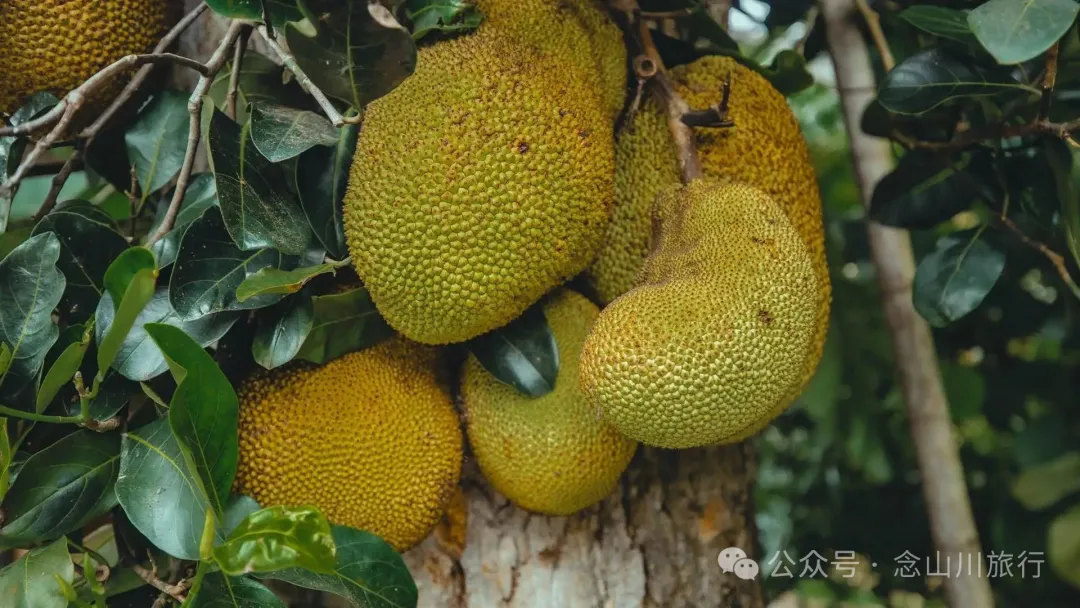
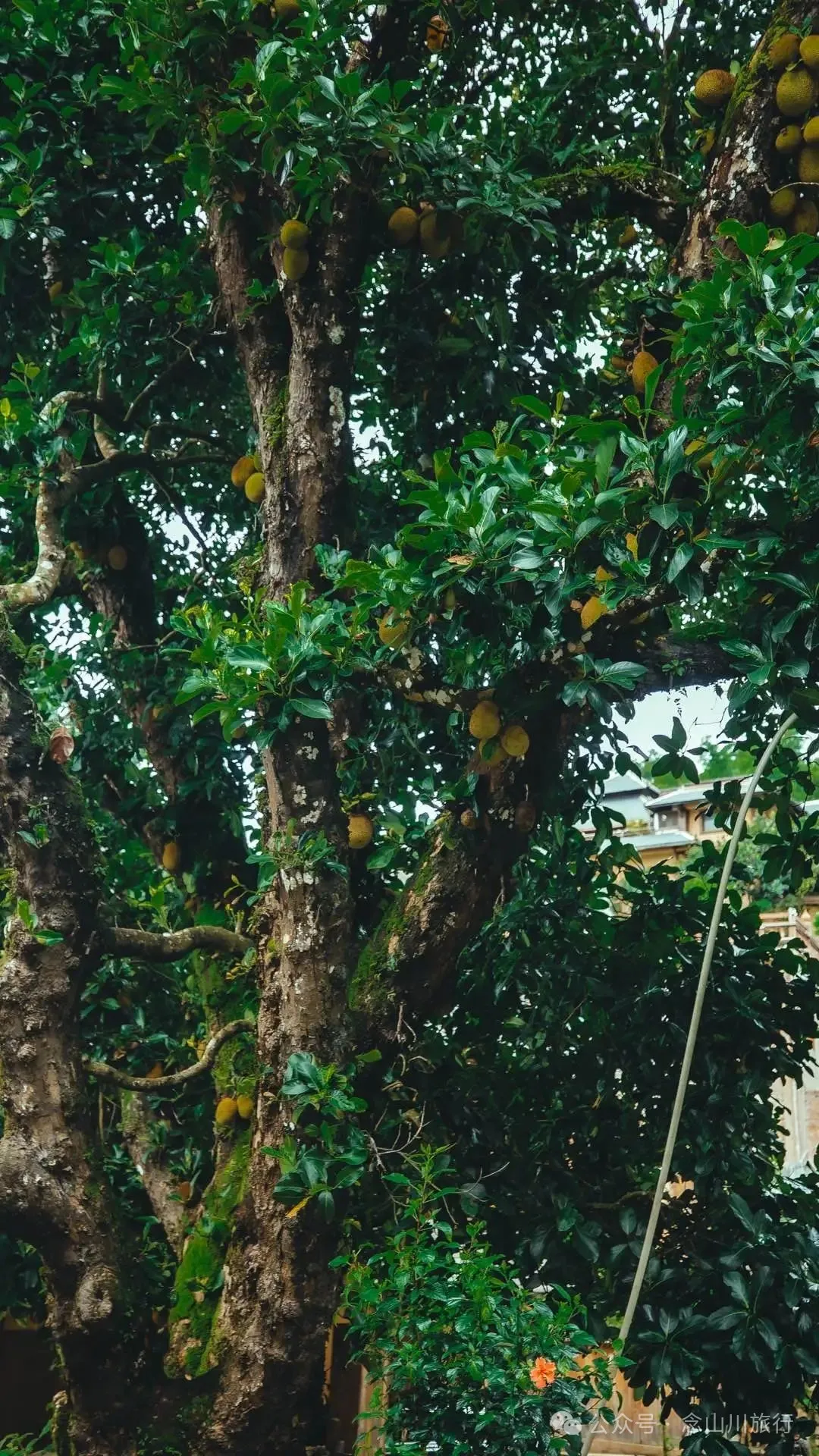
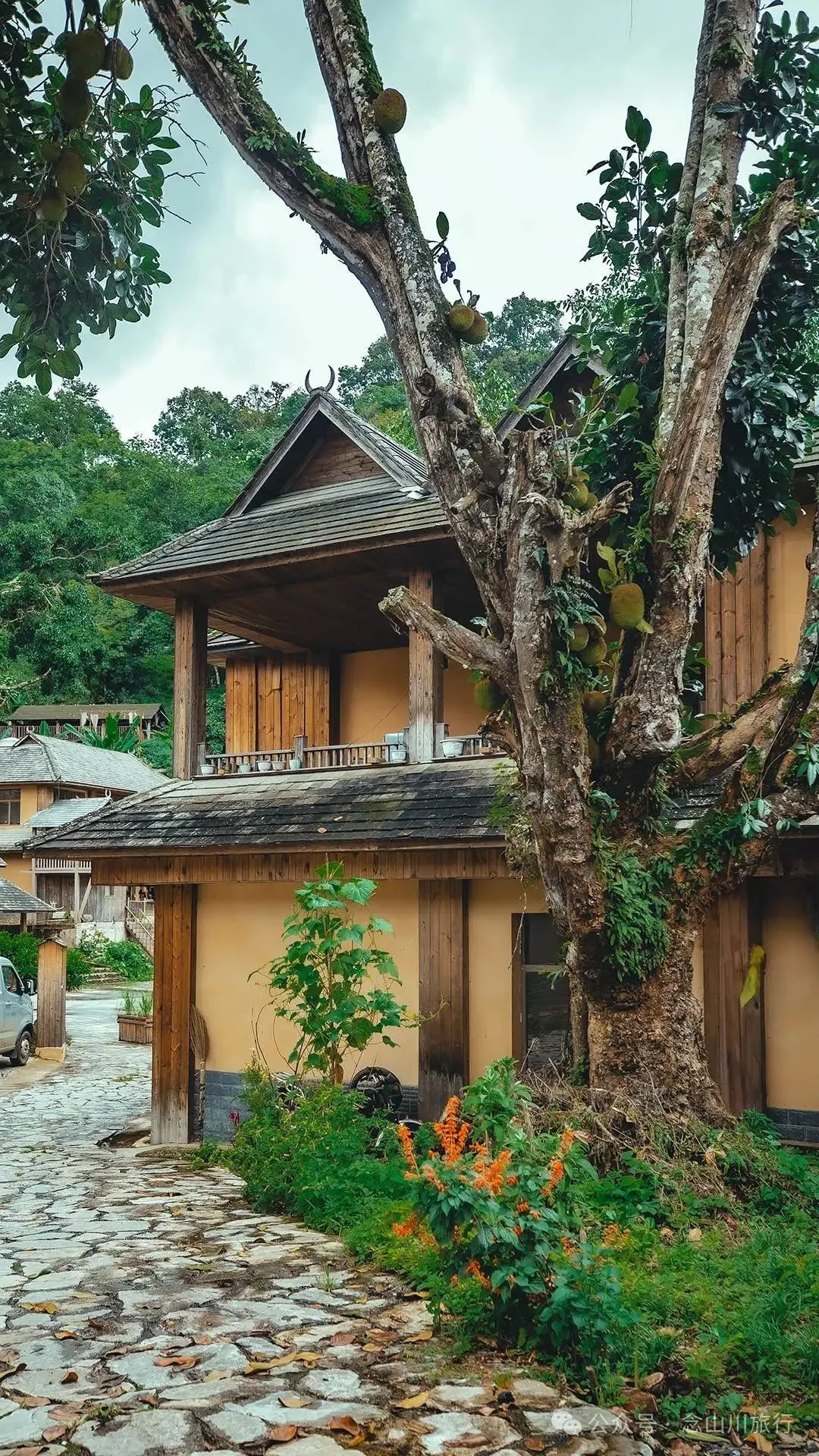
Manggeng Village is full of tall and thick jackfruit trees. In the rainy season, fruits of various sizes cluster in groups or hang alone on the sturdy trunks. In many countries, the jackfruit tree is not just a plant but also has significant religious meaning. In Hinduism, the jackfruit tree is regarded as a 'tree of abundance', often planted around temples, symbolizing life and prosperity. In Southeast Asian Buddhist countries like Thailand, the jackfruit tree is considered a sacred tree, and its fruits are used to offer to deities.
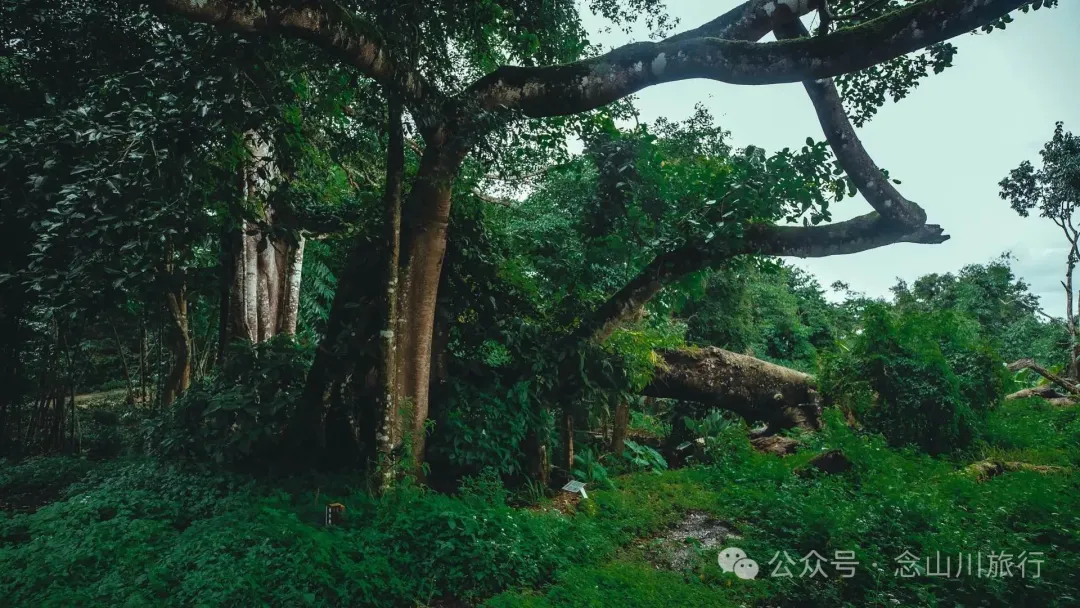
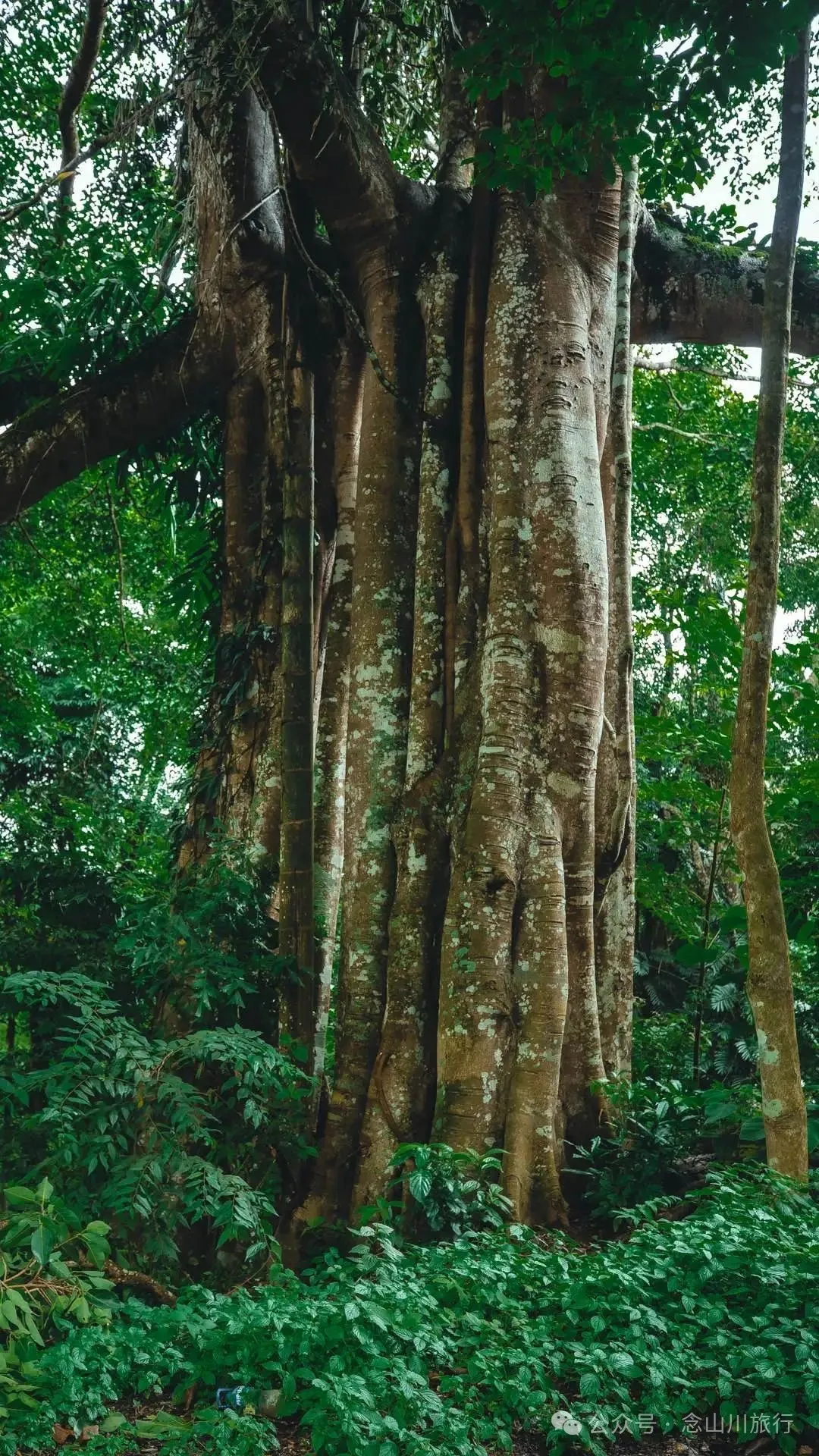
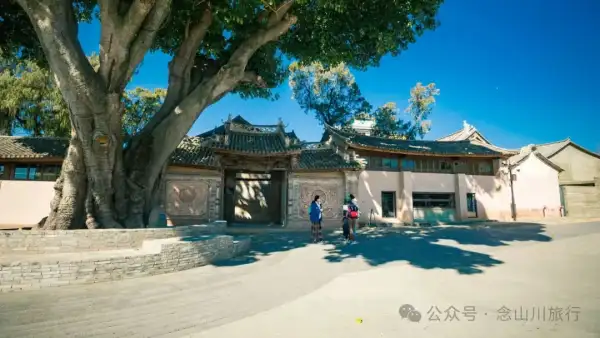
In the jungle outside Manggeng Village, there is a uniquely shaped 'Hand-in-Hand Tree'. It is actually two ancient banyan trees with interconnected roots and intertwined branches, belonging to the species Ficus altissima. The canopy is huge and umbrella-like, over 20 meters high. Their uniqueness lies in the two trunks gradually approaching each other during growth, eventually forming a 'hand-in-hand' posture, with branches interwoven like lovers embracing, hence the name 'Hand-in-Hand Tree'. As one of the 'village guardian trees' of the Dai village, together with other ancient trees in the village, it forms an ecological barrier, playing a role in wind prevention, soil consolidation, and microclimate regulation.