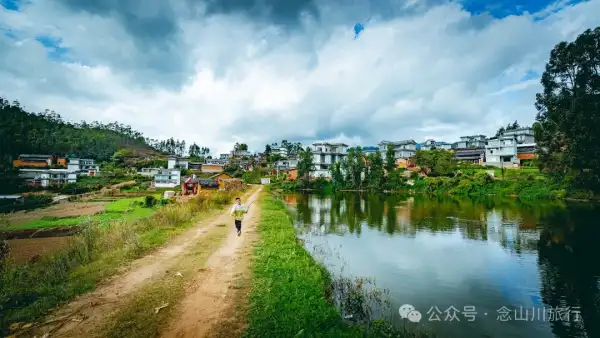

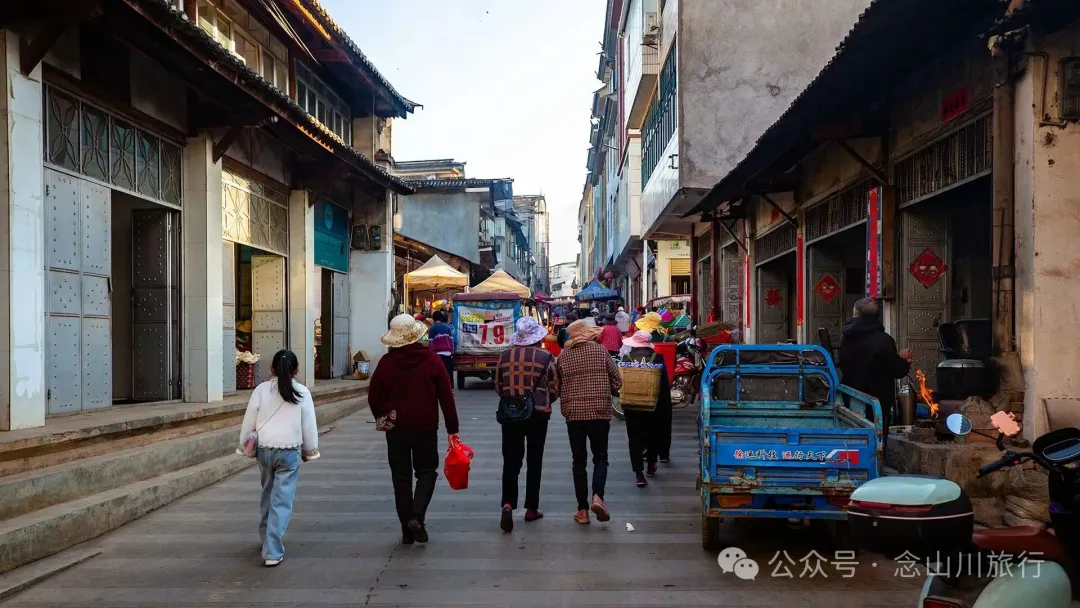
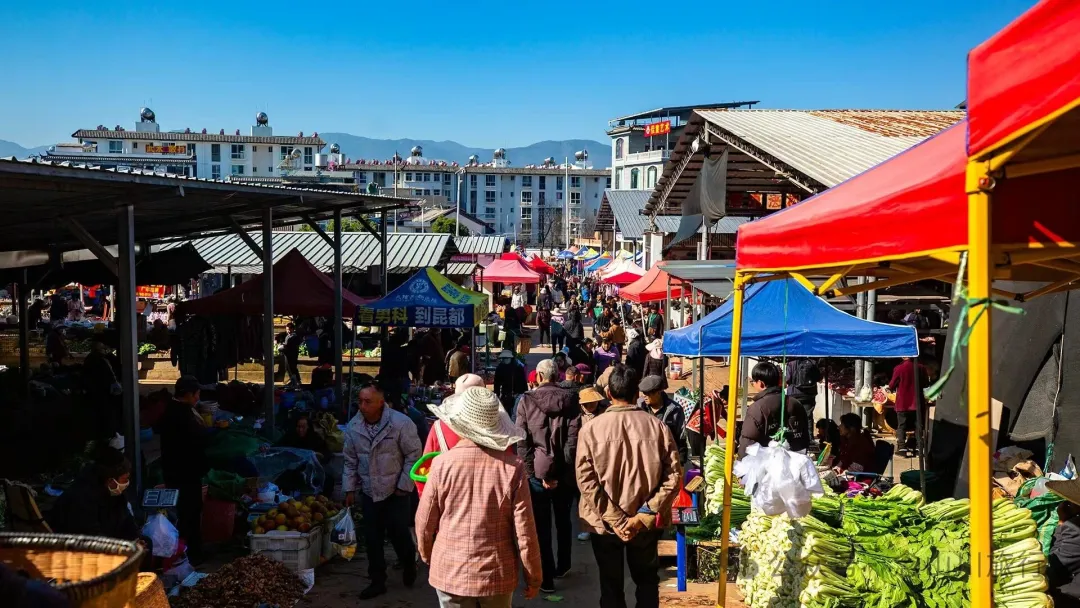
Miao Street is just over 10 kilometers from the ancient town of Weishan. It is a very ordinary Yi ethnic town, with neither breathtaking natural scenery nor profound historical and cultural heritage. Compared to the many famous ancient villages in Weishan, it seems quite lackluster. However, in recent years, the market at Miao Street has increasingly attracted more people. On every market day, the once quiet town becomes bustling with traffic and lively noise.
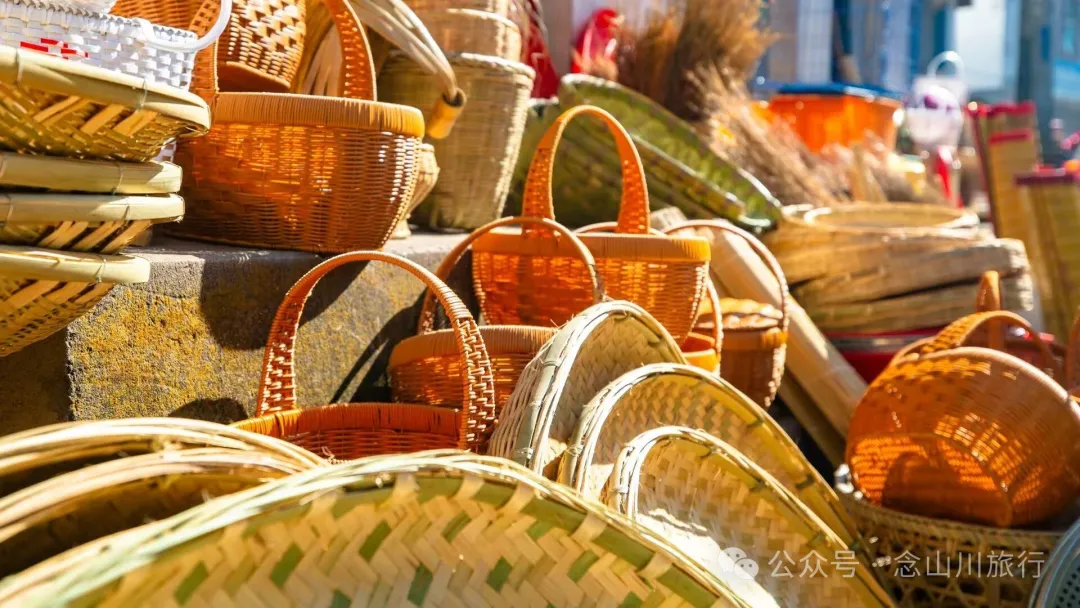
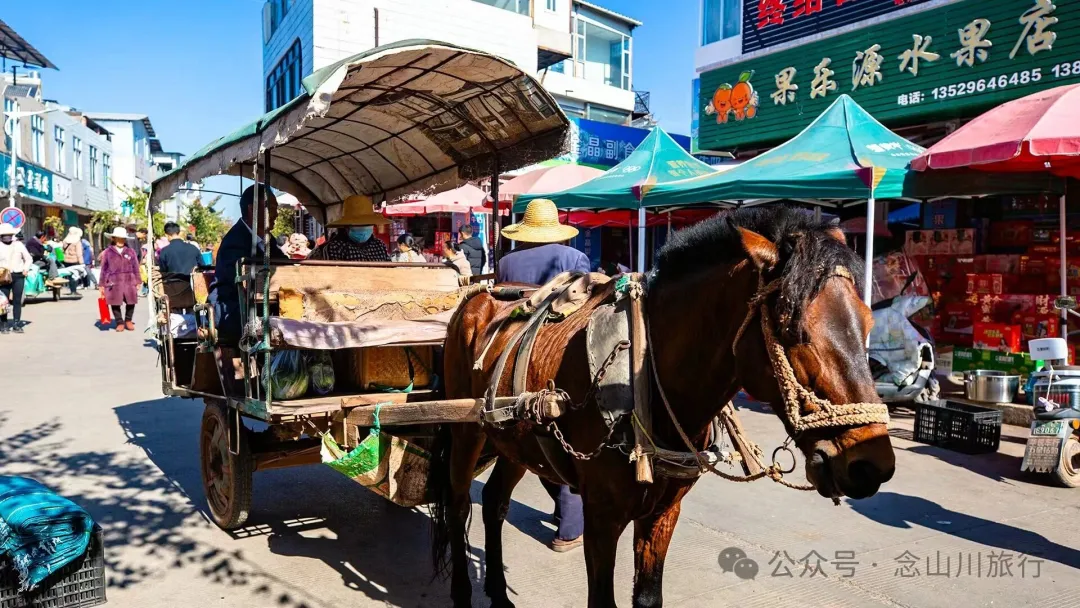
The market day at Miao Street falls on dates ending with 3 or 8 (solar calendar). Residents from surrounding towns and villages come to join the excitement. Those living nearby carry bamboo baskets on their backs, walking in groups of three or five in the morning light. Those from farther areas, such as the mountainous Dasi to the west, drive horse-drawn carts, calling friends and laughing all the way. Some Dali Bai people, undeterred by the distance, drive from Xiaguan (Dali city center) or Dali Ancient Town, dozens of kilometers away. Most puzzlingly, in such an unremarkable town market, you can see quite a few tourists. Tourists are easy to spot: with non-local accents, curious looks, and bags full of local specialties.
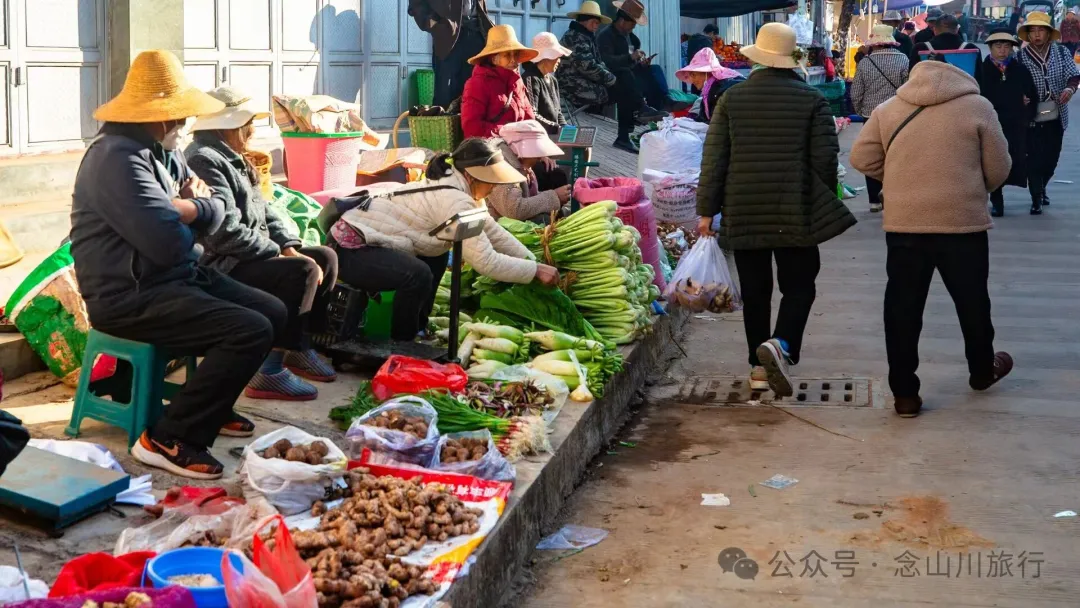
Compared to Dianzhong Street, the largest cattle trading market in western Yunnan, and the famous singing and dancing village Qingyun Street, the market at Miao Street is nothing special. Although the market is full of a dazzling array of goods, most are ordinary items. Clothing and shoe stalls are crowded with locals. For rural farming residents, such daily necessities only need two qualities to attract their attention: durability and low price. Flashy styles and expensive materials are far from their lifestyle and have no market here.
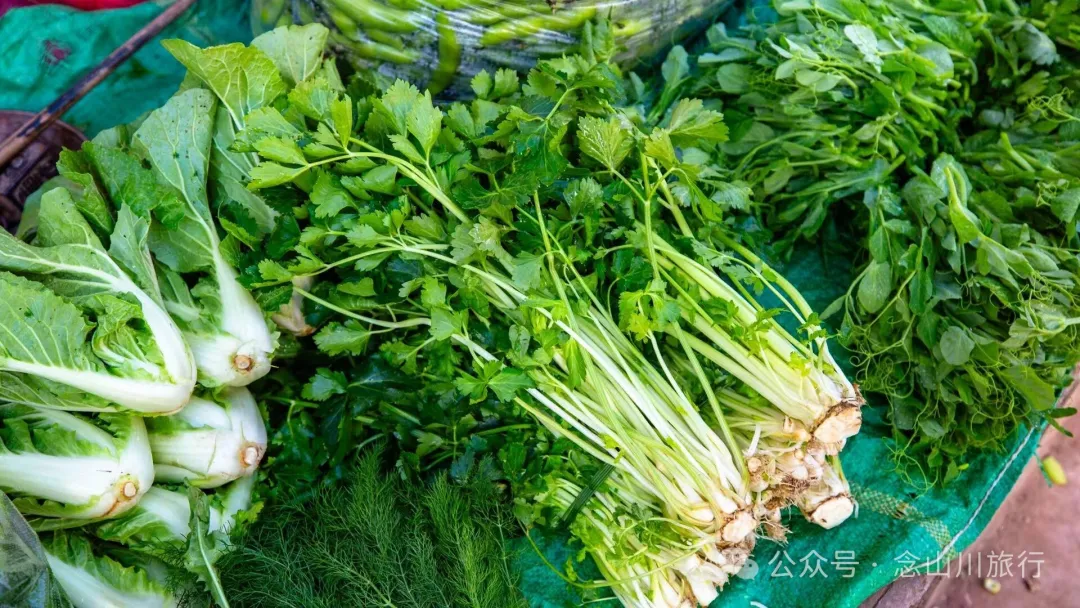
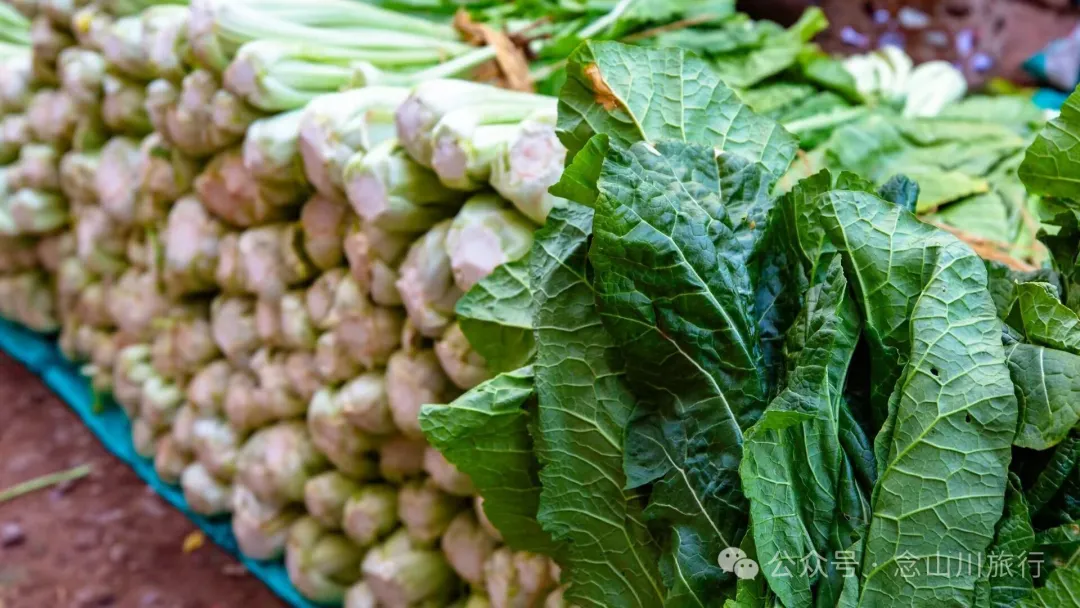
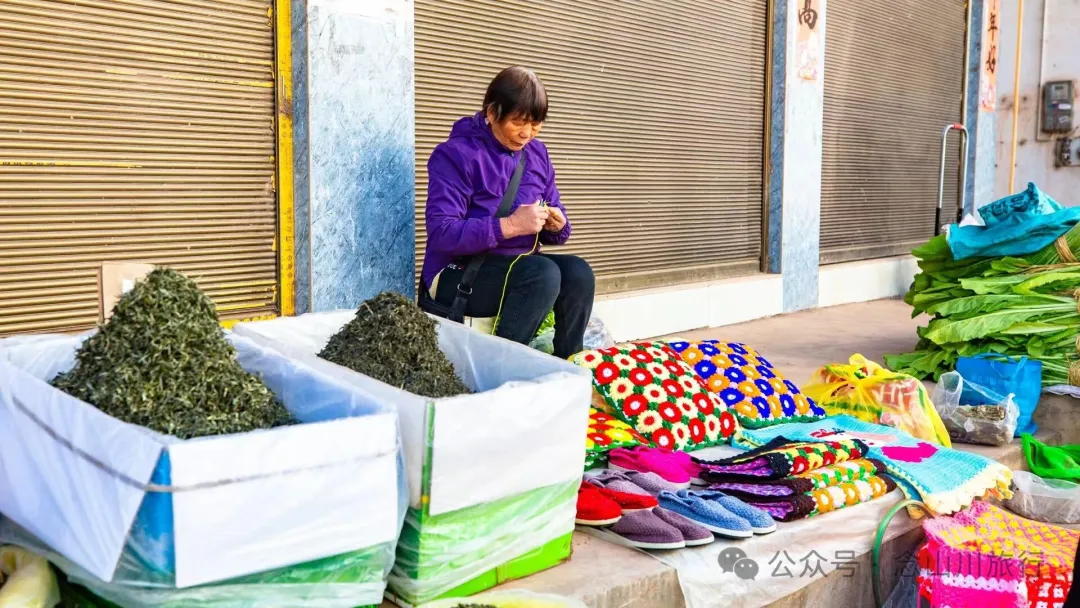
Areas with items closely related to rural life are also gathering spots for locals, especially the poultry trading area and farm tool section. Compared to the fixed vegetable and fruit stalls in the main area, the flexible temporary stalls of elderly vendors sitting along the streets are more popular. They sell various seasonal vegetables and fruits they grow themselves, such as crown daisy, spinach, celery, pea shoots, persimmons, and other common items.
Since they mainly grow for their own consumption, they generally do not care about the appearance or growth cycle of the produce, so they do not use chemical fertilizers or pesticides, making them the most natural and healthy. Moreover, due to low yield, scarcity makes them valuable, and people rush to buy them. They don't worry about not being able to sell. Besides, they are not professional traders, so they don't need to worry about sales channels. Even if they can't sell, they can just take them home to eat or give to neighbors. That's why they look so calm and composed.
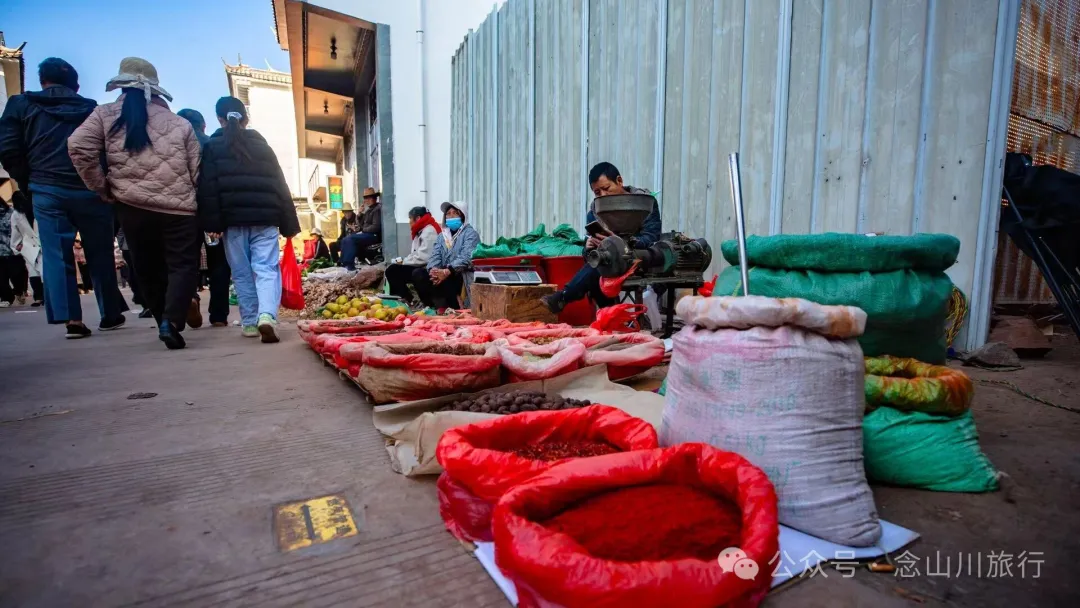
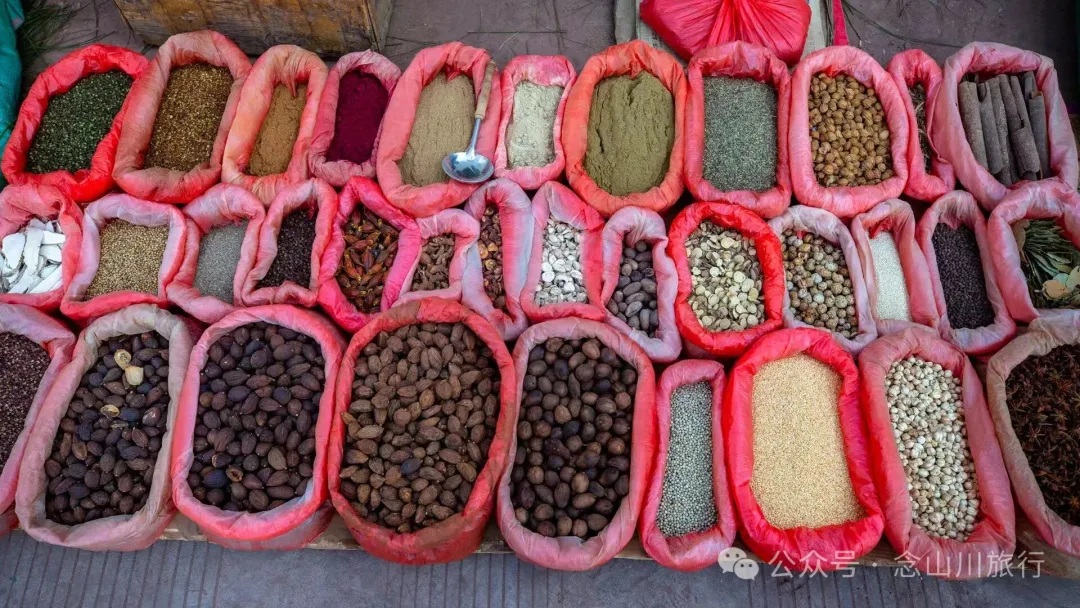
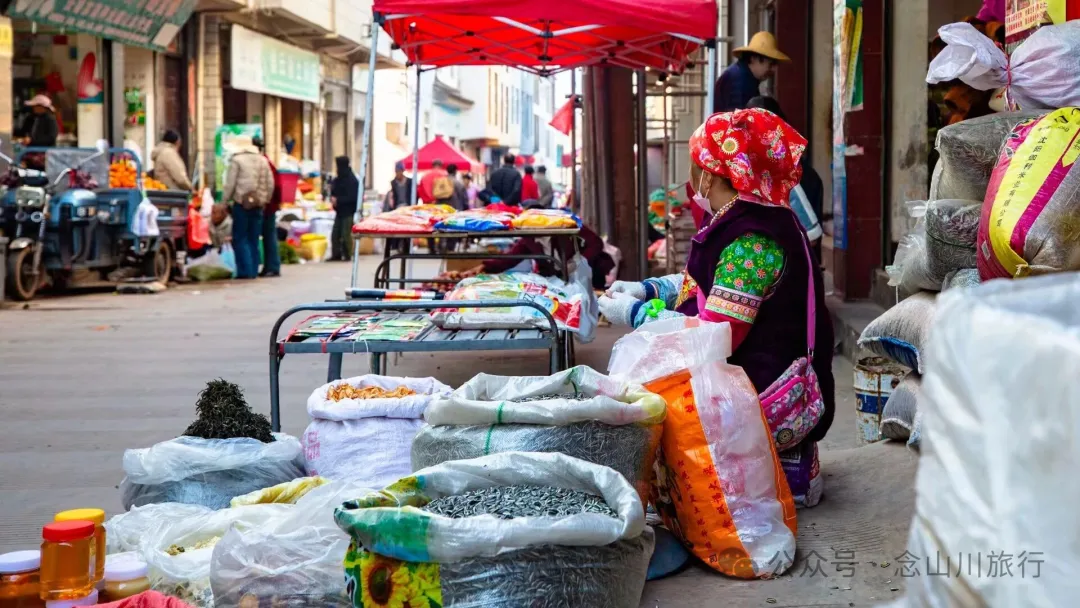
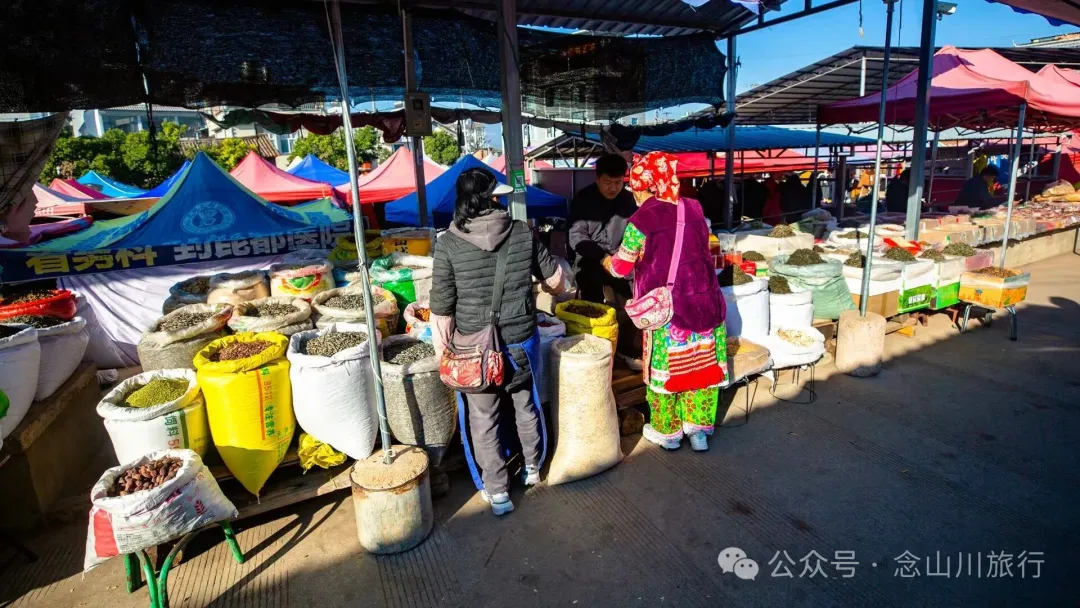
At the market, these calm vendors who don't shout loudly are quite endearing, forming a unique scene that leaves a deep impression. The alley originally for vehicles has turned into temporary stalls. This stall full of spices by the roadside is very attractive. Over thirty kinds of spices are neatly arranged on the roadside. The vendor, a middle-aged man, sits on a stool staring at his phone. People come and go, occasionally someone stops to bend down and look closely. As long as they don't speak, he doesn't look up. It's not that he's arrogant, but he thinks it's unnecessary. If someone wants to buy, they will first ask the price, then he puts down his phone, looks up at the customer, and finally quotes a price.
I didn't plan to buy anything, but seeing so many spices so orderly, and that he even subdivided one spice, tsaoko, into four types, I thought he was a meticulous person. So I asked a few questions about tsaoko and bought five yuan worth to take home for soup. There was also an elderly woman crocheting cushions with colorful wool, more focused on her handiwork than the transaction itself. An old woman in Yi clothing sat by the street selling roasted seeds. When no customers came, she grabbed a handful of raw sunflower seeds from her bag and started cracking them herself, as if visiting a neighbor.
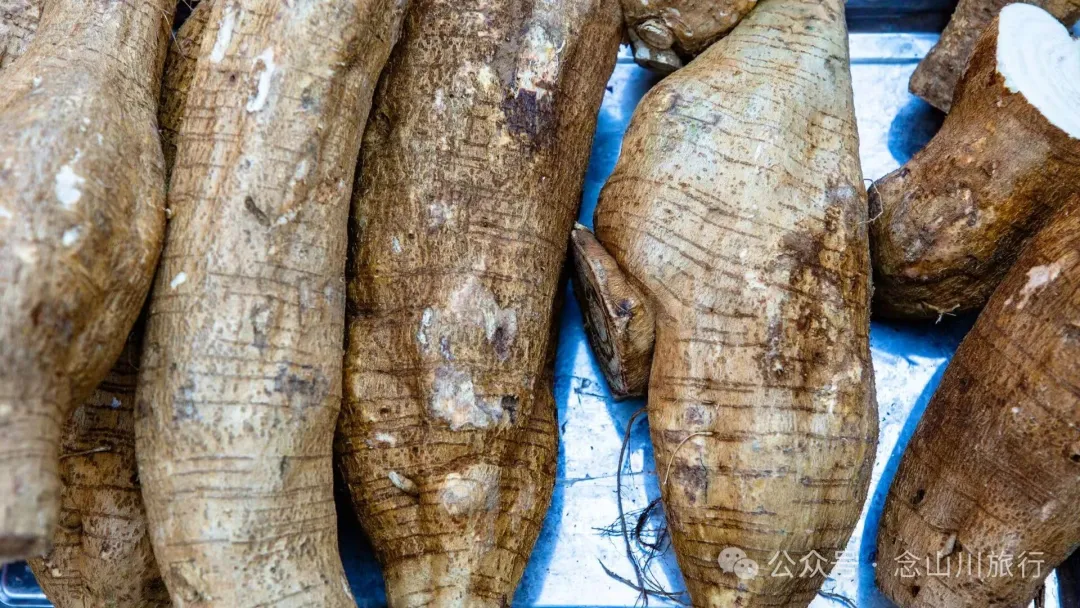
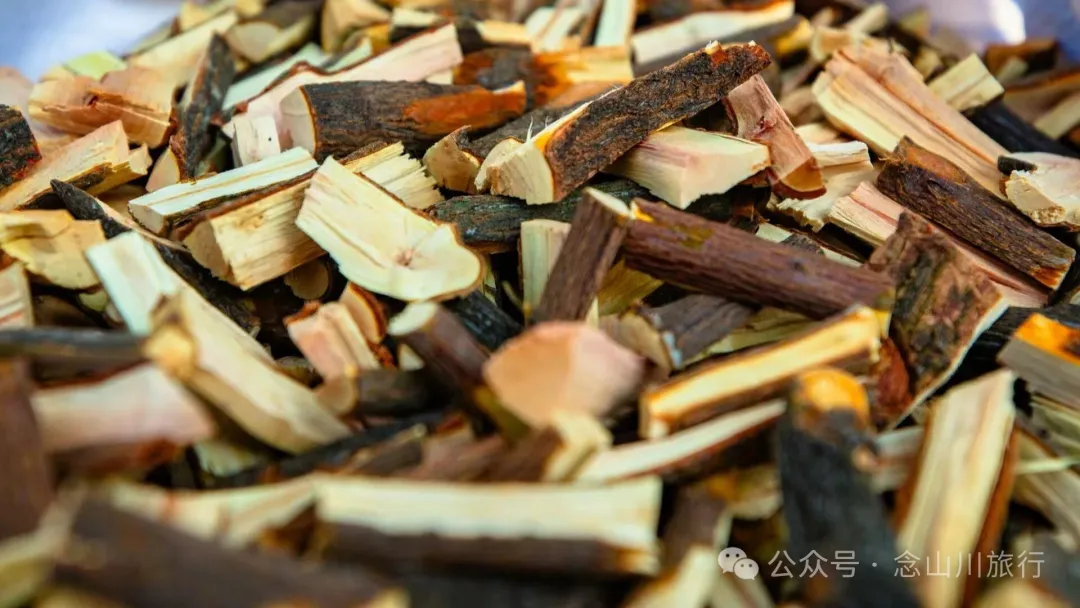
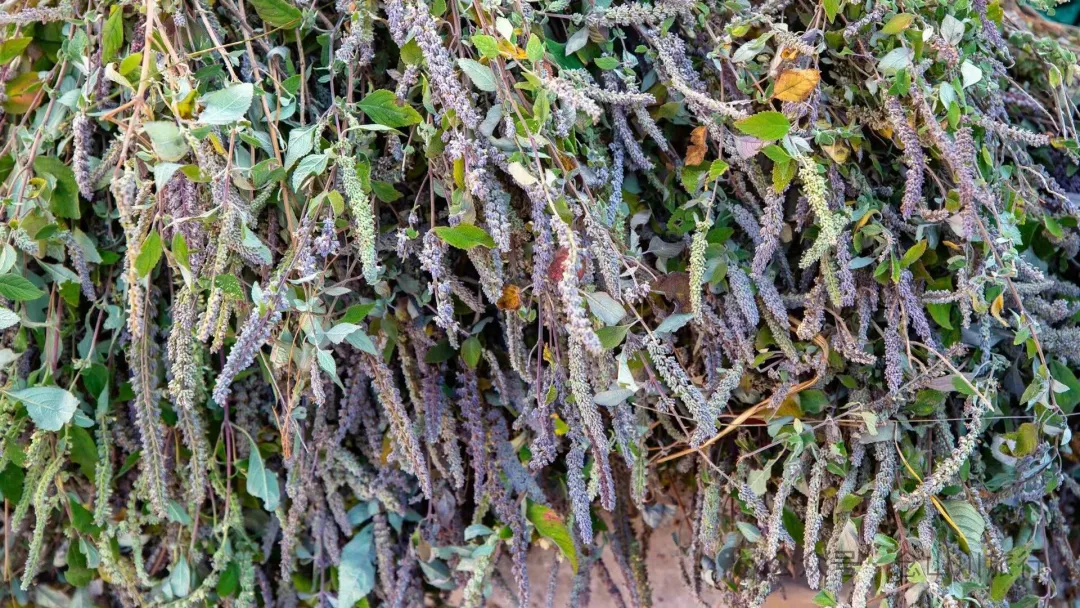
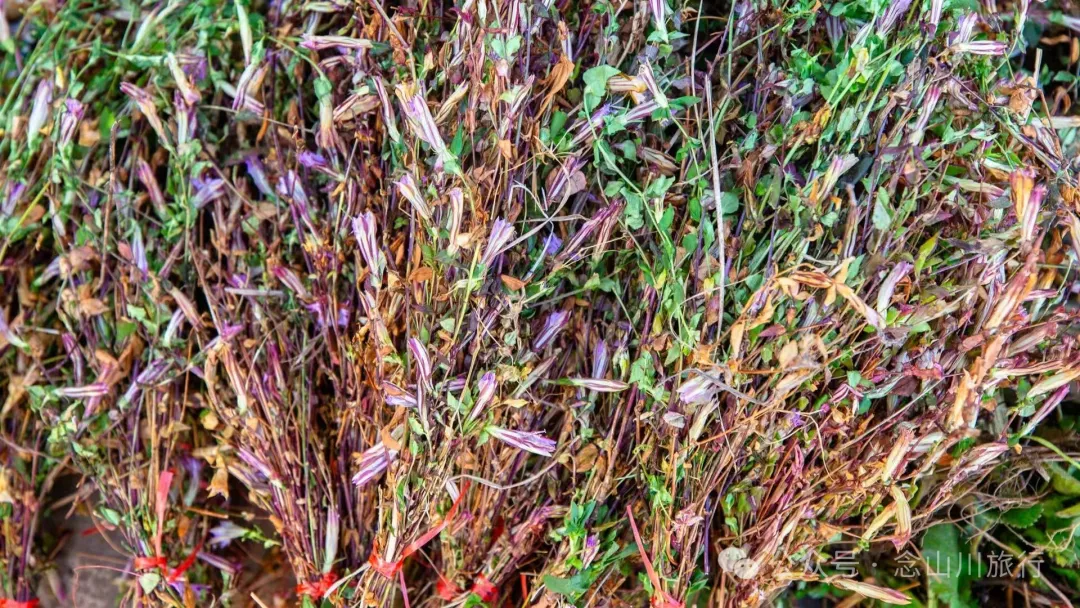
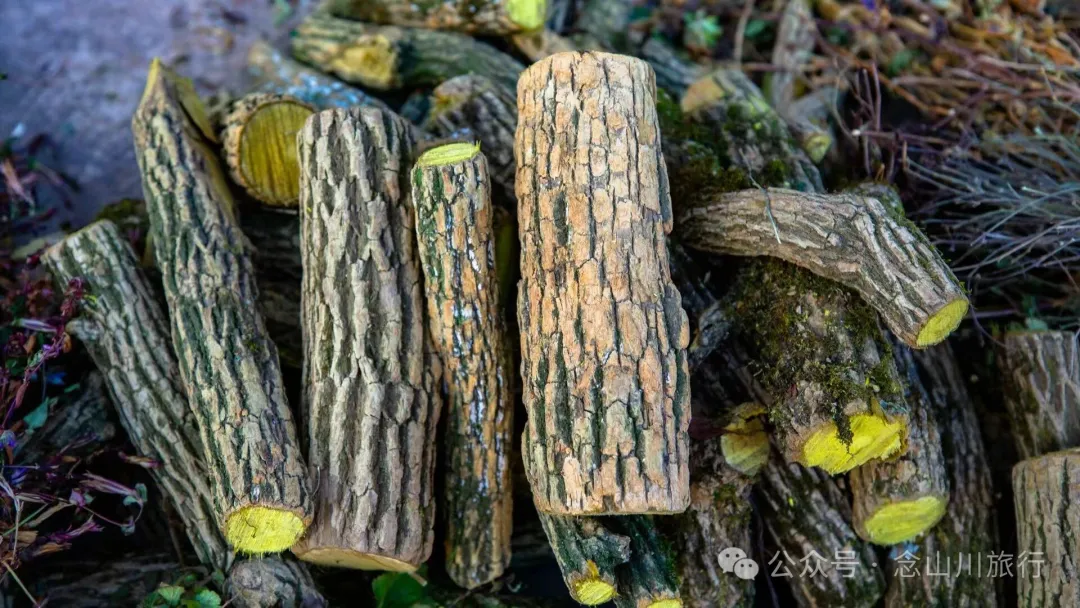
There are always some strange things at the town market that out-of-town tourists have never seen or heard of. Only locals can name them and know their use. Even after living in Dali for over a decade, I still don't know whether that root-like thing is a medicinal herb, fruit, or spice. And what I thought was gentian root turned out to be another wildflower I had never heard of, called something like "mei." The elderly woman's accent was too heavy for me to understand.
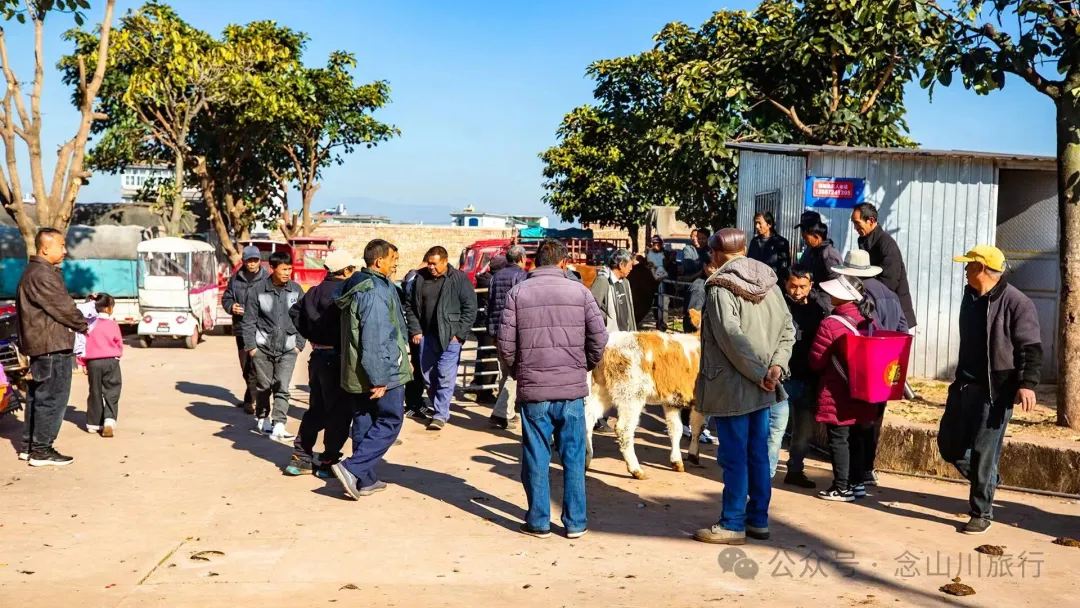
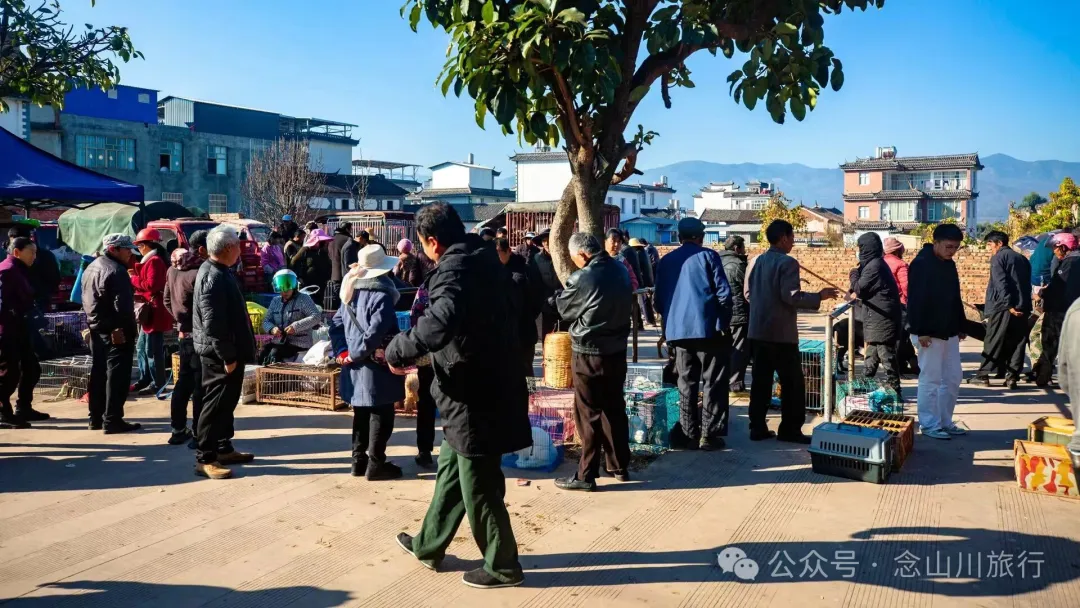
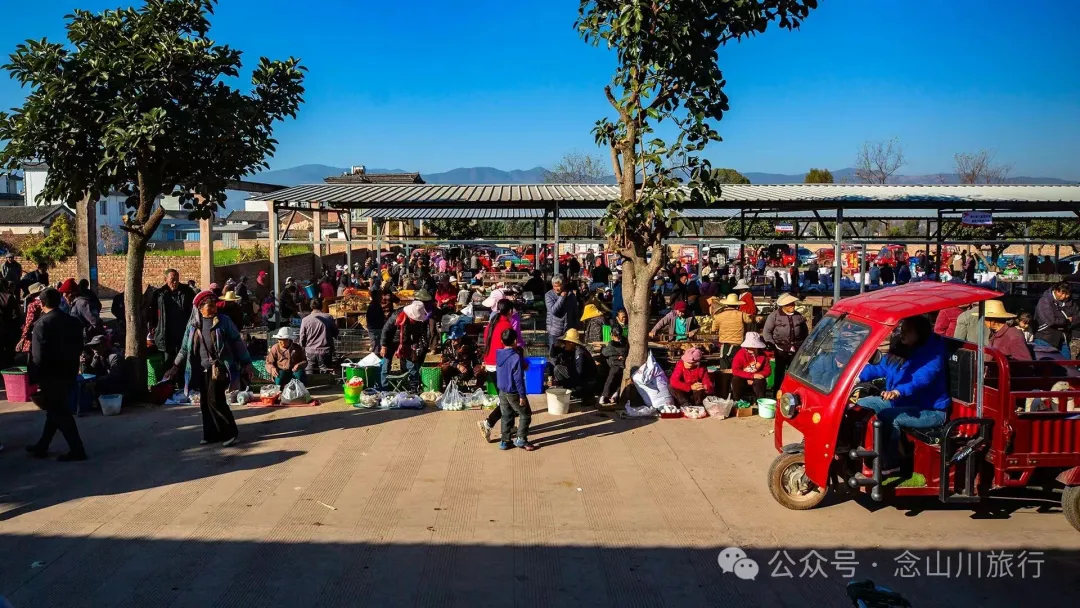

Under the sun, the live poultry trading area and the dog market also have many people gathered. Unlike others, I prefer to come here to look into the eyes of cats, dogs, goats, and cattle, pretending to be one of them.
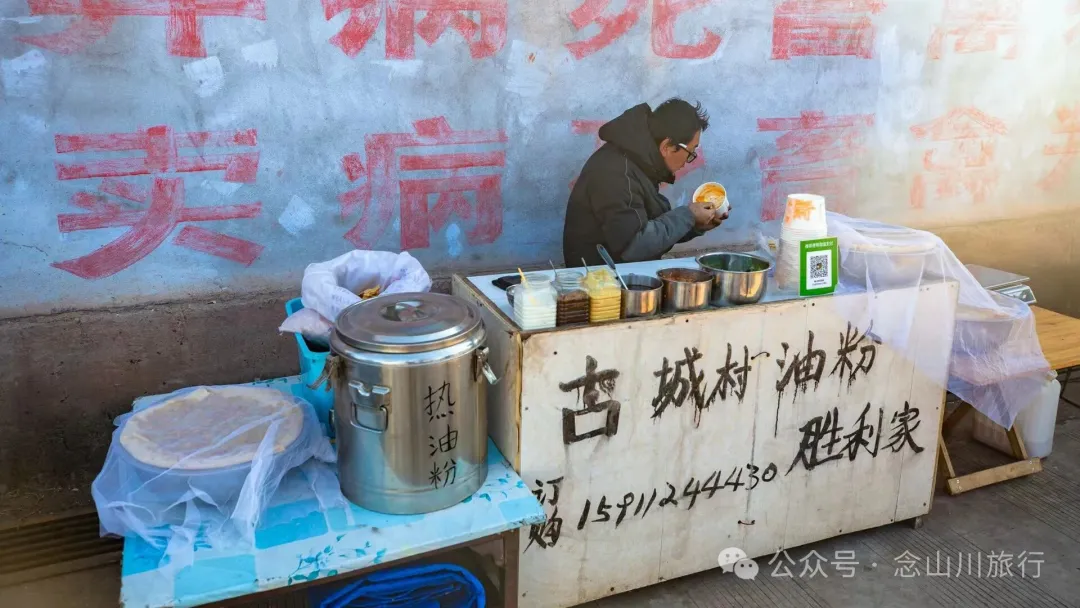
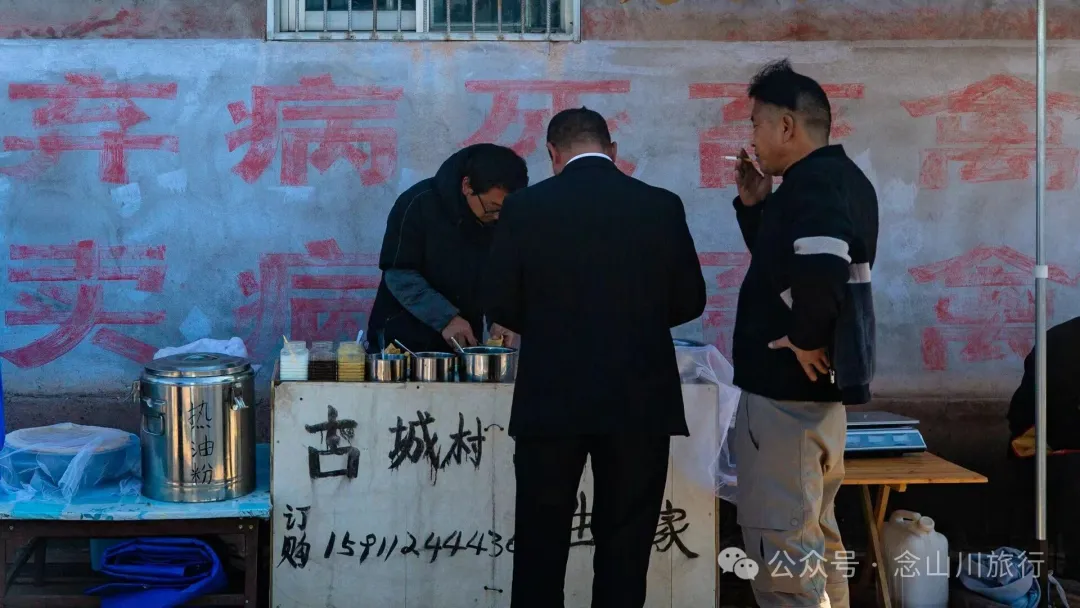
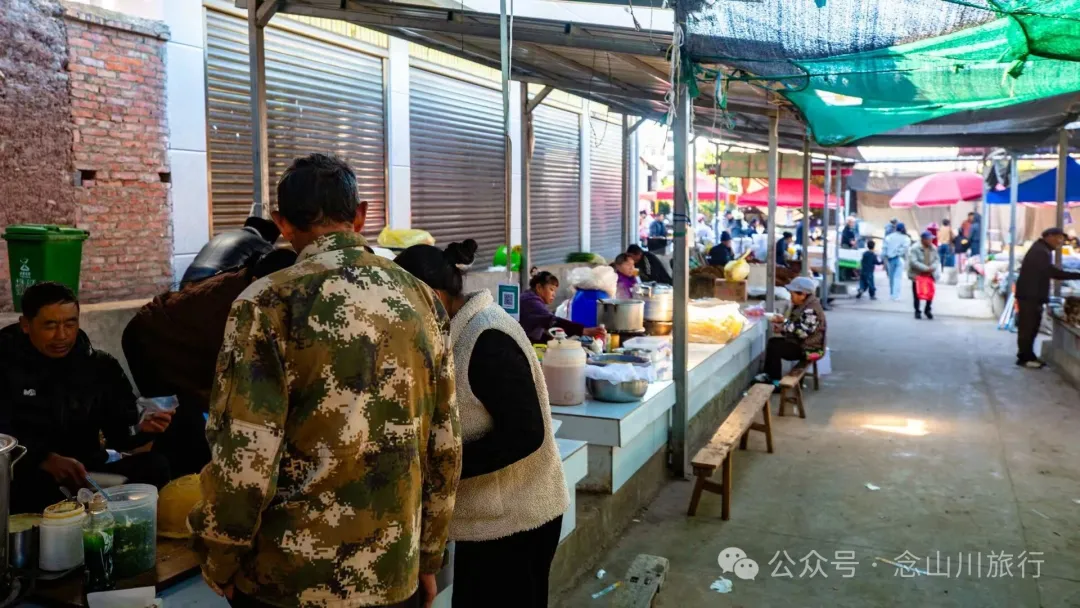
How could a town market lack unique local snacks? Oil flour, rolled rice noodles, and grilled rice cakes are always missed, and they are also the preferred breakfast for locals. Before the customers arrive, the oil flour vendor first fills his own stomach with his food, then sits quietly in the shade, waiting for unknown customers to come.
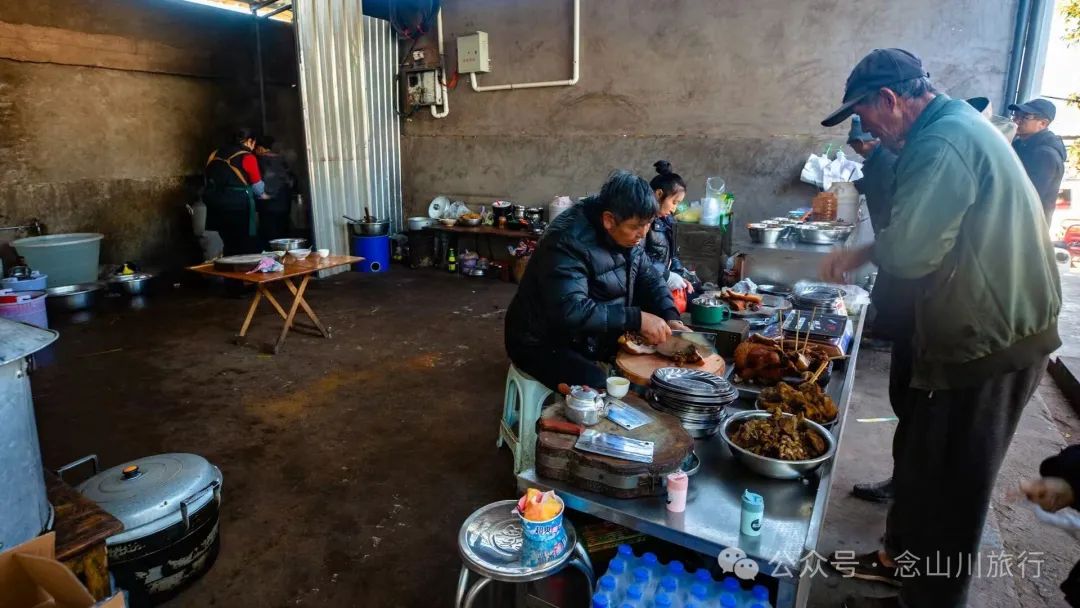
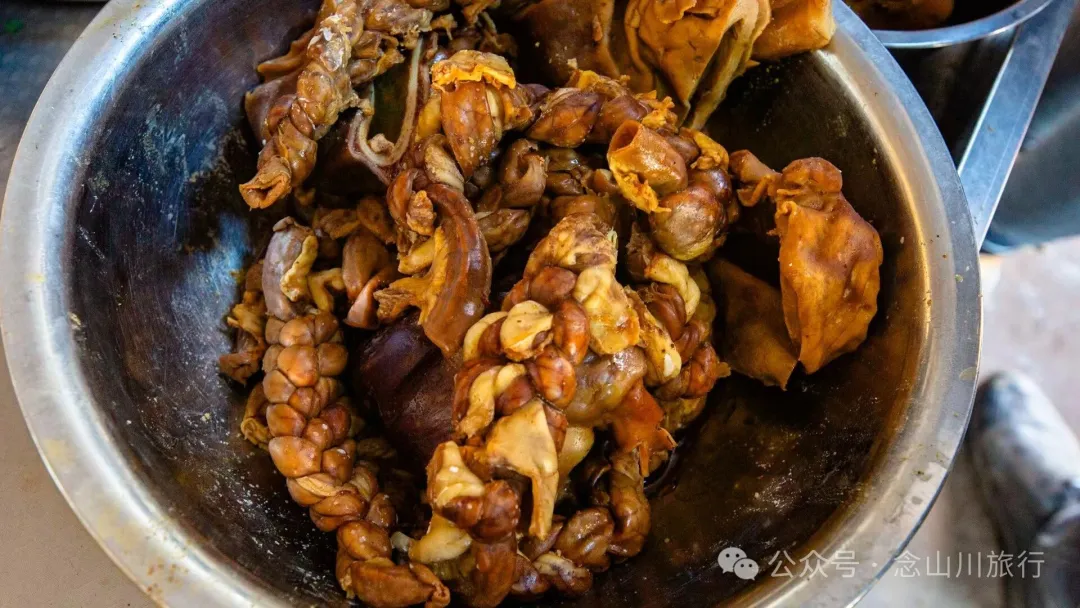
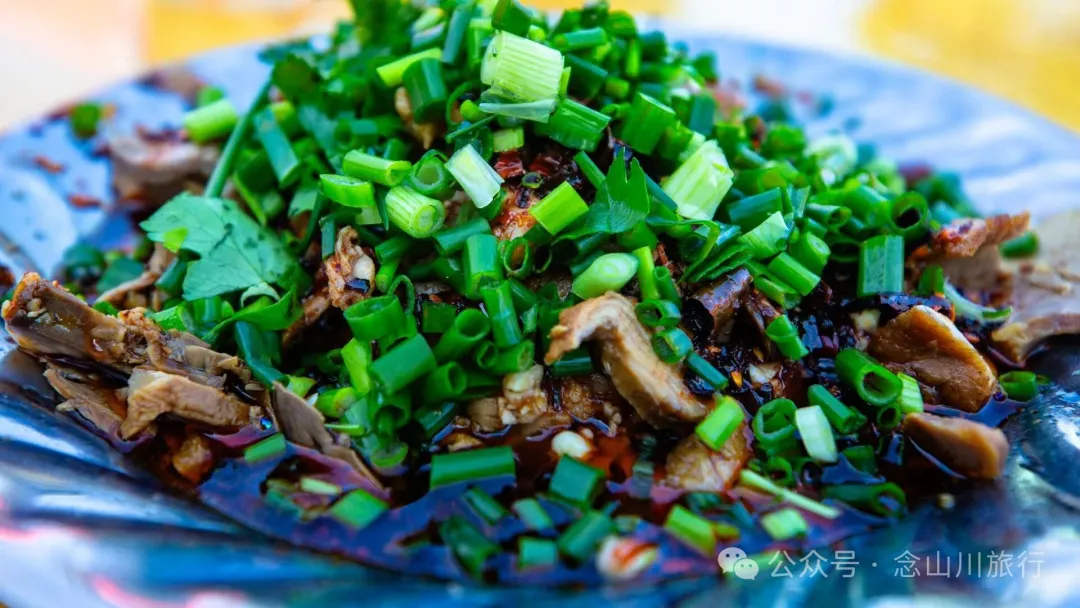
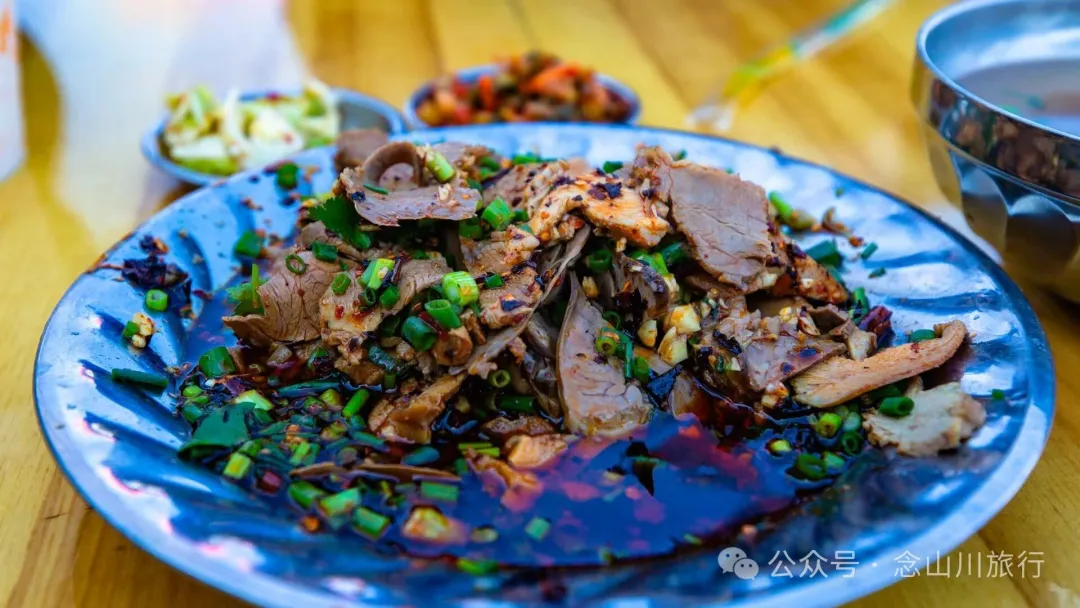
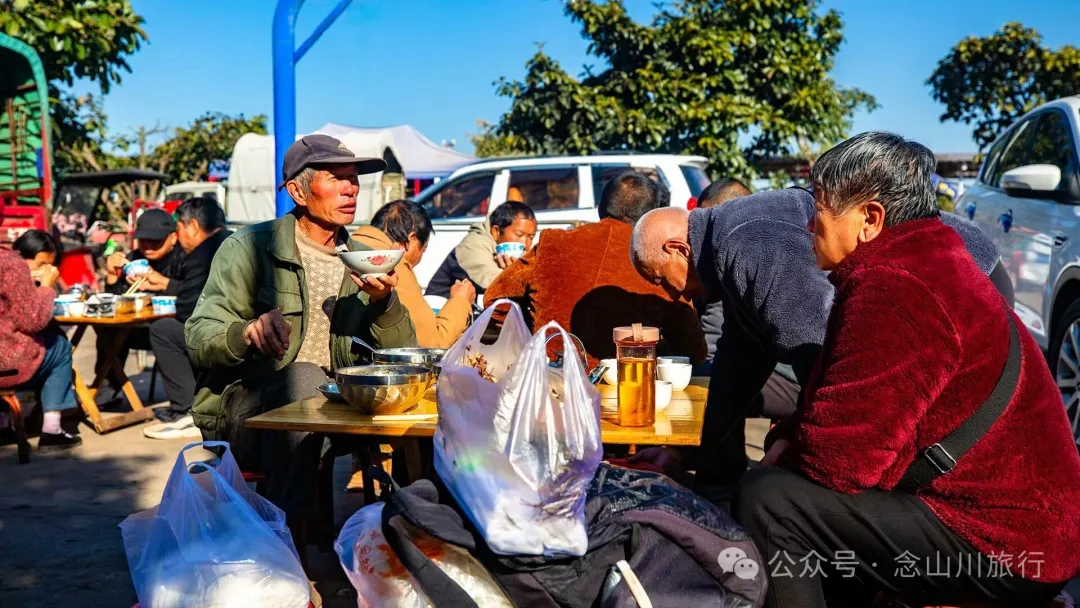
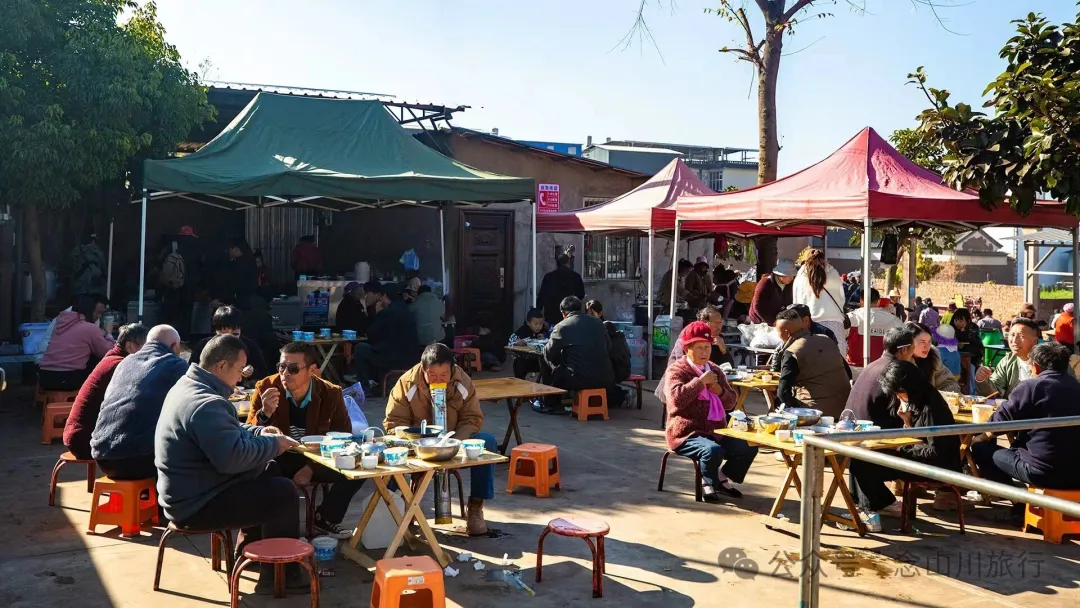
The street food area is the most eye-catching part of the town market, especially this old shop that has been operating for thirty or forty years. They set up stalls at the markets in Dianzhong, Beiqiao, and Miao Street, specializing in Weishan's famous braised meat. At four in the morning, the owner's family arrives first at the market, stewing pork in large pots. They start serving customers around nine or ten o'clock.
This braised meat shop attracts many diners from near and far with its excellent taste. The spacious venue is almost full. At the next table, two groups share a table. A middle-aged woman with two elderly people carries several bags of local specialties, probably tourists. Another old man with a ruddy complexion tells them he came alone from Xiaguan just to eat at their street food stall, apparently a loyal fan. As for us, whether in Dianzhong or Miao Street, we only look for their sign.