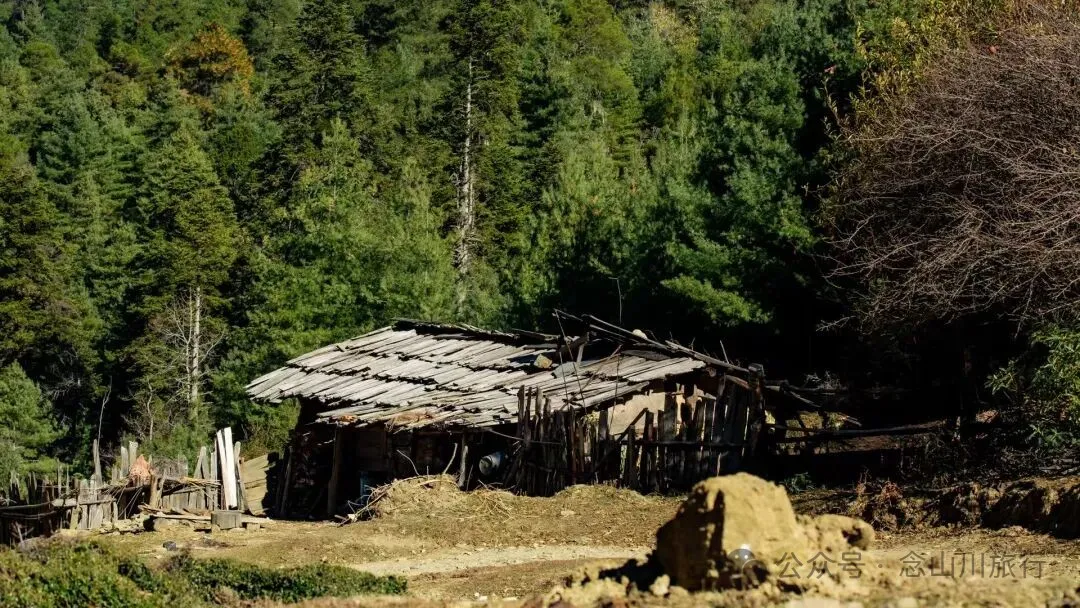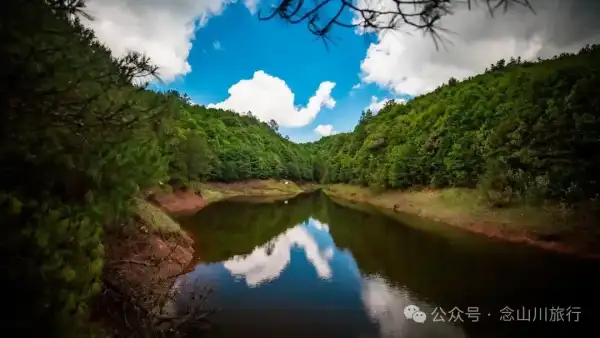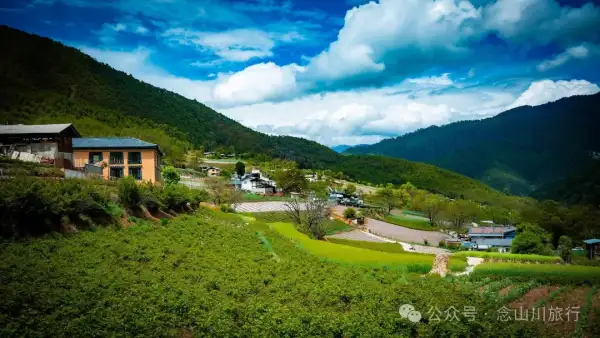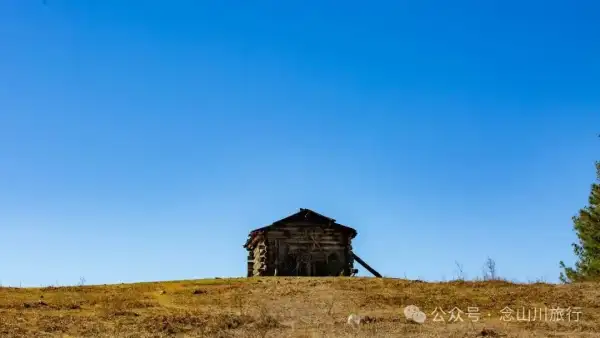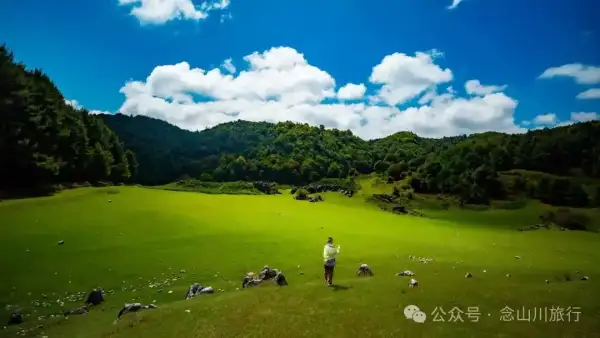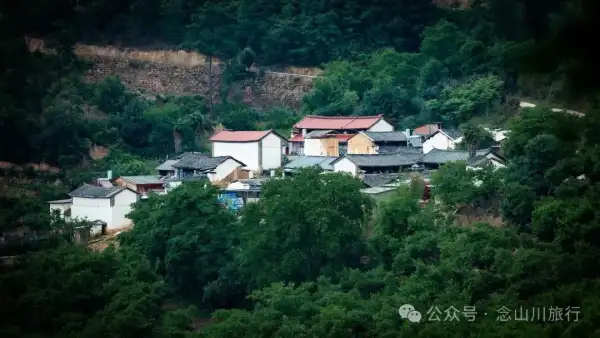

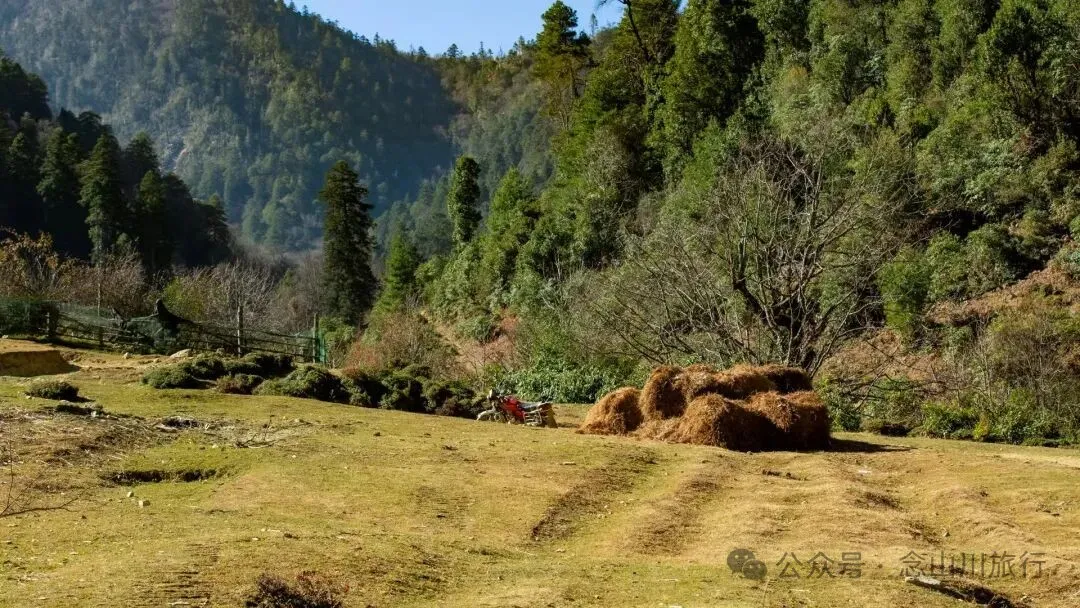
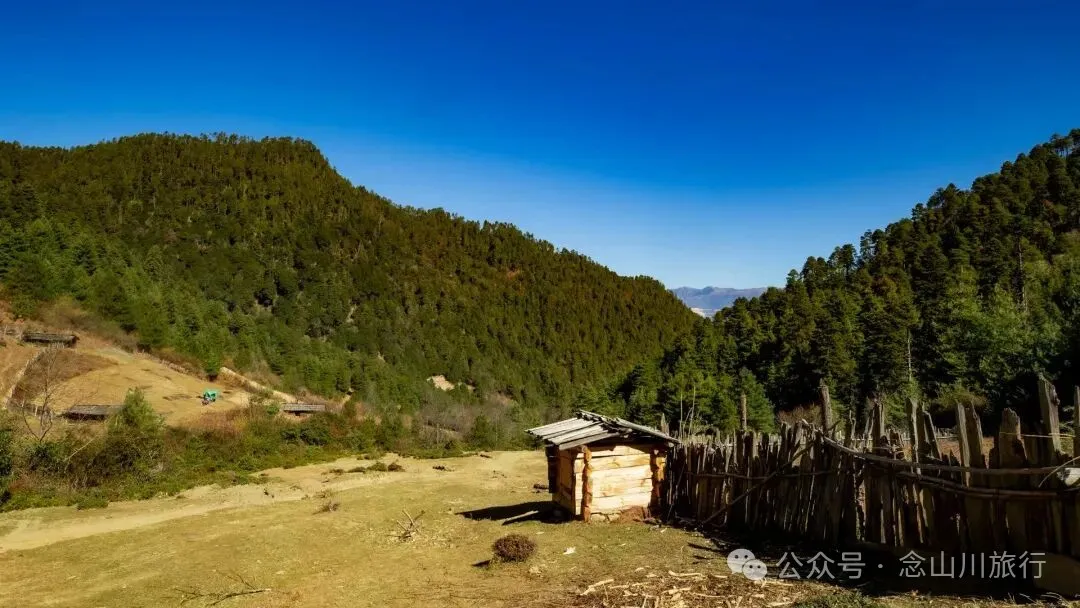
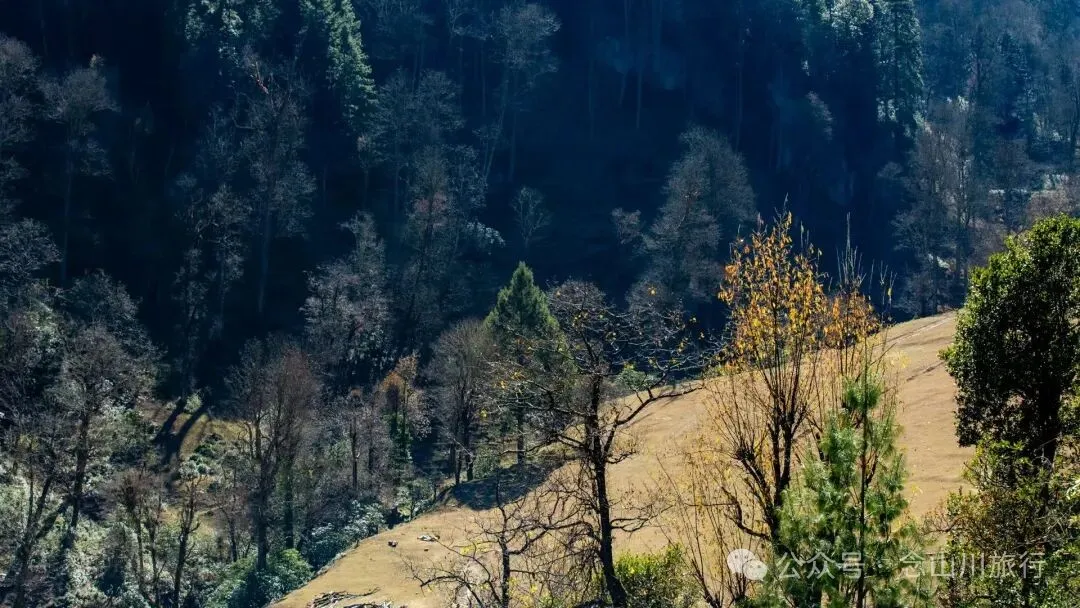
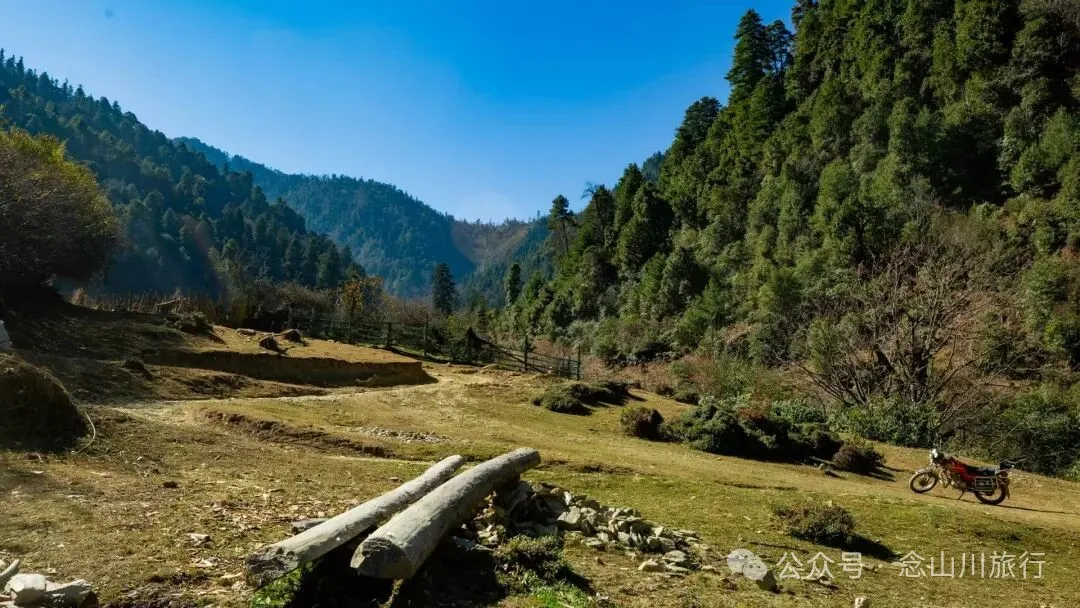
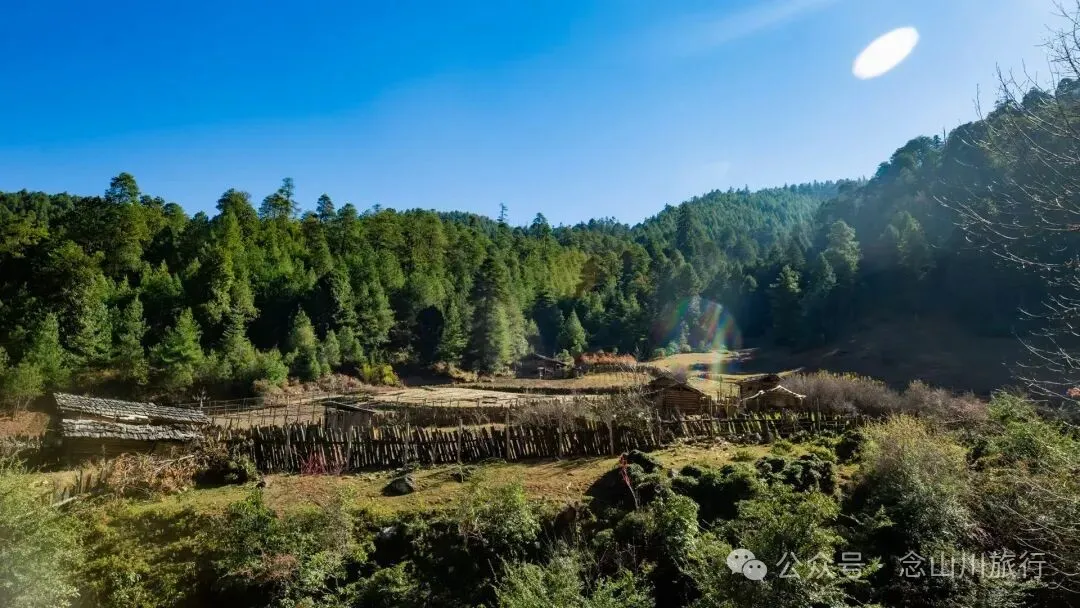
Whether following a stream into an unfamiliar wilderness, searching for ancient trees in the jungle, or tracing cow hoofprints from a mountaintop pasture to find a path out of the mountains, I was surprised to find myself always unconsciously passing by this long, flat meadow where a few families live. Among the low, old wooden houses, one belonged to a couple in their seventies. A small, newly built goose house stood prominently on one side of their yard, and four white geese once walked leisurely in the warm early winter sun—a sight I remember vividly.
I had walked past their wooden house many times. Whenever they saw me, they would happily greet me and invite me in for tea and a chat. I remember the first time I passed by on a sunny afternoon, returning from the autumn-rich mountains to the village. The old man was feeding a large bundle of atractylodes stalks to a yellow cow. I approached and chatted with him. He said they had a house near the village committee, but the old couple preferred living in the small cabin close to the pasture and deep mountains. Only on rainy or snowy days, when there was nothing to do, would they stay in the village.
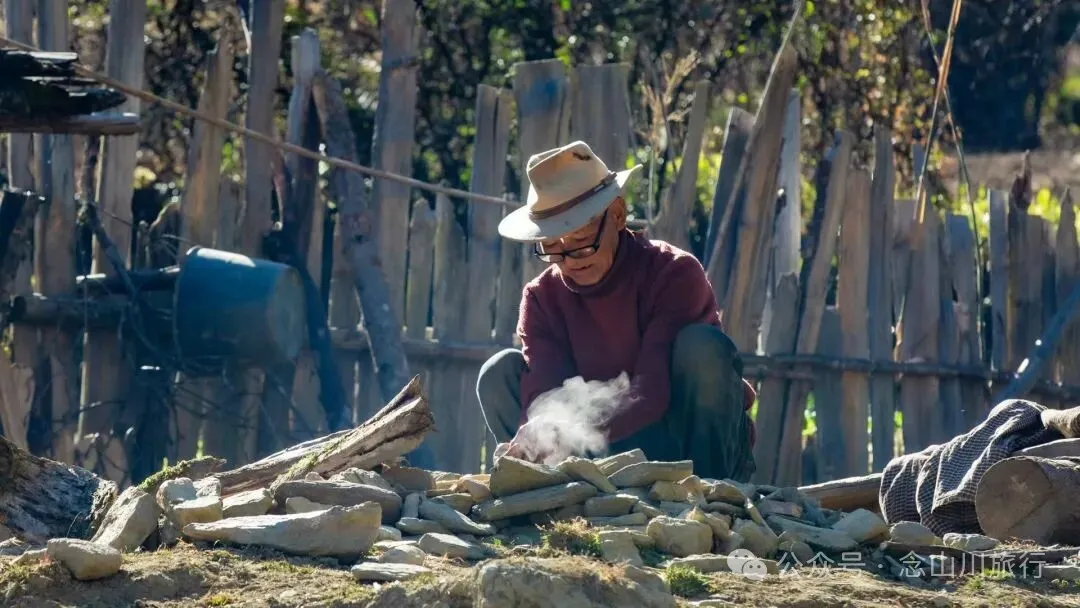
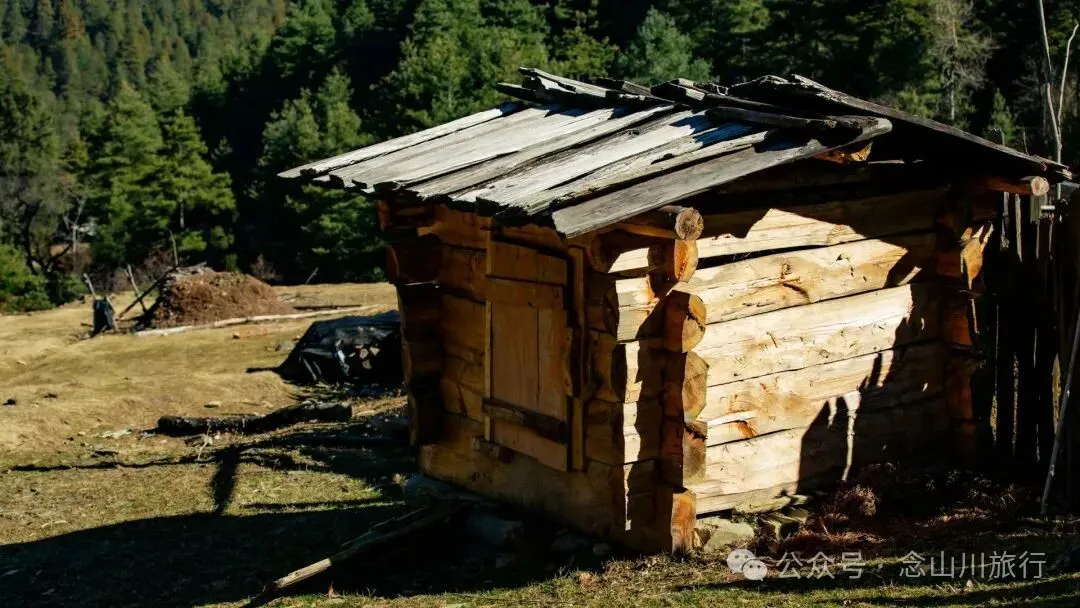
This time, I didn't just pass by; I came specifically to visit the elderly couple and see their life in the mountains. Ironically, I took the wrong path and ended up in a valley separated from the meadow by a low peak. It took me an hour to realize my mistake, and I had to turn back, finding the correct valley at the confluence of two streams. When I arrived, the old couple was busy in the yard, but the four geese were gone—they had been sent back to their village home.
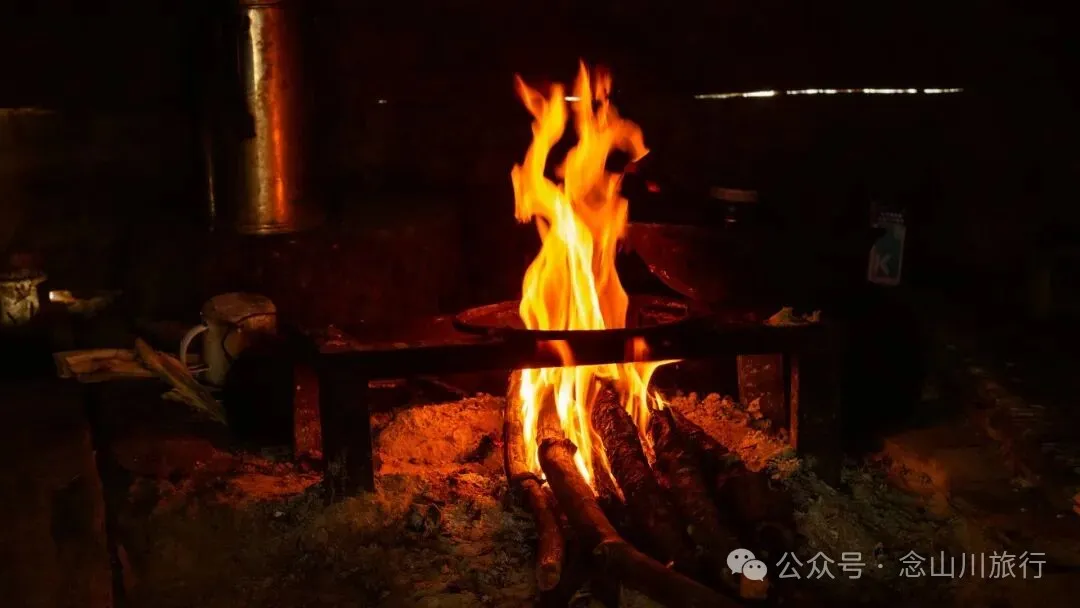
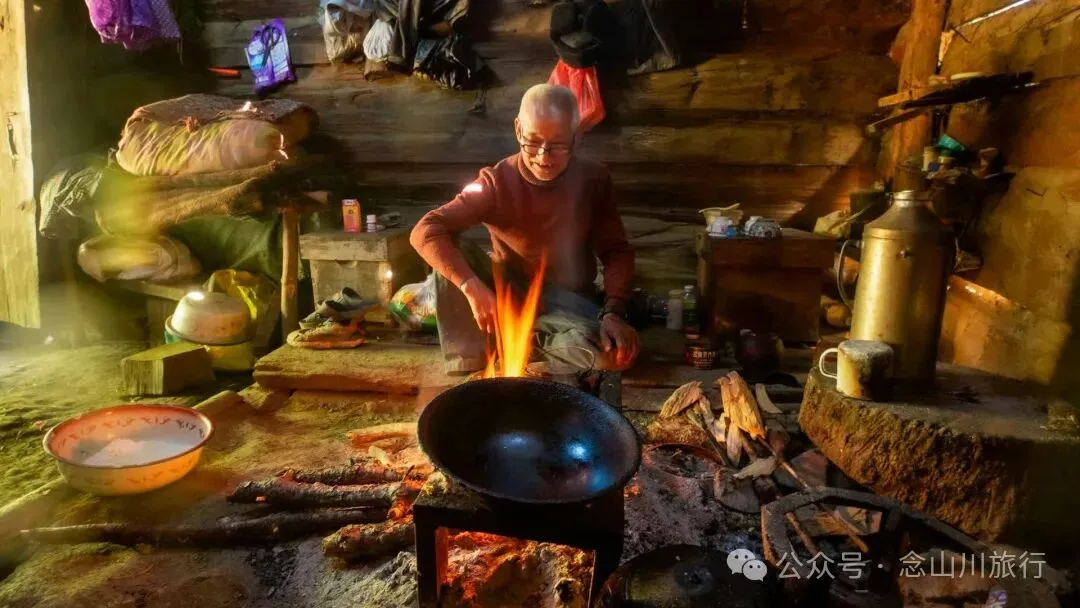
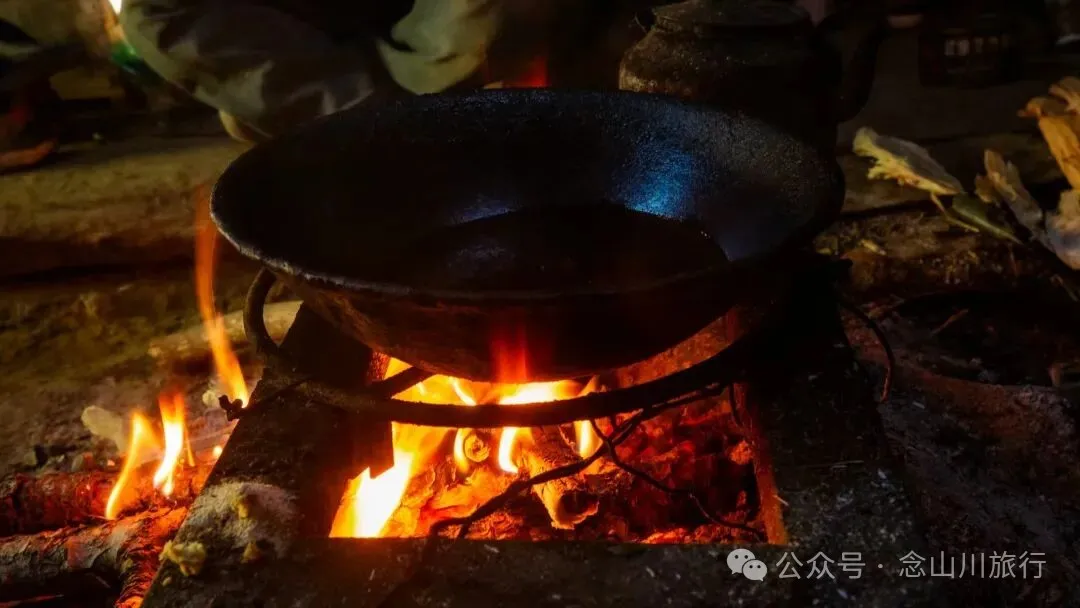
Following the old man into the low, dim cabin, it took a few seconds for my eyes to adjust to the light and make out the simple furnishings. In the center of the cabin was a square fire pit, set against the back wall. On either side were wooden planks less than two meters long, serving as beds for the couple. During the day, the bedding was rolled up and piled in one corner of a bed, and the couple sat on the planks to cook. On the wall by the door, a few narrow boards were nailed, holding various bottles, jars, pots, and pans. Apart from two small wooden boxes filled with odds and ends, there was no other furniture. We sat around the fire, sunlight slanting through the gaps between the wooden planks, mingling with light dust particles dancing and drifting. The old man said he had lived in this wilderness since he was thirteen, because his mother passed away and he had to take care of his many younger siblings. As the eldest son, he had to drop out of school and take up sheep herding alone. After marrying at seventeen, he built this small cabin with his own hands, and he and his wife have lived here ever since.
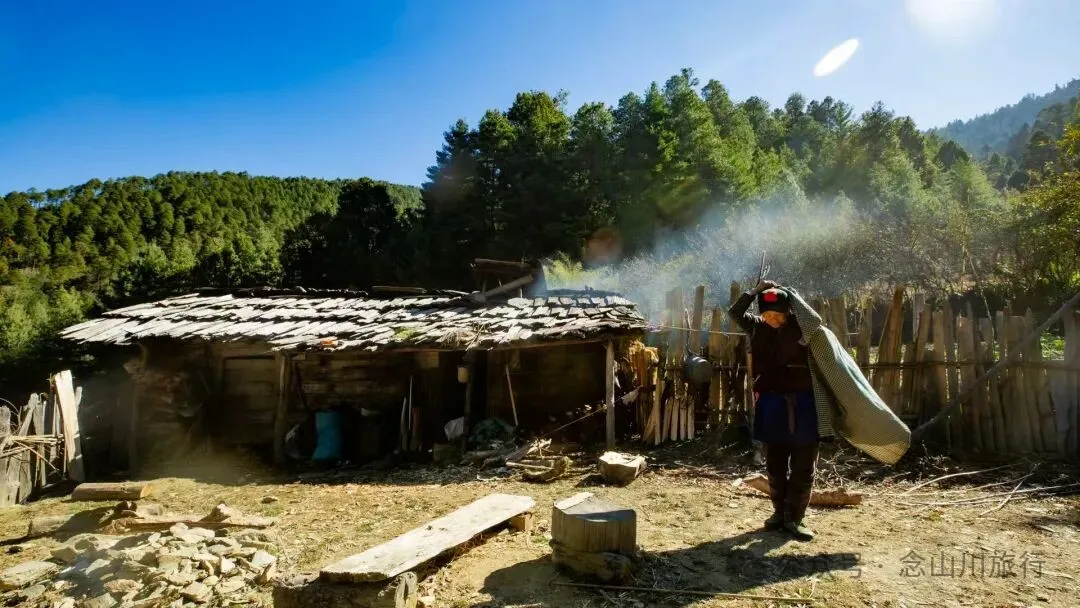
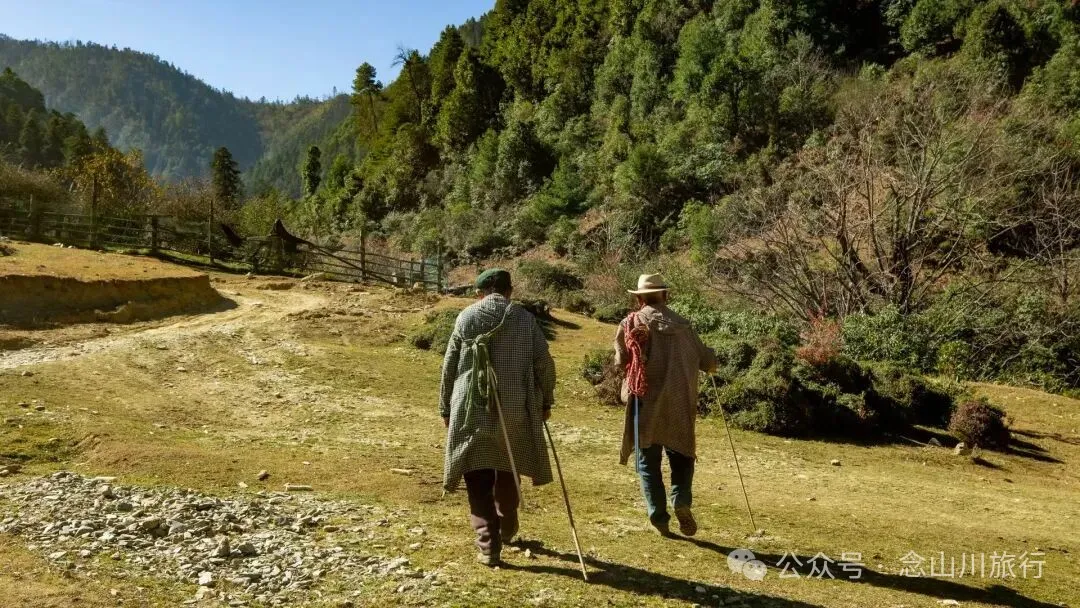
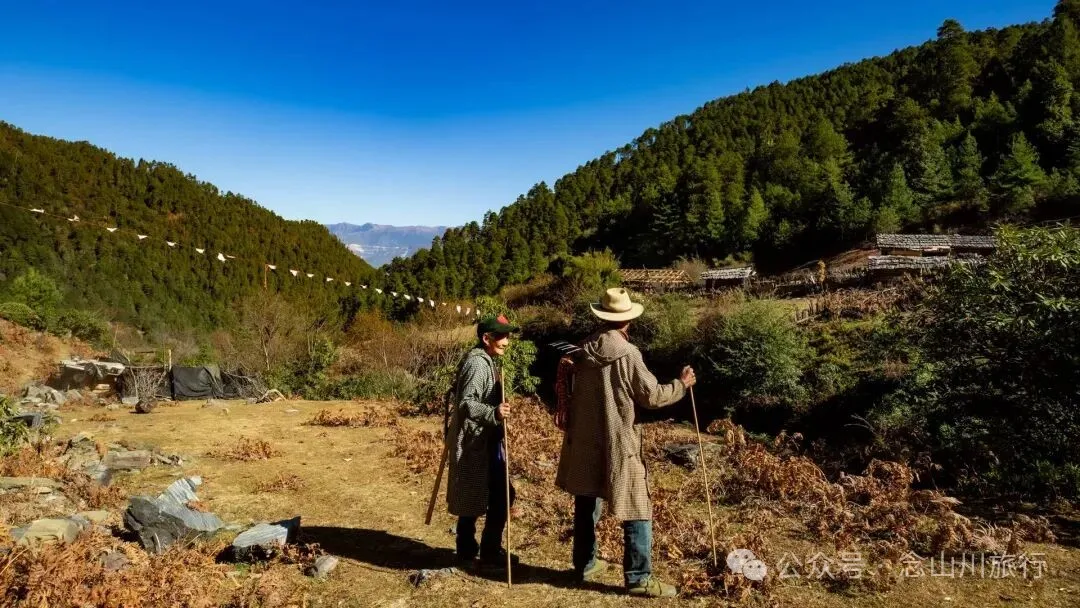
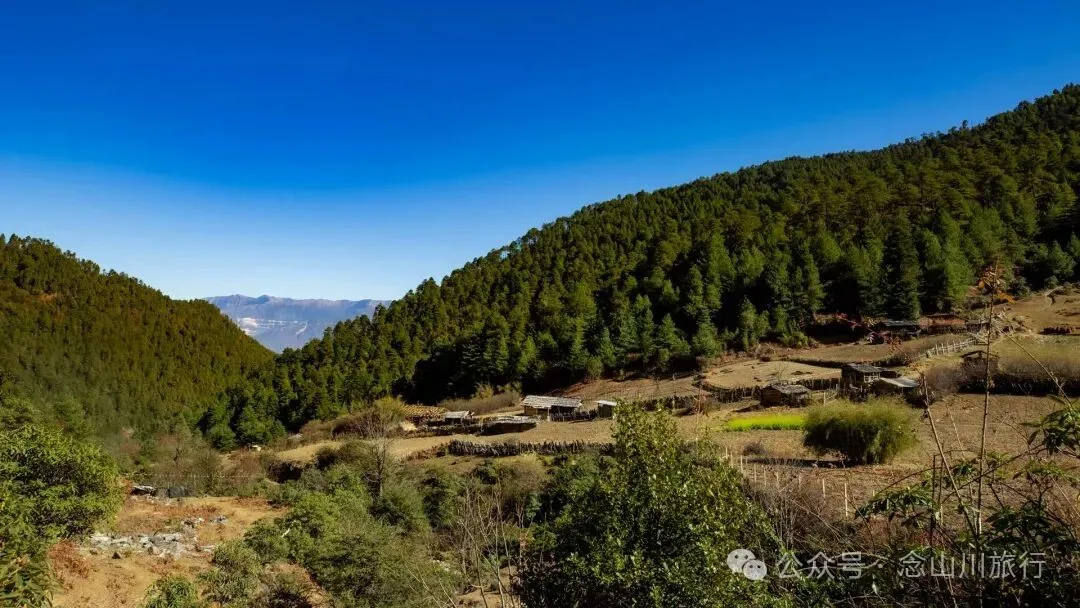
Now, though advanced in age, the couple no longer has the energy to raise sheep, but they still find light work to do: growing vegetables in the plot beside the cabin, raising cattle and geese. These days, they have been collecting pine needles in the mountains. When I arrived, I noticed a large pile of pine needles in the yard. The old man said they had spent four days gathering them from the nearby mountains. After lunch, they shouldered ropes and machetes and set out again to rake pine needles. The old man thoughtfully reminded his wife to bring her bamboo stick, and they slowly made their way toward the slope on the right. With a bamboo stick and green rubber shoes, the 70-year-olds went mountain climbing.
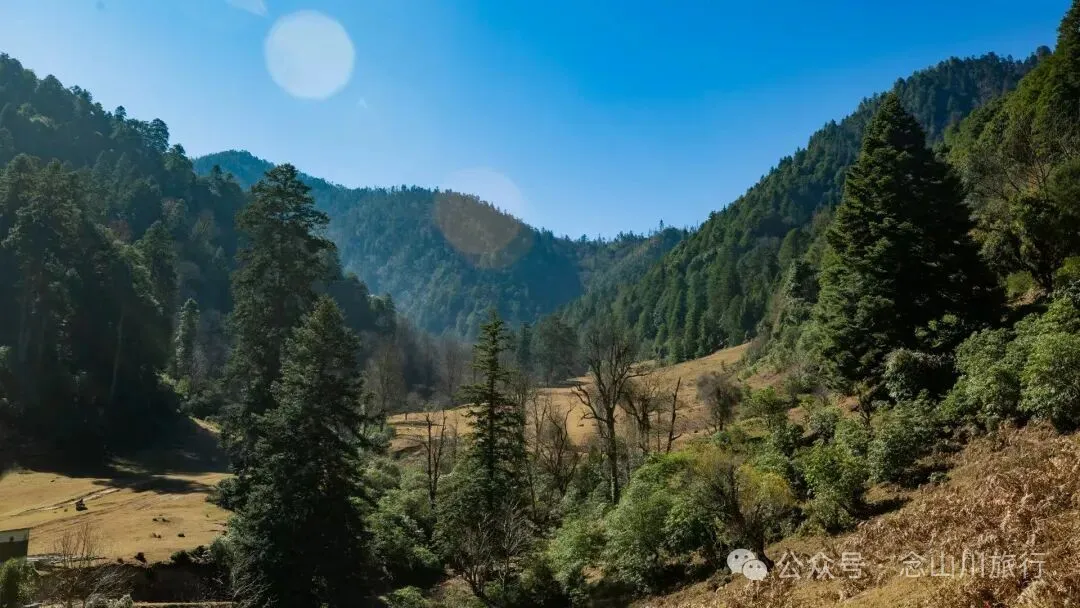
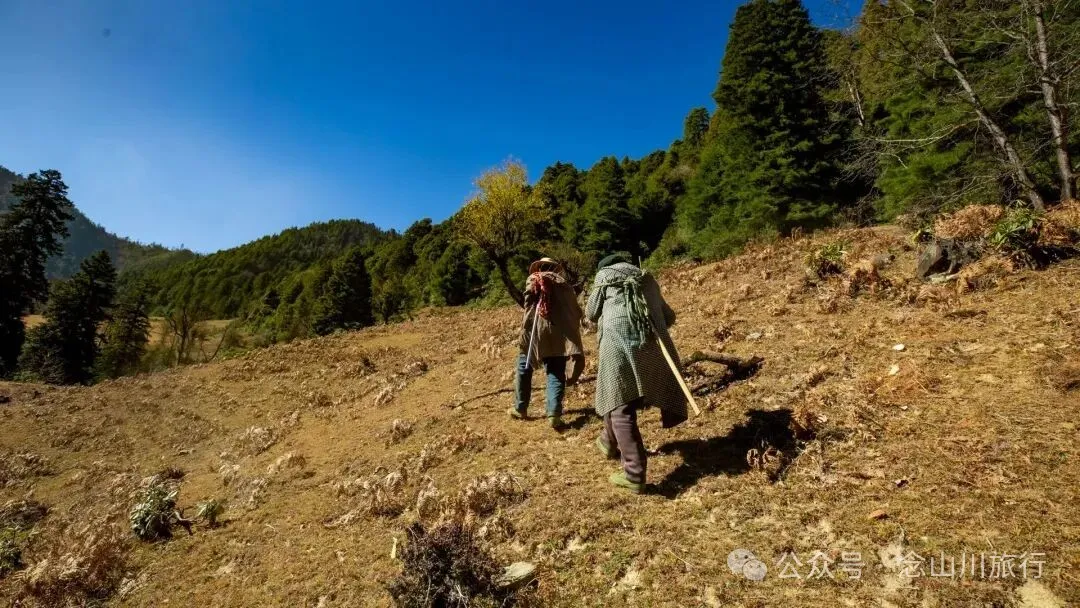
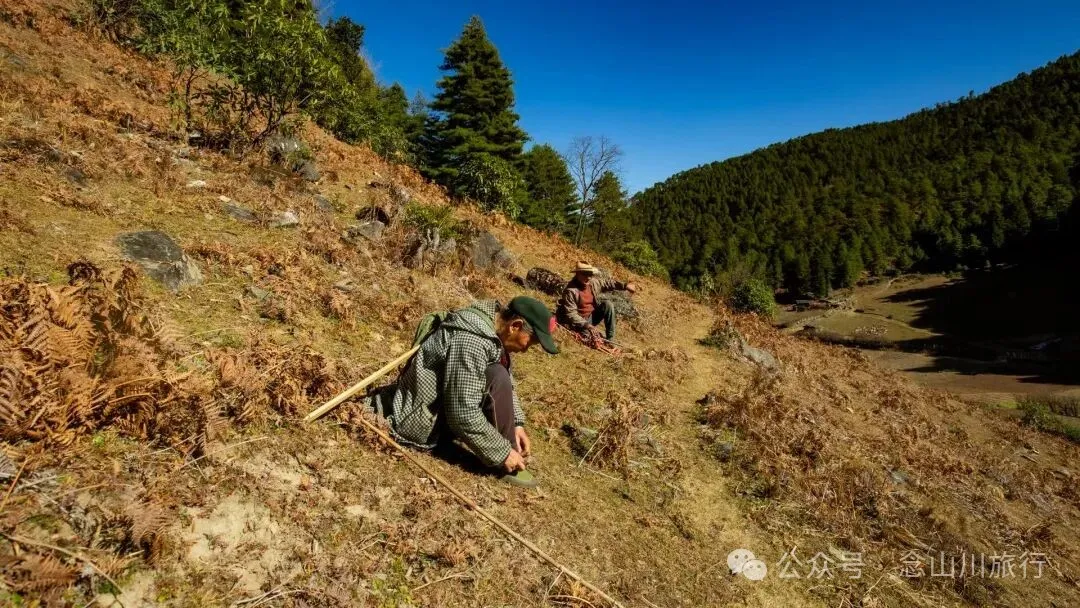
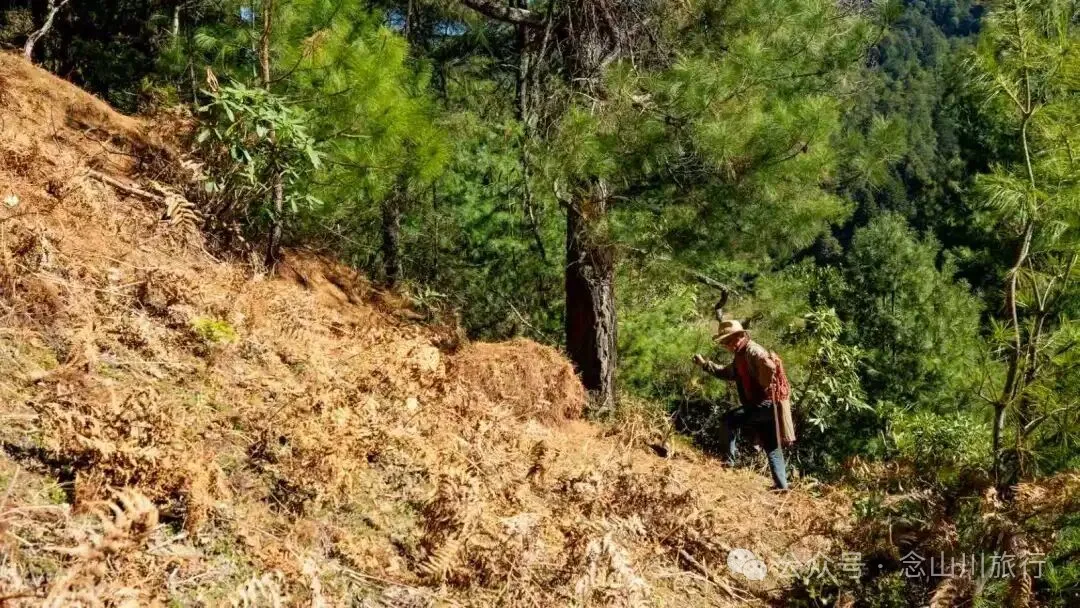
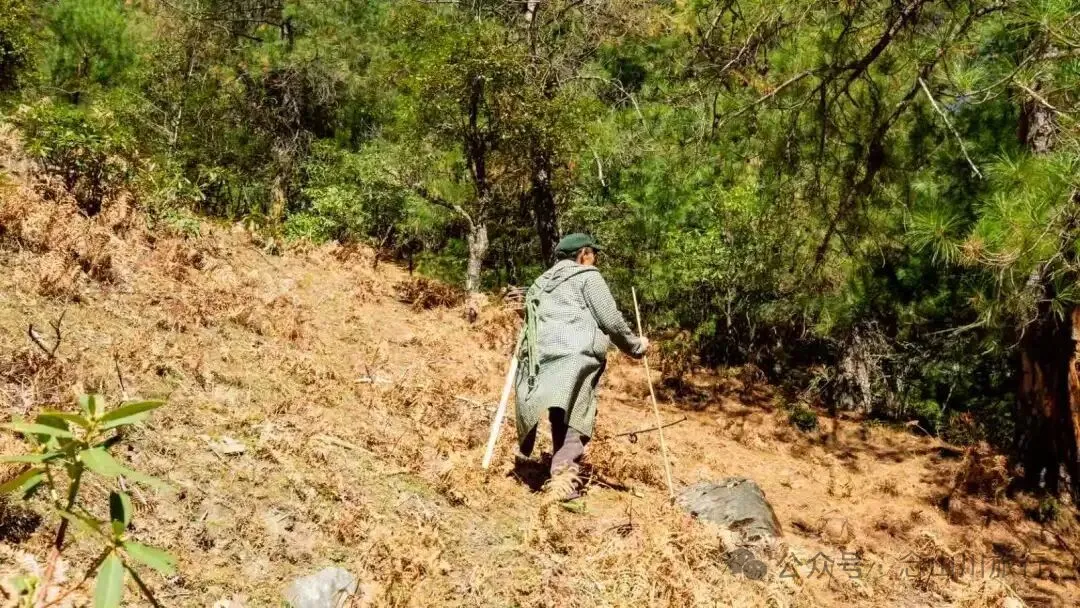
Crossing the meadow and starting up the mountain, the terrain rose steeply, with dangerous slopes and treacherous paths. Yet the old couple moved nimbly, only occasionally stopping to catch their breath, and frequently checking to see if I was keeping up.
The slope was covered with withered yellow pine needles, making it slippery and dangerous—a fall could send one tumbling down. Following behind them, I often worried for their safety, my palms sweating from the steepness. But they, leaning on thin bamboo sticks and wearing cheap green rubber shoes, walked steadily on the slippery needles as if on flat ground. In contrast, my hiking boots were far less slip-resistant, forcing me to carefully pick my way.
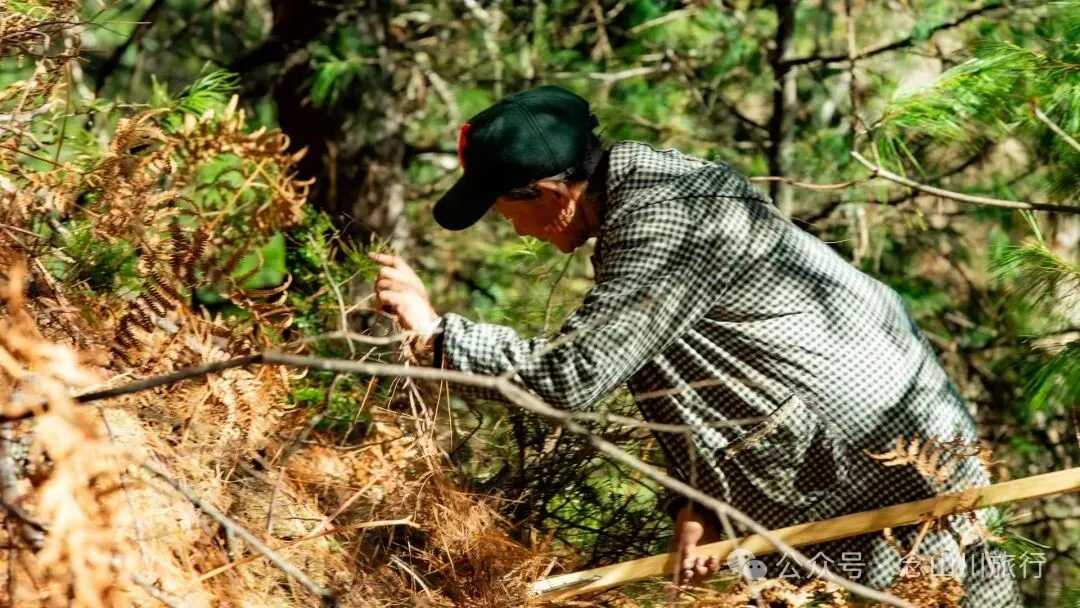
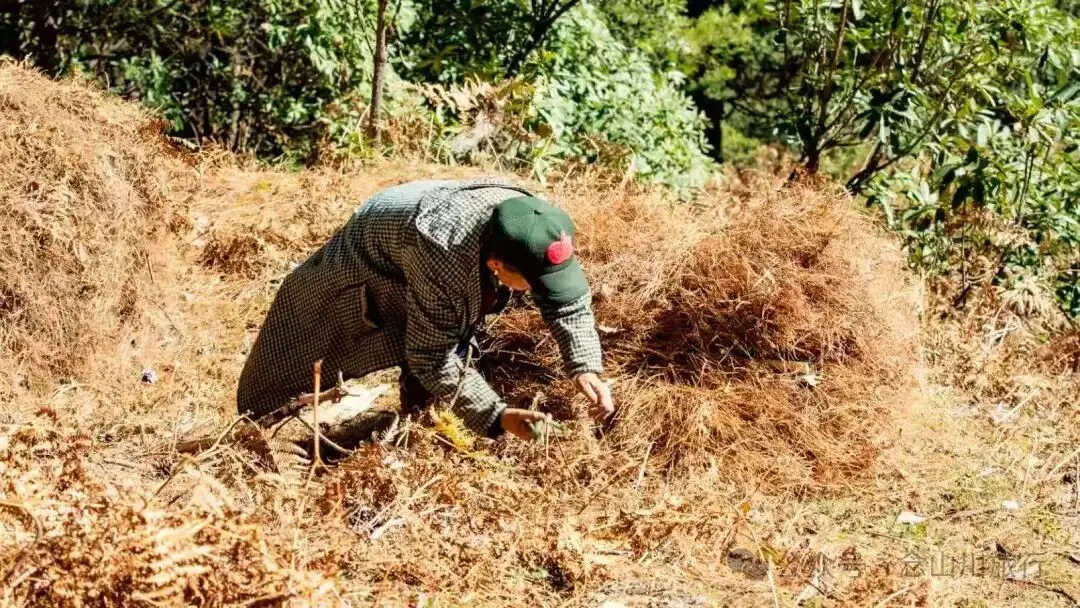
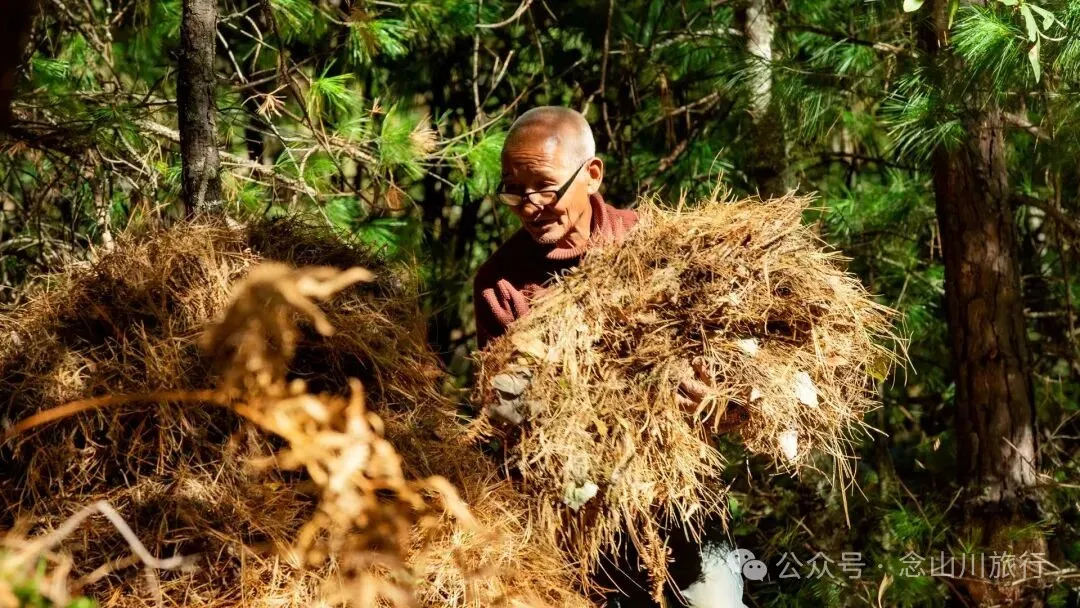
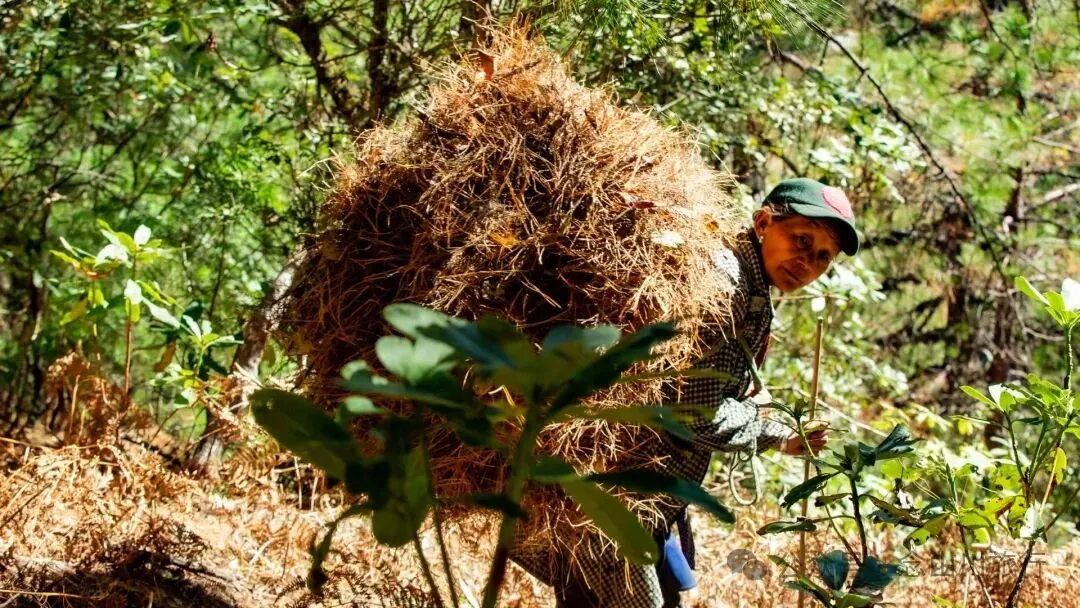
Choosing a spot with a thick layer of pine needles, the old man left the path and disappeared into the woods. The old woman climbed a steep slope about ten meters high and also vanished under the dense pines. She untied her rope, placed it on the ground, bent over, and with one hand wielded an iron rake while the other picked out twigs mixed in with the needles. After filling the rake, she arranged the sides and placed the needles on the laid-out rope. Gathering the scattered needles from the surrounding slope, she then carried small bundles downhill to another area, repeating the process until the pile on her back towered above her head like a small hill.
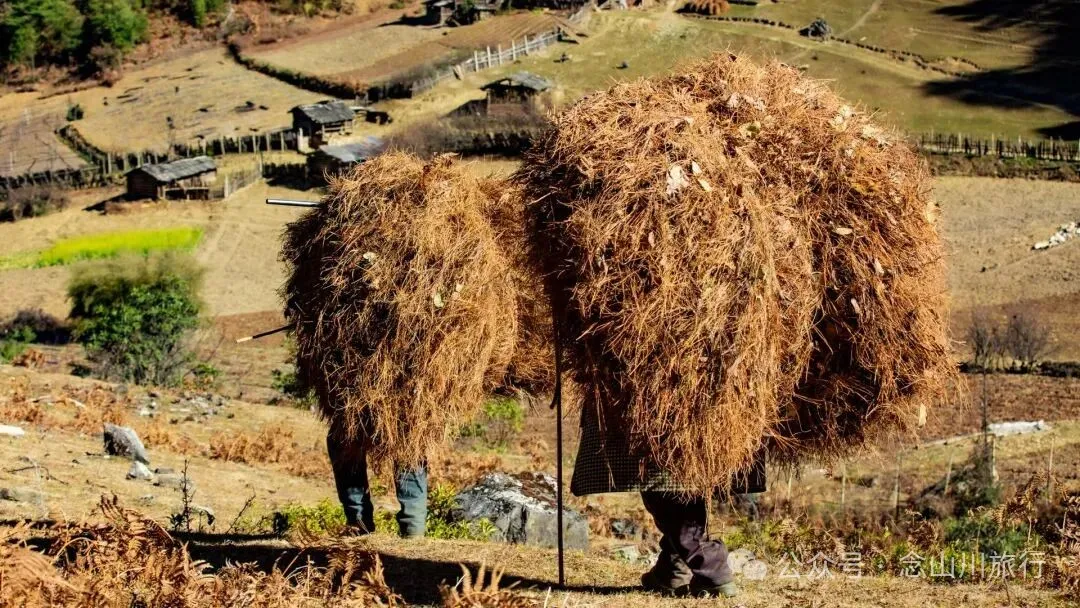
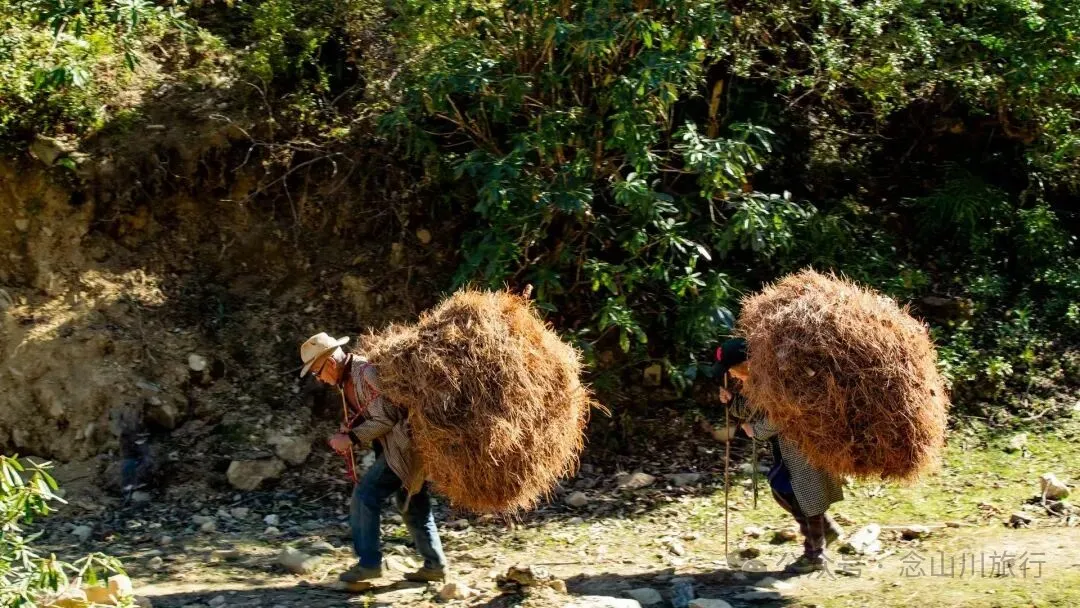
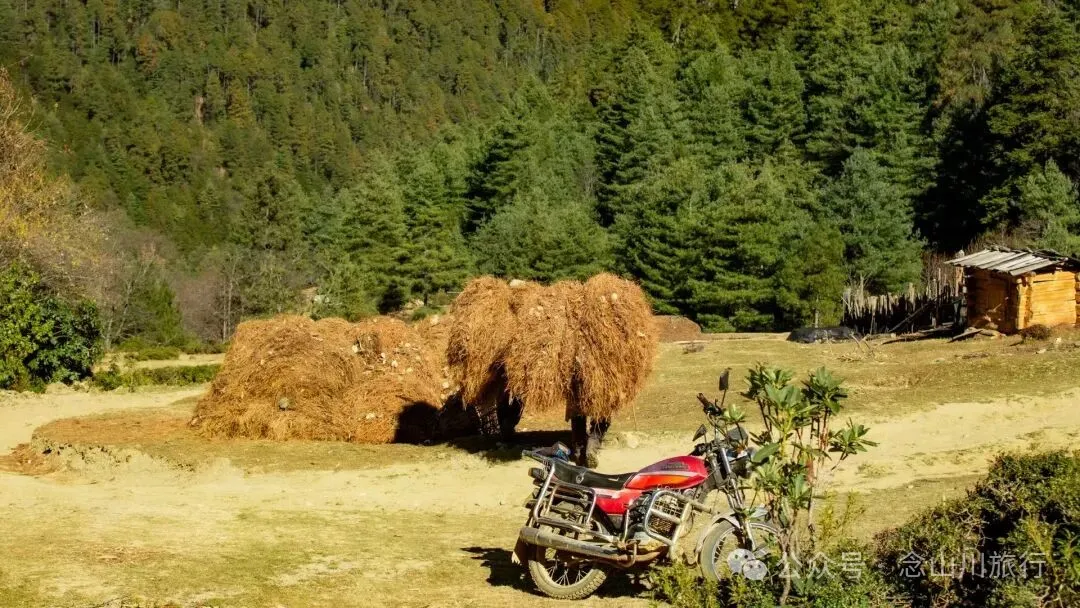
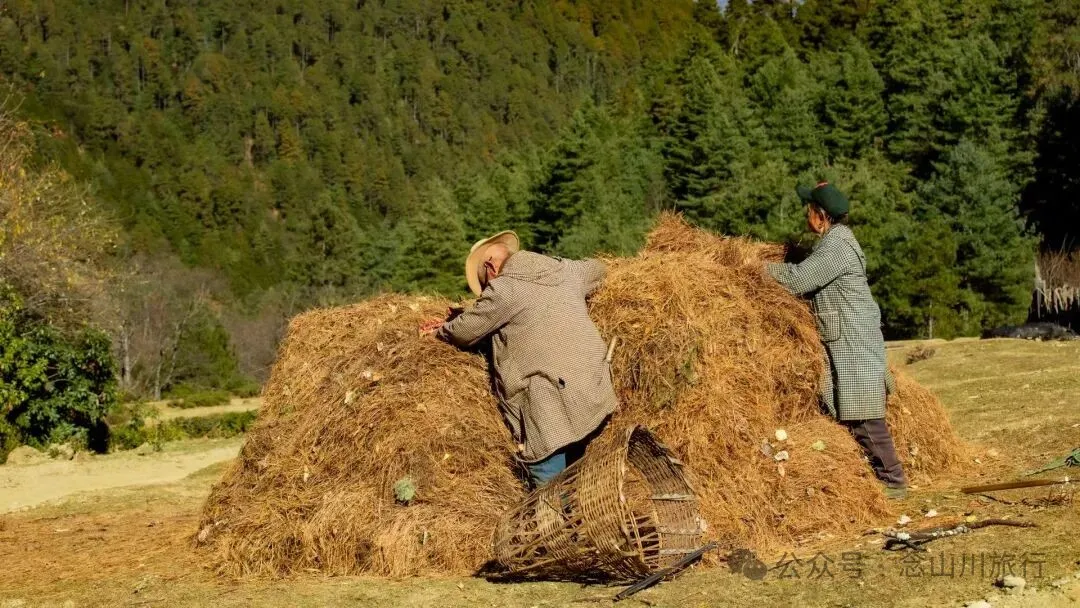
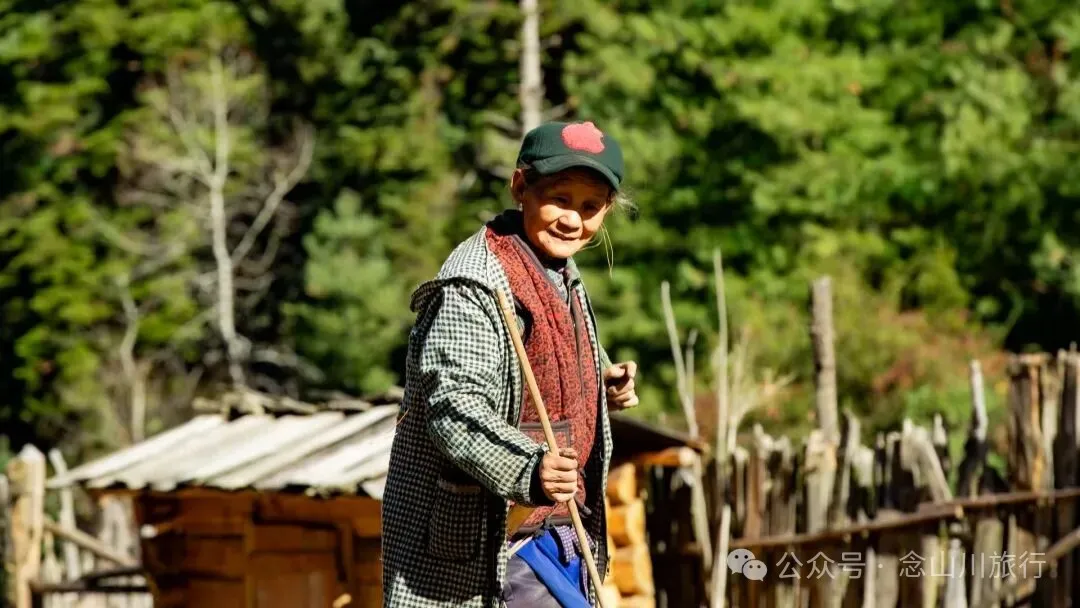
Two hours later, they walked steadily back onto the meadow with their "small hills" on their backs, while I was still cautiously sliding down the slope, holding onto tree trunks. The old couple frequently stopped and waited for me. They carried the pine needles down the meadow, crossed the stream, unloaded the small hills, and entered the small cabin they had lived in for decades. Tomorrow, they would again go into the mountains, find a slope covered with pine needles, work for a few hours, and then light a roaring fire at dusk to dispel the chill of the long night.