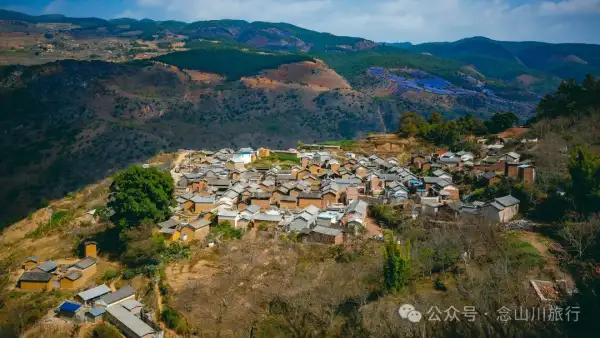

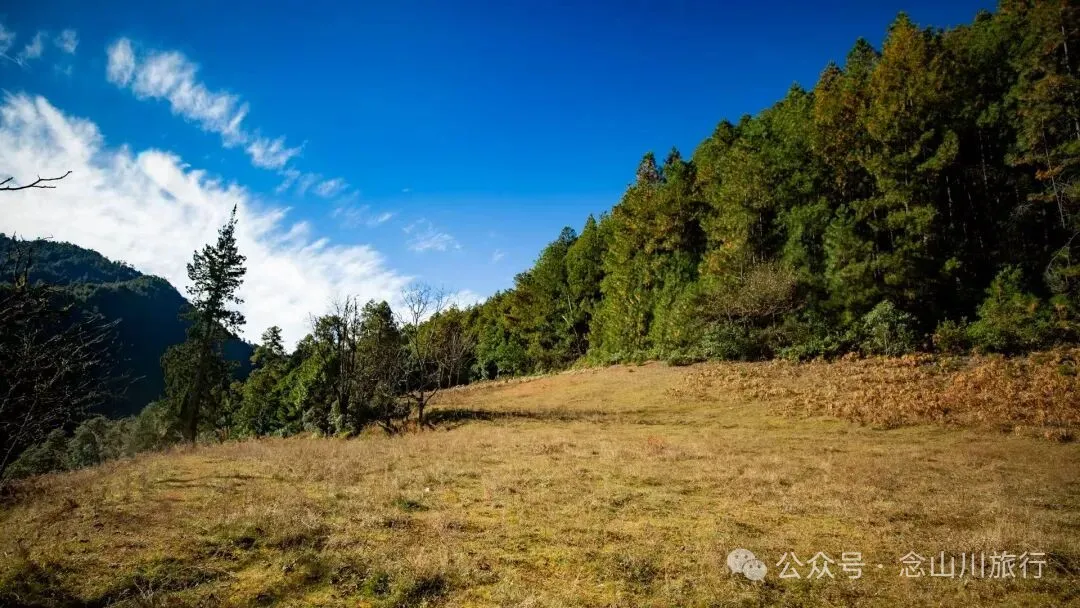
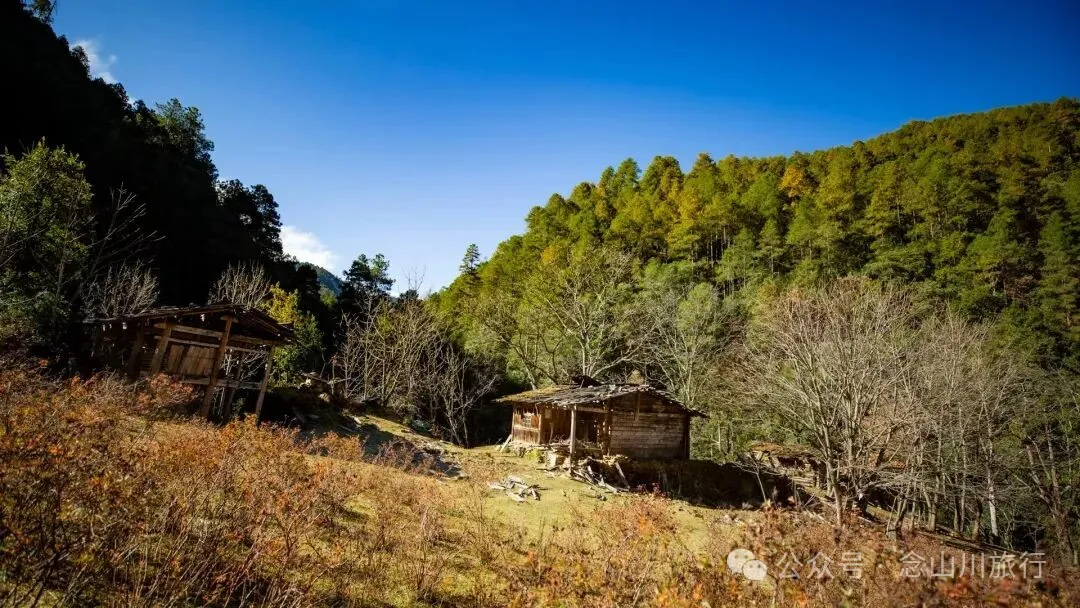
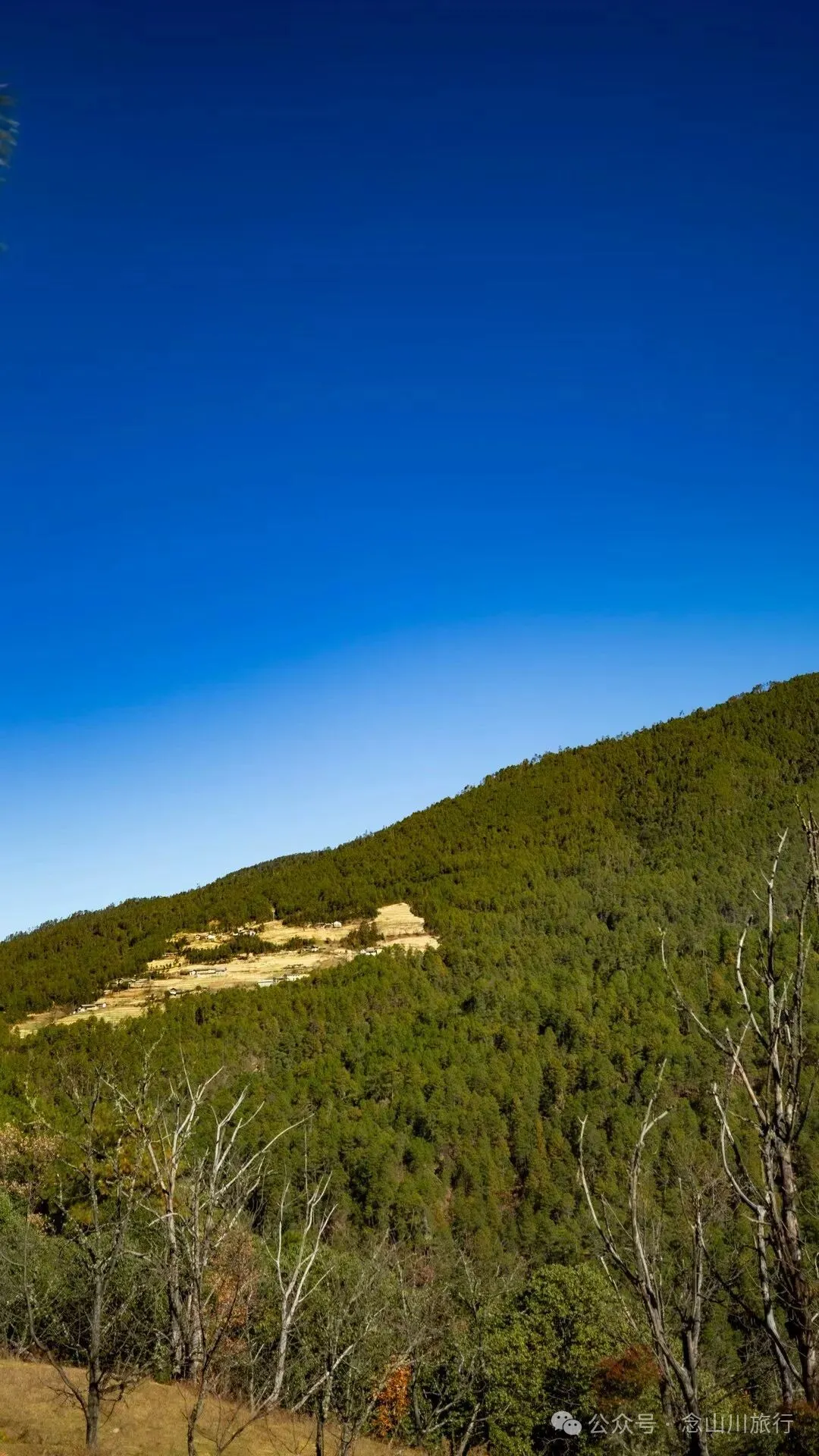
Near the last sharp bend on the road from Bazhu Village Committee to Shuozhujiao, there is a place marked as Dongsangka. Satellite images show several patches of grassland of varying sizes, surrounded by dense jungle. Canba said his ancestors once lived there, with only three households including his own. Due to frequent raids by bandits crossing the mountains to steal property, their lives were greatly disturbed, so they moved the entire family to Shuozhujiao, a village group with only six or seven households, and settled there ever since.
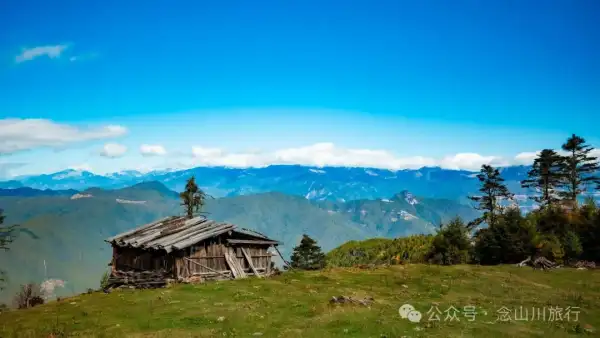
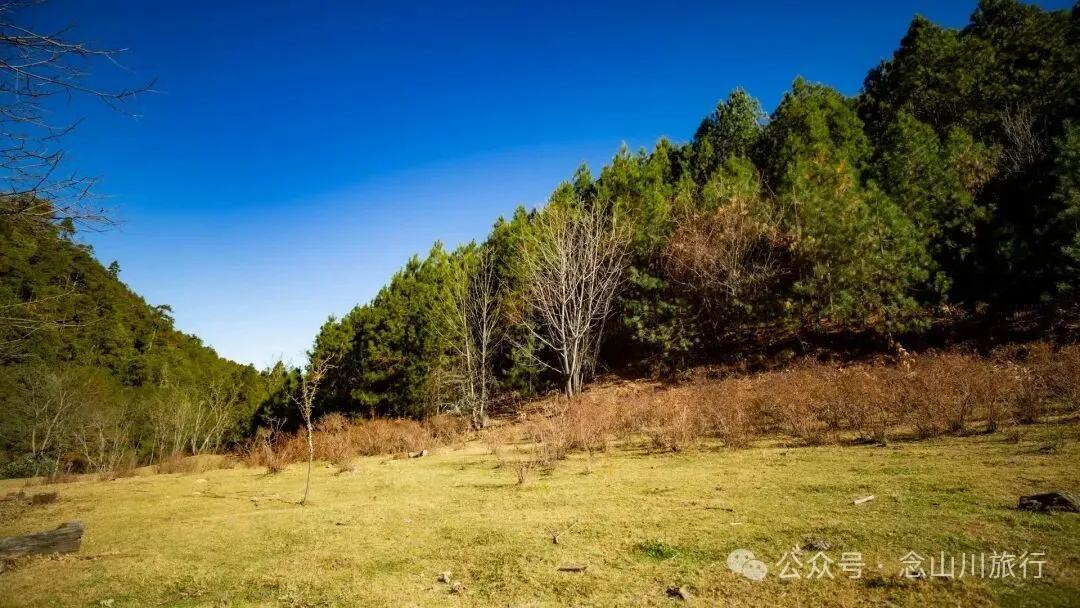
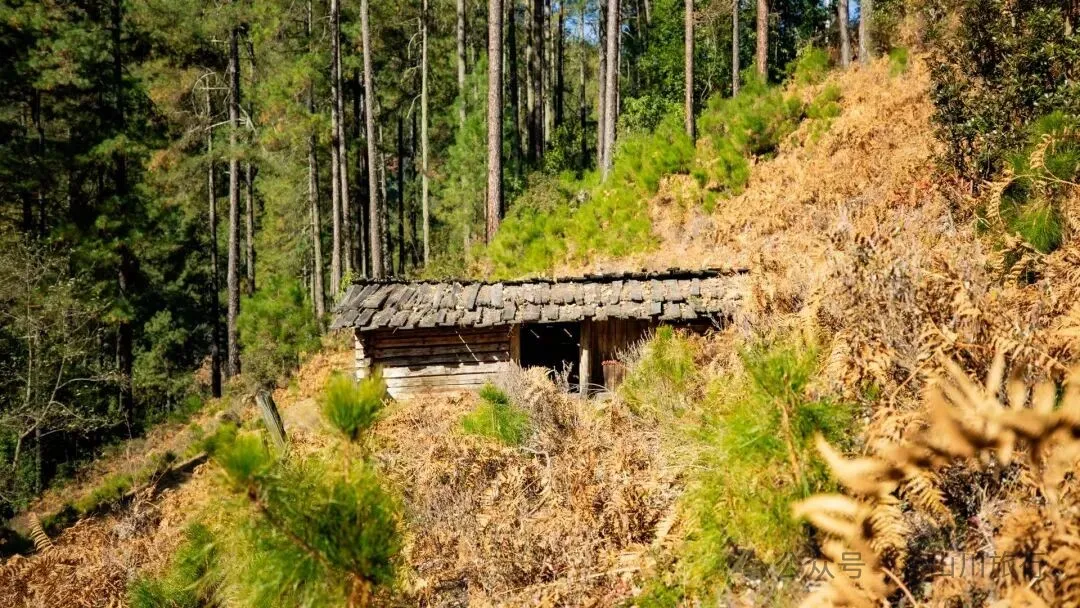
After these three households moved out of Dongsangka, apart from a small wooden cabin that once housed people but now has a nearly collapsed roof, and a few sheds for livestock, no other traces of human presence remain. Dongsangka has turned into a primitive mountain meadow, where ferns and alpine rhododendrons grow wildly, and weeds have spread to the edge of the steps of the abandoned cabin. On the surrounding slopes, many young pine trees have sprung up; after humans left, they grew unchecked and freely. Dongsangka seems as if it never had a history of human habitation.
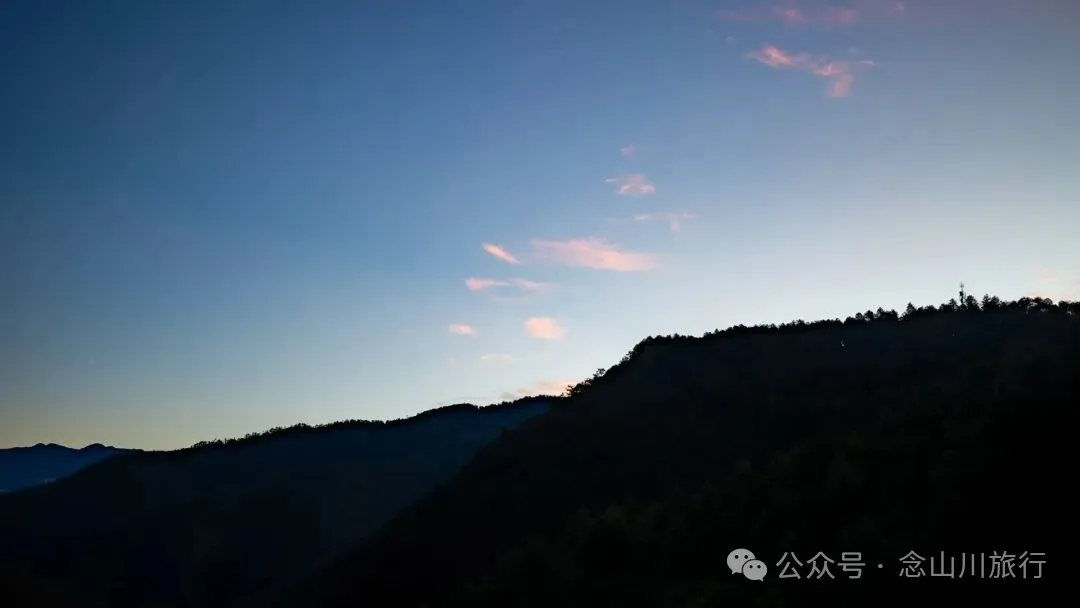
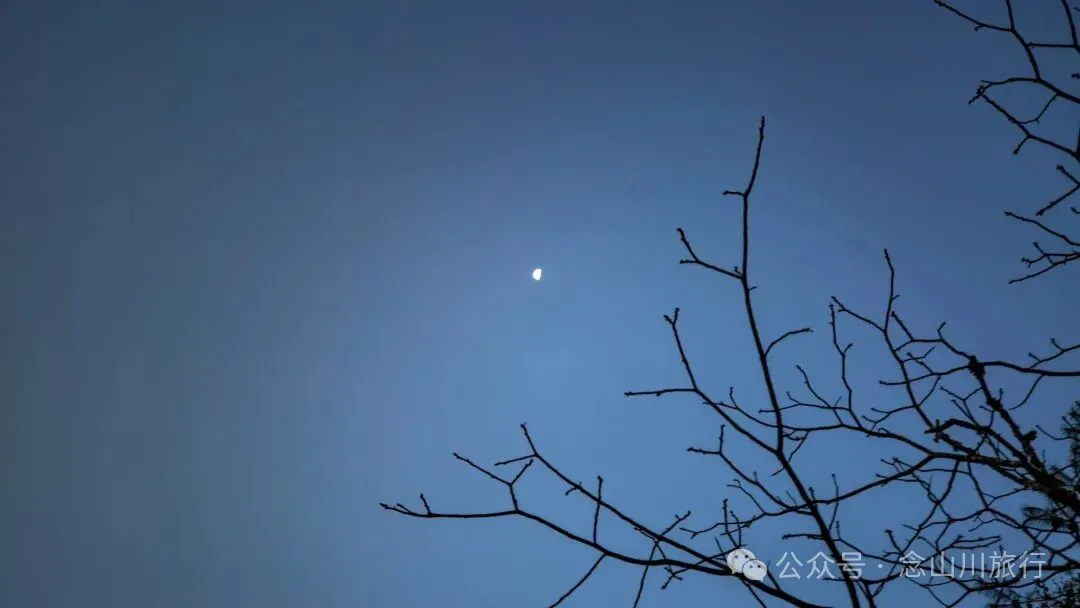
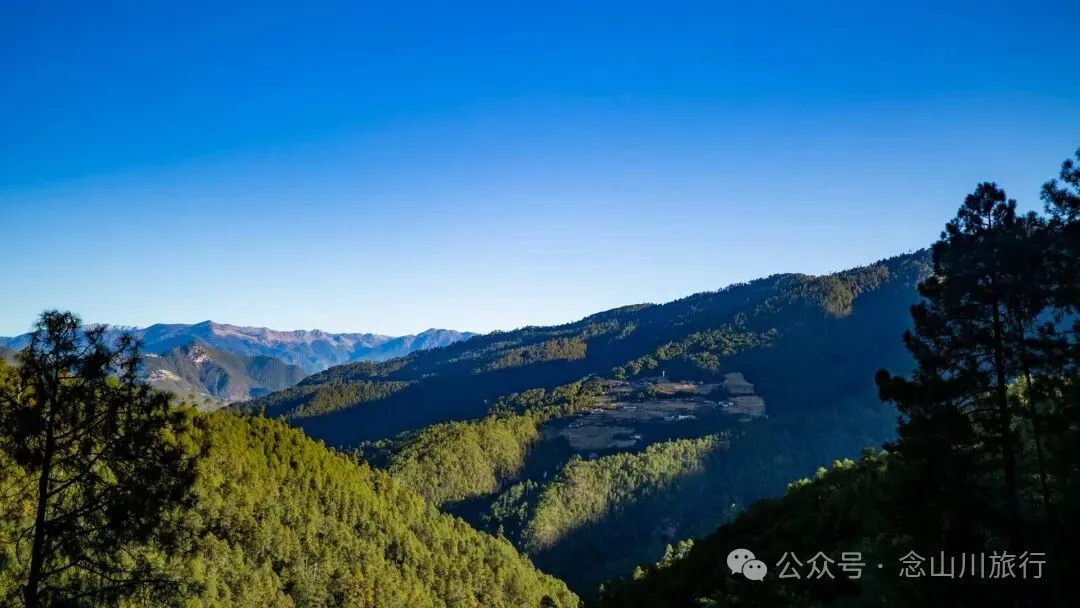
In the early morning, the mountain path was bitterly cold. The morning glow lightly fell on a few swiftly drifting clouds, awakening the sleeping mountains. The waning moon grew cold, lonely as it resisted the impending sunrise. It hung far in the deep sky, like a hole poked through a blue cloth by a tree branch, letting in a pale, hollow light. When the sun climbed over the ridge, the sky's feeble blackish blue became bright, full, and layered. Locating the sharp bend, I left the road and headed toward the nearest ridge to Dongsangka. It was a mixed forest of chestnut and pine trees. This season, the slopes were covered with smooth pine needles, and every step required caution; a slip could send me tumbling down the steep slope. I must have taken the wrong path—the ridge line extended into the jungle for only two to three hundred meters before sloping downward, and there was no trail.
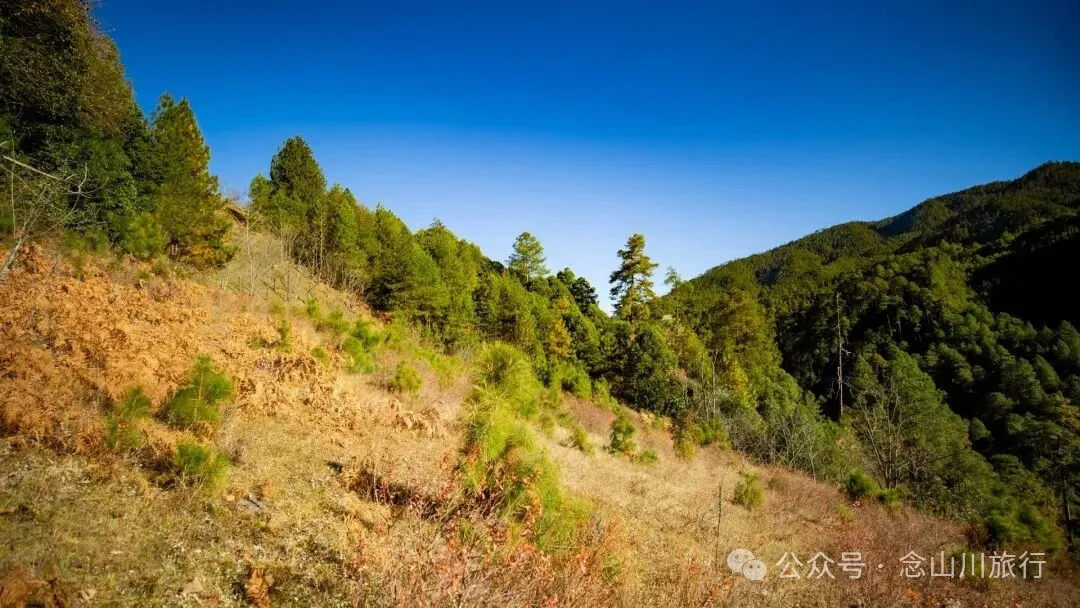
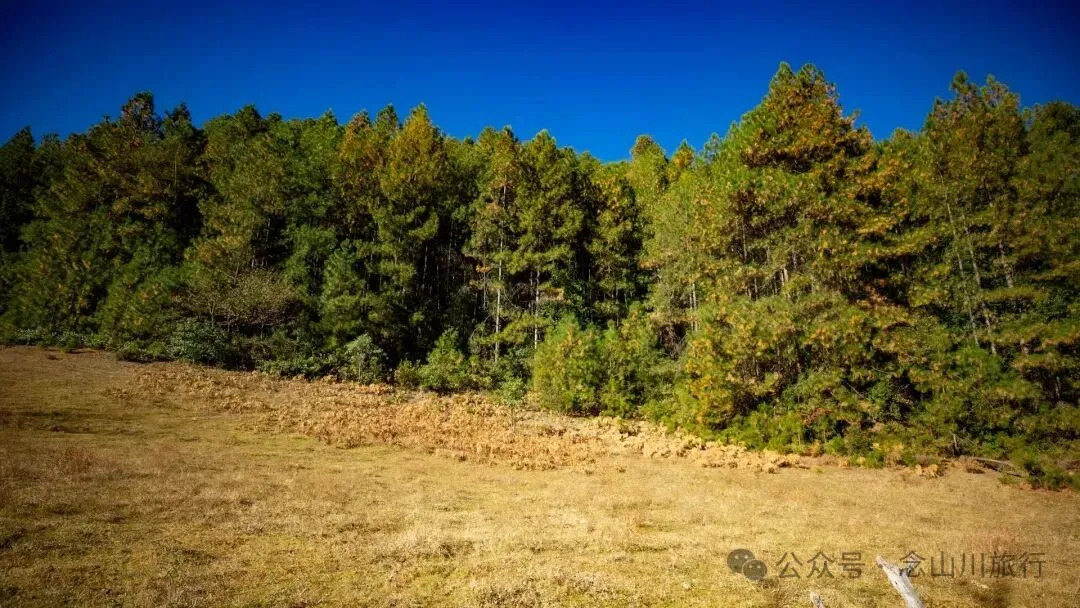
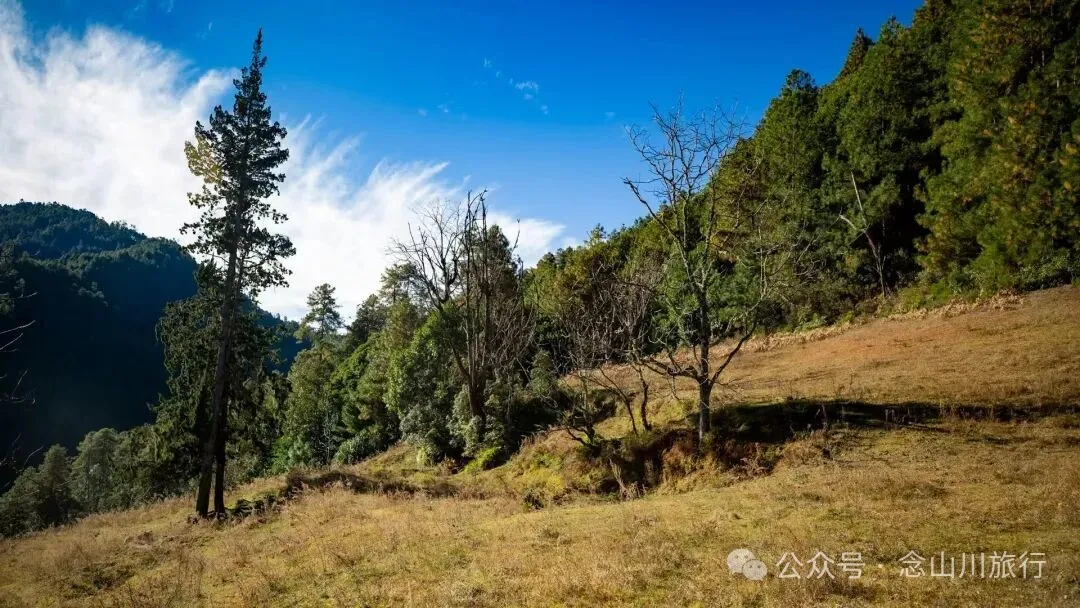
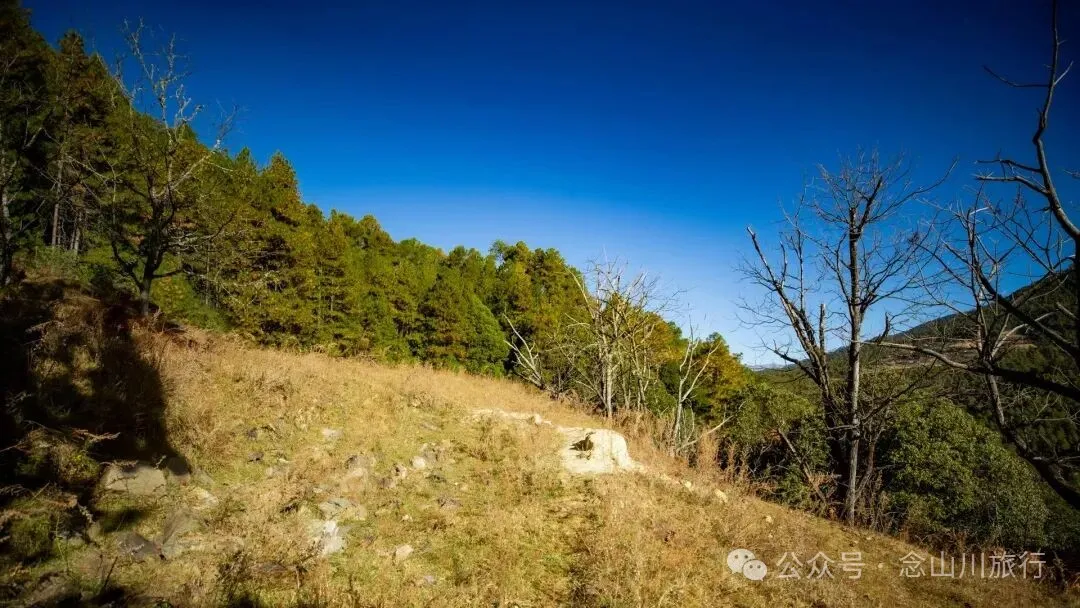
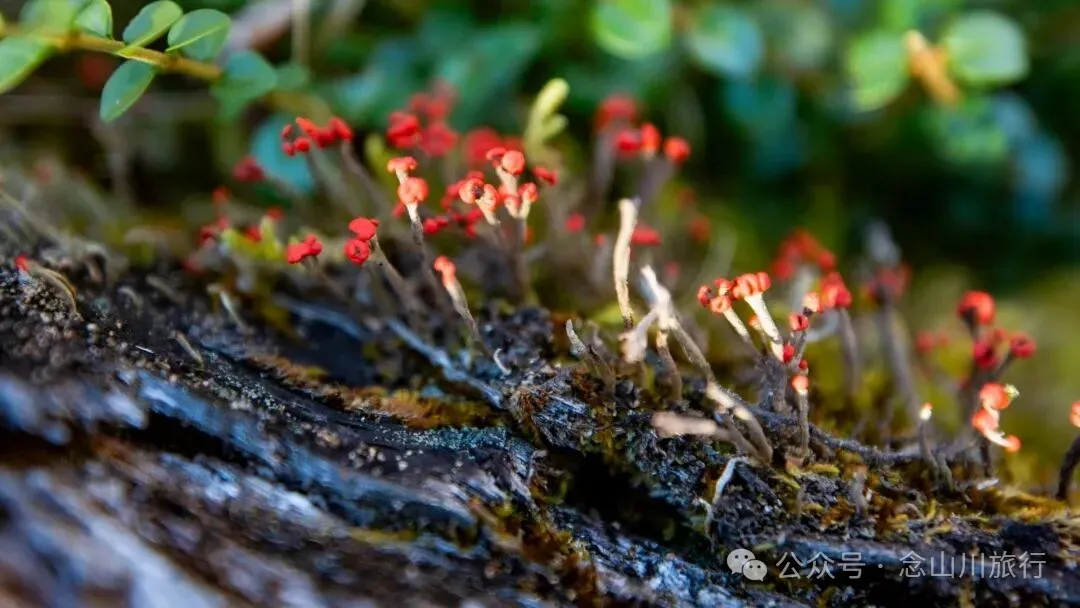
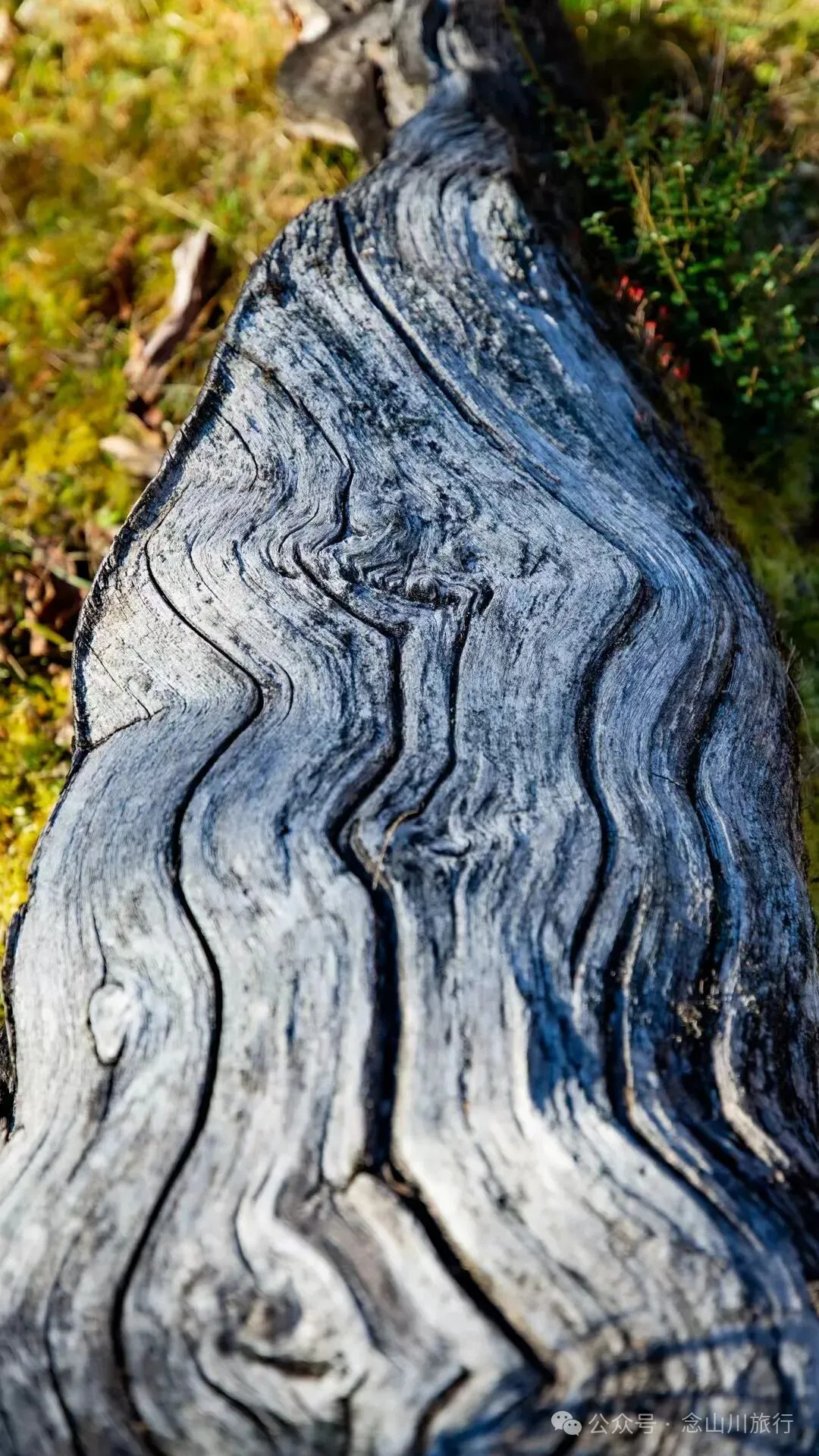
Certain that Dongsangka was just down the slope to my right, I continued sliding down and soon reached a distinct mountain trail. There were hoof prints of cattle. Although it was my first time on this path, I was sure it would lead to Dongsangka. After about ten minutes, I arrived at a sunlit open area where wild grass and young pines basked in warm sunlight. Two weasel-like animals quickly darted from the grass into the pine forest. This was a steep grassy slope nestled in the mountains. There was no cabin, only remnants of an earthen wall—the foundation of Canba's old house. The wall was still bare, with no plants growing on it, while elsewhere the ground was covered with long yellow grass. Between two pine trees near the wall, a log lay horizontally, where a herder had once sat to make a fire. A bleached log had lain in the grass for who knows how long; years of wind and sun had carved curved cracks into its surface, like a unique ancient zither. At its edge grew a cluster of matchstick-like fungi, like some kind of marker.
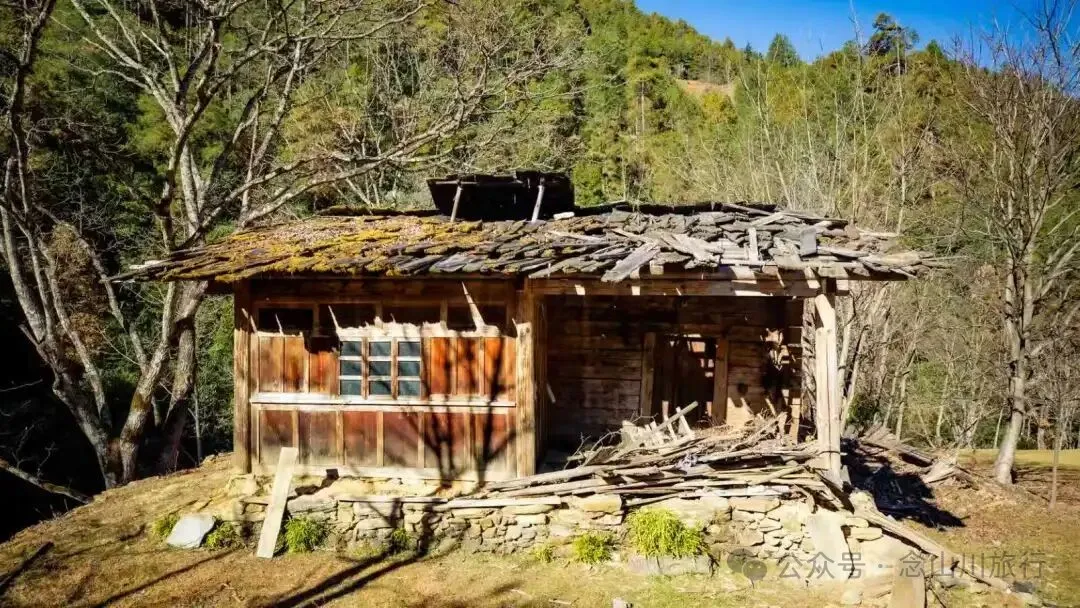
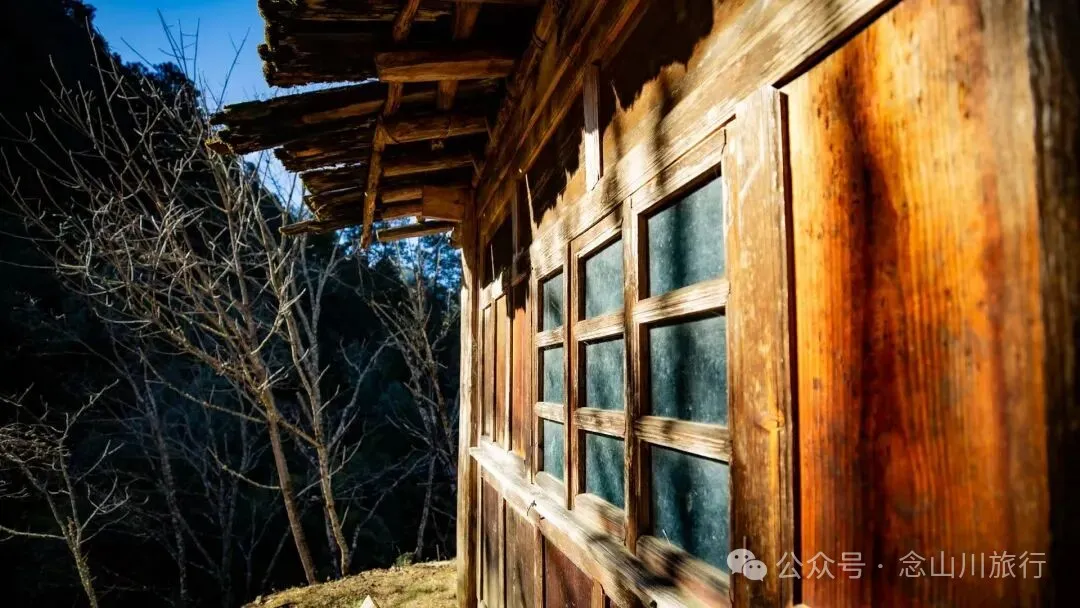
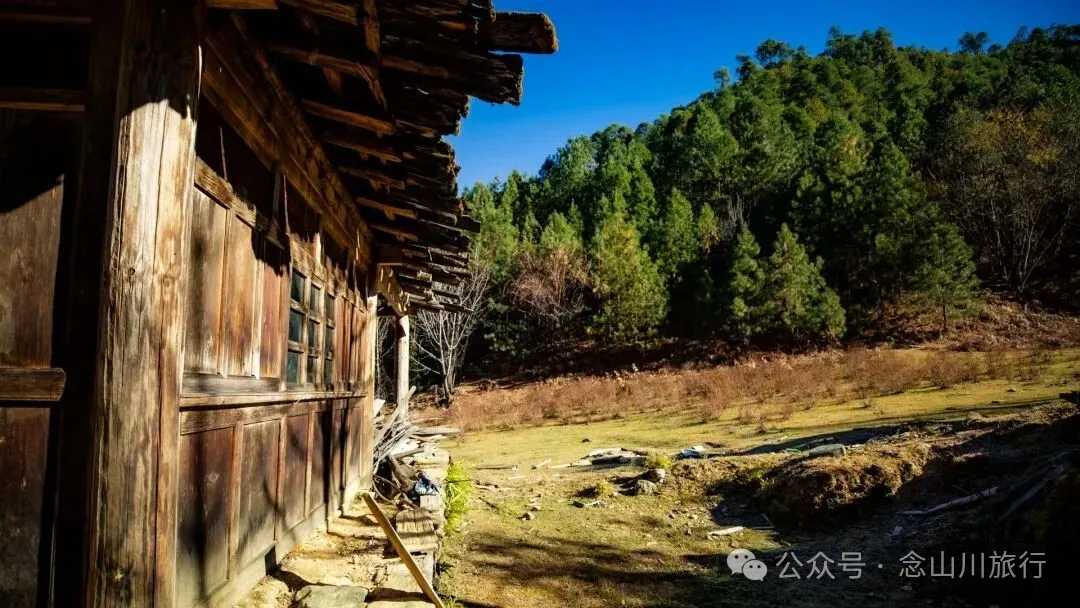
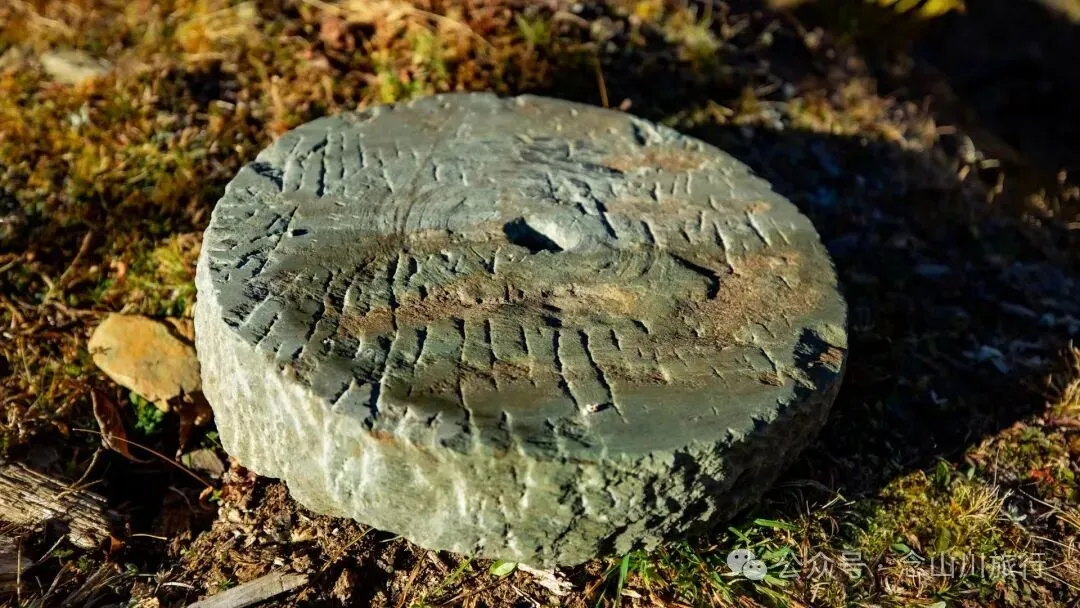
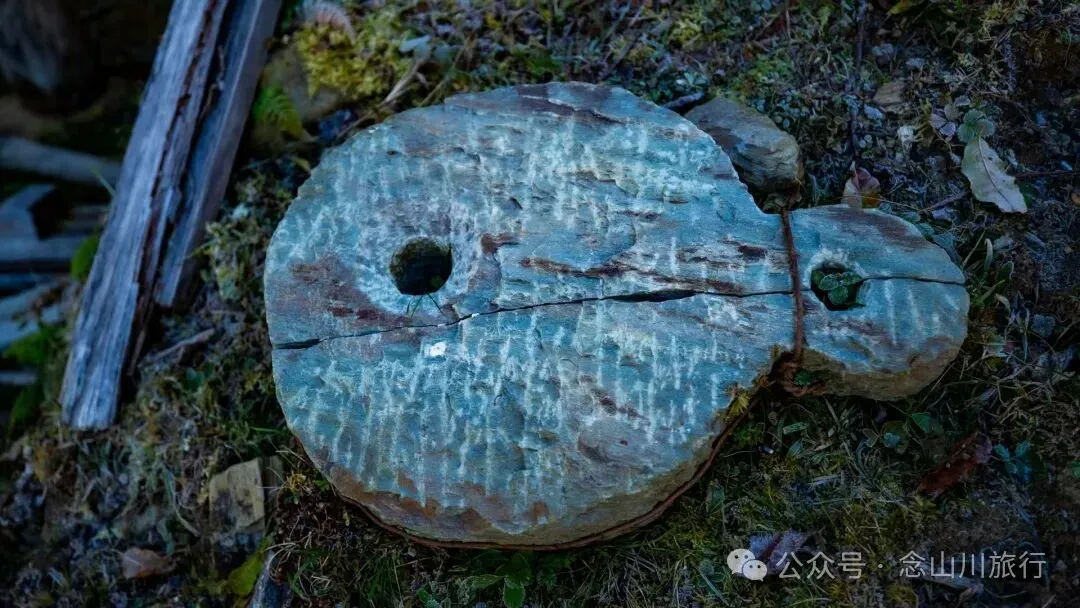
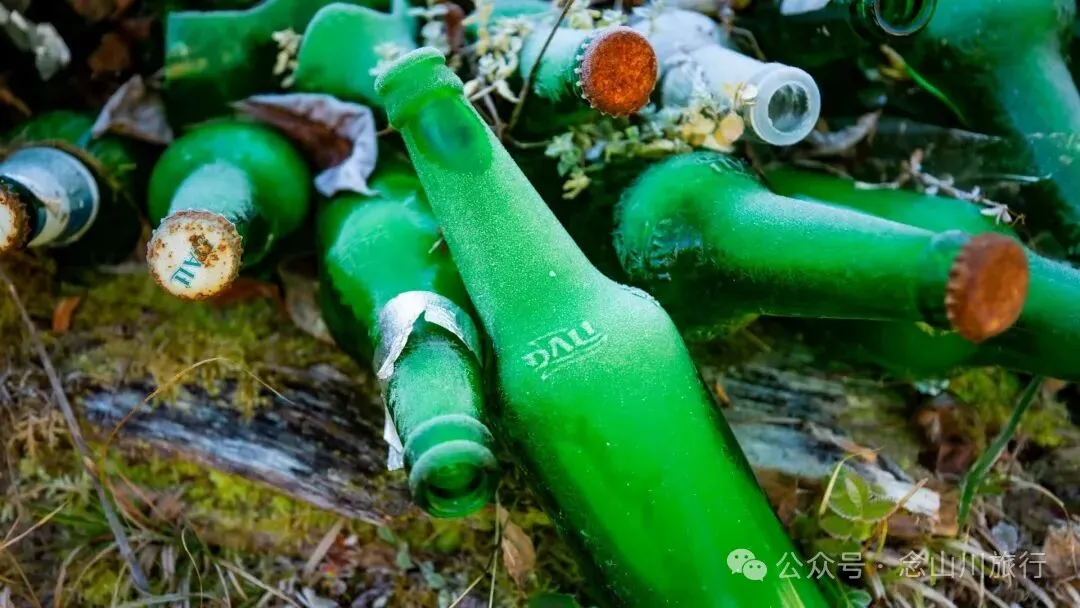
At the edge of the grassland on the western shoulder, there was a path leading down to a valley stream. Following it, I quickly reached the stream, crossed it, climbed a few meters, and arrived at a locked wooden cabin. The cabin had likely been touched by sunlight only recently; thick white frost still lingered in the shadows of nearby trees. The intact glass windows seemed to silently protest, claiming they were not abandoned and that the owner would soon return, but the roof, which should have sheltered from wind and rain, had long given up resistance. Two heavy stone millstones lay discarded in the grass like waste, one illuminated by the sun, the other still lying in cold shadow. A pile of green glass wine bottles stood out, scattered messily in front of the cabin.
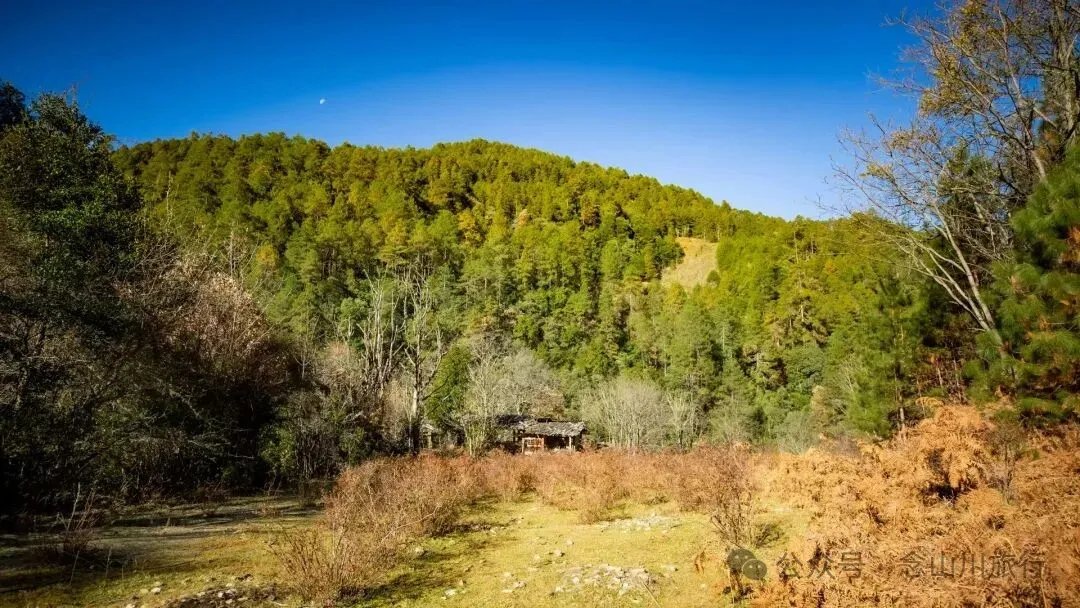
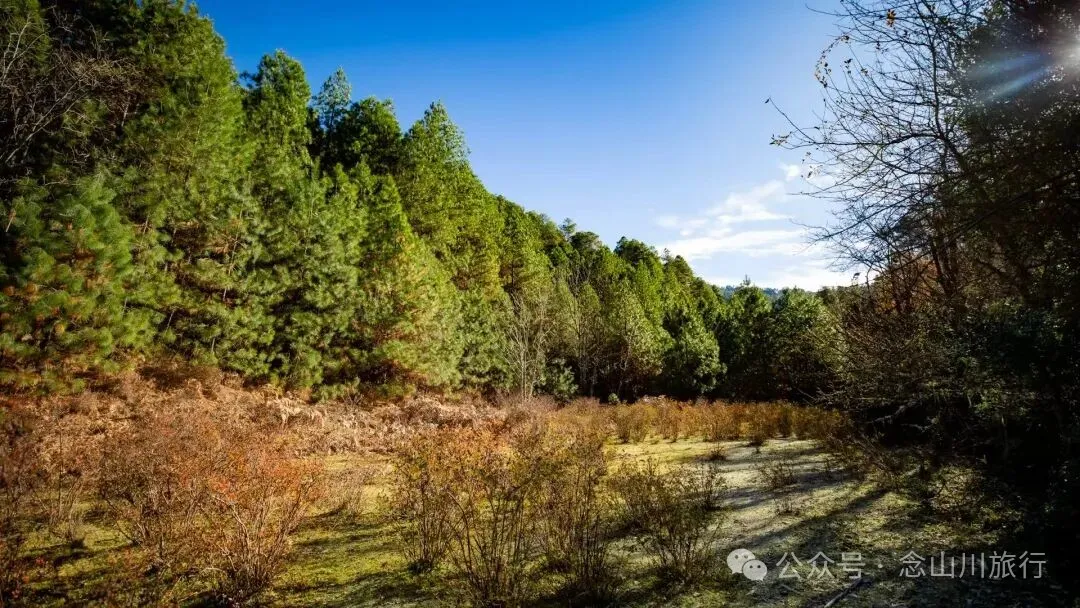
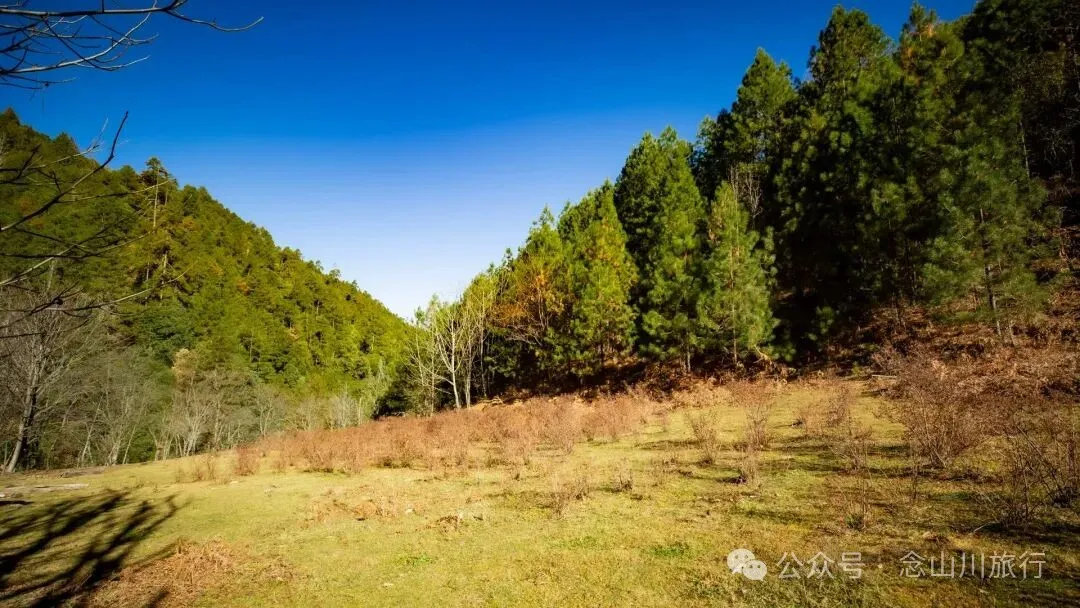
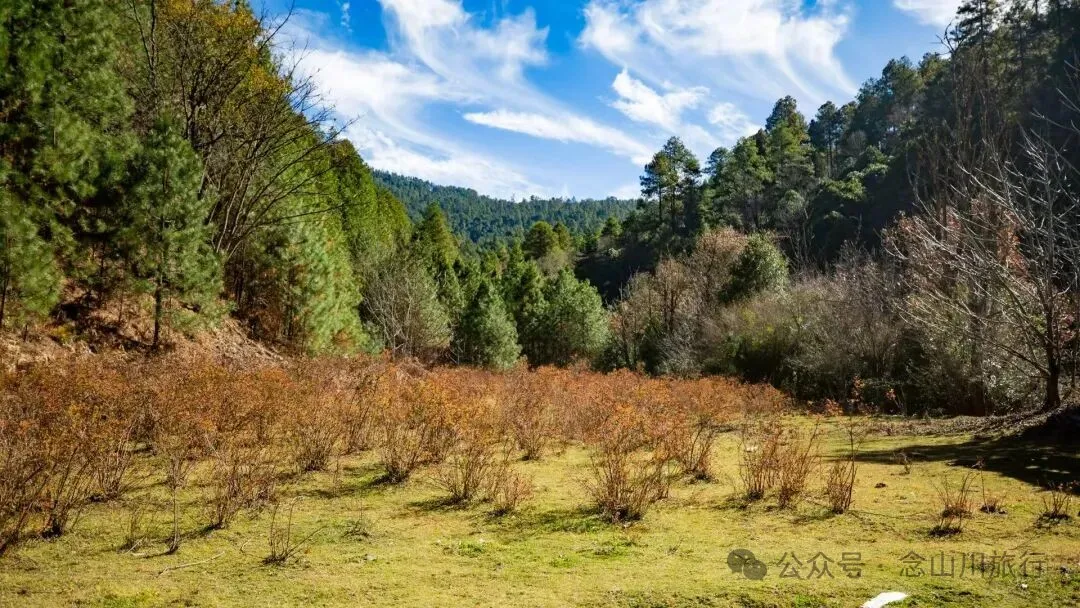
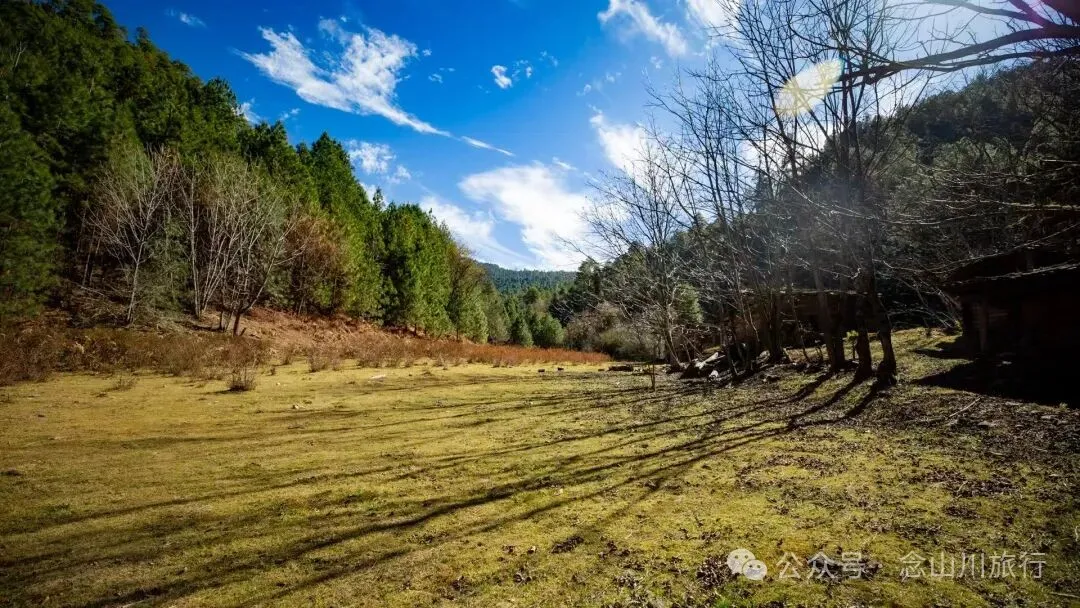
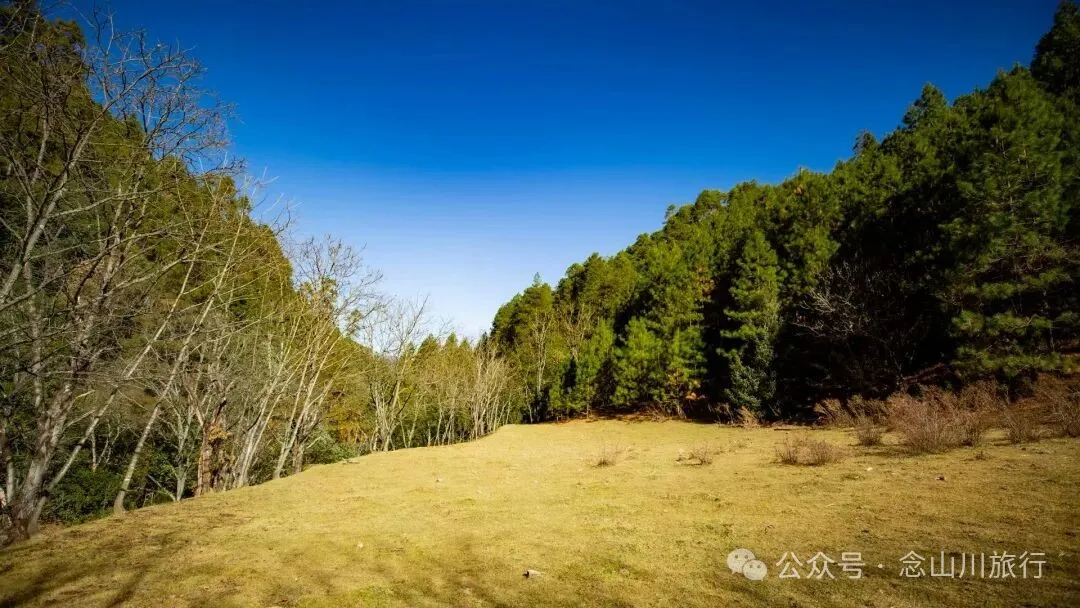
Stepping into this desolation, I imagined the scenes of human life that once existed here. Behind the cabin were two more crude, low sheds, probably for pigs and cattle. In front of the cabin stood a two-story granary; the floor of the second story was mostly destroyed, likely where harvested crop stalks were stored. And the chicken coop? Perhaps it was on the ground floor of the granary, or in the stone corner next to the cabin—anywhere would do. Back then, there might have been a small cultivated plot growing various vegetables, but now only endless weeds, low alpine rhododendrons, and withered ferns remain. This place is far from villages, far from noisy humans. The cabin stands at a corner of a gently sloping meadow, facing a vast open field and the nearby jungle, incredibly peaceful and isolated—an ideal retreat.
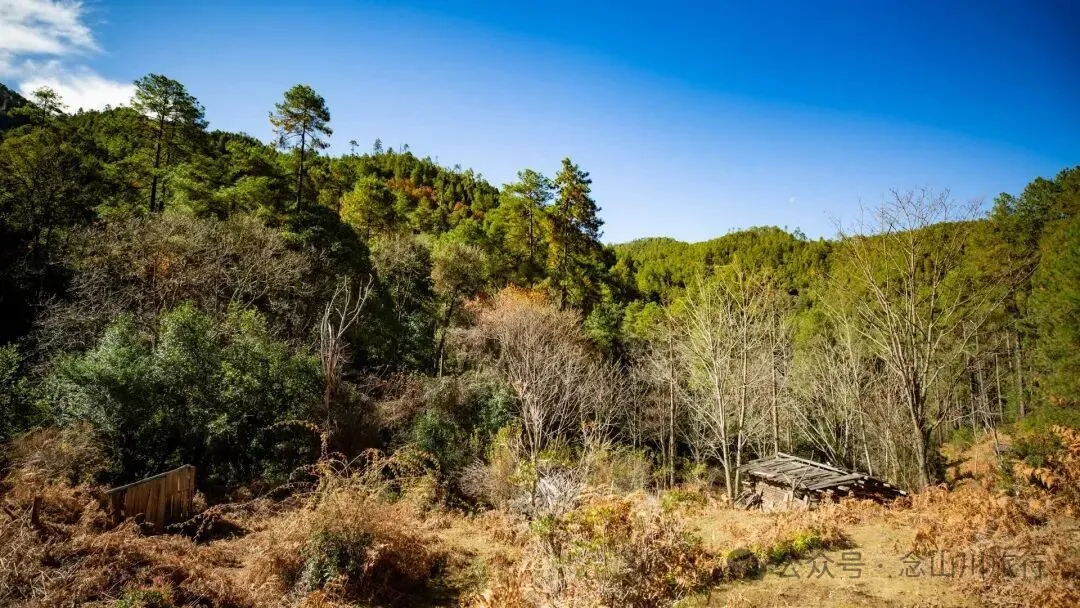
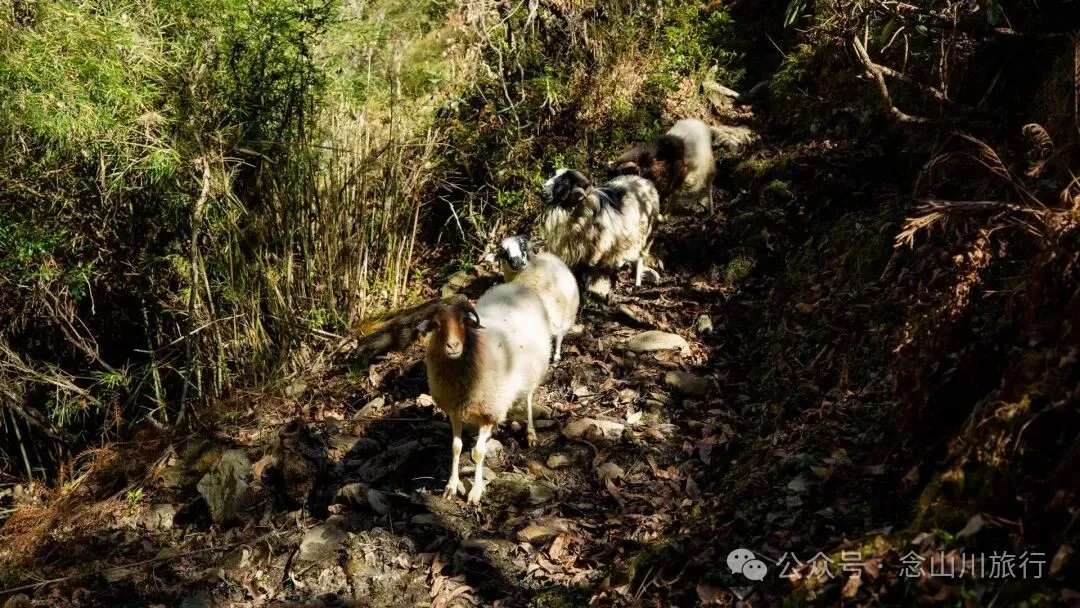
Passing through a small pine forest in front of the cabin, I discovered two other smaller meadows, each with sheds. Near one shed, there was a patch of papaya trees, with freshly sliced papaya drying on the ground, indicating that someone still comes here to work. When I returned to the meadow in front of the cabin and sat on a log to bask in the sun, a few sheep walked in from the earthen cliff to graze. The tinkling of the lead sheep's bell came from the unseen valley, and the shepherd called out from the dense pine forest opposite. I met them by the stream; they hesitated for a moment, then hurriedly crossed a narrow bridge and disappeared into the pine forest. Their owner was an odd man, who flickered past me like a shadow, pretended not to hear me speak, and vanished into the pine forest without looking back. I just wanted to ask him if the path would lead back to the road. I had to figure it out myself.