
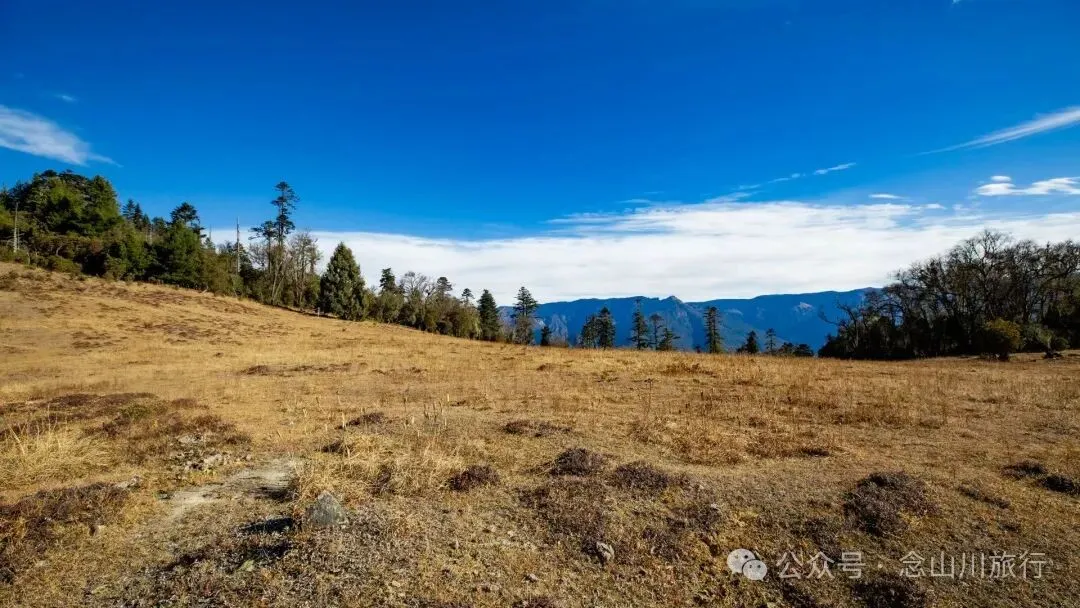
Winter Bliss: Lying on a Hilltop Pasture Overlooking the Jinsha River and Tacheng, Basking in the Sun All Day.
I love climbing to the hilltop pasture in winter. For me, the greatest temptation is not the pasture itself, but the panoramic view of thousands of rivers and the incomparably clear sky that no other season can offer. By this time, the green of the pasture has long withered, and many plants lie dormant in the winter's chill, lifeless as if dead. Only when the mountain wind blows do they emit sounds from beyond life—subtle noises so faint that even birds cannot detect them. Yet within them are the exclamations of life before sprouting: seeds encased in hard shells crack open and scatter with the wind. Whether these seeds are pecked by birds and carried elsewhere or remain where they fall, they will offer another season of renewal next year, replacing the departed and thriving on this land.
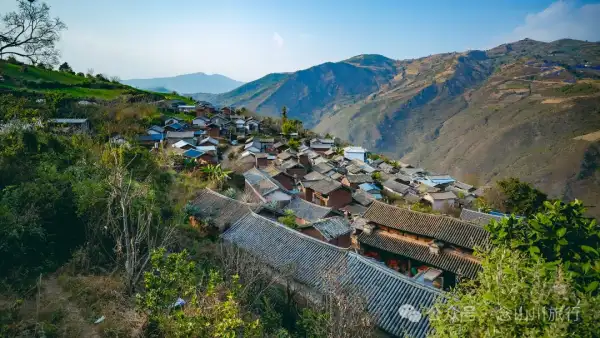
I'm not sure if the ridge where this hilltop pasture lies is called Wulegang. The dozen or so households of Shijiaben are on a slope to the northwest, their harvested fields empty like a scar on the earth. I once followed the cement road of Shijiaben, searching through the forest behind the village for two hours without finding this pasture. After surveying a slightly open woodland, I turned back along the mountain path. Soon after, I realized that open woodland was less than three hundred meters from the hilltop pasture. If I had been bolder and pushed through the dense primeval forest above, I would have successfully entered this pasture with its excellent views.
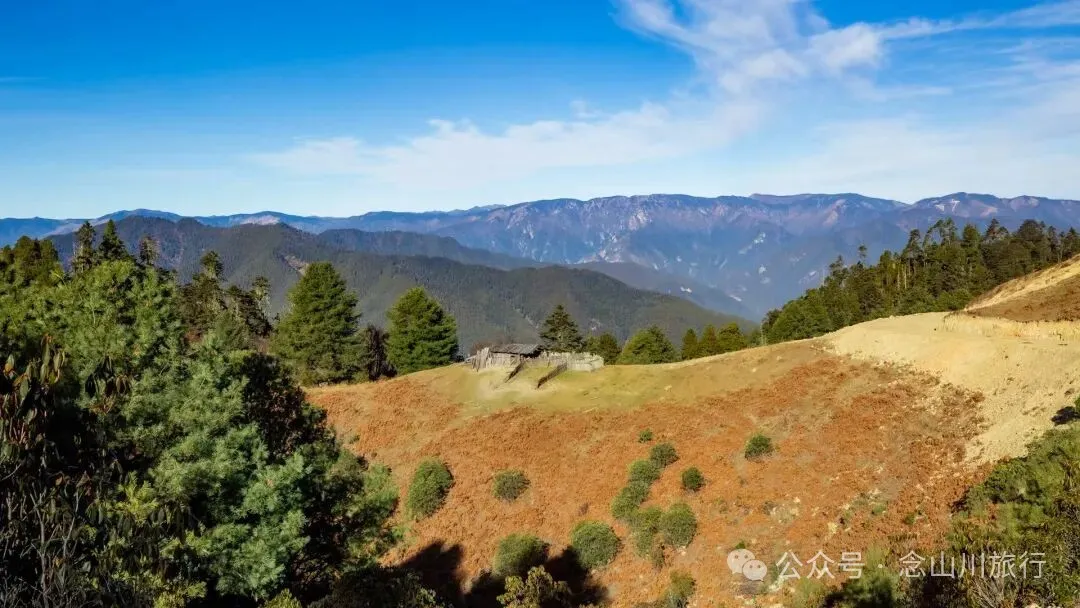
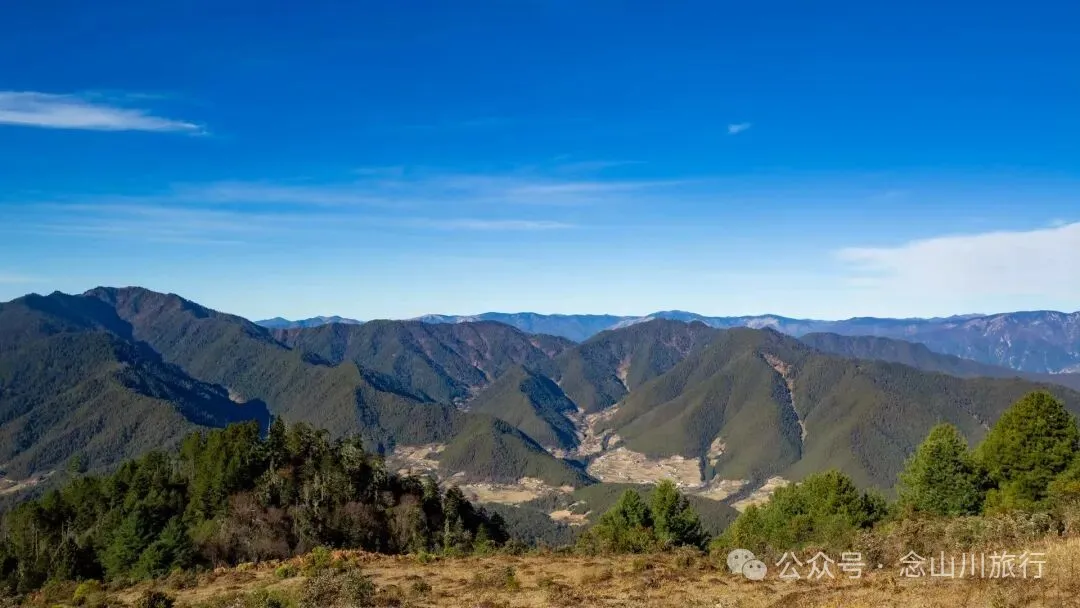
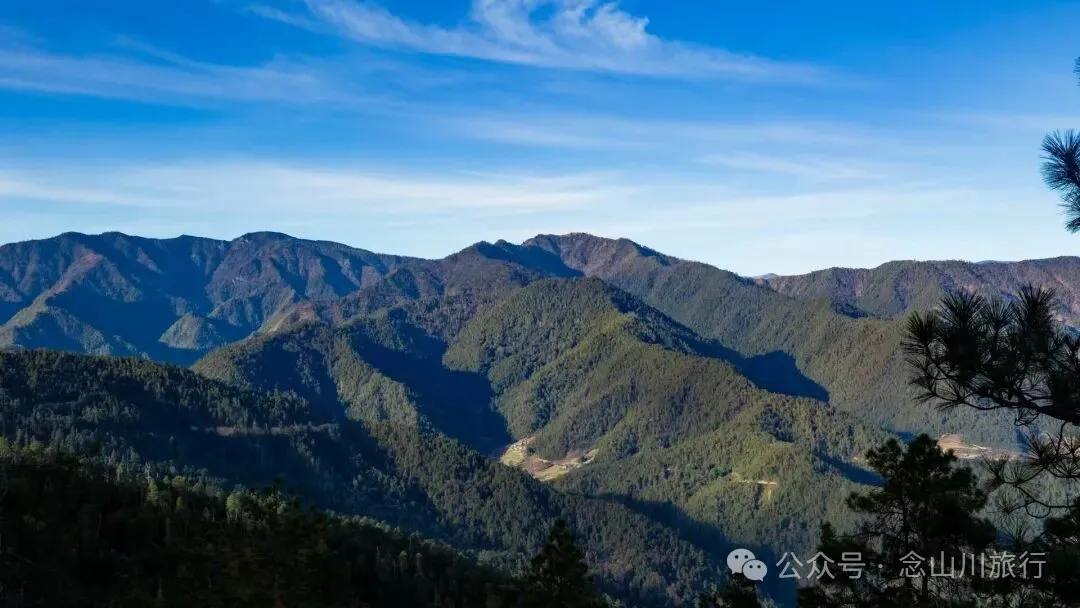
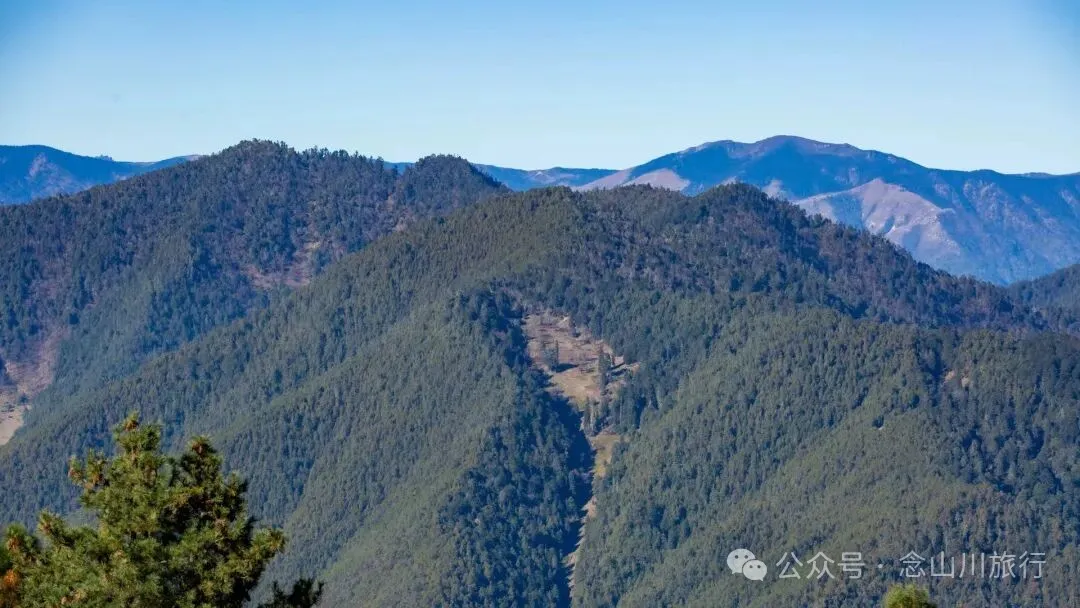
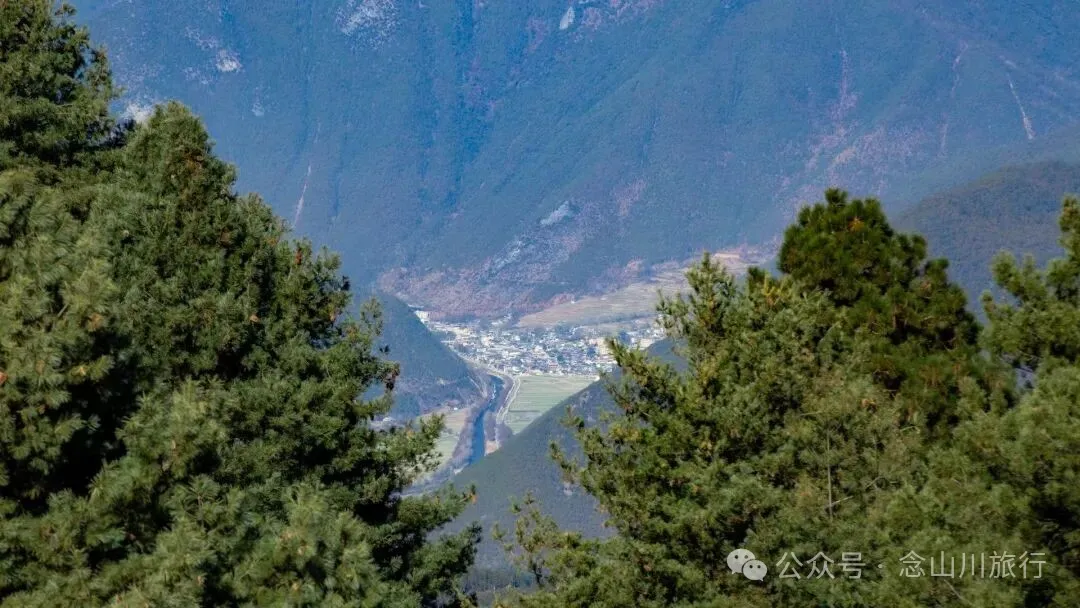
Standing on this pasture, I can see many landscapes that are invisible when confined to the village. Bazhu Village becomes a distant, unfamiliar place. Every ridge and gully surrounding the village seems as novel as if seen for the first time, as magical as the distant, unknown mountains. In truth, I have walked through many of these places multiple times, yet I wonder how long it will take for their forms to be etched into my memory like a brand.
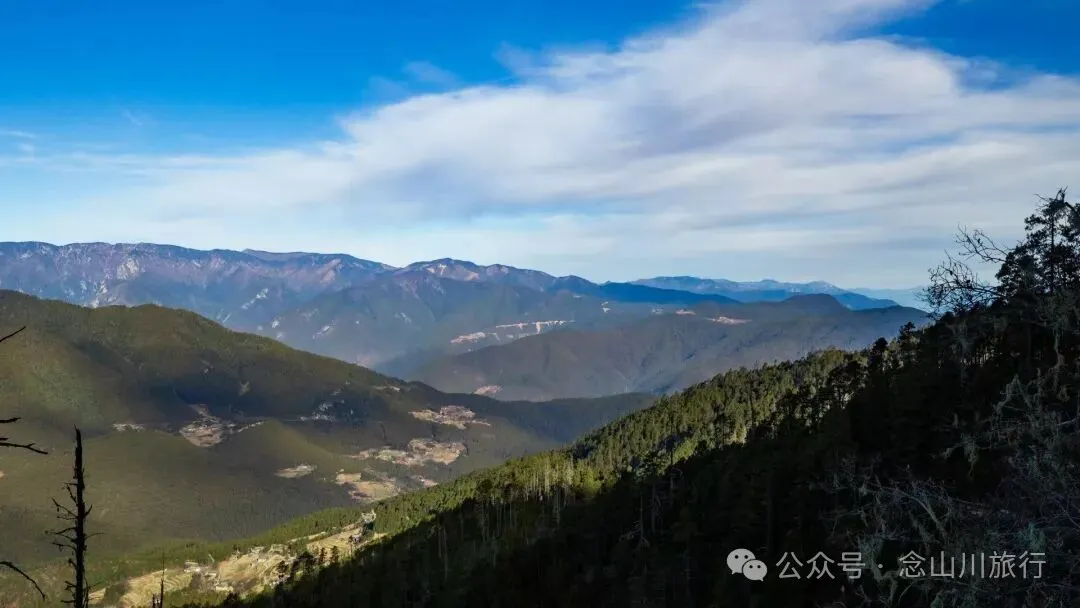
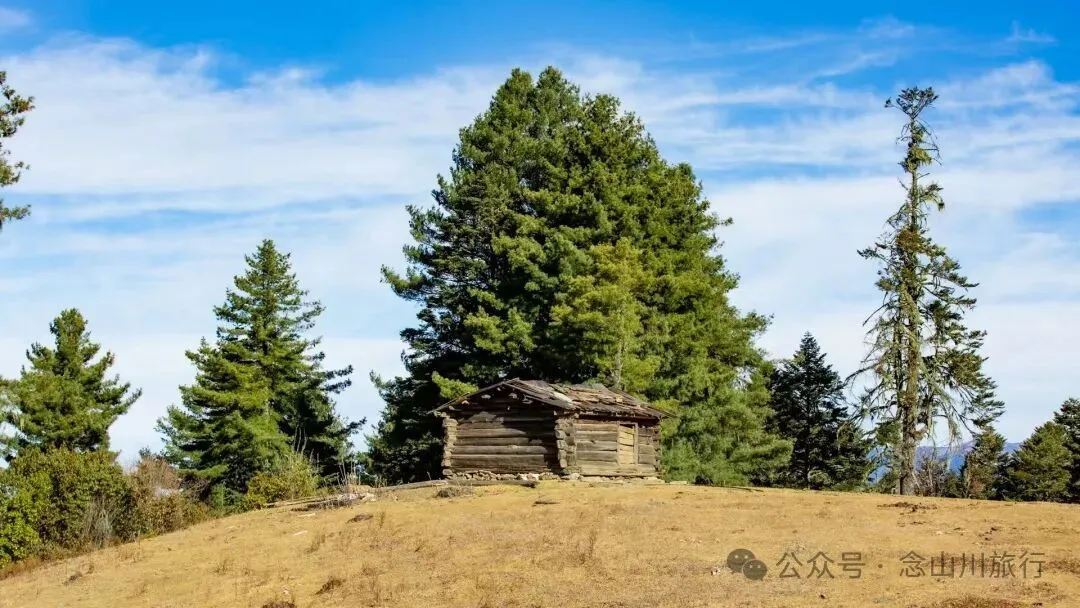
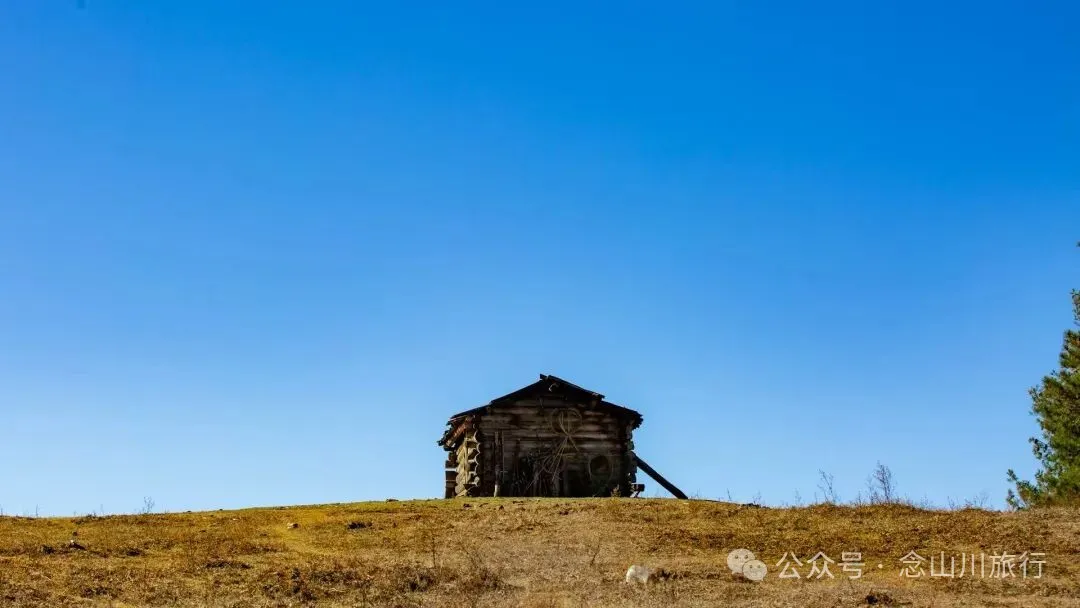
Gewamu sits like a saddle on the ridge, its gentle arc and towering height that looks down on all others making it instantly recognizable among the many similar peaks. Huobenggangka is much more low-key; though I can point out its general direction, I cannot see its figure—it hides on a ridge near Gewamu, obscured by the forest. The long-handled spoon-shaped meadow behind the village committee seems within arm's reach, and I can even clearly see the small wooden cabin at its edge. I wonder if the red maple leaf on its roof is still gazing at the sky. Tacheng is framed in a small triangle, as if about to be swallowed by the evergreens cascading down the slope.
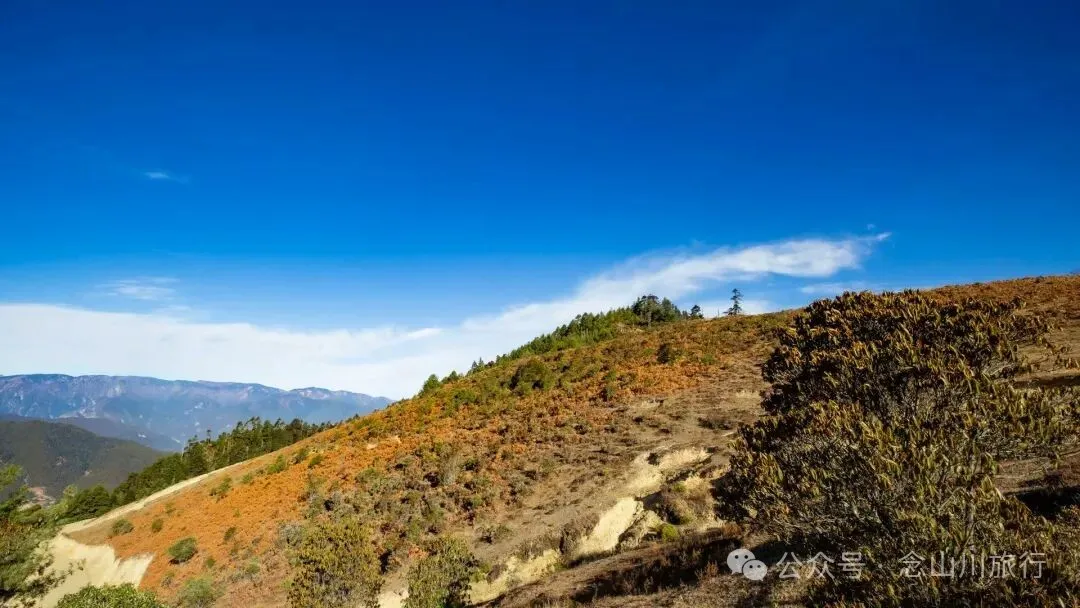
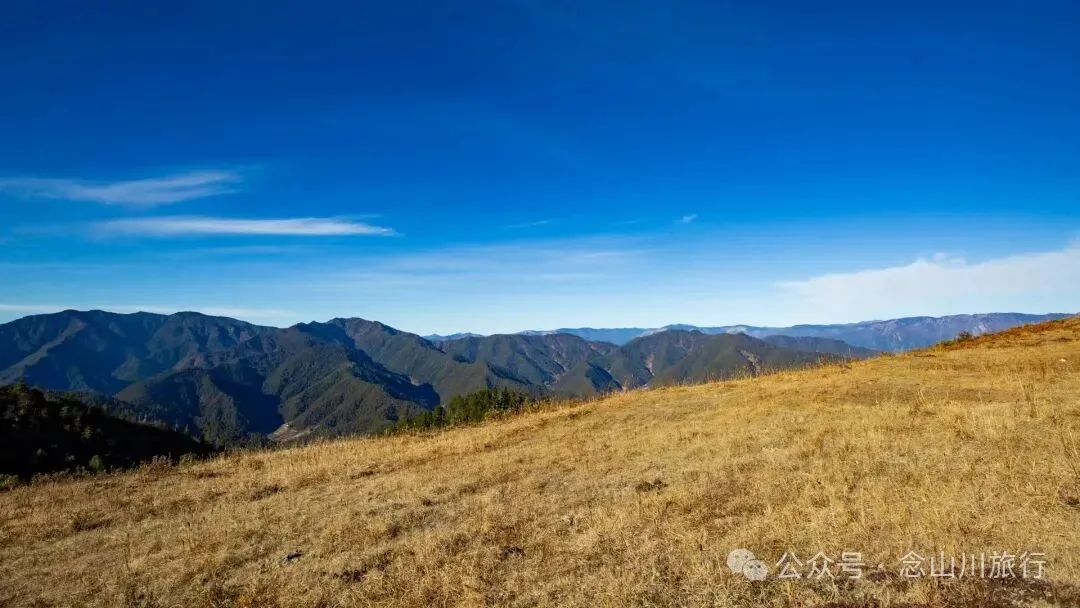
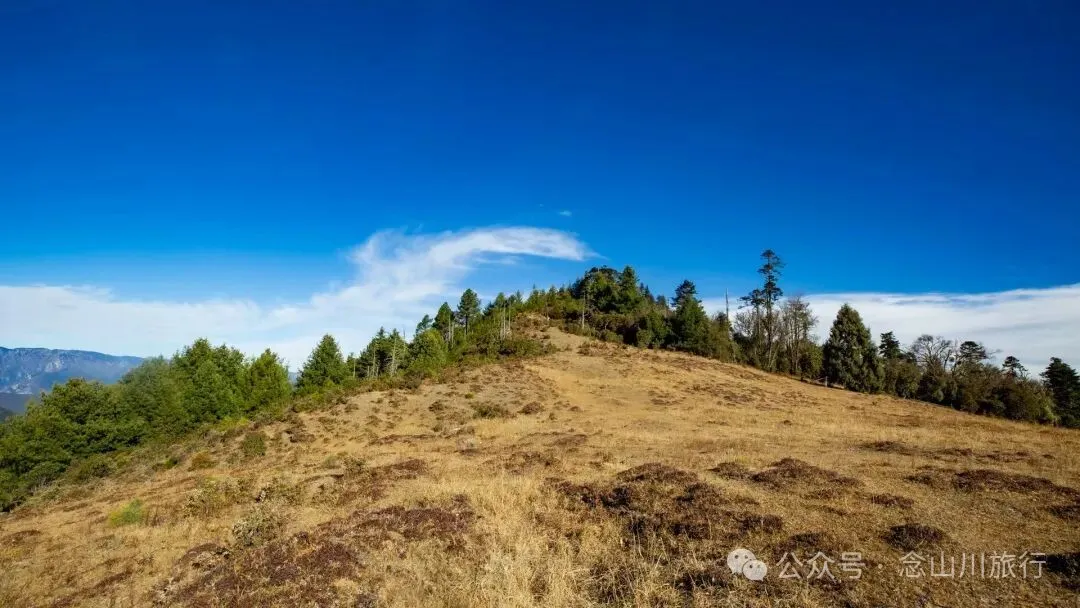
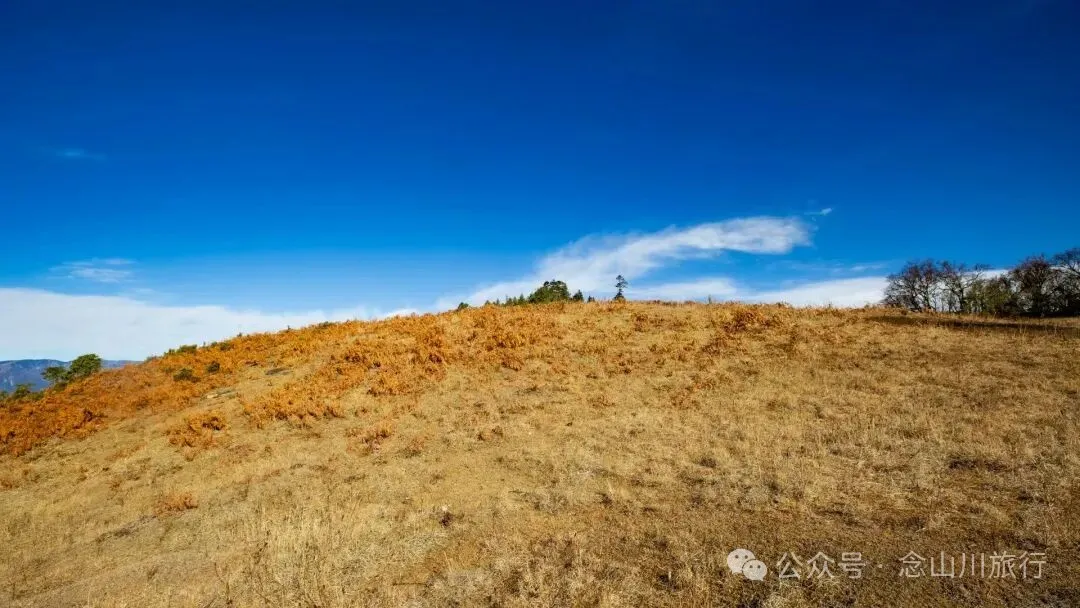
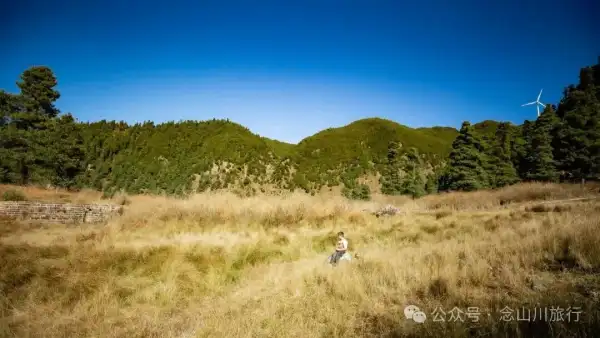
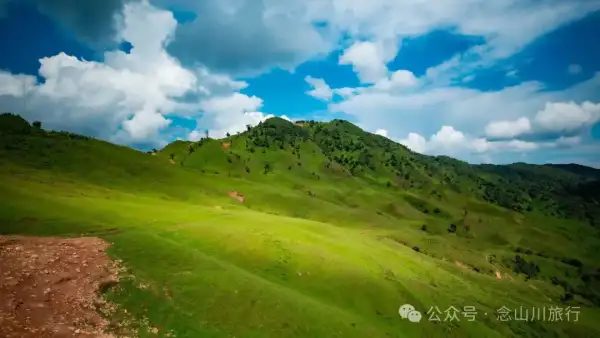
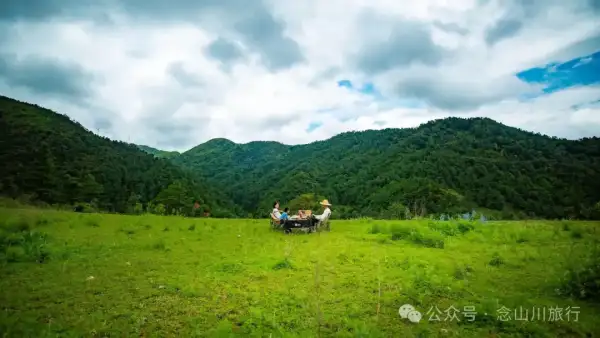
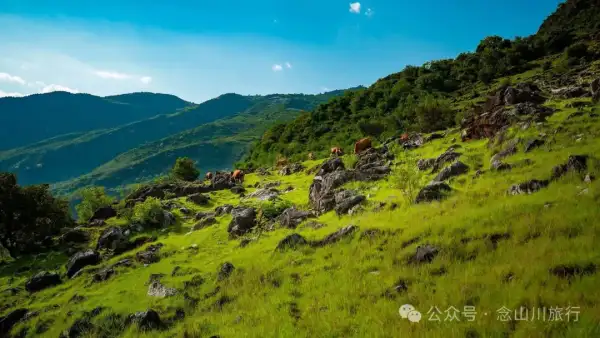
The meadow is as serene as the distant mountains—no cattle, no shepherds. After the wind skims over the grass, the whole world falls silent, like a vacuum. The withered yellow grass shows no sign of life; not even the heart of the grass holds a trace of green. All plants have hidden their true forms, the natural healing colors retreating so resolutely, so firmly.
But the sun generously bestows enough warmth, and the wind is not harsh. Lying here, basking in the sun all day, gazing at the thousands of rivers, meditating, or doing nothing at all—like the small wooden cabin standing on the high ground, in this season that offers shelter to no one, simply enjoying this perfection is a great happiness, as long as the drifting clouds do not intrude.
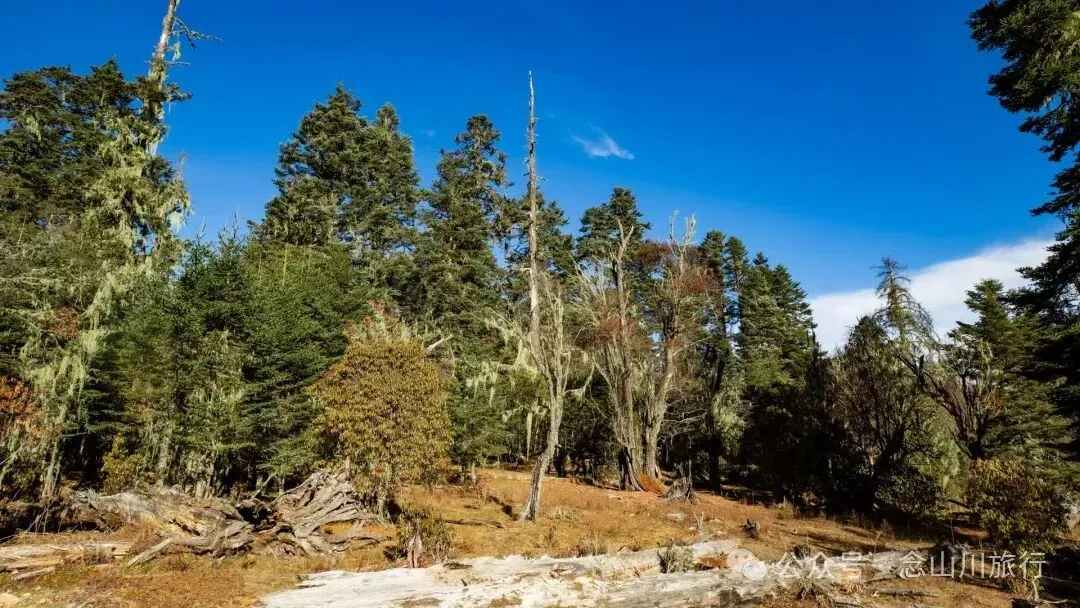
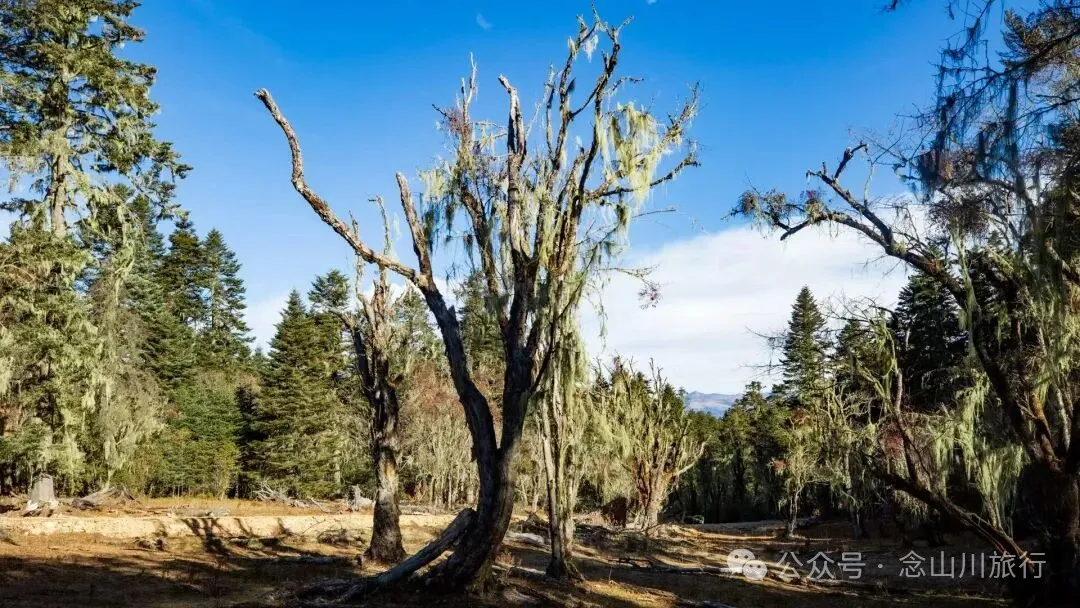
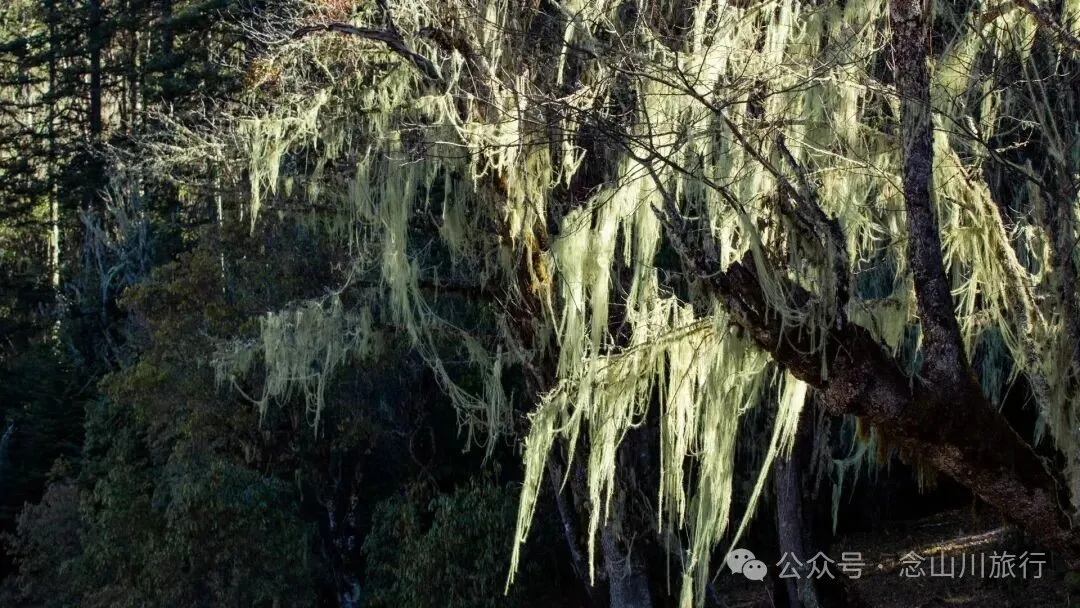
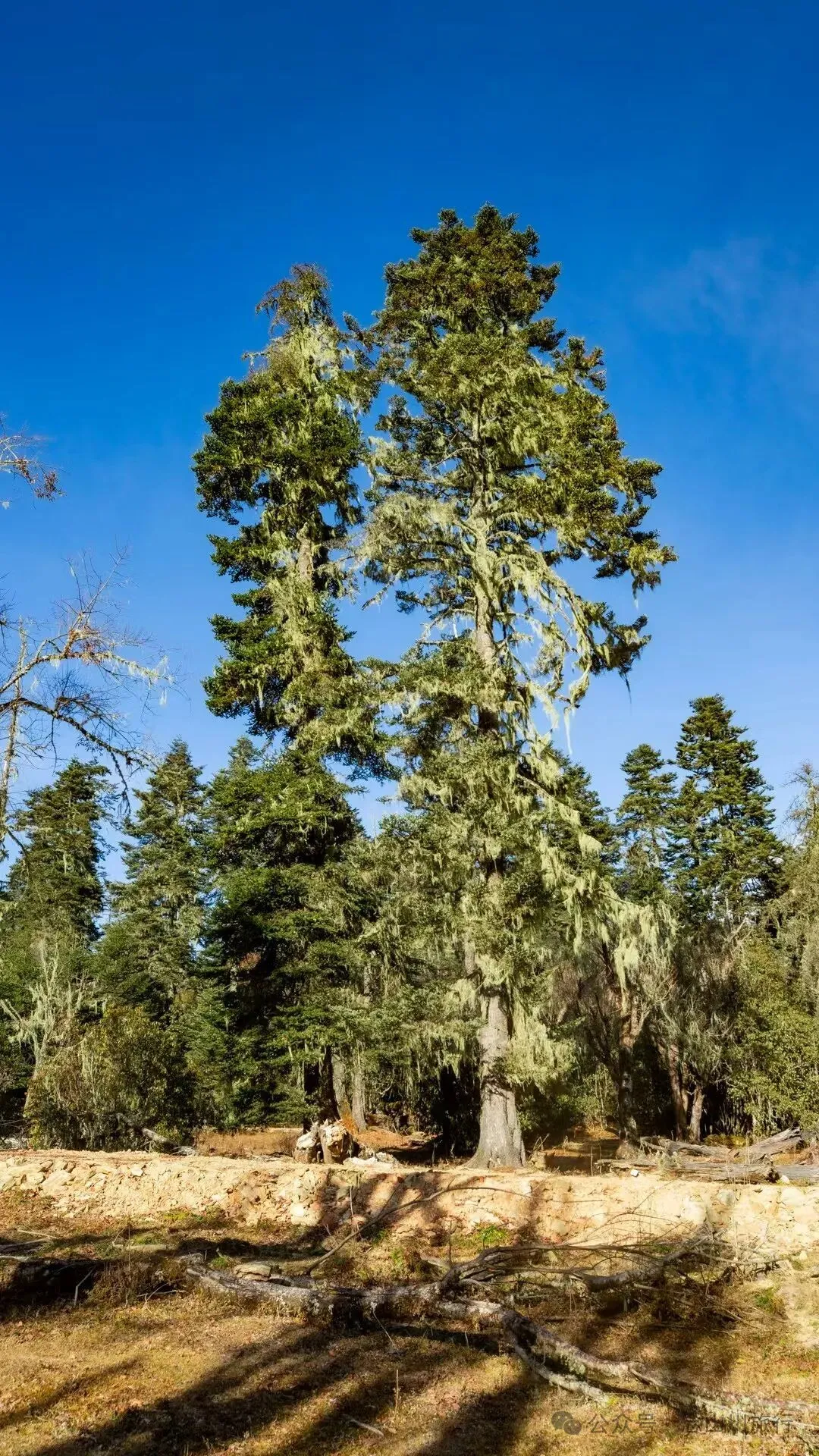
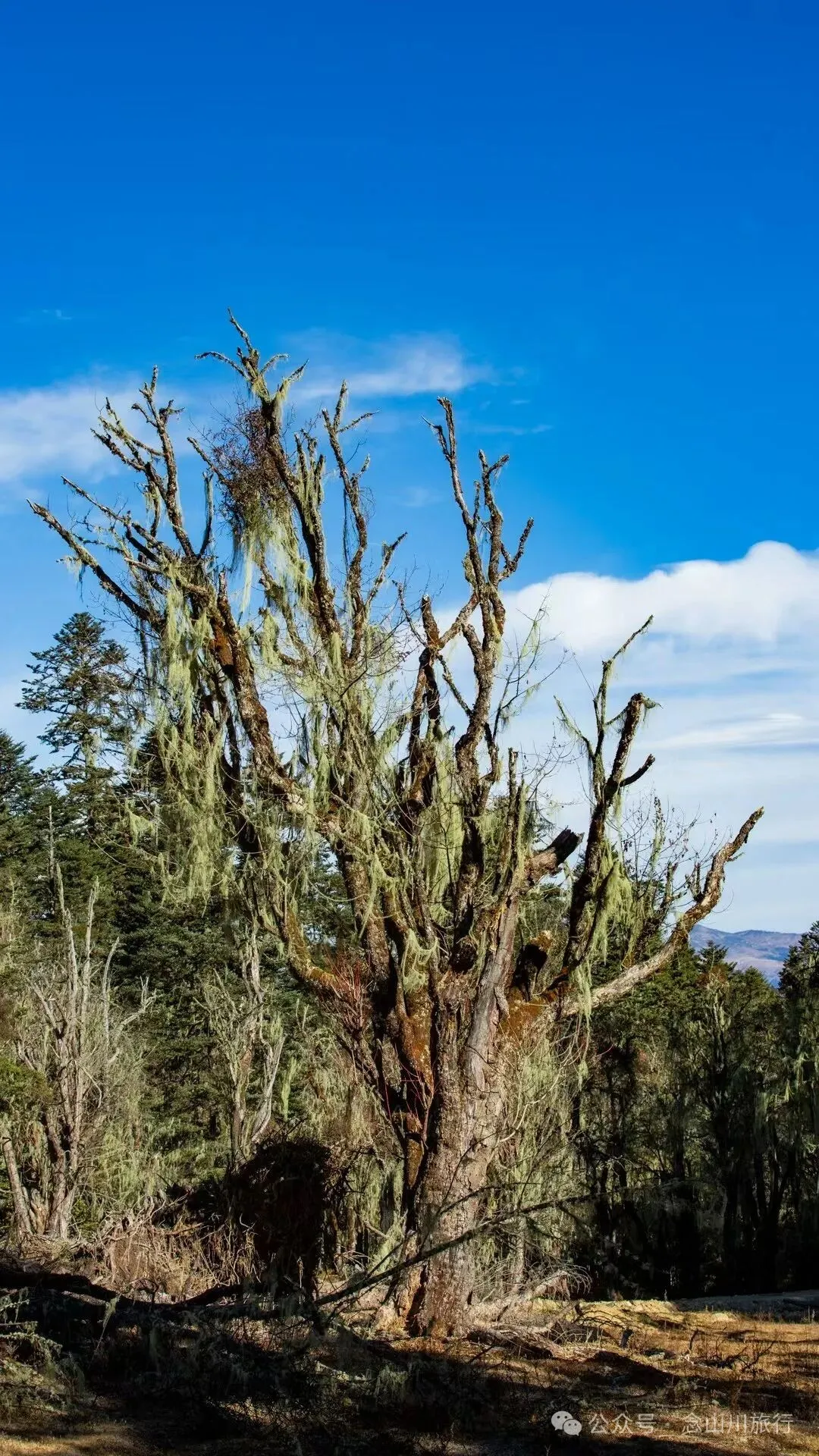
The hilltop pasture is divided into several small patches by the ancient primeval forest. Without these forests, the pasture would be more vast and expansive. But without them, wouldn't the pasture be monotonous? No one knows how long these trees have grown; people only say that they have always looked this way since the first time they saw them. The long green moss on the gnarled, sturdy trunks indicates they remain untouched by civilization, like the talking, walking Fangorn Forest in The Lord of the Rings. If these trees could speak, their stories would surely be fascinating.
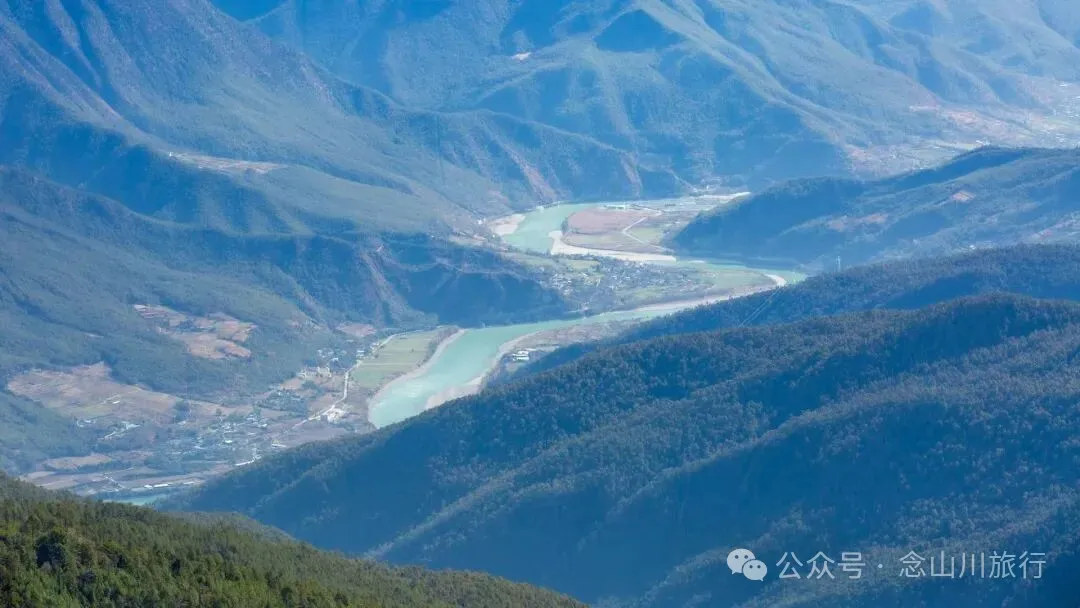
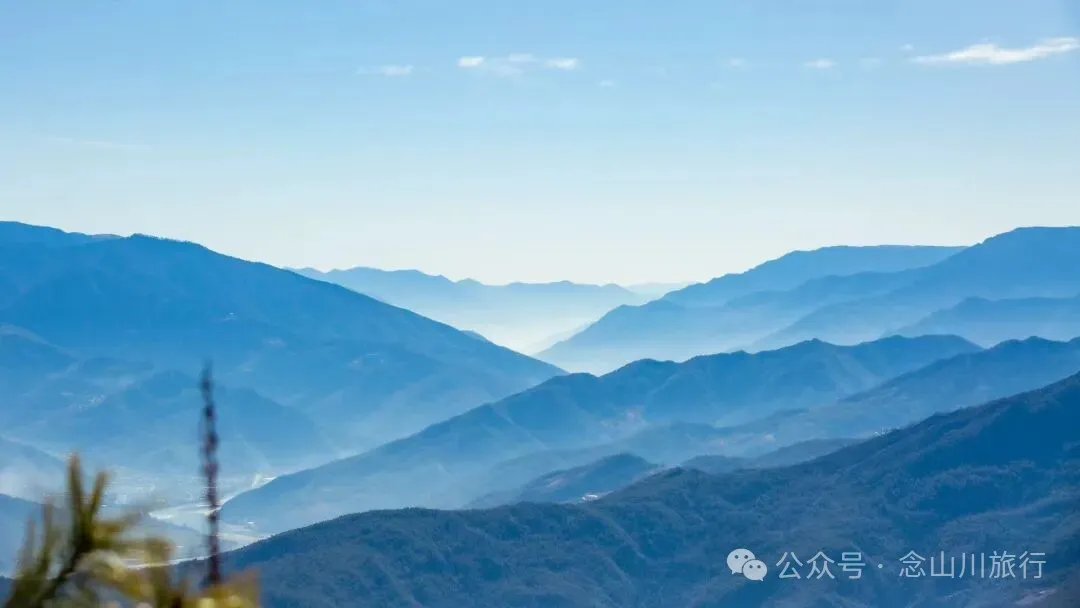
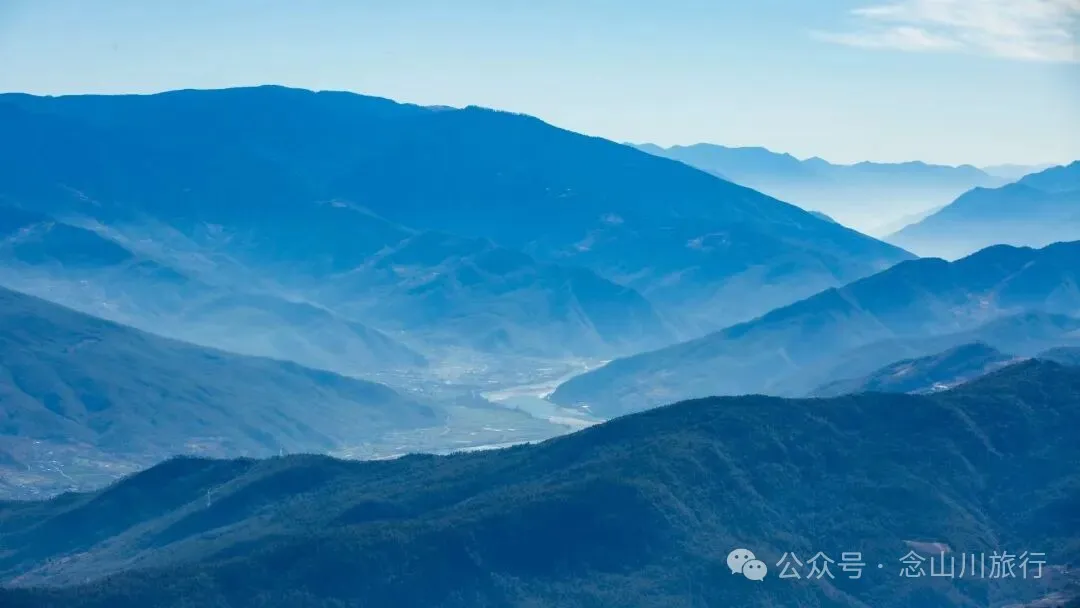
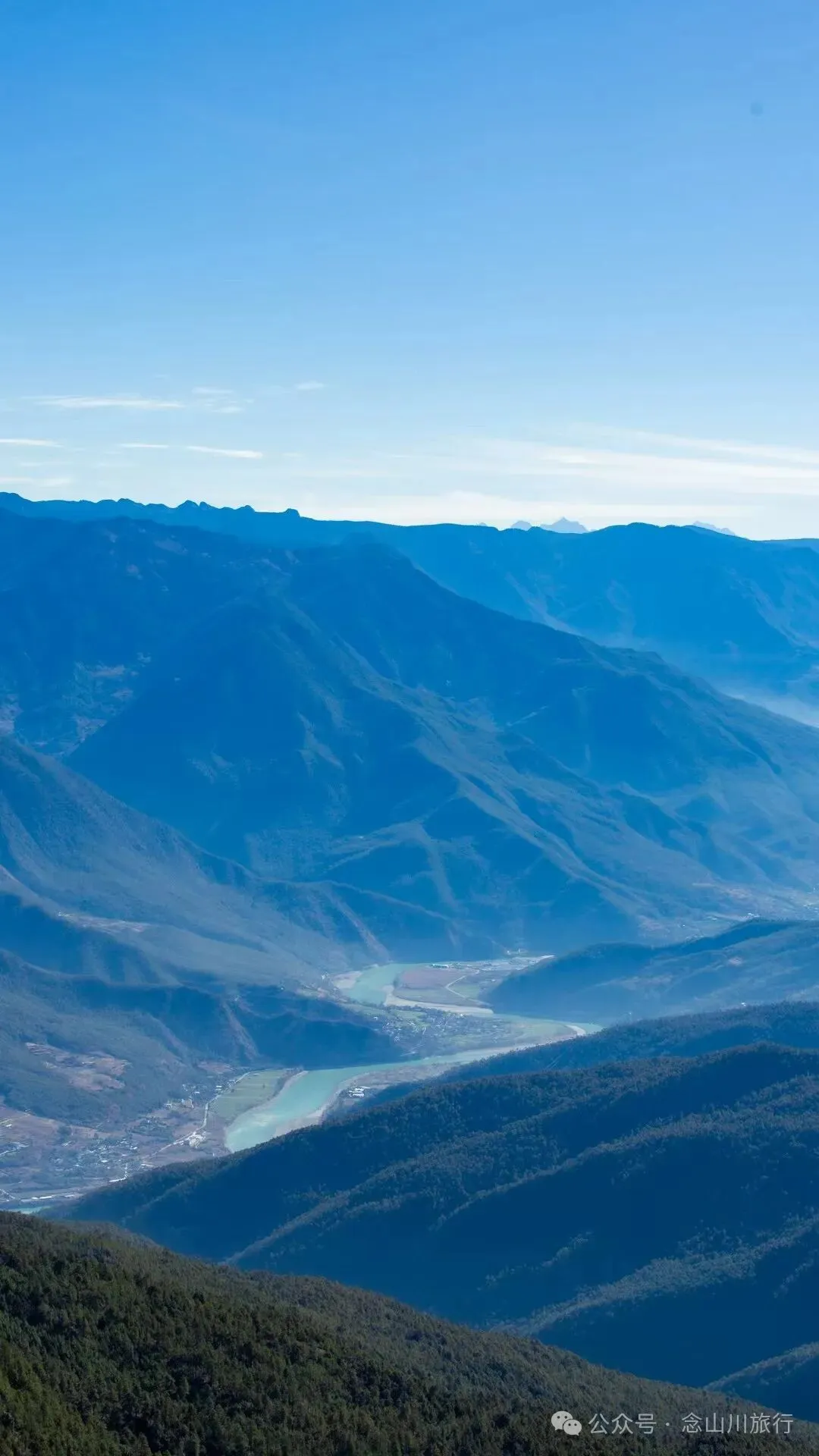
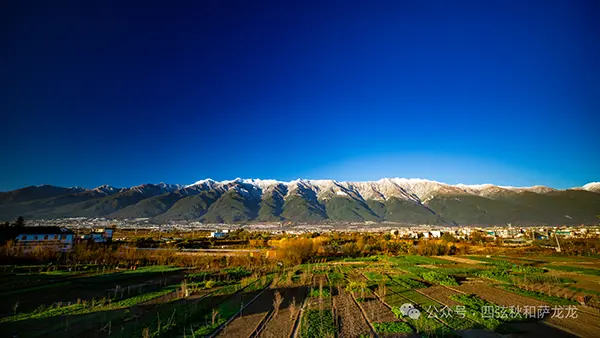
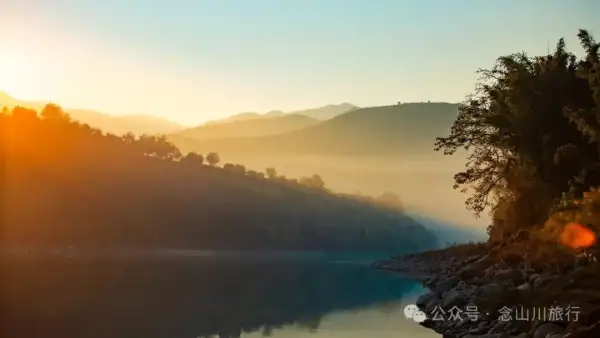
The vast view on the other side of the pasture belongs to Lijiang. A winding emerald river flows calmly across the land, with peaks alternating and ending at its banks, like a parade of whales watching and bidding farewell to the river as it departs on a magnificent mission that fills them with envy. The blue of the sky falls like mist, drifting over the mountains and land, merging with the ethereal white of the earth into a hazy, lingering mist around the peaks. At this moment, the clarity within that faintness outshines all light.