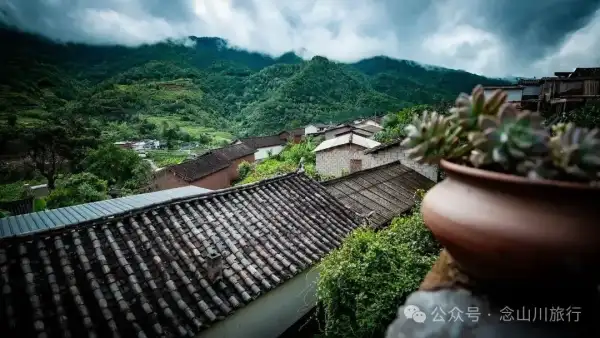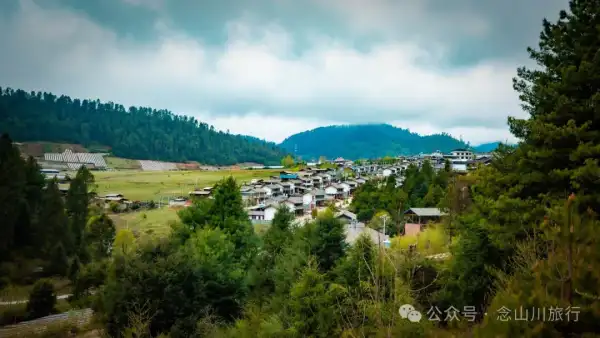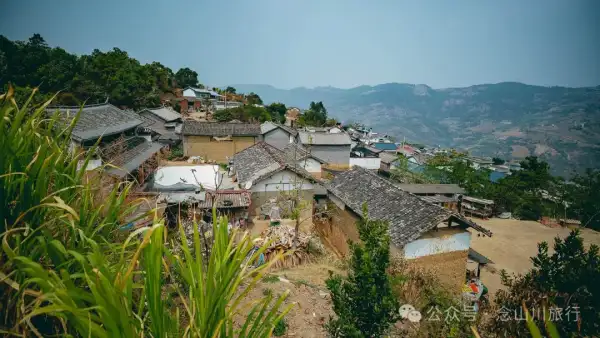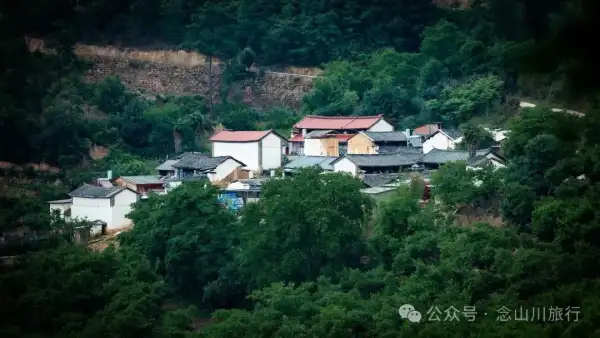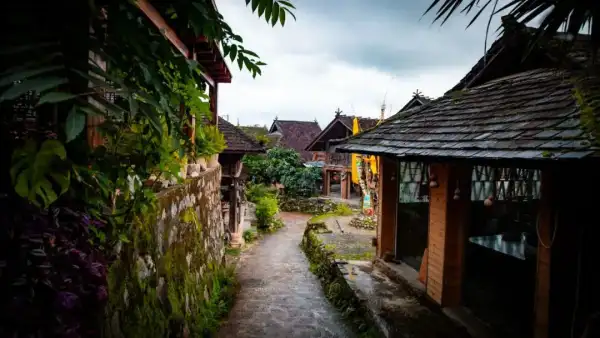


Bazhu Village, nestled among the mountains, is a typical Tibetan village. Weddings held here often feature strong Tibetan wedding customs, from daytime feasting to nighttime celebrations, showcasing the uniqueness of traditional Tibetan culture blended with ethnic integration. According to villagers, weddings in Bazhu Village usually take place at the end of the year, and the preparation process is lengthy, lasting up to a year or even longer.
Weddings are generally held at home, and most of the ingredients are grown or raised by the villagers themselves. In particular, the multigrain snacks served during morning and afternoon tea, as well as the pork and chicken at the banquet, are products of the villagers' long-term careful cultivation and breeding. Even the wedding wine used to entertain guests is brewed by the host family. It is easy to imagine that over the past year or two, the host family has been busy from the end of the previous year sowing wheat seeds, to hatching chicks and feeding piglets at the beginning of the new year, and planting corn in the spring. Every day, they devoted their energy to farming and raising livestock, and whenever they thought of the joyous event at the end of the year, their hearts must have been filled with happiness and delight—a feeling that lasts until the wedding ends and even beyond.
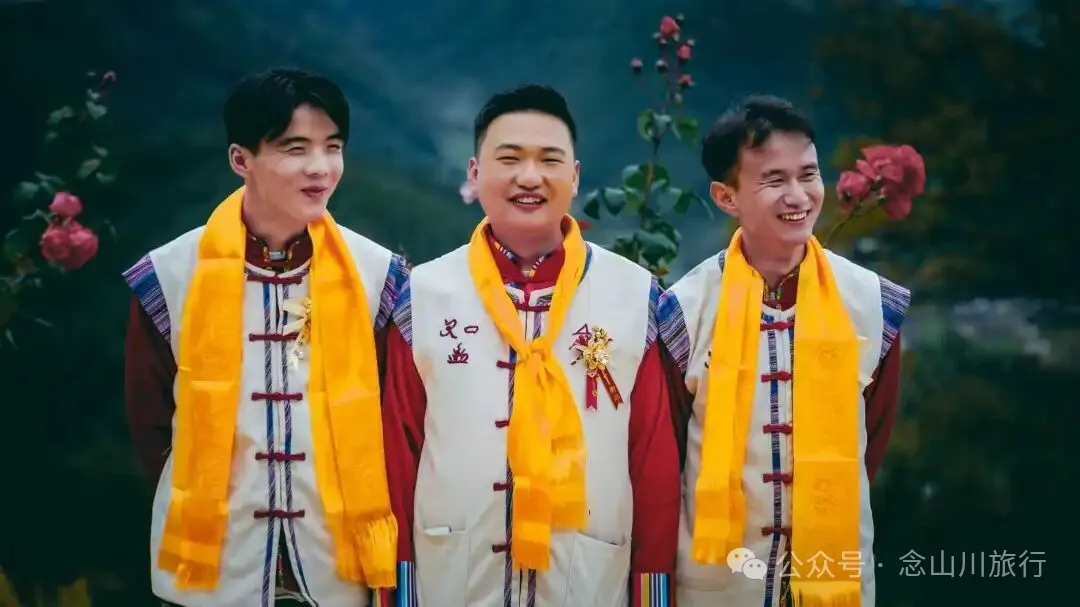
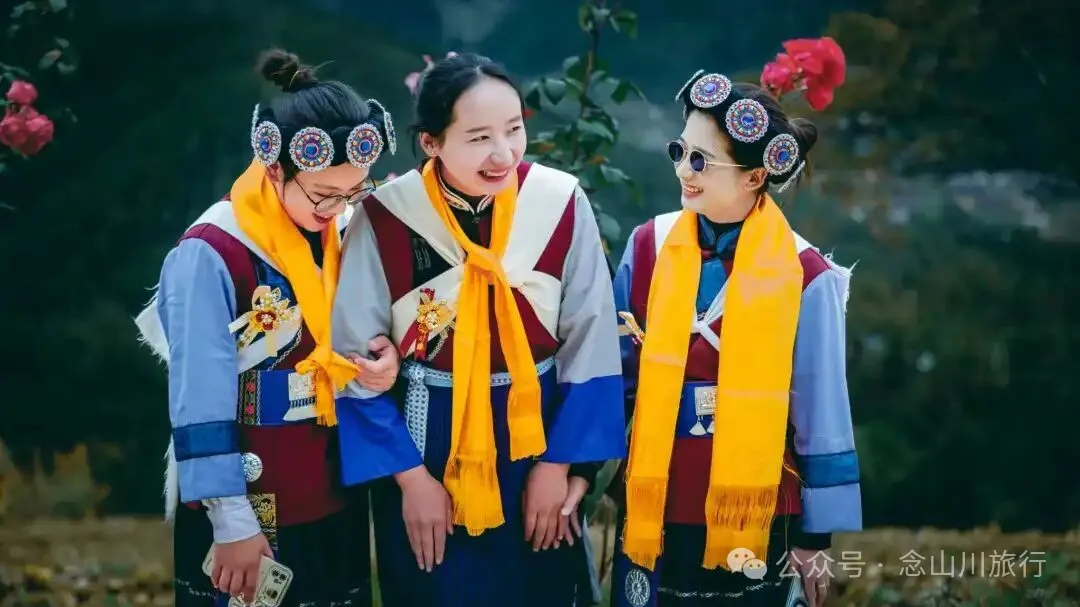
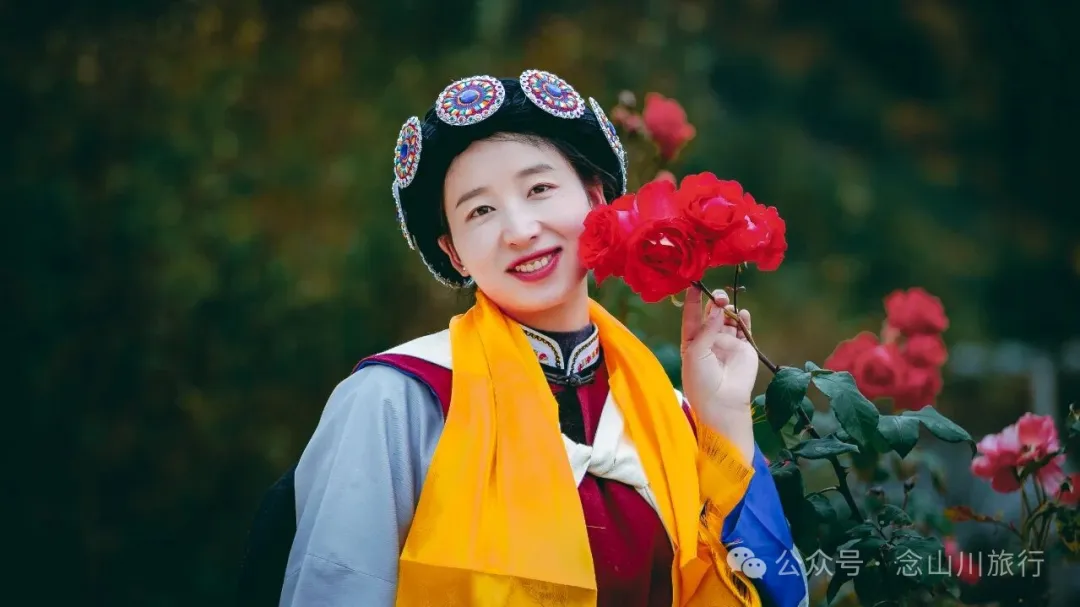
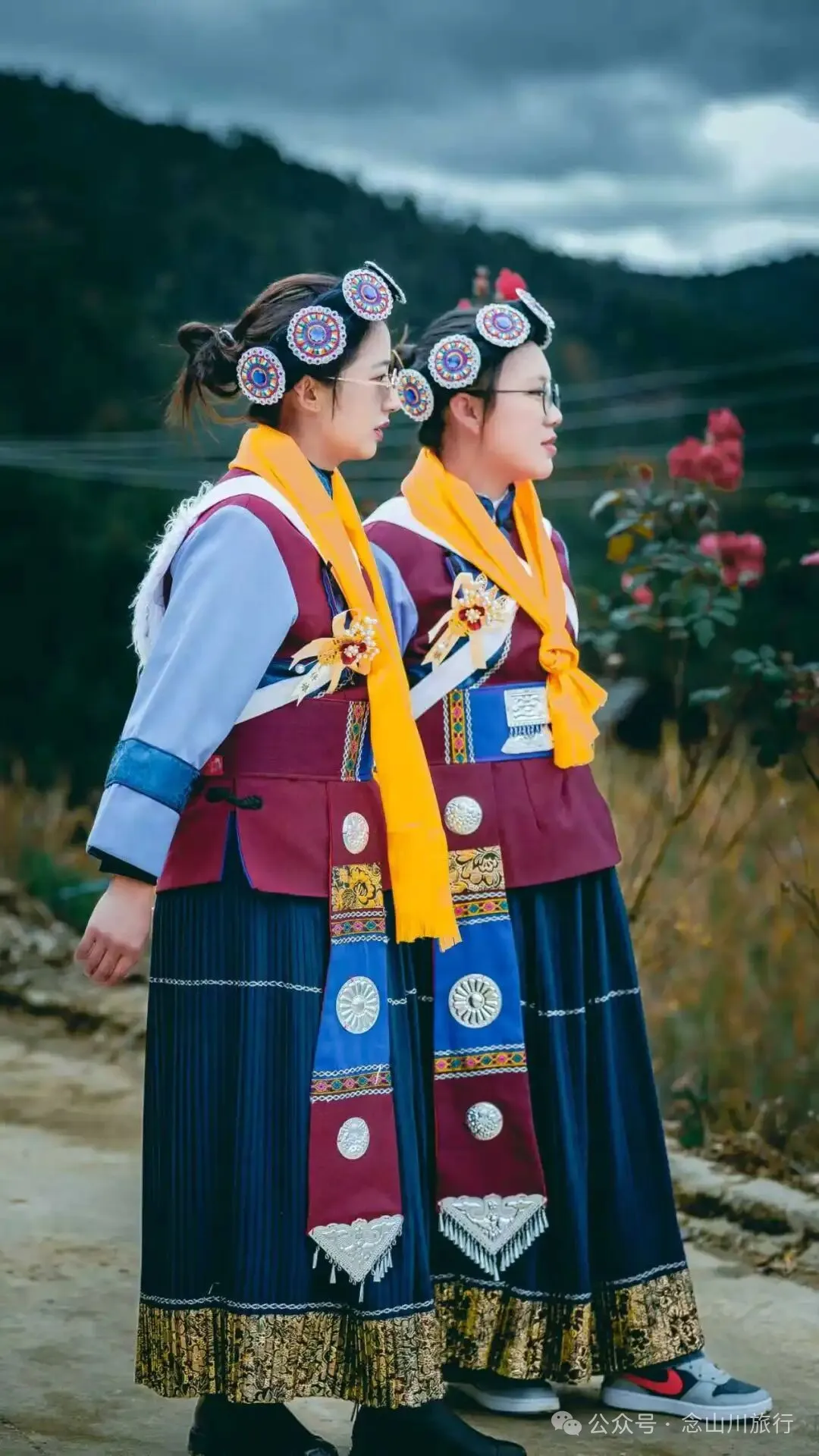
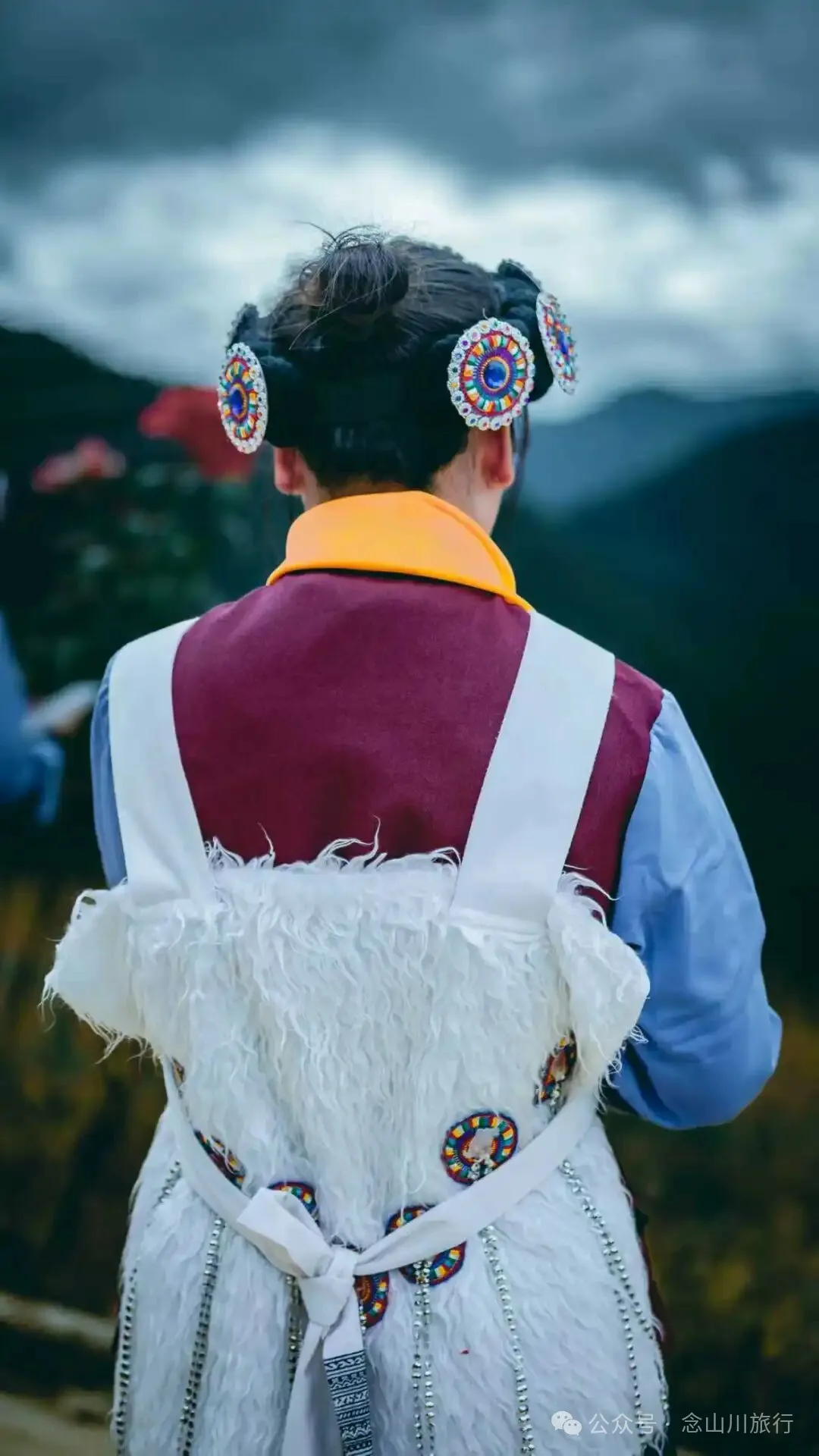
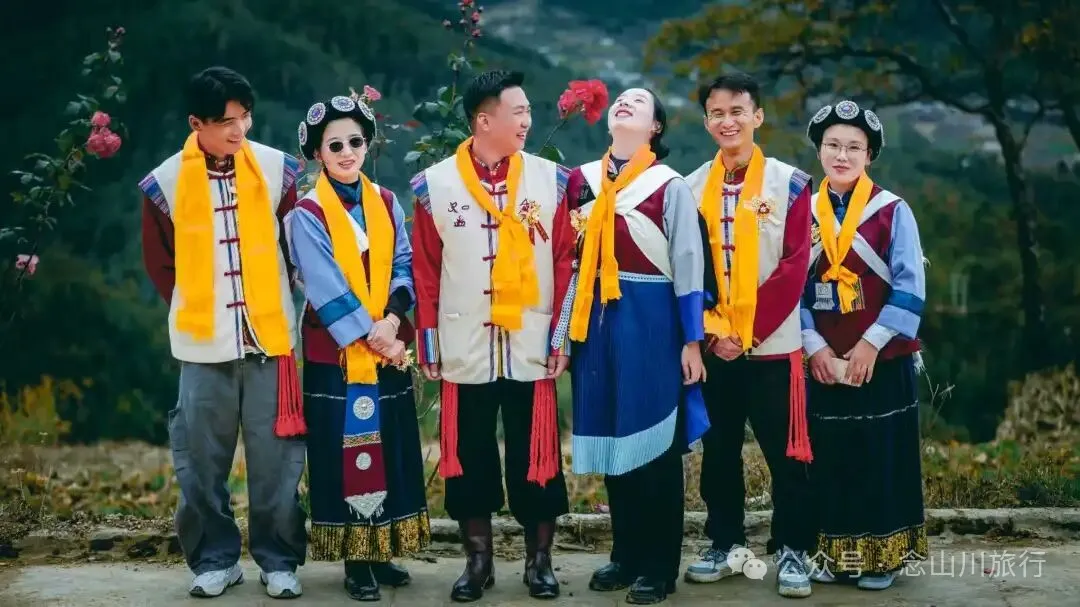
As soon as we arrived at the entrance of the host family's home in the Shijiaben group, we saw the groom, dressed in splendid attire, standing at the door to welcome guests. It turned out that the groom is a Naxi from Lijiang, and the bride is marrying into his family. Therefore, the wedding attire of the couple and the bridesmaids and groomsmen was not Tibetan but traditional Naxi clothing, known as "Pixings Daiyue" (Wearing the Stars and Moon). Naxi women's clothing is quite elaborate, including a shirt, a woman's jacket, a Pulu vest, an apron, a seven-star sheepskin cape, and a headpiece (worn by bridesmaids). The most exquisite part is the seven-star sheepskin cape.
The seven-star sheepskin cape is usually made of sheepskin, with the upper part lined with black woolen cloth and the lower part adorned with seven round cloth patches embroidered with colored threads. Each round patch has two thin deerskin threads in the center, symbolizing the rays of stars. The "seven stars" represent seven stars, and in Naxi belief and culture, this is often interpreted as "wearing seven stars," symbolizing the diligence of Naxi women, who work from dawn to dusk. The overall shape of the cape: the black woolen part at the top represents the night sky, and the seven star disks below are the shining stars. Women wear it on their backs, working from morning till night, as if carrying the sun, moon, and stars on their backs.
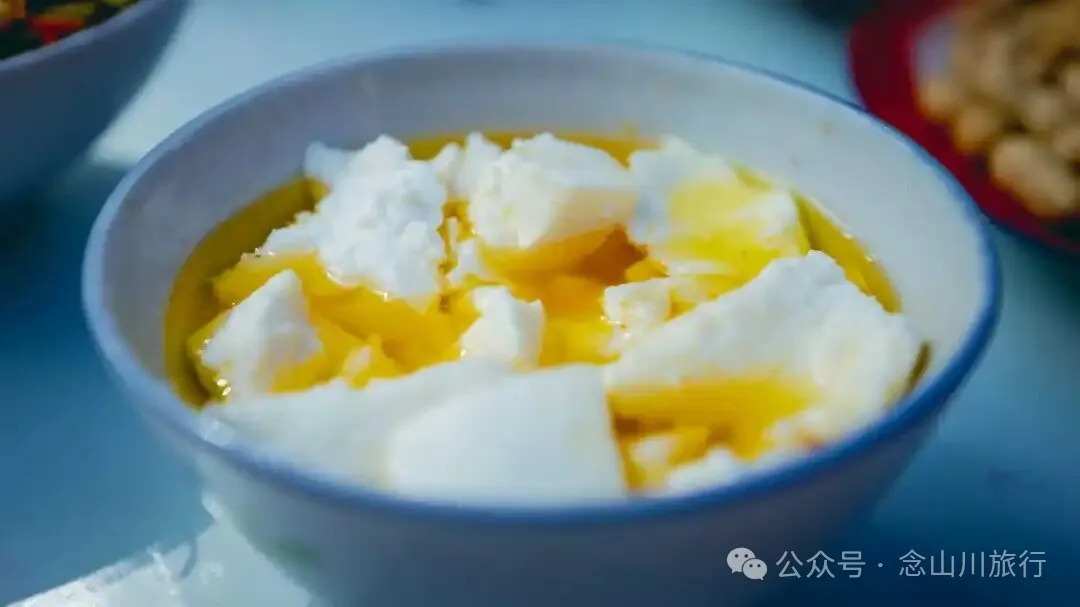

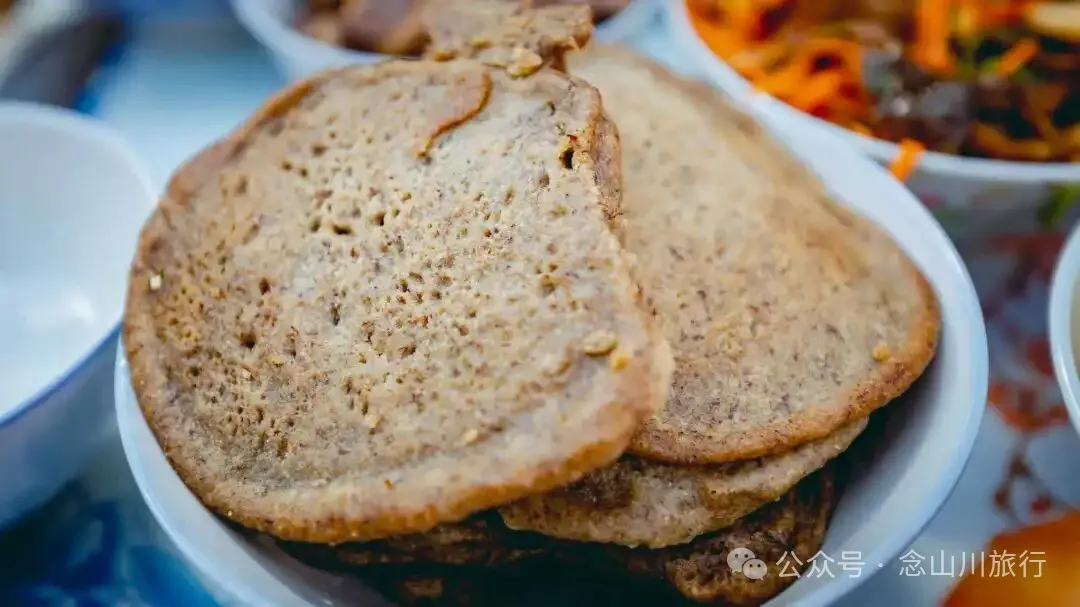
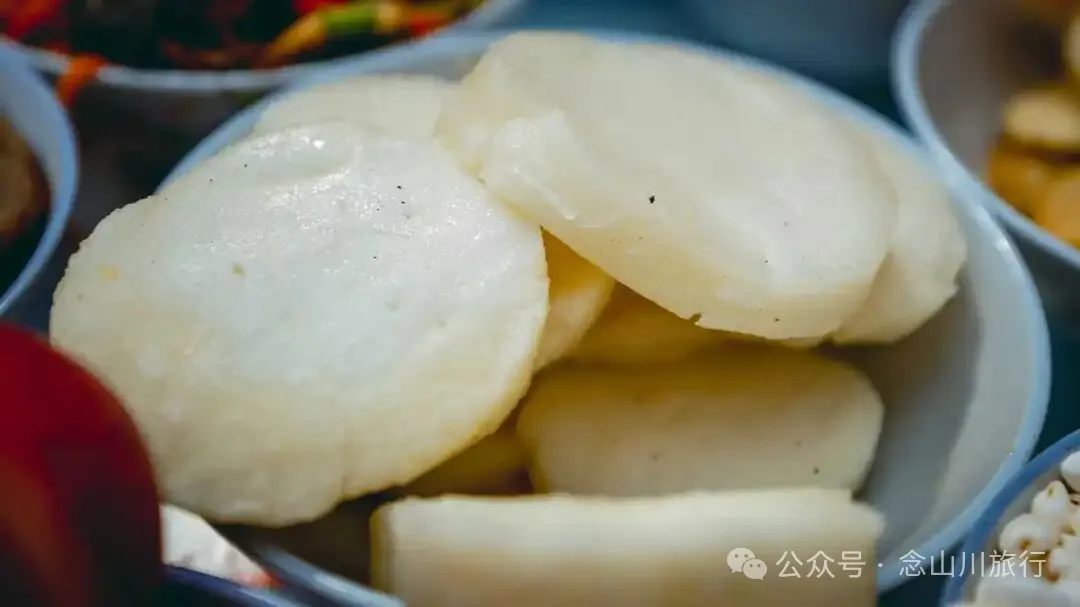


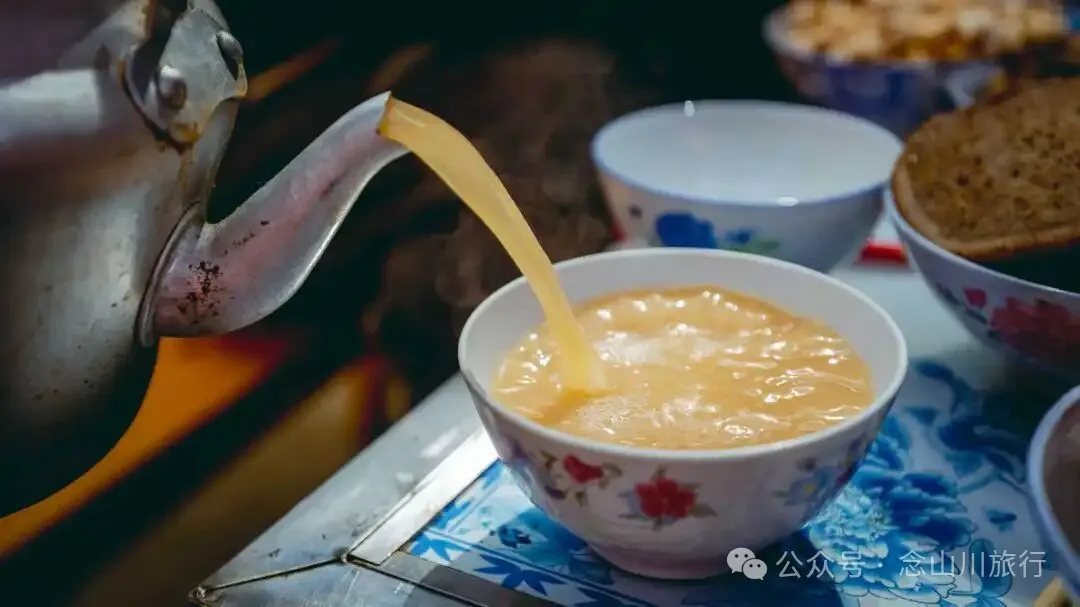
Regarding the banquet, the tea snacks in Bazhu Village are particularly eye-catching, similar to those at weddings of other ethnic groups such as the Lisu and Naxi in the Lappu River Valley. Rice, millet, glutinous rice, corn, wheat, highland barley, buckwheat—various grains are fried, stir-fried, or ground into flour and steamed to make a variety of snacks, laid out on the table in a dazzling array. One wishes for two stomachs to savor each snack's flavor. These snacks are simple and unadorned, without elaborate shapes or added ingredients. With one bite, the rustic and original taste of the grains instantly evokes the heaviness and steadiness of the mountains and earth. I think people use this way to express their gratitude for the blessings of this land.
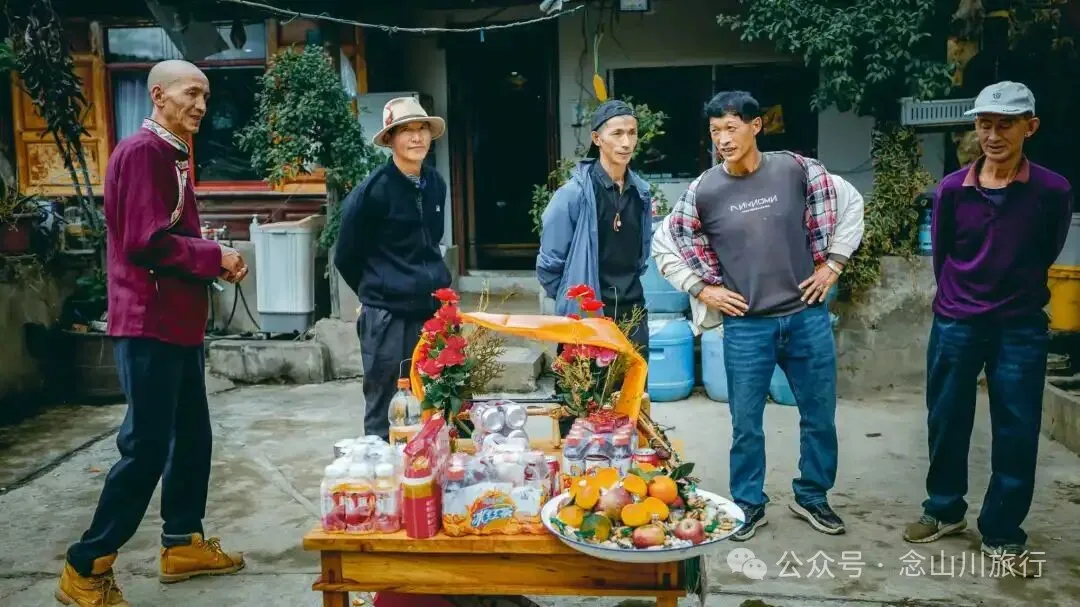
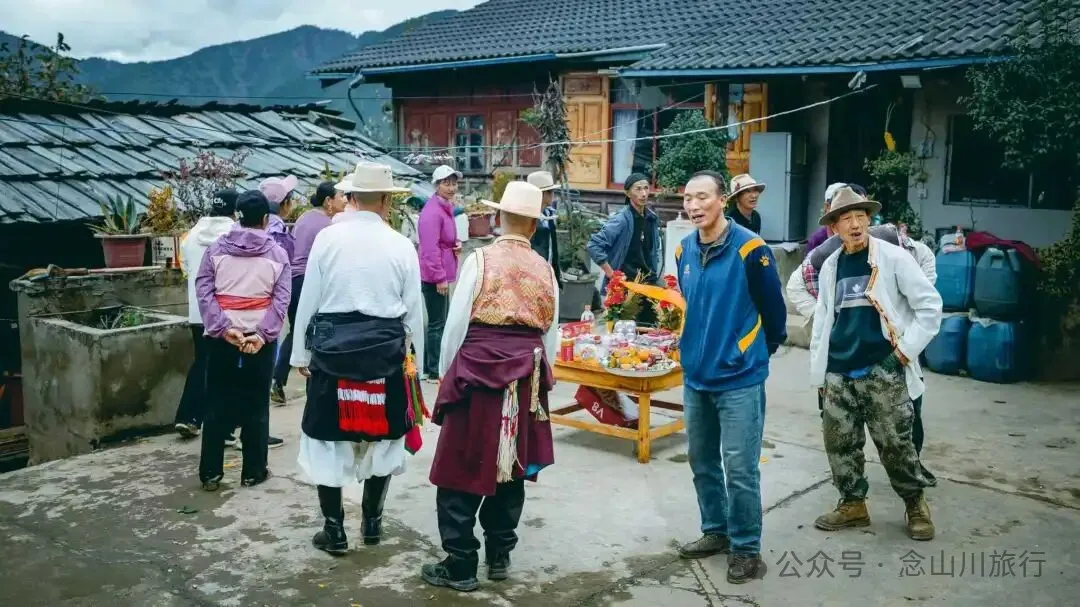
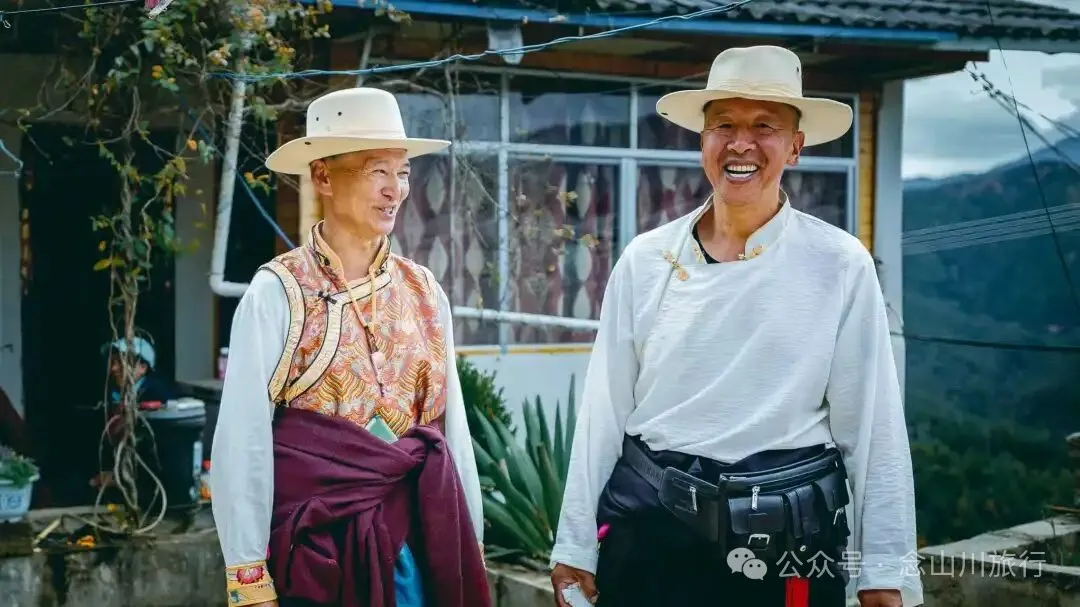
There were a few hours of free time between afternoon tea and the main meal. A small group of people gathered in the center of the venue and began dancing lively Guozhuang. This dance seemed like a warm-up, preparing for the larger, more festive celebration at night.
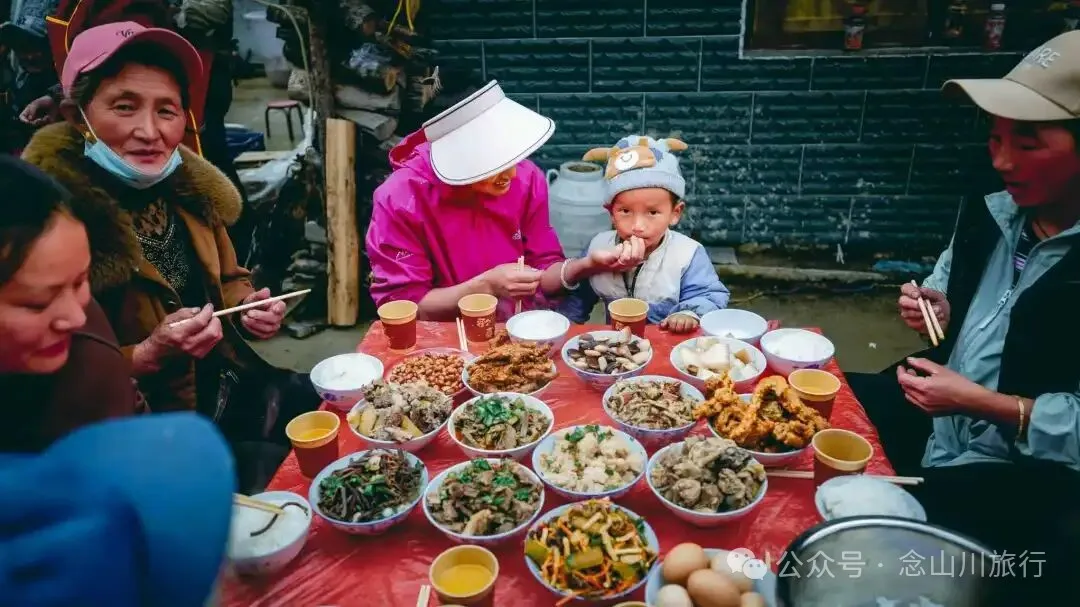
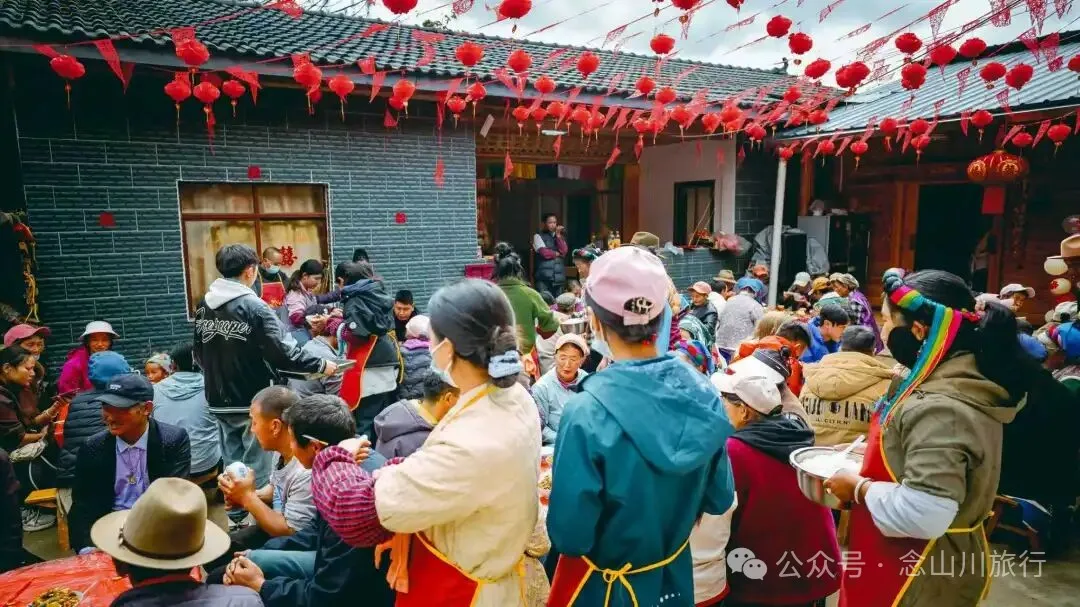
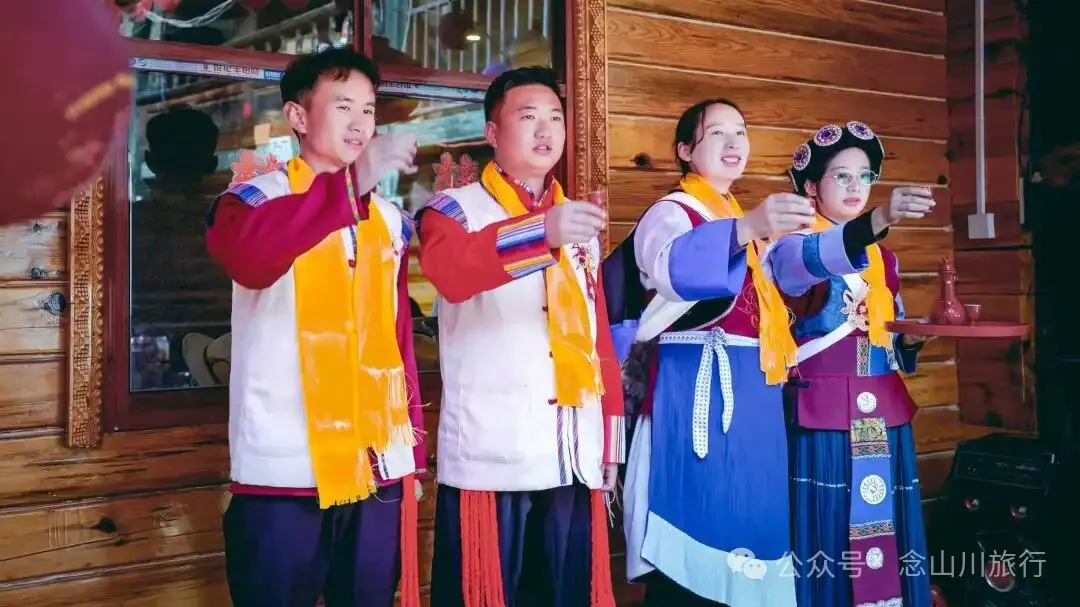
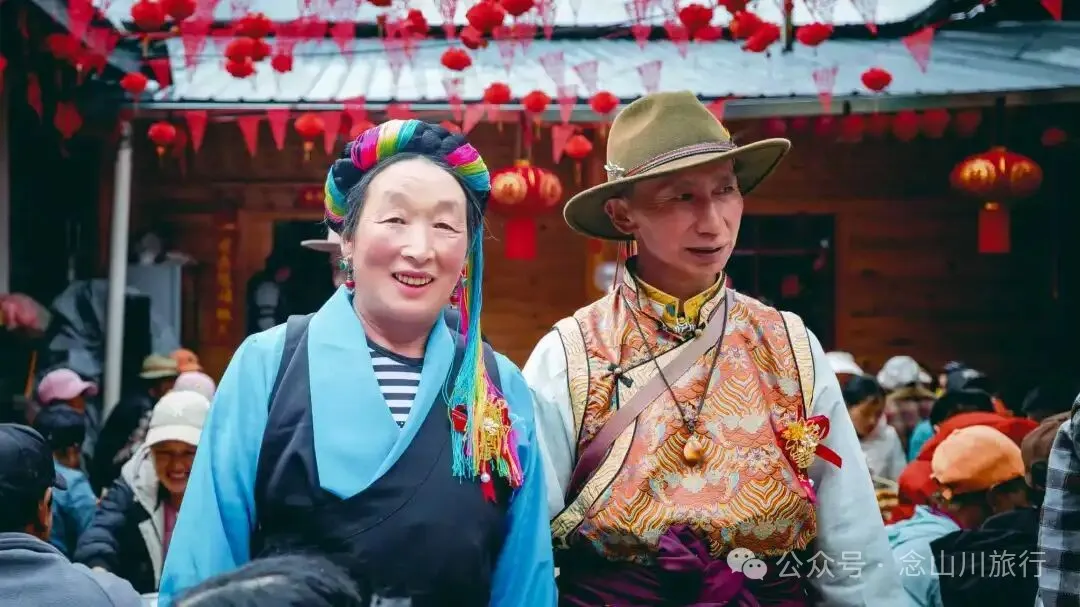
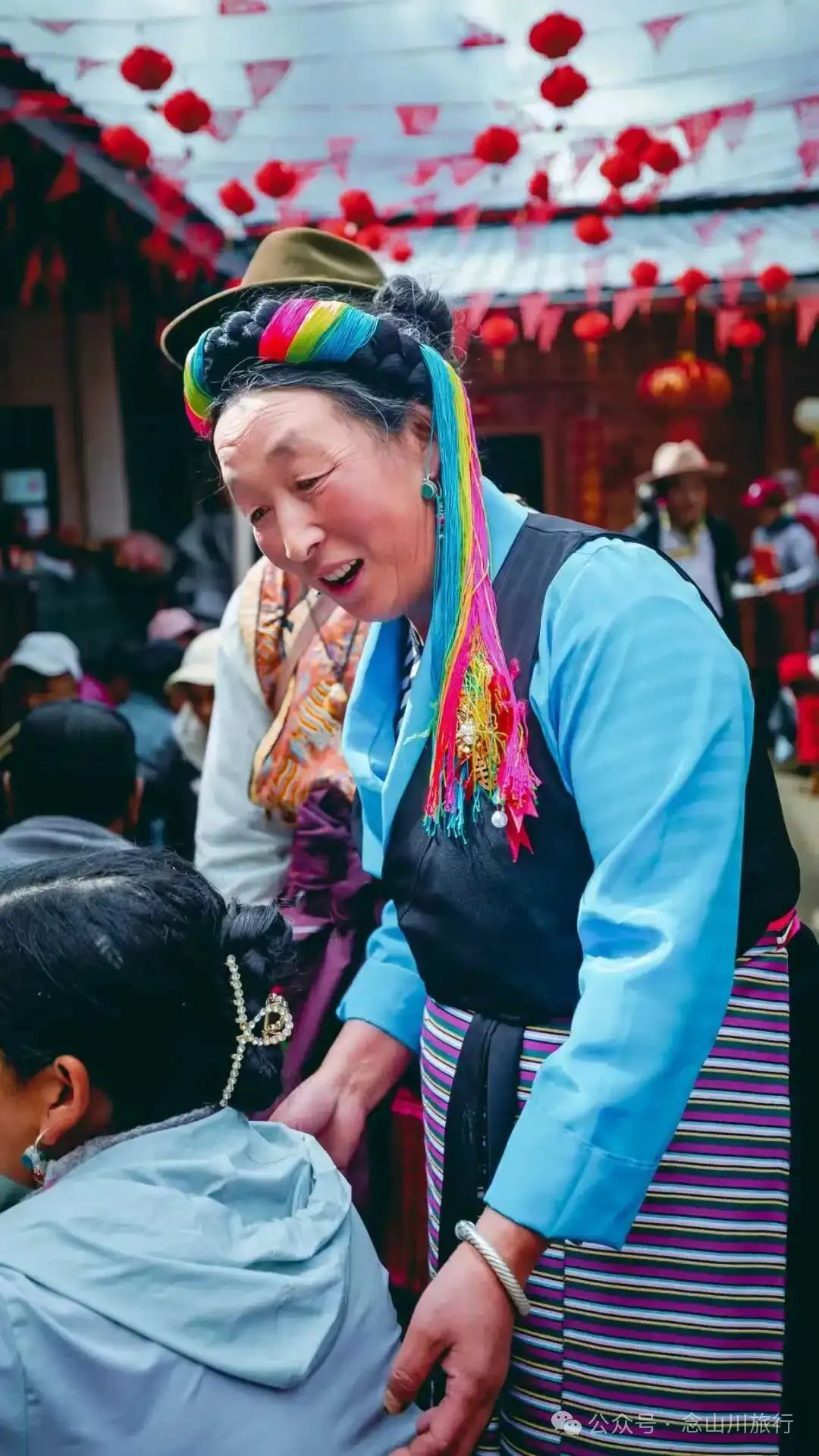
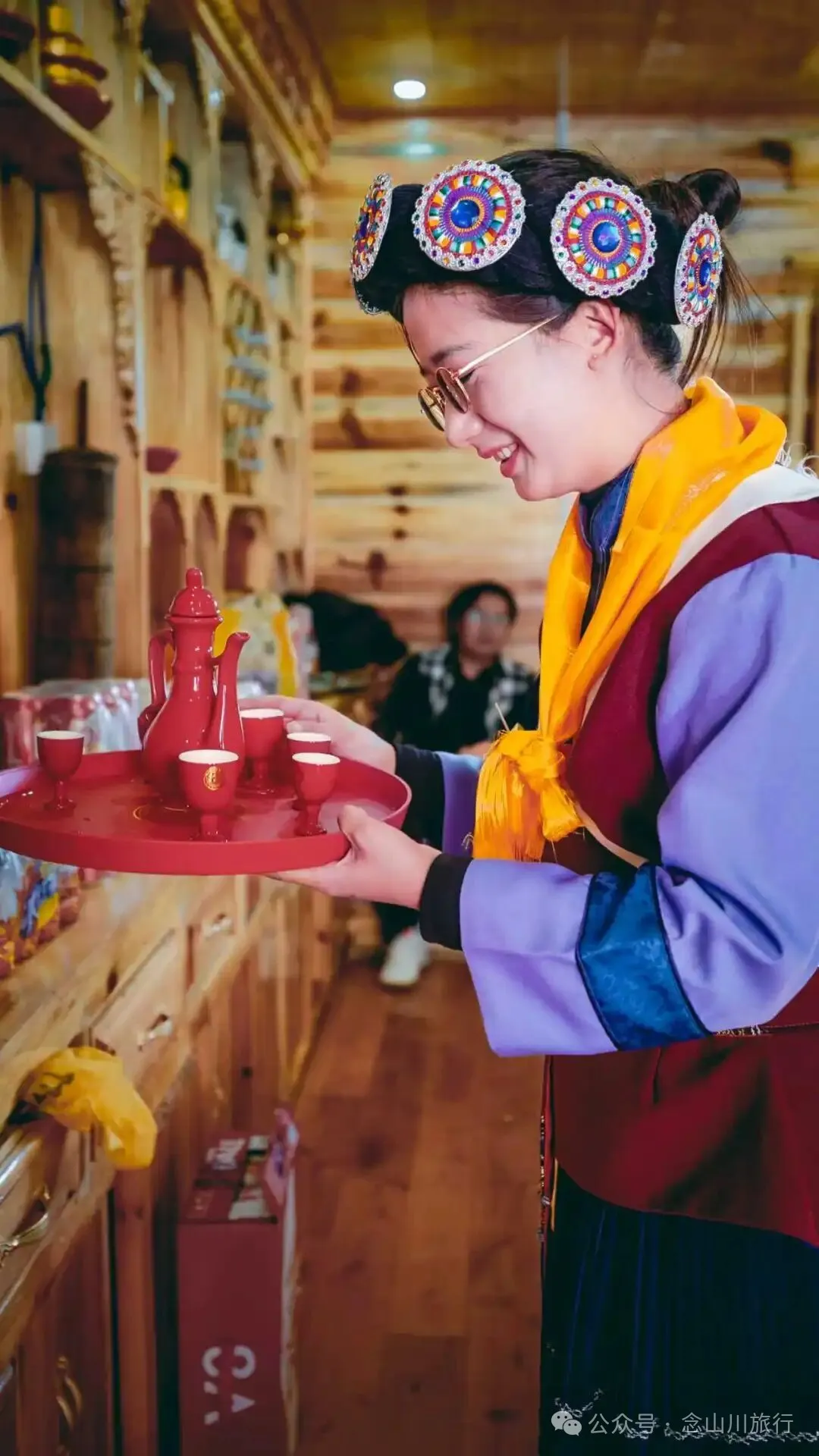
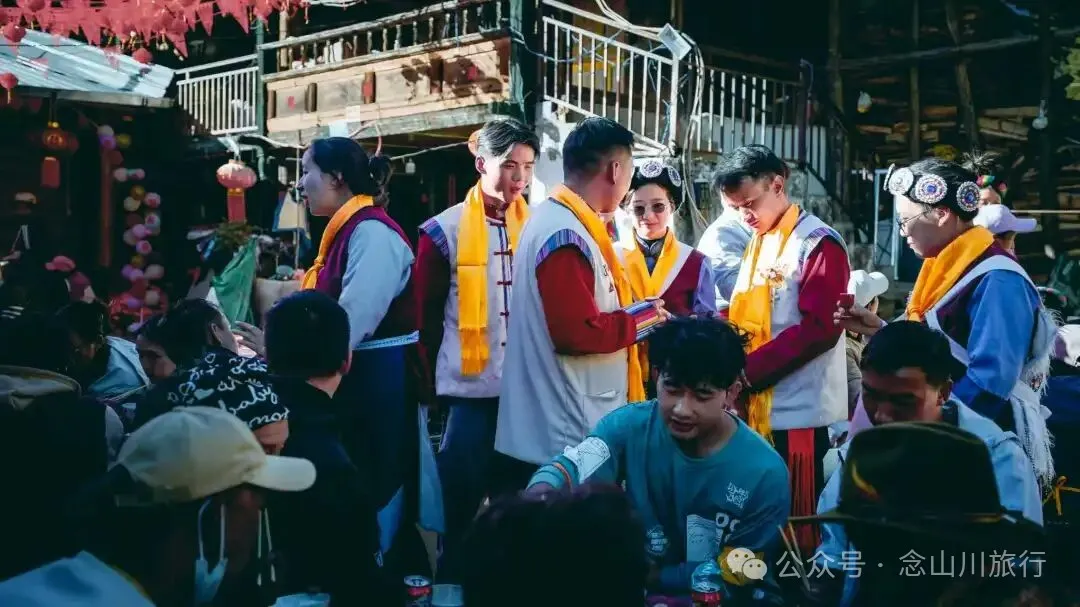
The main meal began at 2 p.m. Due to the large number of guests and limited space, the banquet was served in shifts, continuing until 5 or 6 p.m. Table after table of delicious dishes were brought out, their aroma wafting through the air, making one's mouth water just from the smell. As guests took their seats, the master of ceremonies gave a speech in Tibetan that I could not understand. Then the couple, accompanied by friends, toasted and thanked the guests, who returned the toast and offered wedding blessings. The hosts, dressed in Tibetan attire—the bride's father and mother—walked among the tables, greeting each guest. The banquet was filled with clinking glasses, laughter, and joy. When the daytime feast ended, only a small part of this unique Tibetan wedding in Shijiaben had taken place. As dusk approached, people busied themselves with cleaning up while patiently waiting for the night to fall, when two larger, all-night celebrations would begin.