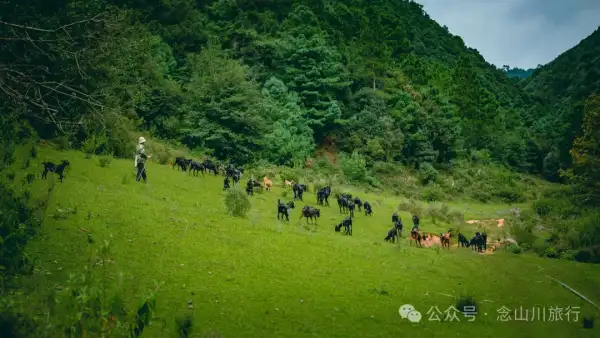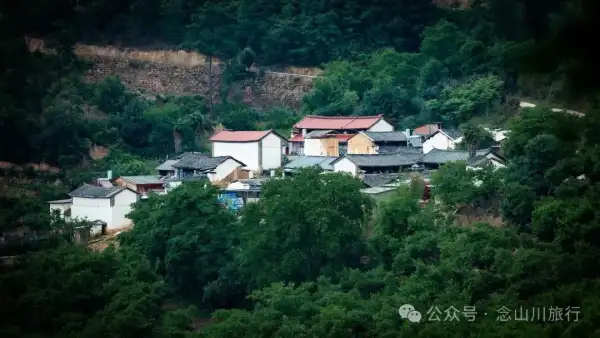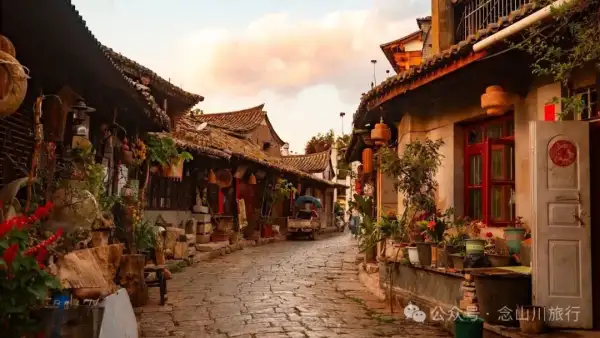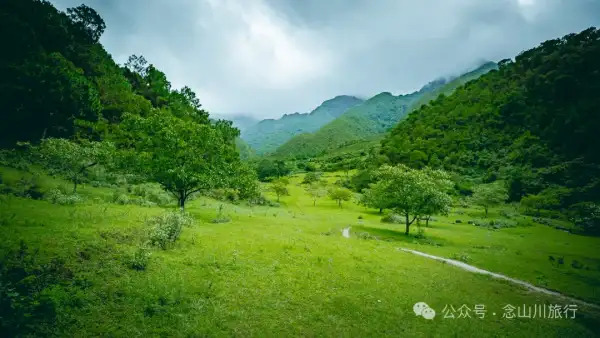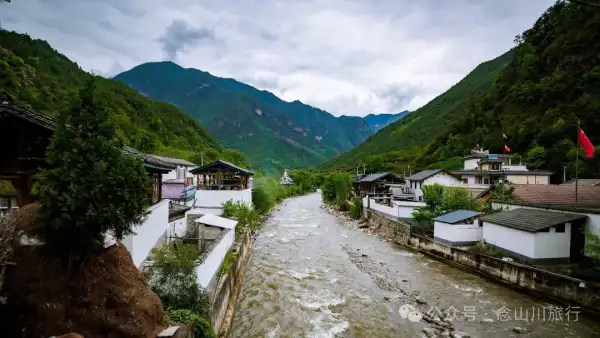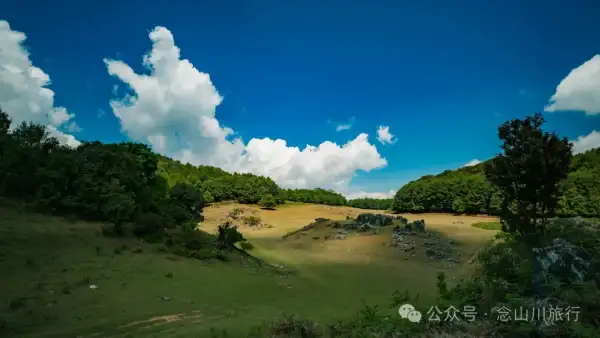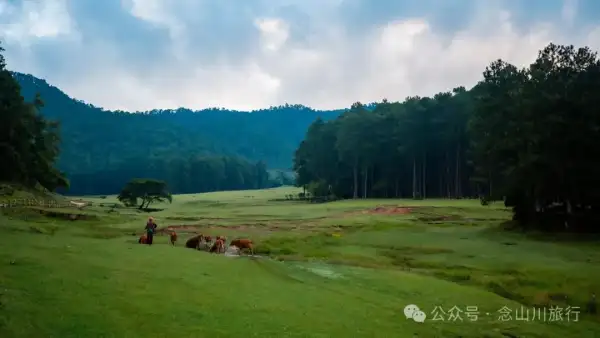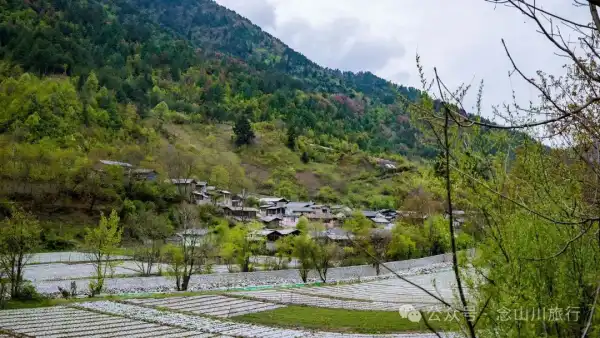

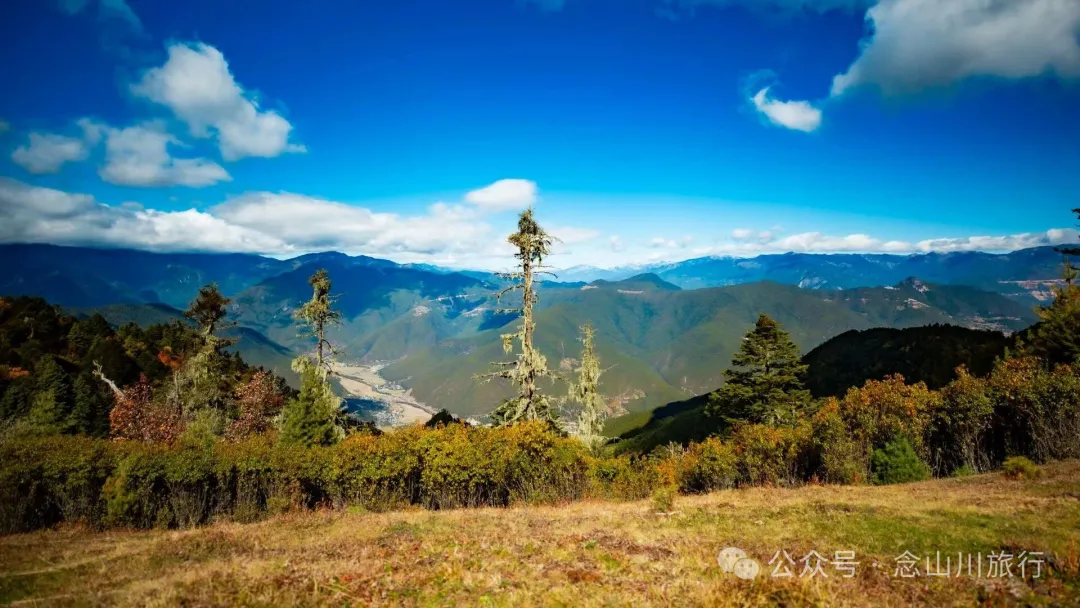
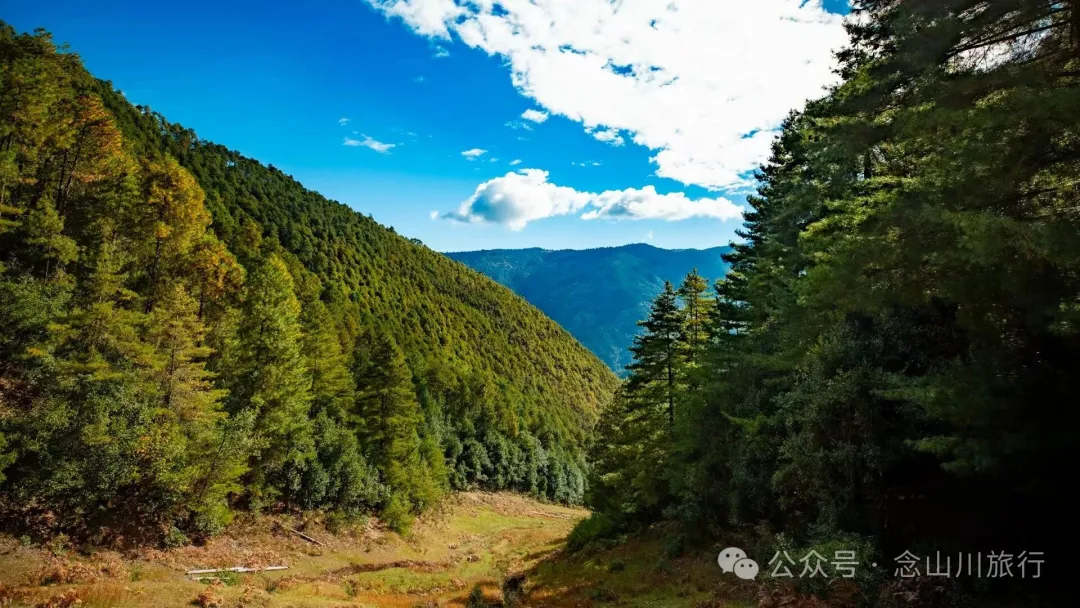
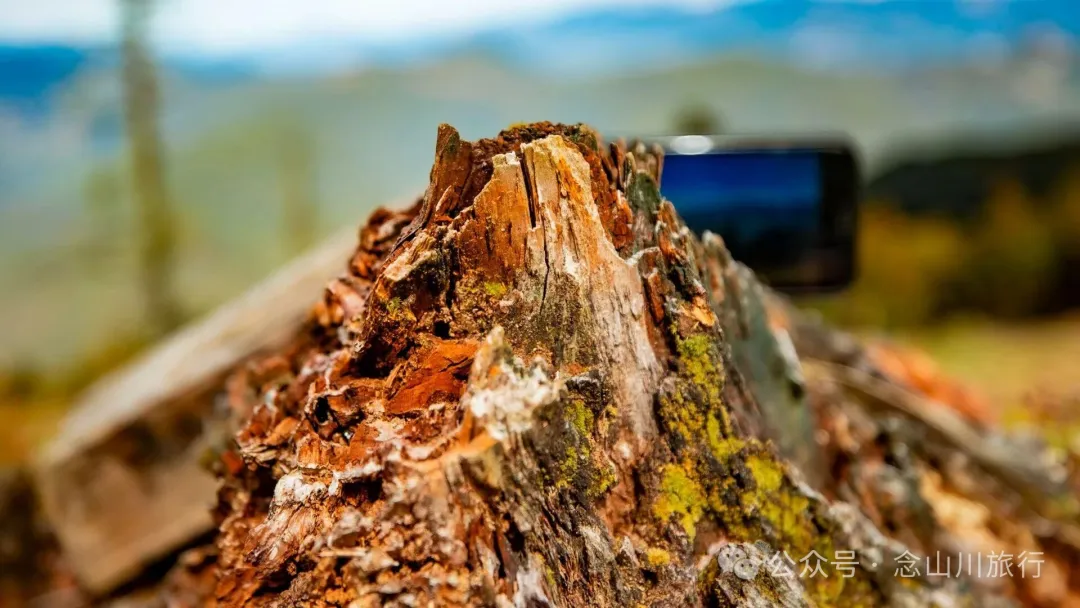
Behind the village committee, there is a very narrow meadow in the mountains, stretching almost from the edge of the forest on the slope of Talagong to the mountaintop. I heard that many years ago, the meadow was more open and lush, but gradually it was replaced by forest. From satellite images, the meadow looks like a long-handled wooden spoon. The first time I hiked this long-handled meadow was during my first week of long-term stay in Bazhu Village. After finding the tallest Tibetan house in Talagong on the map, I climbed up along a nearly dry mountain stream.
The weather was still warm then, and three yellow cattle were freely foraging on the meadow, not yet driven back to the village by their owner to take shelter from the cold in the barn. They grazed from the foot of the mountain all the way to the shoulder, their yellow backs against the boundless blue sky. When one of them saw a human approaching, it didn't bother to check if it was its owner; it came over and stared with round eyes, its big nose sniffing incessantly—it was looking for salt. But this time, there were no yellow cattle to be seen. The entire meadow was empty, and even the silent, good-natured dog was not there.


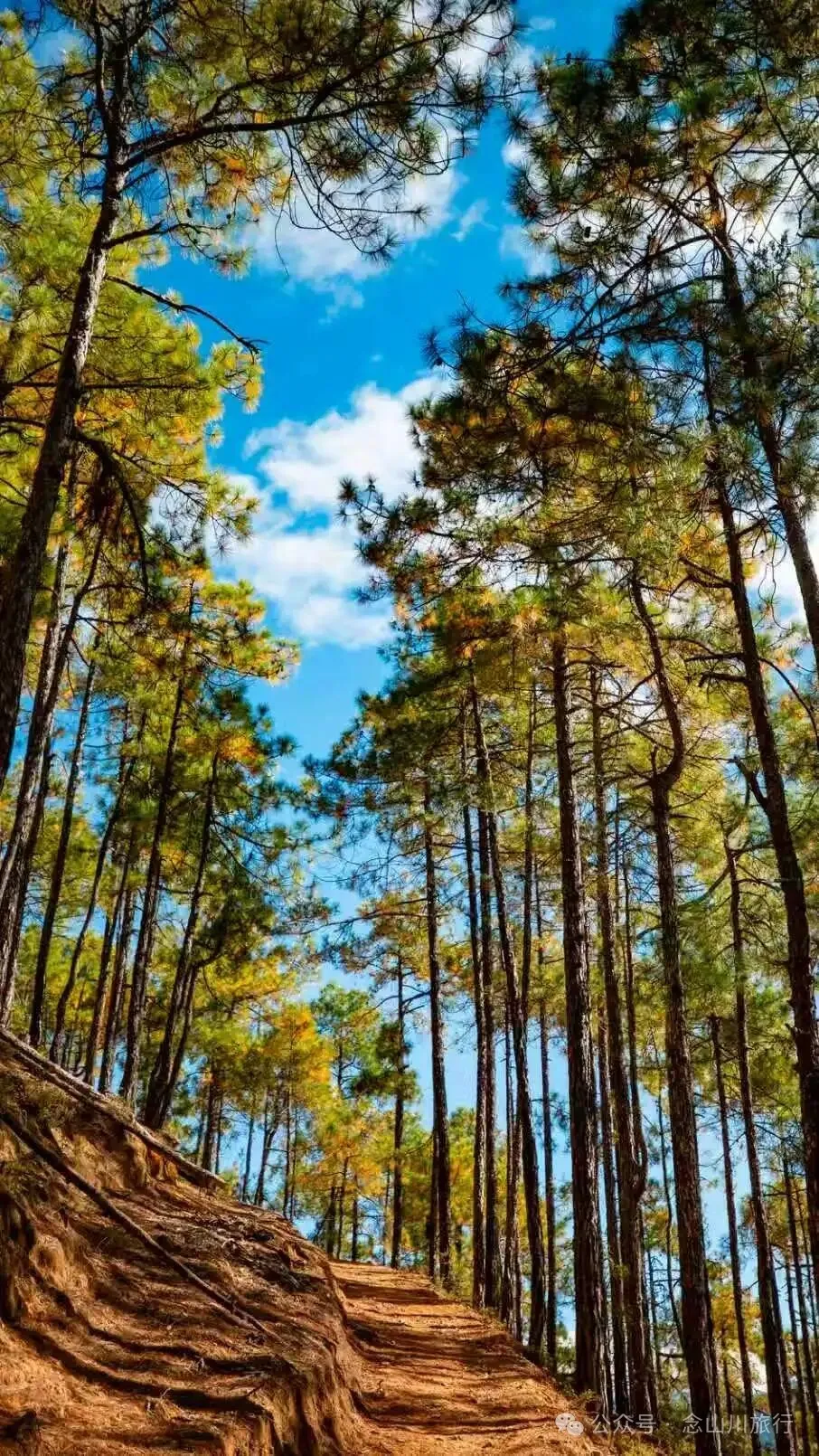
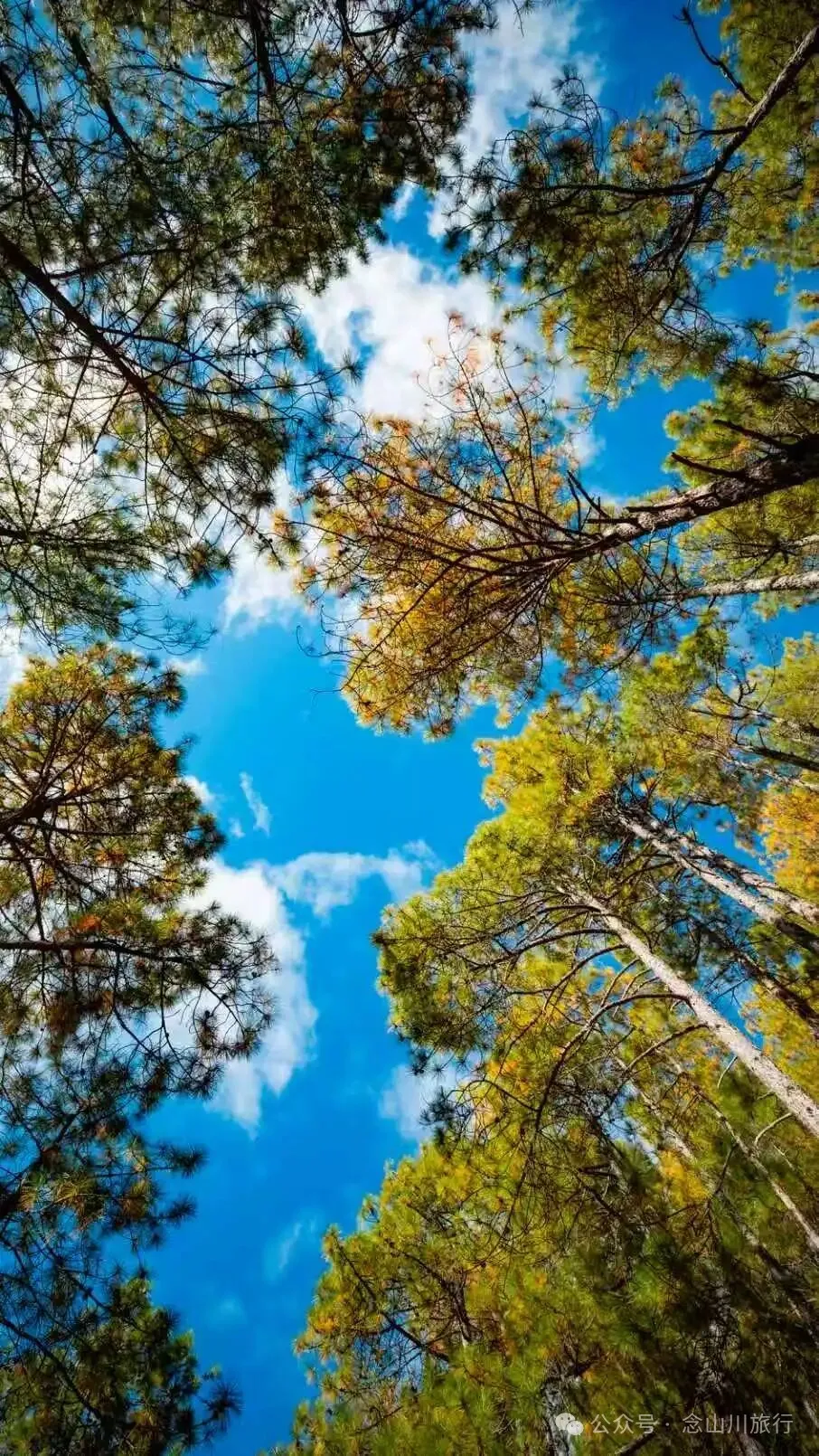
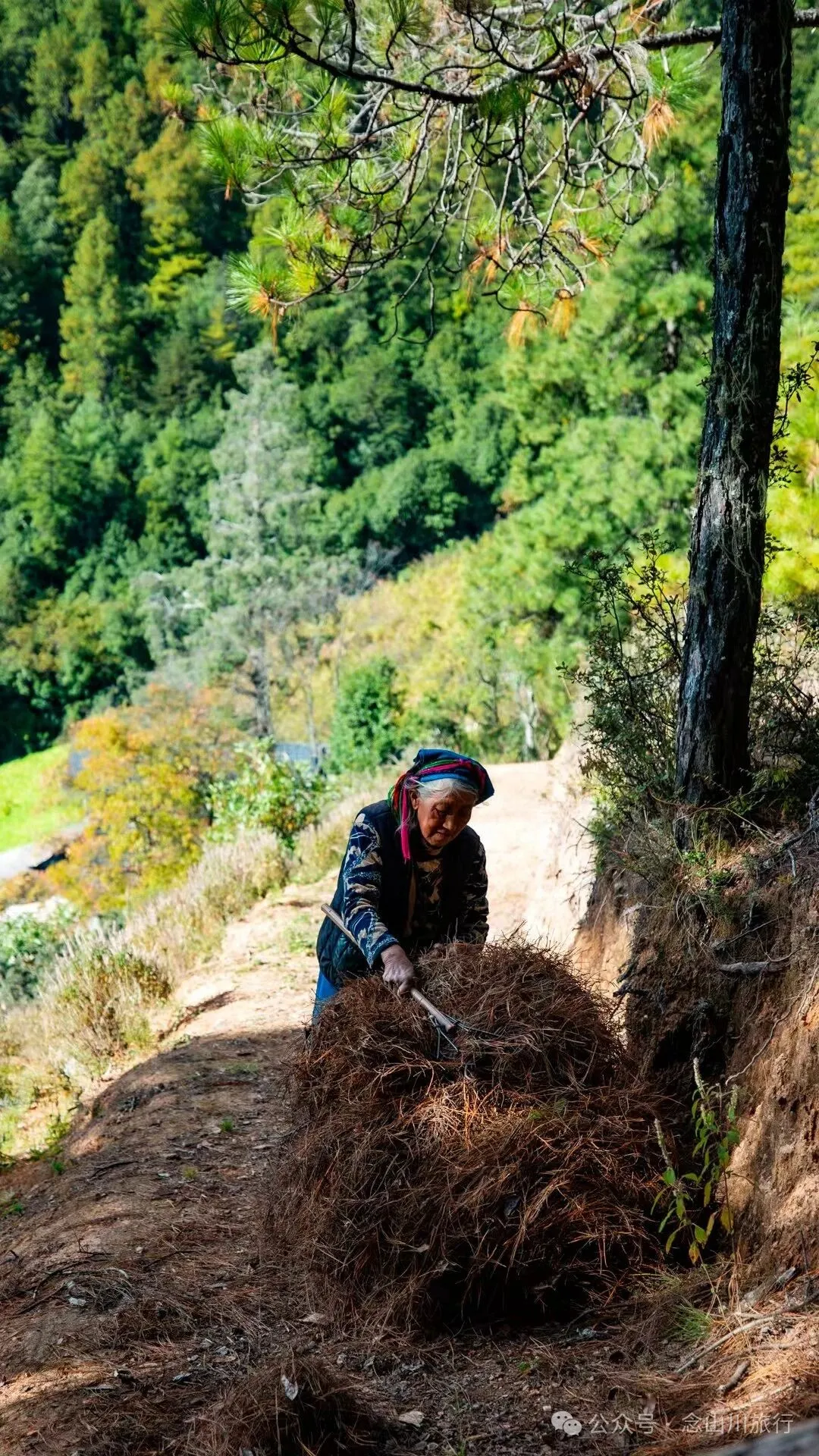
When I set out again into the mountains toward that vast, empty mountaintop meadow, I chose the same return path as last time. I pulled out a wooden fence and climbed into a family's orchard, then cut straight across two harvested open fields, and the mountain path appeared easily before me. This season, the pine forest is sparser and more upright, and the treetops above, against the blue-and-white sky, seem like another world. On the mountain path, a Tibetan auntie was alone, raking pine needles, but as far as I know, raking pine needles in Bazhu is a group activity and should be quite lively.
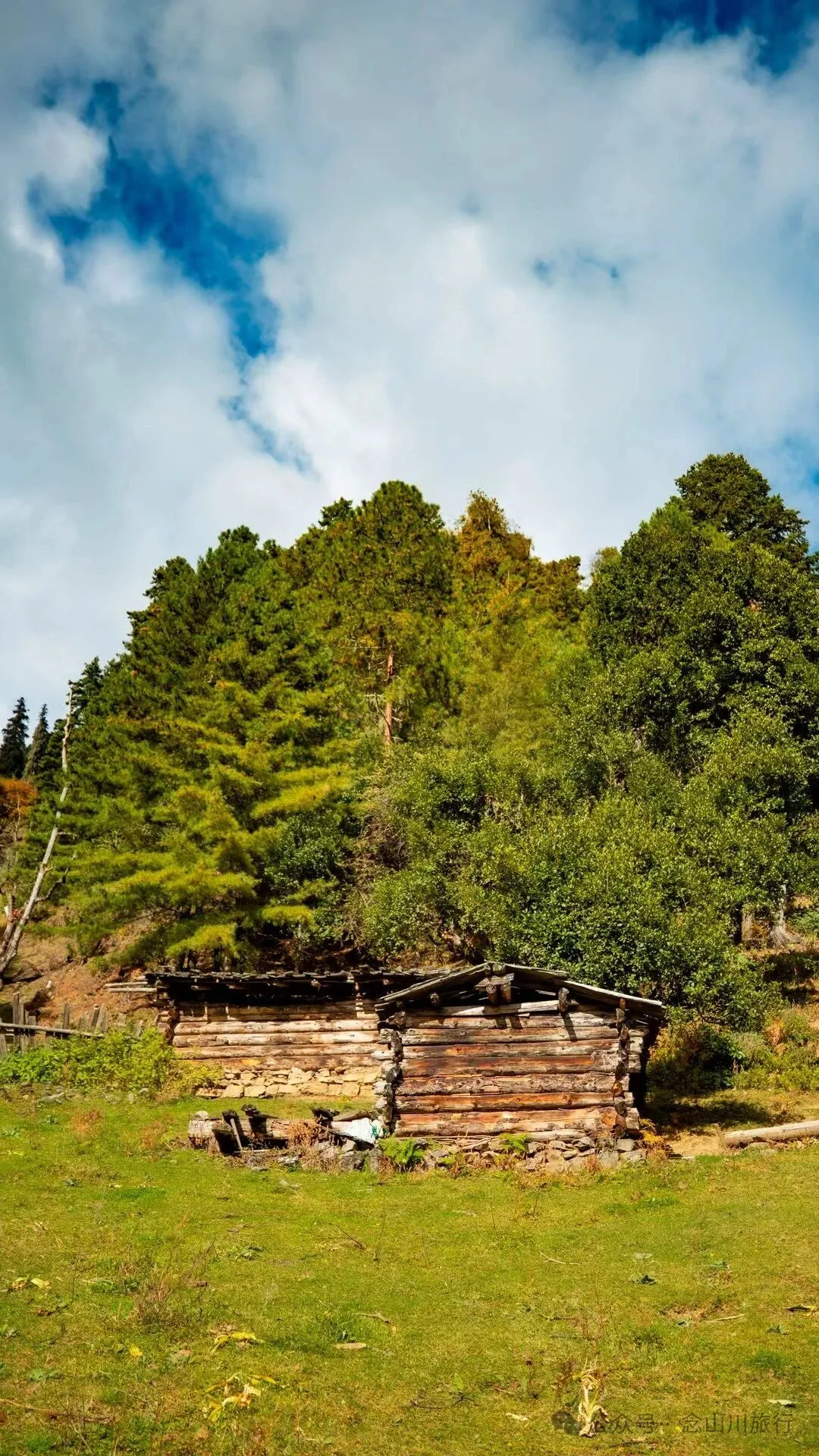
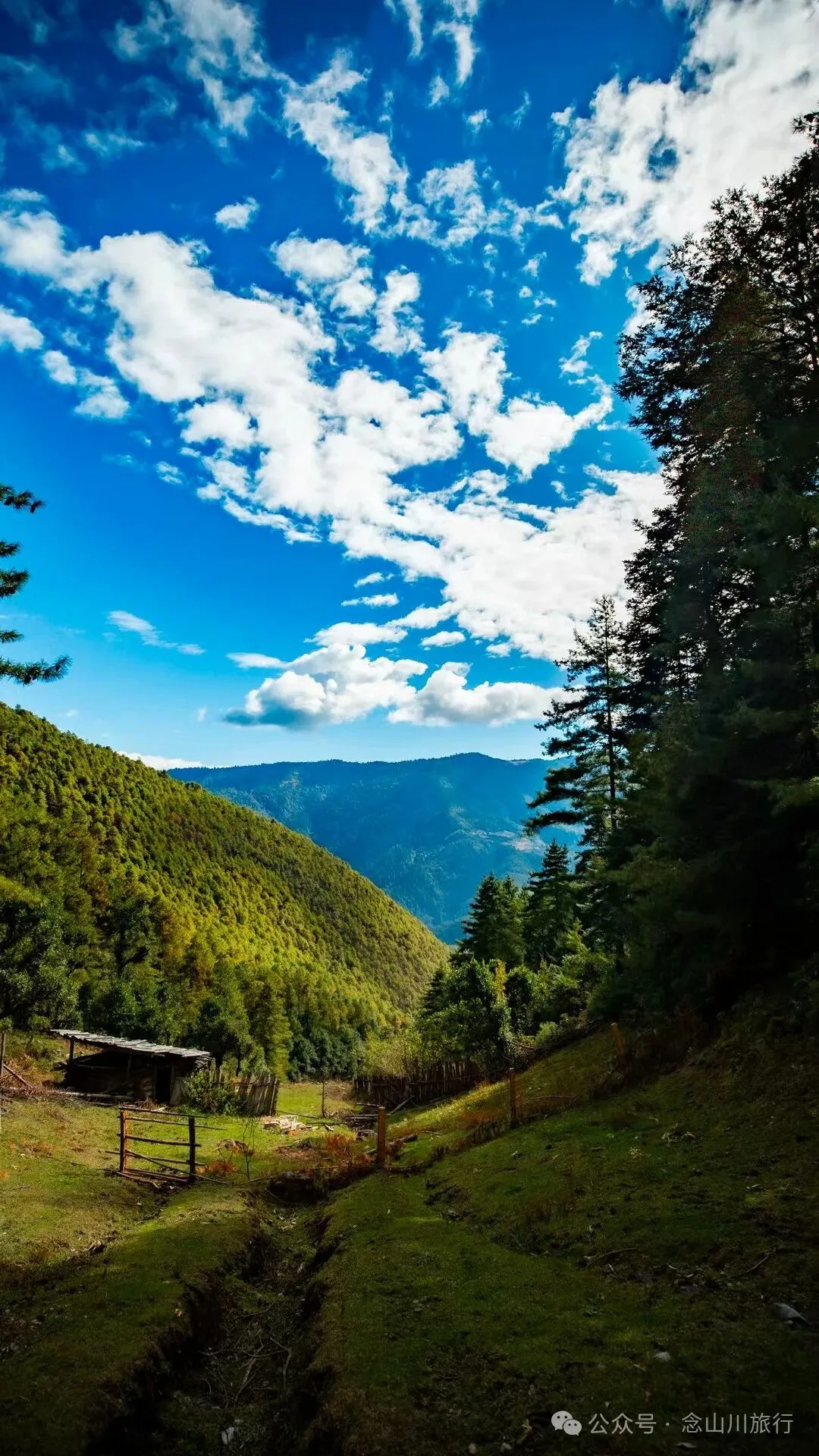
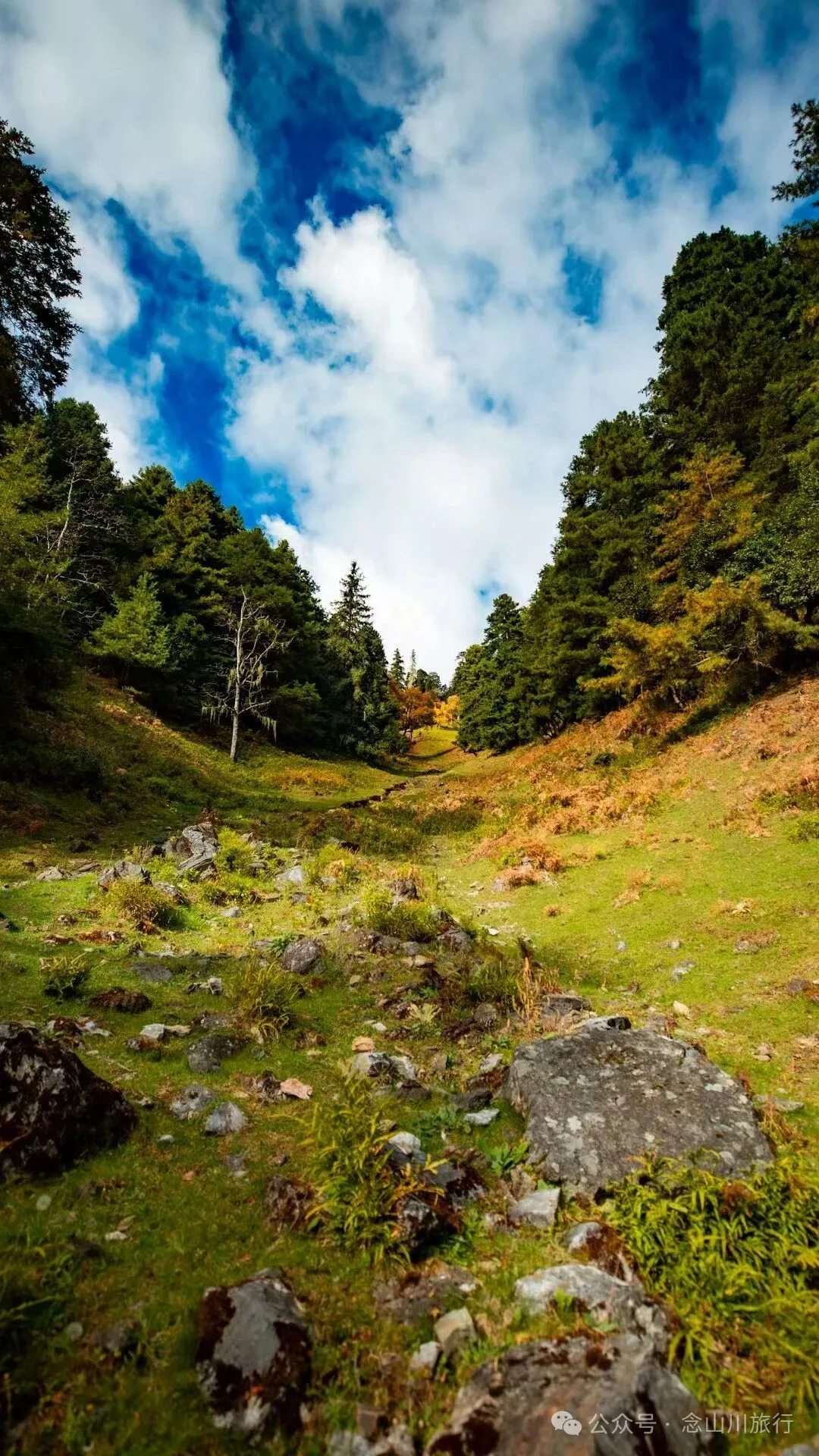
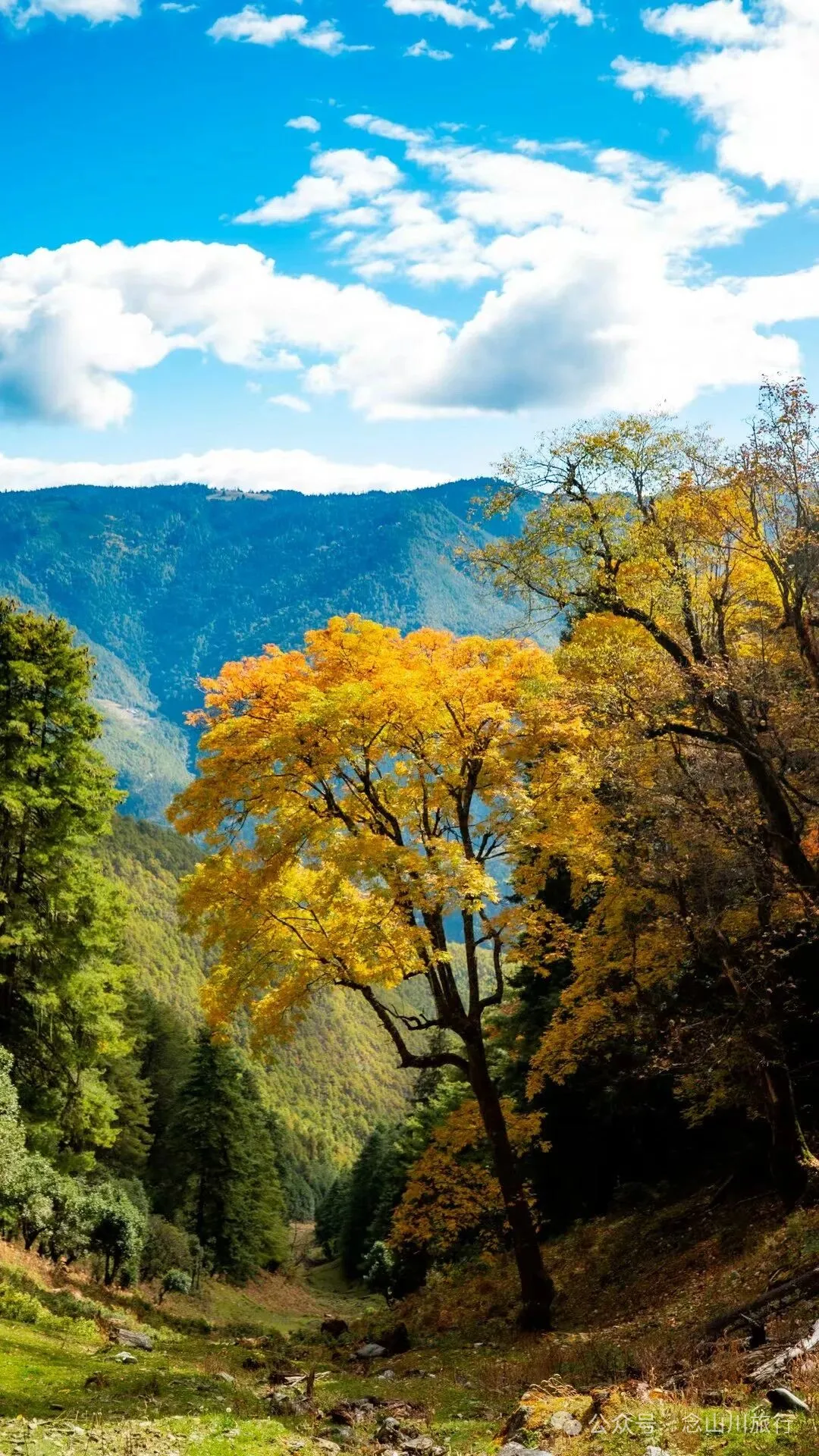
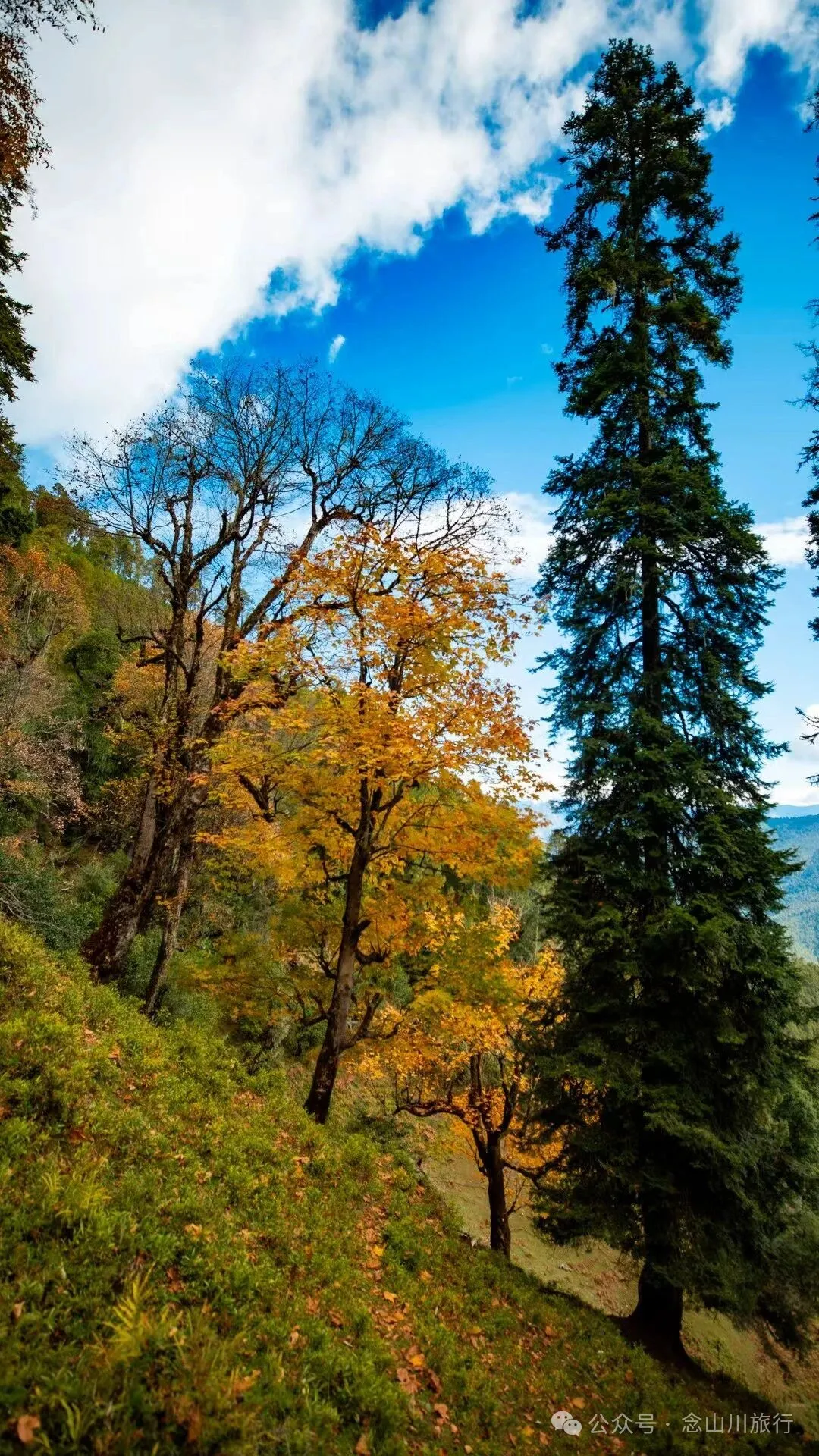
The sky was not very clear that day. After entering this narrow grassy slope, no matter when I looked up, thick clouds always lingered at the mountaintop, but the autumn colors were increasingly bright. There were no leisurely yellow cattle, nor any human activity. Only a flock of tiny birds flew out from a nearby tree; they were so small, like the white butterfly that once landed on my sleeve. Apart from the sound of their fluttering and the distant logging noises from the forest below the mountain, nothing else could be heard. The mountain wind seemed far away, above the clouds. After spending too long in crowds, such emptiness and silence are truly missed. I found a sun-warmed stone to sit on, and the moment I closed my eyes, the meadow became empty again.
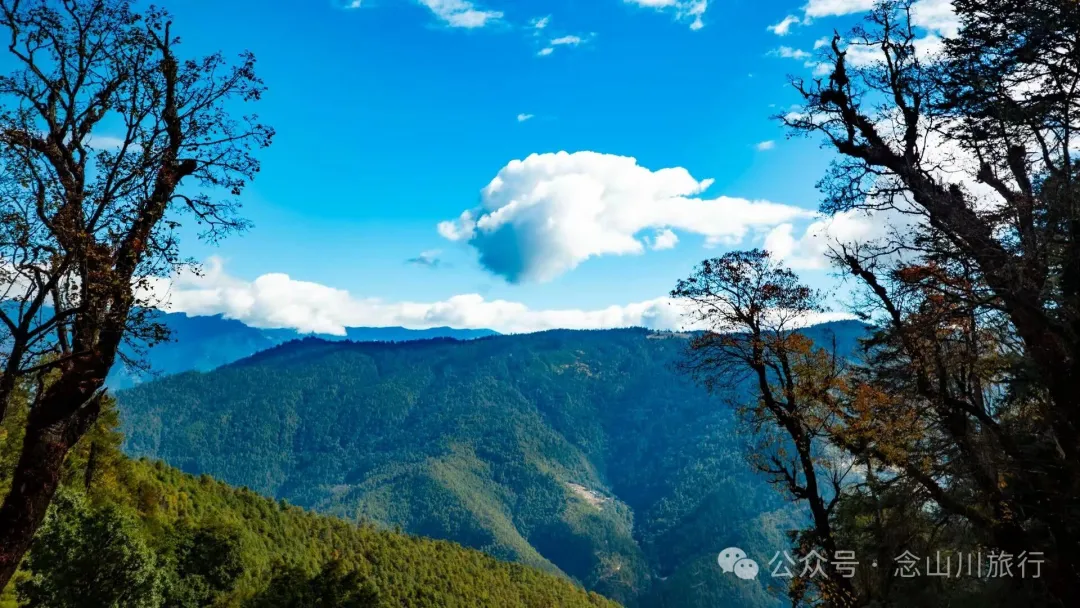
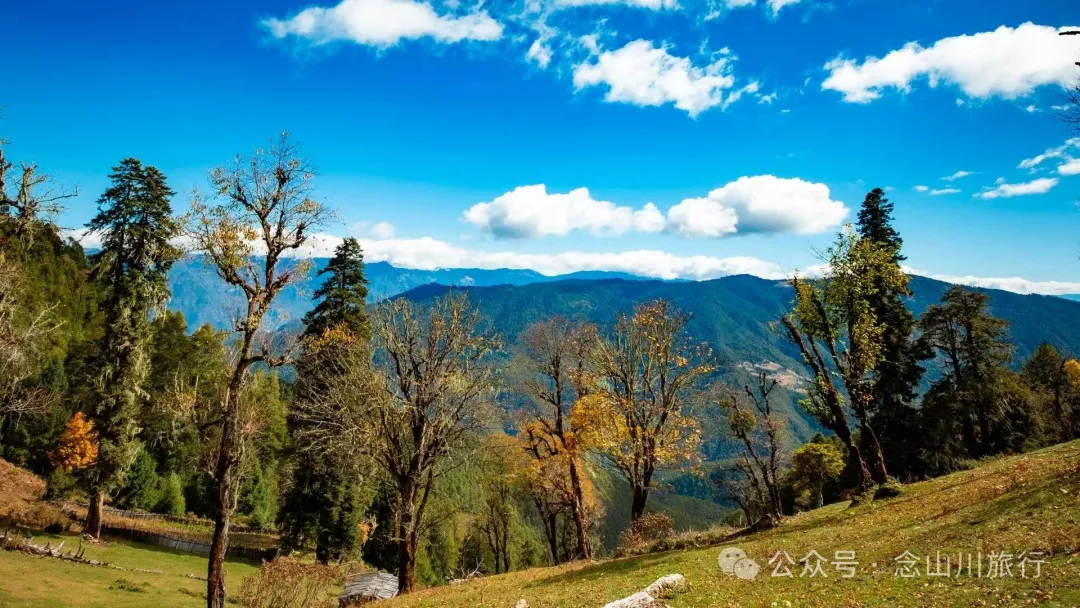
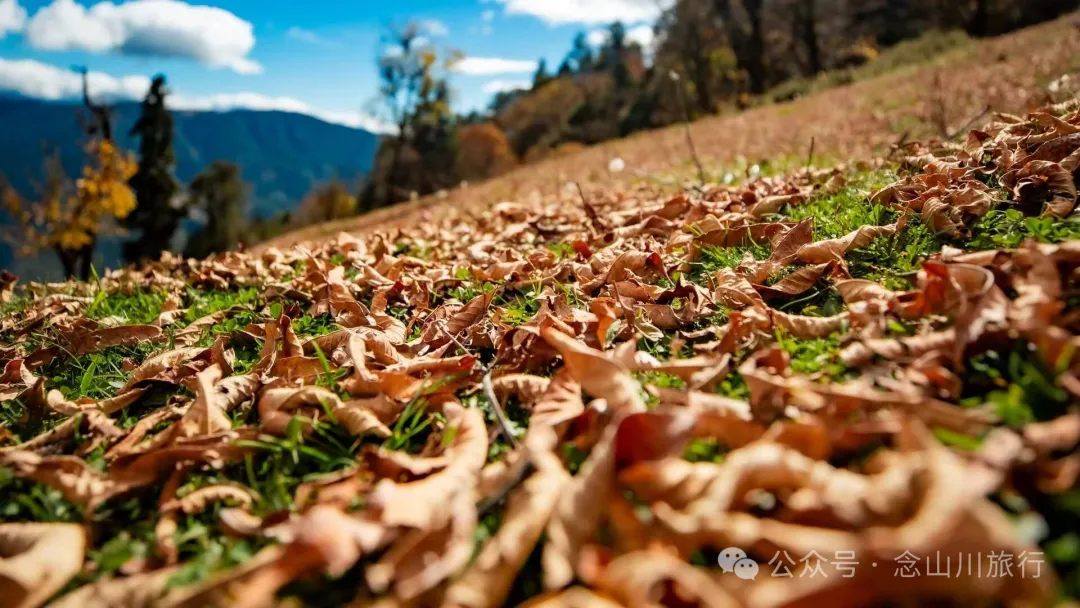
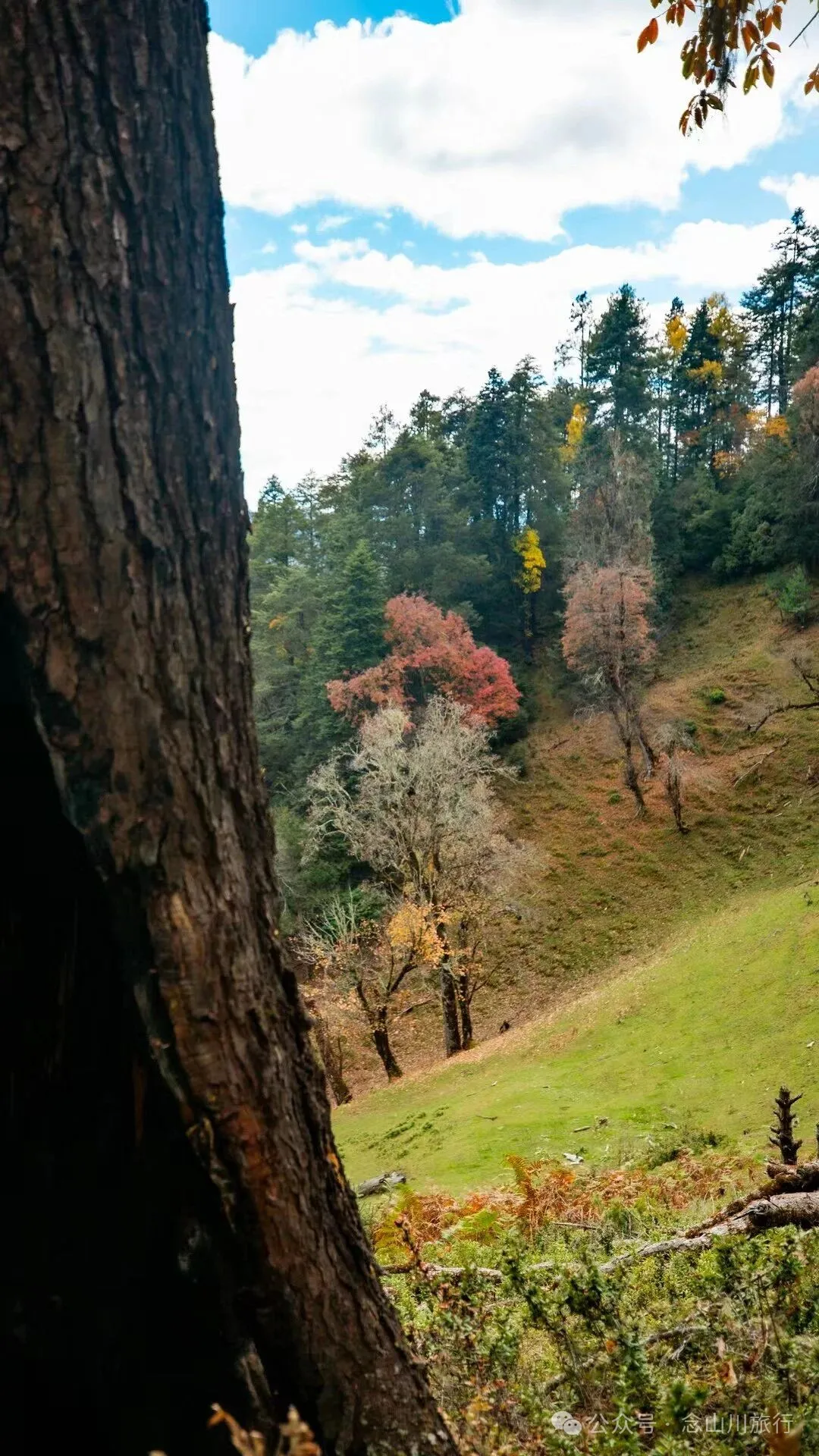
The higher I climbed, the steeper the terrain, but the wider the view. On the opposite mountaintop, there was also a meadow, the one behind Shijia Village, which now seemed low and close, as if the clouds and sky were within reach. The scenery here was purer, especially the small primeval forest in the middle of the meadow. No cattle or sheep came, no birds descended, and no human had set foot there. The grass was covered with yellow leaves that had fallen to the ground in their original state, untouched even by the mountain wind, which couldn't bear to stir them up and scatter them. The yellow leaves under the trees piled up more and more, as if someone were deliberately drying them, waiting for them to be completely dry before collecting them.
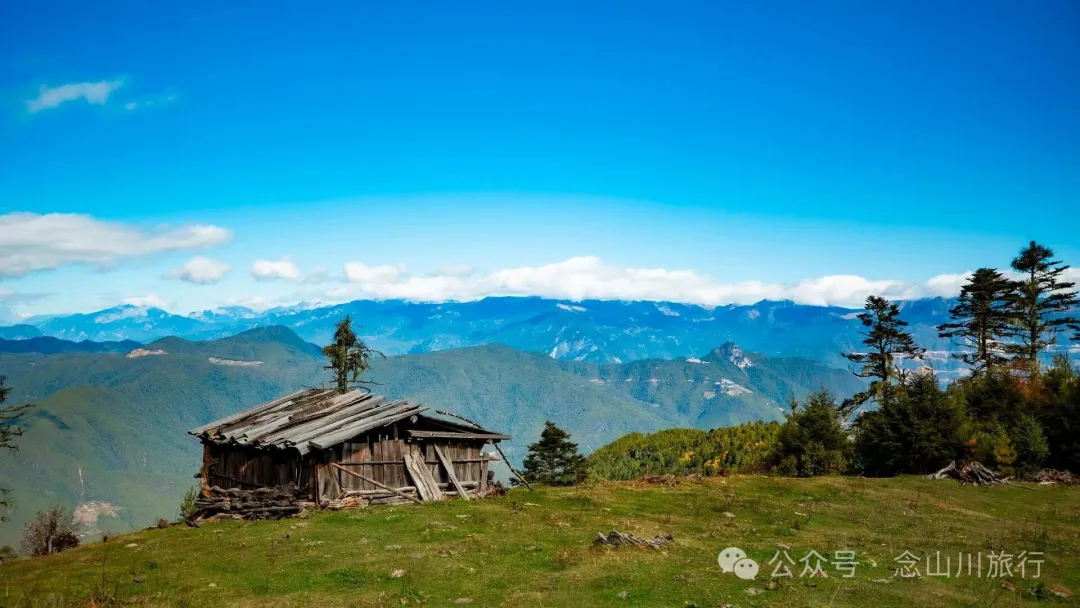

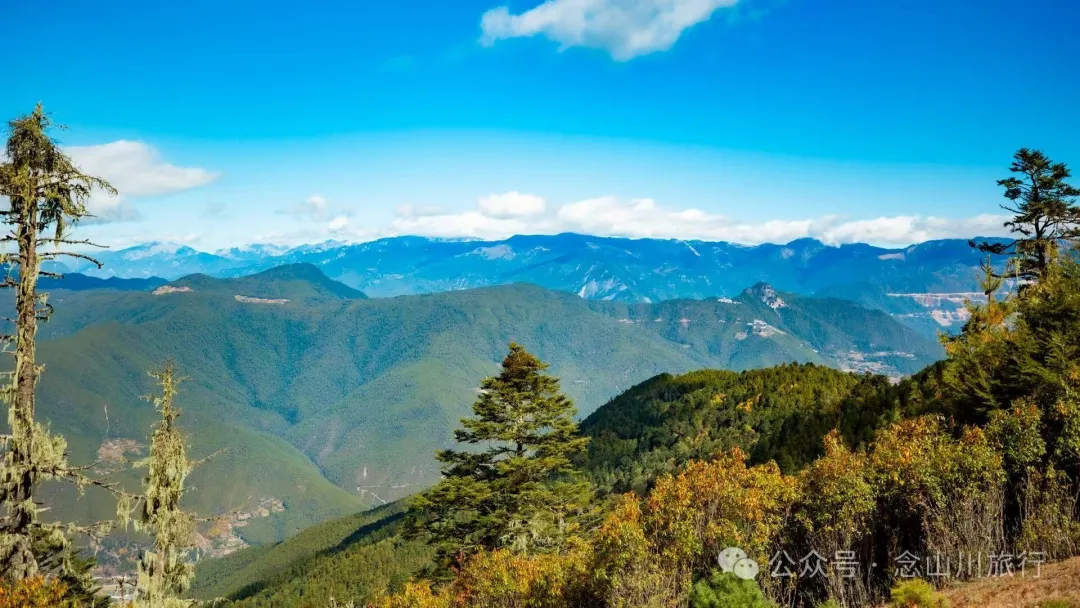

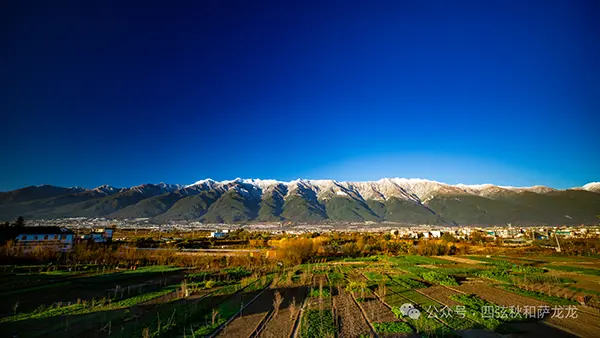
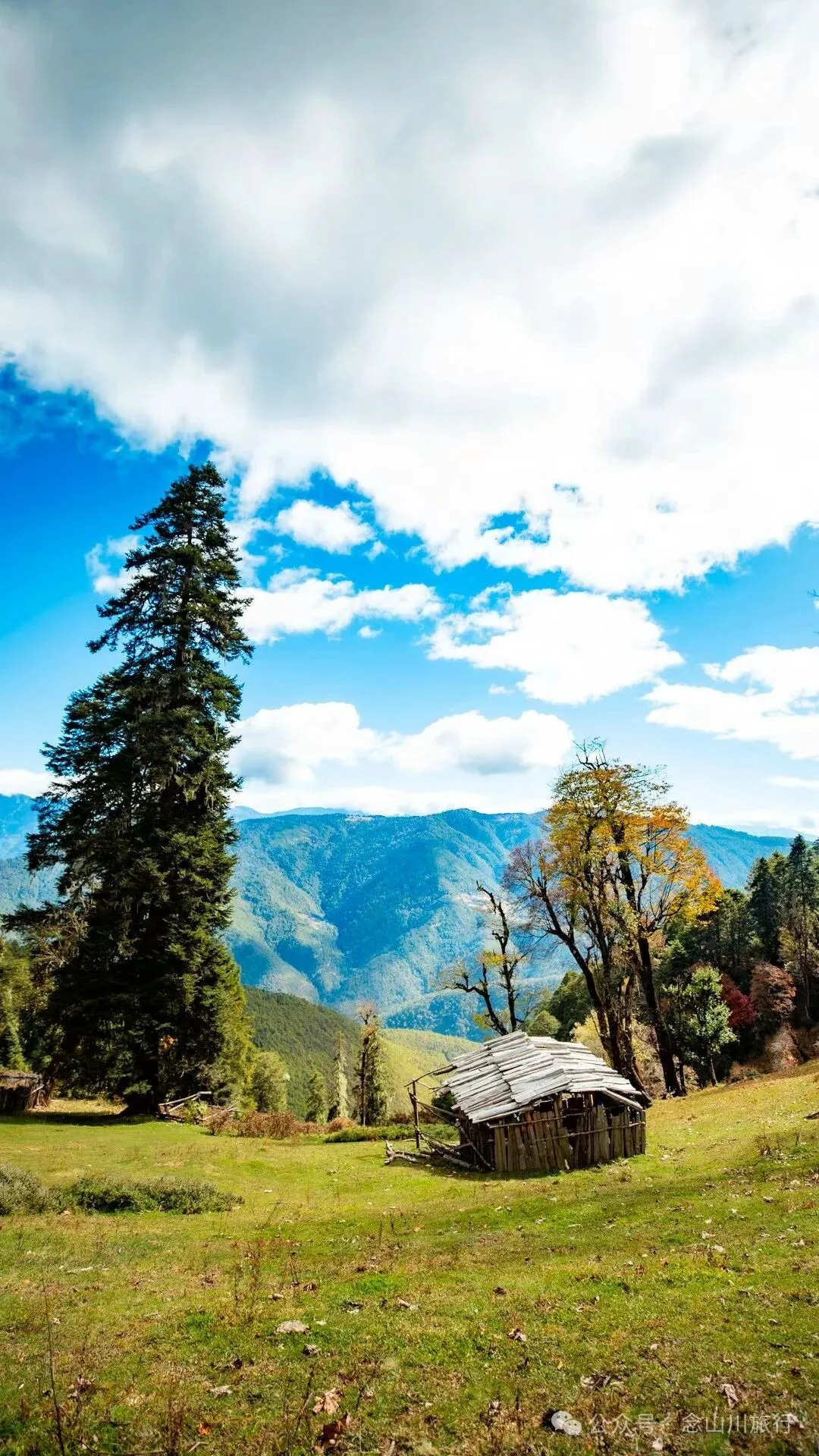
The small wooden cabin at the mountaintop was like a hermit living there long-term, facing north every day, gazing at the mountains and rivers. The low flatland below was Tacheng Town; the right peak a bit farther was the location of Damo Ancestor Cave; and at the limit of the view, the dazzling white snow mountain was said to be Shika Snow Mountain in Shangri-La, 120 kilometers away by driving route, but only about fifty kilometers in a straight line. Peering through the gaps between the wooden planks into the cabin, I saw a few log stools casually placed, and in the center, a pile of unburned firewood, suggesting that a herder had once rested and lit a fire there. If one came to camp at the mountaintop in summer, this crude cabin would be a good shelter. If one had the energy to carry some dry food, spending a few more days there would be quite pleasant. Sitting on the grass beside the cabin to rest, the sunlight playfully shifted across the land, never lingering long, mostly hiding among the clouds.
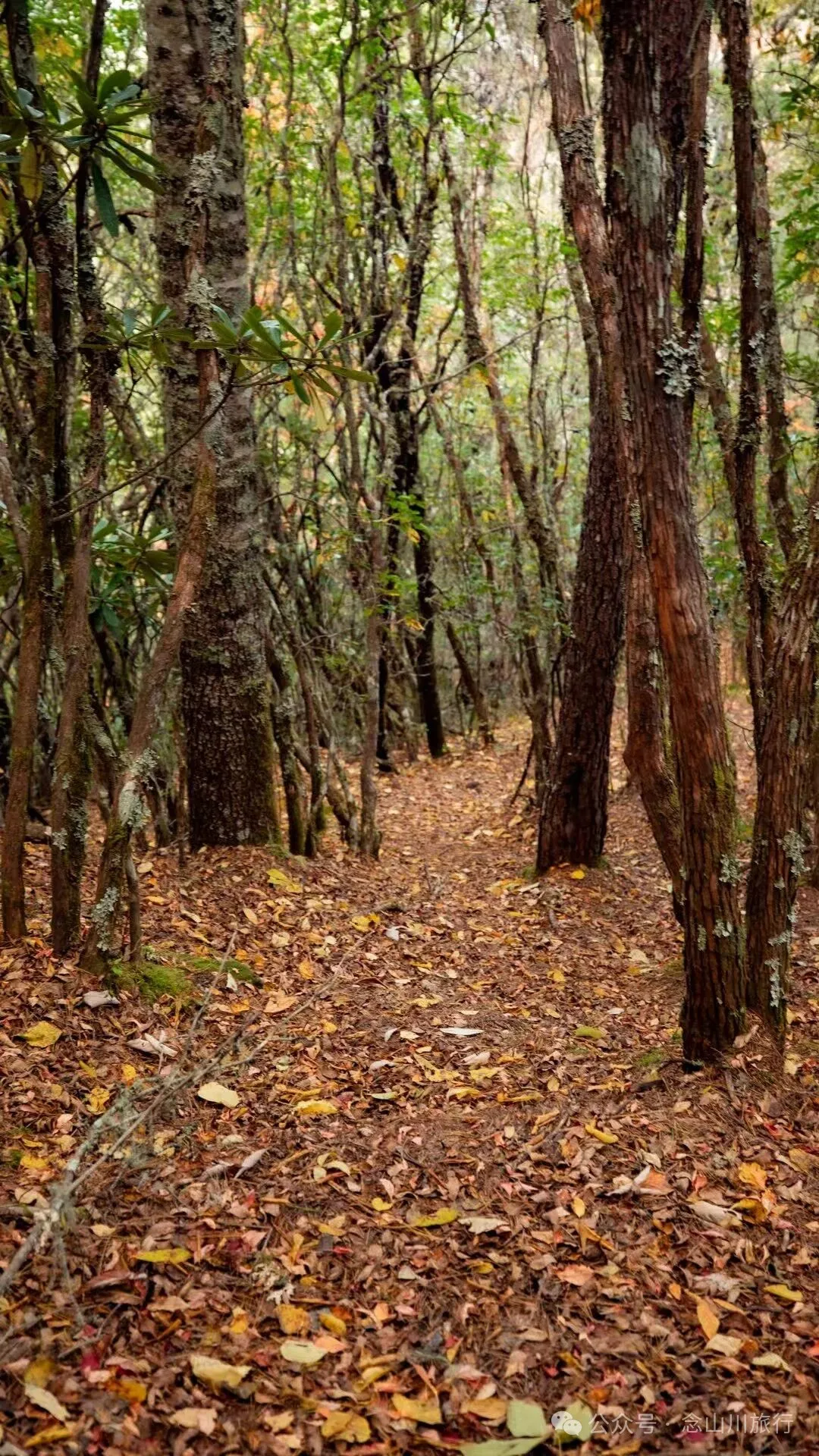
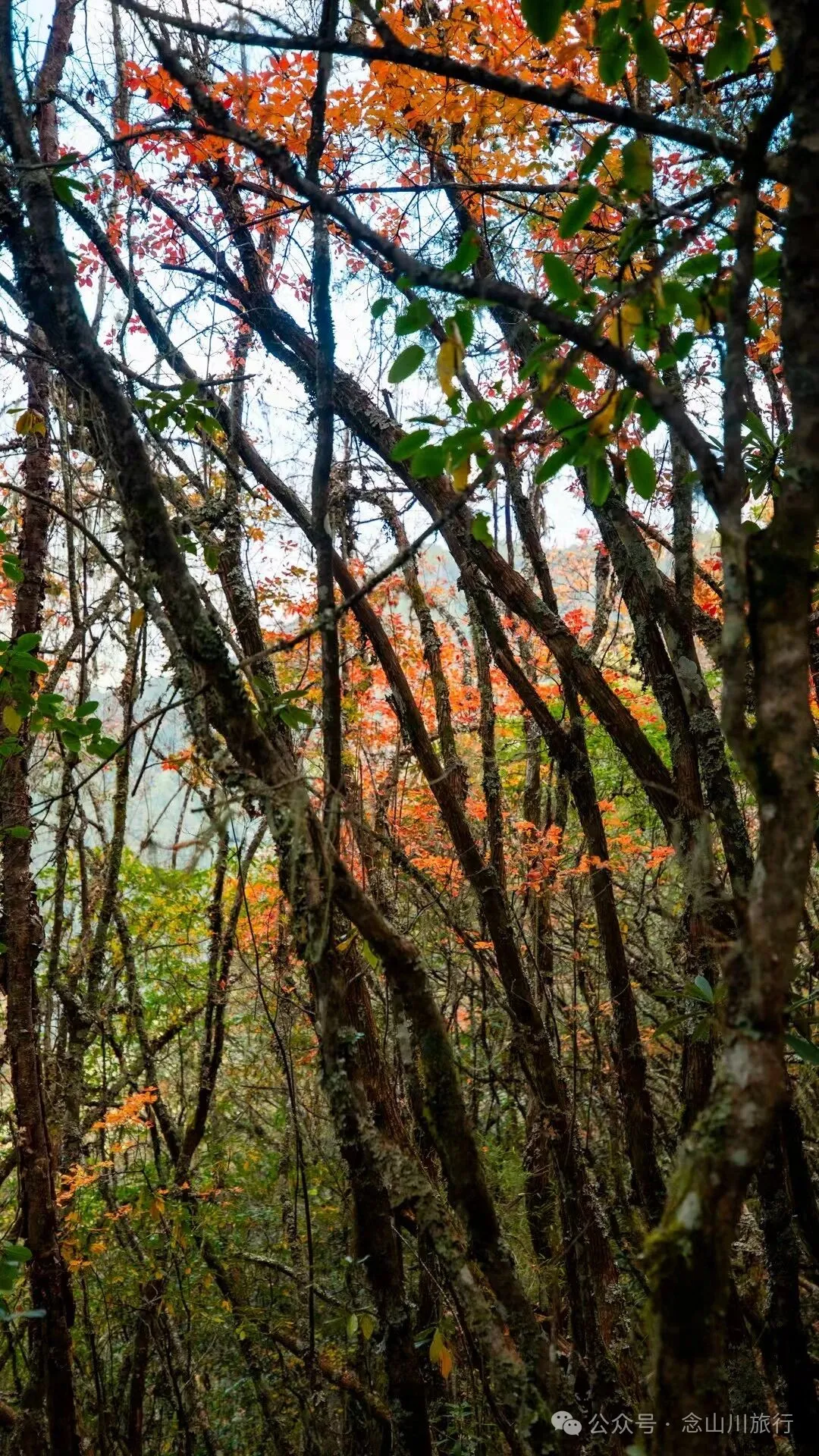
I started descending at one in the afternoon. Because the previous hike had gone so smoothly, I grew bold. When I heard there was a hidden path that could return to the village from another direction, I completely forgot my friend's warnings and reminders. Seeing a narrow winding mountain path near the cabin, I set off without a second thought. Even after hitting several dead ends, I still didn't turn back but wandered recklessly through the mountains, arrogantly searching for a path that didn't exist. The music from Tacheng Town, blaring through the forest, reached me from afar. I thought I hadn't strayed too far and that following the stream down would lead me to the familiar slope of Yejiu. It wasn't until I had struggled down a steep, dry stream for three hours that I realized I was lost. When I called a friend for help in a valley that had lost sunlight, a herdsman in camouflage clothes and hat was sitting on a rock (or maybe a log, I didn't notice) a few meters away, legs crossed, watching me, and asked what I was doing. I asked him where I was, and he said, "Three kilometers further down this stream is Hada Village; Bazhu Village is on the other side of the mountain."
Warm reminder: There are no obvious signs along the way, and there are certain risks. Those unfamiliar with the route should contact a local guide. Do not enter without permission.