您的浏览器需要启用 JavaScript 才能正常访问此网站。
Hotline:15911225507
Dali Travel
Login
Home-Travel Article-History & Culture-Body Text

Jianchuan Shibao Mountain Song Fair, Dali: Finding love through song, competing with wit

Sa LonglongSa LonglongHistory & Culture12 hours ago112

A Custom Out of Antiquity

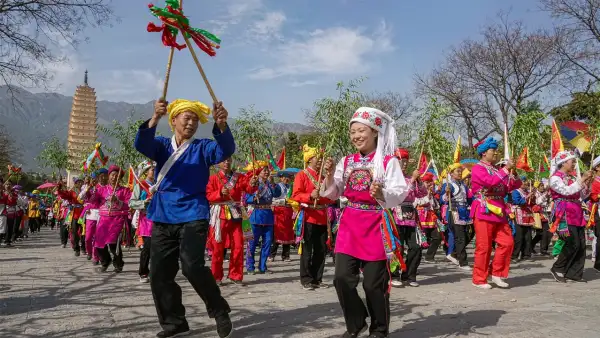
The Shibao Mountain Song Fair is thought to descend from a vestige of prehistoric group marriage, and has been sung for more than a thousand years. What began as young men and women calling to one another with songs and leaf whistles grew into the Bai people's great annual gathering. From the 27th day of the seventh lunar month to the first day of the eighth, Bai people from Jianchuan, Eryuan, Lijiang, Dali and Lanping climb the mountain to pluck their strings and trade verses, looking for a match. The daylight hours belong to incense and prayer: people circle the temples, take part in Azhali Buddhist rites, and pay respects at the Benzhu shrines and to Ayangbai, the stone-carved female organ. After dark, torches and flashlight beams move through the woods; under monastery walls, among blossoming branches, beneath boulders and beside springs, the sanxian and the answering voices carry on until dawn.

A Duel of Wits

What rouses the crowd at the fair is not the singing but the answering. Trading verses is both a Bai way of courting and an open contest of quickness: question and reply are improvised on the spot, with no pause allowed; miss a line or break the rhyme and you have lost. The answer must fit the question, hold the rhyme and arrive before the crowd draws breath - which is why a good exchange draws a ring of listeners several deep. When two singers are evenly matched, the duel can run for days without a winner. A fine voice merely gets you into the ring; wit and resourcefulness decide the bout.

The Song City

The fair is known as the "Song City of Shibao." To scholars it is a surviving witness to archaic group marriage and fertility worship, the cradle and staging ground of Bai balladry, and a source of first-hand material for anthropology, ethnology, history, archaeology and aesthetics. Its reach has gone well beyond the mountain: CCTV and more than twenty stations around the country have repeatedly filmed here, producing features such as Jianchuan Has a Mt. Shibao, The Shibao Mountain Song Fair and Southern Treasure. A duel in the mountain wilds, played over and over on screen, became one of the ways the outside world learned to see the Bai.

Tags:
This article is original, author: Sa Longlong, and its copyright is owned by Dali Travel.
For reprinting, please indicate the source: https://dalilvxing.com/en/911.html
Sa Longlong

Sa Longlong

This guy is so lazy, he won't even write a few words!
212.07K
Loading...
Share:
Word Count: 1829
Natural Marble Pictures - Landscapes Without a Brush
Natural Marble Pictures - Landscapes Without a BrushPrevious
Related Articles
Total: 8
Raosanlin: Dali Bai’s Millennia-Old Festival of Song and Dance

Raosanlin: Dali Bai’s Millennia-Old Festival of Song and Dance

Raosanlin ("winding around the three spirits") is a traditional Bai festival that fuses religious worship with a spring outing. In the Bai langu…
Sa LonglongSa LonglongHistory & Culture1 months ago00580
Tiaocai: Dali Nanjian Yi’s “Dance the Dishes In, Eat and Be Merry”

Tiaocai: Dali Nanjian Yi’s “Dance the Dishes In, Eat and Be Merry”

Serving the feast with a dance"Tiaocai" — literally "jumping the dishes" — also goes by the name "carrying-the-course dance" and in the Yi l…
Sa LonglongSa LonglongHistory & Culture1 months ago00640
Bai Opera (Baiju): A Treasure of Dali’s Theater Culture

Bai Opera (Baiju): A Treasure of Dali’s Theater Culture

Two theaters, one stageBai Opera (Baiju) is the minority opera of the Dali region, born from the fusion of Chuichuiqiang and Dabenqu, furthe…
Sa LonglongSa LonglongHistory & Culture9 days ago11310
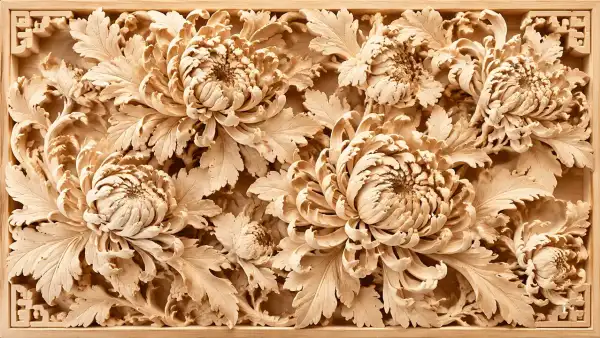
Dali Jianchuan Wood Carving: Dragons Etched to Bai Songs

Dali Jianchuan Wood Carving: Dragons Etched to Bai Songs

A town of carpenters on the Tea-Horse RoadJianchuan lies in northwest Yunnan inside the Laojunshan zone — one of the eight districts of the …
Sa LonglongSa LonglongHistory & Culture10 days ago11270
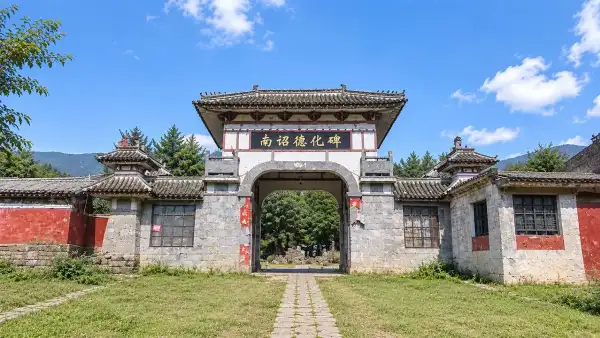
Dali Taihe City Ruins – The Nanzhao Capital and the Dehua Stele

Dali Taihe City Ruins – The Nanzhao Capital and the Dehua Stele

The old Nanzhao capitalThe Taihe city ruins lie at Taihe Village, Xiaguan Town, Dali City, at the foot of Cangshan's Foding Peak, on the roa…
Sa LonglongSa LonglongHistory & Culture5 days ago11160
Dali Bai Tie-Dye – The Art of Time Woven in Needle and Thread

Dali Bai Tie-Dye – The Art of Time Woven in Needle and Thread

A craft with ancient rootsTie-dye was once called zha xie or jiao xie (bound-and-dyed). Its Chinese history reaches back to the Western Han,…
Sa LonglongSa LonglongHistory & Culture20 days ago00450
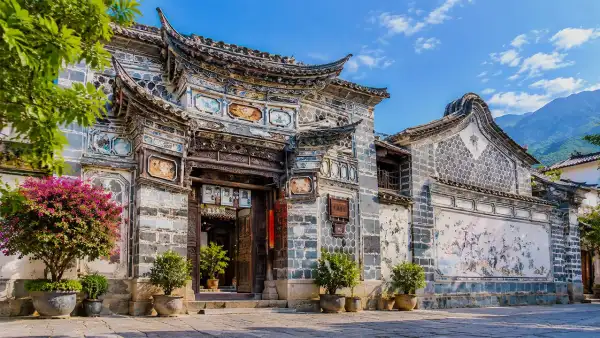
Dali Xizhou Bai Folk Houses – Three Bays and a Screen Wall

Dali Xizhou Bai Folk Houses – Three Bays and a Screen Wall

The old town of XizhouThe old town of Xizhou stands 17 km north of Dali Old Town. Already in the age when the six Zhao and the "He Man" grou…
Sa LonglongSa LonglongHistory & Culture6 days ago11220
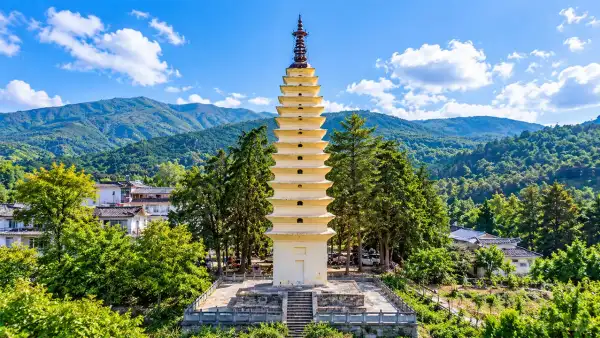
Futu Temple Pagoda (“Snake-Bone Pagoda”): A Millennia-Old Brick Pagoda at Cangshan’s Foot

Futu Temple Pagoda (“Snake-Bone Pagoda”): A Millennia-Old Brick Pagoda at Cangshan’s Foot

Location and formThe pagoda stands before Futu Temple, on the north side of Yangping Village in Xiaguan Town, Dali City, at the foot of Cang…
Sa LonglongSa LonglongHistory & Culture6 days ago11190
Comment FormTourist Hello, welcome to the discussion.
Dali Travel
Please login first
Comment Lists
Total: 0
Dali Travel
No relevant content