您的浏览器需要启用 JavaScript 才能正常访问此网站。
Hotline:15911225507
Dali Travel
Login
Home-Travel Article-History & Culture-Body Text

Dali Xizhou Bai Folk Houses – Three Bays and a Screen Wall

Sa LonglongSa LonglongHistory & Culture5 hours ago111
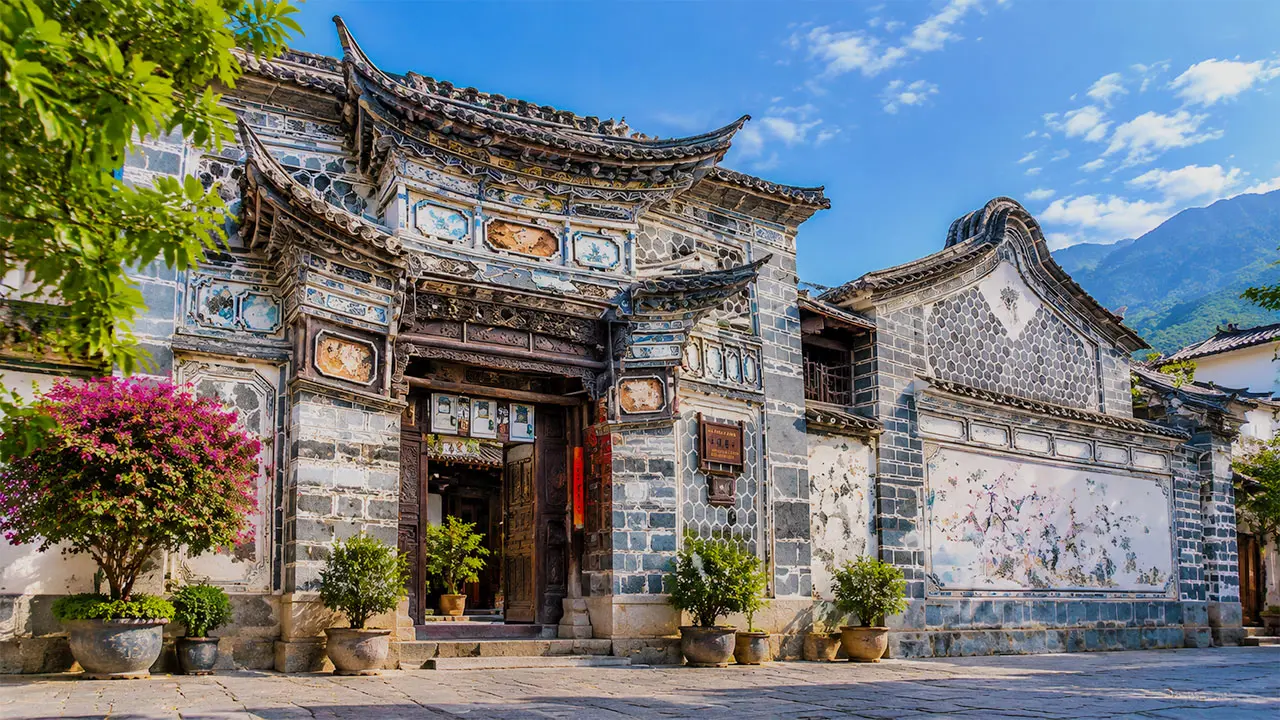
Dali Xizhou Bai Folk Houses – Three Bays and a Screen Wall - Image 1

The old town of Xizhou

The old town of Xizhou stands 17 km north of Dali Old Town. Already in the age when the six Zhao and the "He Man" groups coexisted, Xizhou was a Bai settlement: under the Sui it was called "Shicheng," and in the Tang–Song era it served as the Nanzhao and Dali Kingdom's "Dalicheng." Local commerce flourished late in the Qing and early Republic, and most of the surviving buildings date from then, with further construction into the Republican period — the Zhao family compound of the late Qing, the Yan compound of 1920, and the Yang and Dong compounds of 1948 among them.

"Three bays and a screen wall; four courts and five skylights"

The Xizhou complex embodies the classic Bai courtyard layouts: the sanfang yi zhaobi ("three building wings and one screen wall") and the sihe wu tianjing ("four enclosures with five skywells"). These houses are rich with carved beams, layered bracket sets and upturned eaves, and their gate towers, screen walls and gable murals blaze with decoration — a vivid display of Bai architectural genius and artistry. In modern times a Sino-Western fusion crept in, earning Xizhou the title of a great legacy in China's architectural history. The best known compounds are the Yang Pinxiang residence, the Yan family mansion and the Hou family compound.

On June 25, 2001, the State Council inscribed the Xizhou Bai ancient building complex as a key national protected cultural relic (5th batch, Ming–Qing architecture).

Tags:
This article is original, author: Sa Longlong, and its copyright is owned by Dali Travel.
For reprinting, please indicate the source: https://dalilvxing.com/en/901.html
Sa Longlong

Sa Longlong

This guy is so lazy, he won't even write a few words!
181.82K
Loading...
Share:
Word Count: 1226
Futu Temple Pagoda ("Snake-Bone Pagoda"): A Millennia-Old Brick Pagoda at Cangshan's Foot
Futu Temple Pagoda ("Snake-Bone Pagoda"): A Millennia-Old Brick Pagoda at Cangshan's FootPrevious
Related Articles
Total: 6
Futu Temple Pagoda (“Snake-Bone Pagoda”): A Millennia-Old Brick Pagoda at Cangshan’s Foot

Futu Temple Pagoda (“Snake-Bone Pagoda”): A Millennia-Old Brick Pagoda at Cangshan’s Foot

Location and formThe pagoda stands before Futu Temple, on the north side of Yangping Village in Xiaguan Town, Dali City, at the foot of Cang…
Sa LonglongSa LonglongHistory & Culture23 hours ago1120
Bai Opera (Baiju): A Treasure of Dali’s Theater Culture

Bai Opera (Baiju): A Treasure of Dali’s Theater Culture

Two theaters, one stageBai Opera (Baiju) is the minority opera of the Dali region, born from the fusion of Chuichuiqiang and Dabenqu, furthe…
Sa LonglongSa LonglongHistory & Culture3 days ago11100
Raosanlin: Dali Bai’s Millennia-Old Festival of Song and Dance

Raosanlin: Dali Bai’s Millennia-Old Festival of Song and Dance

Raosanlin ("winding around the three spirits") is a traditional Bai festival that fuses religious worship with a spring outing. In the Bai langu…
Sa LonglongSa LonglongHistory & Culture1 months ago00530
Dali Bai Tie-Dye – The Art of Time Woven in Needle and Thread

Dali Bai Tie-Dye – The Art of Time Woven in Needle and Thread

A craft with ancient rootsTie-dye was once called zha xie or jiao xie (bound-and-dyed). Its Chinese history reaches back to the Western Han,…
Sa LonglongSa LonglongHistory & Culture15 days ago00340
Dali Jianchuan Wood Carving: Dragons Etched to Bai Songs

Dali Jianchuan Wood Carving: Dragons Etched to Bai Songs

A town of carpenters on the Tea-Horse RoadJianchuan lies in northwest Yunnan inside the Laojunshan zone — one of the eight districts of the …
Sa LonglongSa LonglongHistory & Culture4 days ago11110
Tiaocai: Dali Nanjian Yi’s “Dance the Dishes In, Eat and Be Merry”

Tiaocai: Dali Nanjian Yi’s “Dance the Dishes In, Eat and Be Merry”

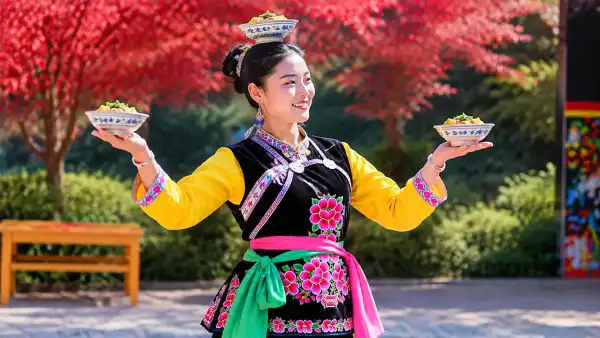
Serving the feast with a dance"Tiaocai" — literally "jumping the dishes" — also goes by the name "carrying-the-course dance" and in the Yi l…
Sa LonglongSa LonglongHistory & Culture25 days ago00440
Comment FormTourist Hello, welcome to the discussion.
Dali Travel
Please login first
Comment Lists
Total: 0
Dali Travel
No relevant content