
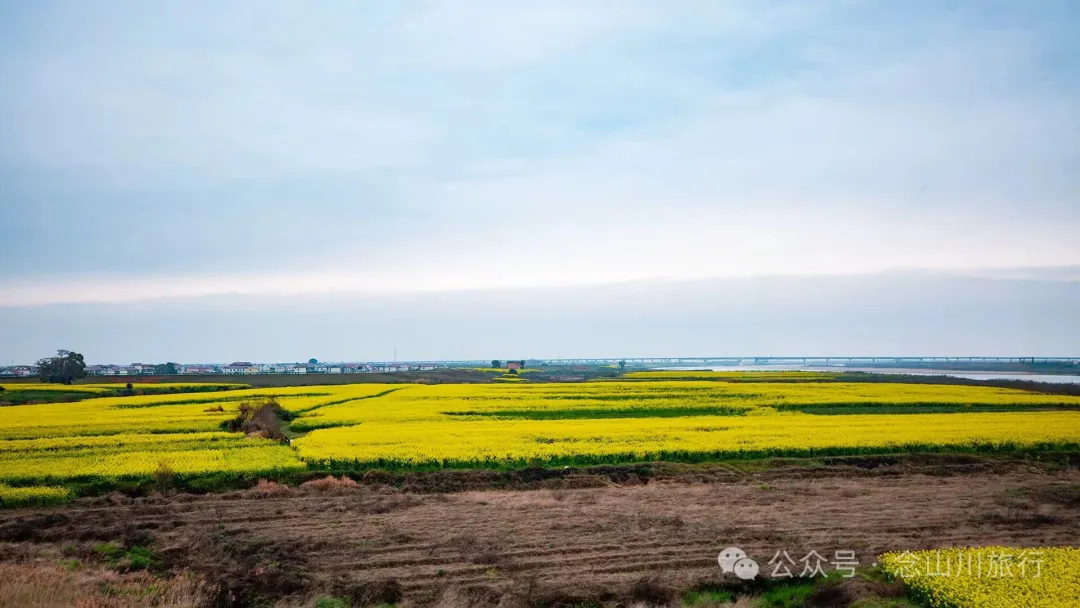
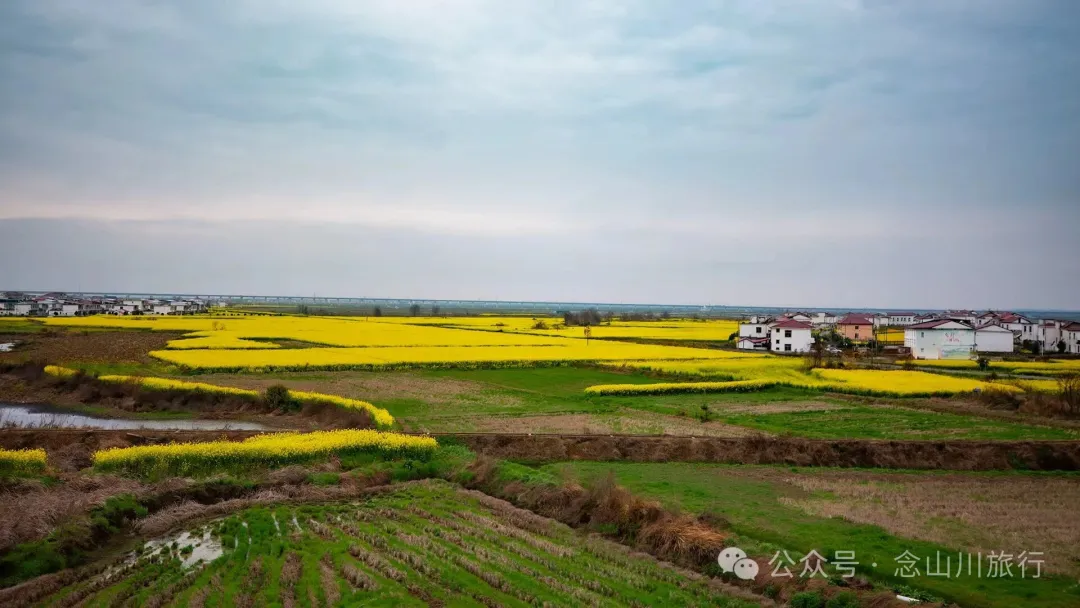
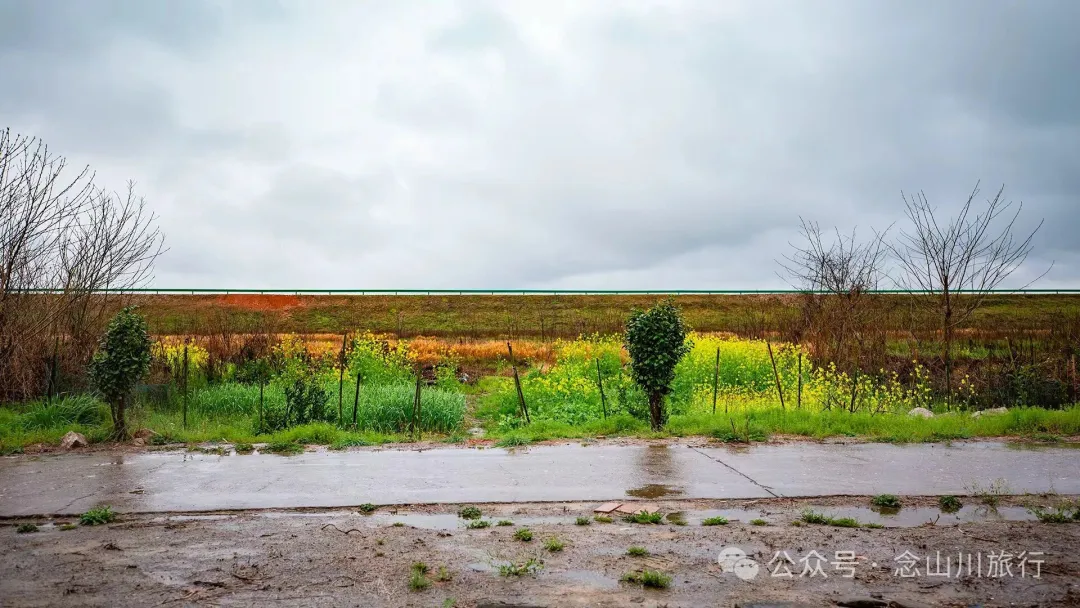
The early spring plain is so gray and hazy, perhaps it has been like this for the past six years, or maybe the haze is growing heavier. The most common sight along the way is the brilliant rapeseed flowers, which appear even more golden and bright on the plain, as if they are the source of light, with all radiance flowing and radiating from them rather than from the sky. The sky seems increasingly dim. On the third day of my return home, I have yet to see a sunrise or sunset; the true sky has been cut off from me for a long time.
It took me an hour to leave Yongxiu County and step onto this familiar river embankment. Having been away for so long, I had to turn on navigation to find the way back to my hometown. I never imagined that when I set foot on this land again, it would be as a traveler. I felt as if I had stumbled into a huge dream. Illusion and reality—or rather, memory and reality—began to blur, switching mercilessly before my eyes, catching me off guard. The distant, chaotic dark gray clouds made me mistake them for a snow-capped mountain hidden in mist, the destination of this journey.
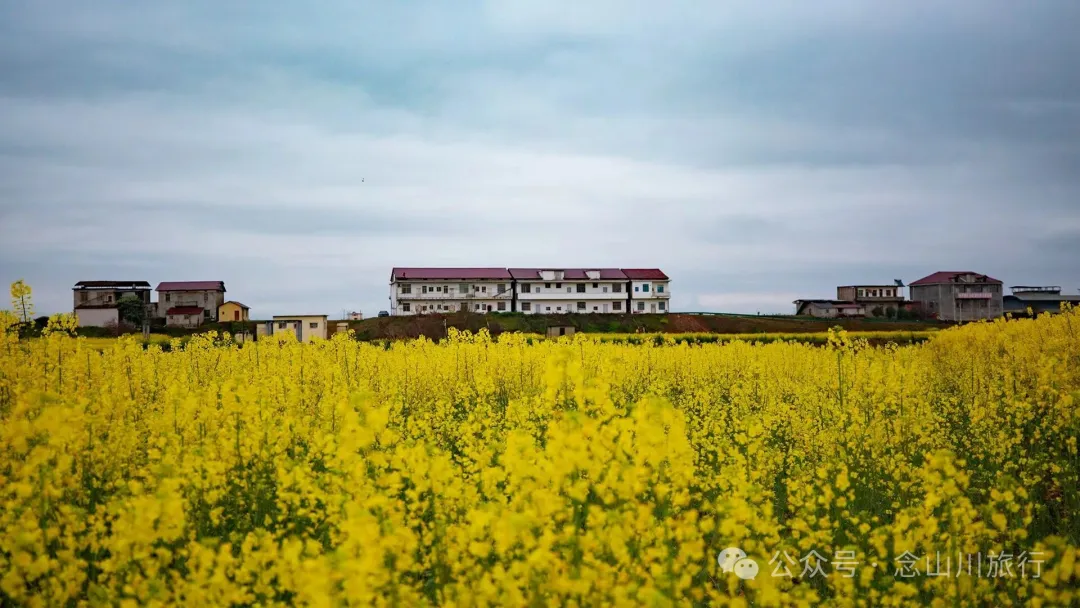
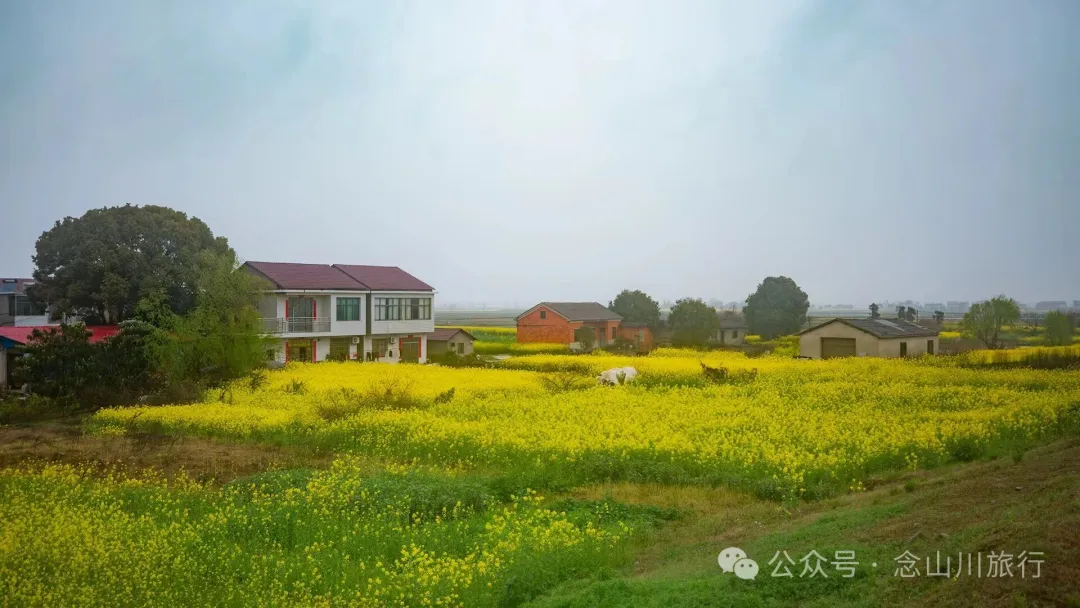
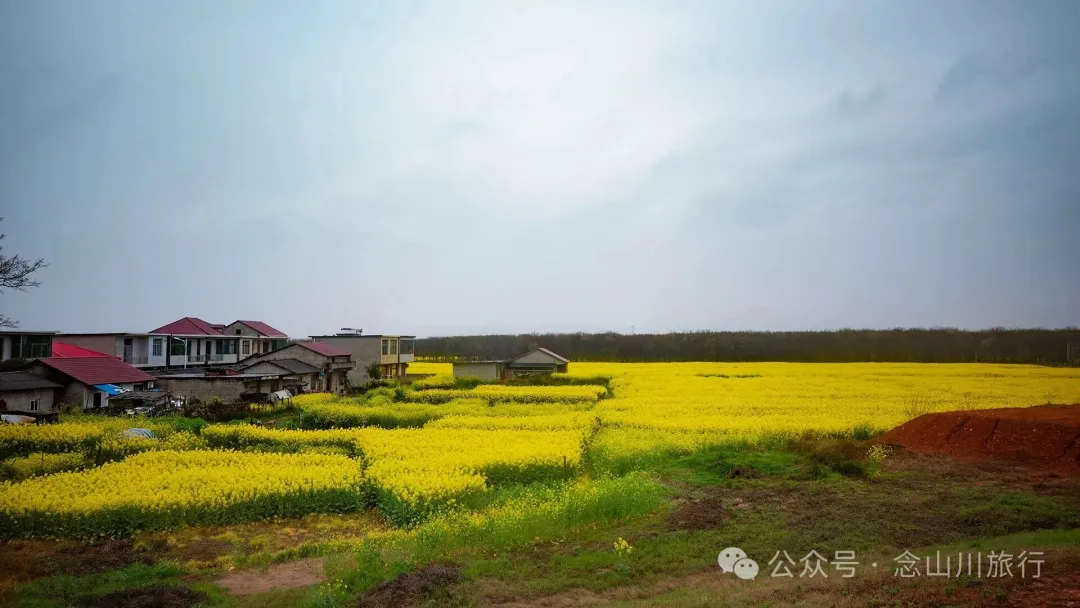
The villages along the way were completely unfamiliar to me. In my childhood, the route from the county to the village where I was born was by water, a slow wooden boat carrying a full load of people along the river, so I rarely had the chance to pass by these villages built along the embankment. In the past forty years, the only memory I have is a hiking experience over twenty years ago, when, like this time, I didn't take shortcuts through the villages but walked along the winding muddy path by the river, glancing at the villages from afar. I don't even know the names of these villages; only when I reach the village entrance and see the name can I search my distant memory for a corresponding dialect word—adults would mention these places, but I knew nothing about them.
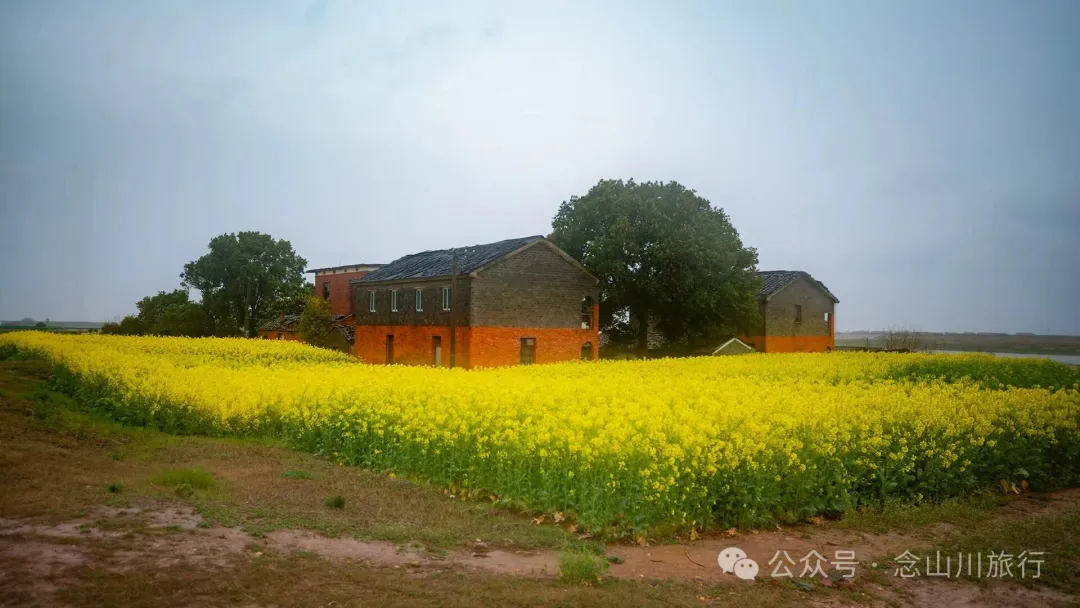
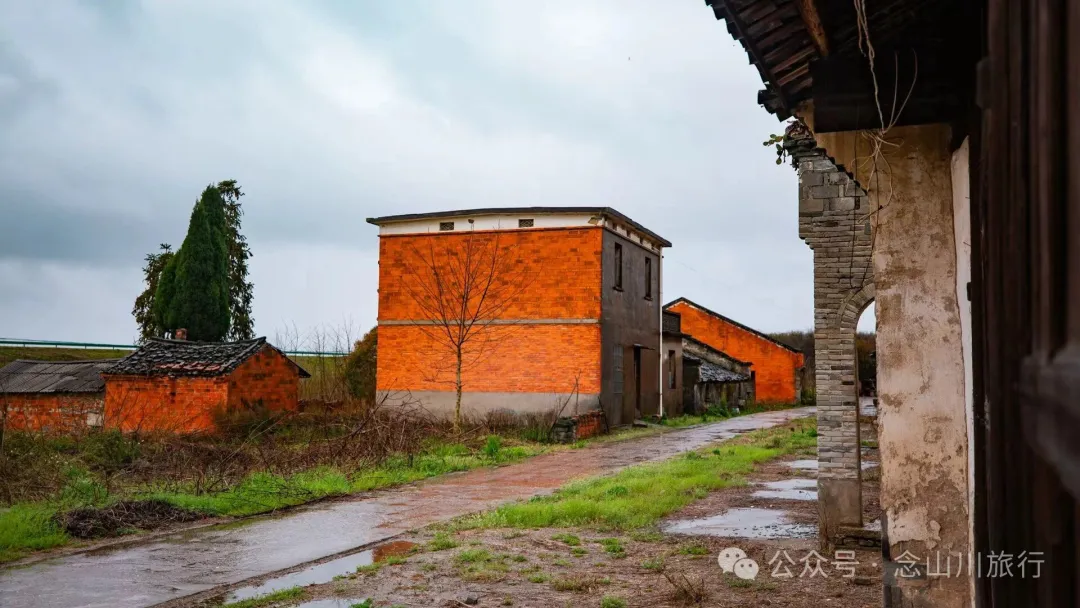
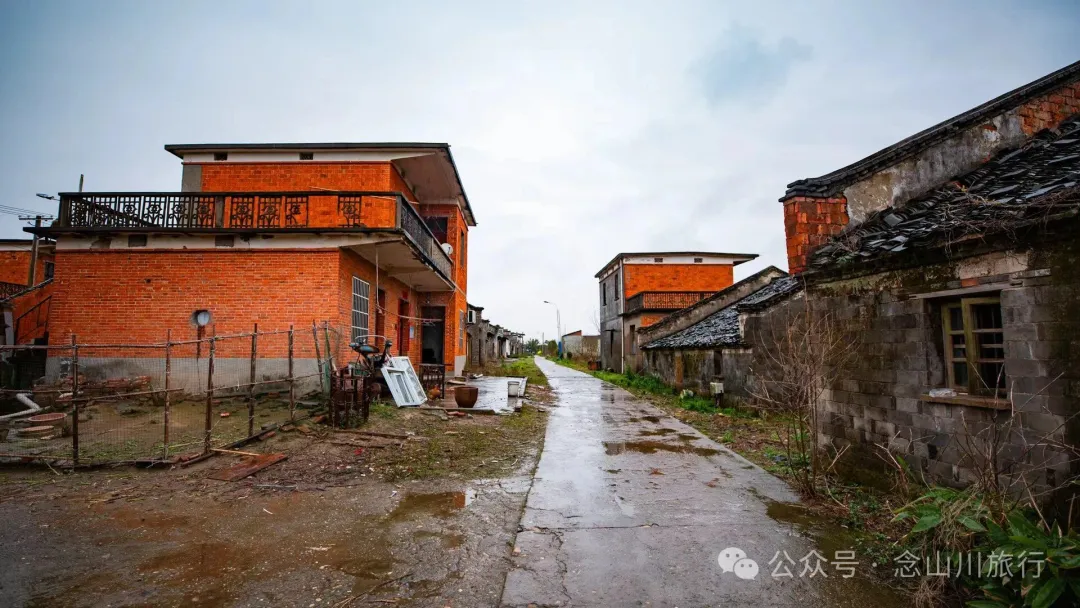
These villages are surrounded by flat fields of rapeseed flowers, with houses uniformly modern concrete buildings. At some point, the familiar blue-brick or red-brick houses I knew were replaced and disappeared. So when I saw two old buildings with mixed colors on the embankment, I was delighted. Such buildings are rare: the upper part is made of blue bricks, the lower part of red bricks. I don't know if the owner did this intentionally or due to a shortage of materials, like when my mother knitted wool pants for us as children—if the new wool wasn't enough, she would unravel an old sweater to make up the amount, regardless of whether it matched. In that era of material scarcity, aesthetics were unnecessary.
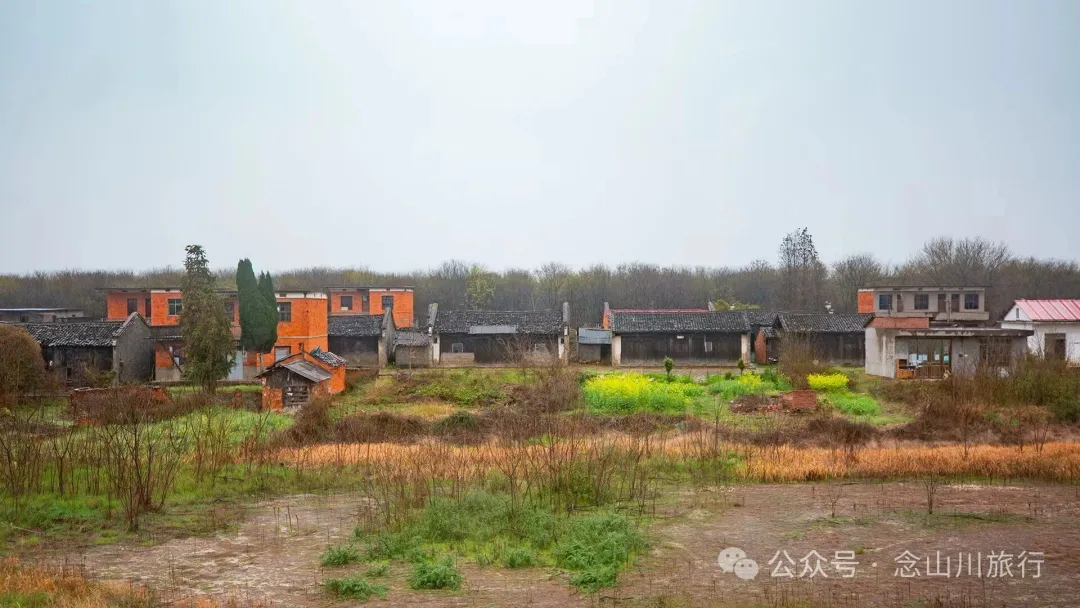
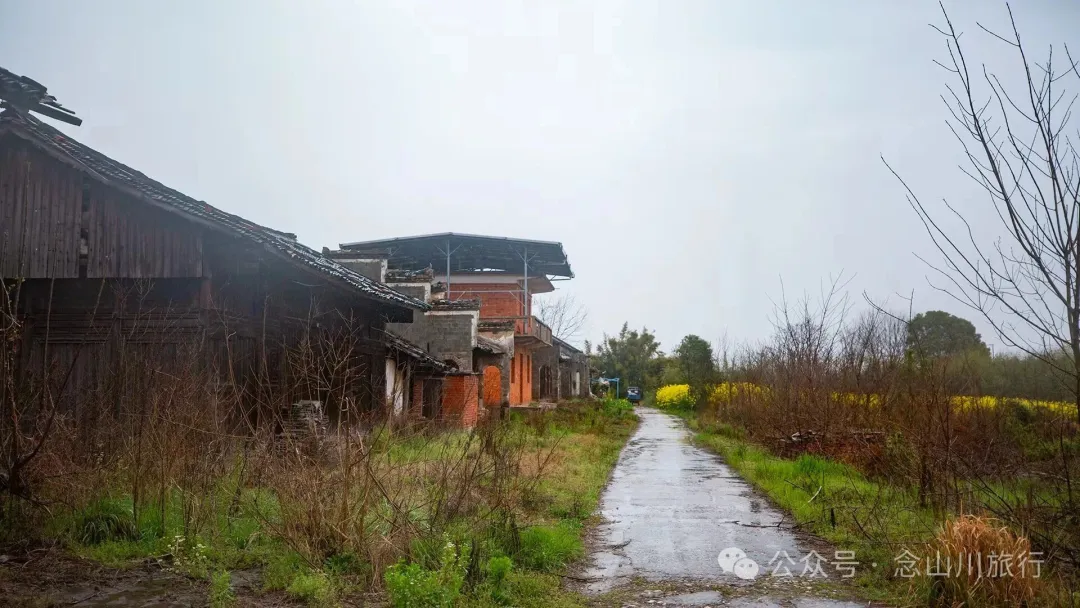
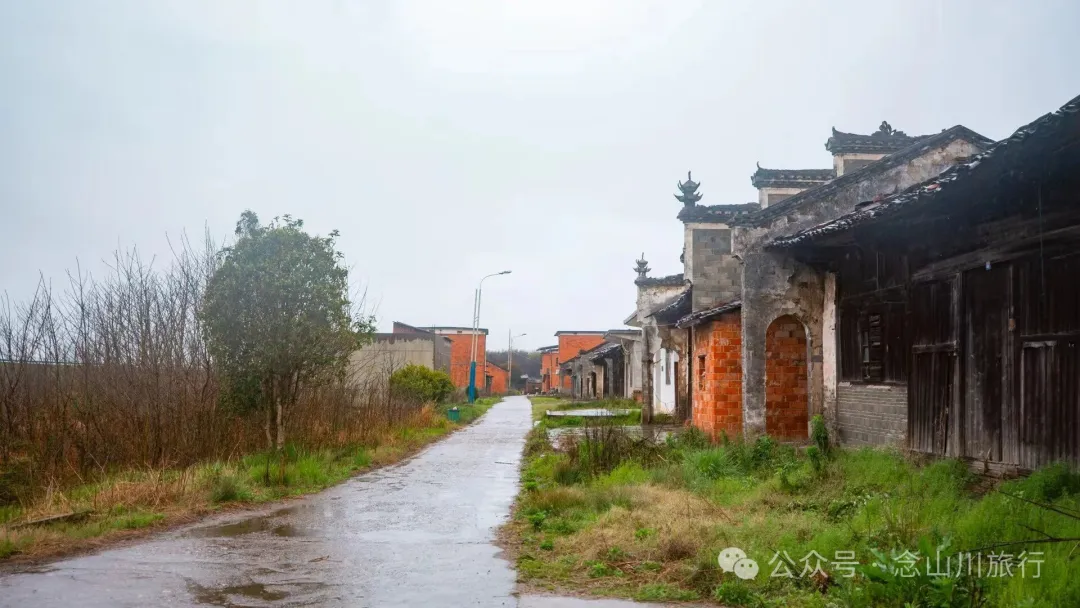
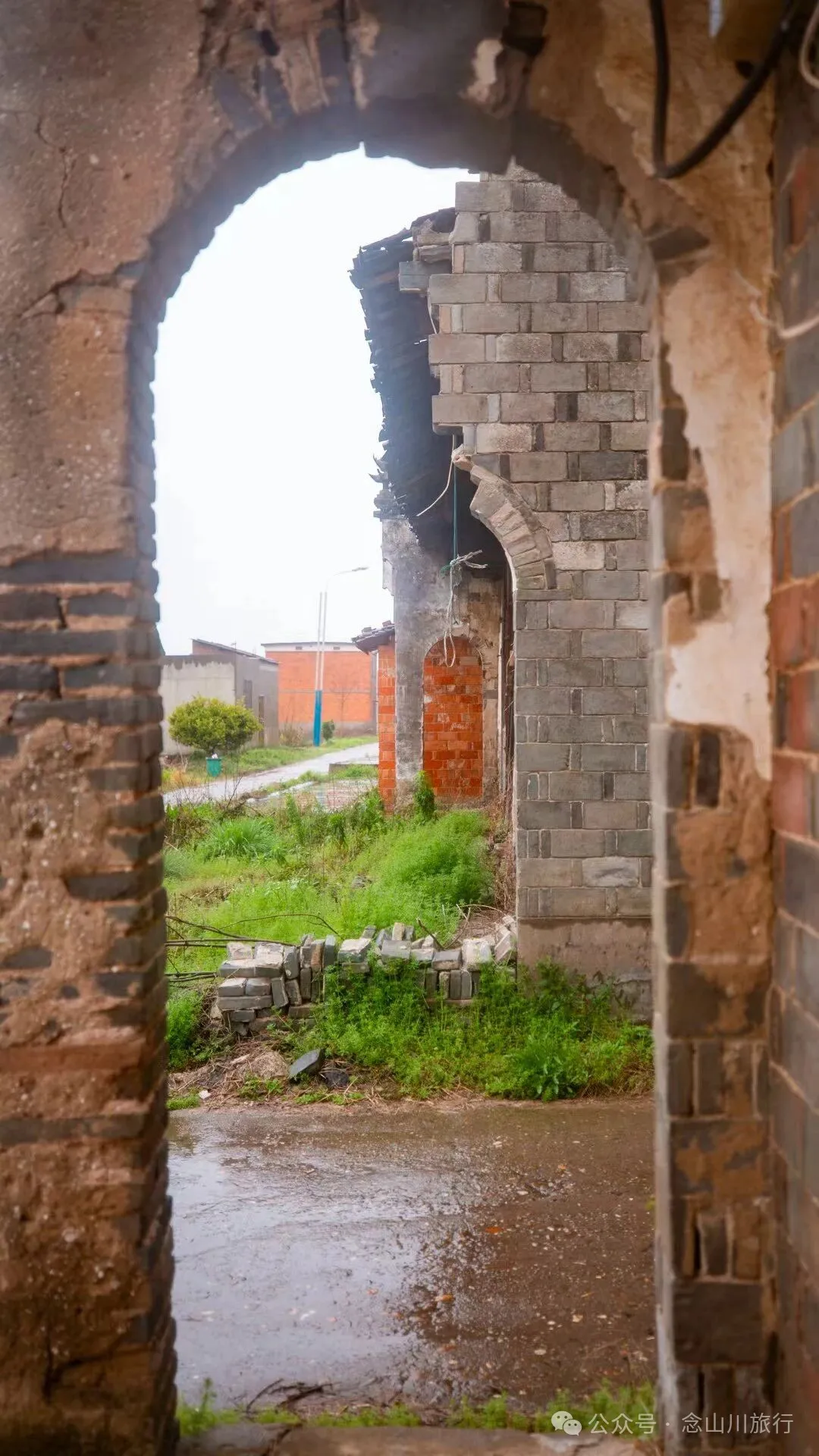
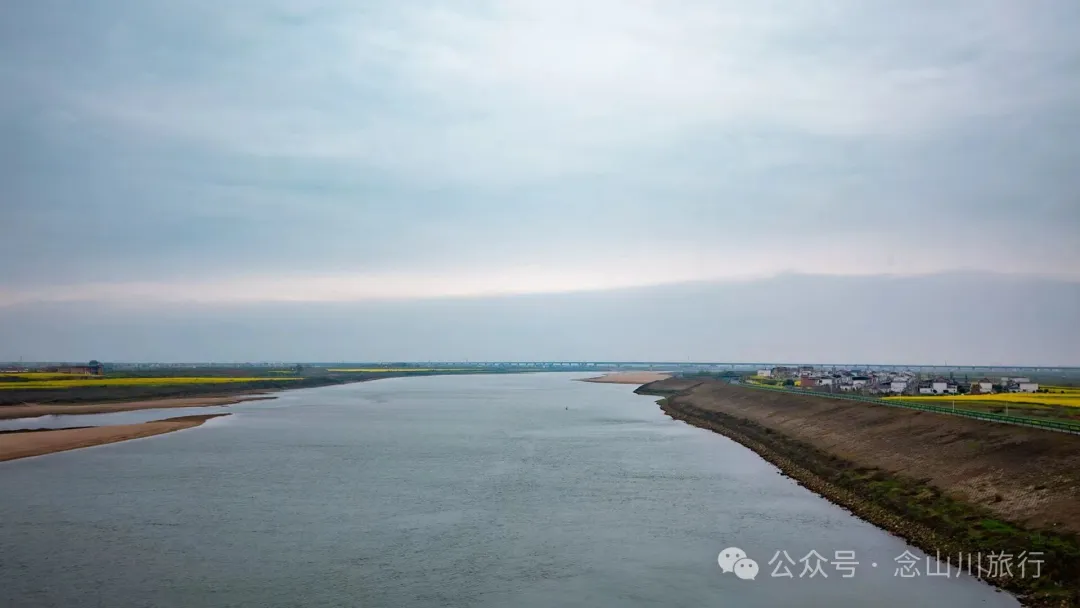
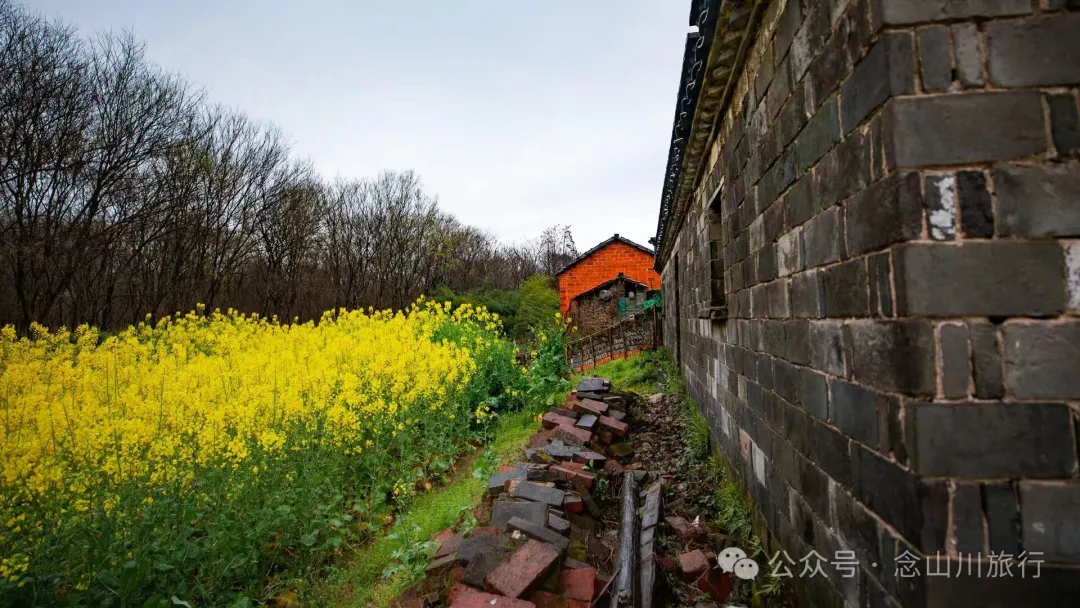
It wasn't until I had walked nearly half the distance that the rain began to slant down. The cold wind swept across the endless plain behind the villages, blowing toward the embankment, then skimming the shallow river surface and running to the other side of the plain. This was the weather I had imagined—the damp, hazy spring of Jiangnan that I had longed for on the sunny plateau. The moisture in the air would effectively relieve the various discomforts of dry allergies. But the scene between the embankment and the river had changed. The wilderness there used to be overgrown with weeds, with occasional willow groves swaying by the river bends, where water buffalo would forage, followed by cattle egrets flying in the pale sky or standing on their backs, their striking white feathers unforgettable. More birds soared among the trees or perched in the grassy banks dotted with red flowers. Now, most of the trees are gone, and the wilderness has been cultivated into farmland by the hardworking villagers, with yellow rapeseed flowers spreading across it.
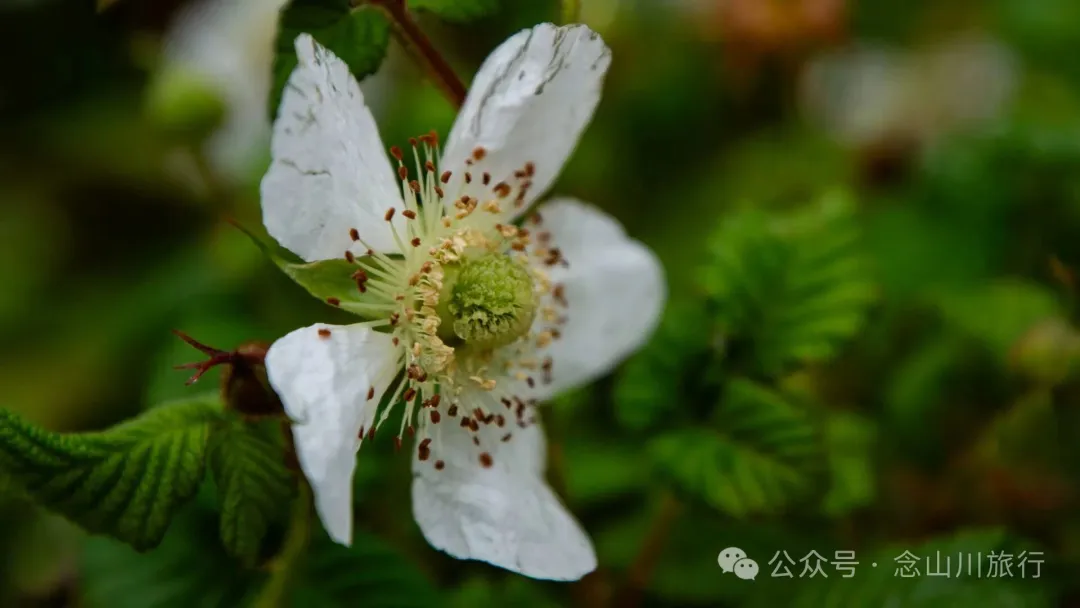
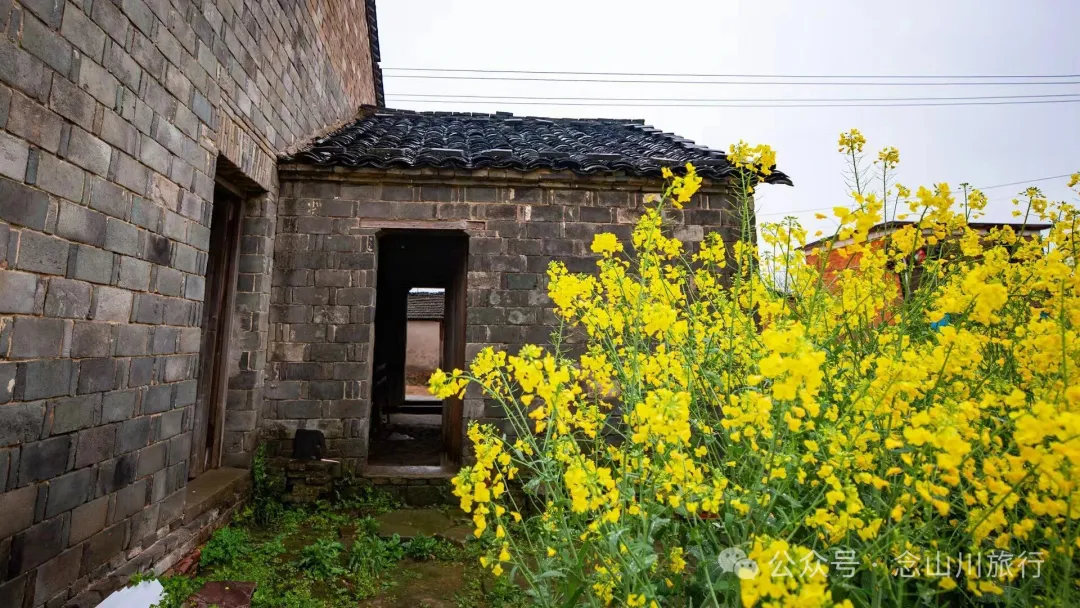
Standing on the embankment in front of the village, I still didn't immediately recognize the village where I had lived for ten years; I had to look twice. The old path into the village was gone, and the girl who used to rush down the slope into the village was gone too, along with a small pond in front of the village, which had been a paradise for her and her friends during countless beautiful summers. I followed a narrow concrete road into the center of the village, which was empty except for a few chickens walking in the yard of a house at the village entrance. The dense rain beat on the tile roofs, the sound seemingly intent on covering the village's silence. The raspberry bushes on the roadside were lush, blooming with fragrant white flowers before they even reached a meter in height, endearing to behold.
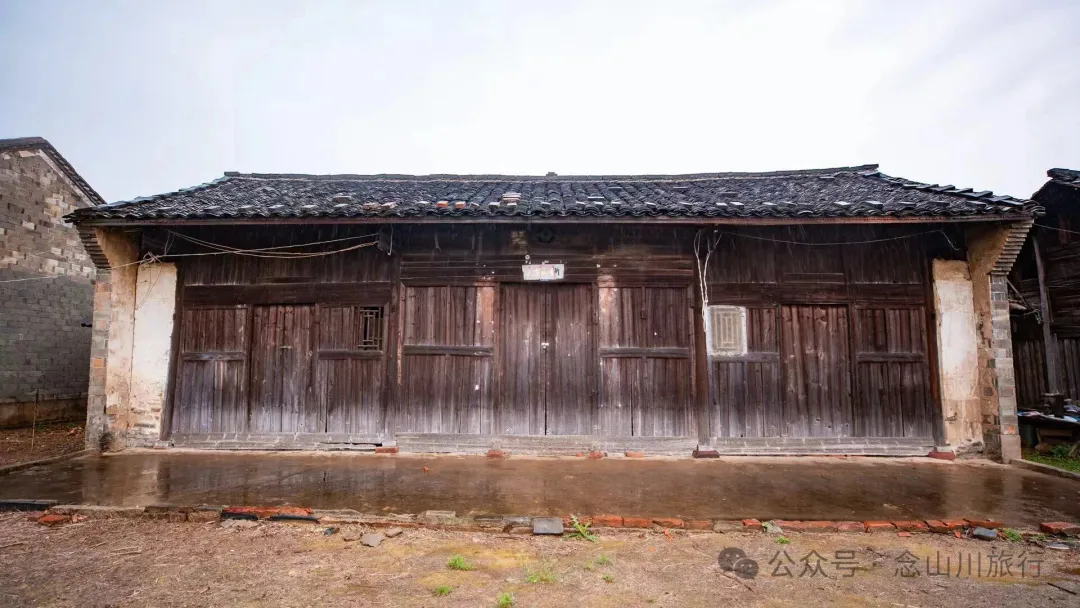
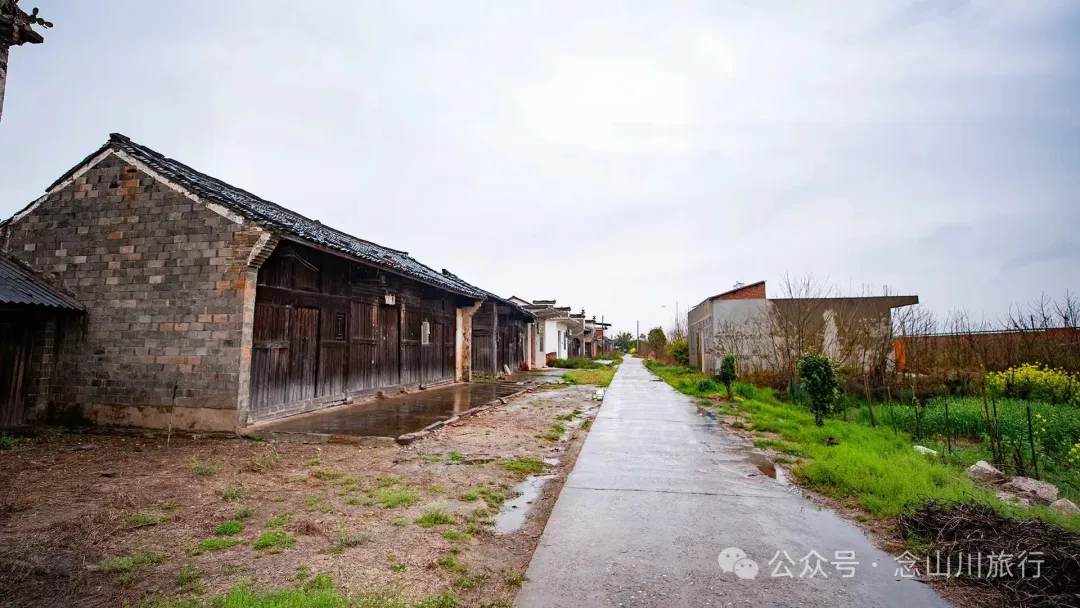
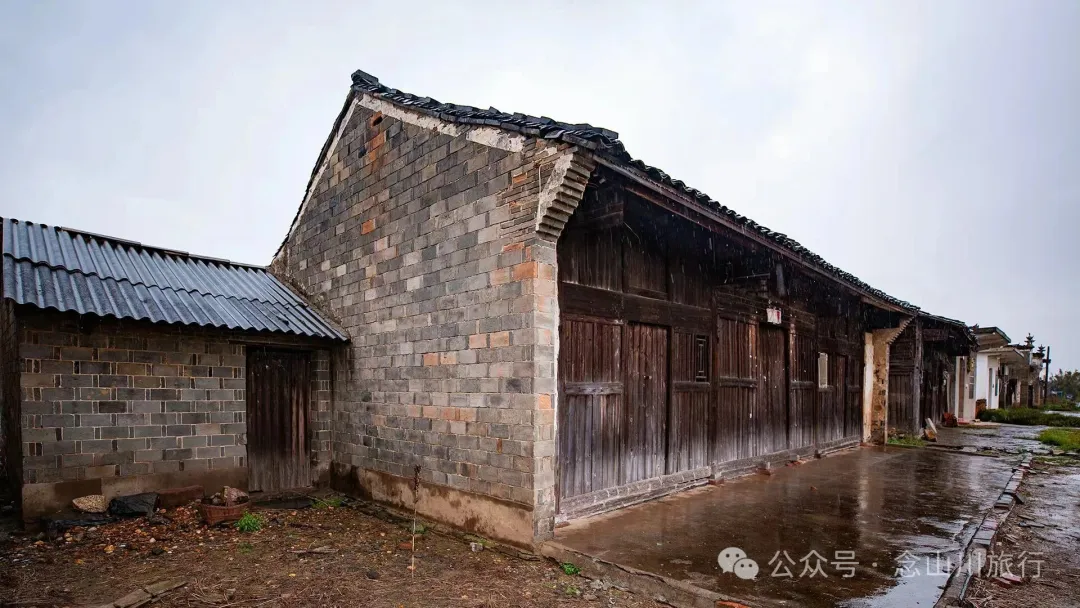
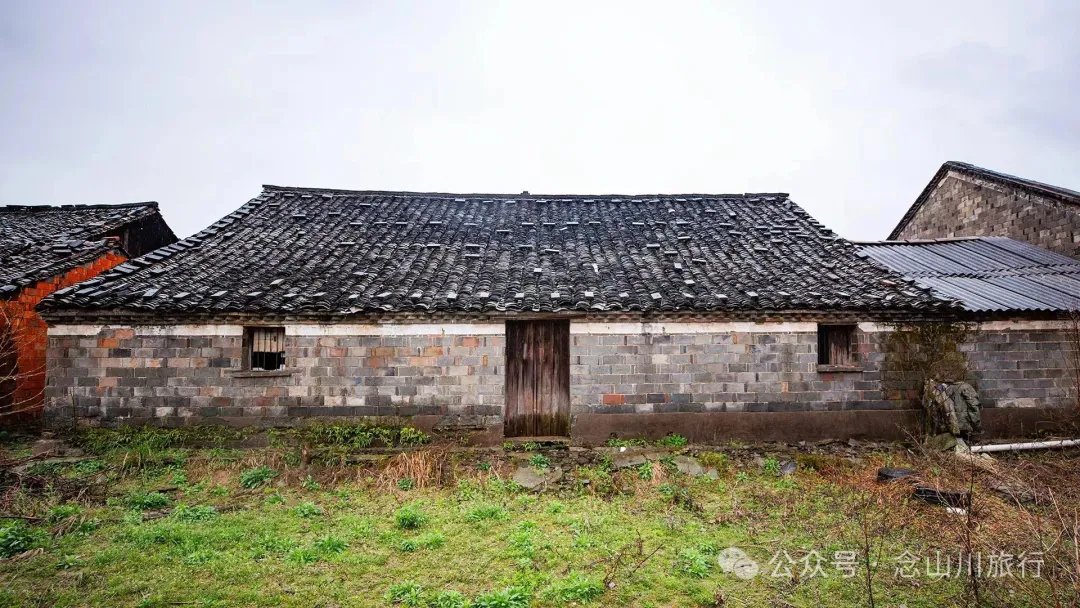
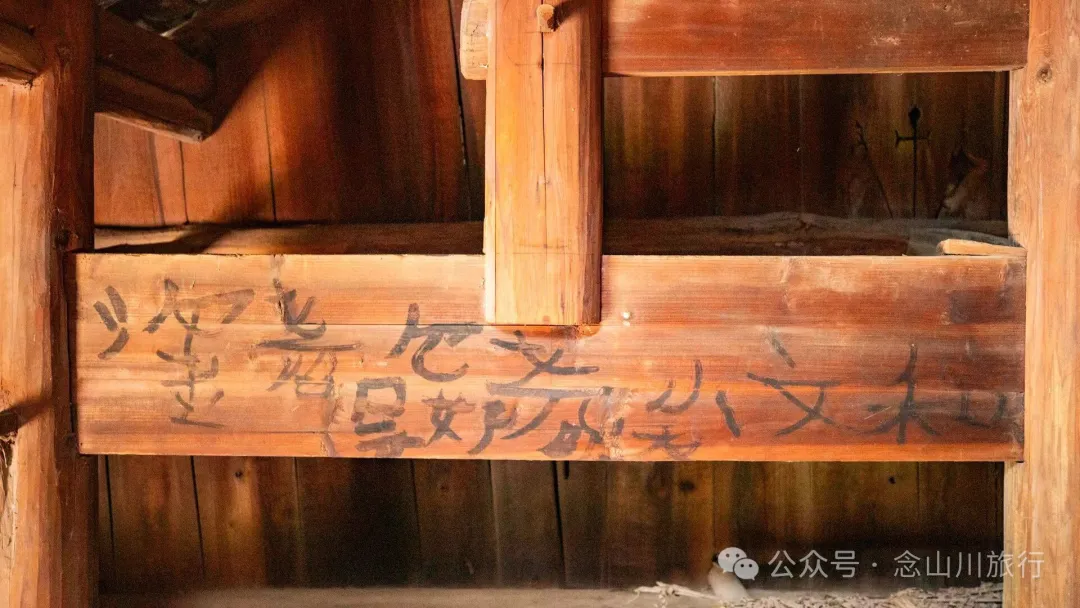
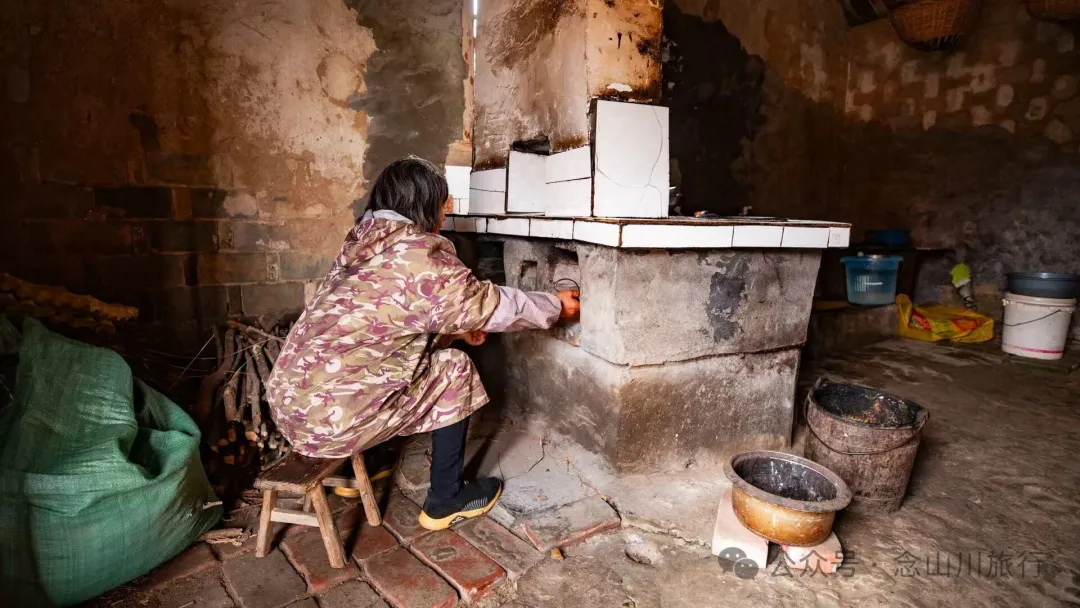
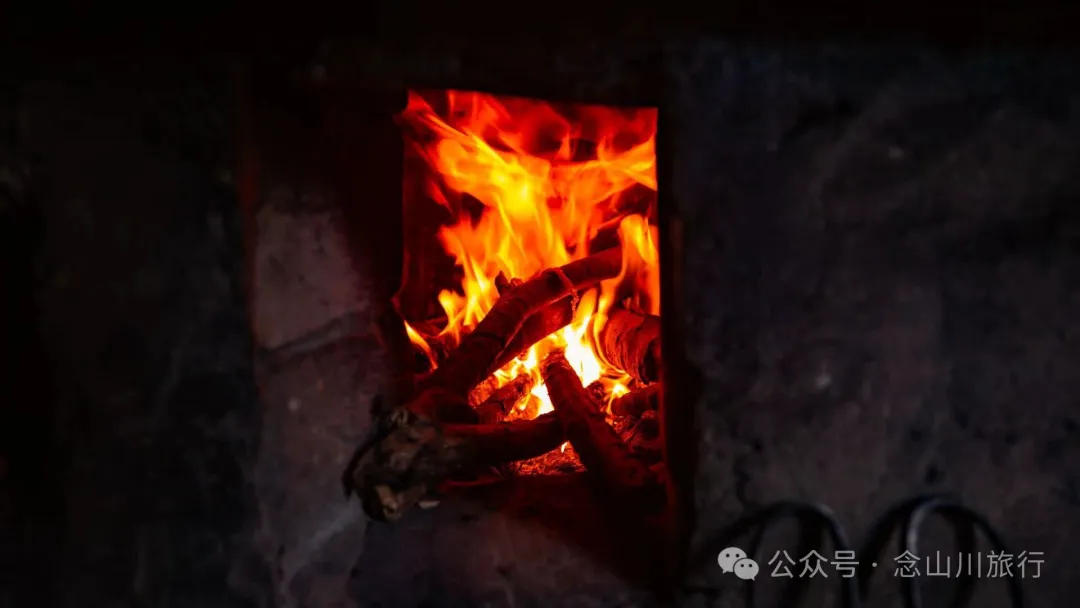
Approaching the old house, I realized how low and old it was. In fact, this was no longer our old house. After our family moved away when I was ten, the house was sold to another family in the village. So when I pushed open the dusty wooden door and looked around, I saw the lives of two families. Most traces were from the later occupants—furniture, farm tools, stickers on the wooden boards, and the clean concrete floor. I could only search for our traces in the small room where my grandmother and I lived, in the narrow passage between the room and the outer wall, and even on the rusty nails driven into the wooden wall. The kitchen was piled with clutter, all covered in thick dust, and the earthen stove was destroyed beyond recognition. If she were alive, if we still lived here, there wouldn't be a speck of dust in the kitchen, and the firewood by the stove would be neatly stacked.
The wooden ladder to the attic was still there, and I climbed up. Only a bamboo bed stood against the wall. The bed was almost intact, not falling apart, but I thought it must have been left by the other family; the bamboo bed we slept on was at least half a century old and probably wouldn't have lasted this long. I have a particularly vivid memory of a bamboo bed: on a cold winter day or early spring, I saw my mother and other women from the village being carried into the village on overturned bamboo beds, their faces pale and looking pained. Many years later, I learned they had undergone sterilization surgery. At that time, there were too many unplanned children in the village, mostly girls, and I was one of them.
The wooden ladder to the attic was still there, and I climbed up. Only a bamboo bed stood against the wall. The bed was almost intact, not falling apart, but I thought it must have been left by the other family; the bamboo bed we slept on was at least half a century old and probably wouldn't have lasted this long. I have a particularly vivid memory of a bamboo bed: on a cold winter day or early spring, I saw my mother and other women from the village being carried into the village on overturned bamboo beds, their faces pale and looking pained. Many years later, I learned they had undergone sterilization surgery. At that time, there were too many unplanned children in the village, mostly girls, and I was one of them.
An exceptionally clean and straight blue-brick old house made me stop. An old woman sat at the door, picking Artemisia selengensis, while an old man stood behind her, his murmurs drifting into the rain outside. Seeing me approach, the old woman warily asked what I wanted. I asked if she knew my mother. After a moment of scrutiny, she exclaimed in dialect with surprise and joy, "Lao wa lao!"—a phrase I had long awaited. And I had anticipated it, suppressing a surging warmth I didn't want to reveal.
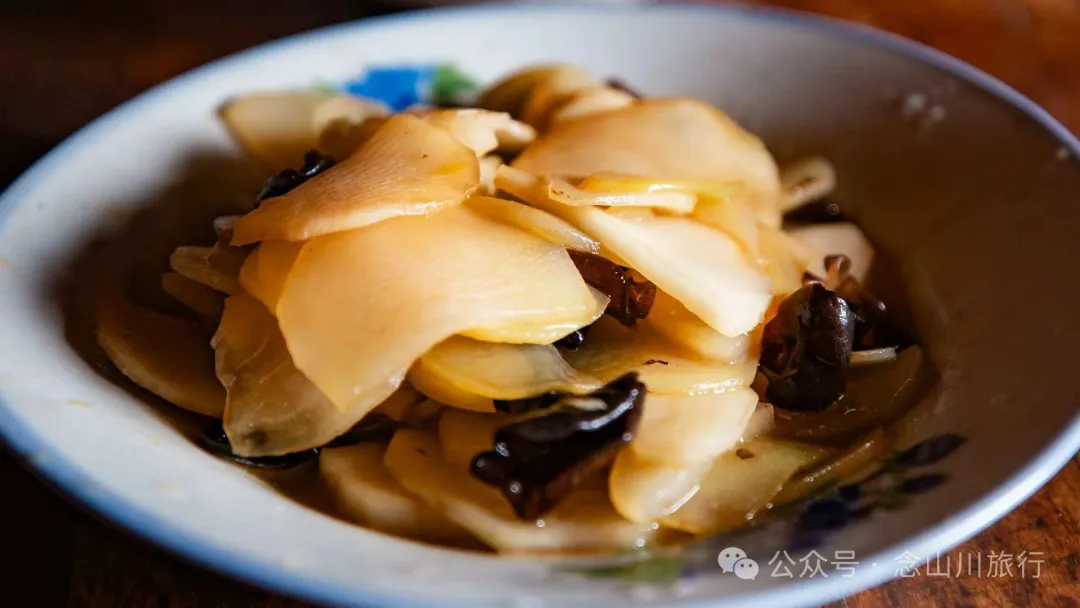
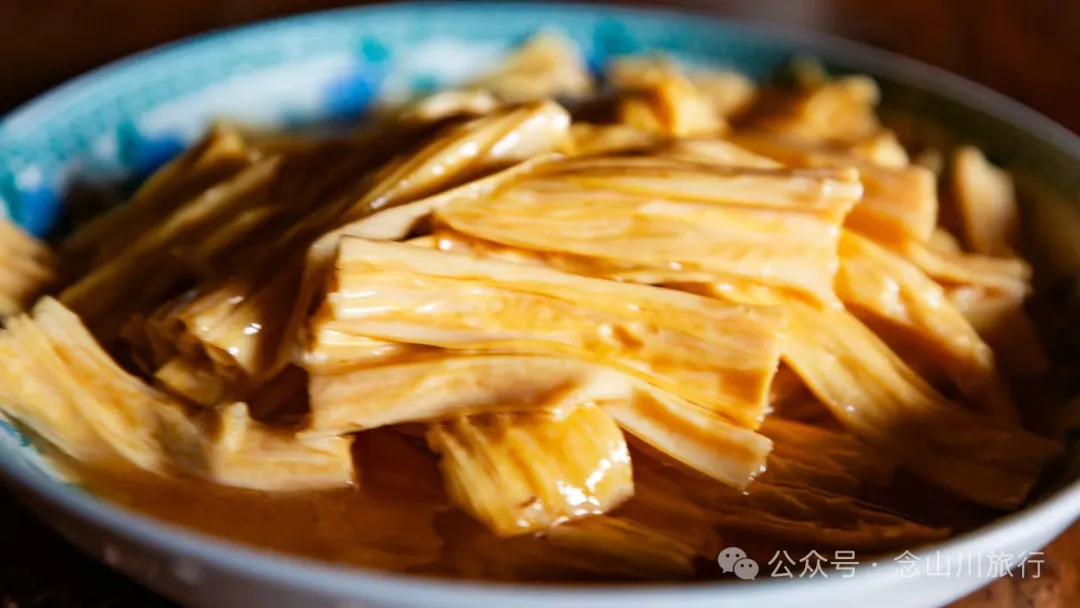
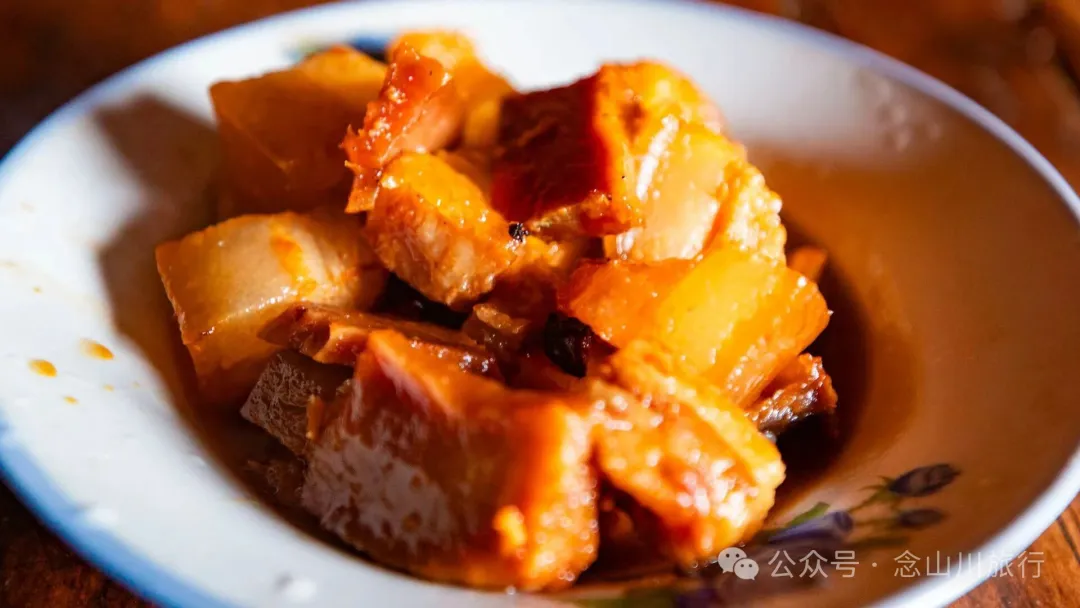
We chatted about the past and the present. I sat at a square table in the main room, listening to her tell stories about the village. "Mujie" (elder sister-like aunt), I should call her that, but I had been away so long that the word was no longer in my language system. She filled me with a simple lunch, warming me, but she felt ashamed—if she had known I was coming, she said, she would have prepared a more elaborate meal. Yet from the plate of white salted turnip, I tasted the flavor my grandmother used to make, and I was deeply grateful.
The day before returning home, I suddenly remembered a sister in the village, about the same age as my eldest sister, clever and skilled at braiding hair in various styles. I remembered she had braided my hair a few times beautifully, and I remembered a fragrant flower planted in front of her house, but I couldn't recall her name. And the "mujie" before me was her mother. That sister had long married into another village and become a grandmother.