
We entered the city from the northwest direction of Gejiu. Before reaching the urban area, the large expanse of red-brick buildings on the slopes outside the city easily evokes the city's glorious and shining past. From the scale of the buildings and my knowledge of Gejiu, the "Tin Capital," I guessed that this cluster of dusty red-brick structures belonged to a tin factory that once hummed with machinery. Now, it looks extremely desolate, even somewhat dirty.
Thick dust is stirred up by vehicles speeding along the highway, drifting aimlessly in the air for a while before lazily descending to find a place to settle. The old, motionless buildings become their preferred landing spots, because they seem far from everything, so far that even a breeze wouldn't bother to touch them. Thus, they can stay there securely until they themselves grow tired. As a result, those old red-brick buildings look even more useless. I regret not insisting on stopping by the roadside to take a good look at these ruins and snap a few commemorative photos. The word "ruins" seems inaccurate, as each large iron gate is tightly shut, not allowing outsiders to enter freely. What are they still waiting for?
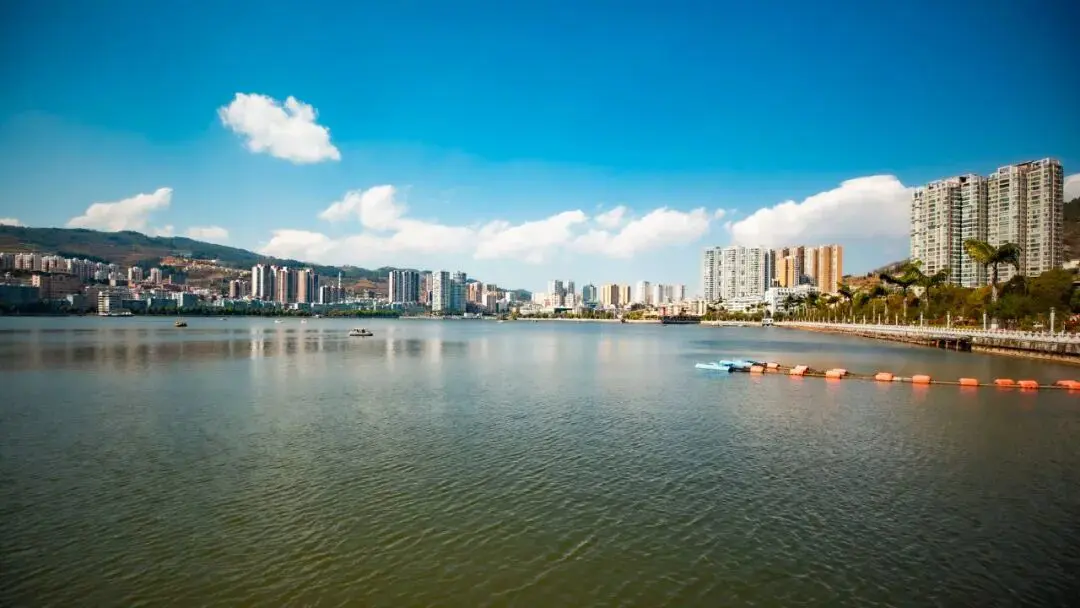
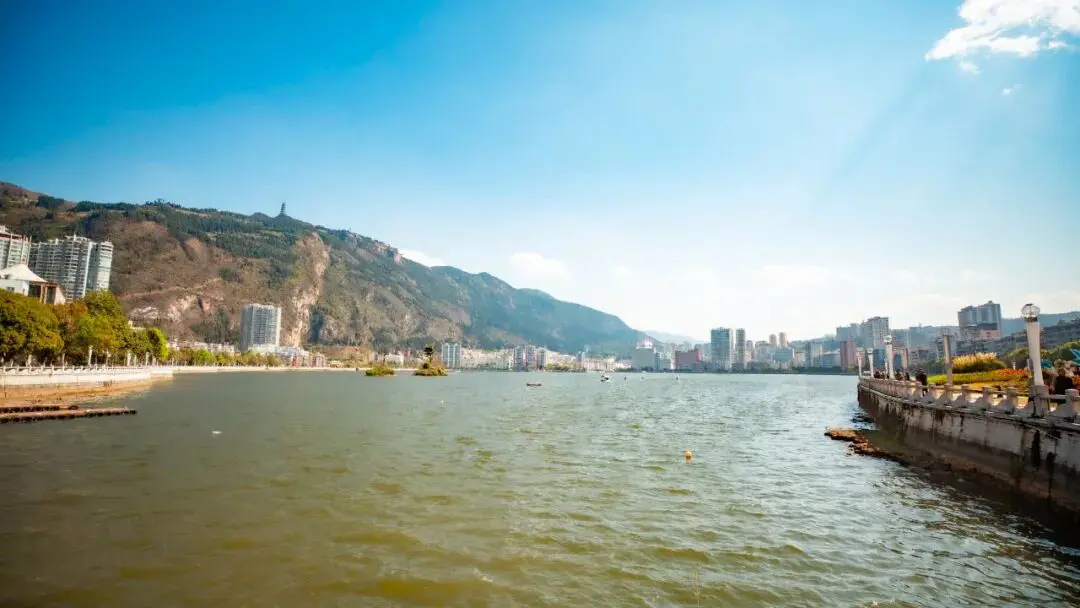
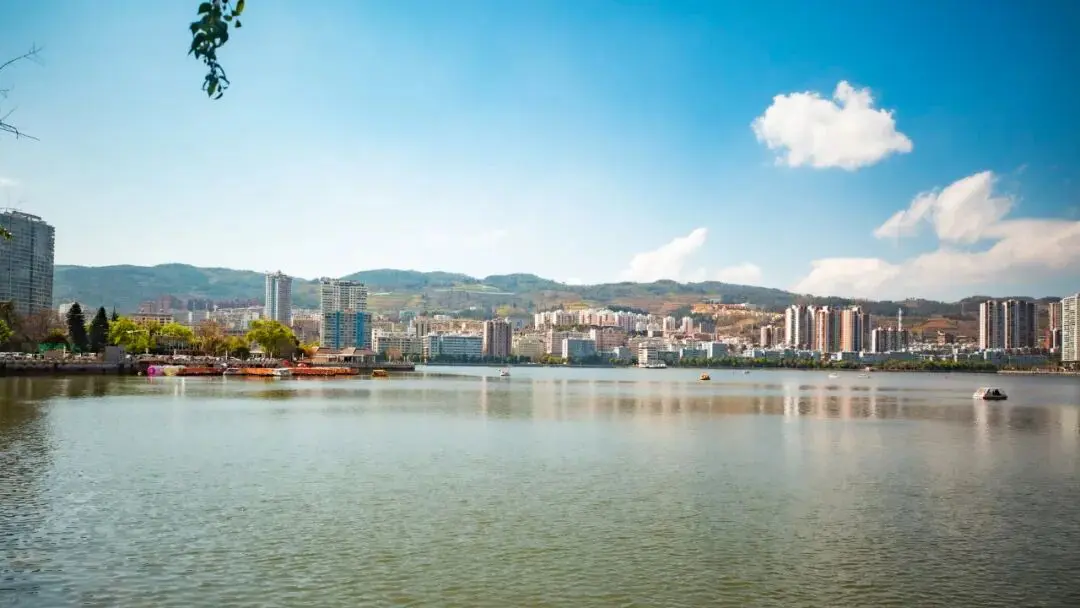
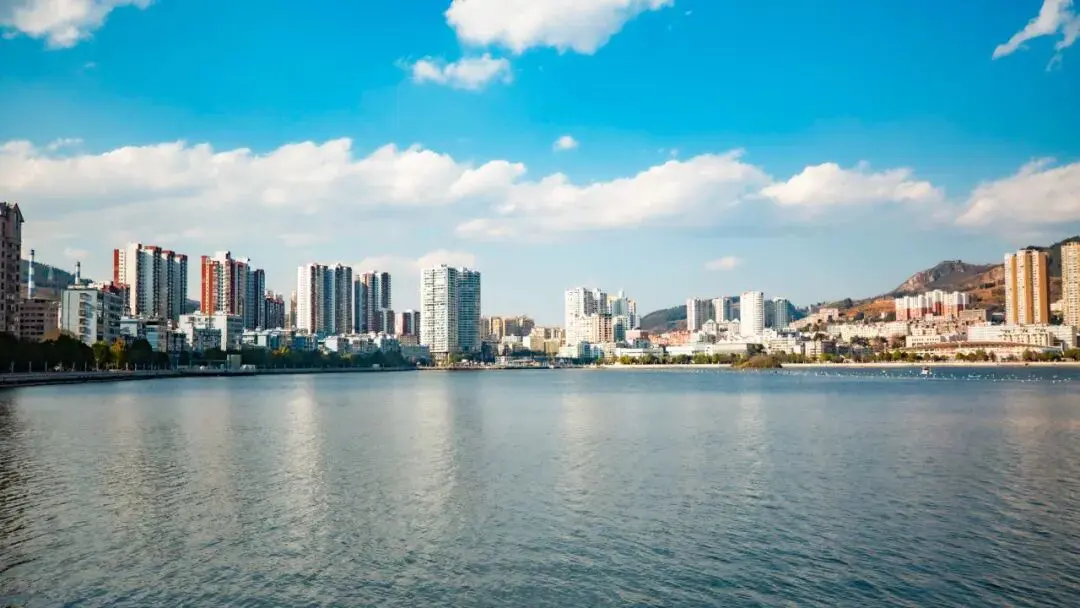
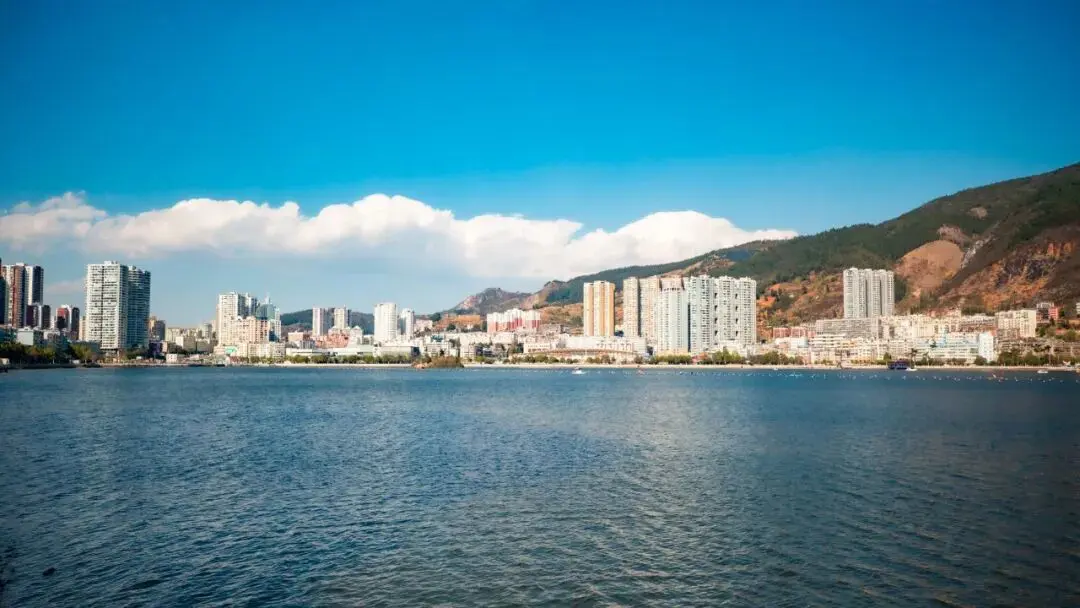
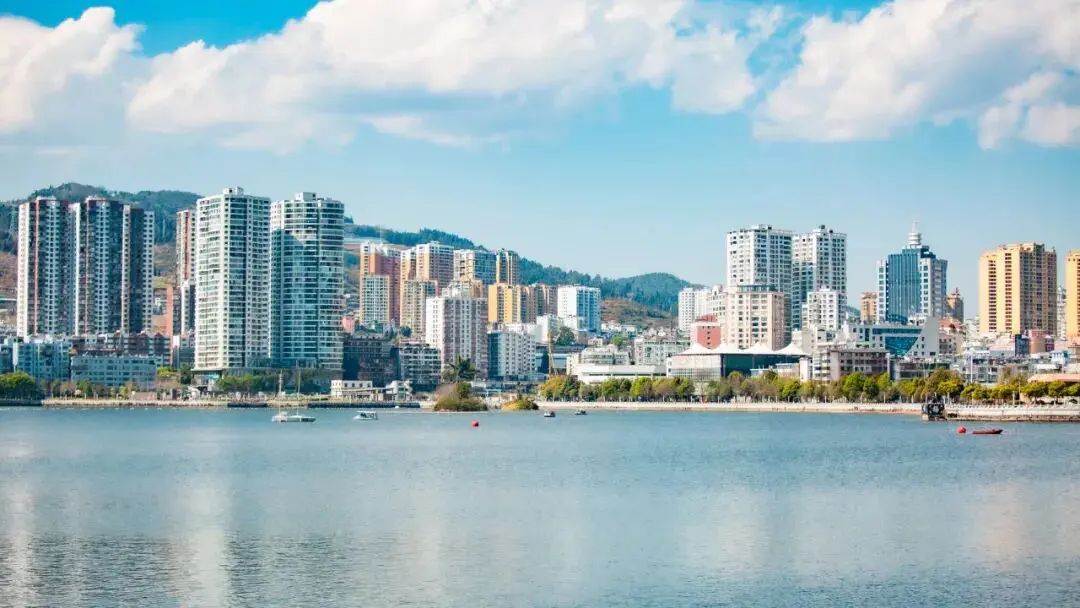
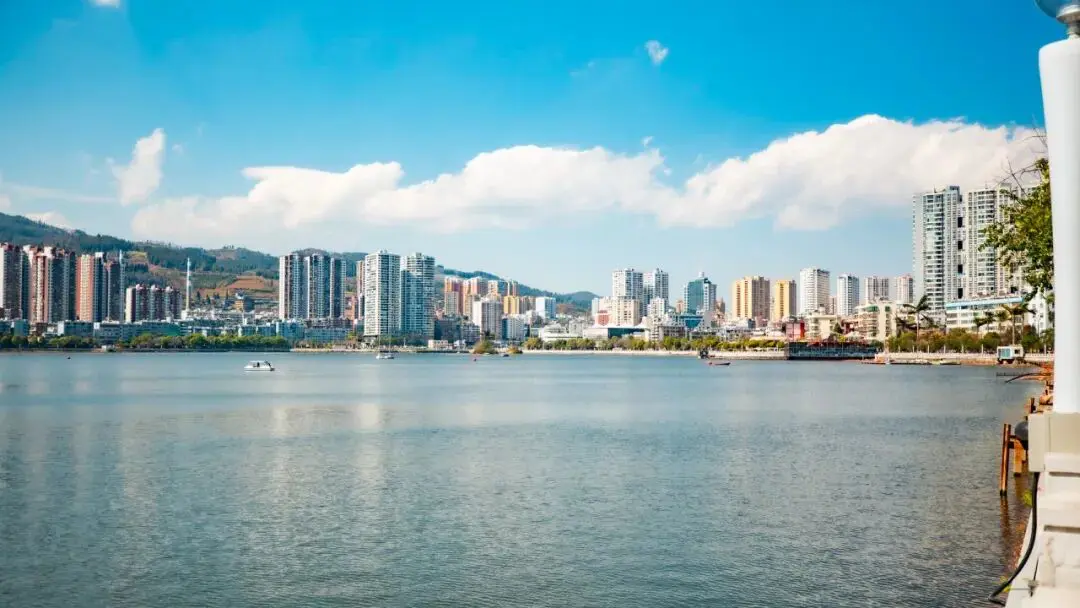
Following the winding mountain road, we rushed down into the lower-lying Gejiu city, circled the Jinhu Lake in the city center one and a half times before finding a parking lot, and walked a long way along the lake to enjoy the urban landscape by the water. Had we not seen that desolate factory area, the clarity of Jinhu Lake and the prosperity of Gejiu would not have left such a deep impression. The city begins to show a bustling scene of high-rises halfway up the mountainside, clustered together in layers, dazzling to the eye. Jinhu Lake is more like a giant washing place, cleansing the city of the fatigue and frustration brought by depleted resources, allowing the city to maintain its reputation as a livable place.
Jinhu Lake is truly a magical existence. This plateau lake is actually an artificial lake, closely linked to a torrential rainstorm. In the 1950s, when Gejiu was still in the midst of vigorous industrial production and development, an unexpected downpour continuously poured into this basin, with mountain floods rushing from all directions toward the low-lying areas, causing prolonged flooding. In this water-scarce city, people immediately decided to turn the natural disaster into a benefit: relocating from low areas, building dams on higher ground, and retaining all the precipitation. After months of hard work, an artificial lake for water storage was born. Today, the water of Jinhu Lake is unexpectedly clear and clean.
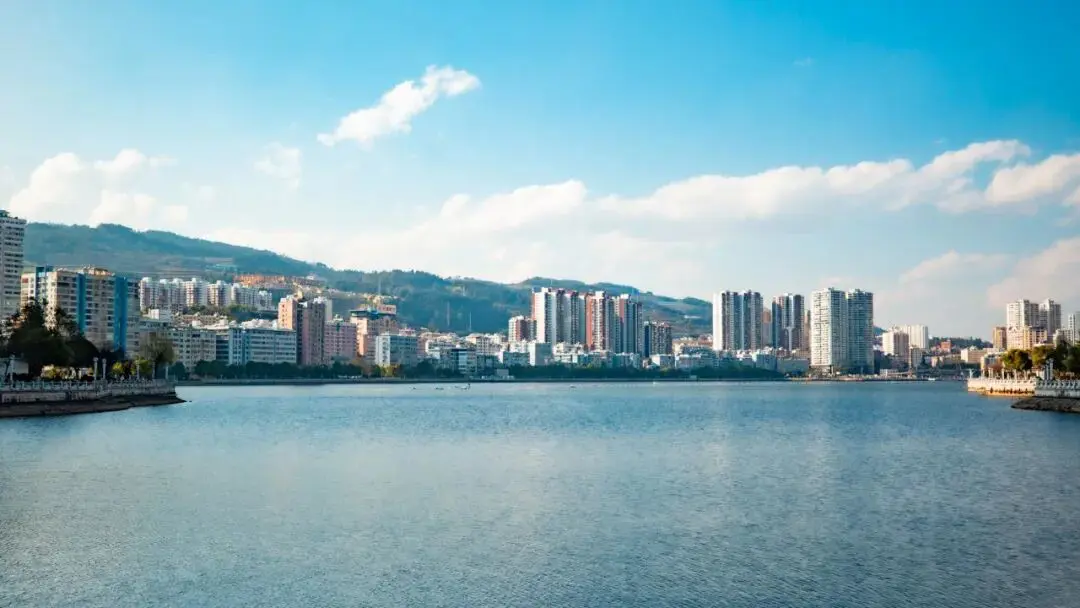
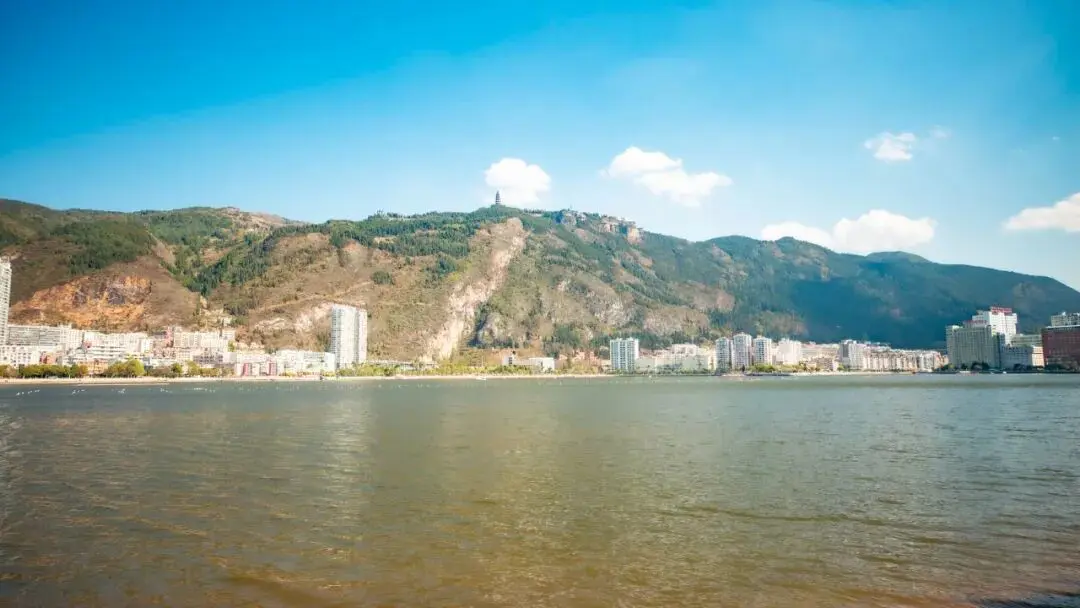
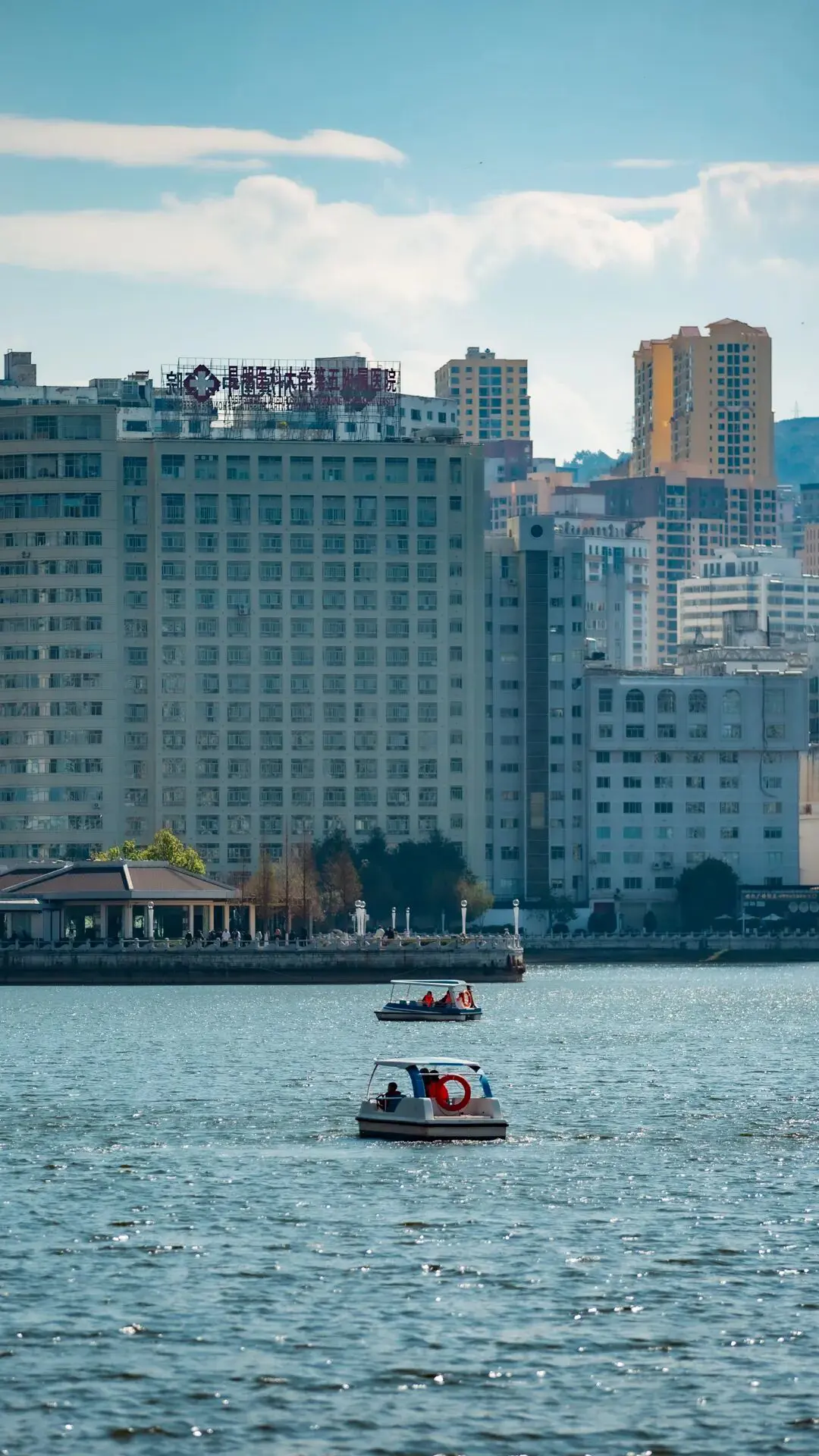
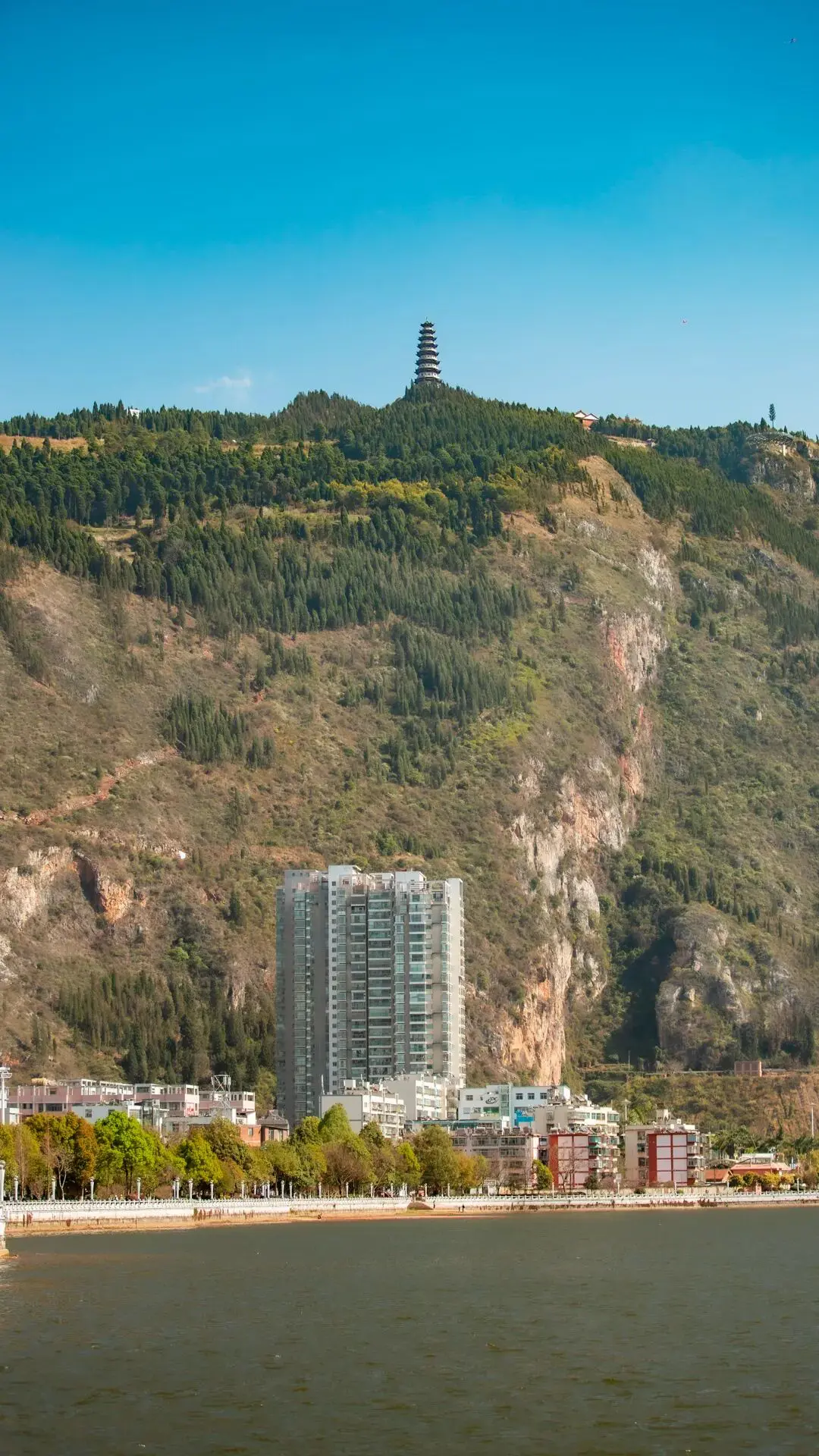
Over 70 years have passed, and Jinhu Lake has witnessed the city's decline and rebirth, as well as its steel-like resilience. Amid the passage of time between old and new, Jinhu Lake has washed away the dust and glory of this industrial city, always bringing a gentle comfort to the city and becoming its core landscape. Walking along the shore of Jinhu Lake under the warm sun and gentle breeze, the city between the nearby water and distant mountains appears serene, peaceful, and leisurely, like a beautiful and affluent seaside town. People stroll by the lake or boat on its surface, enacting scenes of relaxed everyday life with the city.
In a corner of the lakeside park, four residents dressed in Yi ethnic attire seemed oblivious to passersby: a man played a short flute-like instrument, while three women swayed their hips and danced joyfully to the tune. Attracted by their unique music and dance, we stopped to watch and listen, and couldn't help but catch their cheerfulness. They didn't seem to be performing; this was probably part of their daily life, like breathing. Whenever they had free time, they would come here, blending their contentment into the city and sharing the city's peace with passersby.
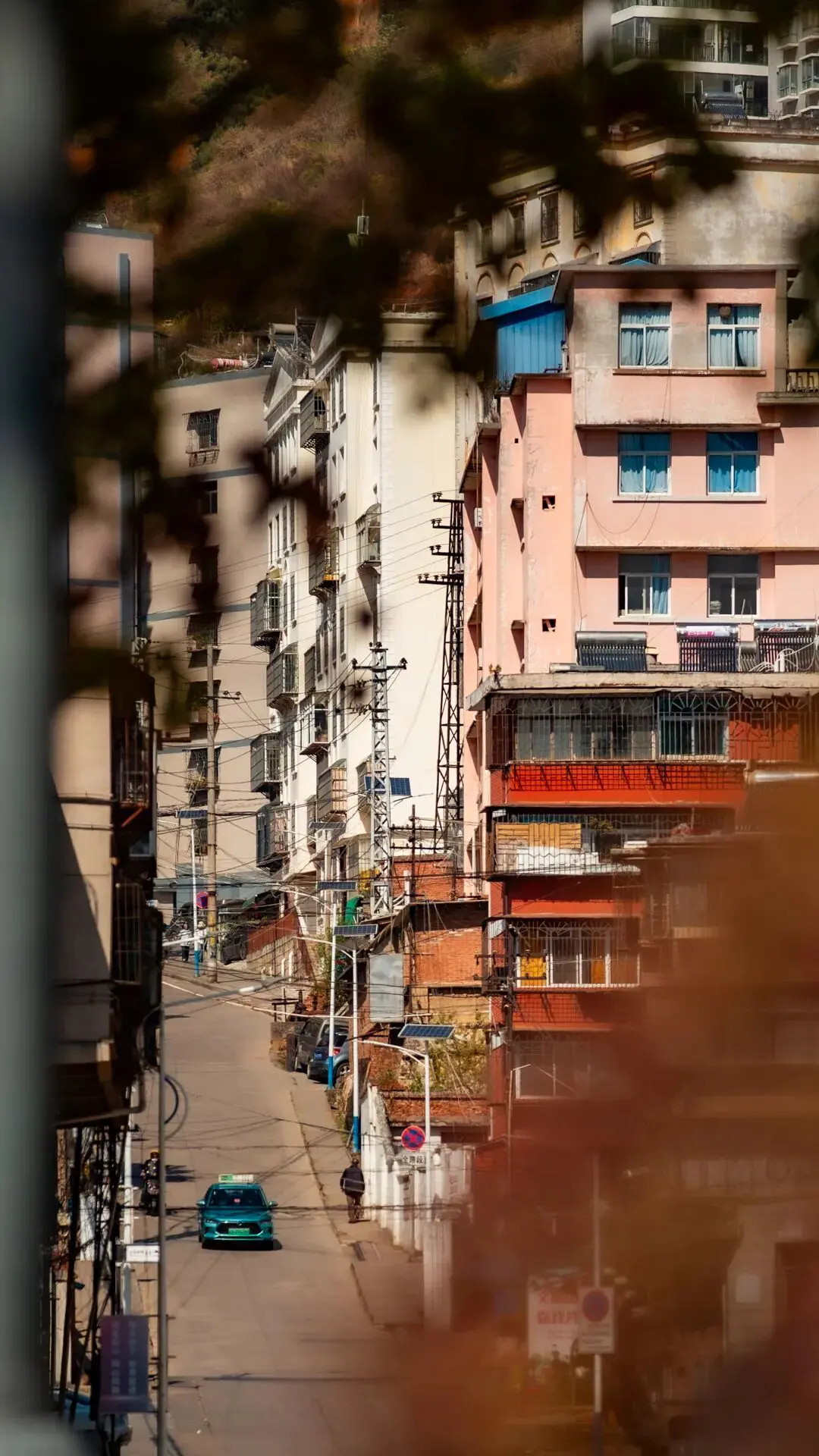
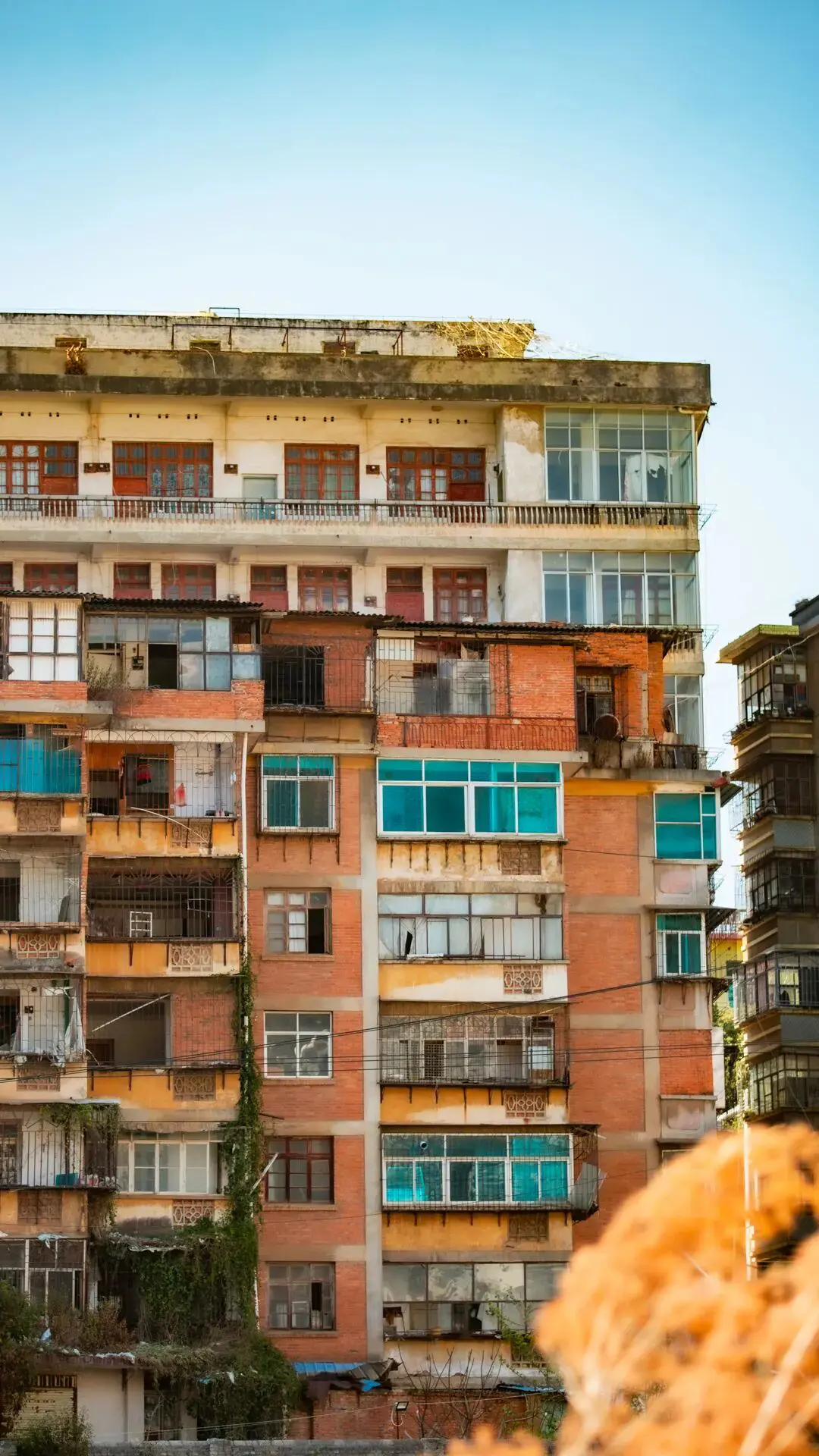
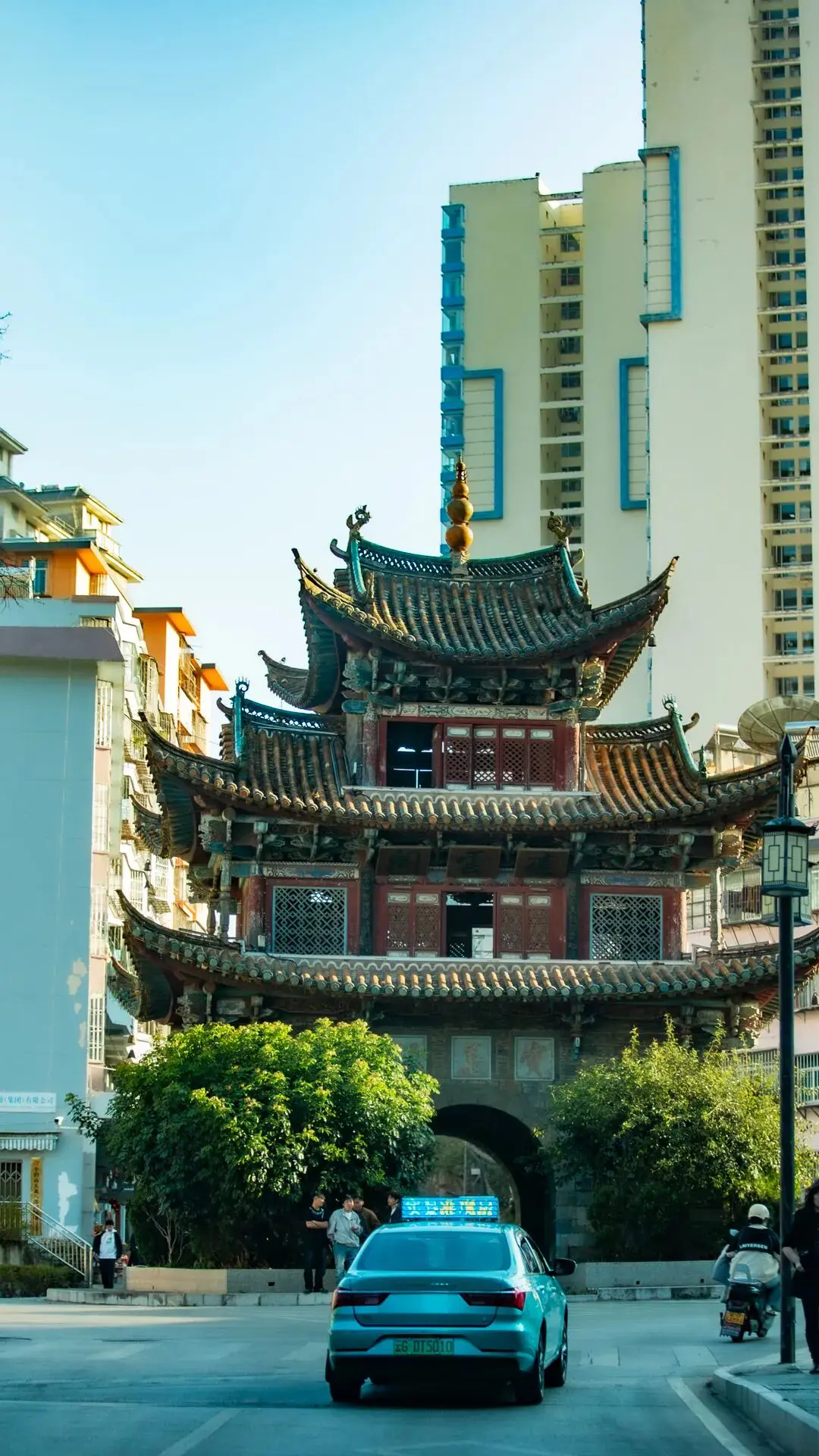
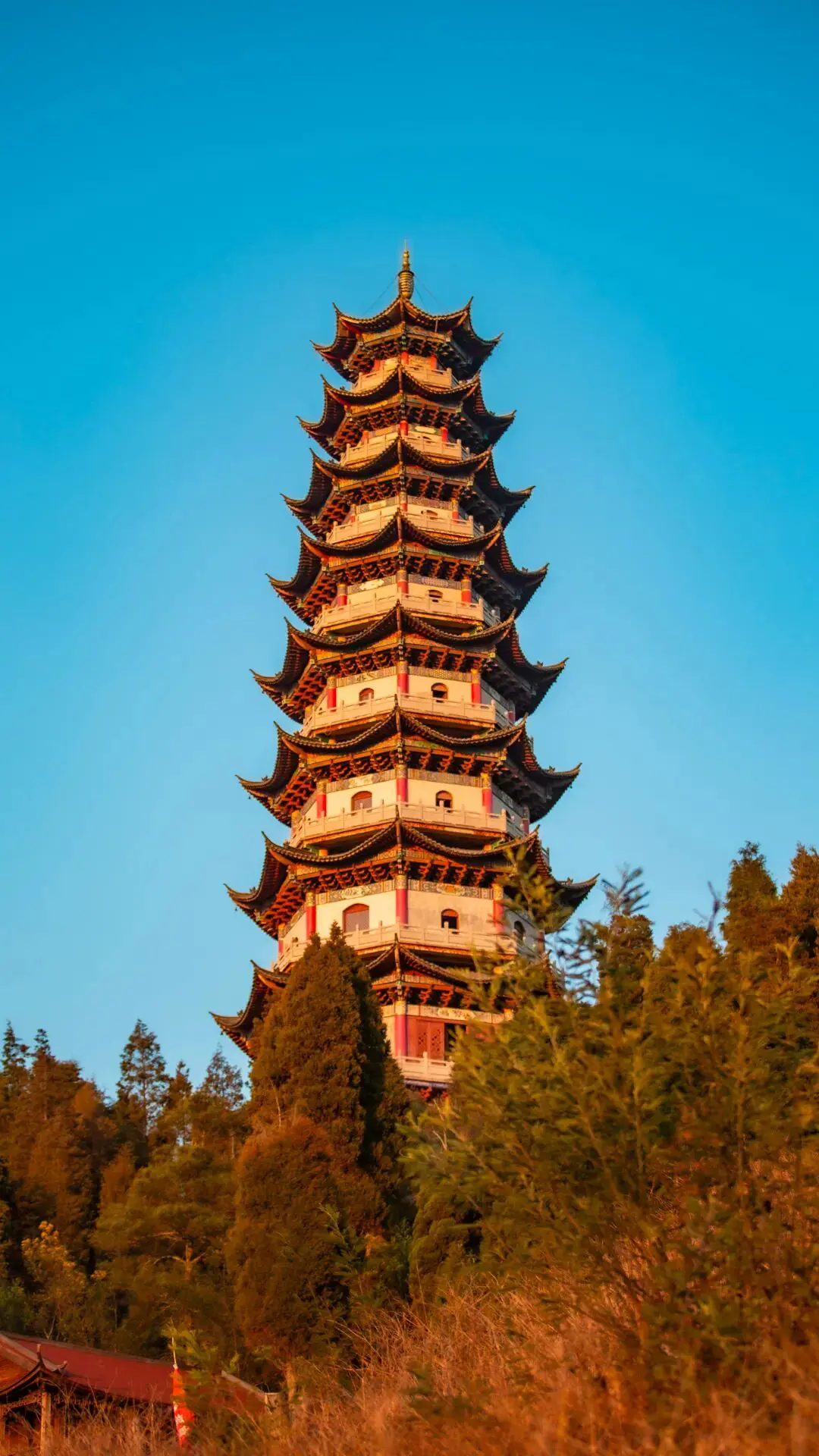
We didn't deliberately wander through the city to look for urban landscapes similar to those elsewhere. I don't like to associate Gejiu with any other city. Gejiu is Gejiu; it stands out and leaves a lasting impression by maintaining its uniqueness. Cities should preserve their old traces so that people can better remember their past.
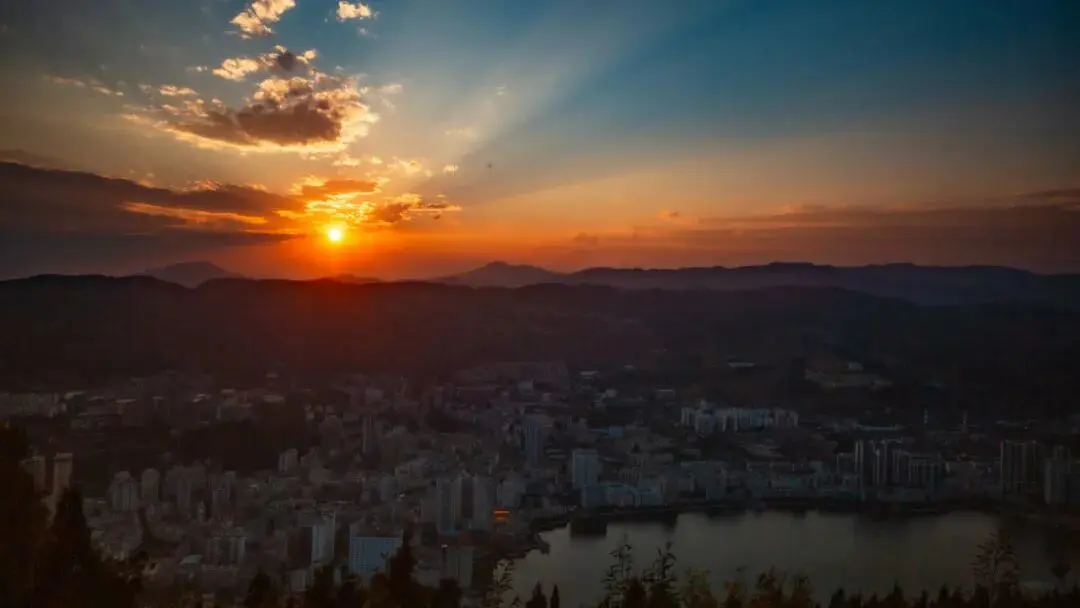

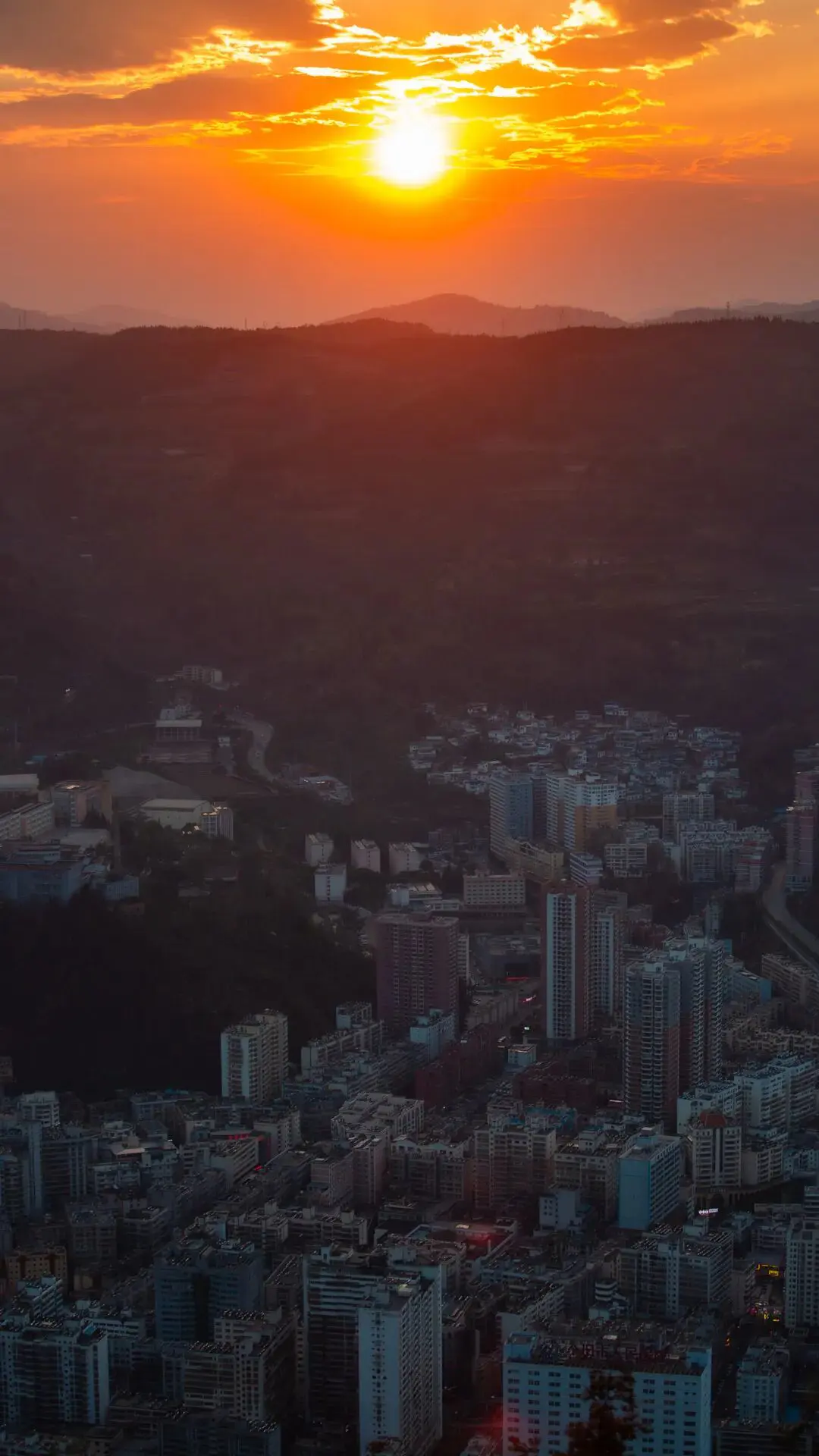
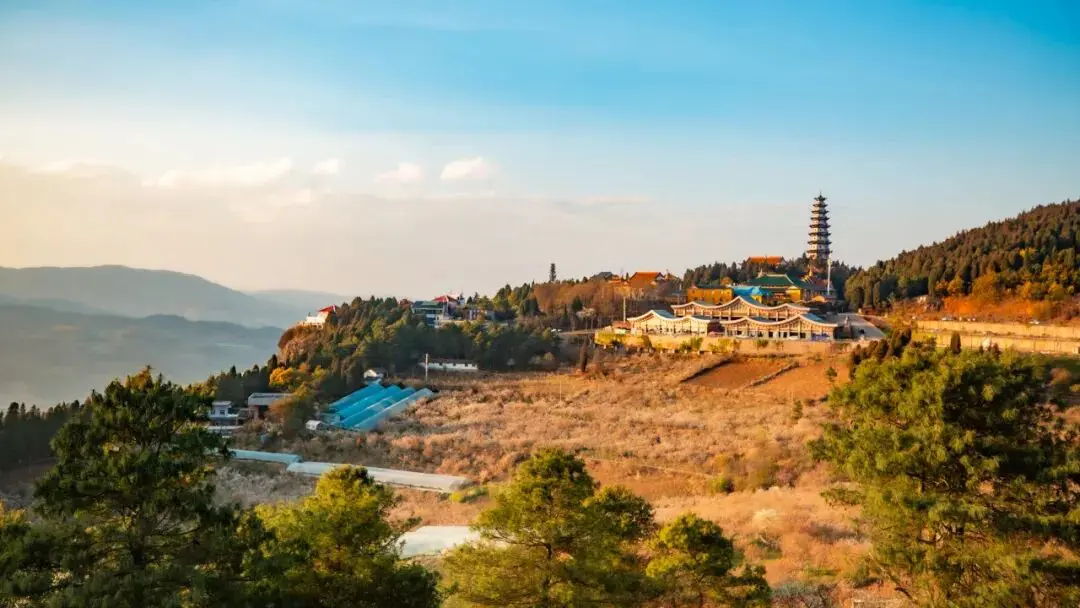
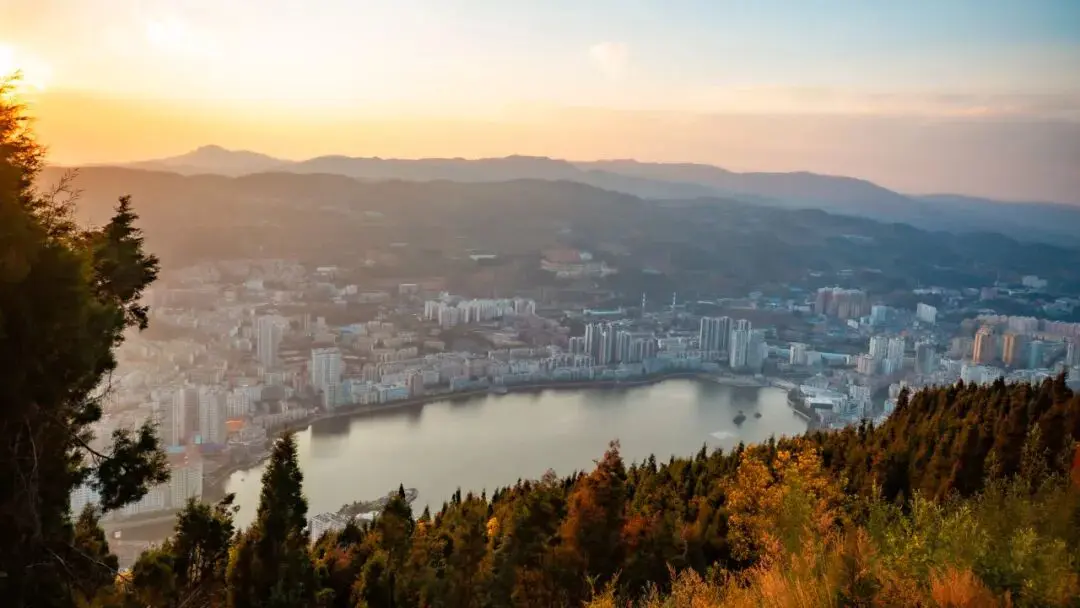
Before the setting sun dipped below the distant ridgeline, we made it in time to Laoyin Mountain, overlooking the entire city about to be enveloped by night from above. Jinhu Lake, lying in the lowlands, resembled an unpolished rock surface, emitting a dull, cold gleam. The city around it seemed to be gazing outward, waiting with it as the orange glow at the mountain's edge spread and expanded, touching every corner of the city before quietly receding, yielding the peaceful night to the city.