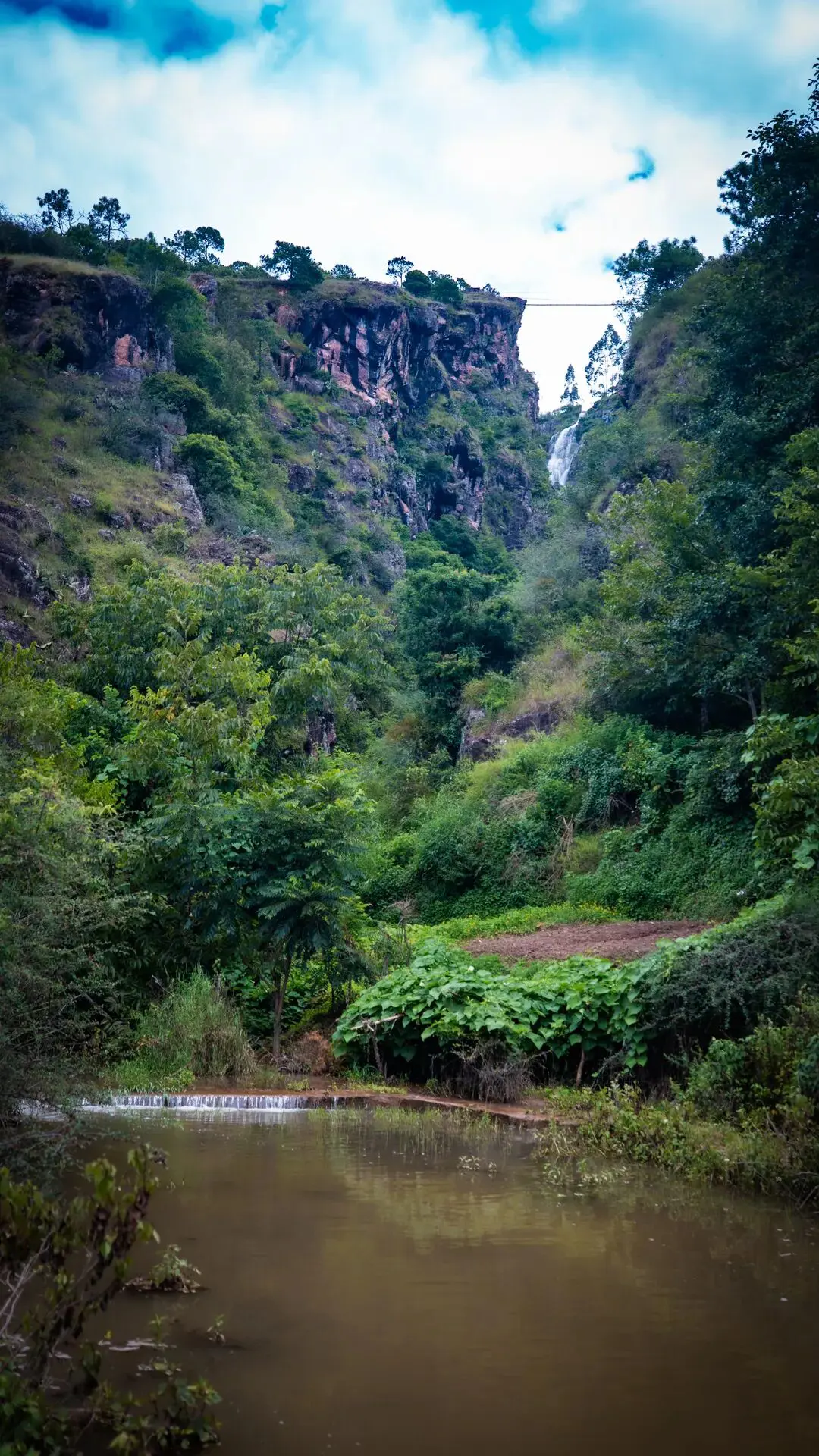

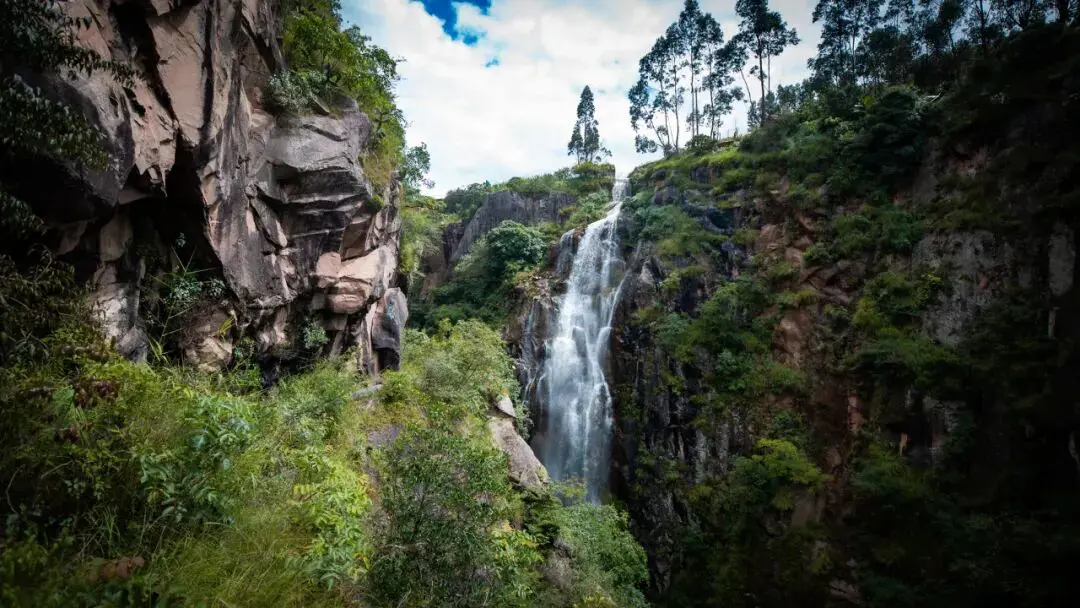
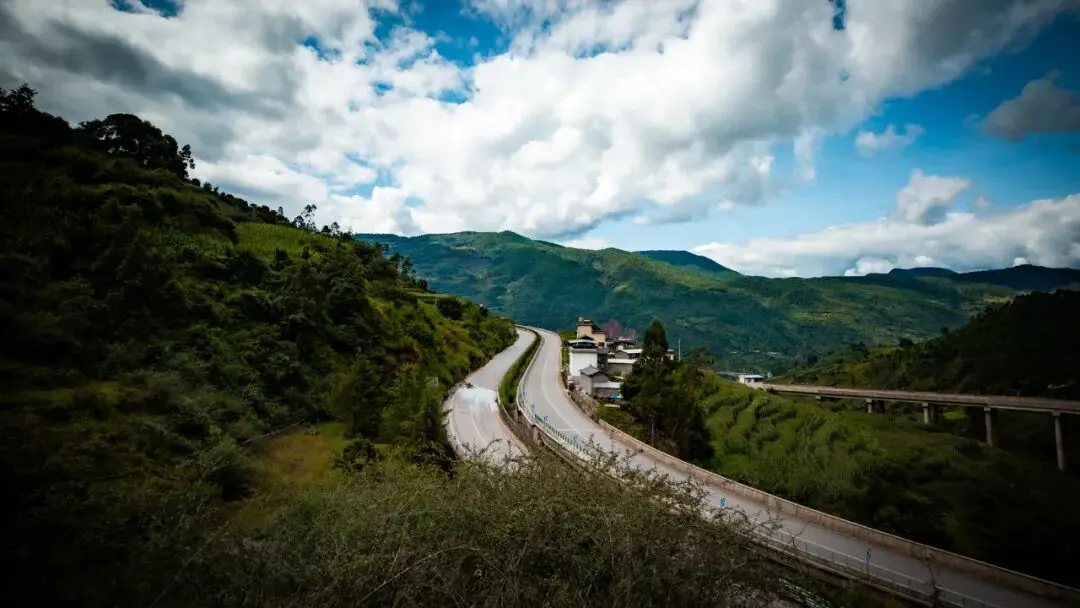
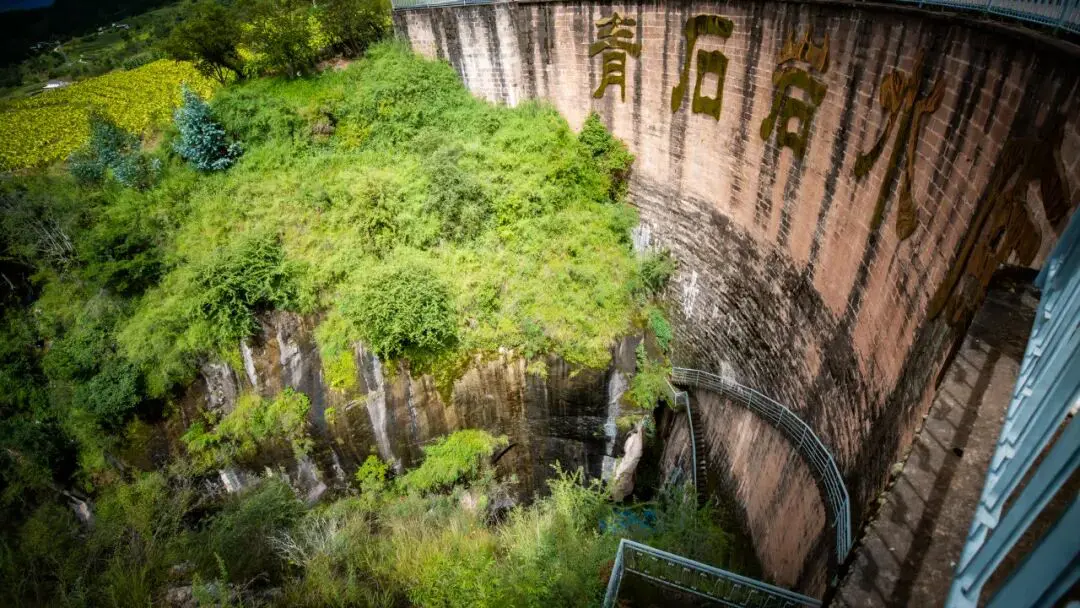
Qingshiyan — that was the place name we looked up after spotting this waterfall. In truth, it isn't even the waterfall's name. It seems to lack a name of its own entirely. Only after we struggled up from the roadside and climbed to the mountaintop did we learn its name and where it belonged. Qingshiyan is the name of the turbid reservoir at the waterfall's source. The waterfall hangs right by the roadside, as if making no effort to conceal itself — easily seen by anyone passing by.
In fact, it has no need to hide, nor any reason to flaunt itself. In the world of waterfalls, the few famous ones have long stolen all the glory, shining brilliantly in poetry and prose for hundreds or thousands of years, drawing countless admirers. But this one? It has never been mentioned in any poem or essay. It hasn't even been marked as a scenic spot worth visiting. It lies exposed on the roadside without any barrier, like an ordinary ancient tree that has grown for centuries — slightly more distinctive than the surrounding vegetation, and thus easily noticed.
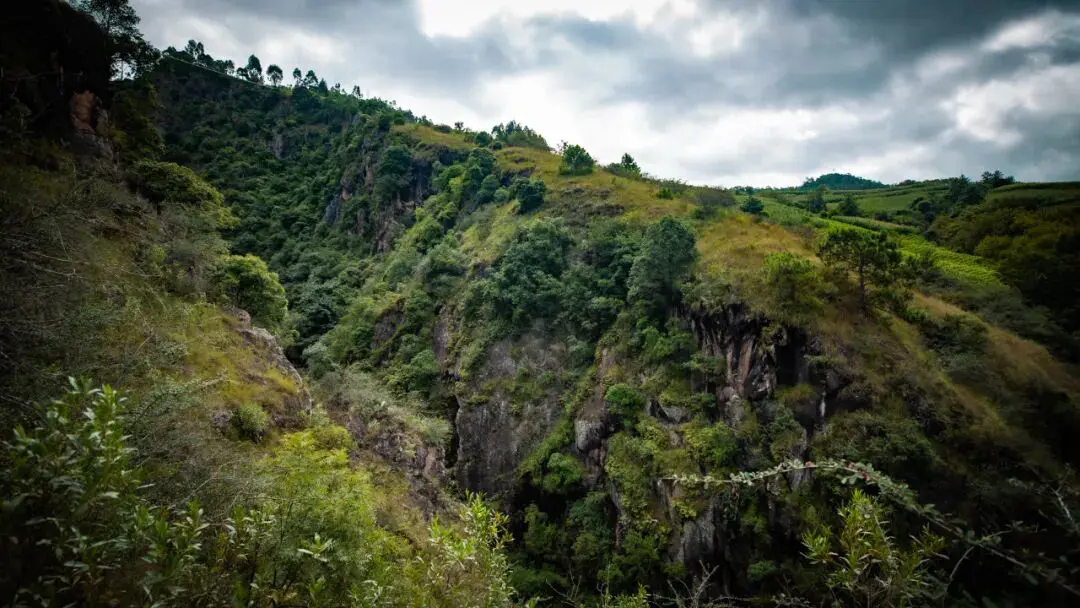
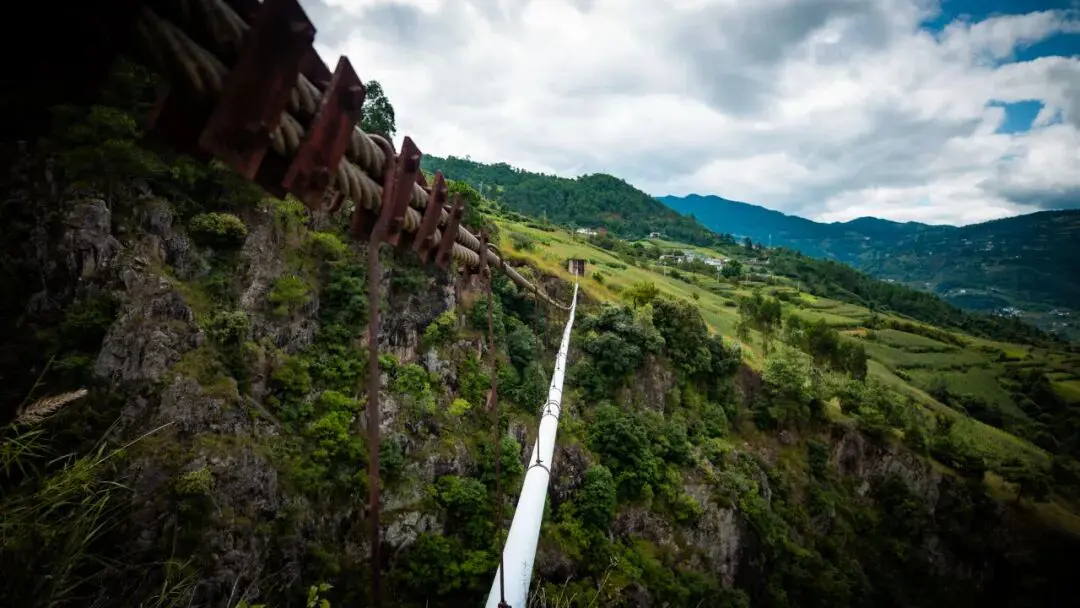
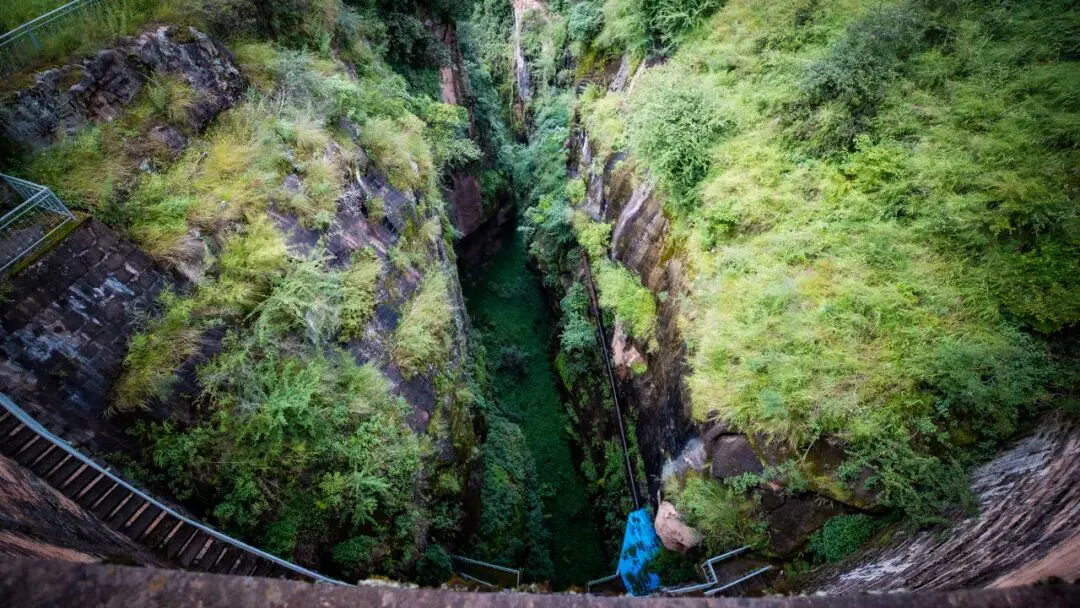
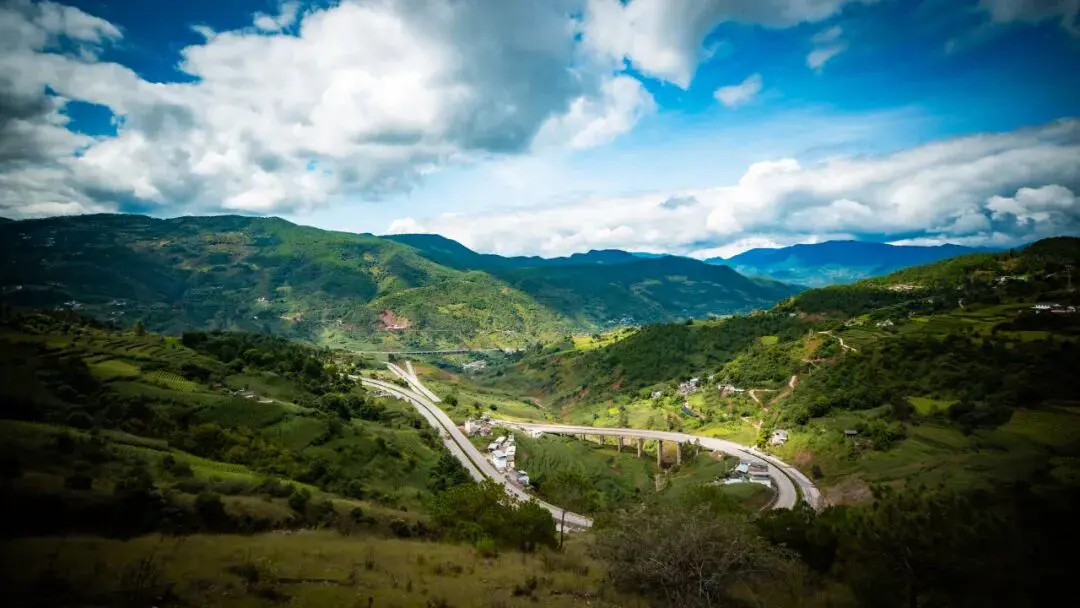
Had the road not taken an uncanny detour here, looping into a near-closed graceful arc like noodles tossed by a noodle master, we likely would never have passed this place and encountered this waterfall plunging relentlessly day and night amid the quiet, undulating mountains. The waterfall crashes violently into the steep, deep gorge, emitting a continuous roar of rushing water striking rock. No clear trail leads to the top. A nearby village called Dawudi exists — I thought navigating there might easily bring us to the waterfall's summit, to a spot closest to the cascade.
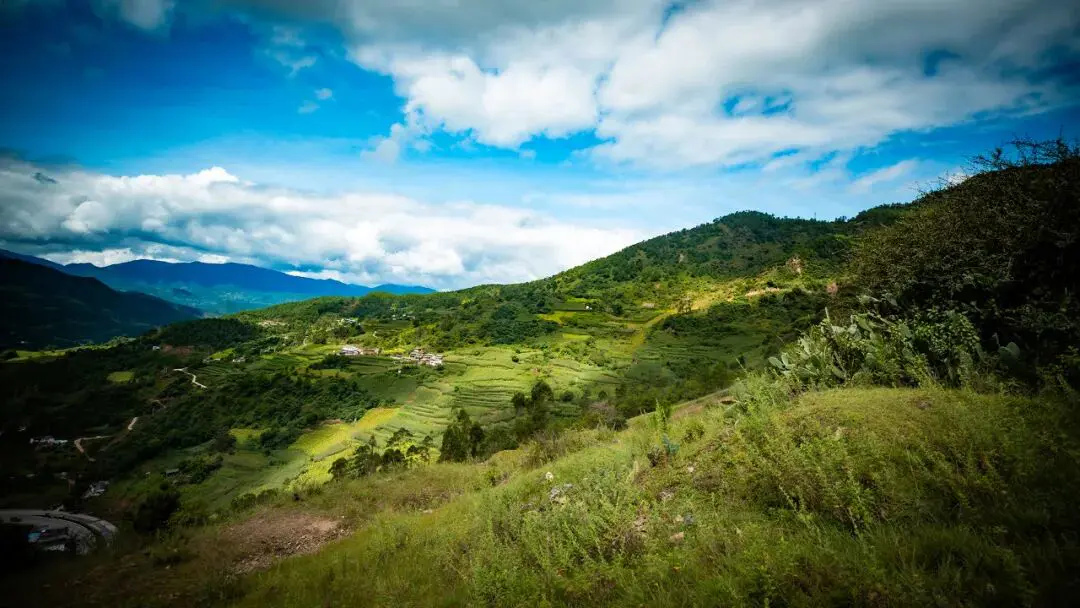
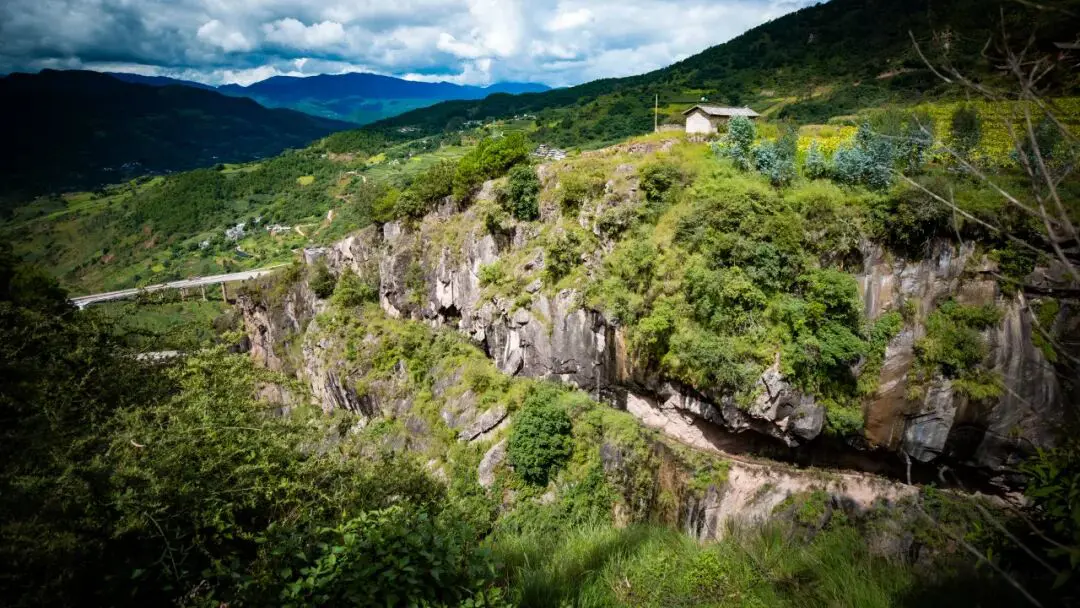
But we didn't want to drive up. Convenience does nothing to help one truly know something; it only makes understanding shallow and casual. Besides, the unfamiliar mountains near and far, the heavy monsoon clouds skimming the ridges, and the light freely shifting between clouds and peaks — all of this deserved hours of our time. The ancient village of Heping we had visited lay nestled among these very hills, and our encounter with it had brought us so many surprises. On the steep slope, a grassy path showed clear signs of foot traffic. Following this trace, we climbed to the top of the waterfall. We ascended higher and higher, transitioning from looking up at the base to facing it eye level, and finally standing atop the summit, overlooking the entire cascade.
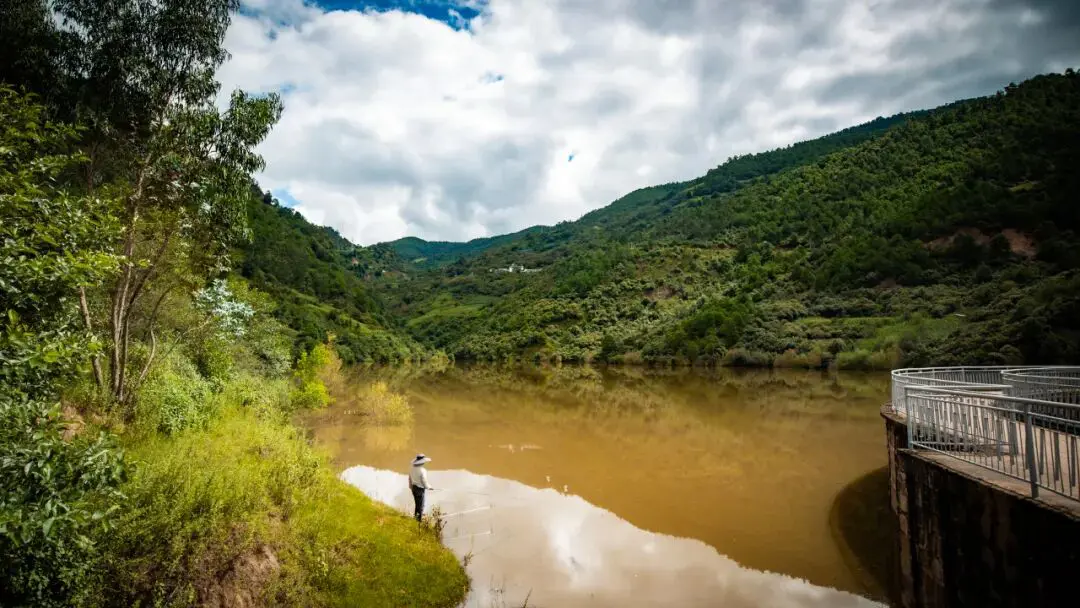
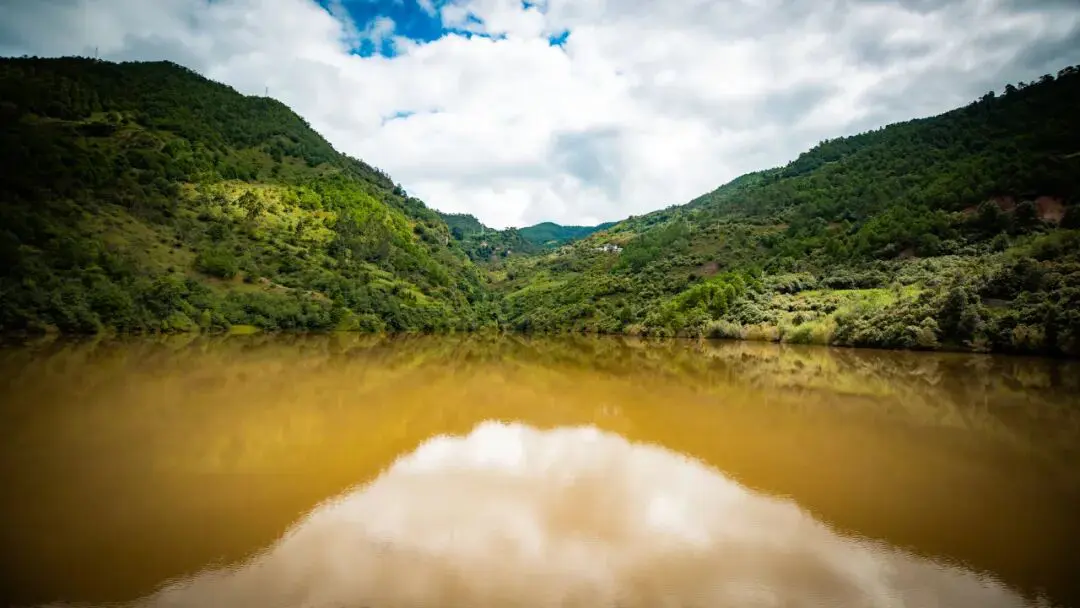
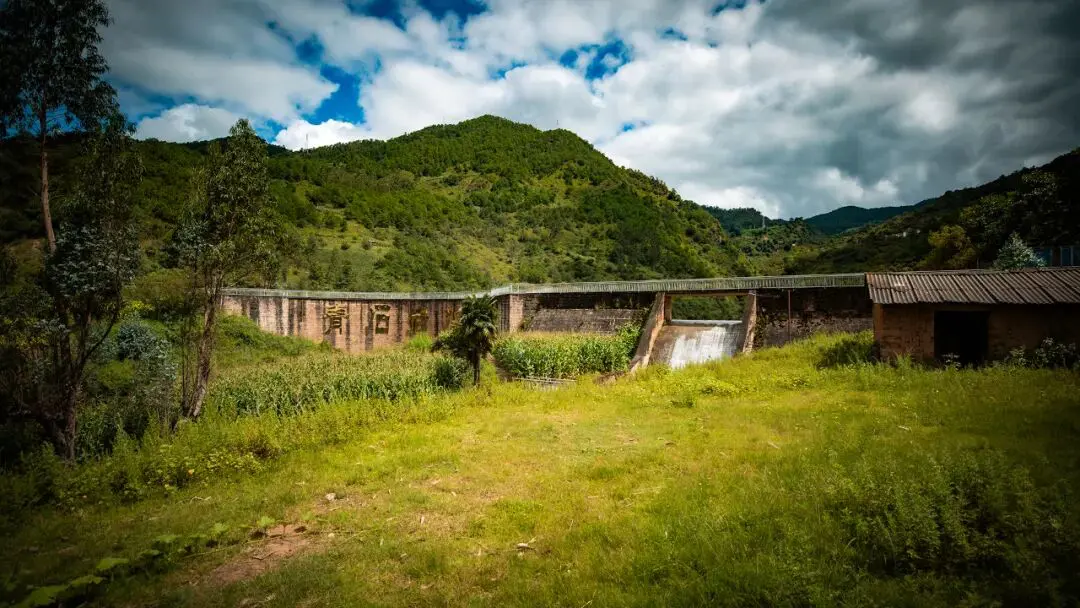
Crossing a broad, gently sloping field at the summit, we discovered that the waterfall's source was a reservoir. A tall, deep, wide stone retaining wall held back the water, leaving only a low outlet. The water spread flat across a short, inclined channel — and once it completed that passage, it leaped without restraint, plummeting into the unfathomably steep mountain ravine. The reservoir water was extremely murky. Only one fisherman stood on the bank, waiting for an uncertain catch. He said recent rains had washed soil down from the surrounding mountains — of course the water would be muddy. He seemed reluctant to talk further, as if we might disturb his fishing. If he caught nothing today, we would likely be blamed.
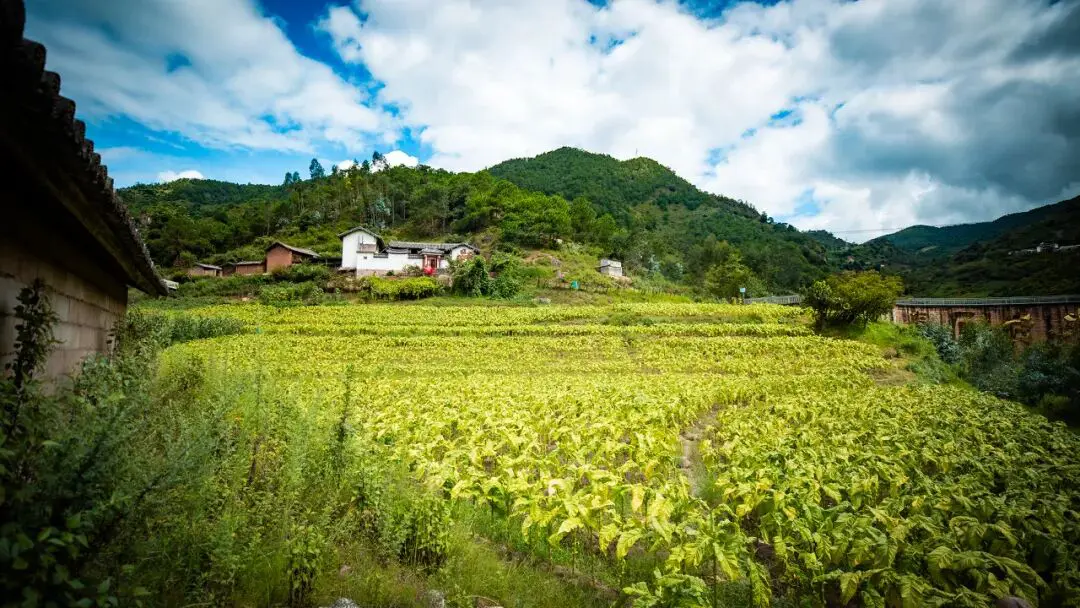
Taking the hint, we stopped asking about the waterfall and instead sought our own path closer to it. At the edge of the slope beside the reservoir stood a small white courtyard. Beyond it, tobacco leaves were planted in the mountain fields. Near the house was a vegetable plot. We heard roosters crowing and dogs barking, but saw no one. On this mountaintop, where the sound of water thundered day and night, someone still chose to live here, unwilling to move away. Perhaps the water's roar had softened into something as pleasant as cricket song, lulling them to sleep.
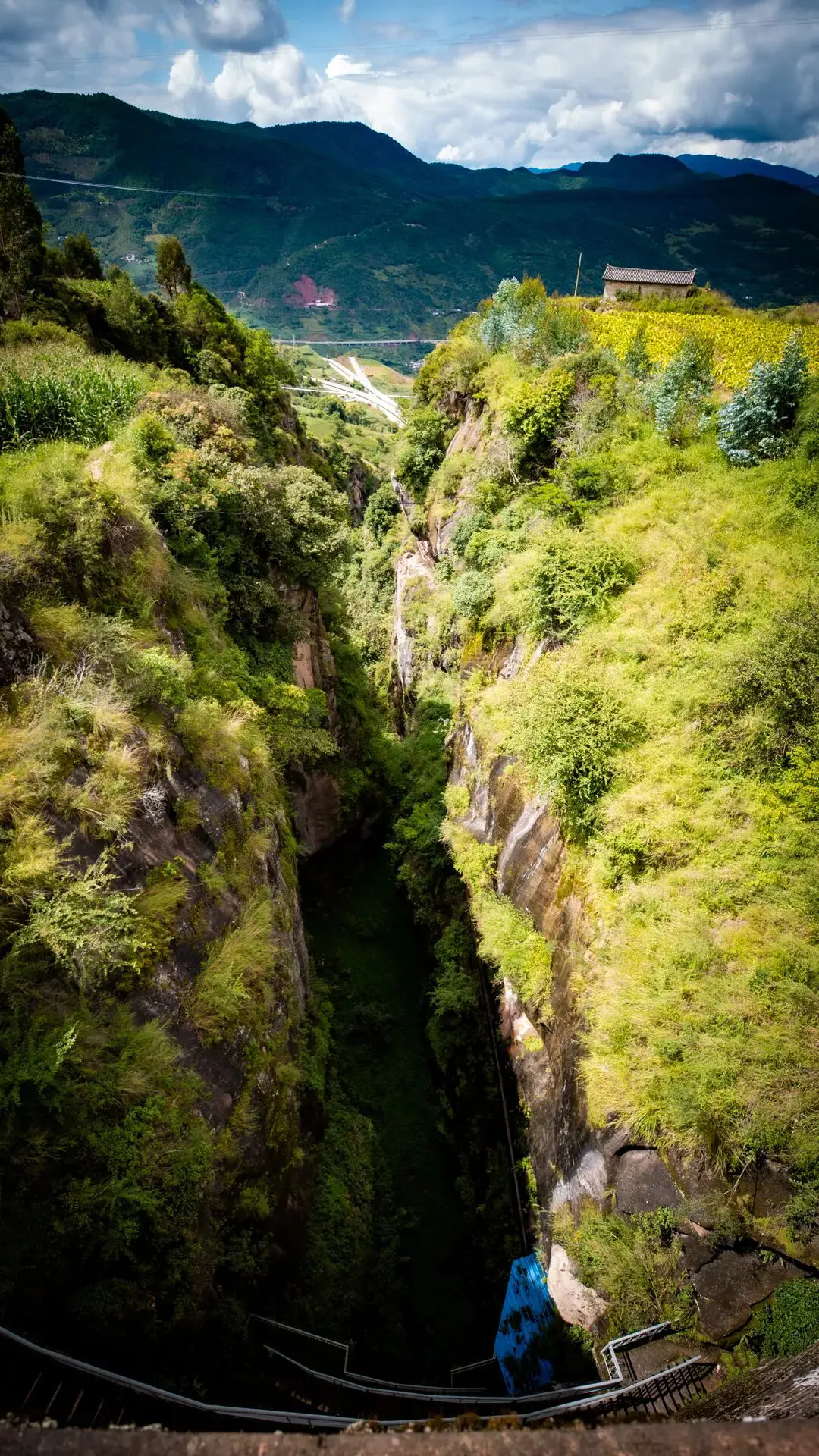
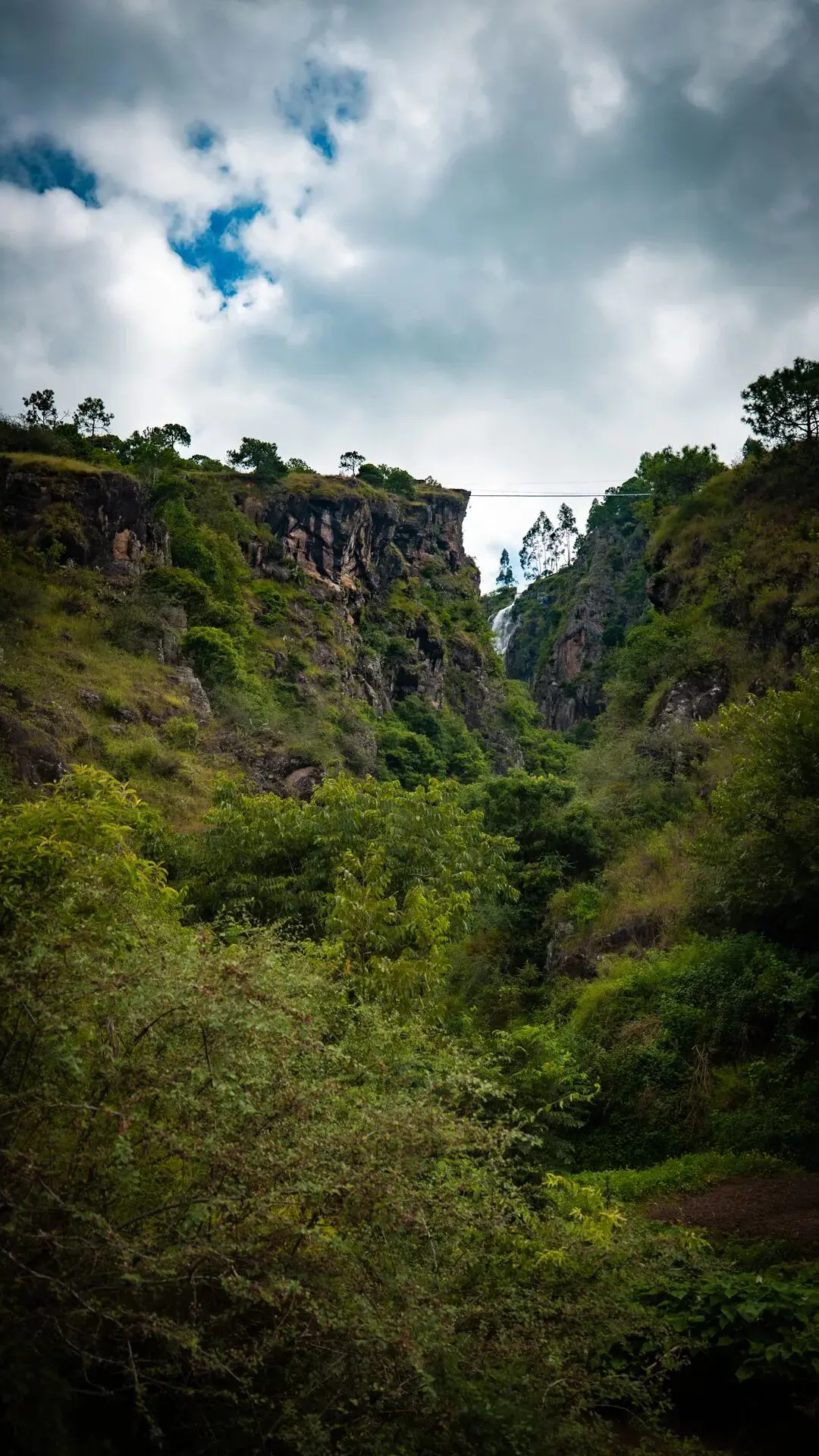
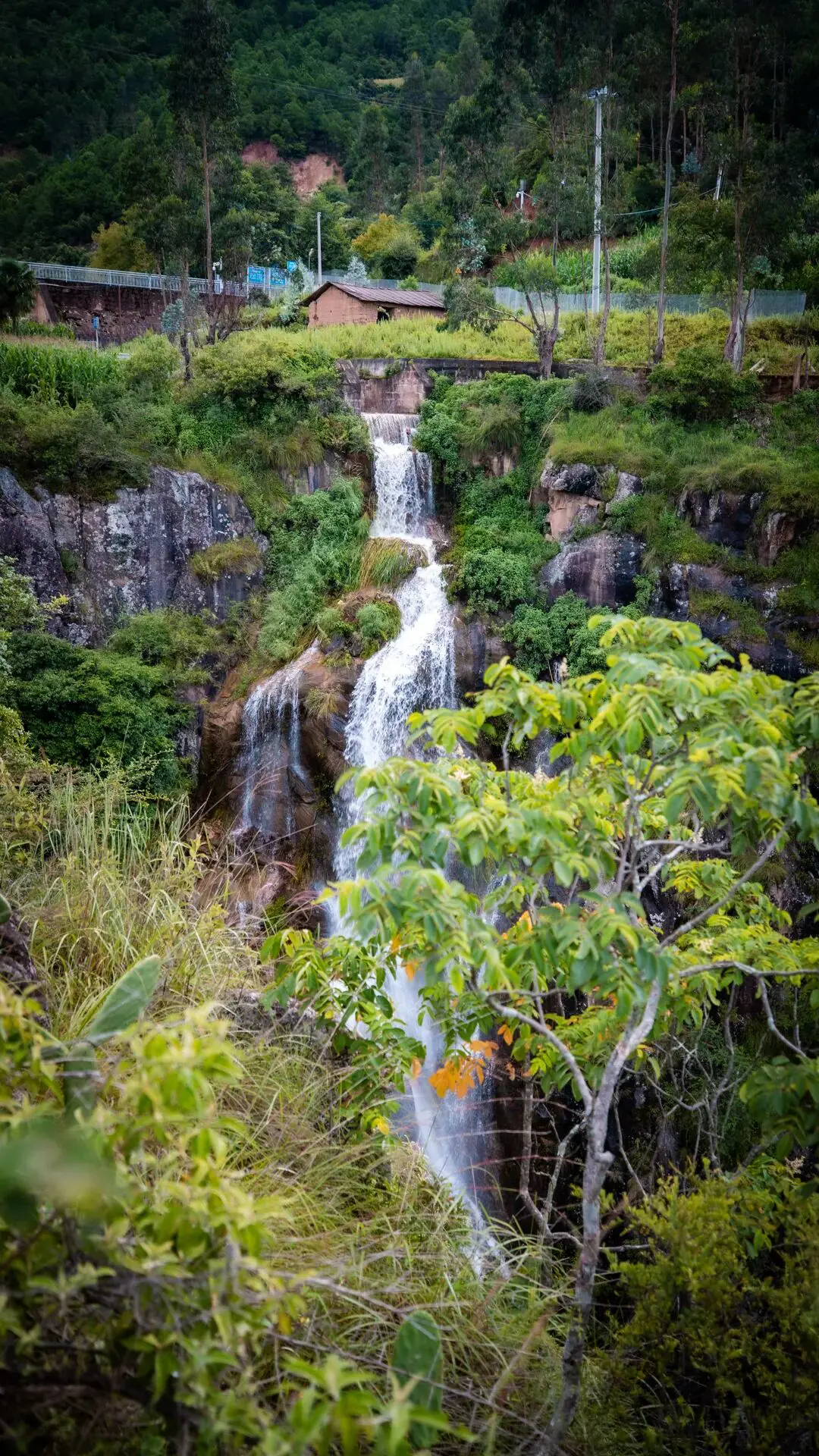
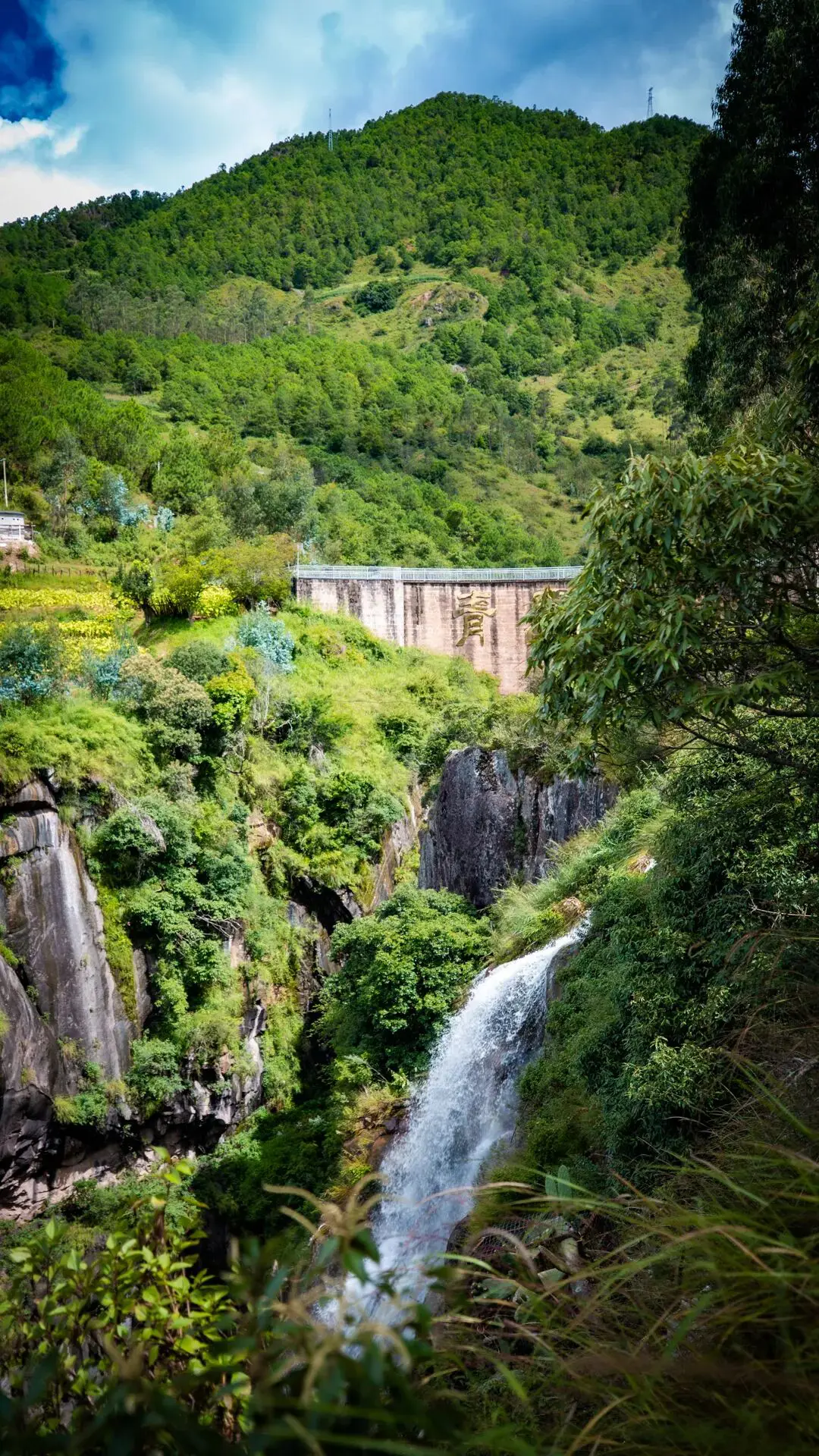
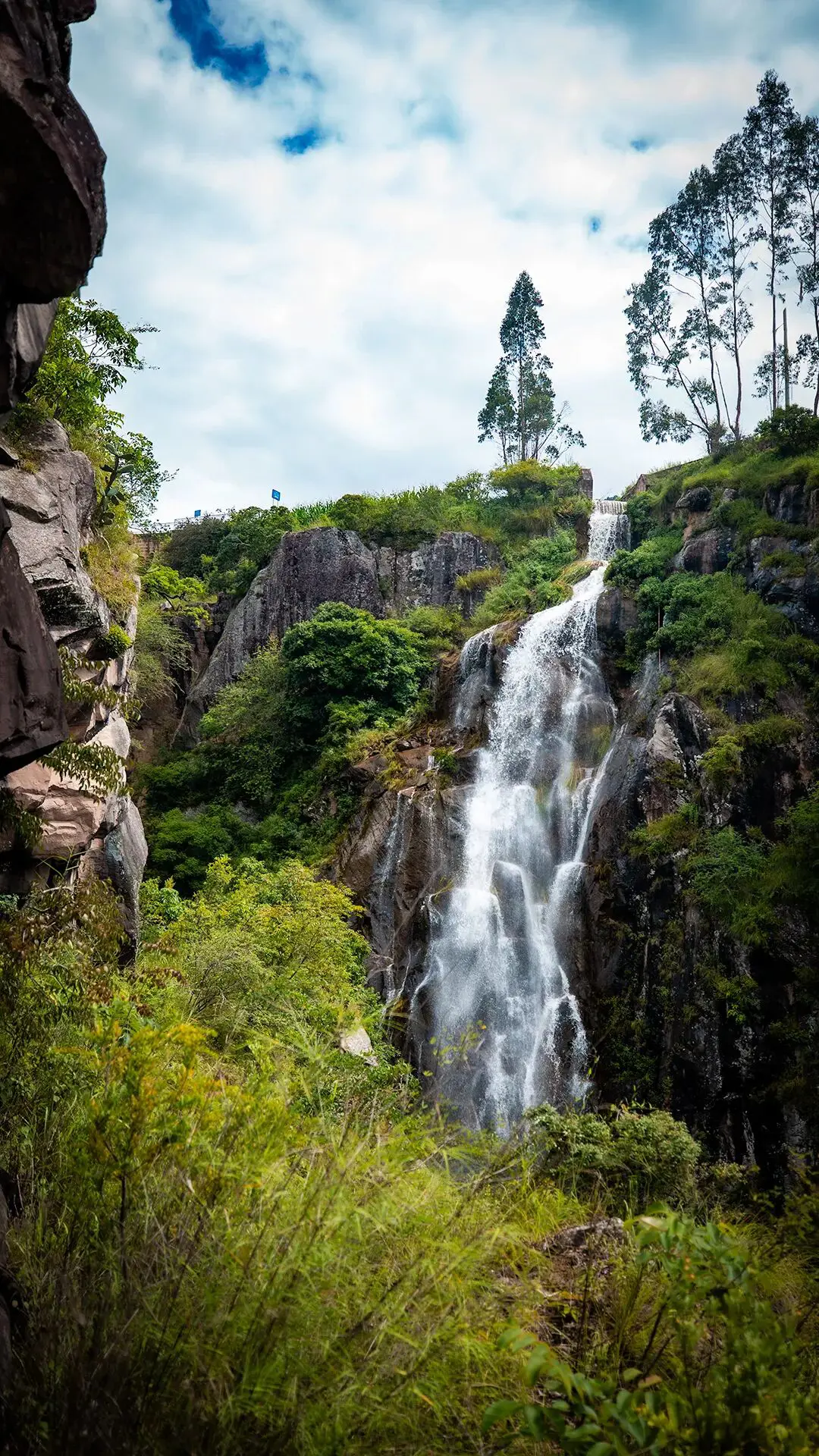
After scrambling along the waterfall for just over an hour, we no longer perceived the cascading flow as harsh noise — we almost forgot it was there. How much more so for those who had lived here for decades. Another low earthen-walled house stood at the edge of the deep gorge, long abandoned, appearing to be a goat shed. Seen from directly across the waterfall, all the water seemed to surge from beneath that little house, as if the dwelling hung suspended above the falls. A home atop a waterfall — who had chosen such a remarkable spot!
We sat on the gentle slope, gasping for breath. A patch of thriving fleabane swayed vigorously in the wind, as if trying to tear free from its roots and drift away with the clouds. We lay down, lying in the boundless cool breeze. The earth rumbled everywhere beneath us, like an approaching train. From the bushes not far away came the voices of shepherds. What were they discussing? How many mushrooms they had found? It was the season for foraging. To their eyes, our family had probably climbed up here for the same purpose. After all, who would spend hours struggling up a mountain just to see such an unremarkable waterfall?