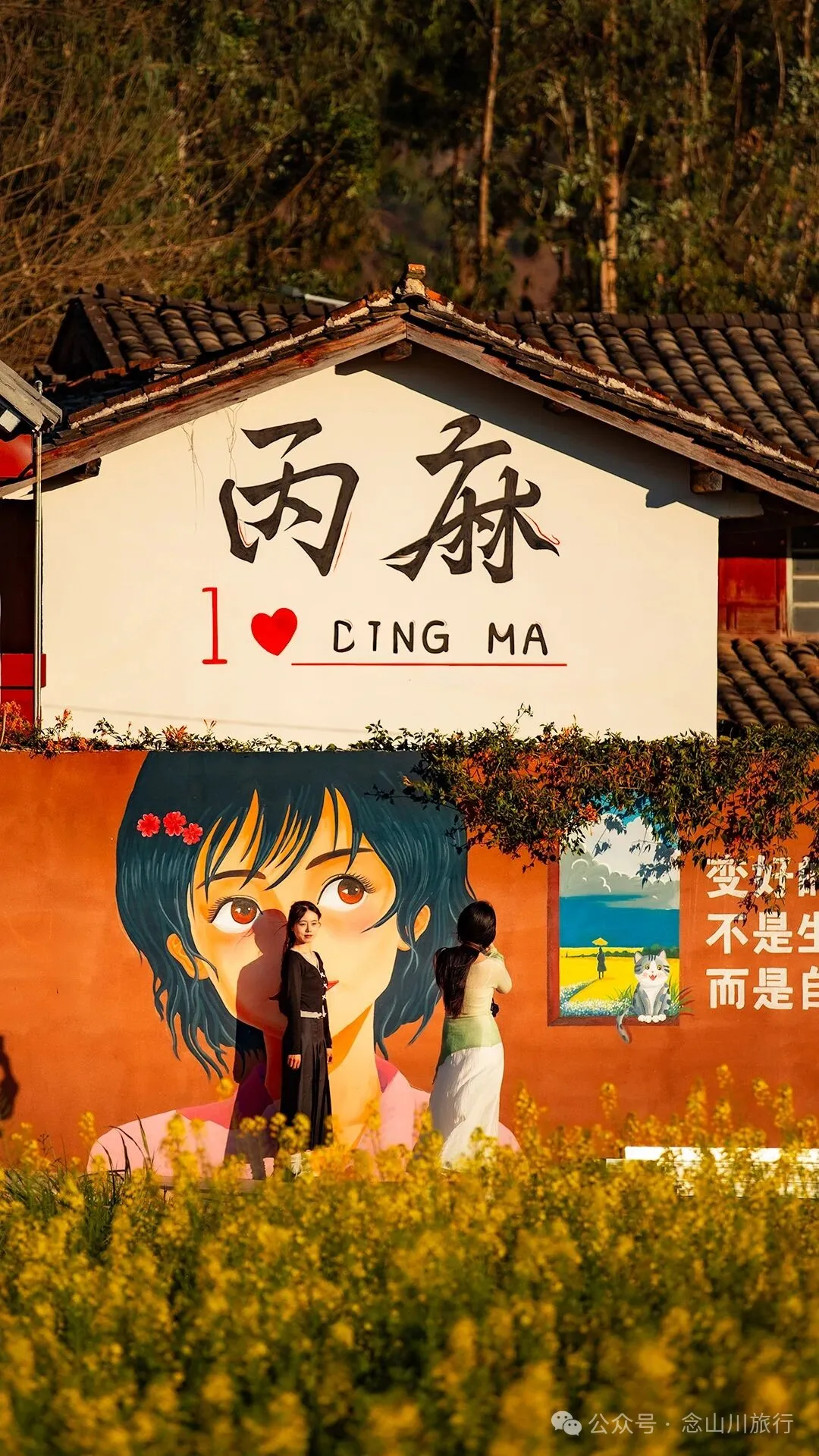

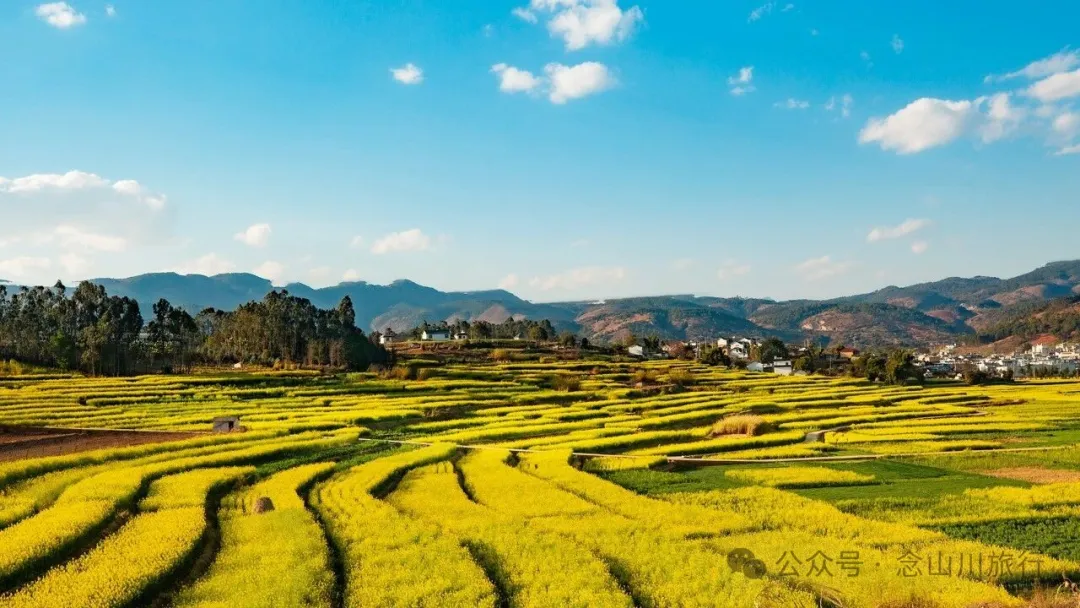
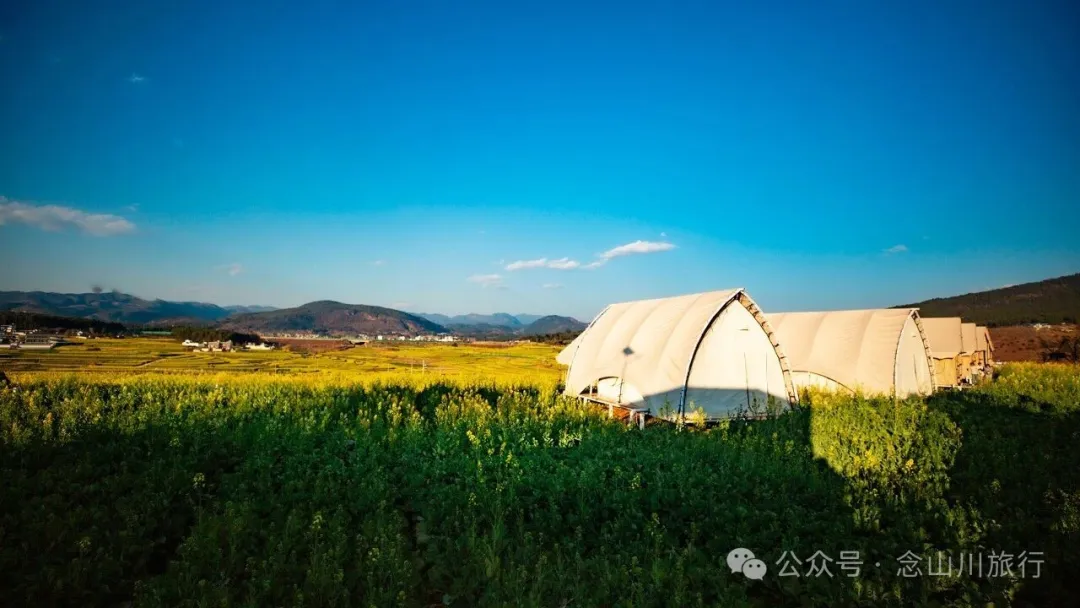
We had already driven more than twenty kilometers on the expressway when, after just a brief glimpse, we decided to exit at the nearest ramp and turn back to that captivating field of rapeseed flowers. The place wasn't hard to find; as we turned onto the Bingma Township ramp, we saw rows of golden rapeseed blossoms in terraced fields, and in another direction, an even more expansive sea of flowers made our impulsive U-turn feel anything but frivolous.
We drove to where the flowers were most dense, only to find that the fields were swarming with tourists, scattered in groups across the fields, gradually merging into the rising sunset glow. By the concrete road, there were a few stalls selling fried potatoes or coffee, but as we moved toward the crowded area, we discovered more stalls concentrated on the grassy roadside. It turned out we had stumbled into a rapeseed flower market, and we had arrived late enough that most visitors had already eaten their fill and were leaving. Behind them, the gentle flower fields were slowly returning to calm, sinking into the darkness of night.
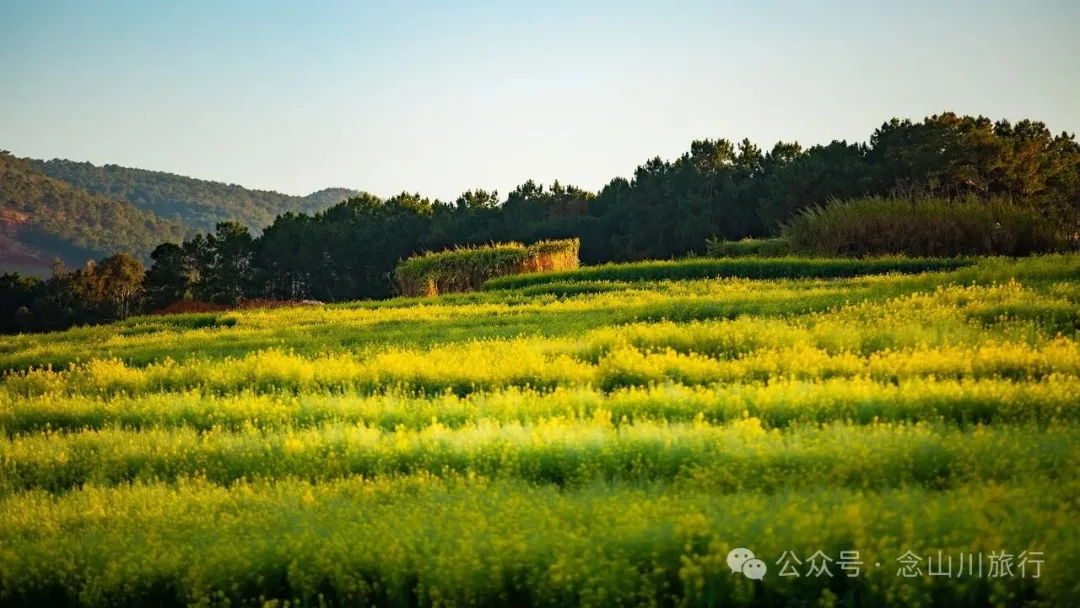
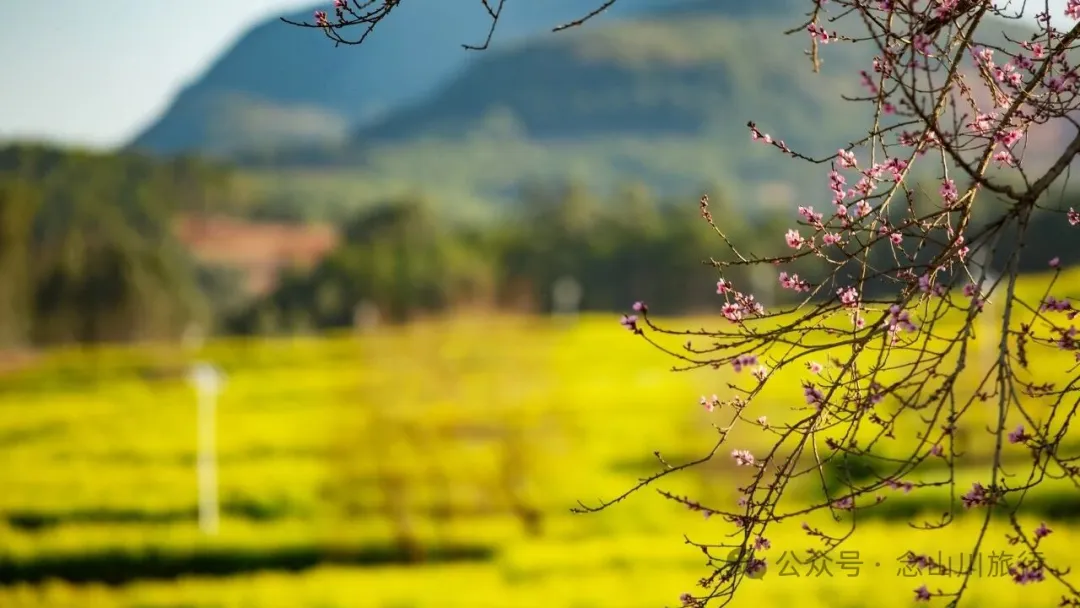
Spring rapeseed flowers are common in the countryside—by river bends, on plains, in valleys, or even in small vegetable plots beside houses, you can always find their golden, warm petals. In winter, farmers seem to prefer planting fields of rapeseed, perhaps because this crop thrives with little effort. In sunny regions, they bloom early into vast, cheerful yellow flowers, claiming their place in winter before the start of spring. In rainy, humid areas like Jiangnan, such a magnificent expanse doesn't appear until late March or April.
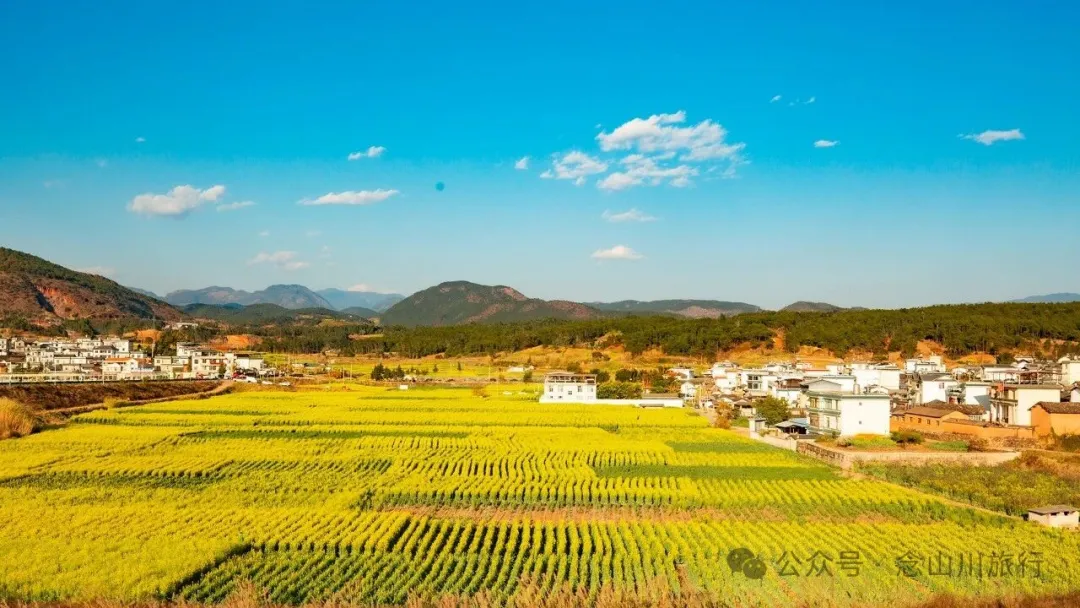
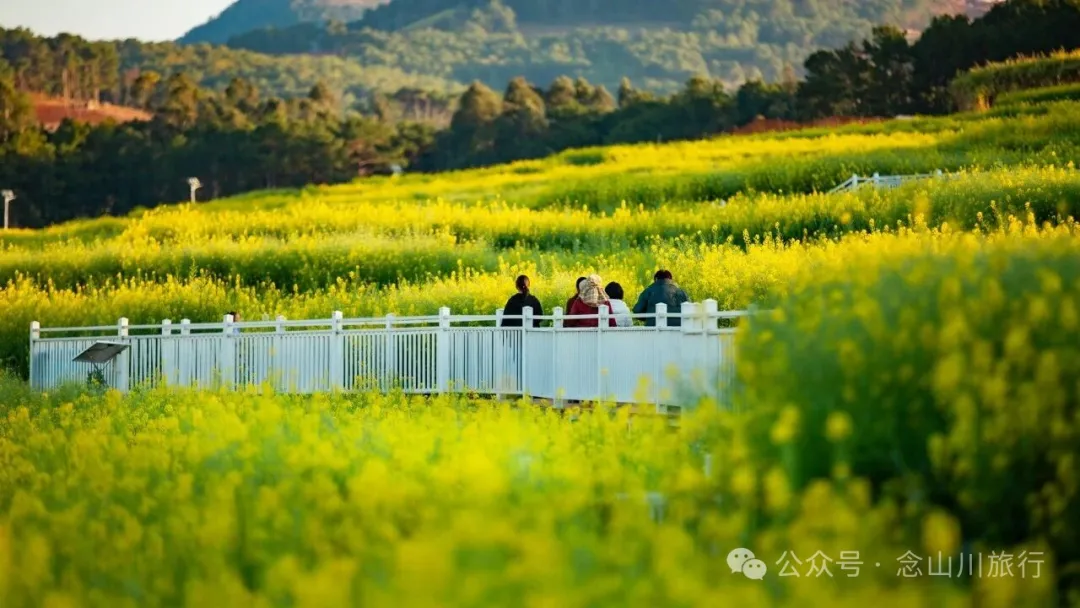
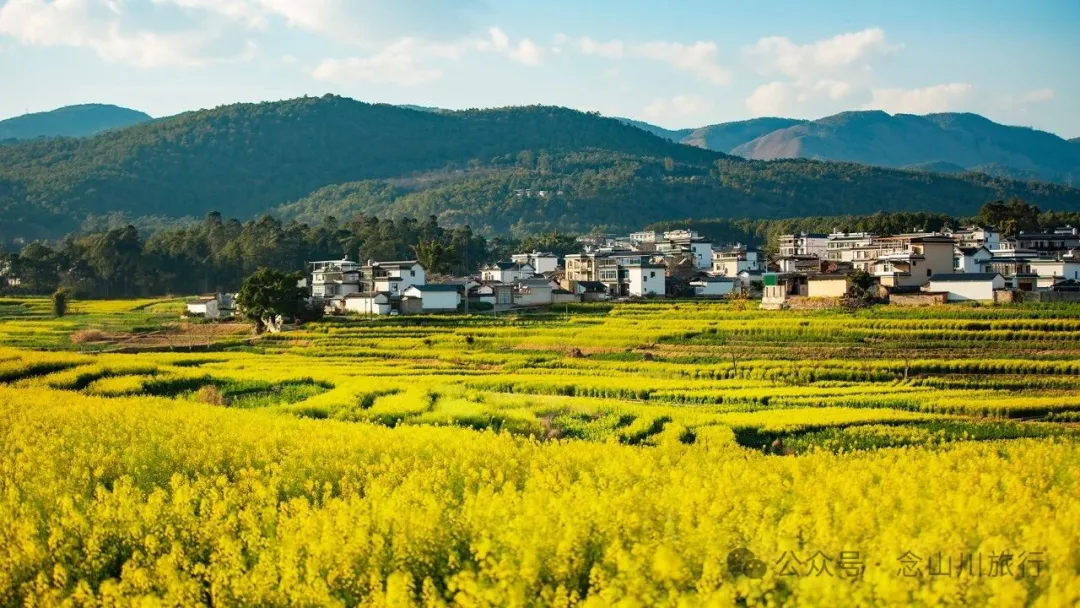
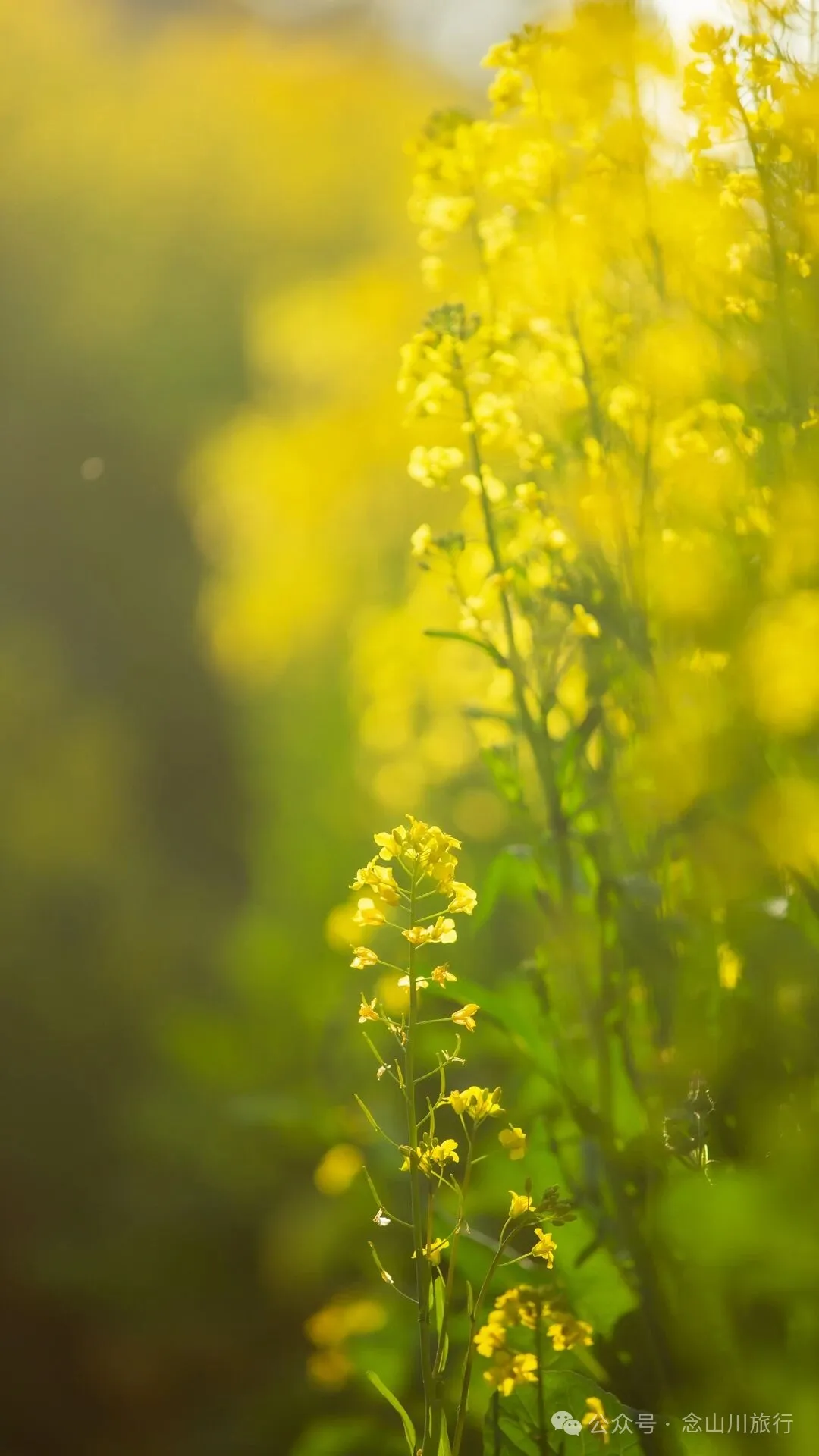
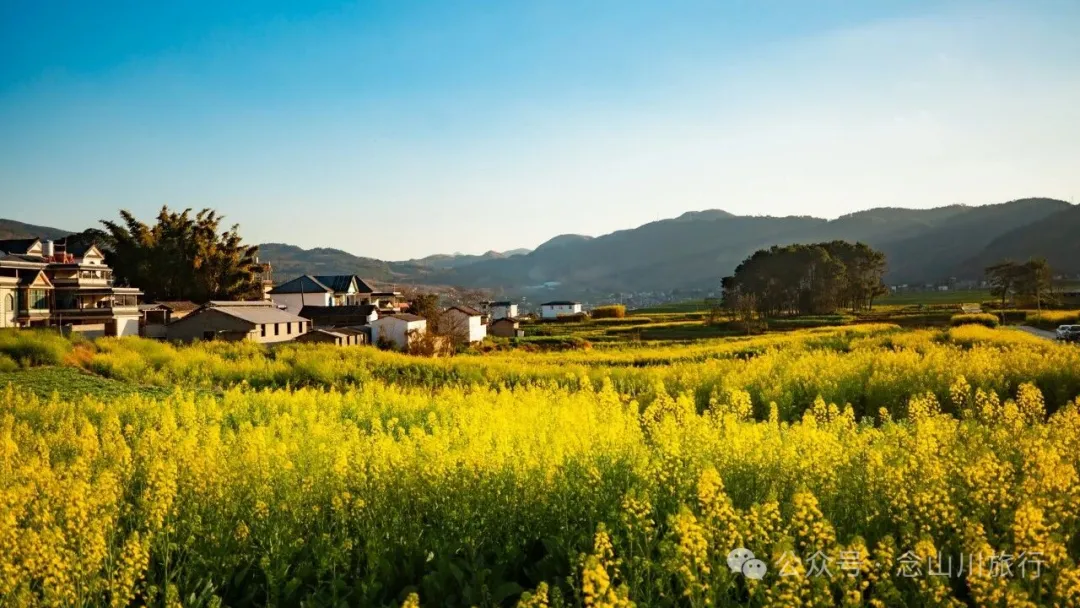
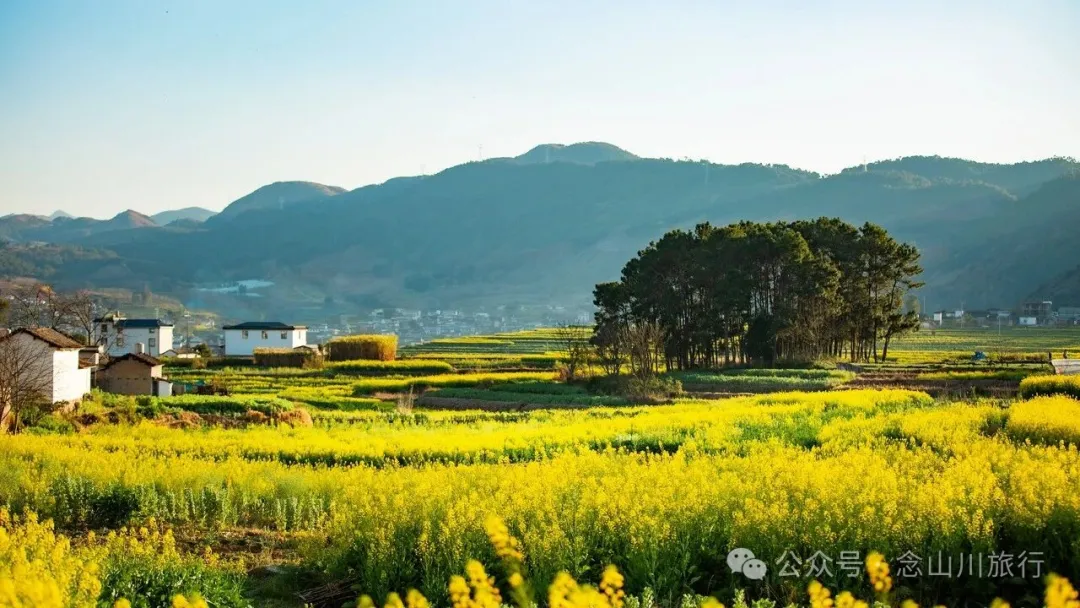
This field of rapeseed flowers in Bingma Township grows on terraced slopes. The distant mountains shrouded in light mist and the occasional rammed earth cottages add a unique charm. Passersby likely stop here for hours, strolling along the white corridors in the fields. I prefer the narrow, weed-covered paths between the fields, where tall, slender green stalks rise above head height, with delicate flowers blooming at their tips. Walking into them feels like entering a tunnel of millions of blossoms, filled with fragrant scents. Up close, the tiny flowers are a delight, lit by the setting sun as if through transparent glass, soft and caressing, like a poem by Keats. From afar, the dense mass of green and yellow seems to crowd together, like a breeze—a cool wind carrying moisture on a hot day, or a bright morning breeze after a long, cold night.
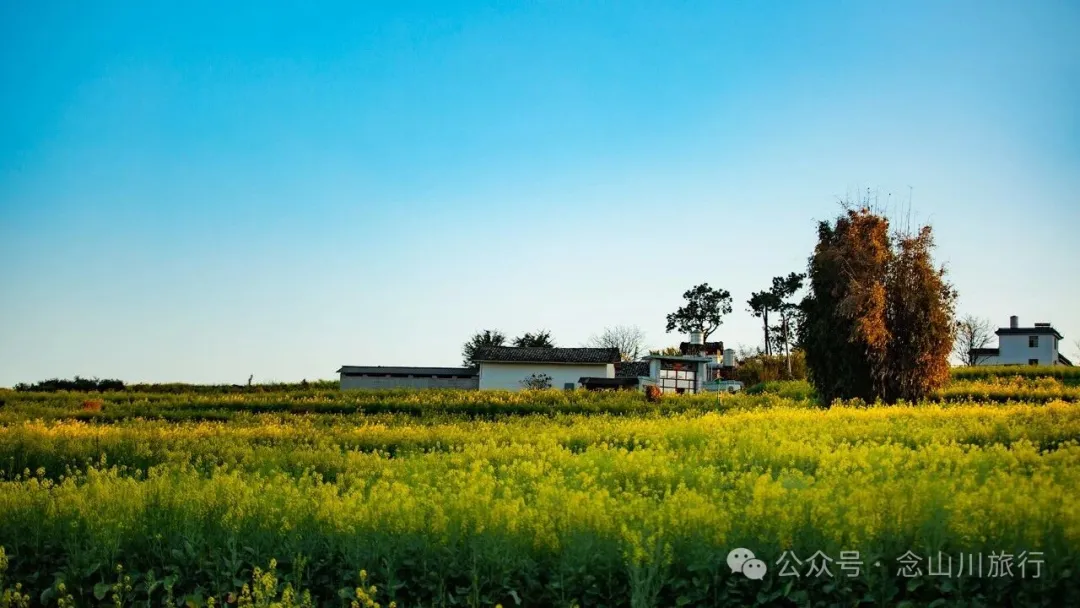
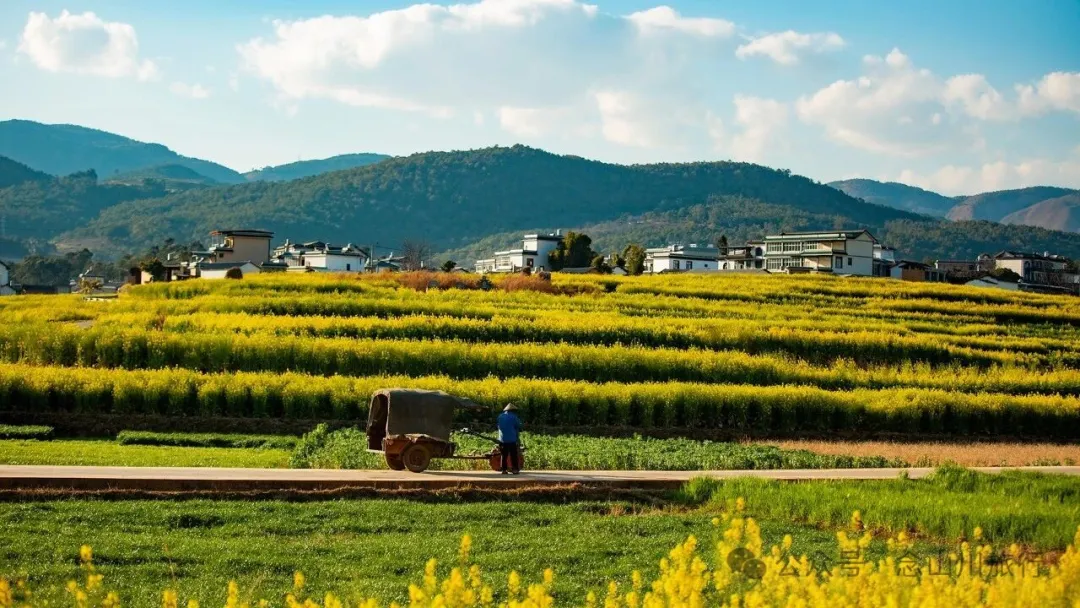
Venturing beyond the flower fields to the less touristy villages reveals the true rural scene. The village stands quietly on higher ground, open to the boundless fields. Life there is as plain as water, without the seasonal splendor of the fields. While tourists flock from all directions to enjoy the sea of flowers, farmers must ignore the commotion, still riding their carts and carrying hoes, fertilizing and weeding. The fields remain their workplace, not a scenic spot.
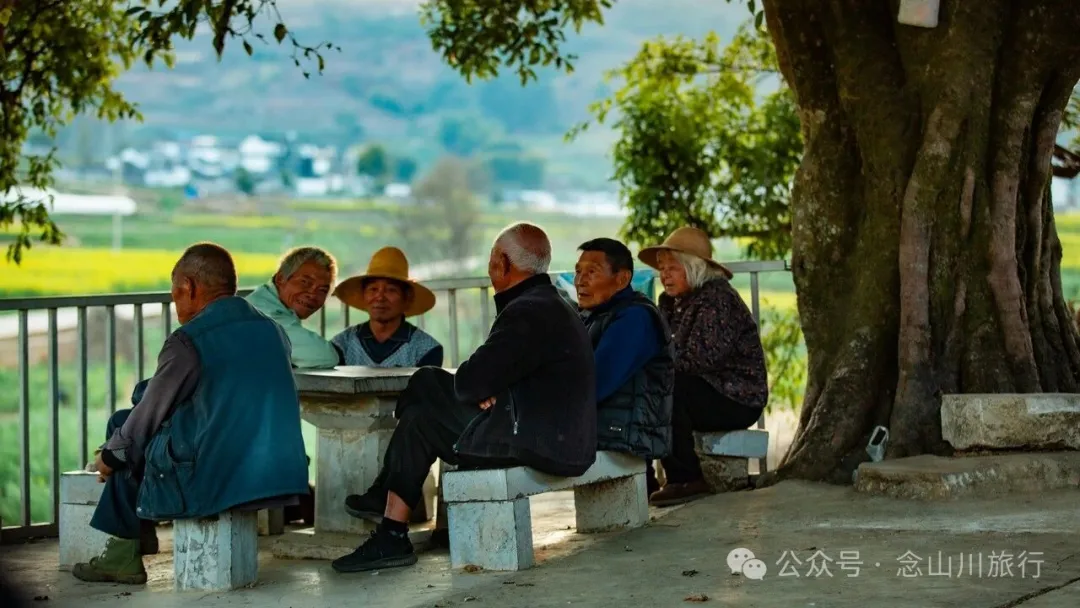
Under a dense ancient banyan tree at the village edge, elderly people sit on stone benches chatting. The fields before them are a familiar sight; they probably don't find them particularly beautiful, but they are still happy, calm and peaceful. Perhaps their joy isn't for the rapeseed flowers, or maybe it is—even after a lifetime, beautiful things remain beautiful, and they deserve to be happy for them.
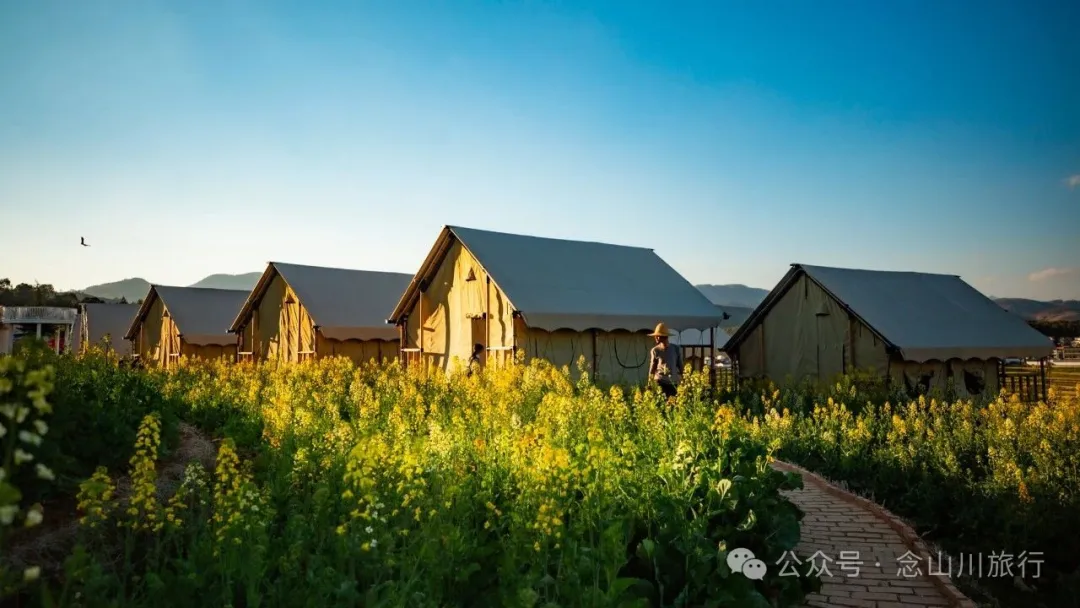
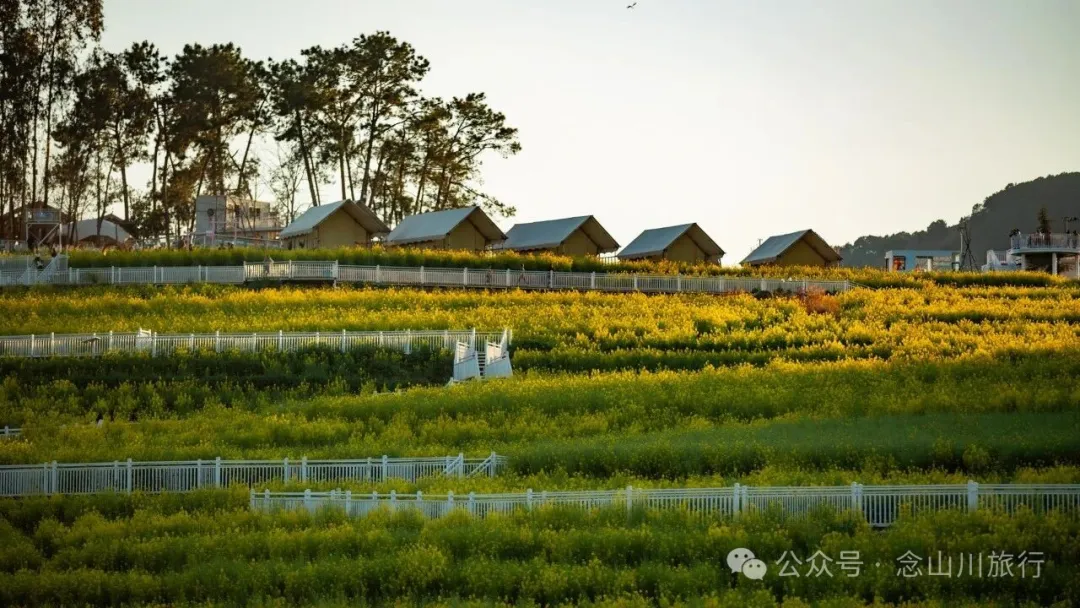
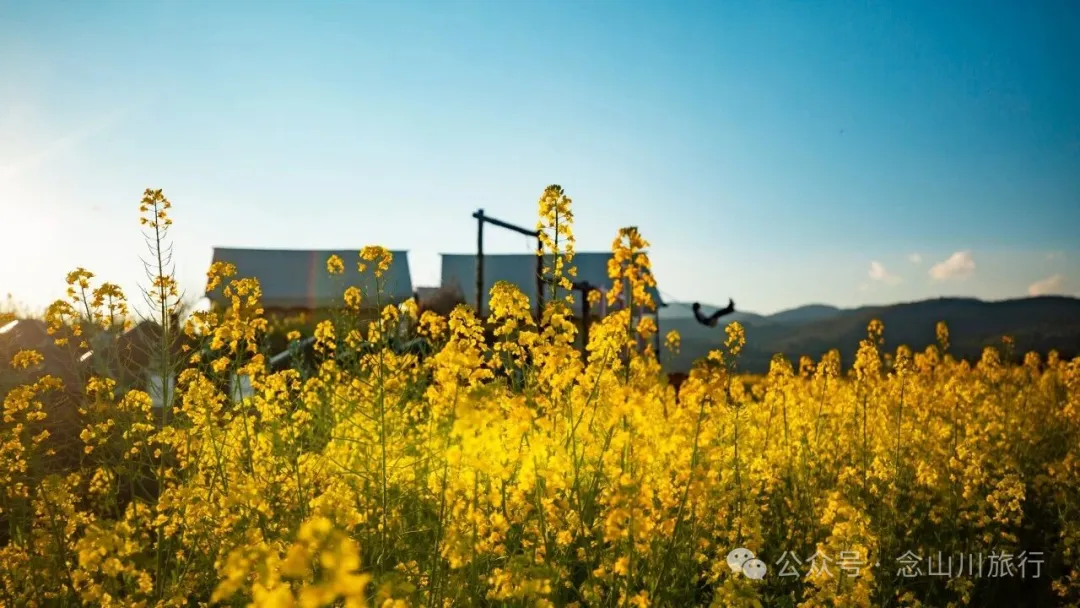
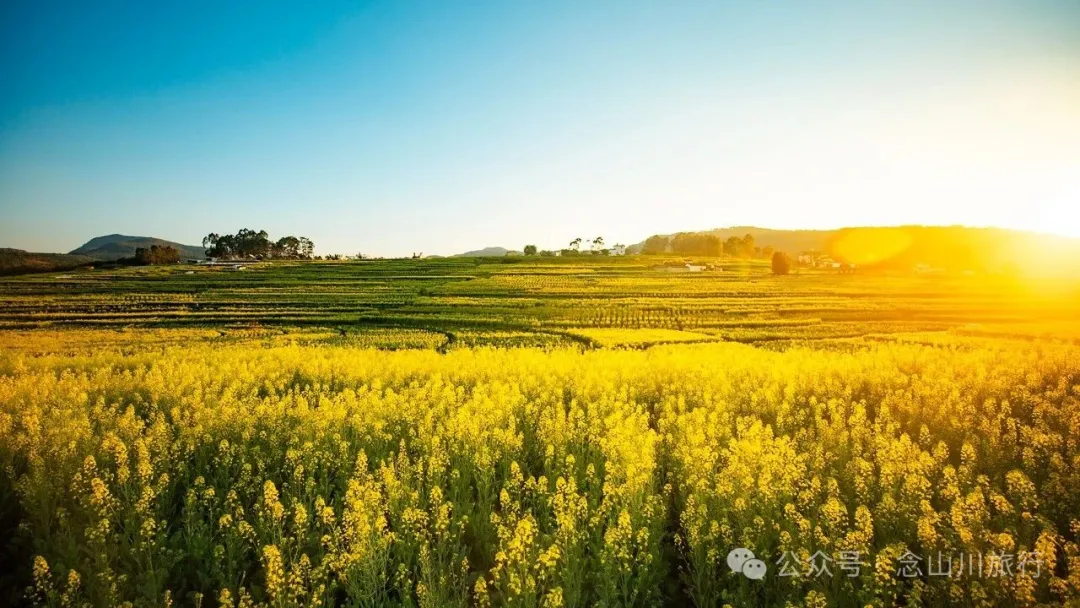
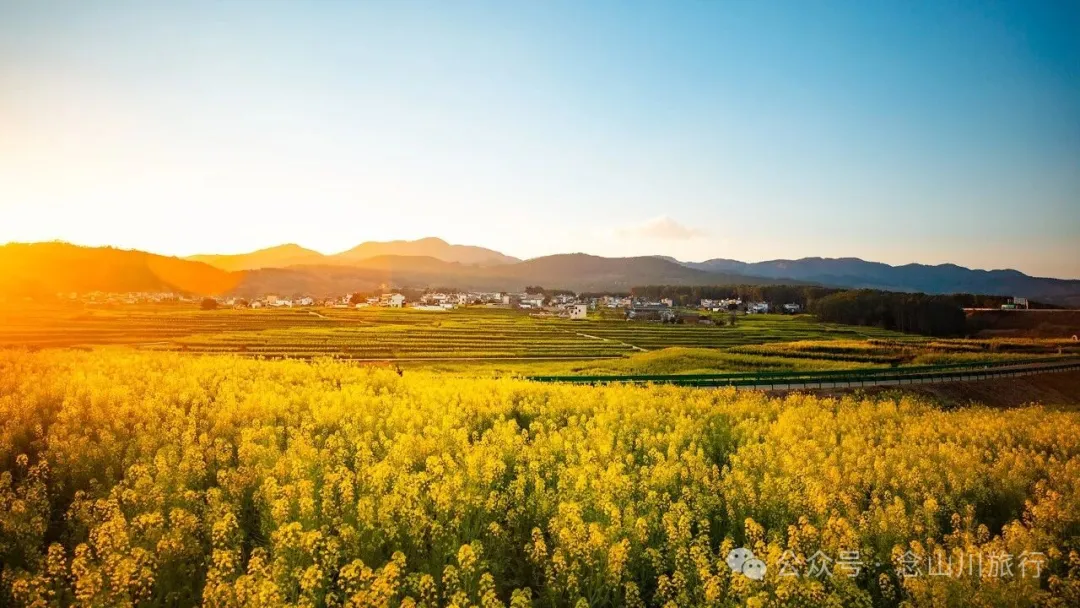
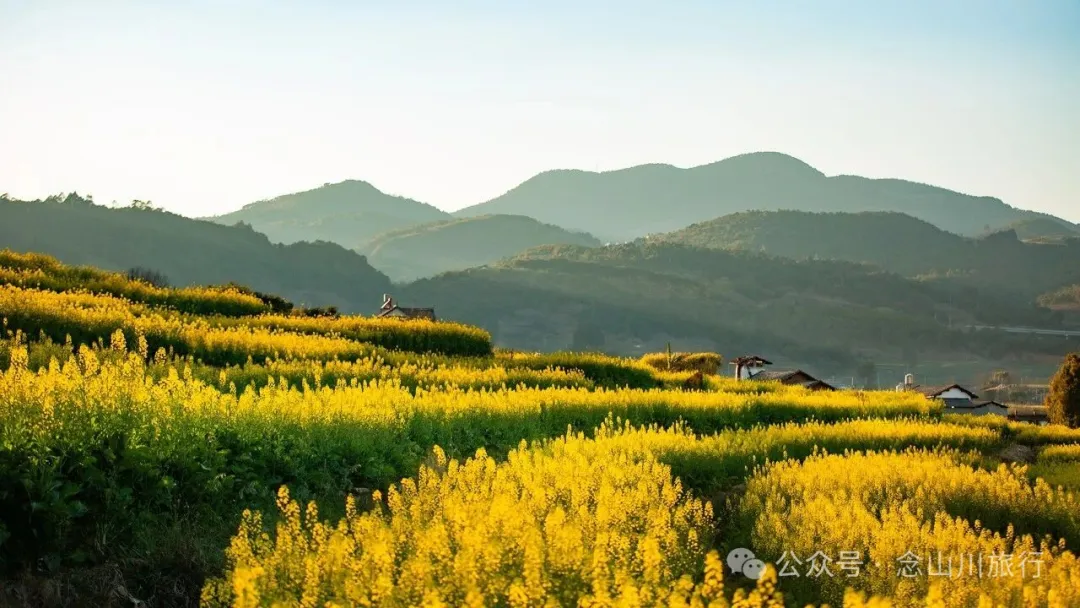
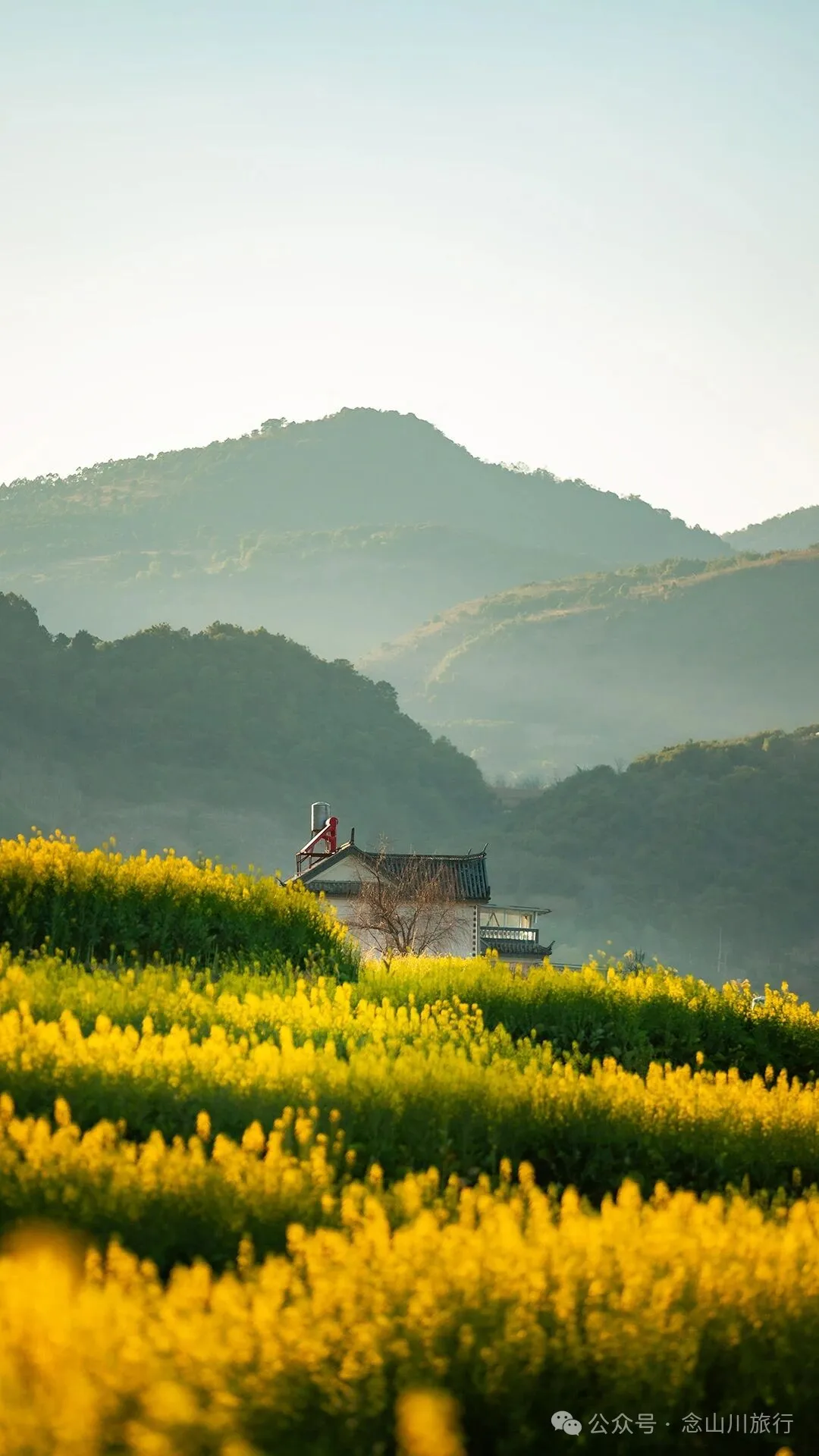
The lovely distant mountains, houses, and nearby flower fields are all bathed in the sunset glow, filled with a sense of peace. This scene shows me the perfect home in my dreams. Rammed earth cottages, distant mountains in mist, sunset over flower fields—whose beautiful hometown is this? The sunset glow is a special light; it strips everything on earth of its true color, dyeing it with its soft, gentle hues.
We had worried we might arrive too late to catch the brief moment when the sunset spreads over this golden sea of flowers. But everything was just right—not too early, not too late. It seemed we were meant to drive over twenty kilometers, turn back, exit the expressway, and step into this rapeseed field. Like tourists, we admired the central area for a while, then ventured beyond into the village, and finally ran to another slope, watching the orange light soak everything—the fields, the village, and us. Perhaps, to others, I too had turned orange.