
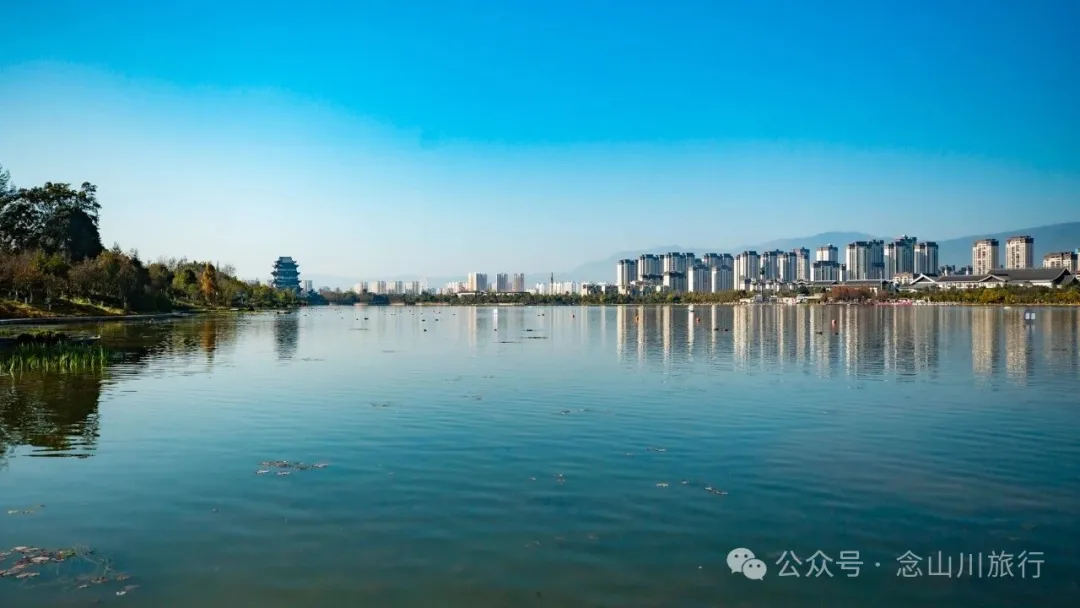
Baoshan, known for its small-grain coffee, has few scenic spots, but the Qinghuahai National Wetland Park in the city center is well worth a visit. When a local friend told me that Qinghuahai is an artificial lake, I assumed it was entirely dug out by human labor and machinery. However, that is not the case. In ancient times, this area was a vast lake called Ailao Ancient Lake, which existed about four to five thousand years ago.
During the Ming Dynasty, the lake still shimmered with clear waves and lush lotus leaves. Yang Shen, exiled to Baoshan (then called Yongchang), was deeply fond of the lake's enchanting scenery and named it "Qinghua" (meaning "green splendor"). He often visited with friends, boating on the lake and composing poems. From their writings, we can glimpse the many scenic wonders of the lake at that time. "Outside the eastern village lies East Lake, / Green hills on the lake form a painted scroll. / Sandpipers fly low, cranes in fields afar, / Frosty reeds bloom, lotus in the marsh wither. / Magnolias startle herons bathing proudly, / Kingfishers feed their young with fish. / I laugh at my wild and unrestrained self, / A romantic soul among us disciples." This poem, titled "Boating on the Lake," was written by Zhang Han, a famous Baoshan scholar and close friend of Yang Shen, during a visit to Qinghuahai. The imagery in the poem is pure and natural, evoking a sense of longing.
Qinghuahai once "disappeared" for a period. In the 1960s and 1970s, due to flooding, the lake was completely drained and turned into farmland. The vast expanse of water, once filled with lotus fragrance for miles and countless boats racing, came to an end. People planted rice paddies in the muddy fields, transforming the sea into mulberry fields, and fishermen became rice farmers, forcing a change in their way of life. Decades later, with the rise of the city, the natural scenery of the countryside grew increasingly distant and blurred in people's memories. They began to miss the Qinghuahai that had nurtured generations, longing for the days of boating among lotus and fishing under the evening sun. Thus, when the project to return farmland to lake was proposed, it was met with widespread acclaim, and Qinghuahai was revived on the Baoshan plain.
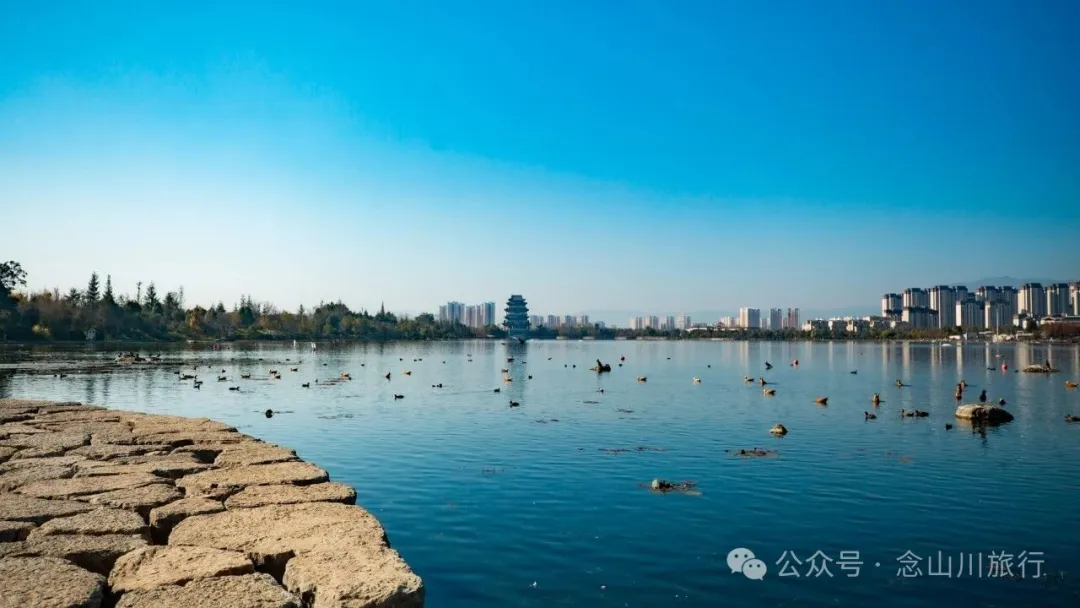
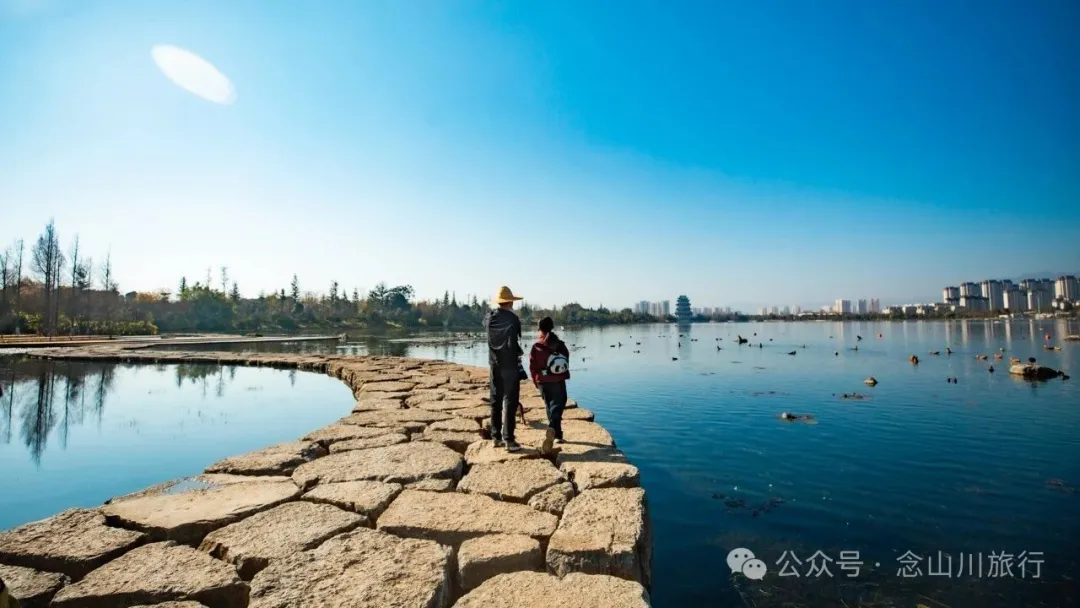
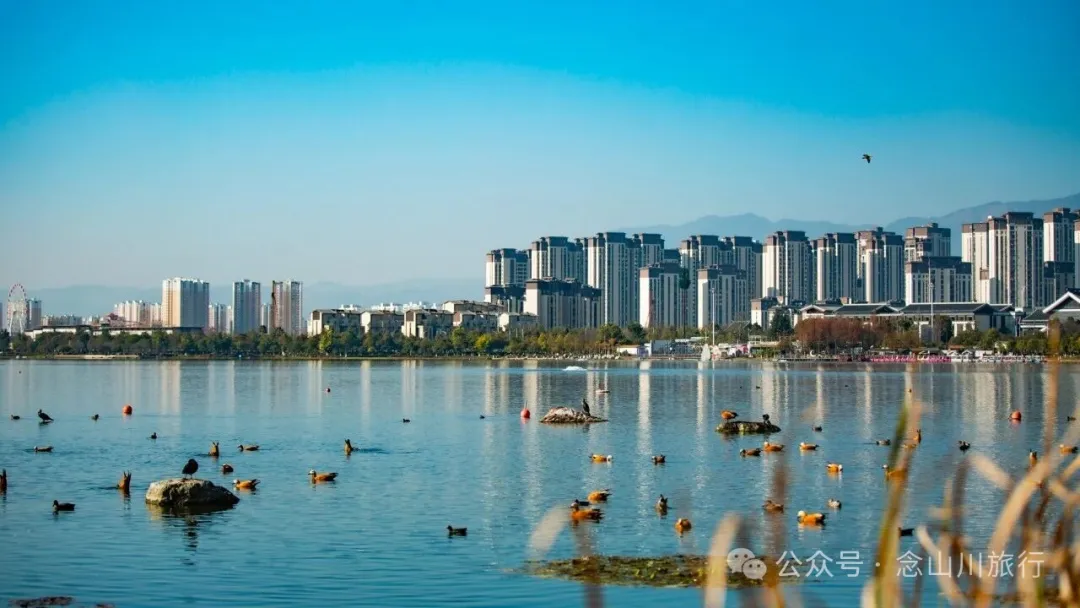
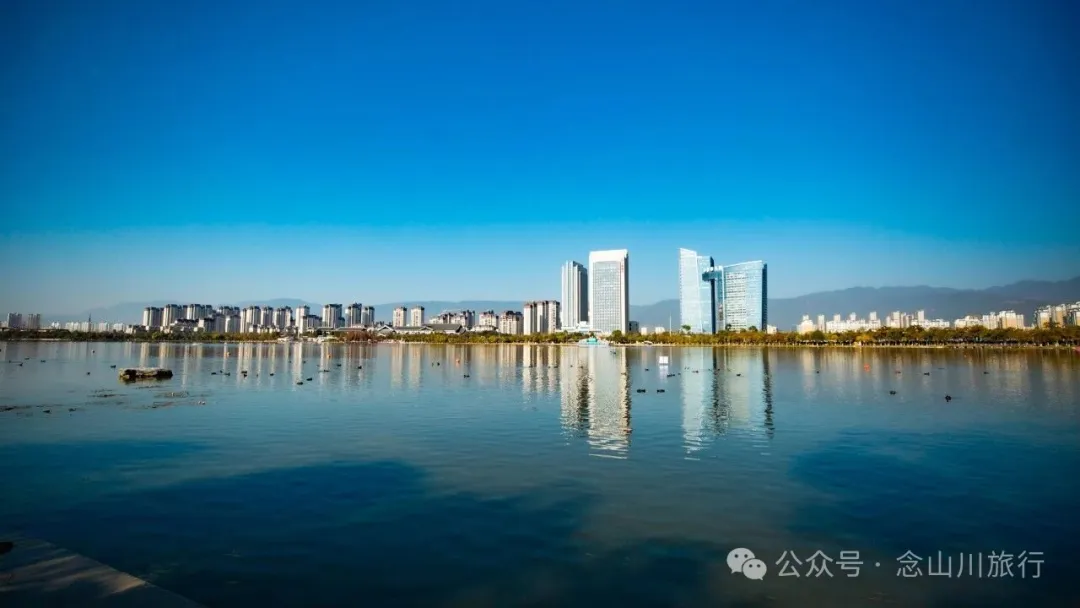
Today's Qinghuahai in Baoshan naturally cannot compare to the Ming Dynasty lake or the even more ancient Ailao Lake. However, as an urban landscape, its water remains clear and clean, free from turbidity and pollution. Thanks to its good water quality, a wide variety of birds can be seen here. According to statistics, over 300 species of birds have been recorded, including more than 100 species of waterbirds. Common species like little grebes, moorhens, and mallards are present, as well as rare and endangered species such as glossy ibis and Baer's pochard.

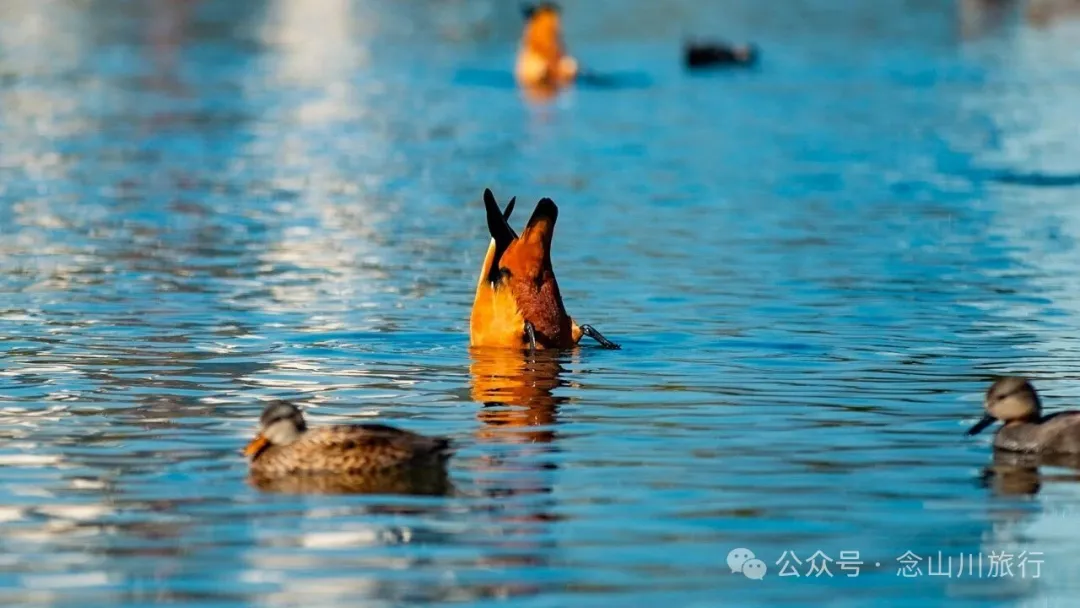
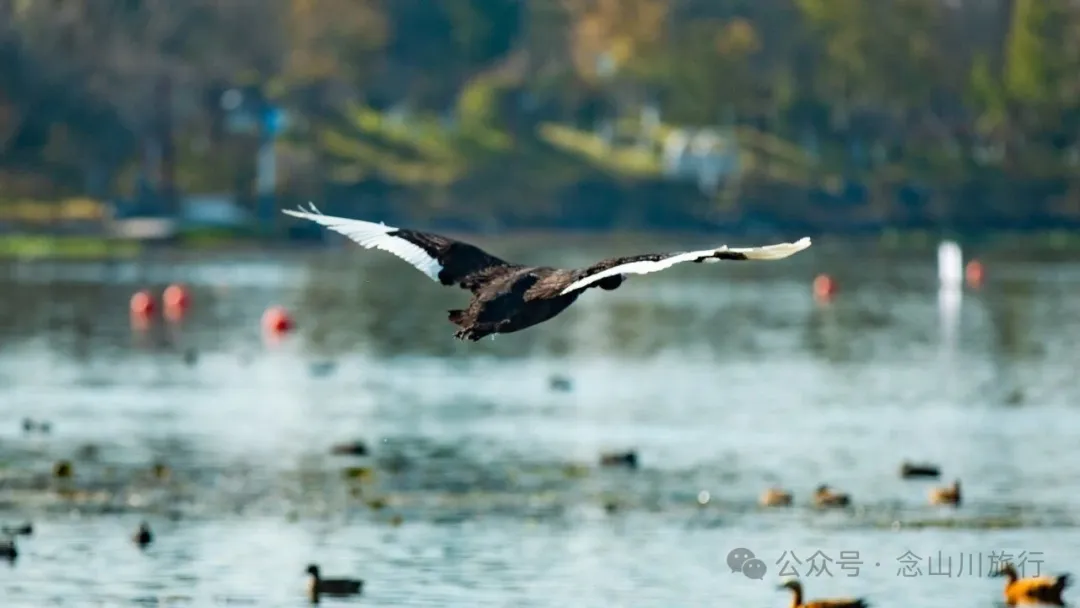
Stroll along the lakeshore, or simply sit on a patch of grass by the water, and watch the leisurely waterfowl. Observe them twisting their long necks to preen, raising their bodies to dip their heads into the water in search of small fish, or spreading their long, supple wings to take off, soar, and hover. Every action they take brings a sense of peace and comfort, offering infinite solace. Without these birds, how dull Qinghuahai would be.
The best time to visit is at dusk. Sit by the lake and watch the black swans standing on one leg in the shallow water, tucking the other leg close to their belly and burying their heads under their wings for a sweet sleep. They ignore the passing visitors and show no fear of other species in the water, as if the lake belongs only to them.

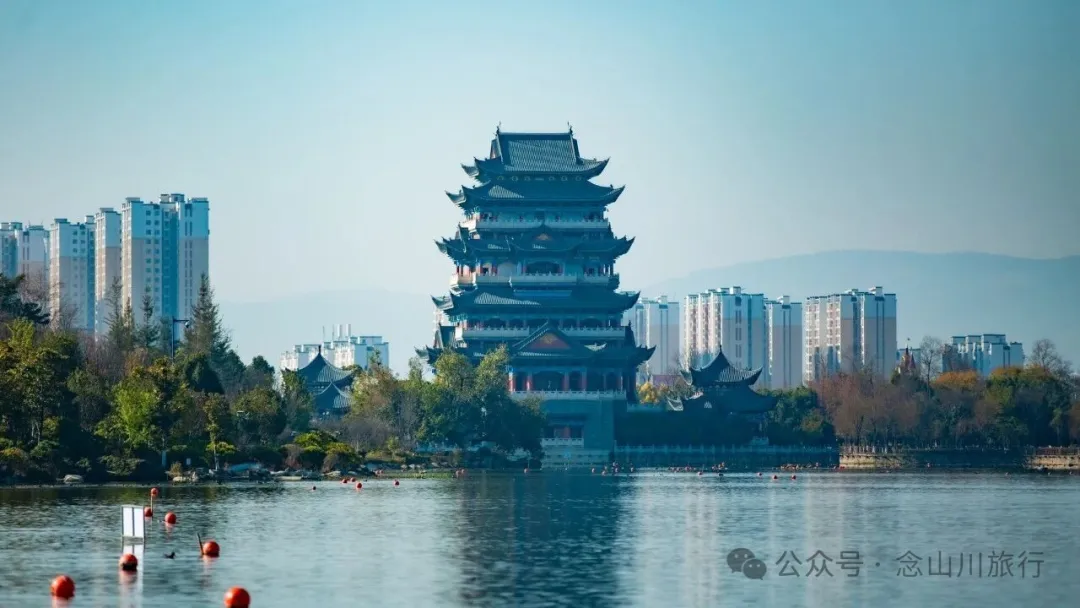
In the center of West Qinghuahai (a long causeway divides the lake into East and West Lakes) stands a tower called Yongchang Pavilion. Years ago, we explored it thoroughly, but this time we only admired it from a distance without approaching. Yongchang Pavilion is a replica of ancient garden architecture, featuring a unique structure of "inner nine and outer five"—appearing to have five stories from the outside but actually having nine inside. It is a landmark building and the core carrier of Baoshan's "Yongzi culture," hailed as the "world's number one chess pavilion" in the Go community. Each floor is arranged around the national intangible cultural heritage—Yongzi (Go stones), perfectly integrating the profound connotations of Go culture with the architectural space.