
At six in the morning, Bazhu Village was still shrouded in darkness. Only a short stretch of concrete road within the range of streetlights and a corner of a Tibetan house beside it were visible. Two stars close together in the sky gradually emerged, and soon, more faint starlight glittered in the vast and distant heavens. In a few hours, they would be completely obscured by the blazing sun. Today would be a fine day; the winter mountains of Bazhu Village would be even clearer, cleaner, and more enchanting in such weather.
I stepped outside just before seven. The morning cold was increasingly unbearable, but walking is an effective way to resist the chill. Moving steadily, neither too fast nor too slow, prevented the cold from conspiring with the mountain wind to creep down my neck and sap my will. I had no idea how long it would take to reach the summit pasture of Gawamagong. Villagers who had been there said it took ten hours or more, and I was unfamiliar with the route, fearing I might take wrong turns and waste time. So I had to leave two hours before sunrise, letting the faint moonlight cast my solitary black shadow on the narrow mountain path.
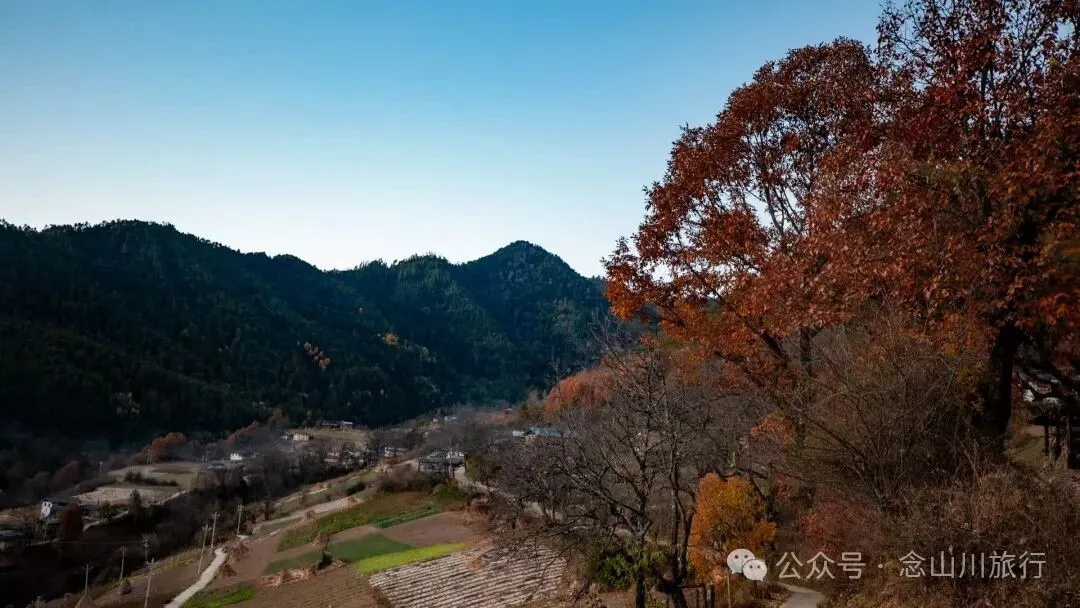
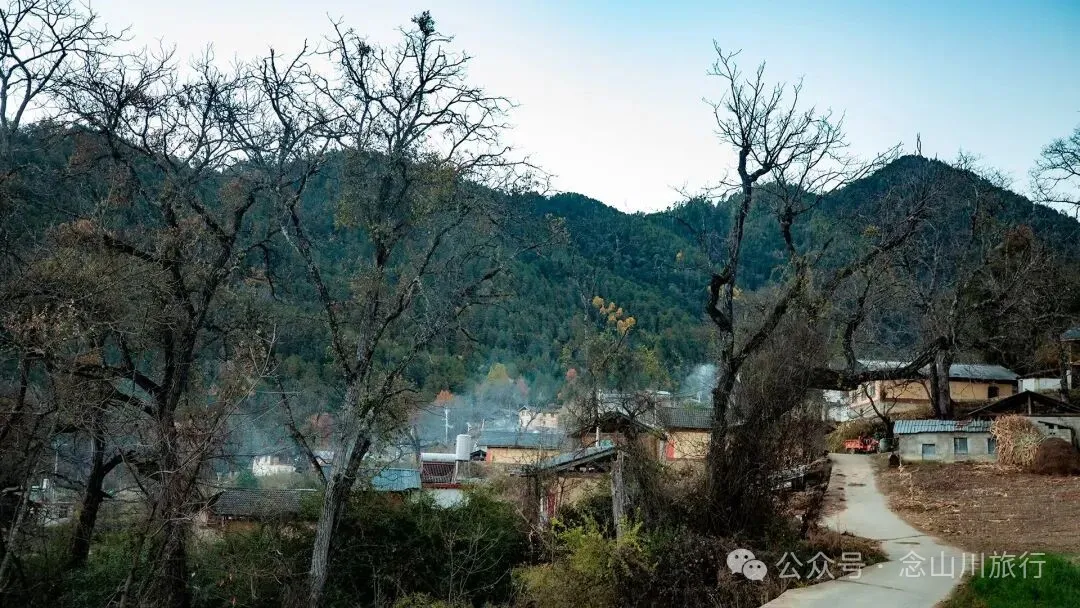
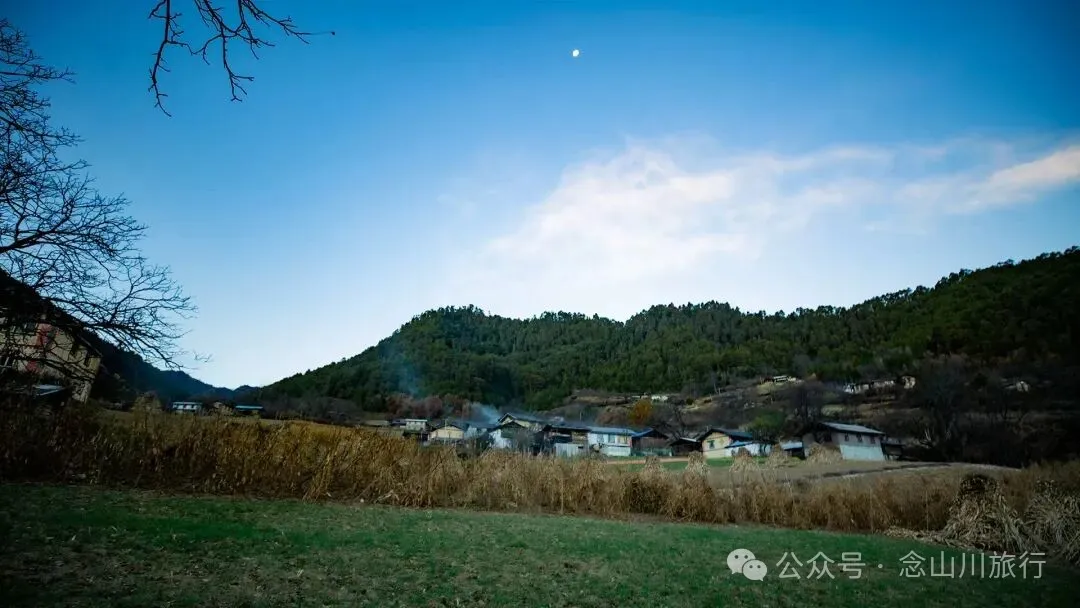
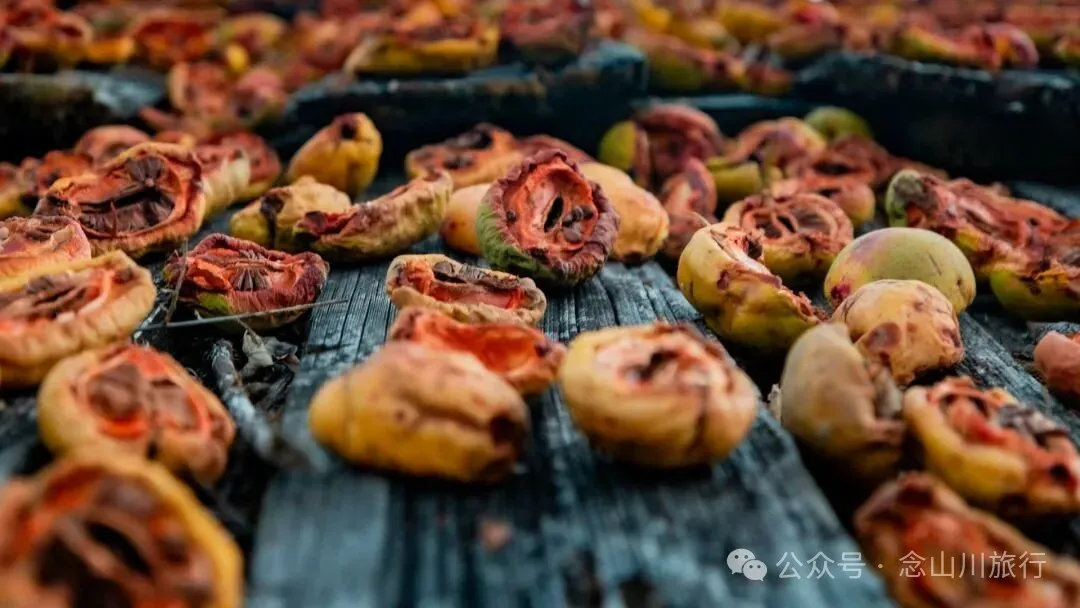
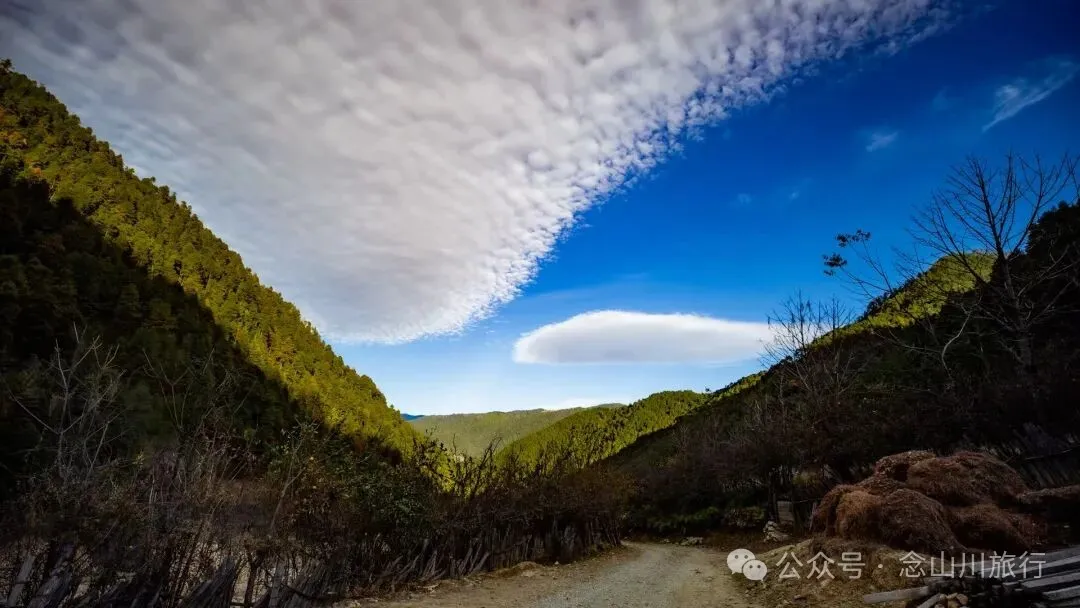
The path to the mountains led through the valley of the Hailijiao area, which contained six village groups: Tuolagong, Paigu, Nirijiao, Tade, Geku, and Shijiaben, with about sixty households. But only about twenty seemed occupied, and it was very quiet. The mountains near the village still retained rich autumn colors, but signs of decay had set in. The winter cold was too fierce; many trees were bare, with only tangled branches. The sun had not yet reached this valley, but cooking smoke was already rising. On the wooden roof of a roadside house, half-dried papayas were laid out, still emitting a intoxicating fragrance. I had walked through this valley many times, once reaching the end of a stream where a thousand-year-old tree stood. The summit pasture was twice as far from there.
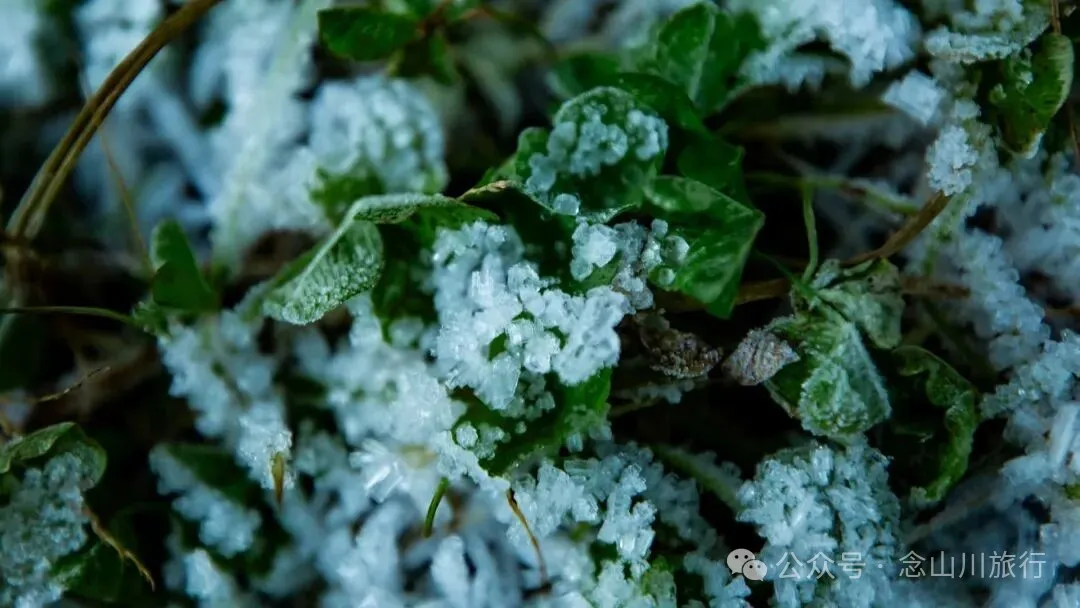
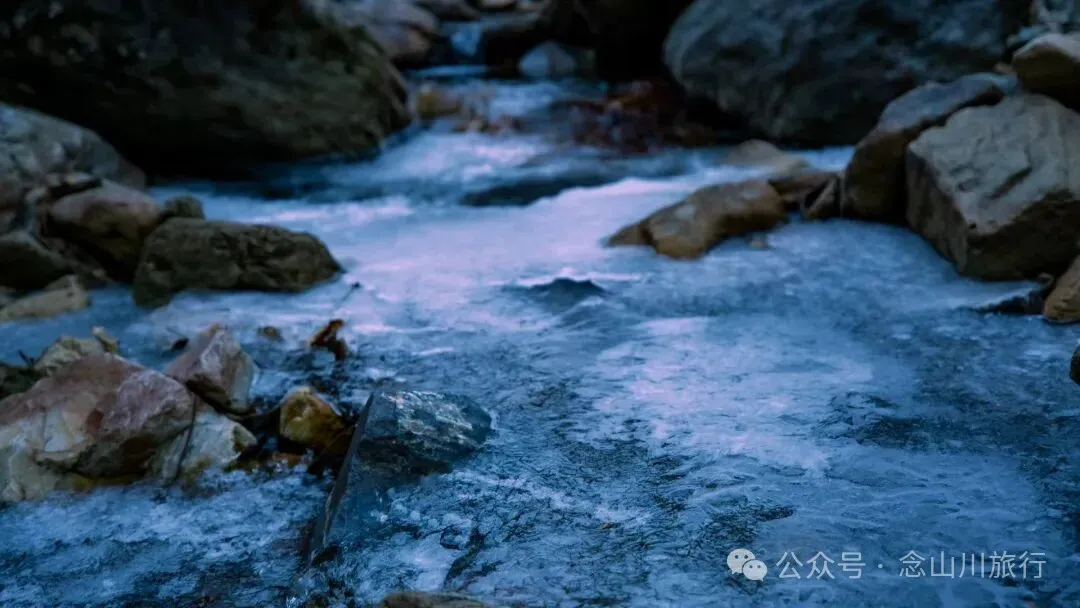
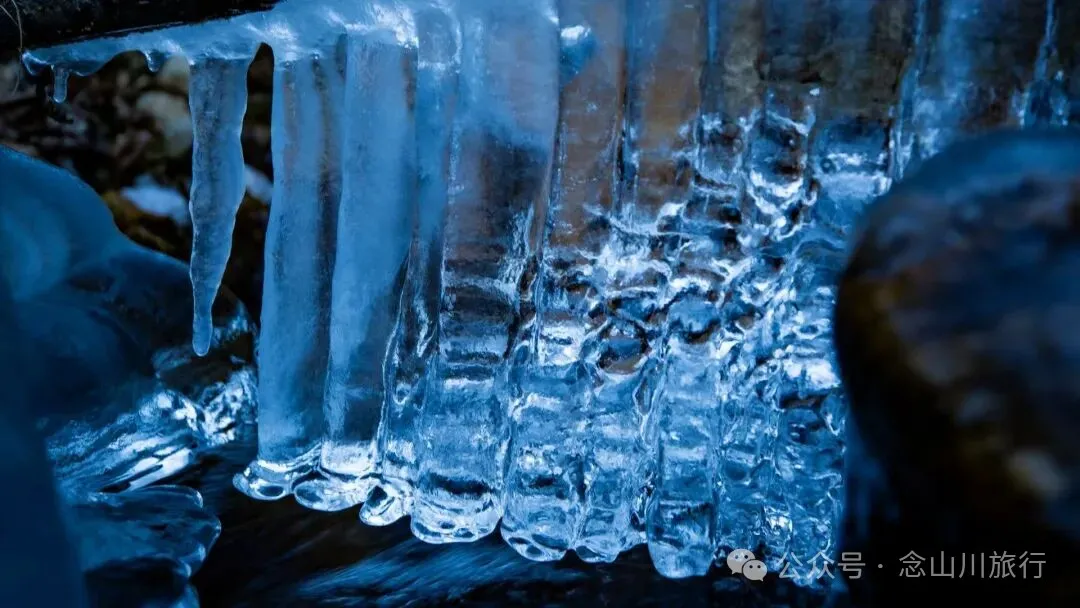
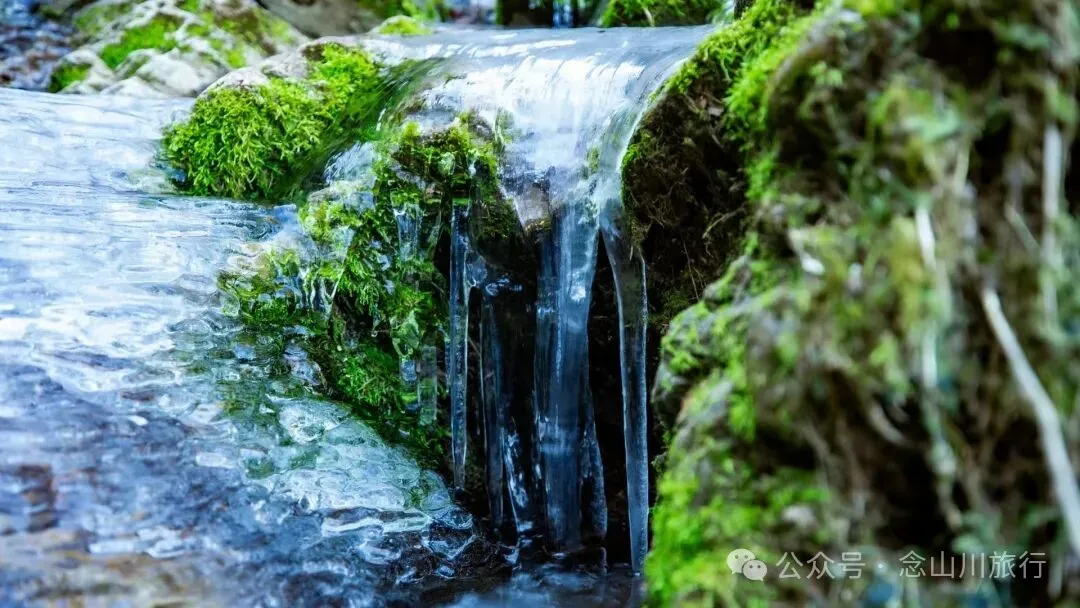
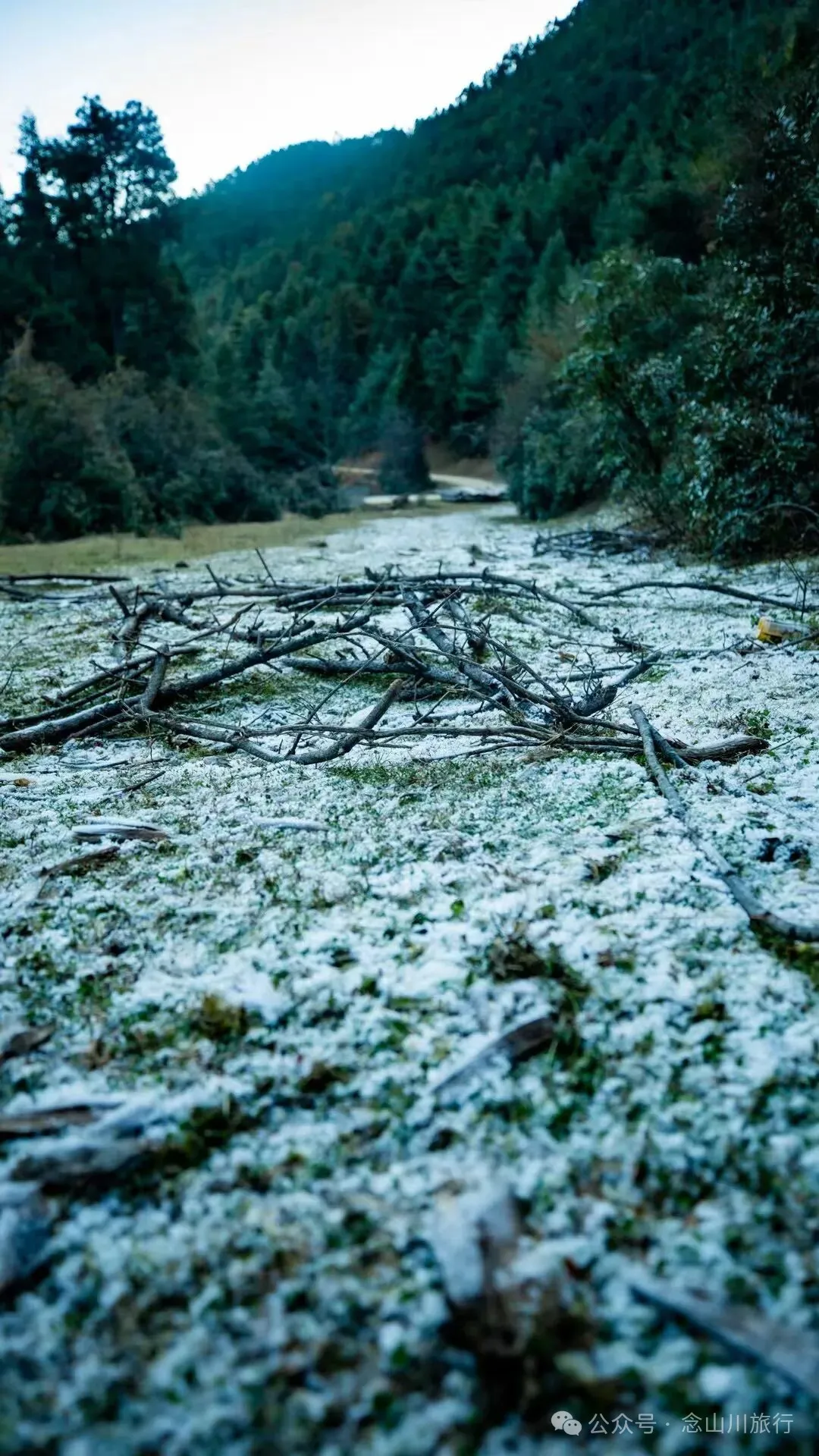
Leaving the village, I entered a narrow meadow between two mountains. It was still early, and I didn't encounter the large herd of yellow cattle or the herder driving them. But the stream valley between the mountains brought me many surprises. A thick layer of white frost covered the grass, resembling snowfall. I was a bit confused; if it were snow, it was too localized—only a tiny patch. The white solid clinging to the weeds looked more like frost, which made the green appear even brighter. Thick ice was visible in many places along the stream. A wooden stick spanning the stream was adorned with a row of crystal-clear icicles, like a white curtain, unmoved by the mountain wind.
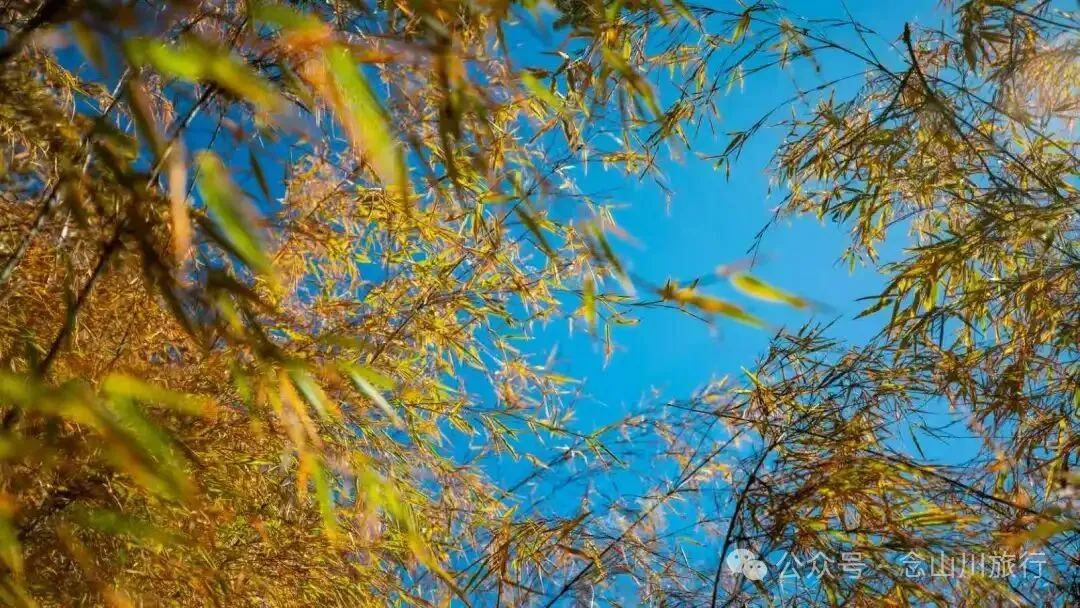
The path beside the stream extended for a kilometer or two before disappearing. At the end of the path, I pondered briefly and decided to climb a relatively gentle slope. The higher I went, the less path there was, and the slope steepened quickly. After passing through a grove of gnarled alpine rhododendrons, I entered a bamboo forest with yellowing leaves. Realizing I had deviated significantly from the direction of the summit pasture, I decisively gave up, retraced my steps to the stream, and climbed upward along the dry streambed. I wasted an hour here. The summit pasture was just behind the high mountain barrier at the end of the stream valley; once I climbed up, I wouldn't get lost.
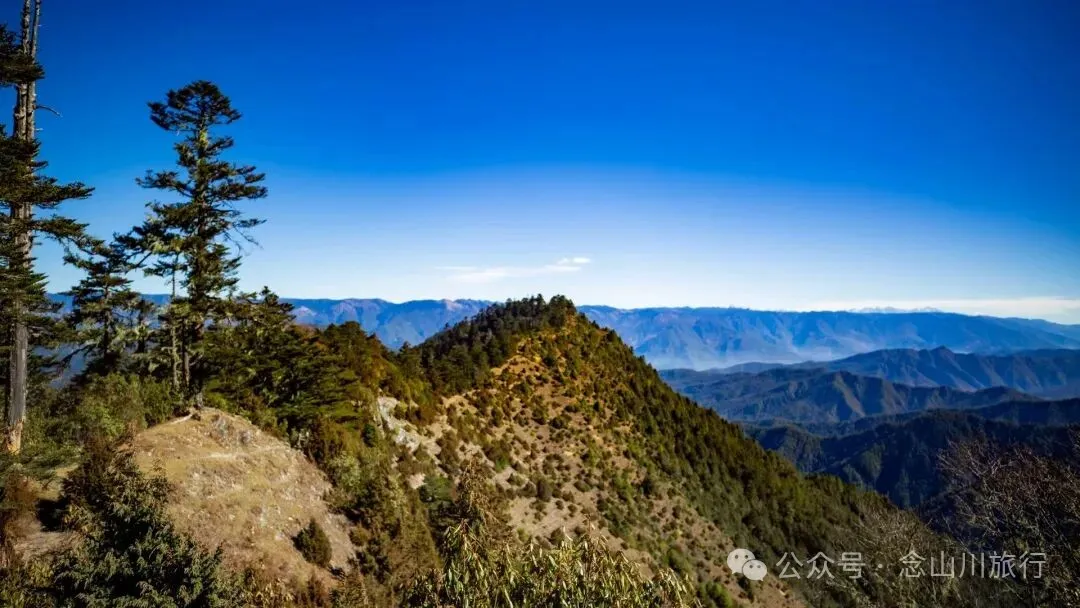
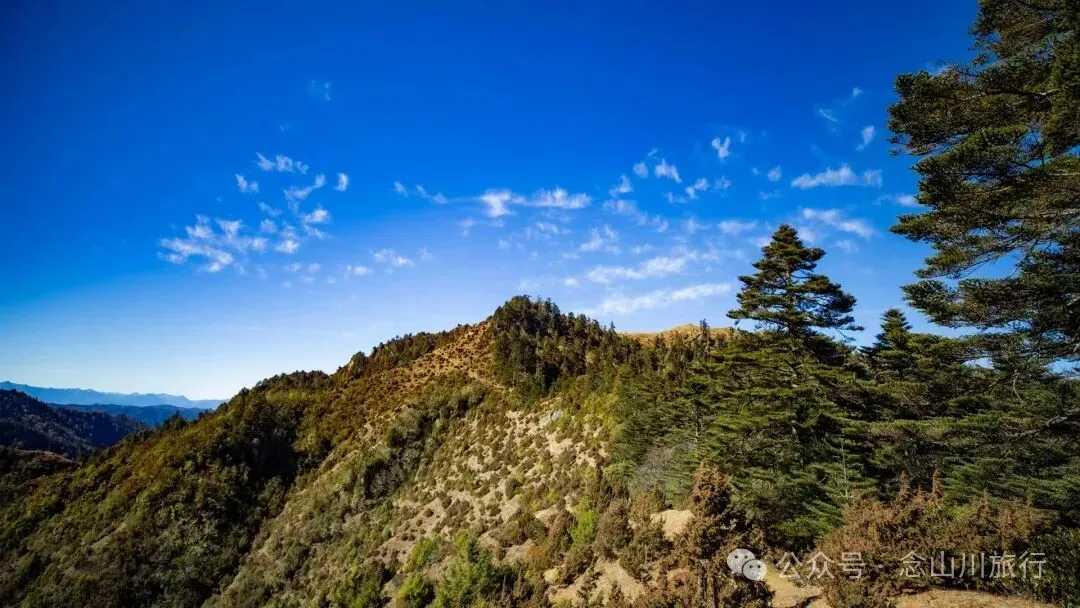
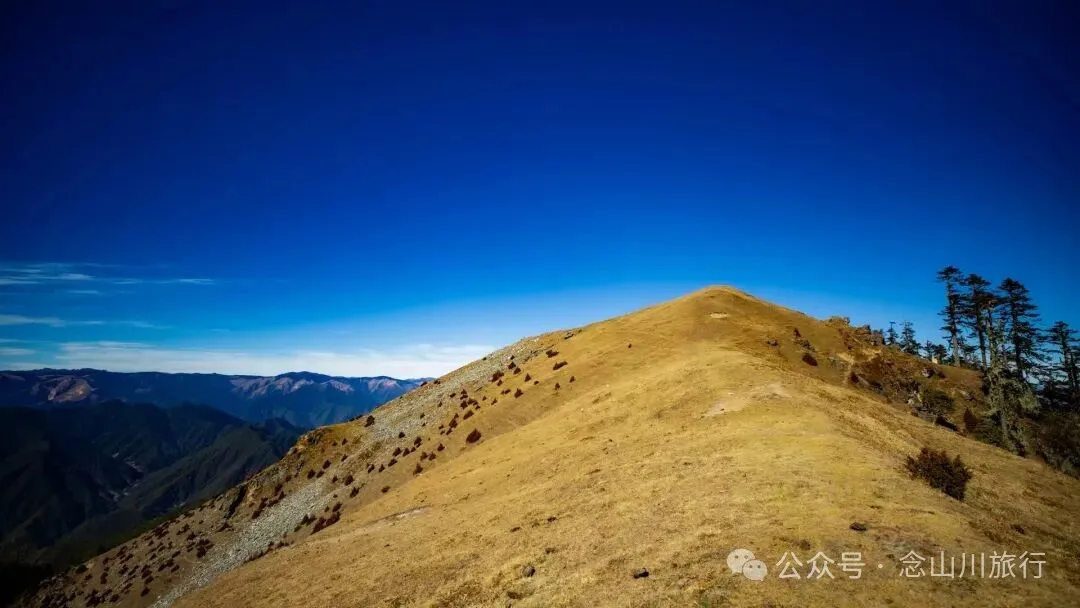
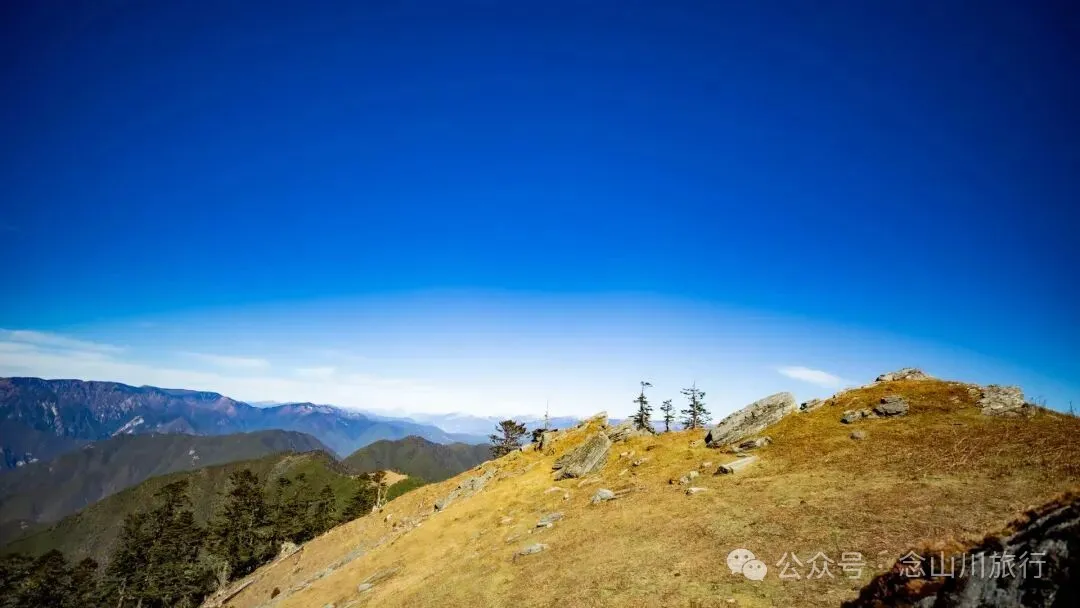
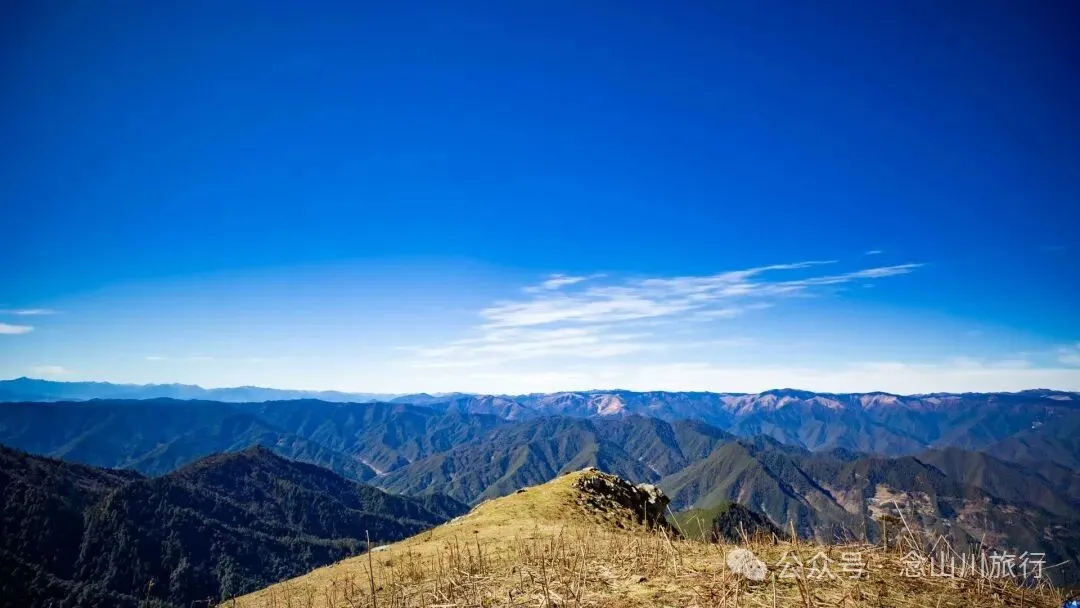
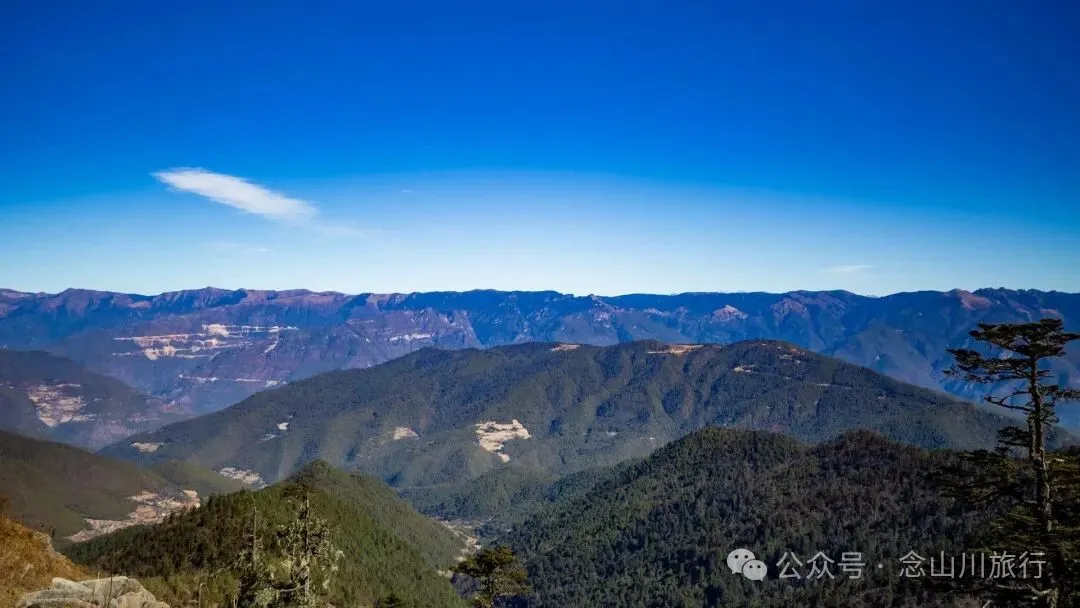
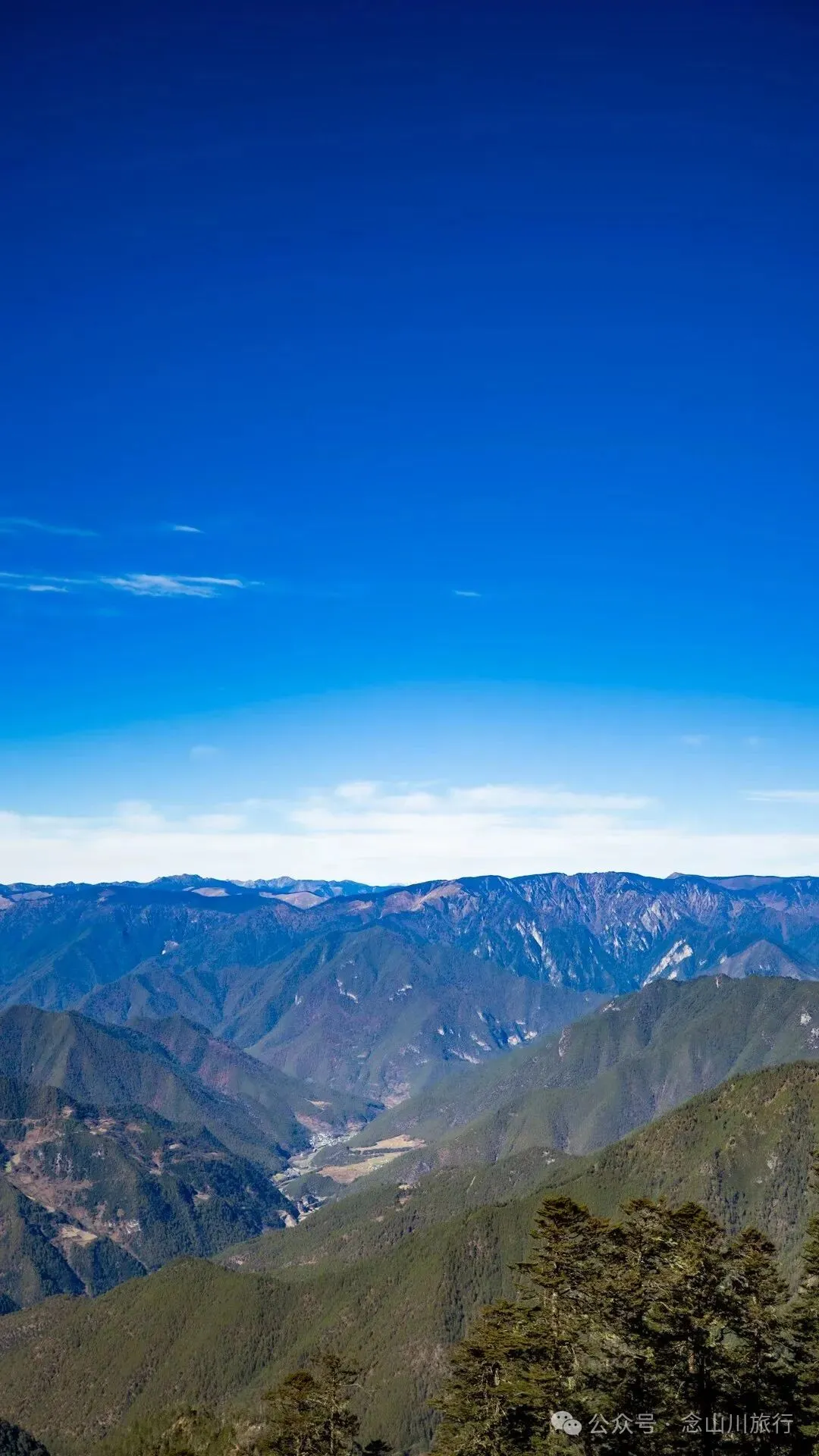
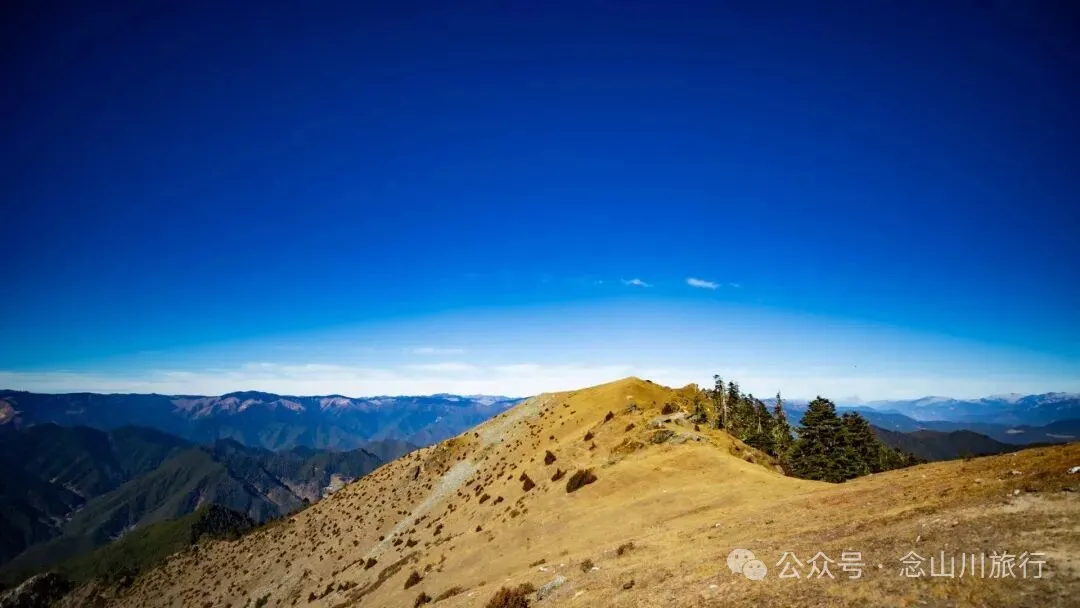
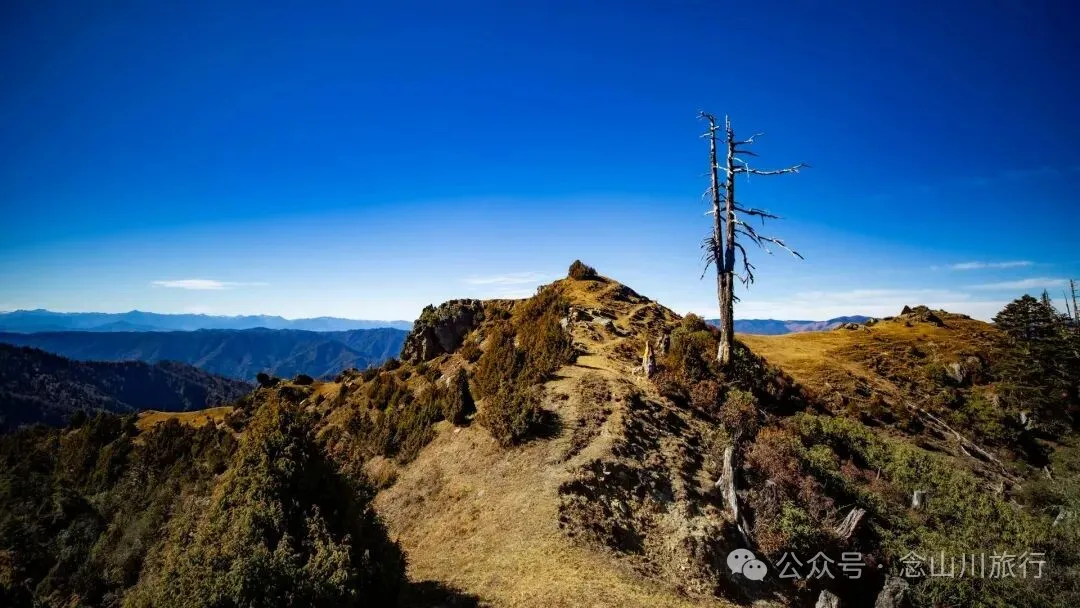
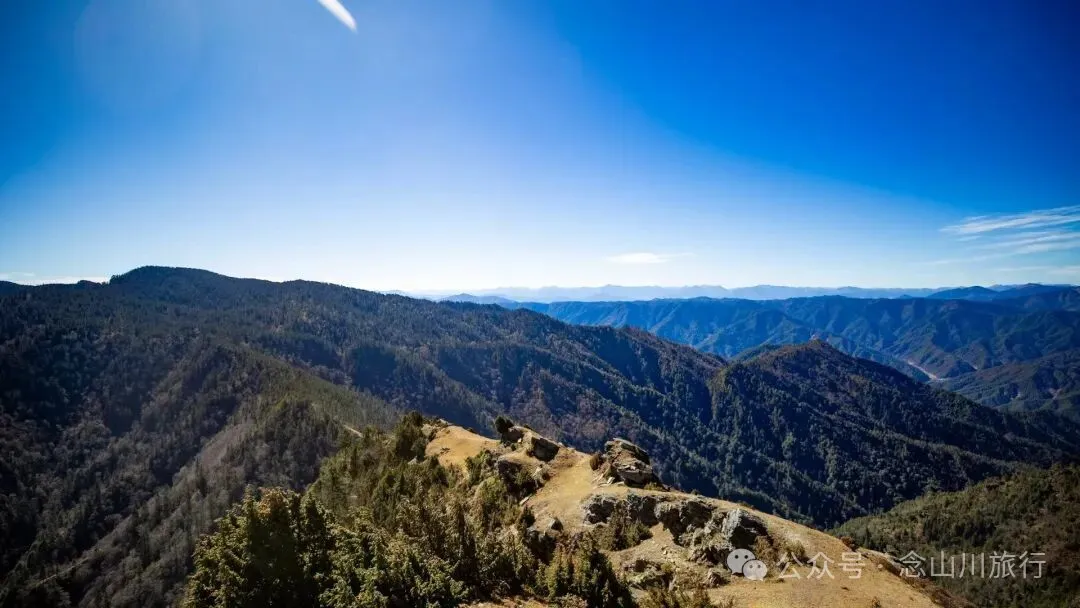
The final stretch of the climb was the toughest. The slopes on both sides of the stream were overgrown with tangled trees, making passage impossible. I had to find footholds on the boulders in the streambed, pulling myself up by plants growing in the crevices. But sometimes, carelessly, my left hand would grab a stinging nettle, and my right hand a sharp thorn. Fortunately, the slope wasn't too steep, so I didn't get hurt when I slipped. After passing through another patch of alpine rhododendrons and then a bamboo forest, I climbed up a slightly concave pass and stood on the ridge line. The view suddenly opened up. The 10-kilometer mountain trek had finally come to an end, taking me six hours. The hardship of 10 kilometers ended at a small cabin on the summit pasture. Gawamagong, the name on the map, is called Gewamu by the locals. I had seen photos of this meadow in summer, covered with various wildflowers and tall grass. But in winter, it was somewhat desolate. I thought I saw a black cow in the distance, but when I got closer, there was nothing. I thought it was an illusion, but a fresh pile of cow dung on the grass proved it wasn't. I wondered where it had hidden.
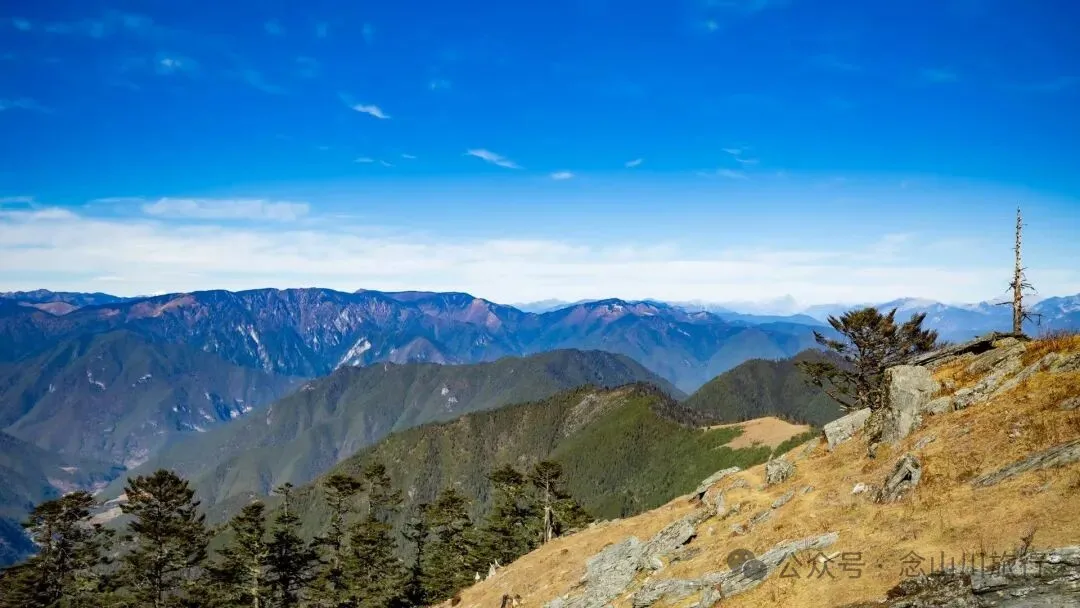
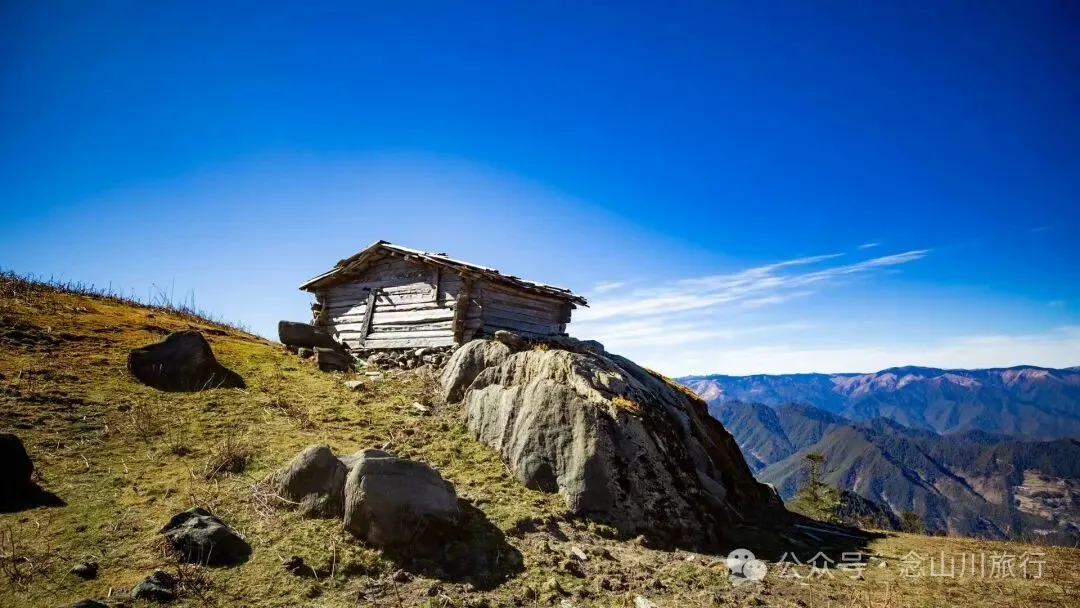
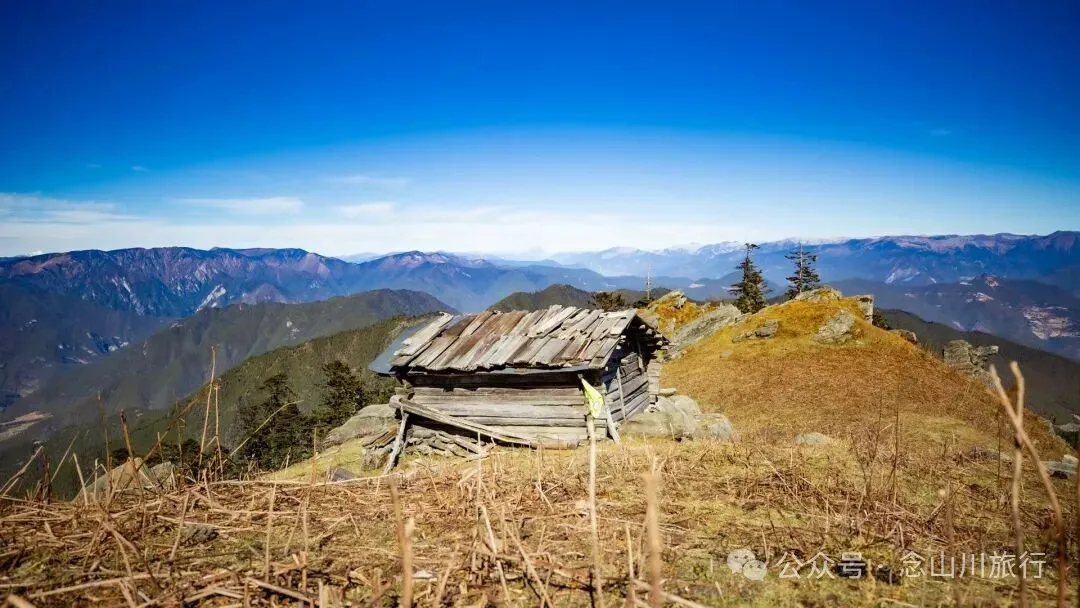
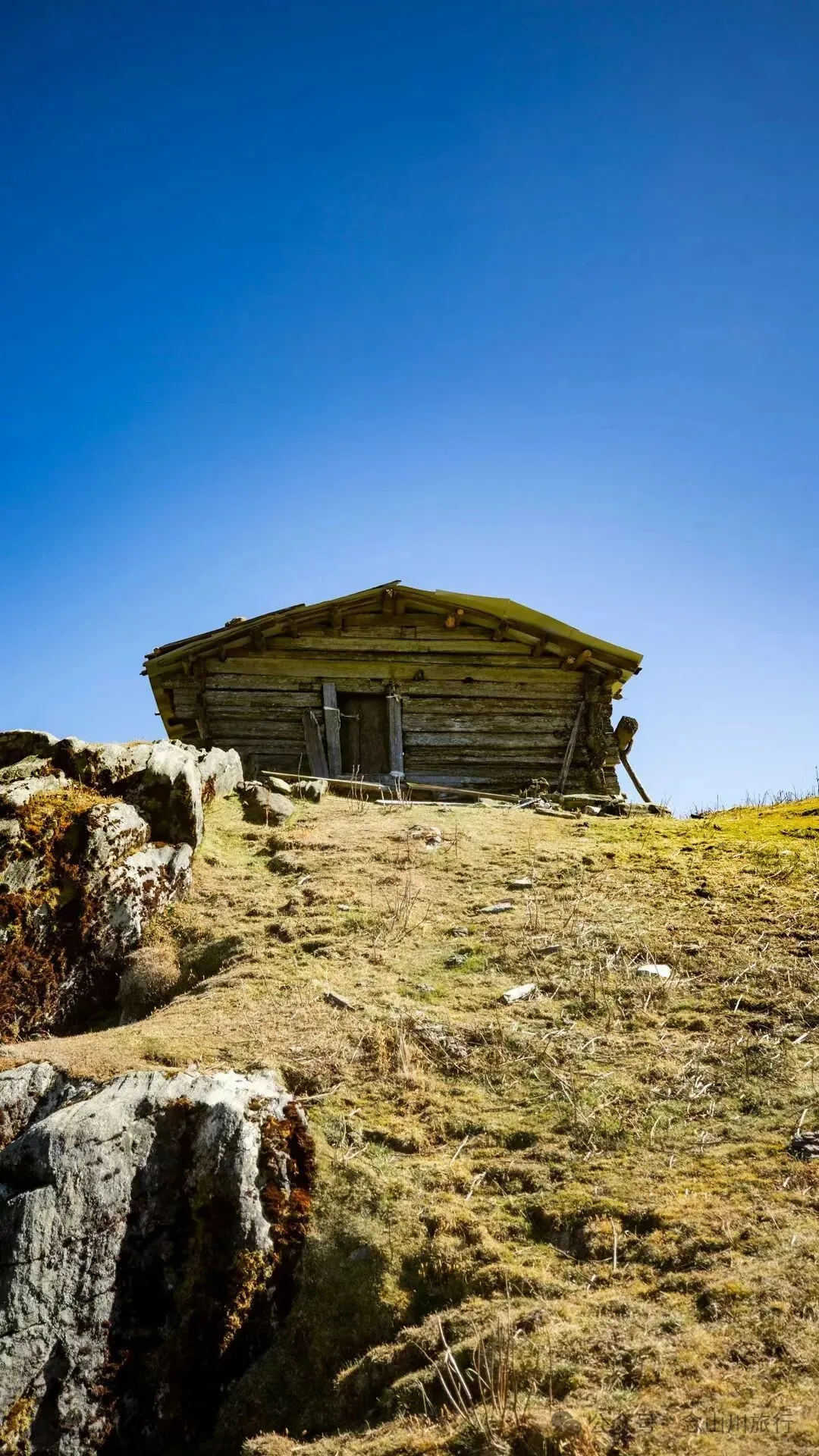
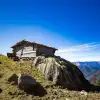
From a distance, I saw a small low cabin behind the slope. As I approached, I saw it was built next to a large rock. The wide tin roof clattered in the strong wind at the summit. Faint light seeped through the gaps between the wooden planks. Once my eyes adjusted to the dim light inside, I could see everything. Some wide wooden planks stood against the wall, with only a board placed by the central hearth as a bench. Several large plastic bottles contained some clear liquid—I couldn't tell if it was water or alcohol. I searched twice but couldn't find a lighter. The moment I saw the cabin after climbing breathlessly to the summit, I decided that if I found a lighter, I would stay overnight in the cabin and descend the next day. It seemed I would have to wait patiently until next summer.
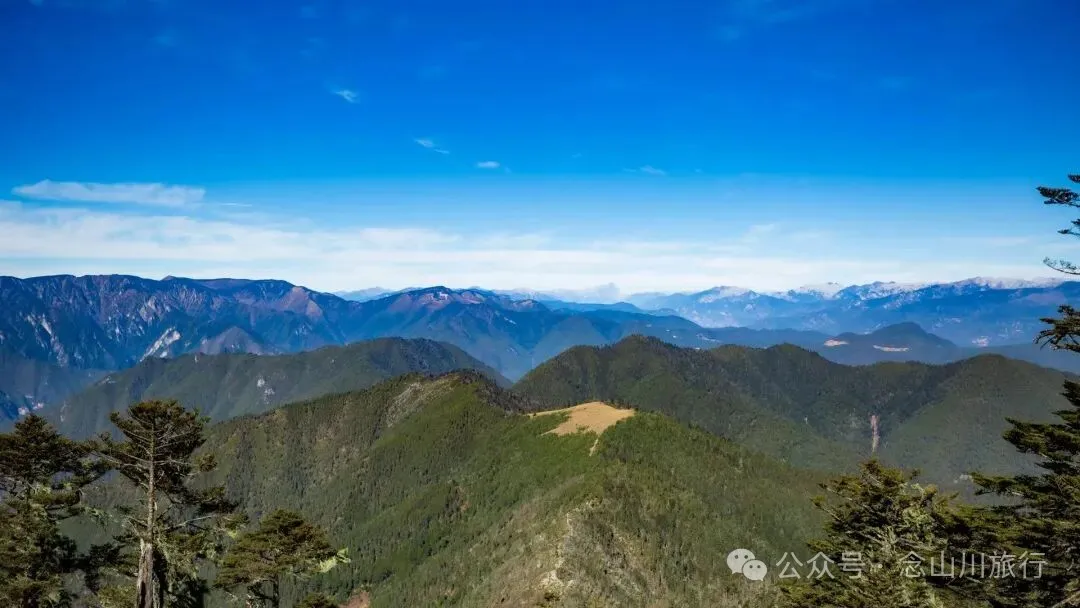
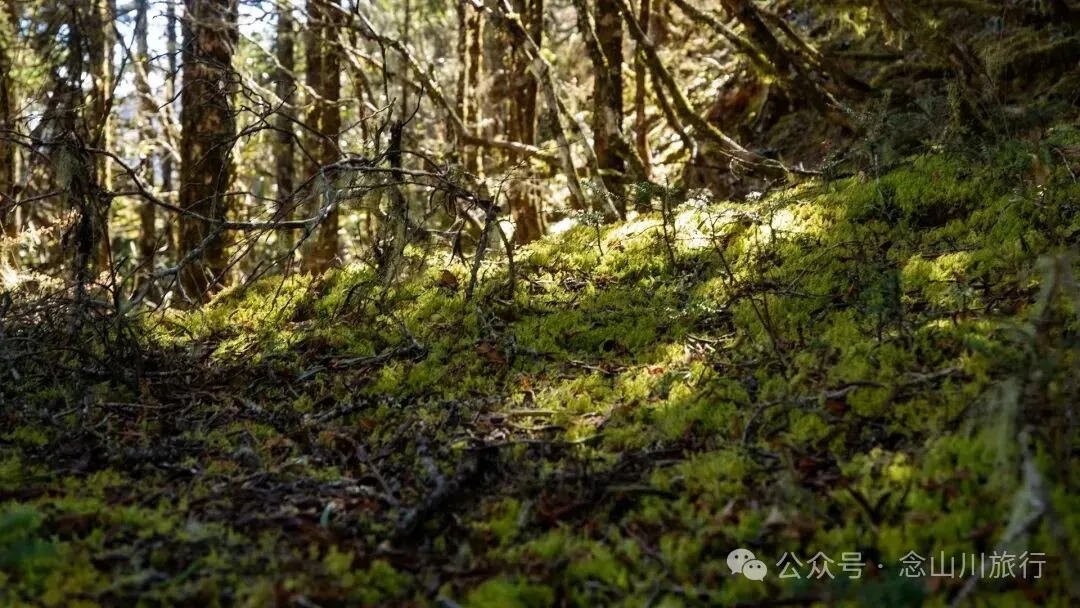
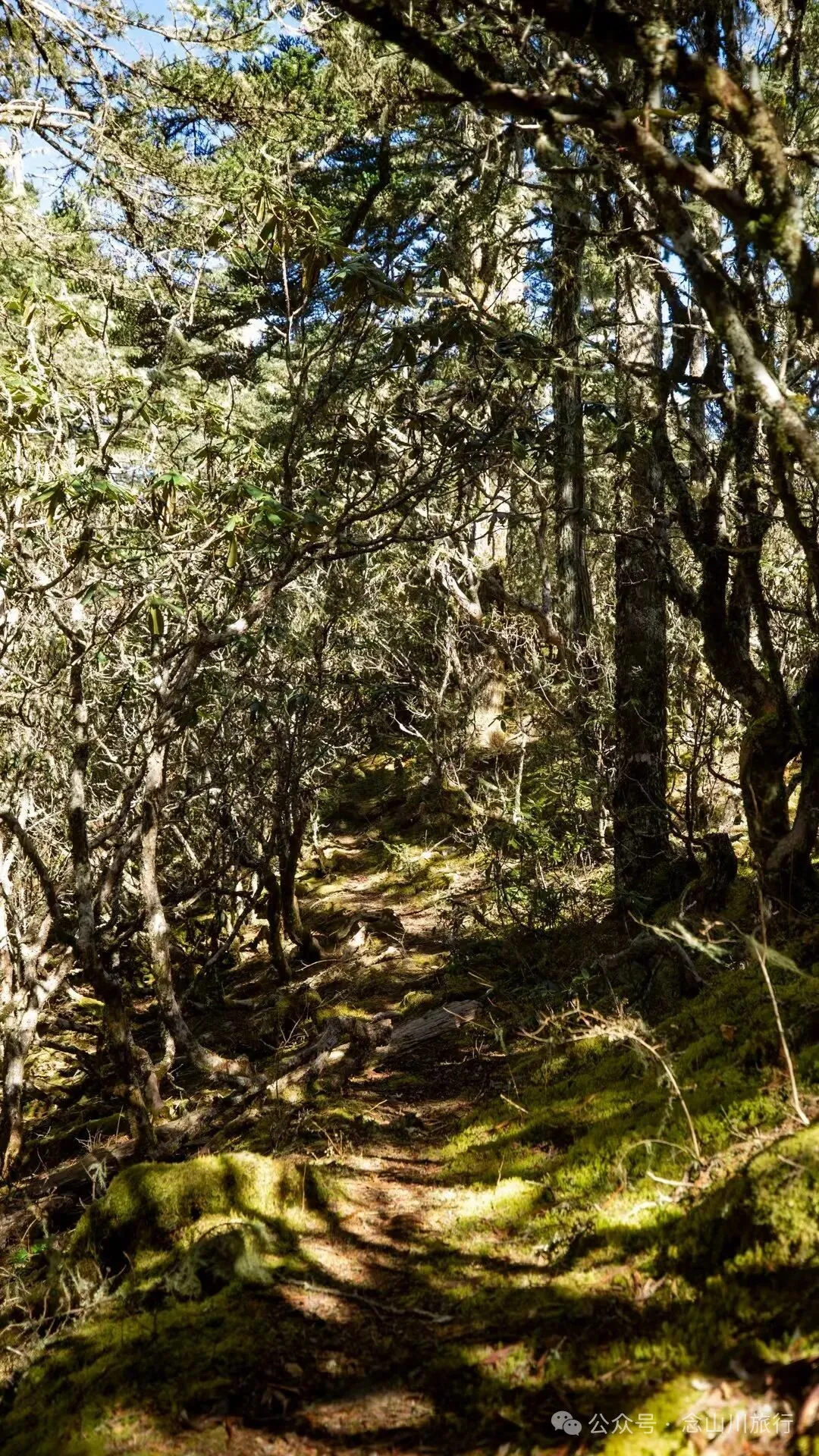
After walking around the summit pasture, I was surprised to find that Huobenggangka, the endpoint of my previous hike, was not far away. A clear ridge line connected these two summit meadows. Even more unexpectedly, the downhill path I found at Gawamagong turned out to be the ridge line leading to Huobenggangka. It was hidden in dense forest, blocked in several places by fallen trees, and I nearly lost my way. But this time, the map positioning was accurate. Crossing those deceptive large trees, the path always guided me in the right direction.
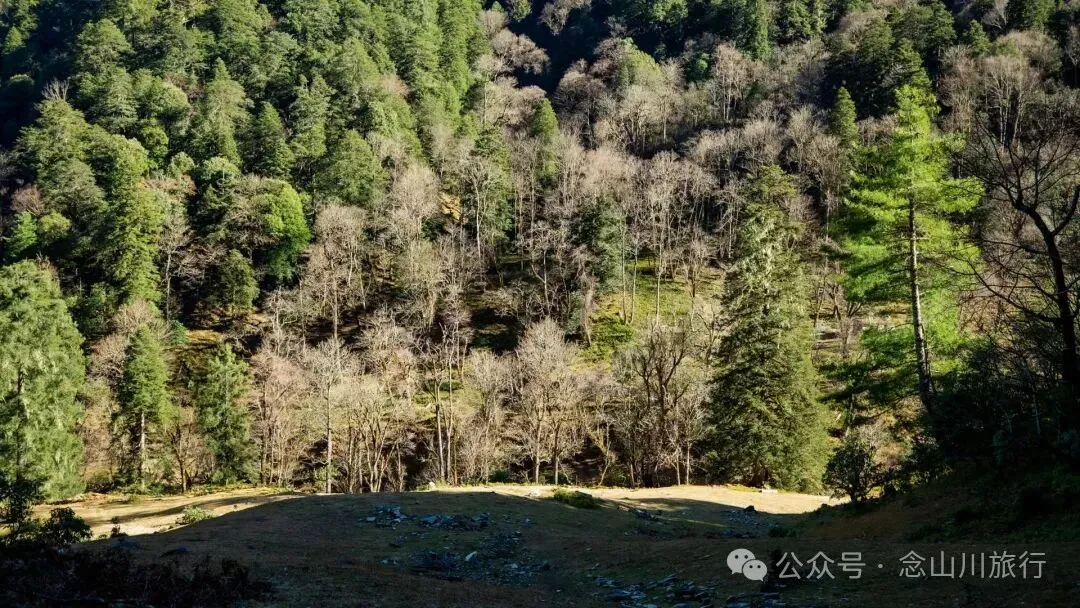
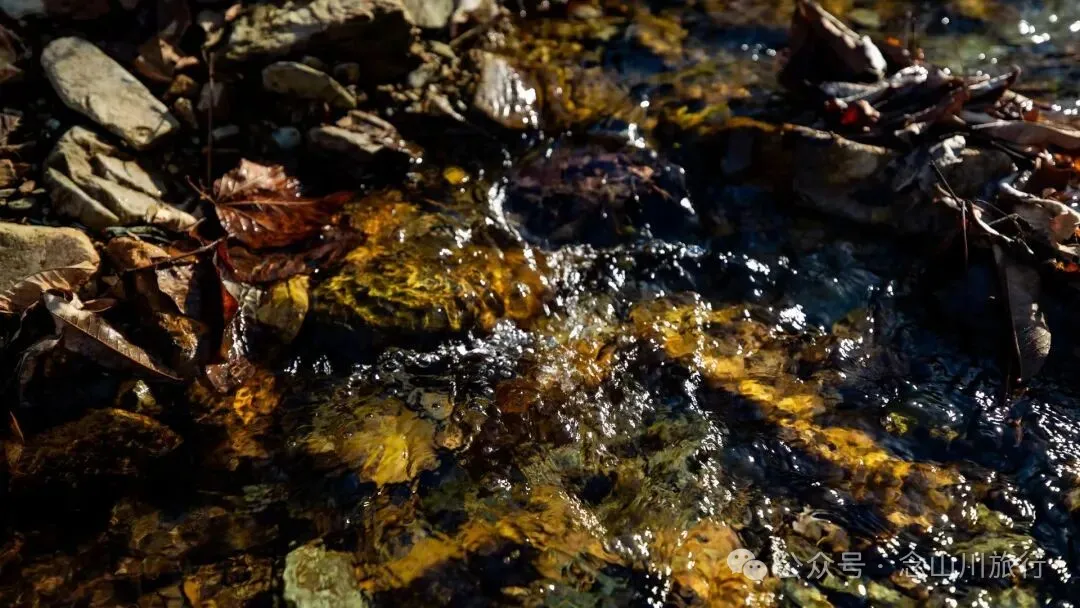
When I was less than a hundred meters from the southern end of Huobenggangka, I had to change direction and turn east to a sparse slope, which was the best place to descend. Thick fallen leaves covered the slope, and I almost slid down the steepest part lying on the dead leaves. When I finally reached the familiar open meadow, the sunlight was still waiting for me on the other side of the valley, and the clear, sweet spring in the stream invited me to drink heartily.