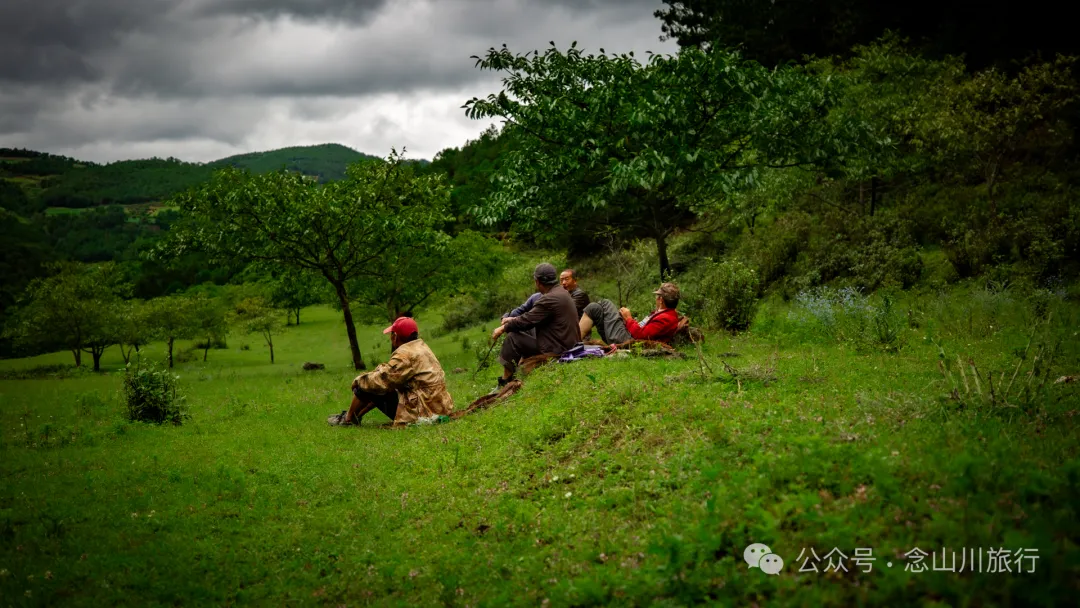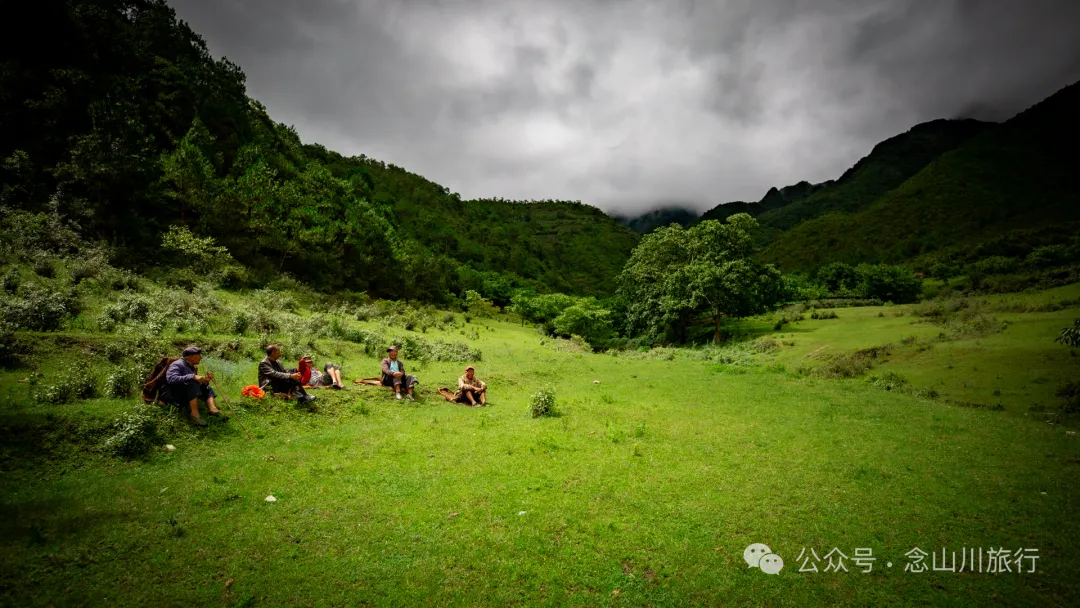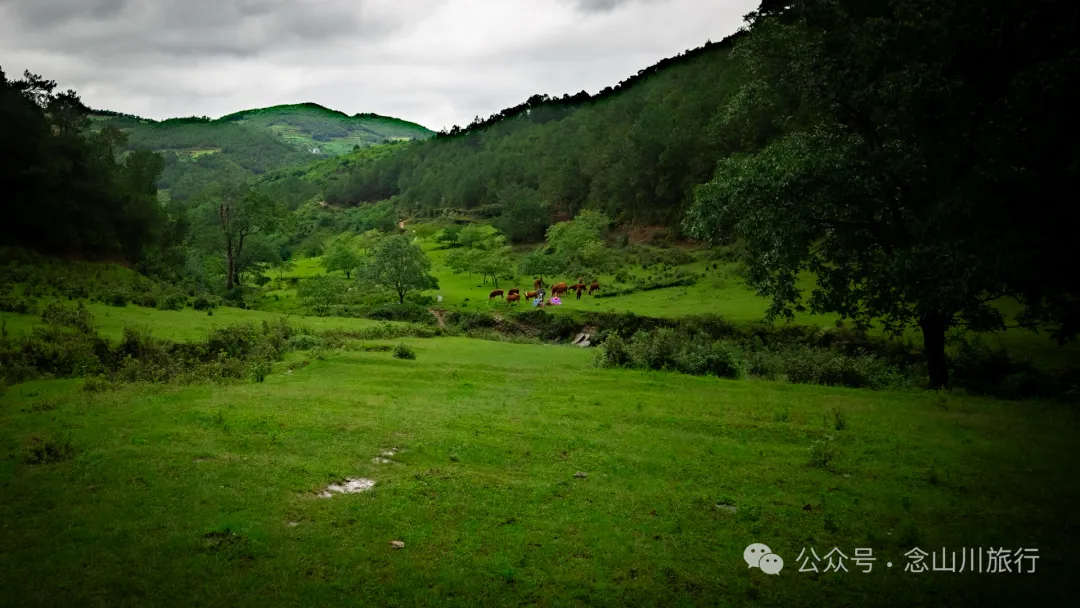

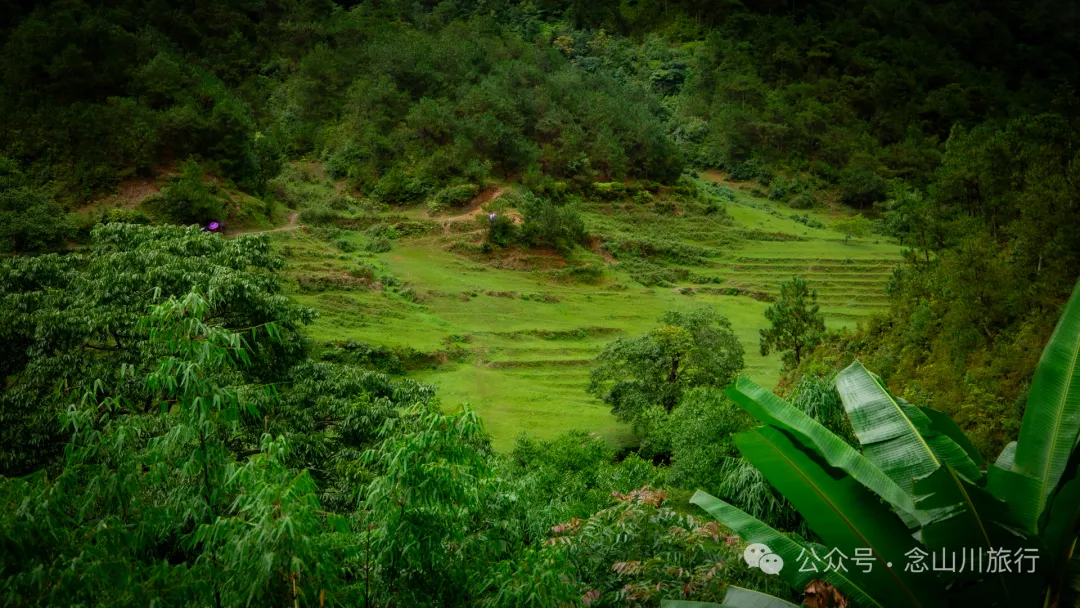
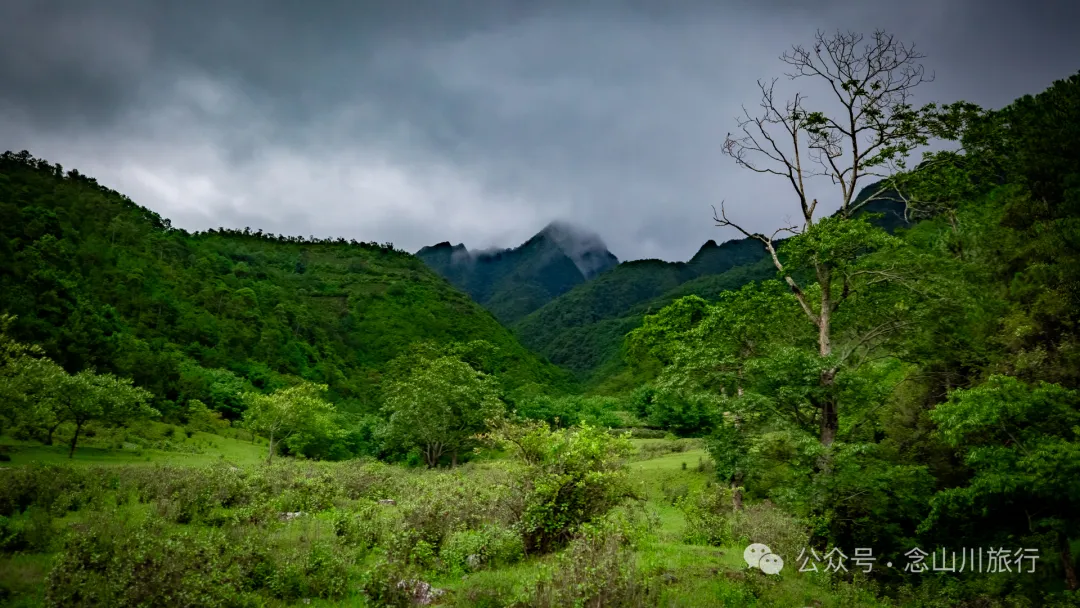
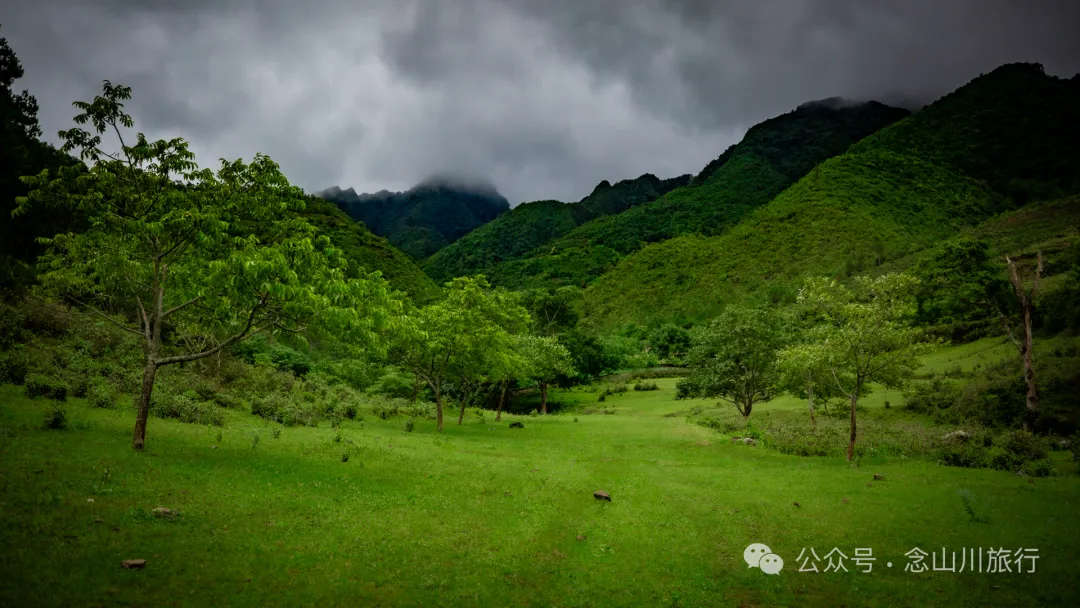
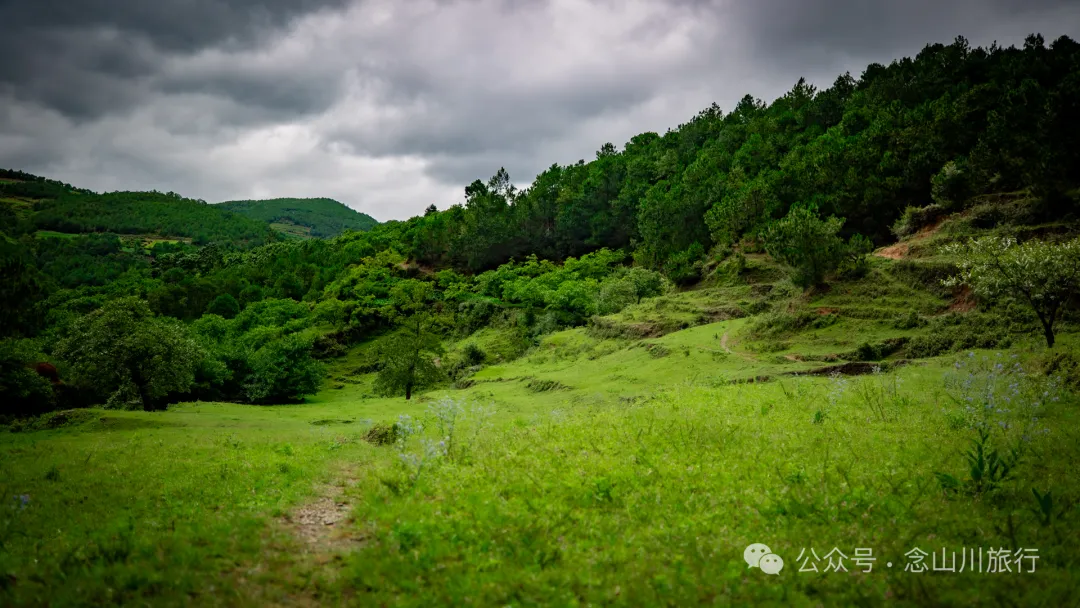
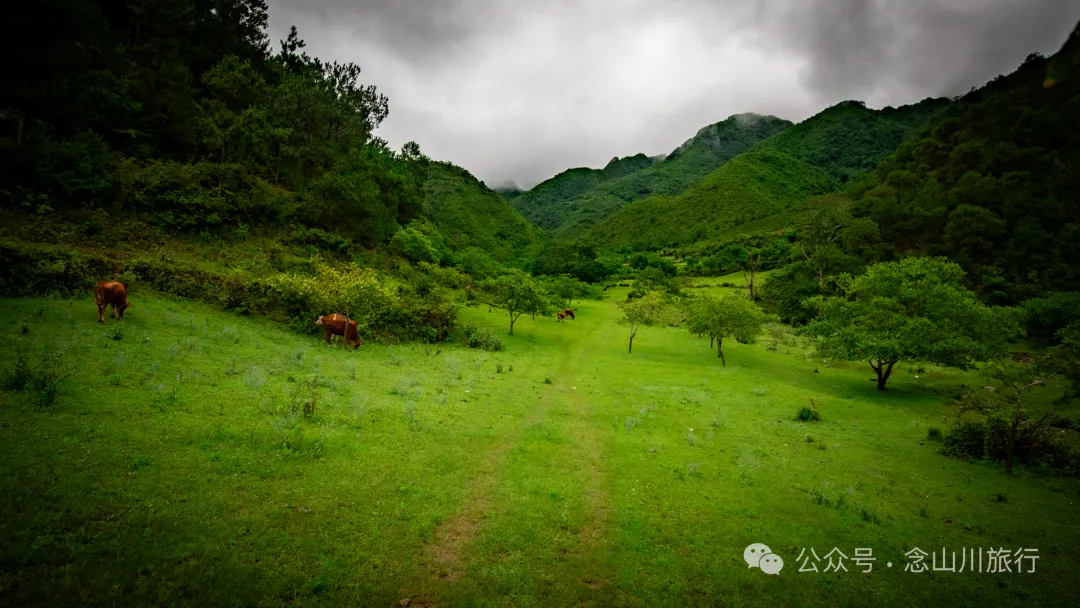
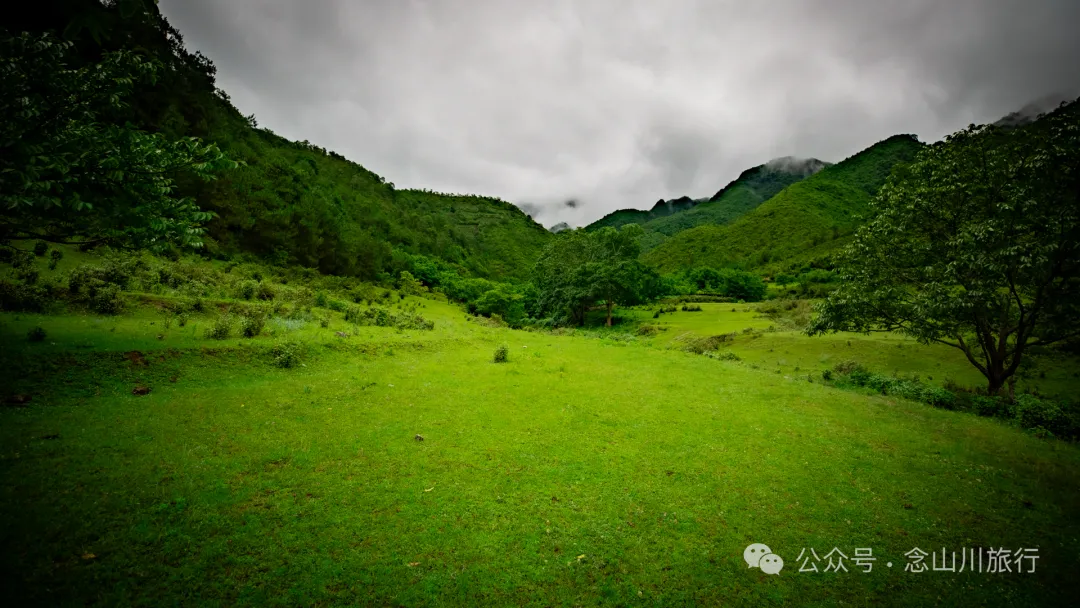
This alpine meadow, located between Mibila Village and Laobuju Village in Baohua Town, Nanjian County, is not marked on any map. The unique peak at the western end of the meadow, resembling a goddess's face looking up to the sky, remains unnamed. If not for a friend's tip, we might have missed this pristine, untouched alpine meadow.
Waking up in the morning to the sound of drizzling rain, the crisp bird calls from the distant forest were like a glimmer of light piercing through the shifting mist. The forest became their marketplace, not filled with the noise of trade, but with the sounds of birds playing, squabbling, and scolding. I pulled back a corner of the curtain and saw the mountains still shrouded in swiftly moving clouds, with no sign of clearing. The alpine meadow that had captured my heart was full of allure, unseen as yet. Ignoring the weather, I grabbed an umbrella and headed down to the village below.
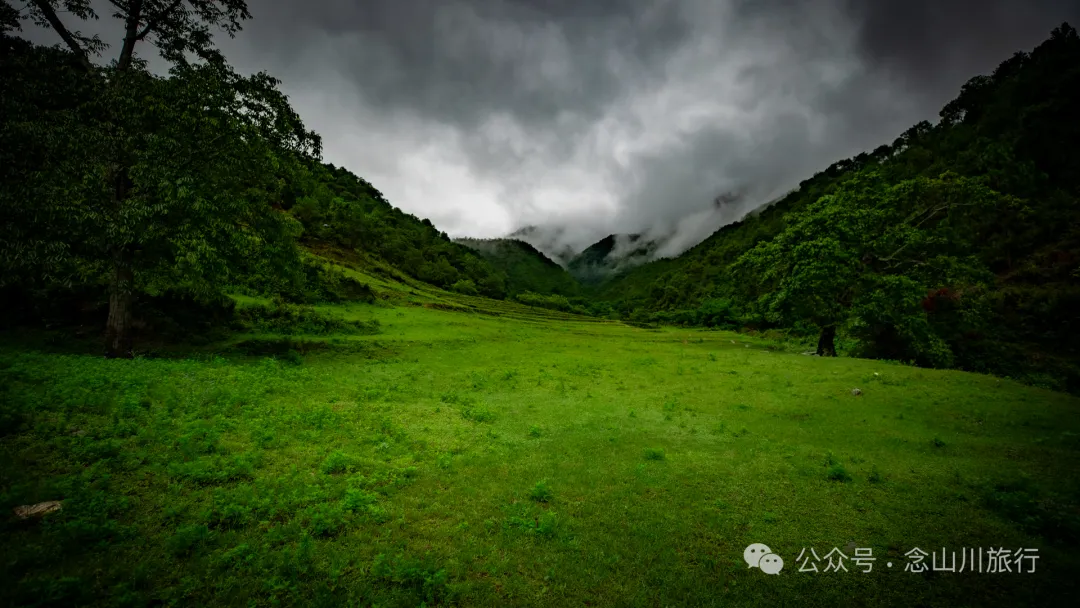
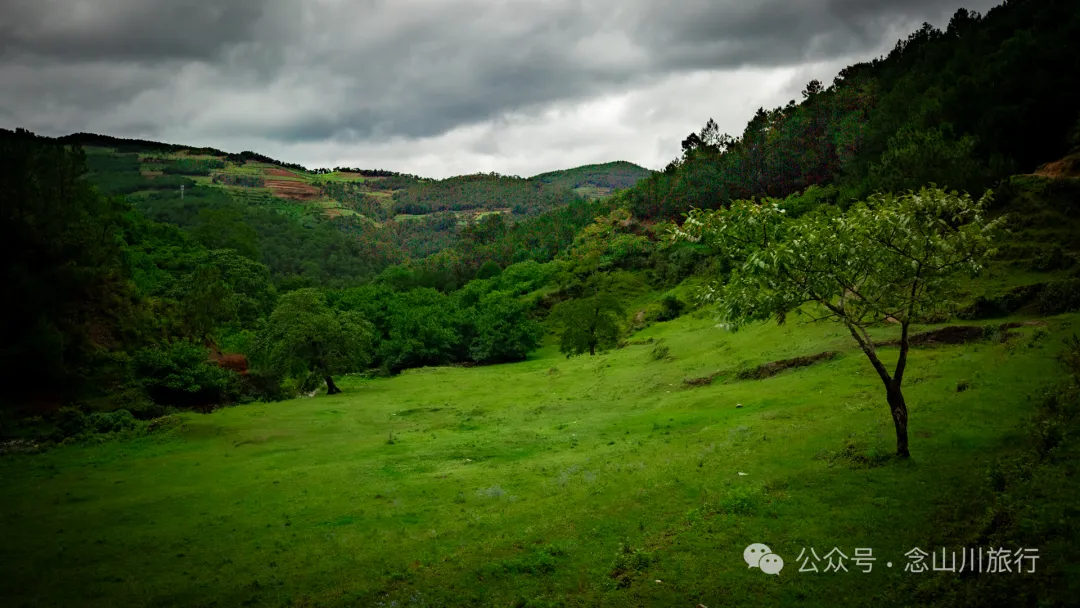
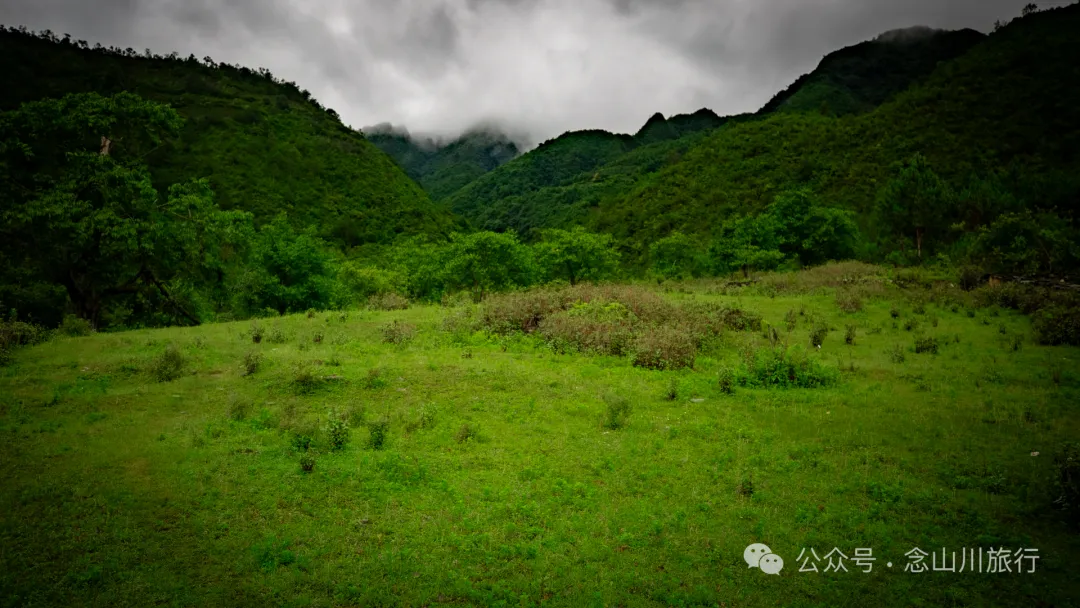
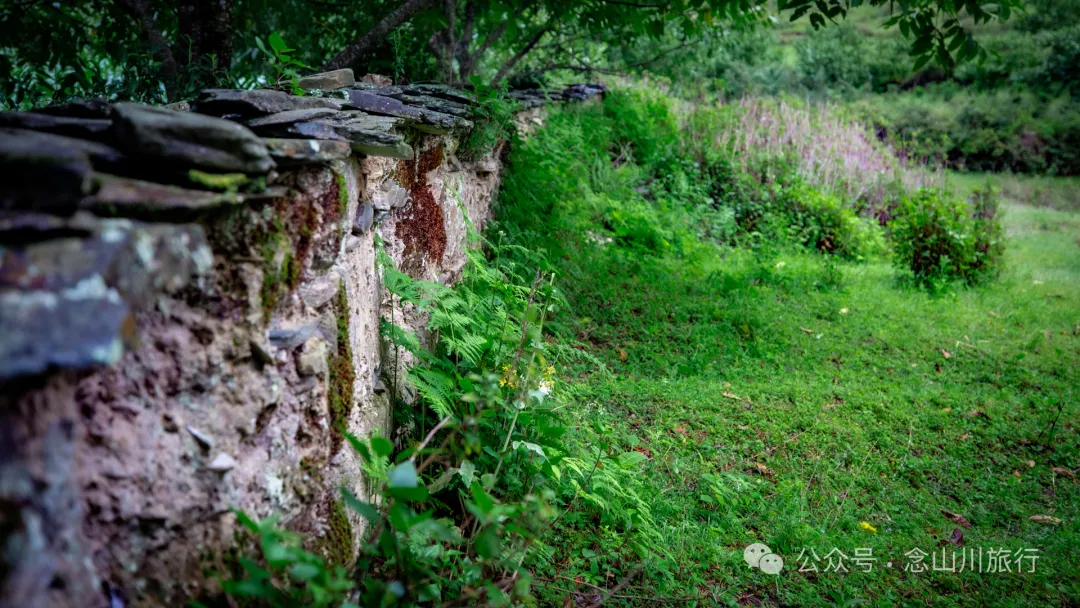
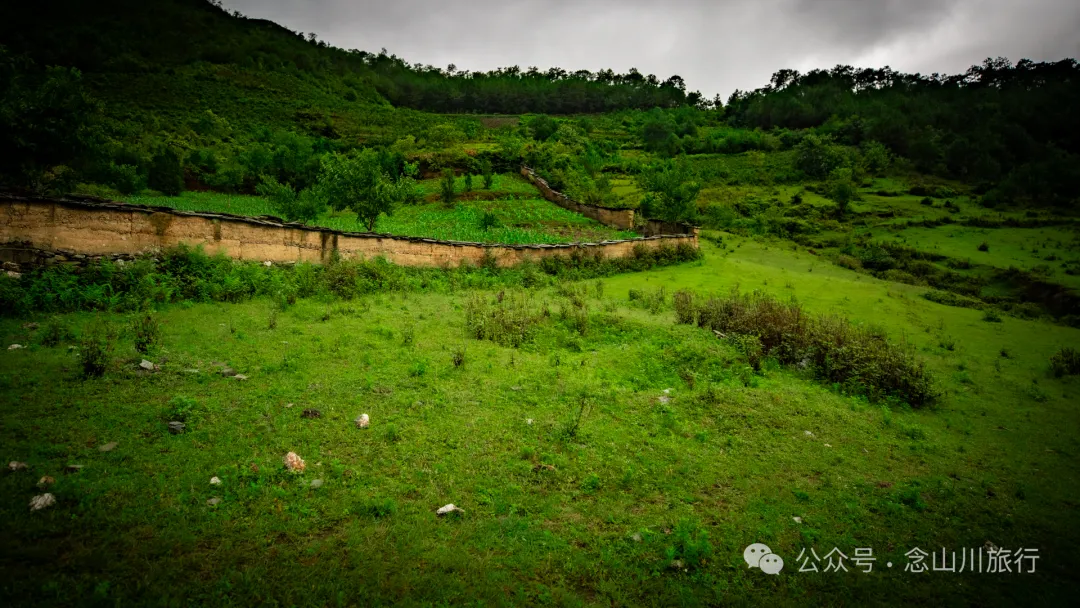
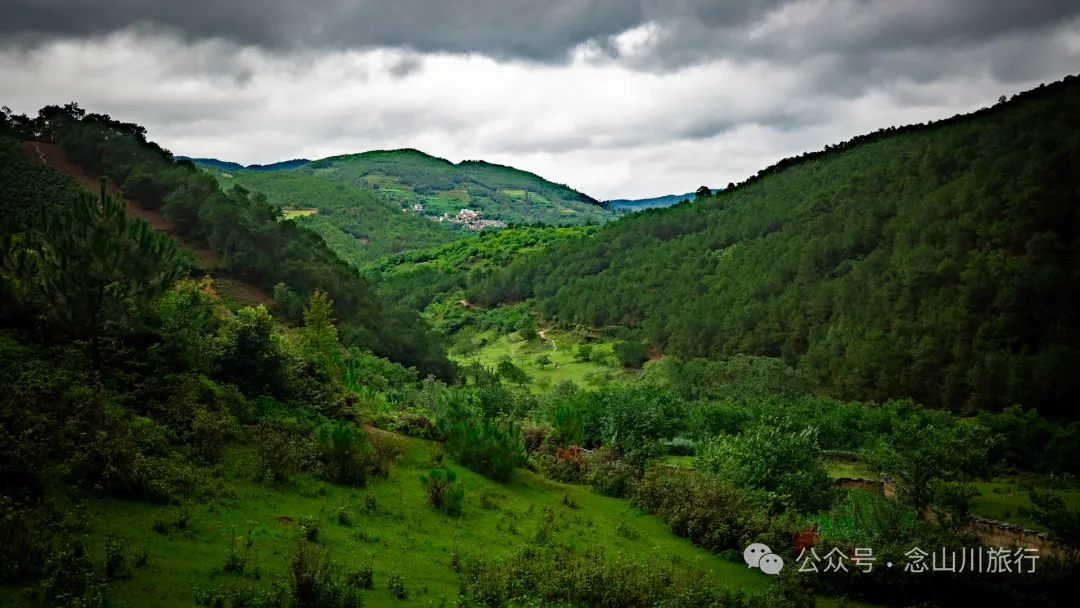
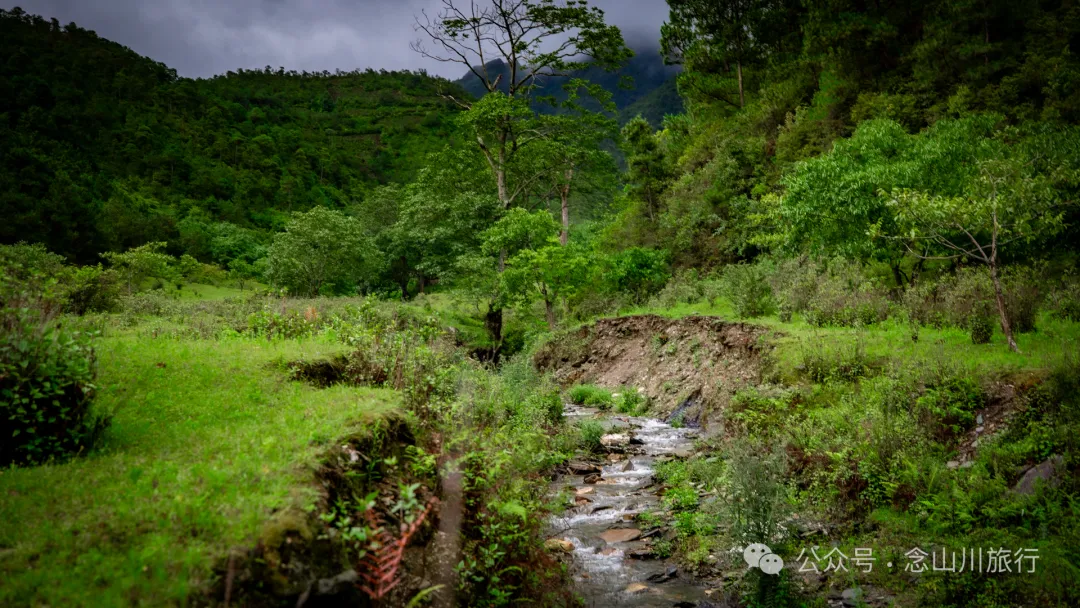
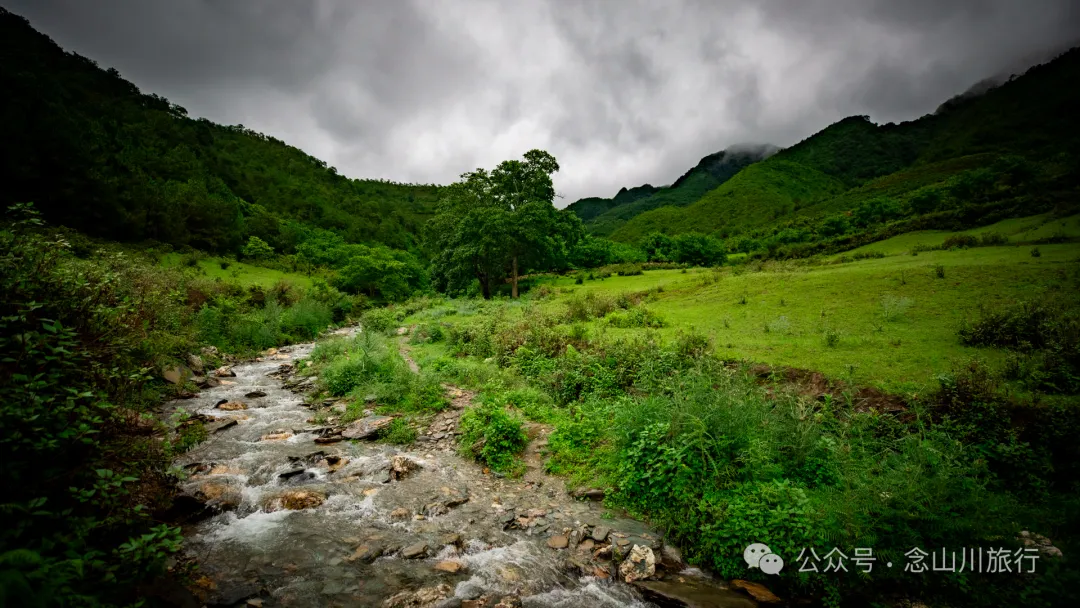
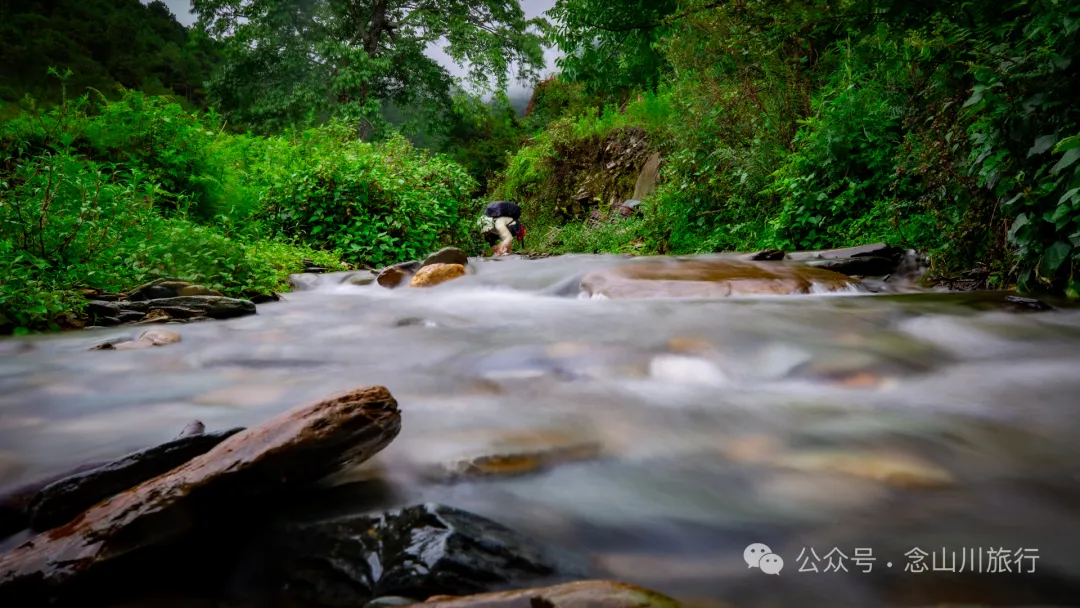
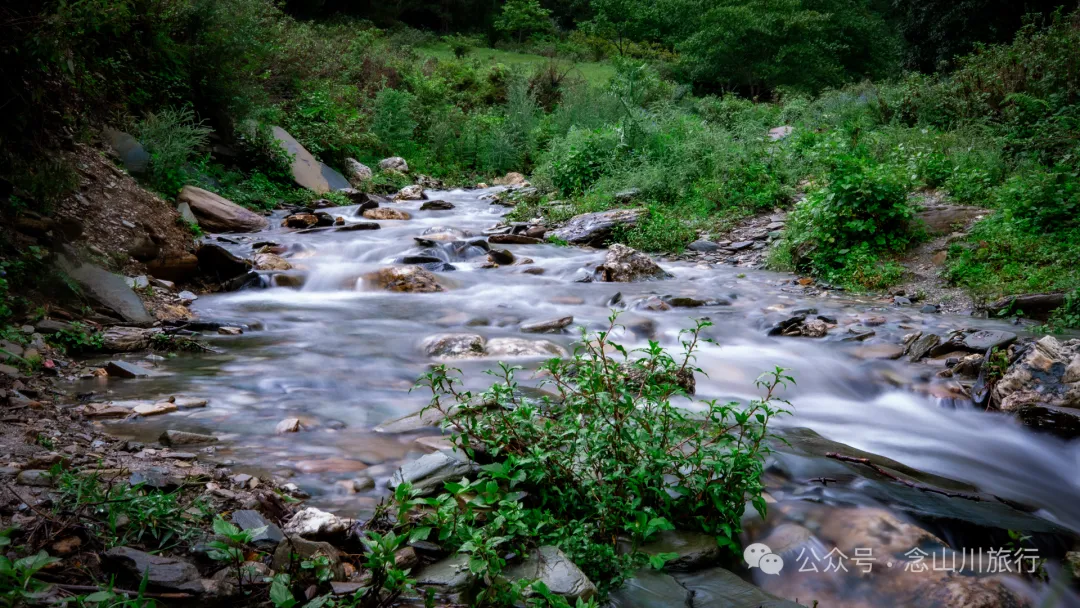
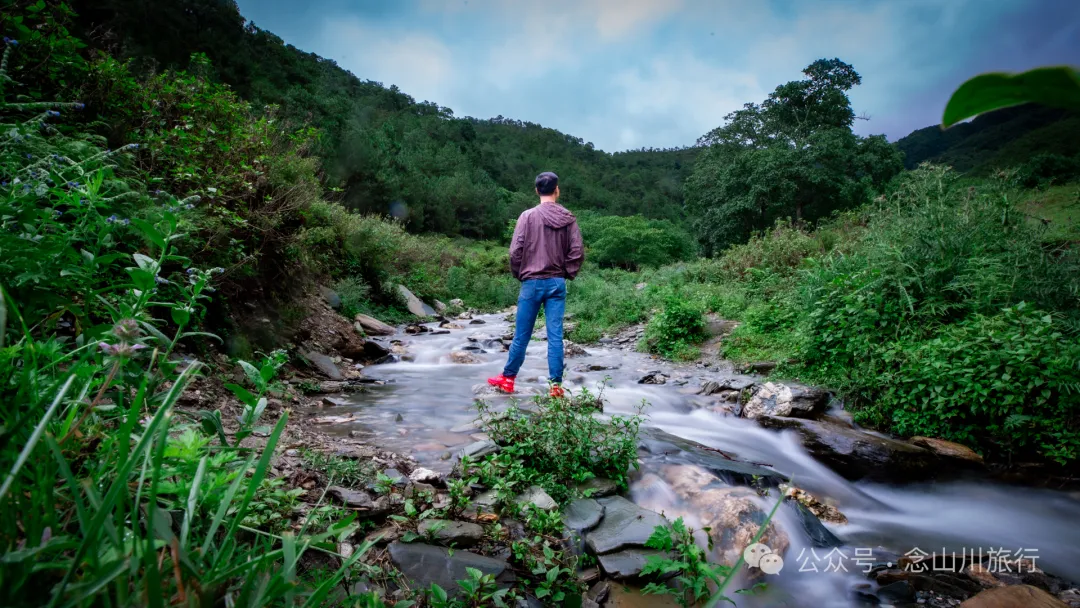
After walking in the rain for just over ten minutes, I spotted the alpine meadow hidden in a low valley from a hillside in Laobuju Village. Crossing another stream that rushed out from a hidden high mountain canyon to the west, I found myself in the heart of this dreamlike alpine meadow. Abundant rain fell from thousands of meters above, first on the peaks, then on the shoulders, slopes, and foothills of the mountains, and finally on the ground beneath my feet, even several meters deep into the earth, all saturated with moisture. Thanks to the plentiful rain, the vegetation here was much denser and lusher than what we had seen on nearby mountains, and the meadow was even more verdant and thick.
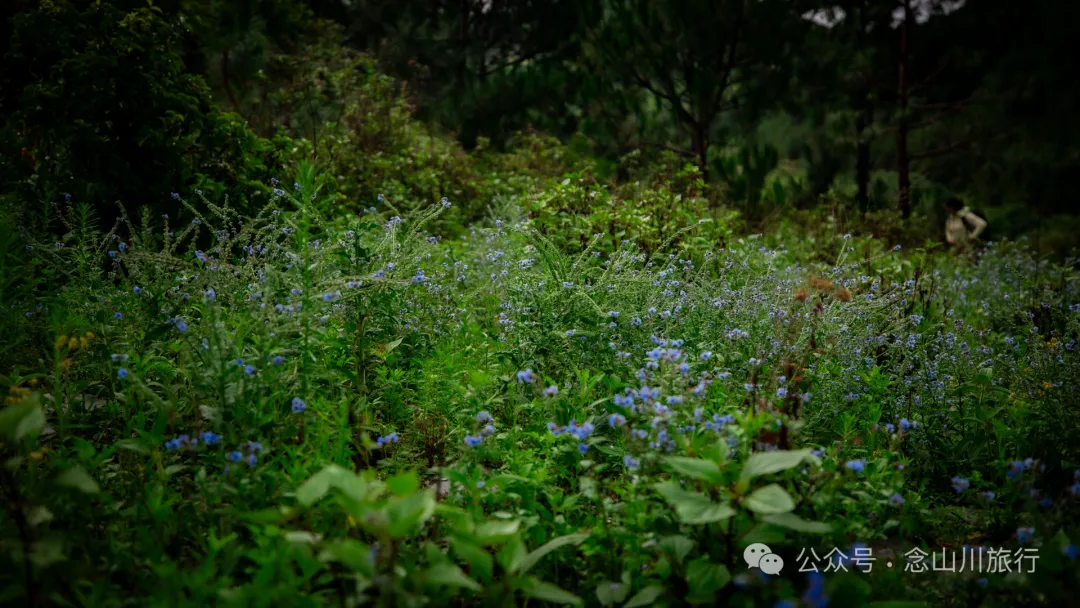
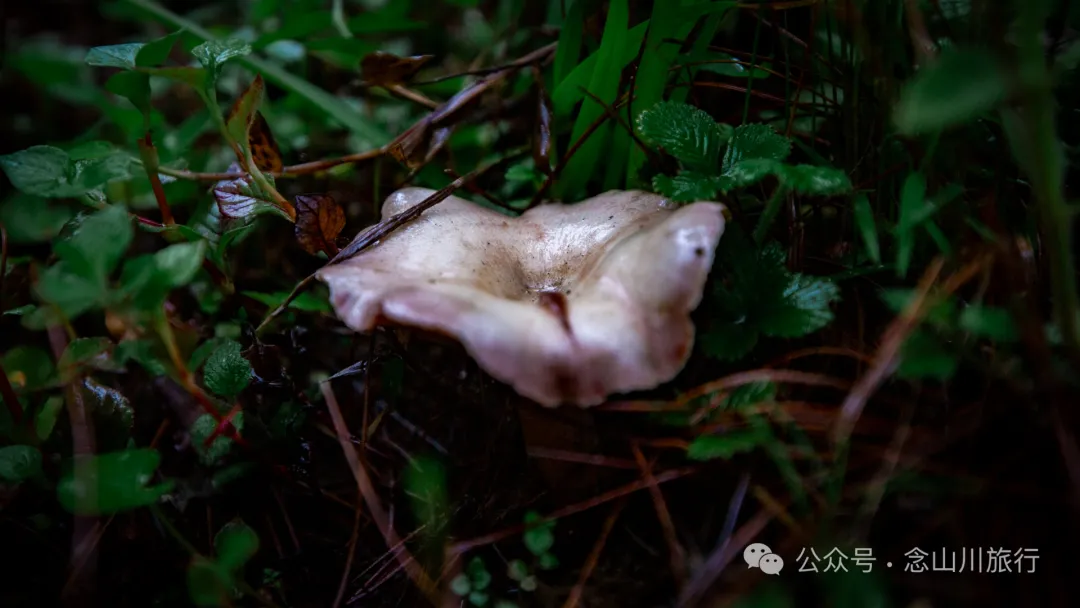
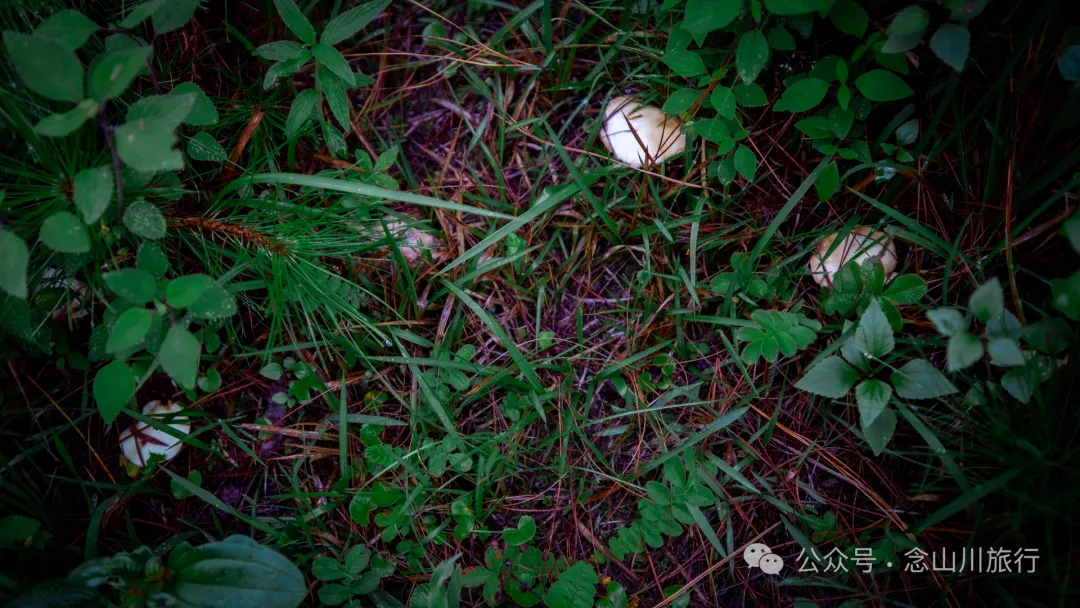
Blue cloth skirts bloomed on the meadow, with fruit like teapots hanging beneath the blue flowers, as if the dewdrops on the grass tips were sprinkled by them. This wild plant, with its dreamy blue flowers and uniquely shaped fruit, is also known as "inverted teapot." Some inverted teapots prefer solitude, growing by the water's edge, away from their kind and the meadow, like a lone falcon gliding across the sky. Most, however, like company, blooming in small groups in the center of the meadow, each group occupying its own little patch, so they don't form large expanses. Countless wild strawberries with tiny white flowers, whose fruit can be used to make wine, and grass jade plums, whose buds always face east, grow freely and bloom, typical of alpine meadows. The sparse walnut trees on the meadow act as umbrellas, sheltering these delicate little creatures. Perhaps at night, a muntjac or a lynx might emerge from the dense forest at the edge of the mountain to play and chase each other on this open, flat meadow. How fortunate it would be to witness such a magical scene under a starry, clear night sky.
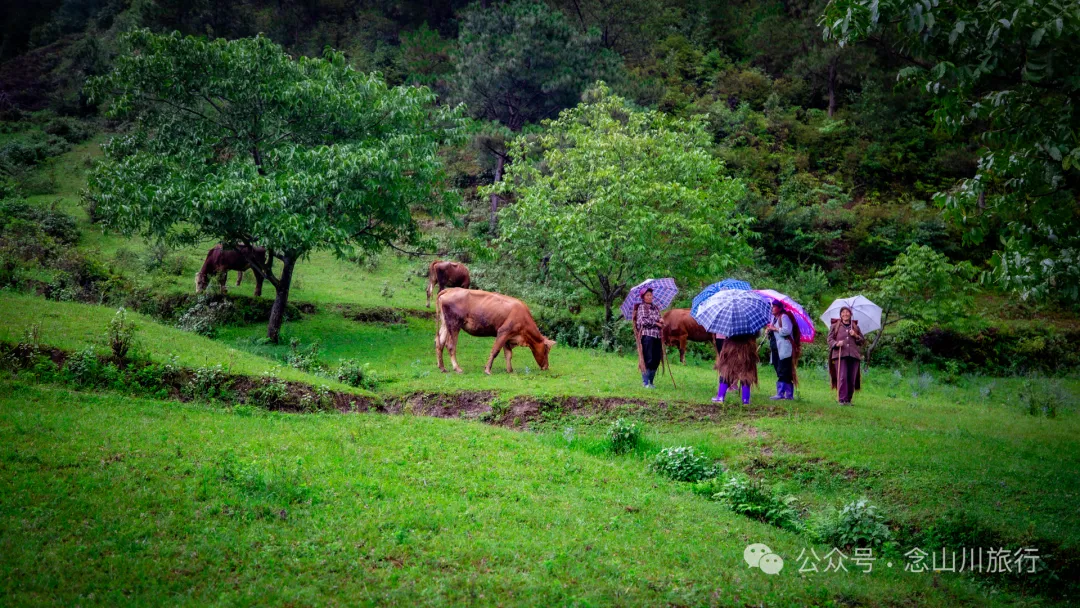
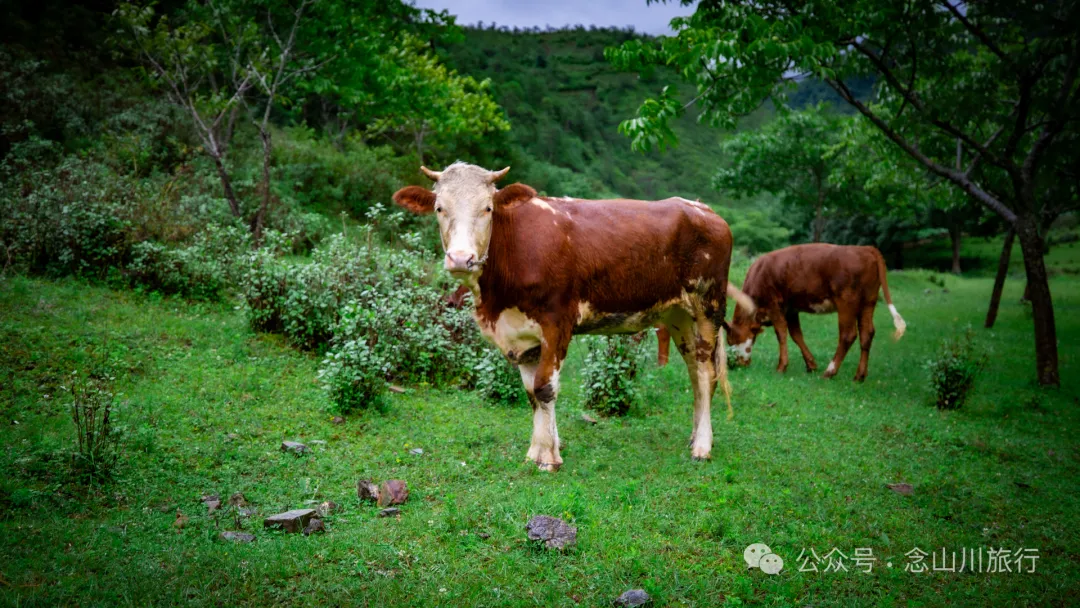
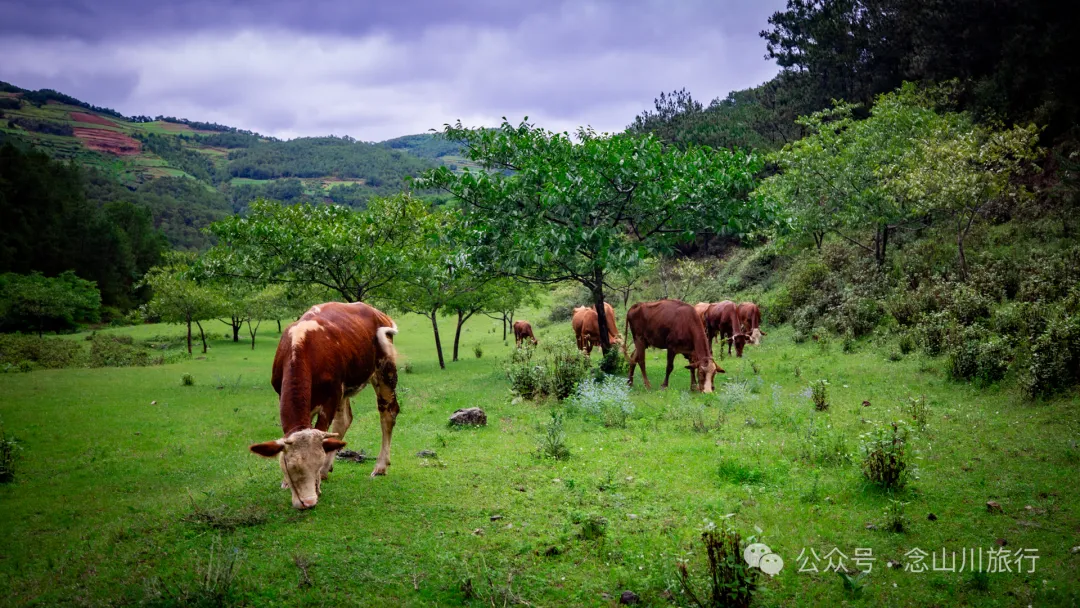
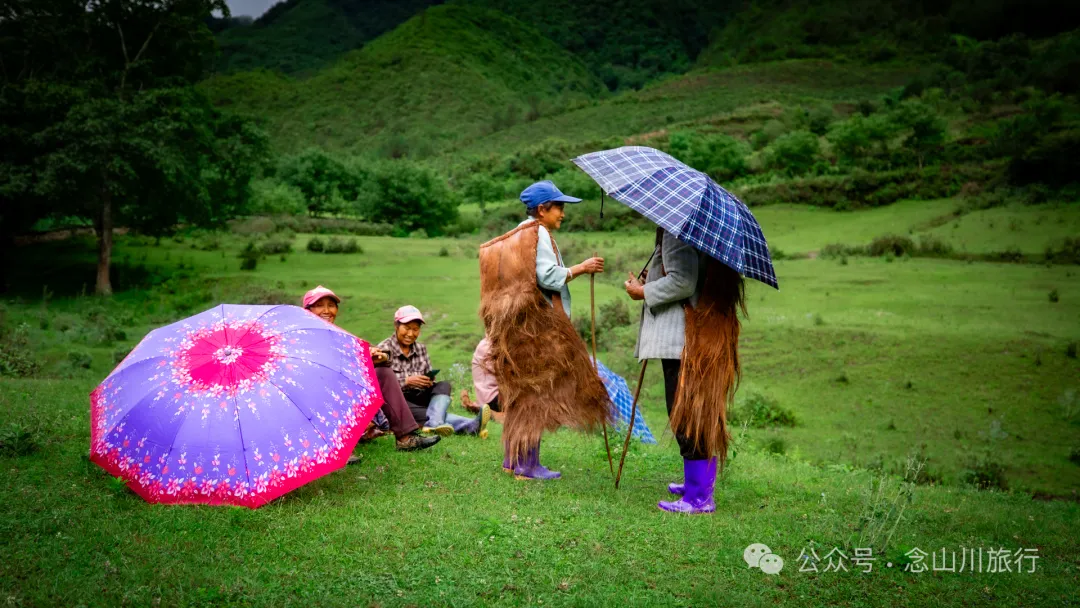
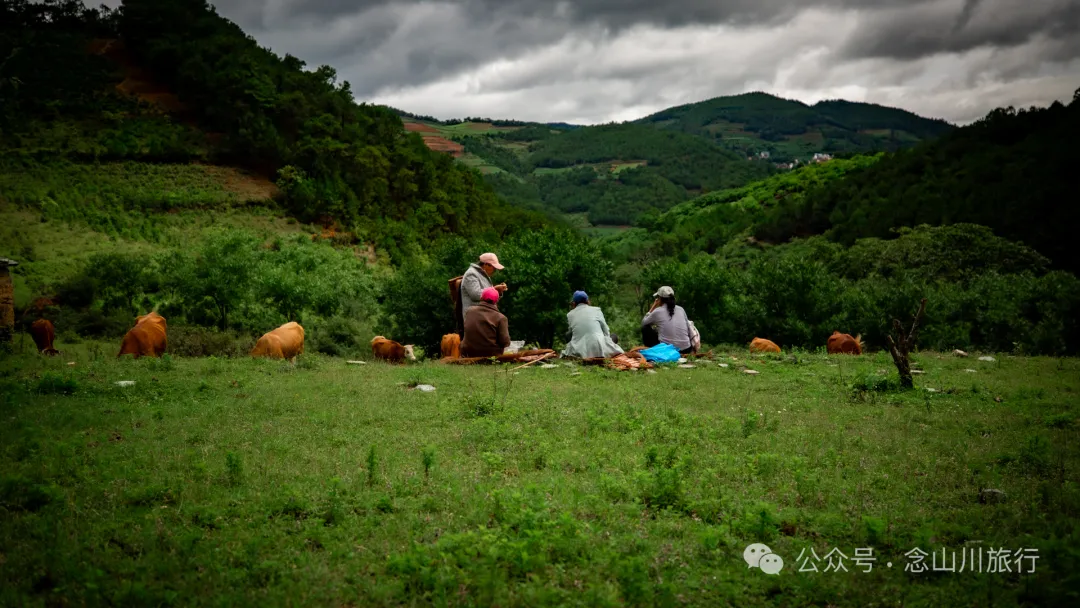
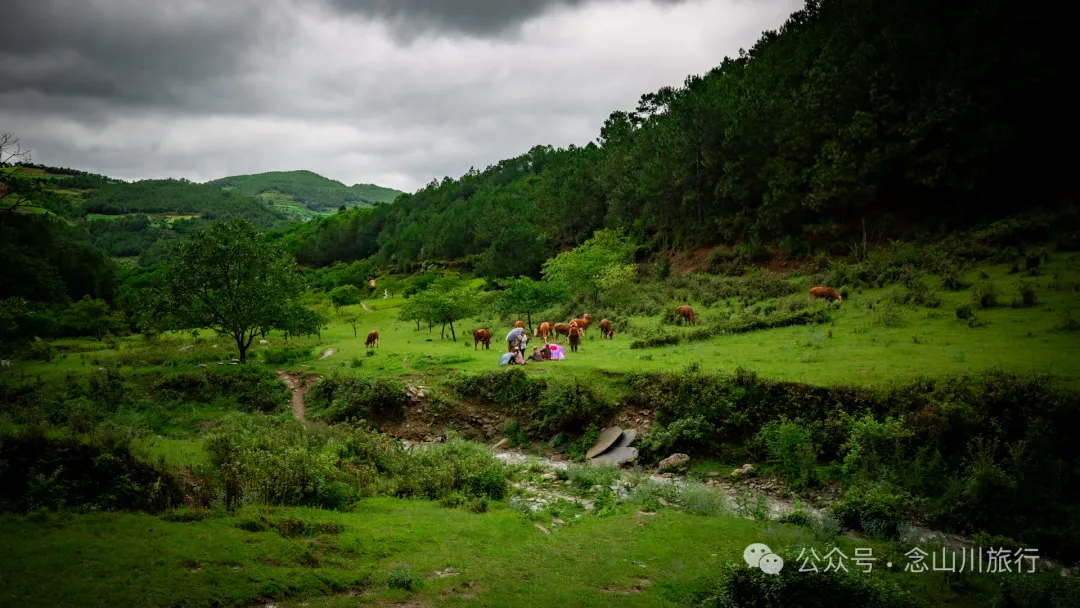
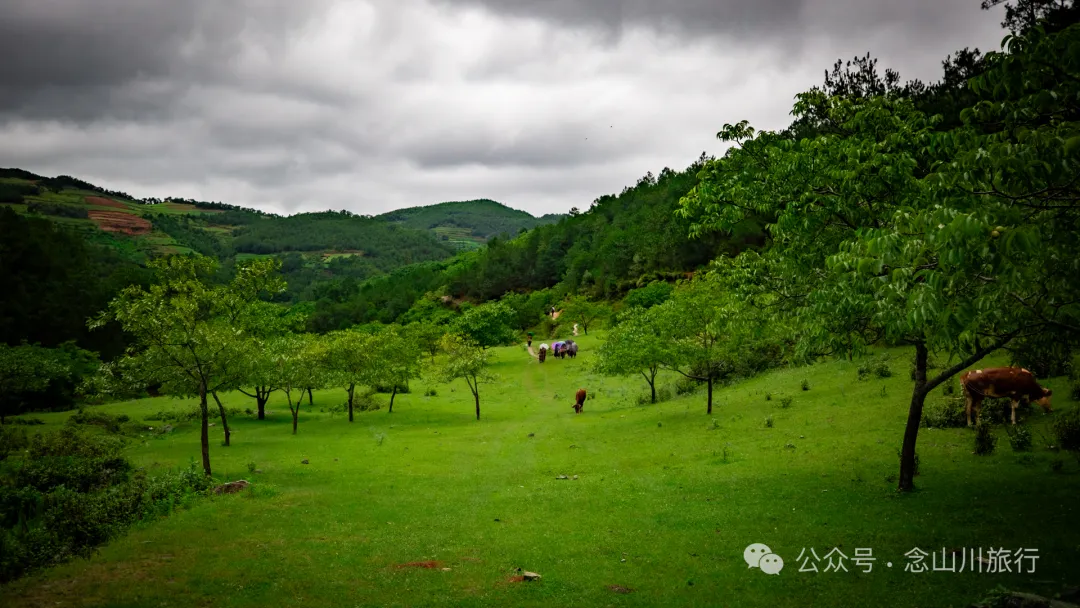
I wandered on this alpine meadow for an hour, and the rain lingered there for the same time. When I returned to the guesthouse and led Brother Long back to the meadow, the once empty and vast meadow was now dotted with many yellow cattle and villagers from Mibila Village tending them. We first encountered five or six women herding cattle together. When they saw Brother Long raise his camera, they shyly turned away, laughing and saying not to take pictures, that they didn't look good. I asked how many cattle each family had. One woman counted on her fingers: one, two, three, four, five, then looked around and said almost every family had one, her earnest expression mixed with a hint of playfulness, as if she were counting not the cattle but herself and her companions. They wore homemade straw rain capes and held umbrellas, standing in a circle on the meadow chatting. When the rain stopped, they took off their capes, laid them on the grass, and sat down to embroider flowers and insoles, following the cattle wherever they went. When we reached the far edge of the meadow and looked back, they looked like colorful flowers blooming in nature. More and more people are fleeing the hustle and bustle of the city, yearning for such pure alpine meadows, bringing camping gear to stay for three to five days without any outside interference. This is because here, there is not only natural beauty, but also unadorned truth and sincere kindness. Even the villagers who have lived here for years are reluctant to leave.