
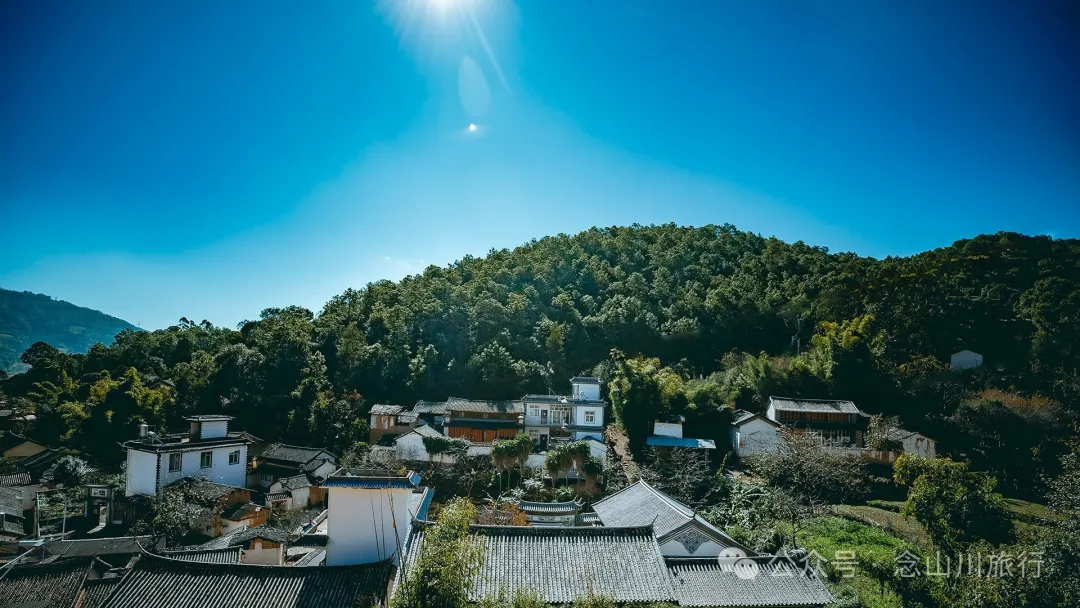
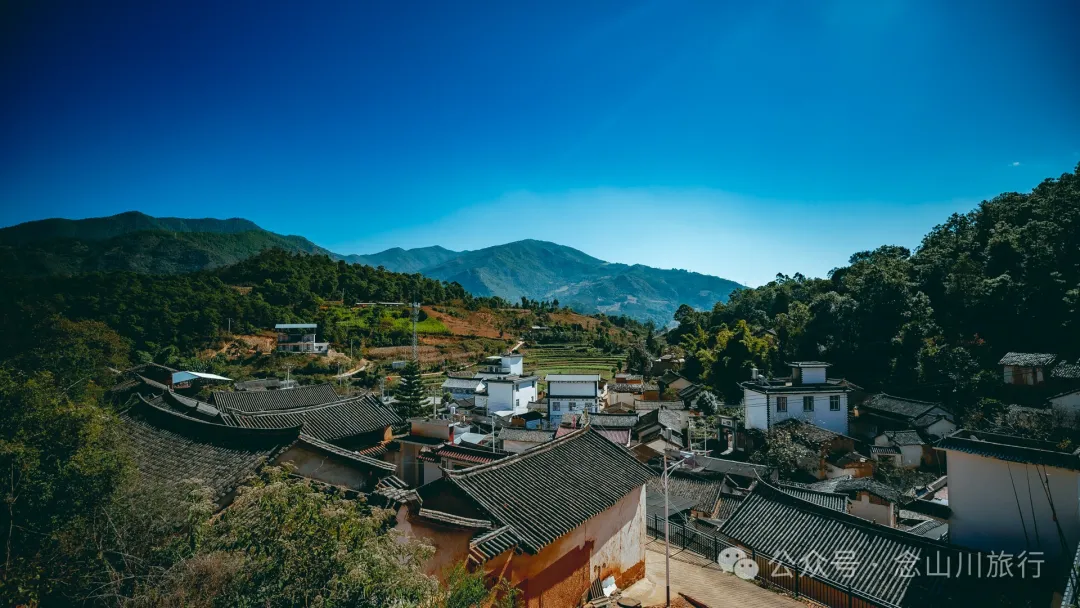
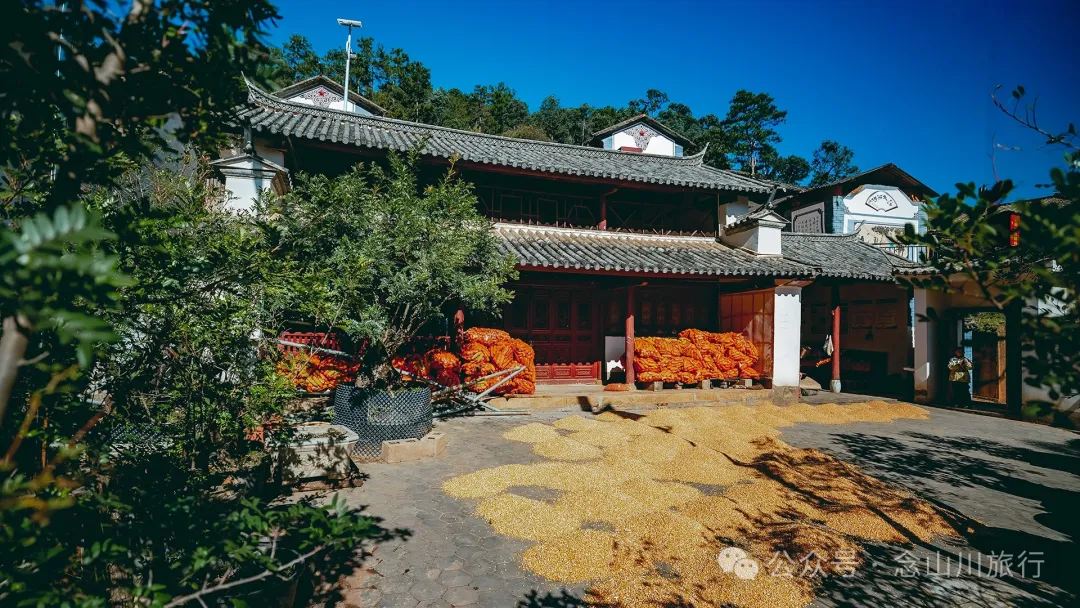
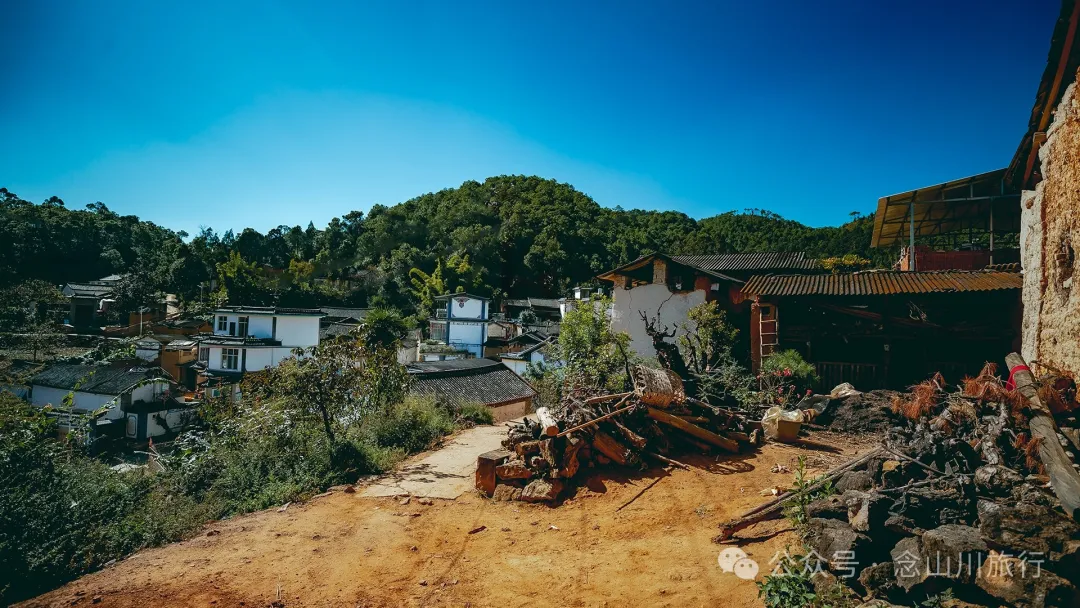
To photograph Fengchuan Tower, which is as famous as the Three Pagodas of Dali, we followed a concrete road to an unexpected small village—Wengjiayakou Village. It is truly a tiny village, with only about 30 households. Nestled in a low valley surrounded by mountains, the entrance is a pass where strong winds often blow in during winter.
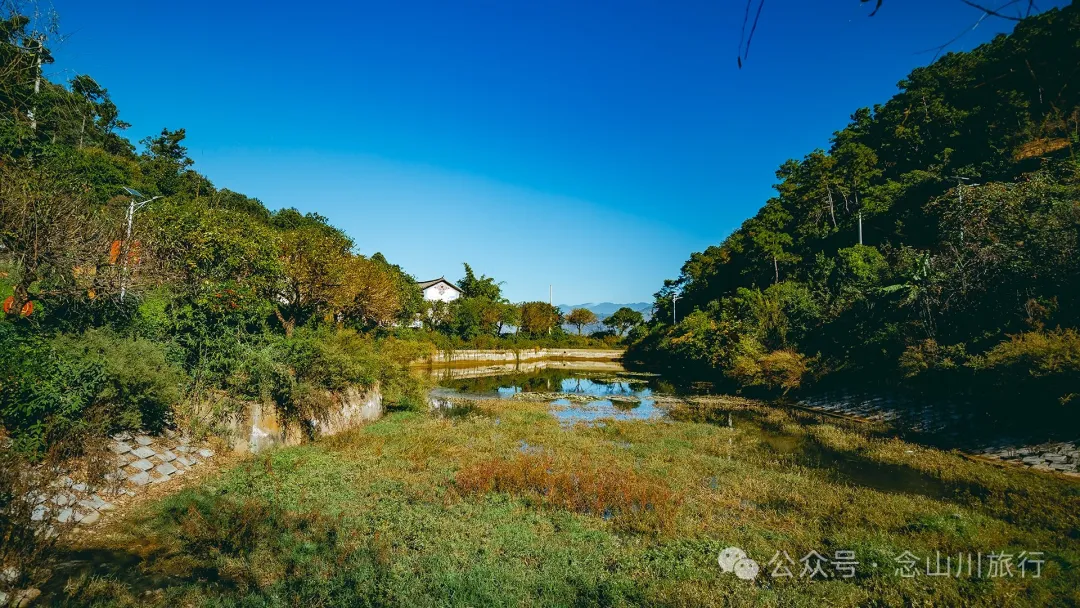
At the village entrance, there is a pond, likely man-made, as natural ponds are rare in mountainous and water-scarce Weishan. The water was shallow and overgrown with weeds. Sitting in the pavilion by the pond, the wind blew from beyond the mountains, carrying a faint scent of water plants. The winter afternoon sun seemed to brew the mellow fragrance of old times, intoxicating. At the northeast corner of the pond, near the mountain, a narrow concrete path leads to the top of the mountain where Fengchuan Tower stands, about a ten-minute walk.
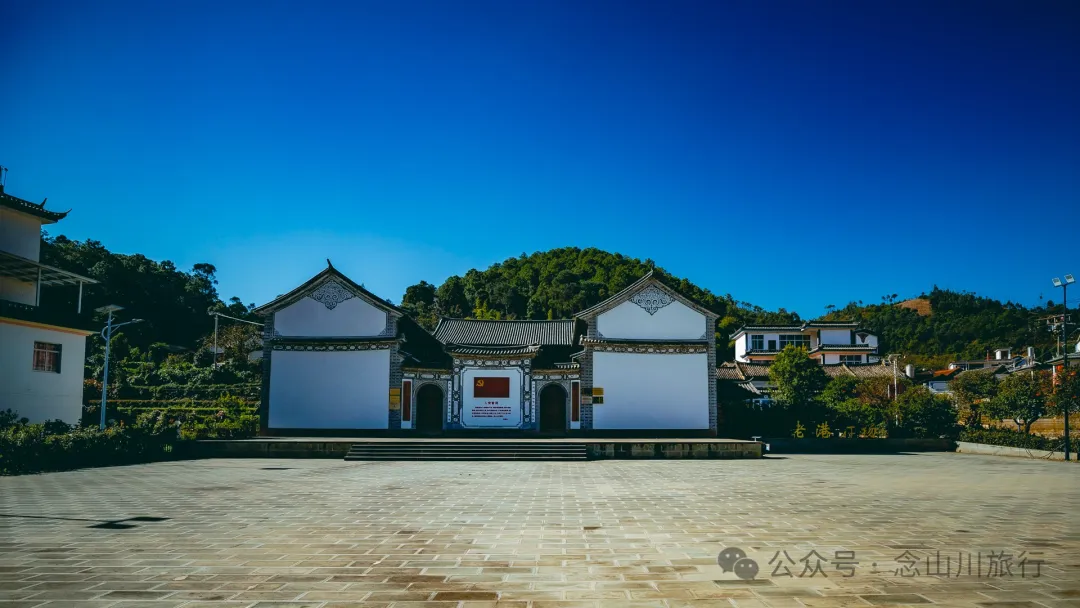
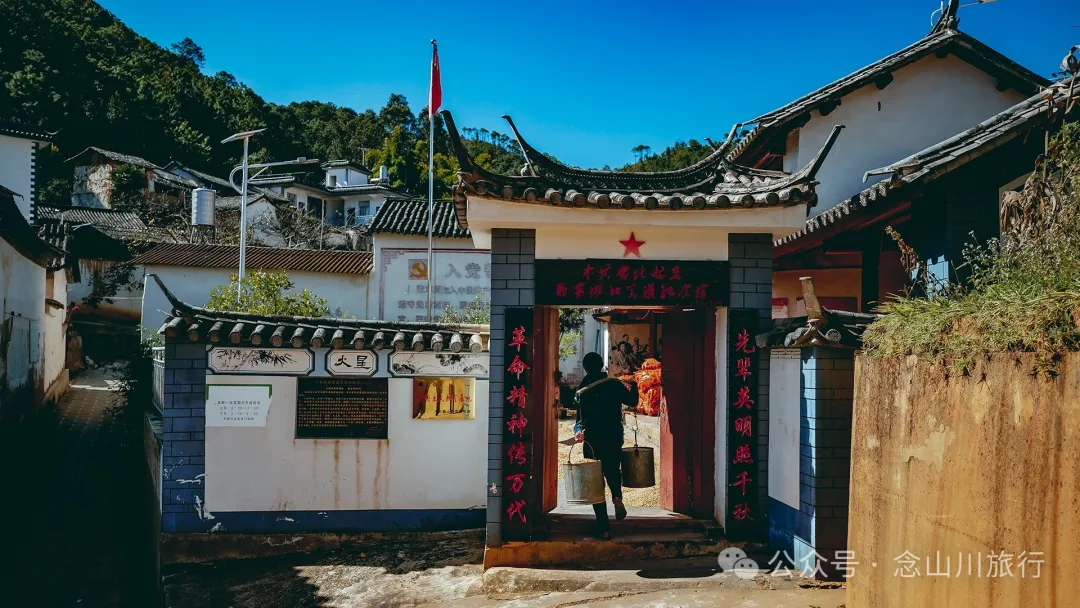
In the village, there is a large square with a revolutionary memorial hall standing prominently. Villagers said the hall is usually locked, but during events and anniversaries, many people come to visit, and many government meetings are held here. We couldn't enter the memorial hall, but from a nearby farmhouse courtyard—the former meeting site—we learned about the village's revolutionary history through a bulletin board. The courtyard is now used by villagers for drying grain.
On November 21, 1949, the Menghua (old name for Weishan) County Party Committee secretly held an enlarged meeting in Wengjiayakou to discuss forming armed forces under the Party's leadership and launching revolutionary struggles. Subsequently, the Changshan Guerrilla Unit and the Wuliang Armed Working Team were formed. Under the leadership of the Communist Party of China, the outstanding sons and daughters of Menghua made significant contributions to the victory of the revolution. In July 2009, the Wengjiayakou Meeting Memorial Hall (former site) was designated as a county-level patriotic education base. On June 29, 2021, the newly rebuilt Wengjiayakou Revolutionary Memorial Hall opened, and it was rated as a 2021 Dali Prefecture Social Science Popularization Demonstration Base and selected as a prefecture-level patriotic education base.
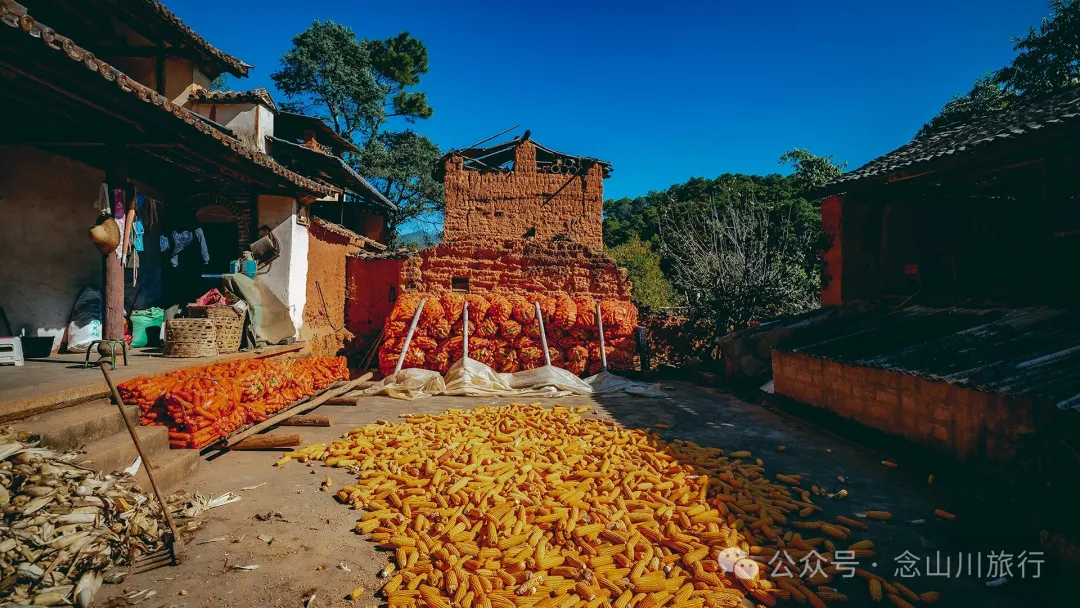
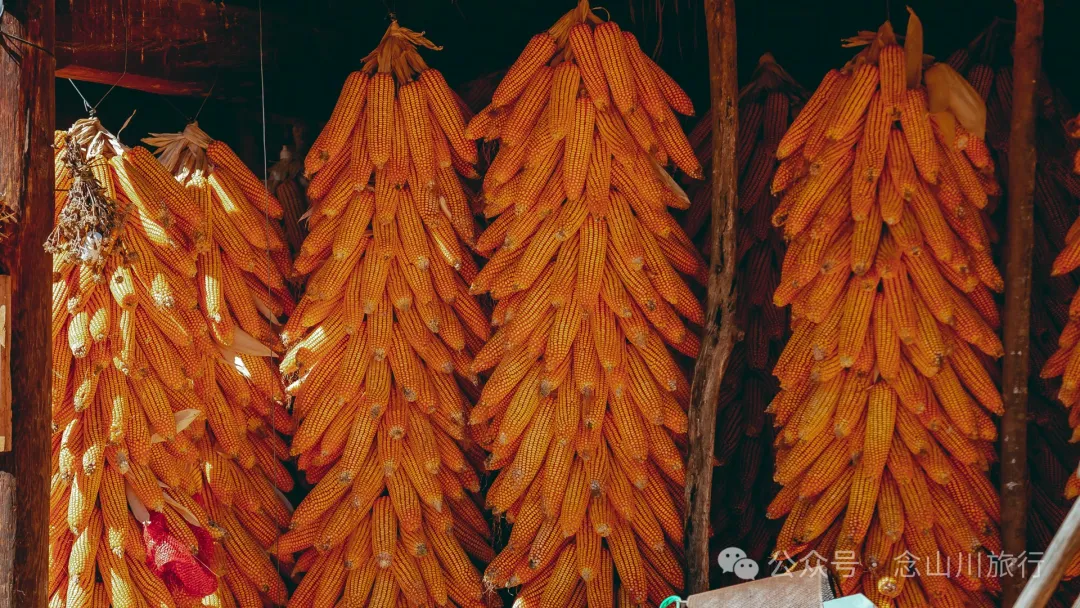
As we walked through the village, an uncle was sitting in his yard shucking corn. Seeing us approaching, he quickly stood up, brought out some stools, and warmly invited us to sit. During our chat, we learned that he lives alone in the village; his children and grandchildren work far away and only return for the New Year. He said he is over seventy, but he is full of energy. Apart from the deep wrinkles carved by time, he shows no signs of aging, and his speech and movements are vigorous, surpassing many younger people.
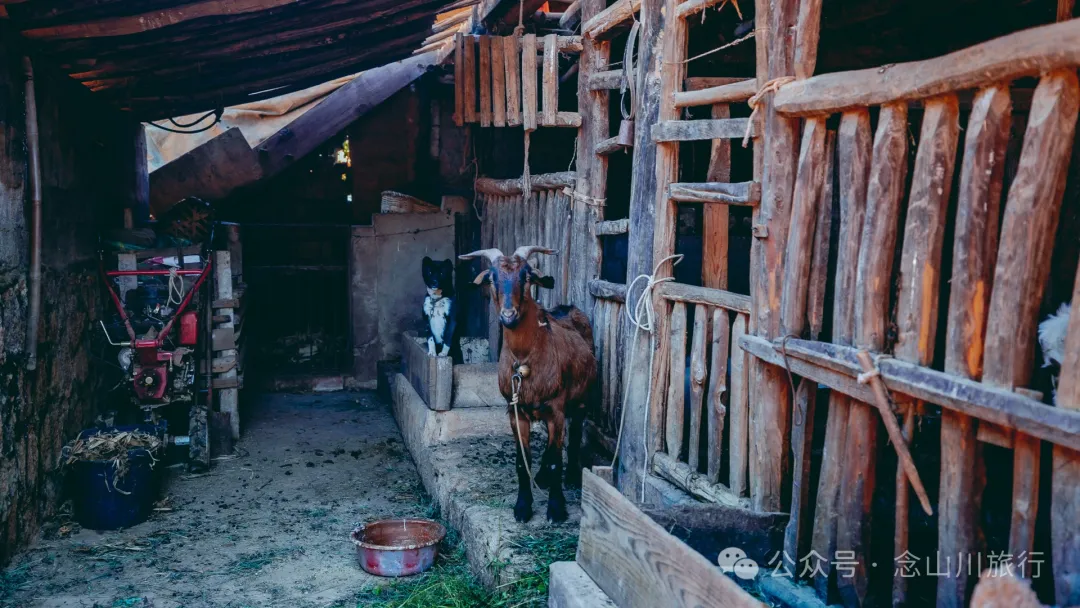
The uncle said that living alone all year, if he didn't do some farm work, he would feel uncomfortable and miserable. The farm work he mentioned, in our view, far exceeds our own labor: raising over a dozen pigs, a flock of goats, planting dozens of acres of corn, and an unknown number of chickens. He said only when he has work to do does he feel grounded, and life has weight and hope.
We have visited many villages, but rarely have we had the chance to deeply understand the specific lives of the farmers, let alone each person's unique life experiences. I think the people who stay in these villages probably live similarly to this uncle, but each has their own unique history, just as this village has its own distinct history different from others.
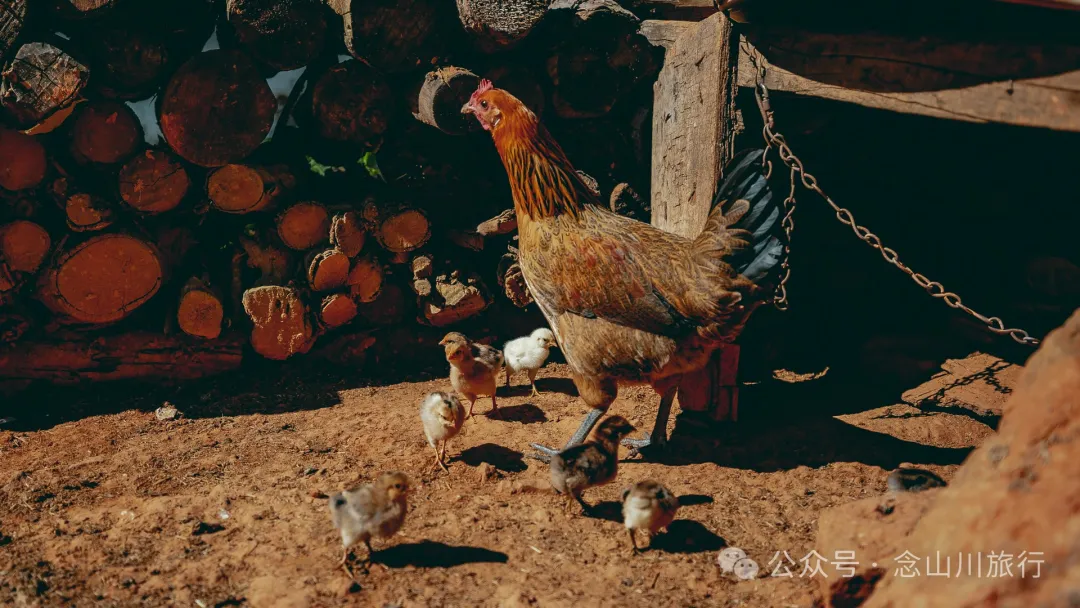
Our sudden intrusion disrupted the leisurely pace of the hens and chicks. They panicked, looking around for shelter, and finally found what they thought was a safe spot in front of the doghouse outside the yard. The black dog lying in the darkness didn't bark, but it bites.
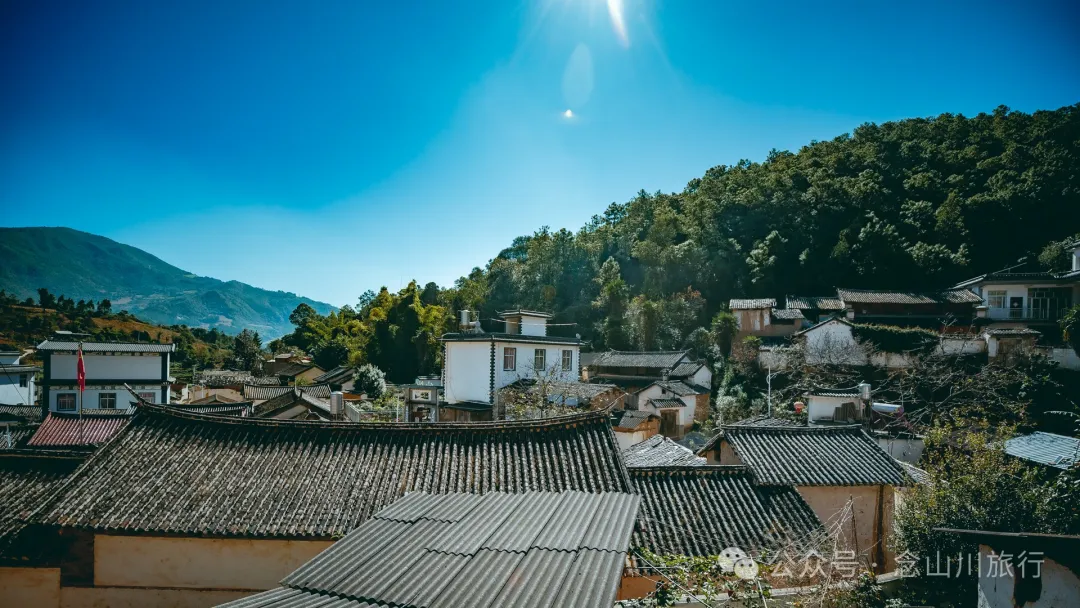
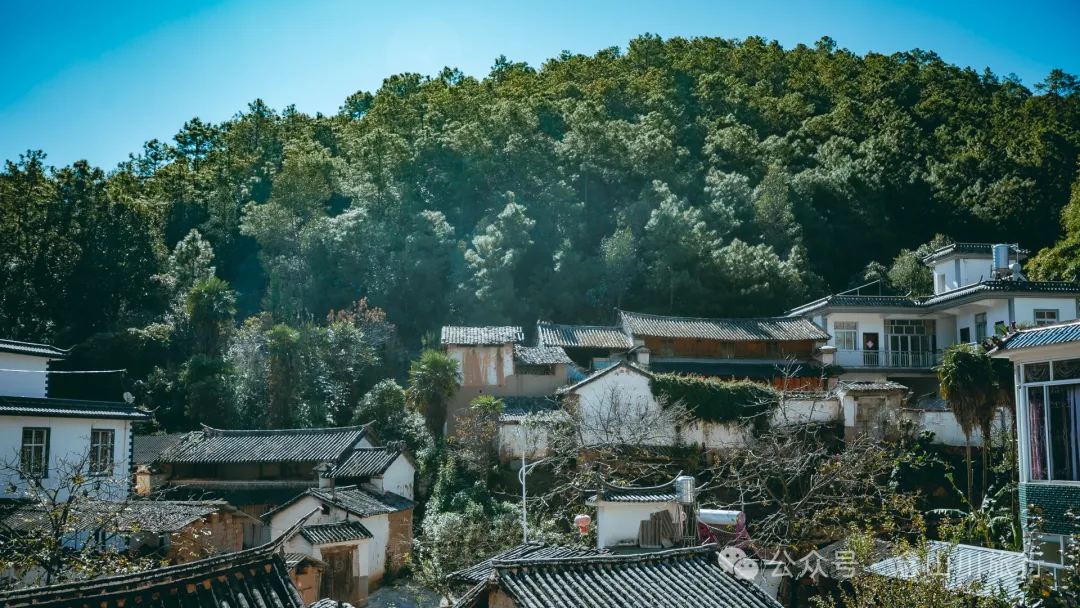
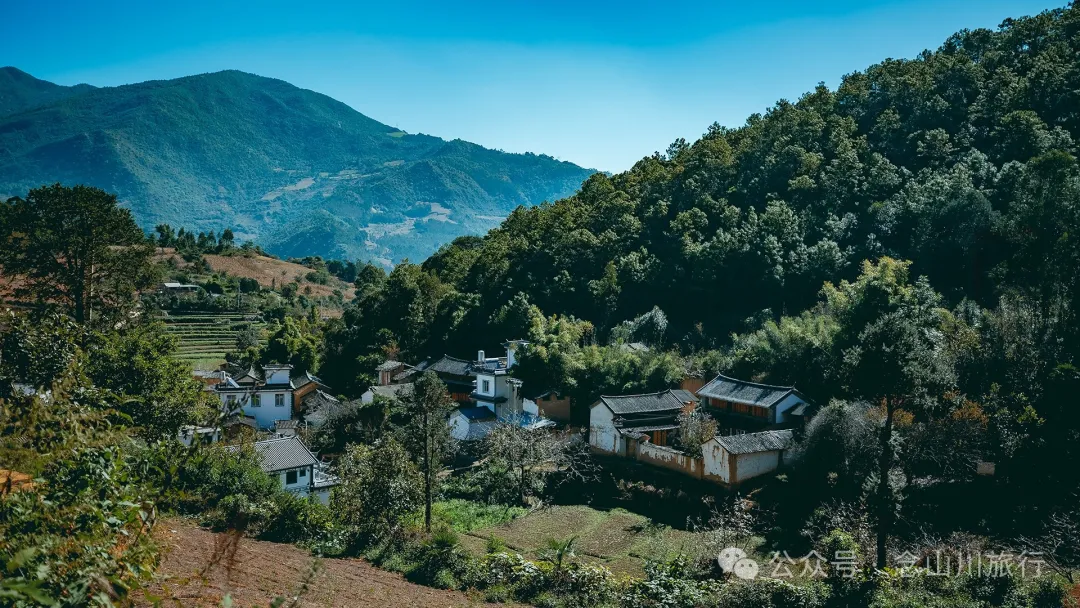
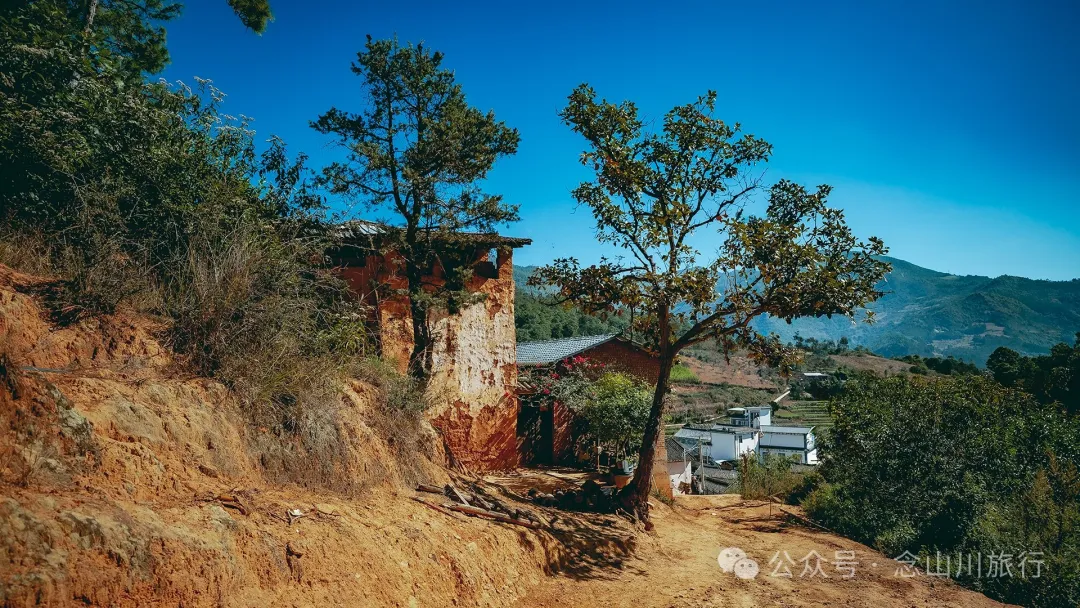
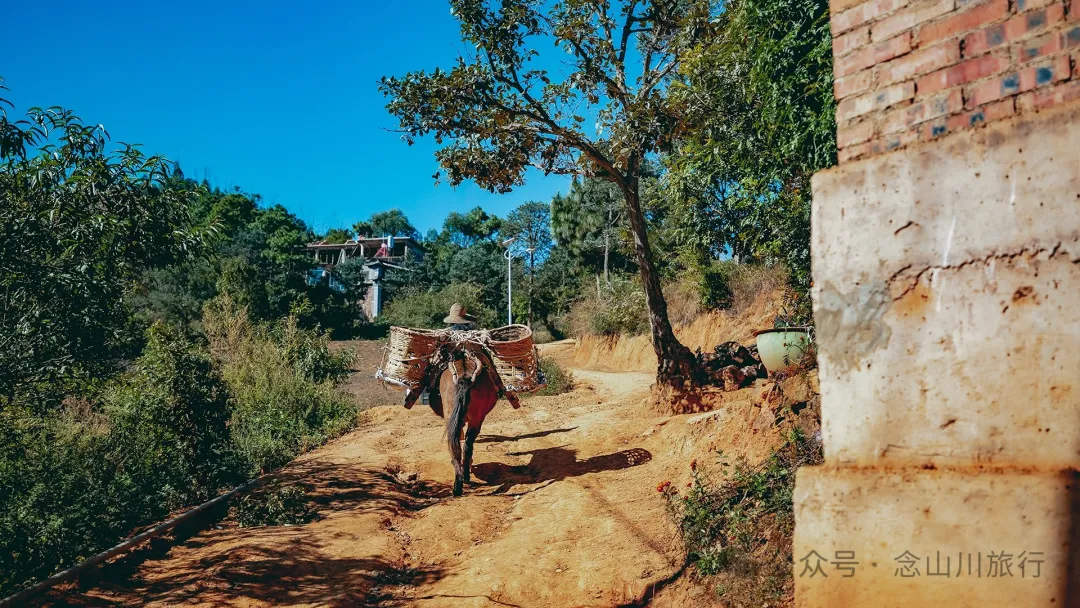
We met a woman heading into the mountains to transport corn. She said she had to walk a long mountain path to reach her cornfield. We saw her going into the mountains before noon, and two or three hours later, we saw her returning on the concrete road, leading a mule carrying two baskets of corn.
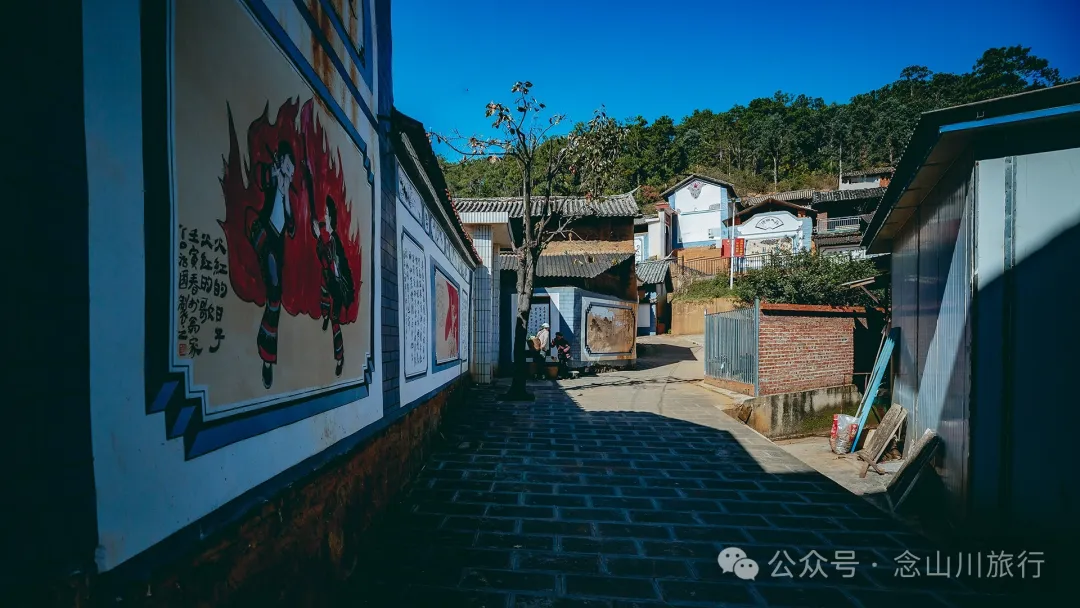
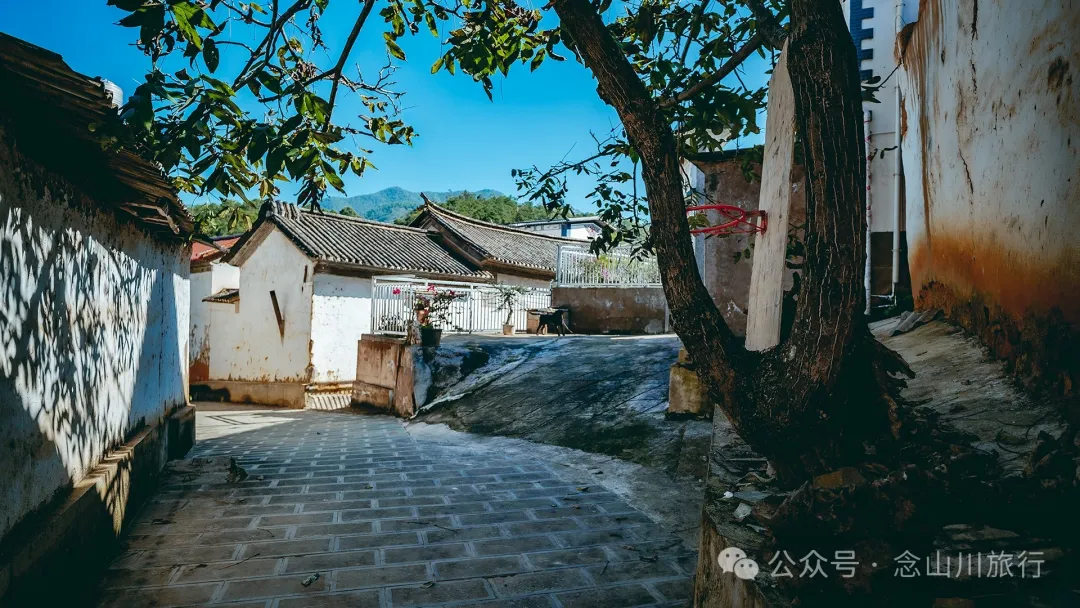
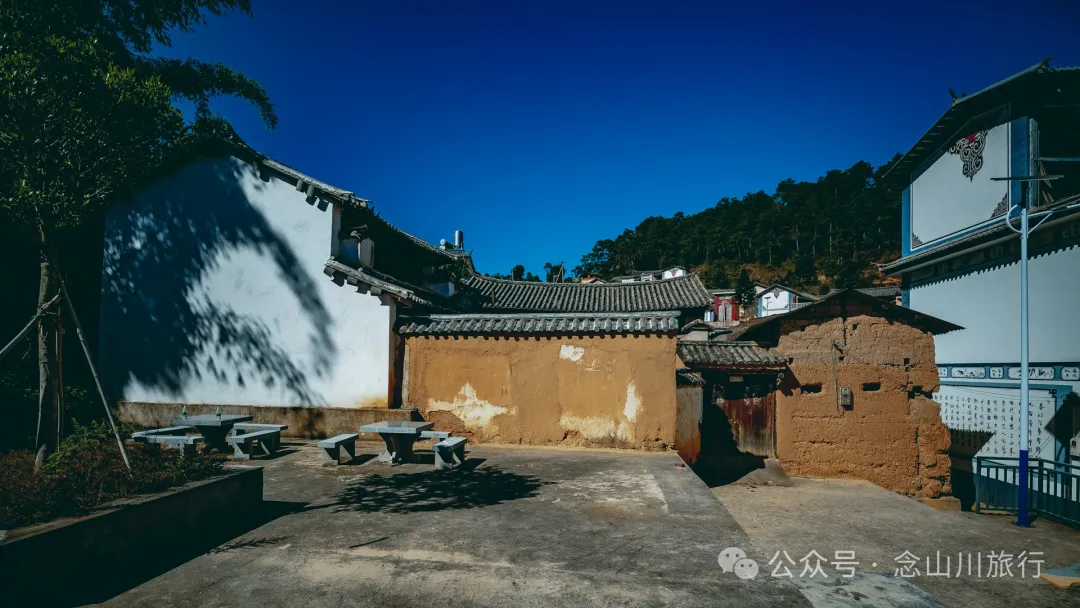
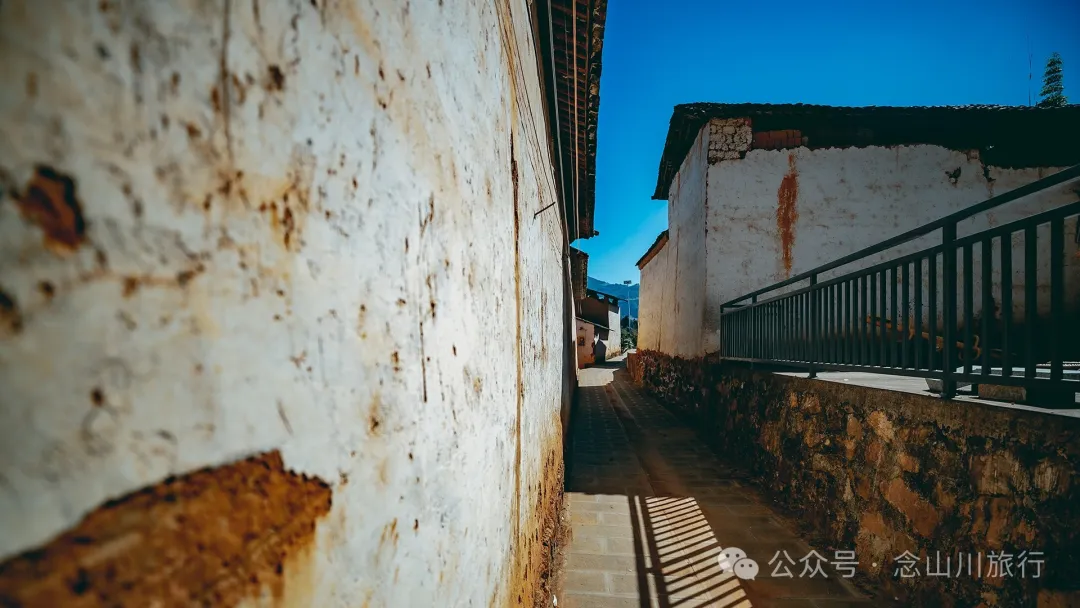
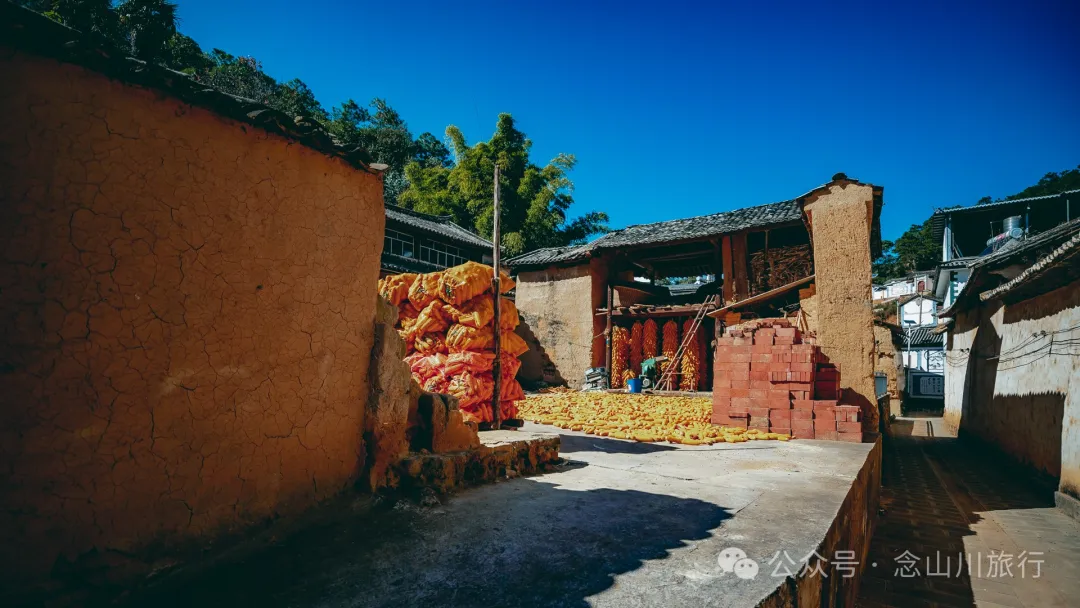
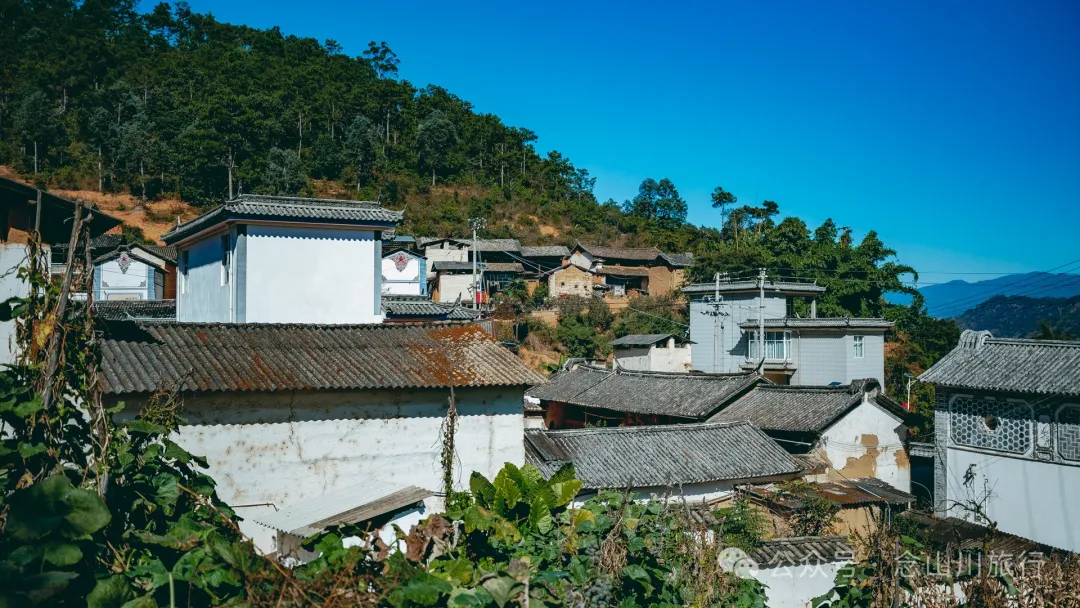
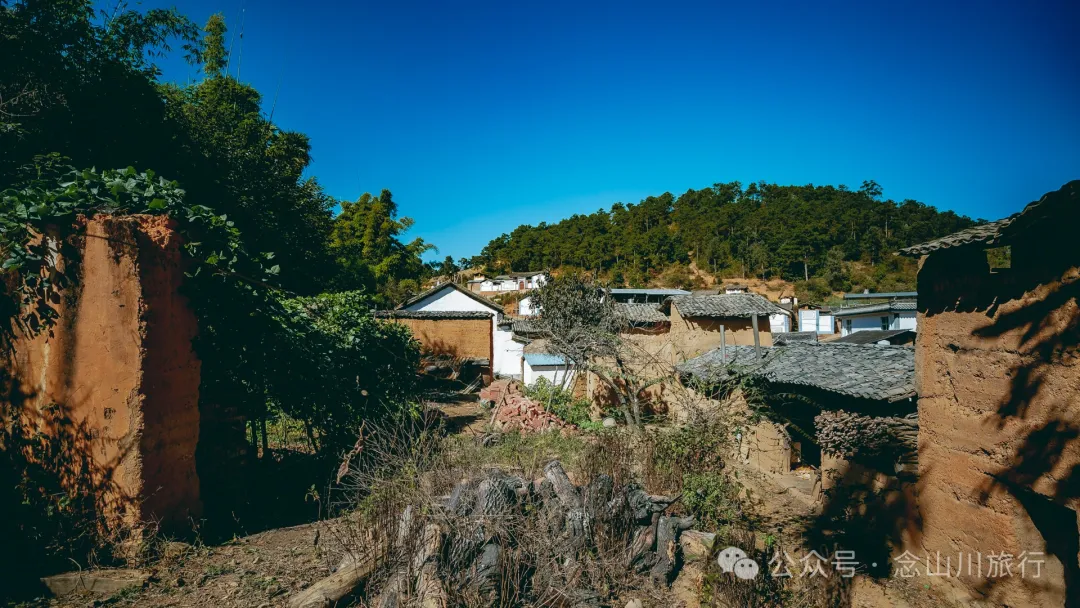
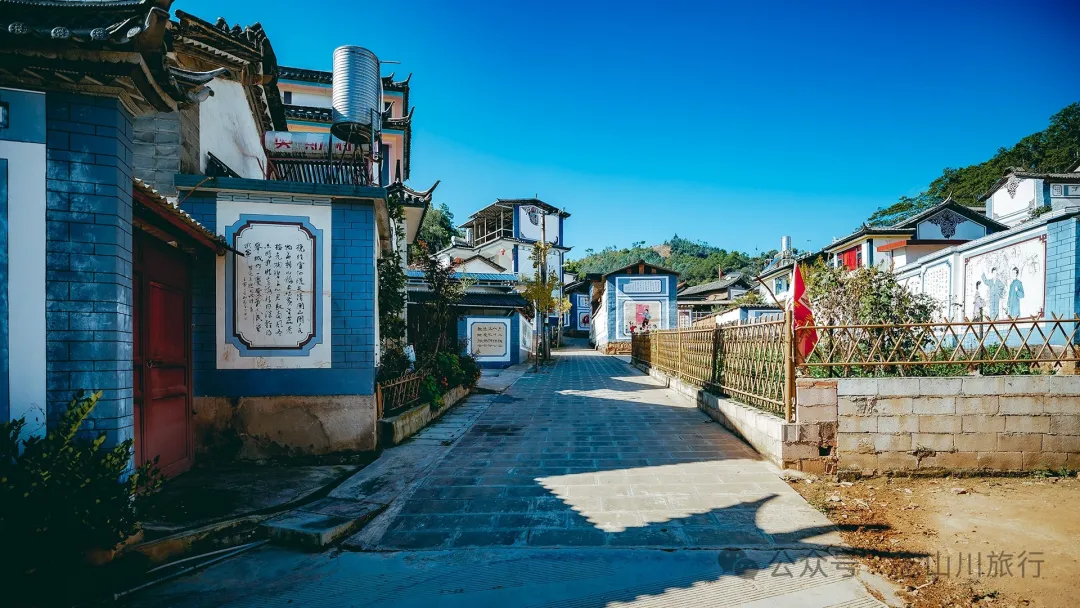
Around the village square, there are several spacious and bright new buildings. Villagers said the owners mostly work outside and are usually unoccupied, only bustling during the New Year. The few old houses in the village belong to the older generation, to the elderly who stay in the village year-round.
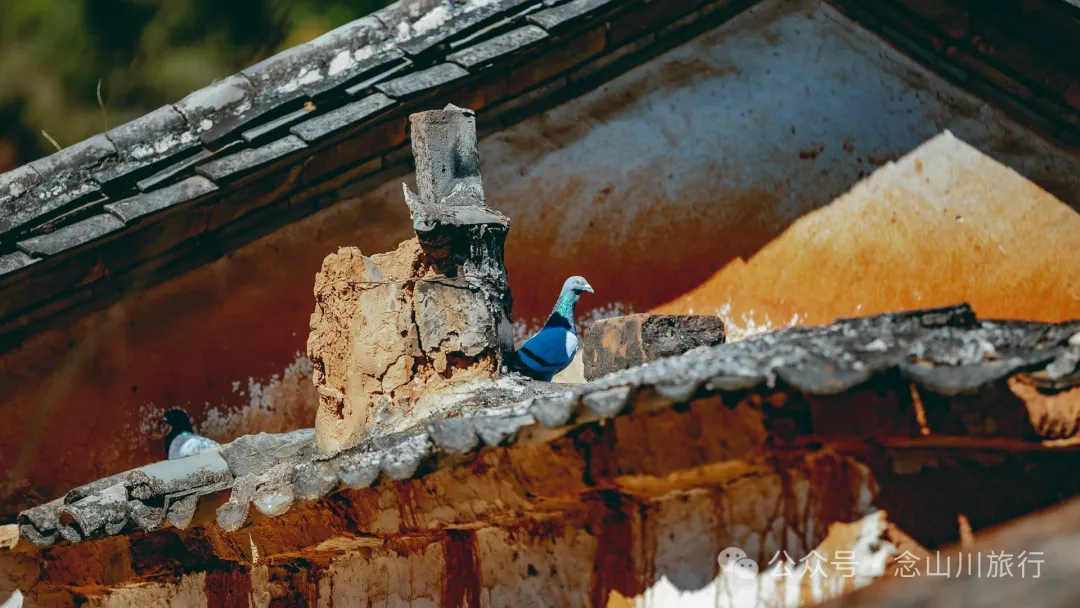
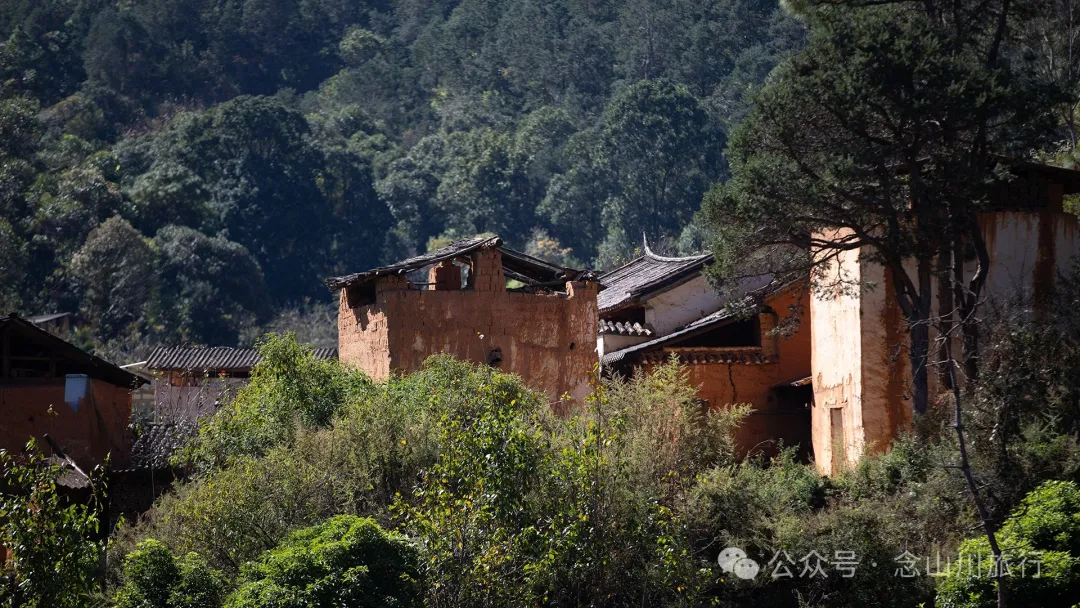
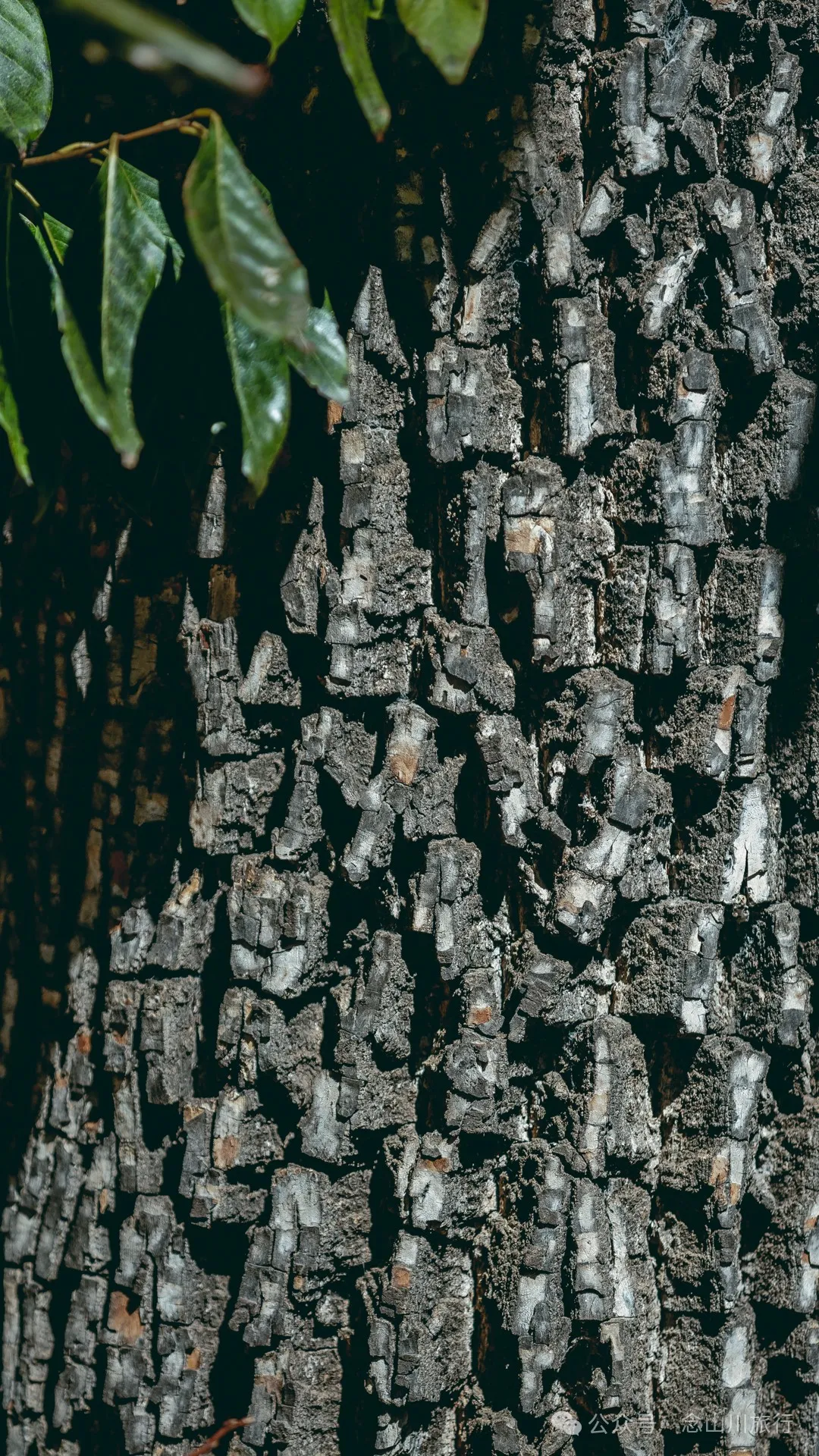
In the yard of an old rammed-earth house in the village, there is an extremely tall and sturdy wild persimmon tree. The persimmons are about the size of crabapples, so I often mistake it for a crabapple tree. The trunk is old but as tough as stone, weathered by years of wind and rain, its bark polished into a unique work of art.
New branches sprouting about two meters up the trunk are still laden with fruit. The bark on these branches is completely different from the trunk—delicate, soft, and light green, a color of new life. It is unknown how many years it will take for these new branches to acquire the heavy, solid color of the trunk. The yard where the persimmon tree stands is now unused. Its branches stretch out over the high wall, the small fruits looking dusty in the sunlight, nothing eye-catching. Like its rough, dark trunk, it stands silently in the corner of the yard, guarding the small courtyard and old home for its owner. No one pays attention to its seasonal changes, and it doesn't need anyone's attention. Living in seclusion is its natural state, and it delights in it.