
Stopping at the location marked as Shibiedi on the map, we still couldn't see the meadow and stone forest scenery from the video. At a glance, the low hills had little grass, mostly cultivated into neat plots by villagers for crops. The narrow strips spared by the roadside were densely covered with bracken of varying lengths. I marveled at the fertility of the soil here; elsewhere, such high-altitude mountains are only suitable for grazing, hardly for any farming.
I once thought we had taken the wrong path. Seeing the brilliant rose-red rhododendrons deep in the valley and ancient trees that seemed to have grown since time immemorial, I almost wanted to stop right there, run down the valley to chase every hidden rhododendron, and go no further. The car was blocked by a wooden fence. I ran a long way before encountering a young girl resting on a hillside. She pointed in a direction and said it wasn't far, giving us hope. However, before we found the right path and saw "Wudingshi"—the small stone forest as locals call it—we took wrong turns several times. I even had to barge into a villager's home to ask for directions; they were warming themselves around a stove.
After passing a high-altitude village with a small bridge, flowing water, and yaks, we finally reached our destination. This was a journey full of twists and turns, but when the landscape unfolded before us in undulating waves, we could only gasp in awe.
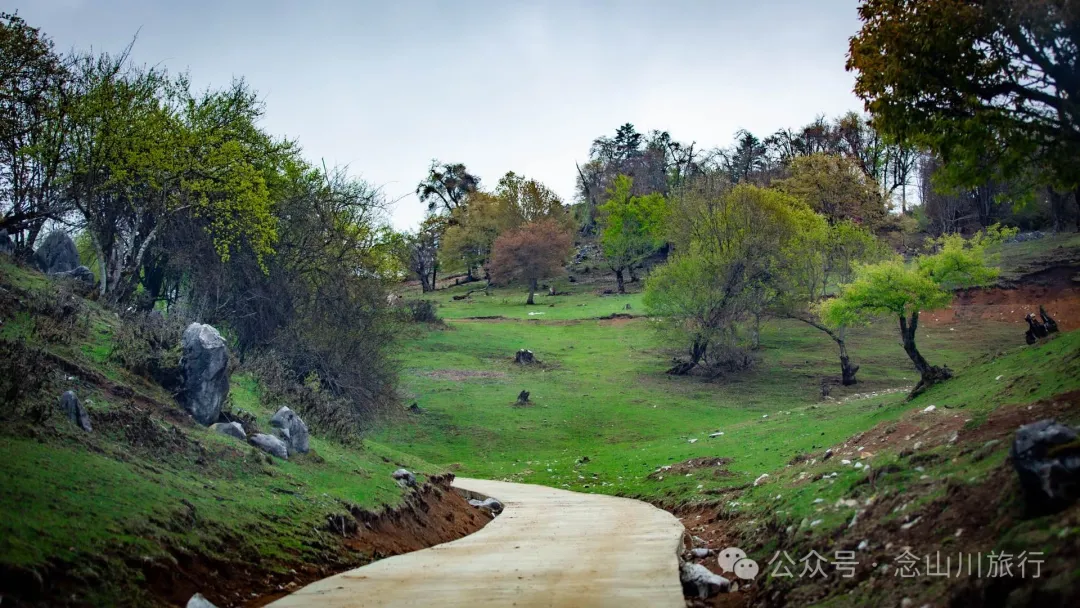
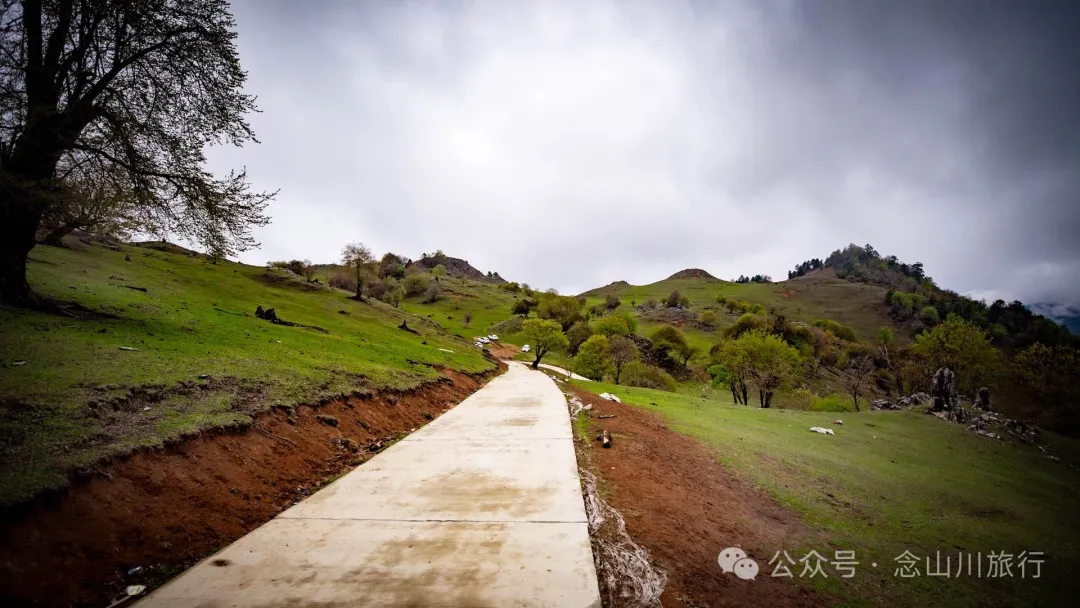
Driving over 30 kilometers from Weixi county town, a narrow concrete road always leads deep into the mountains to the small stone forest. Due to the winding and rugged mountain roads and steep terrain, rocks often fall along the way. Be cautious in rainy weather!
Vegetation
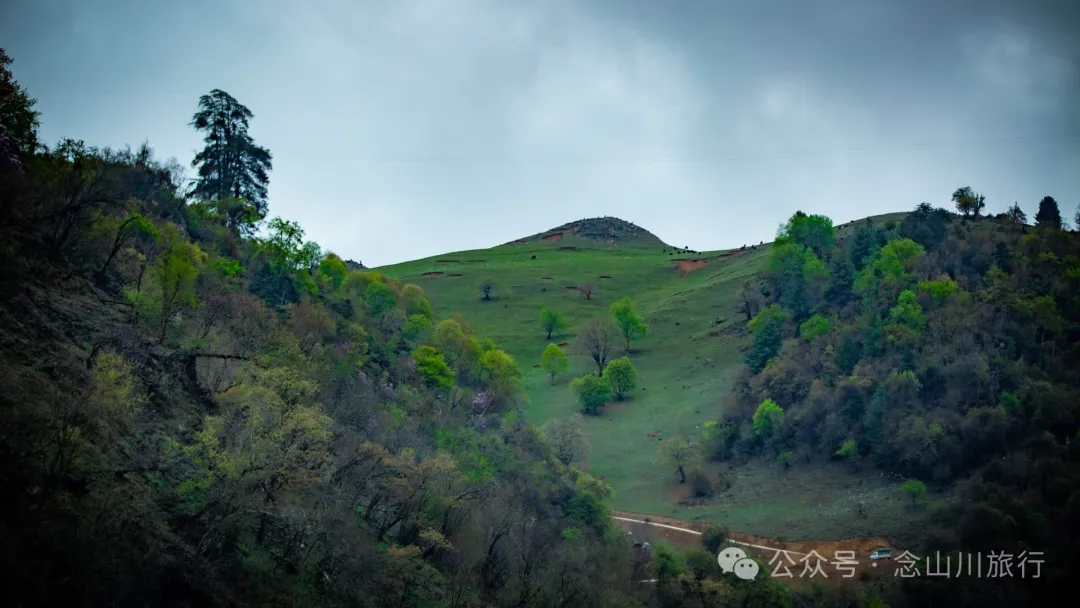
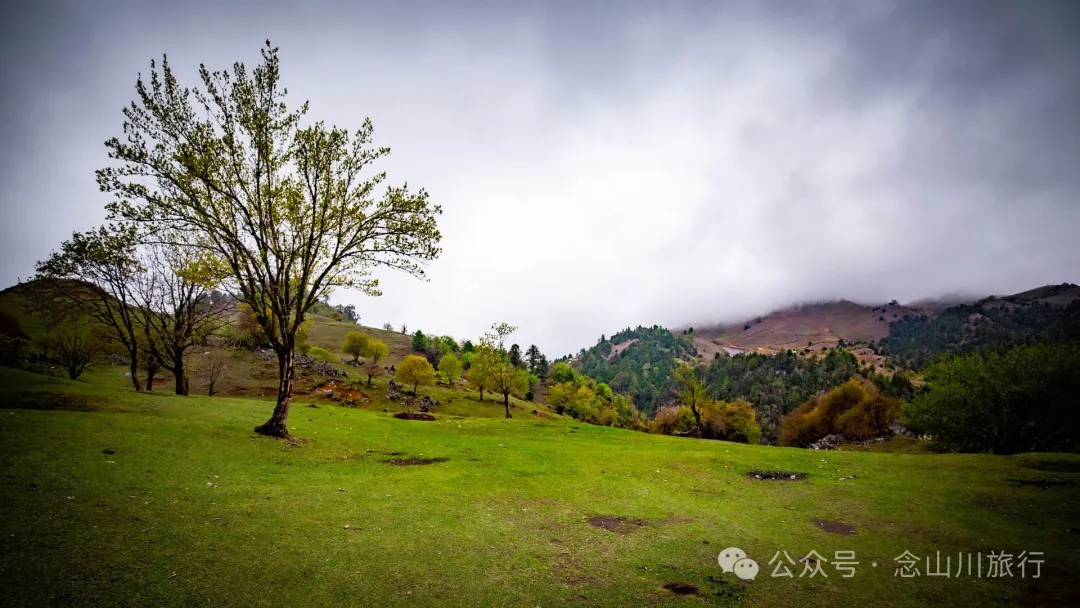
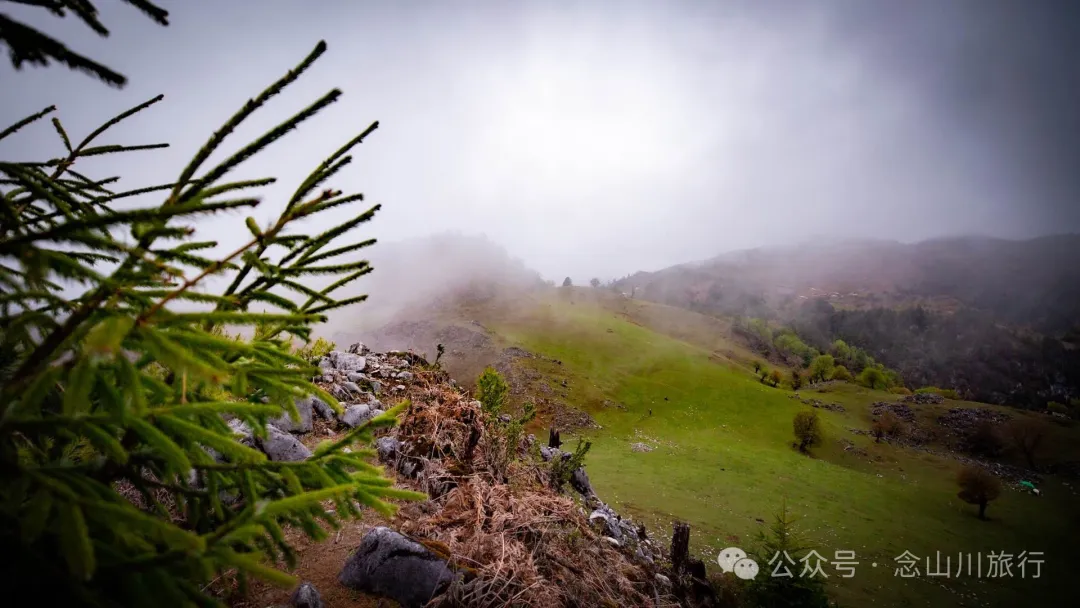
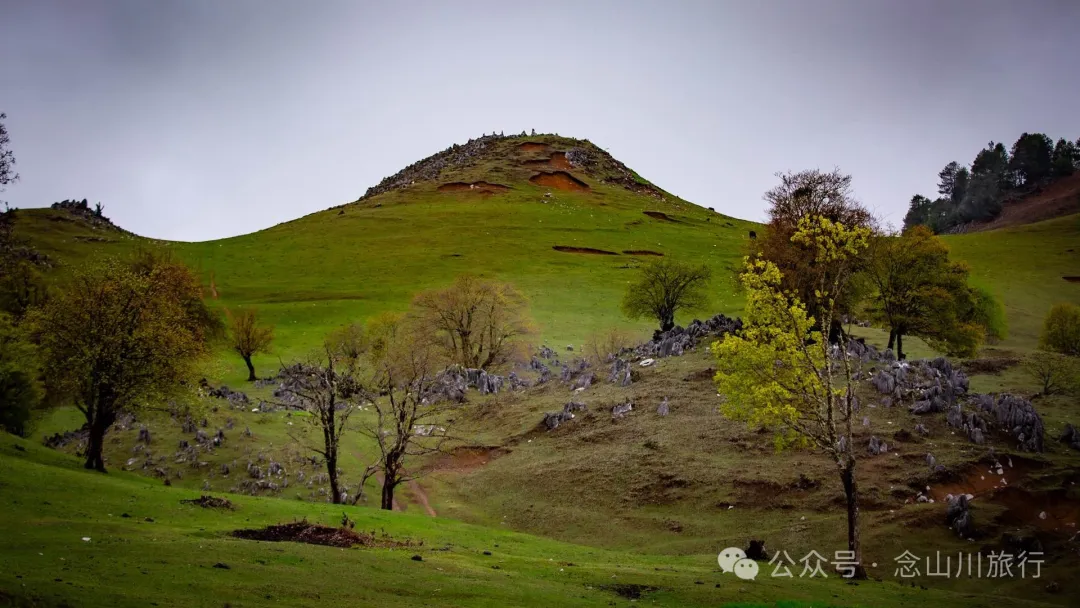
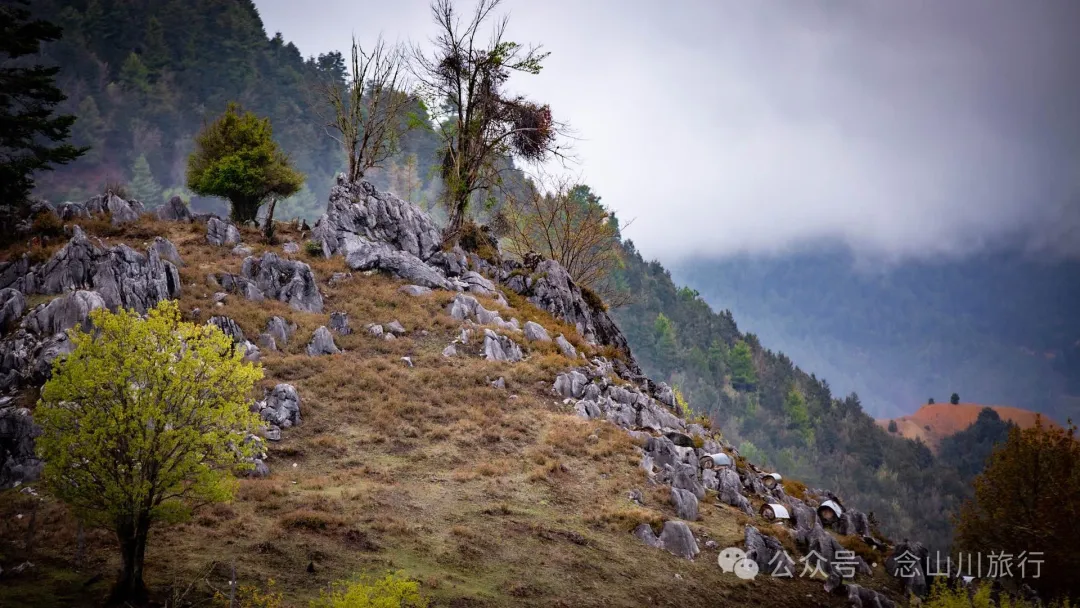
Running to the highest rock in the small stone forest and looking around, you can take in the magnificent scenery. The damp air carries a crisp chill, but everywhere is brimming with spring vitality, with all things striving to grow and emitting new life energy. When did the wild grass on the plains turn green? The tall trees scattered on the grassland have already sprouted new leaves, standing vigorously on the rolling hills.
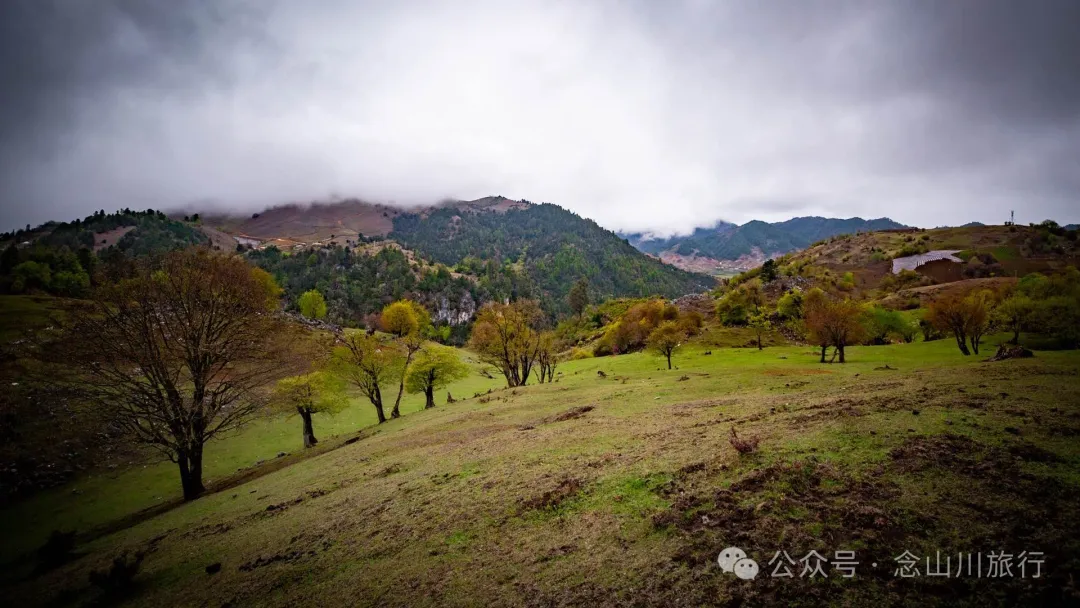
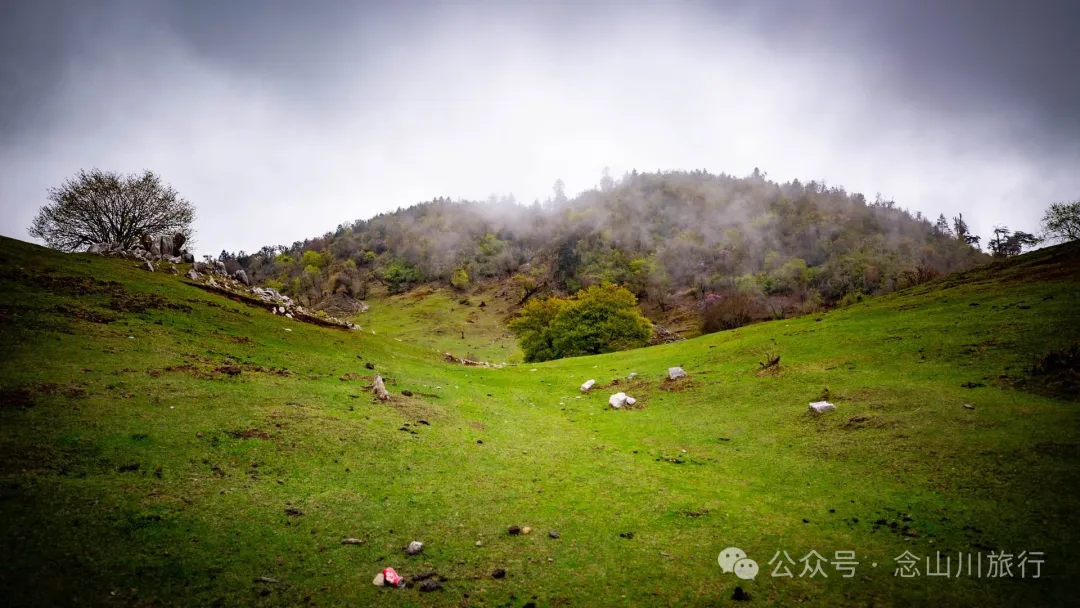
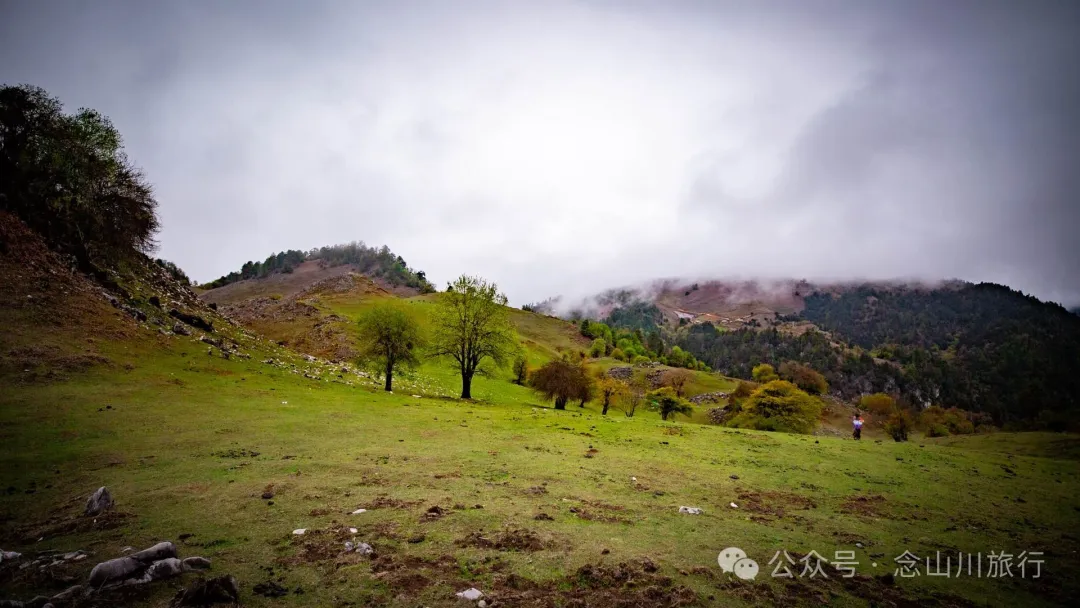
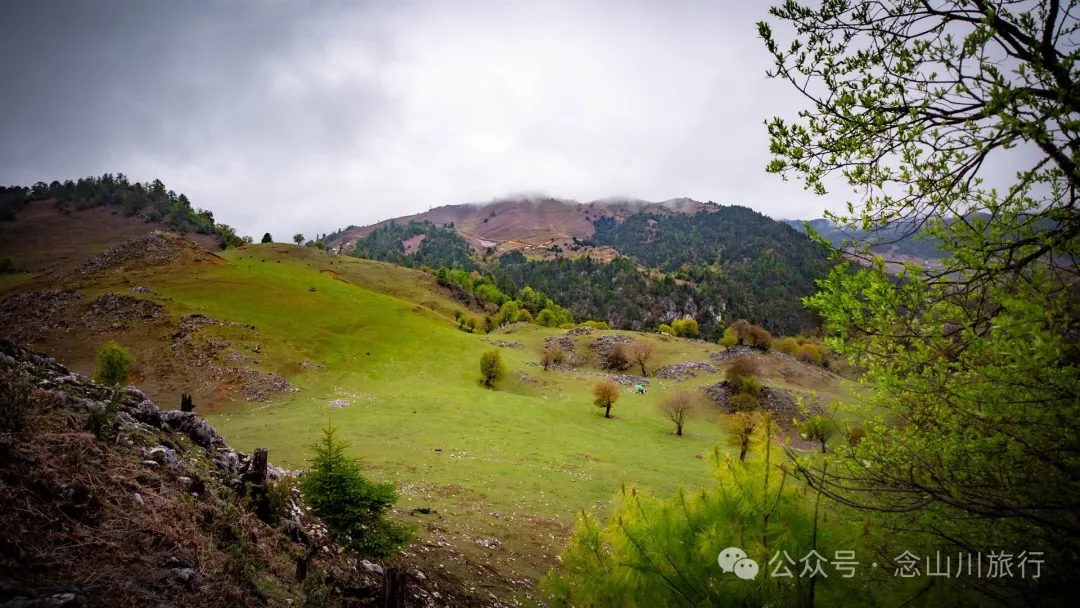
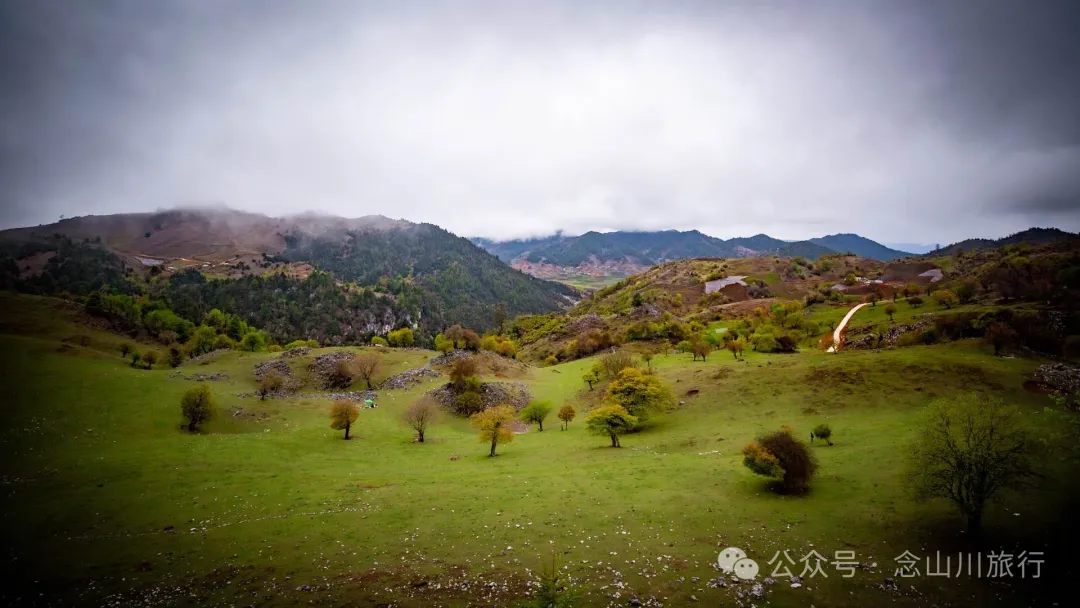
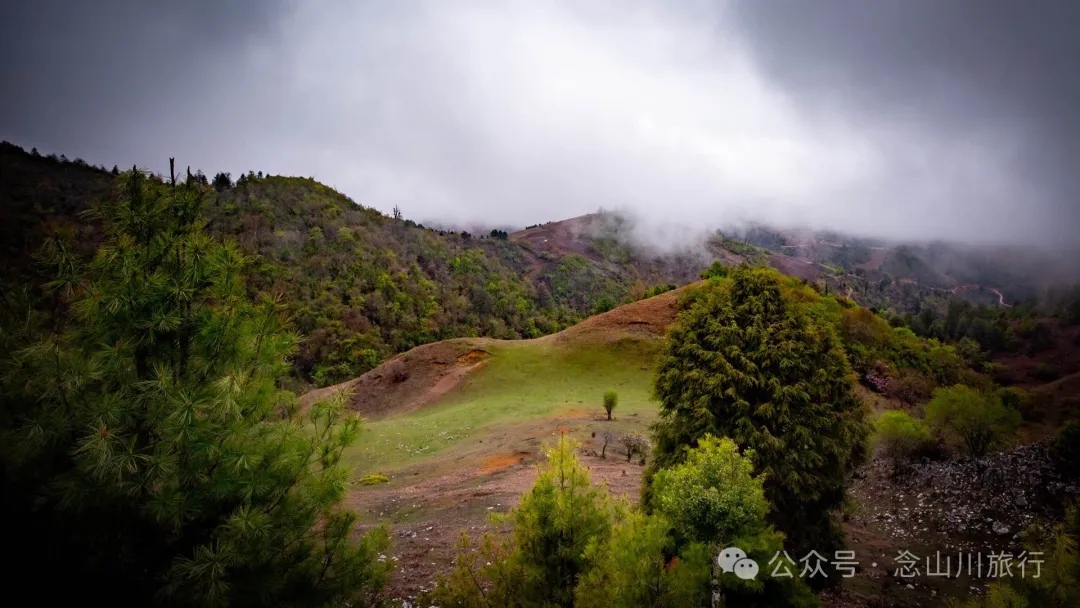
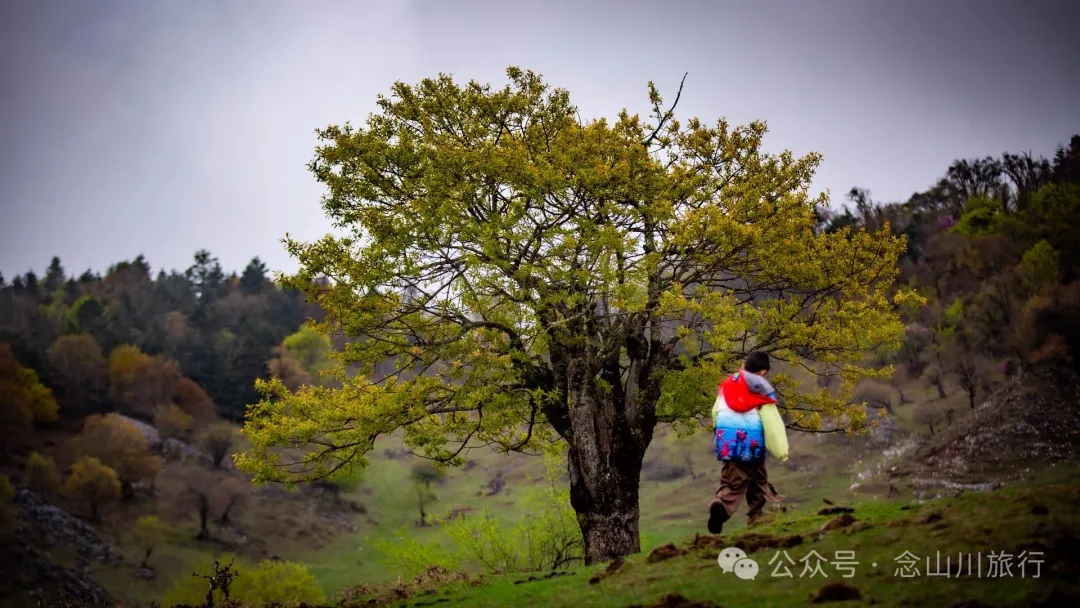
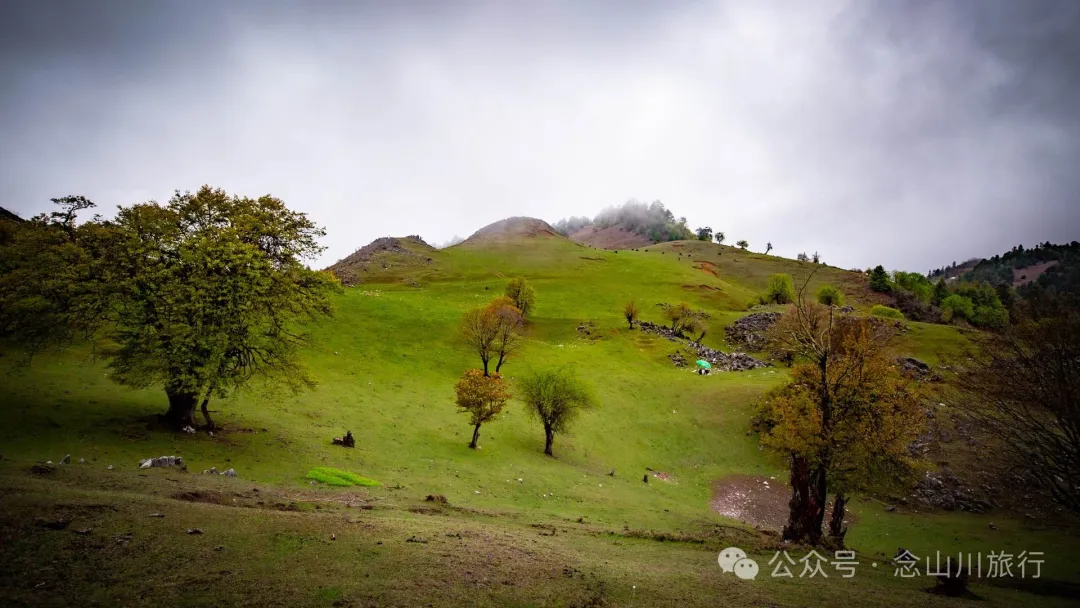
Before we arrived, tourists had already set up camp here. A group chose a sheltered low-lying area, set up a large green umbrella, and sat drinking and eating meat, carefree. The spot was low and flat, with natural rock barriers for wind protection, likely the best camping spot for many. Nearby, a patch of empty ground was littered with white trash left by humans, reminding me of the friendly reminder written on a large wooden board at the parking area. Yet many still ignore it, leaving their garbage behind. They seem indifferent; what they disdain, nature cannot tolerate. The vegetation remains silent, quietly watching batch after batch of people come, leave behind things that don't belong to this landscape, and then depart.
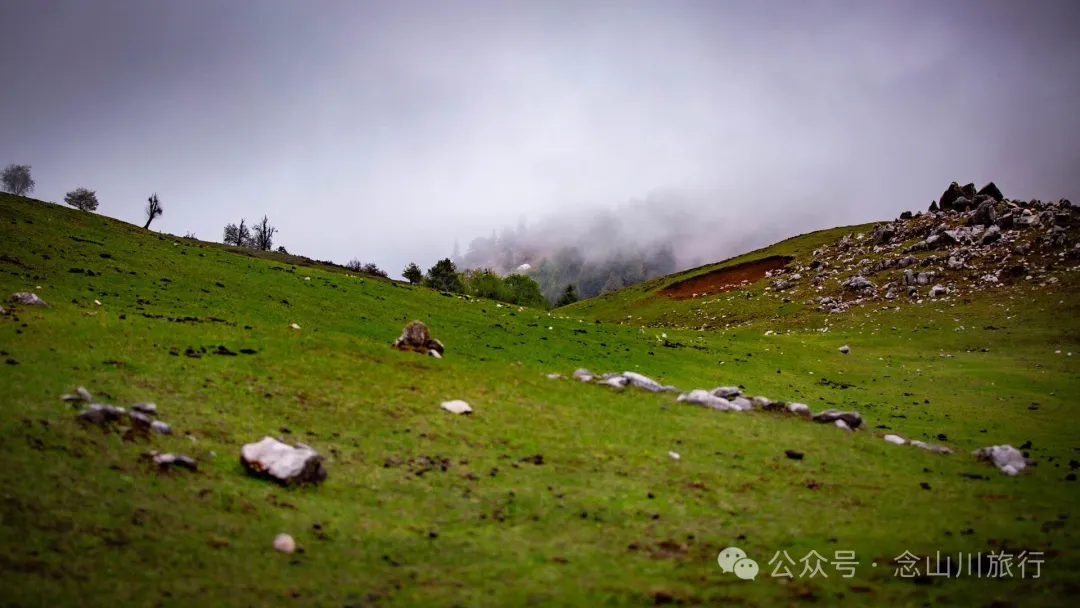
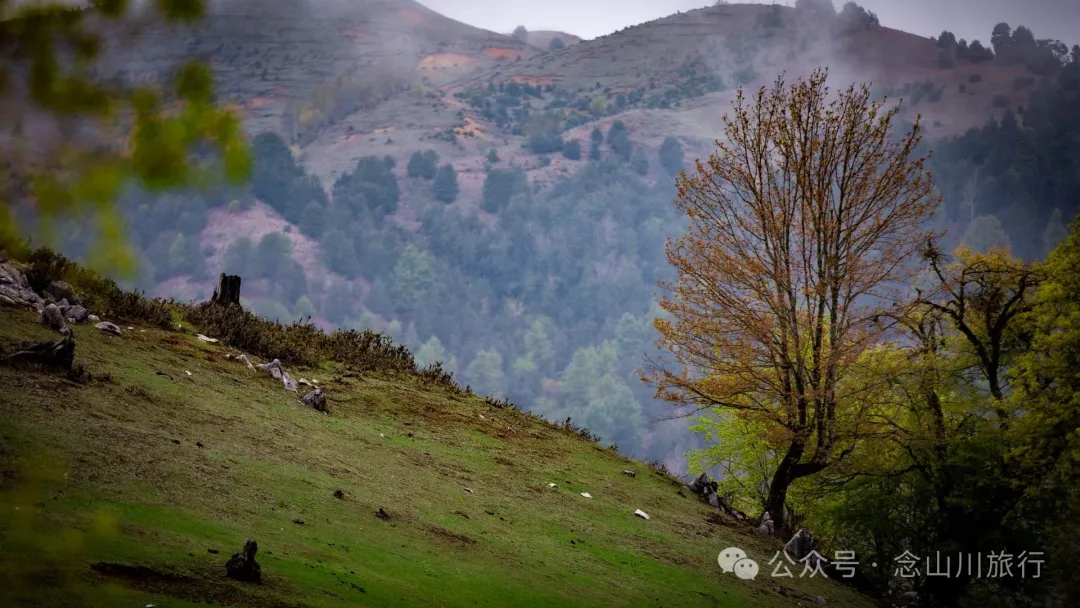
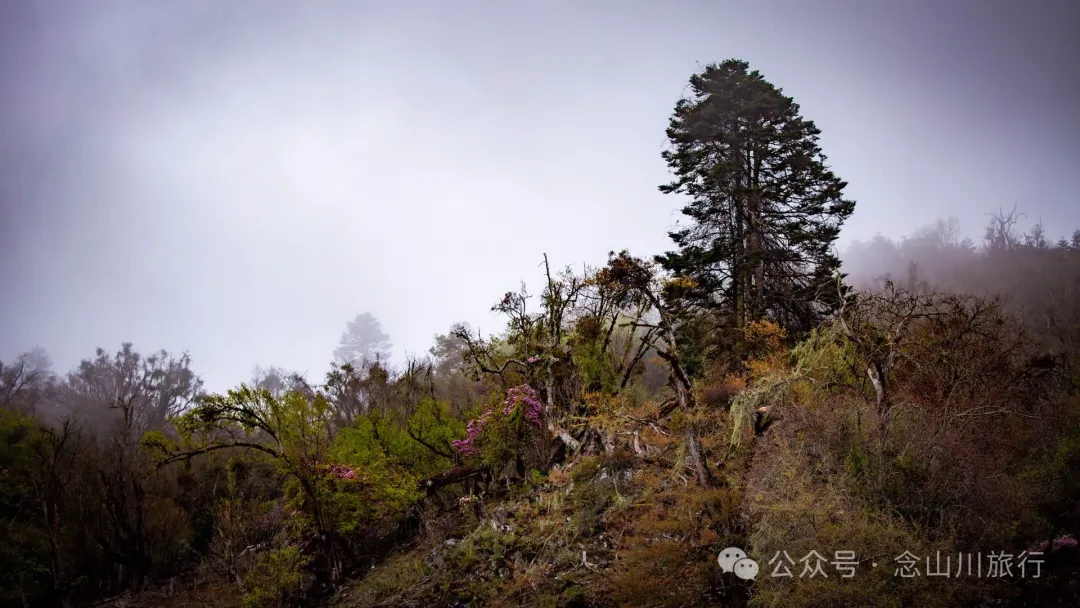
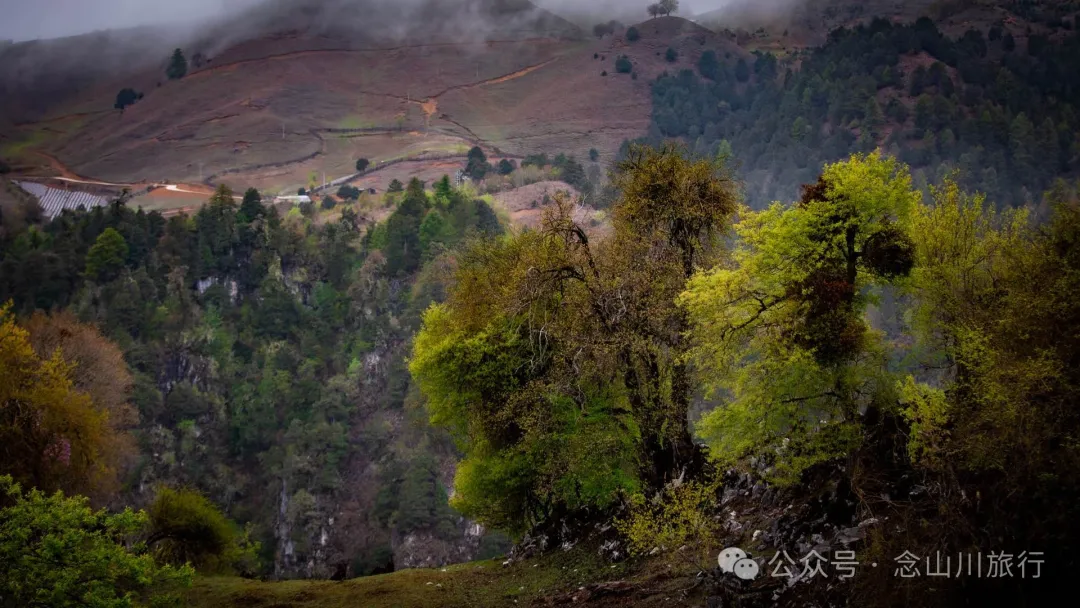
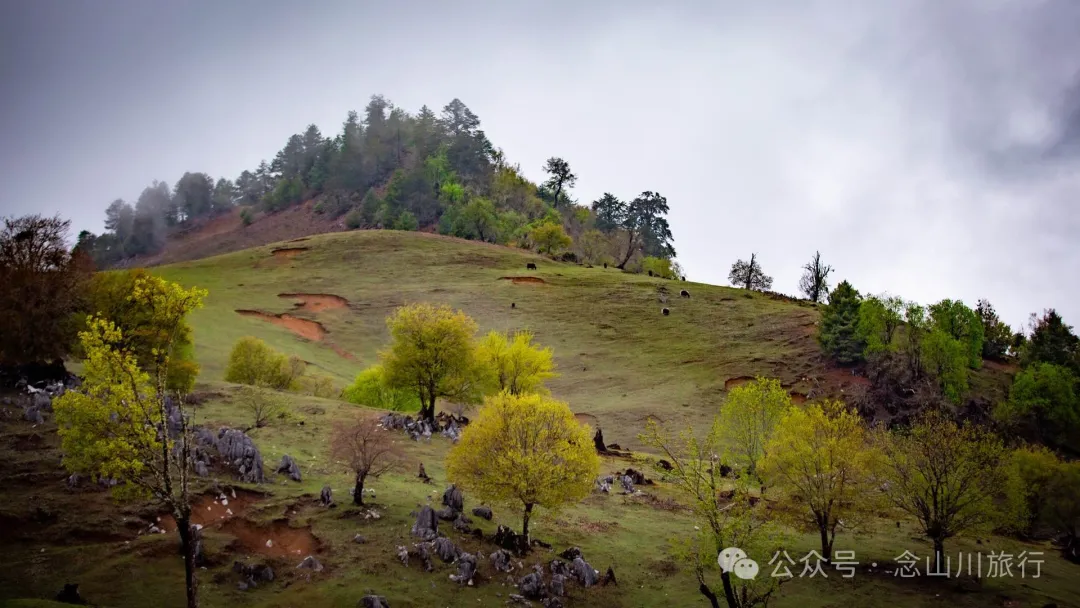
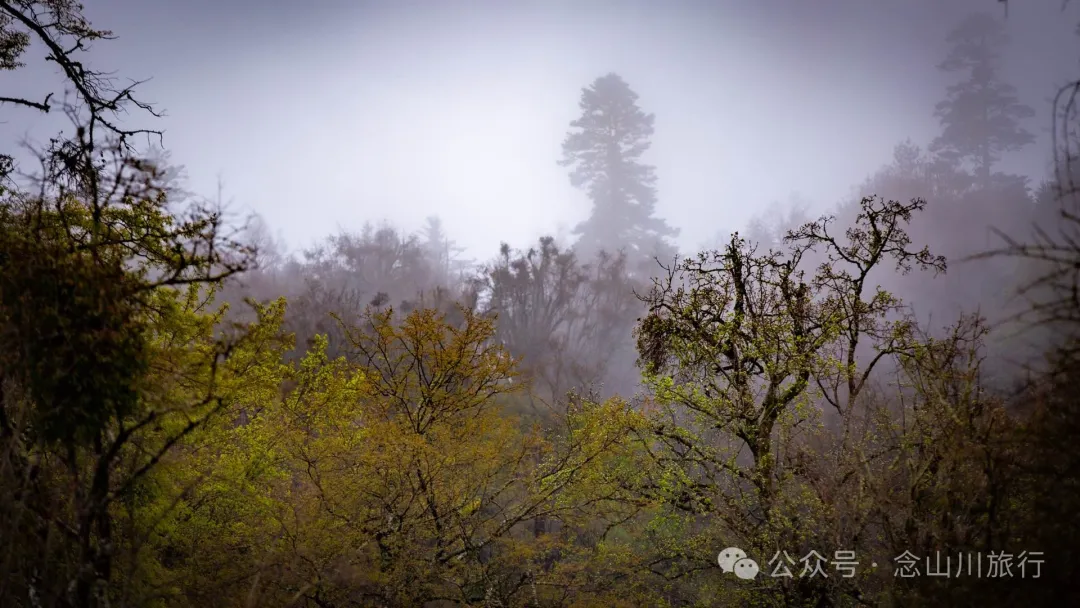
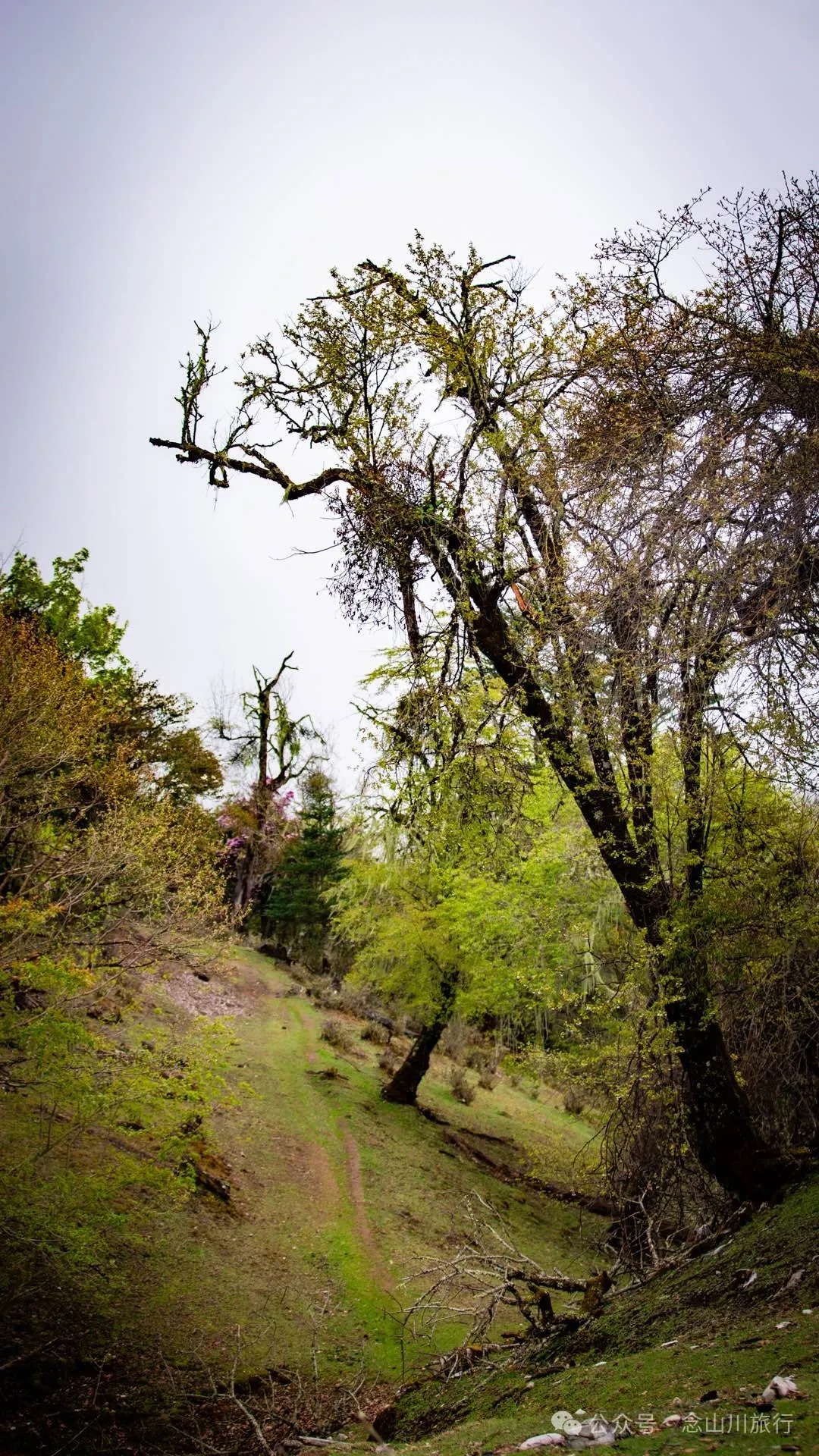
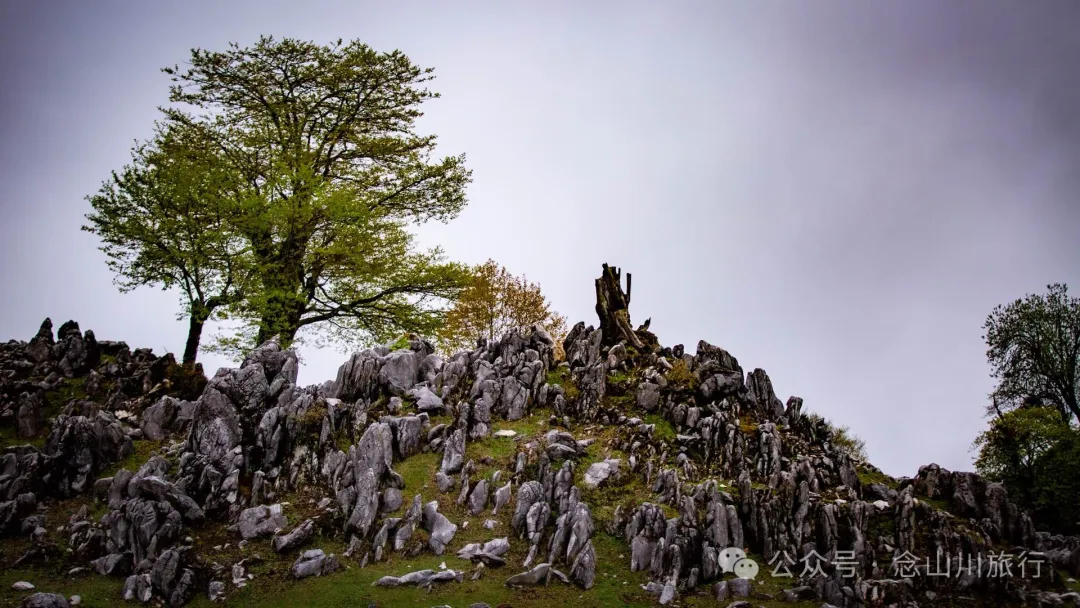
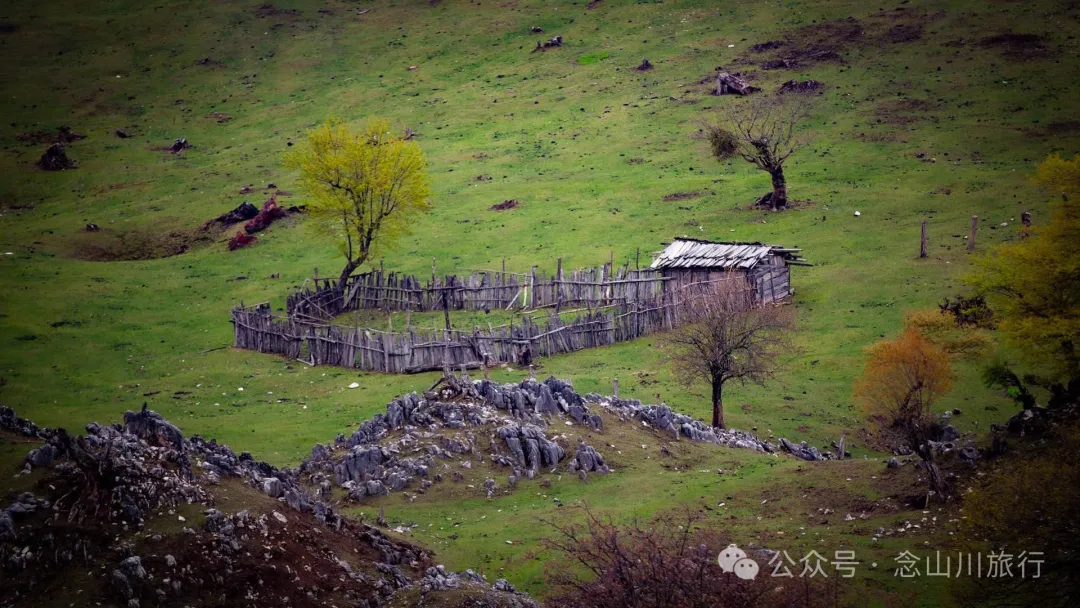
These naturally grown alpine trees stand sparsely on the grassland, contrasting sharply with the dense primeval forest on the steep slopes. The trees scattered on the grassland, with their varied postures, resemble restless members of a large family, full of adventurous spirit. They break away from their ancestral home, step by step tentatively leaving the safety zone for an unfamiliar environment. When they joyfully find themselves in love with this new place, they can no longer reverse course and return to the family. So they stand on the nearby grassland, constantly looking back at their former kin, striving to complete their life's growth excellently, so that their family can recognize them at a glance.
Stone Forest
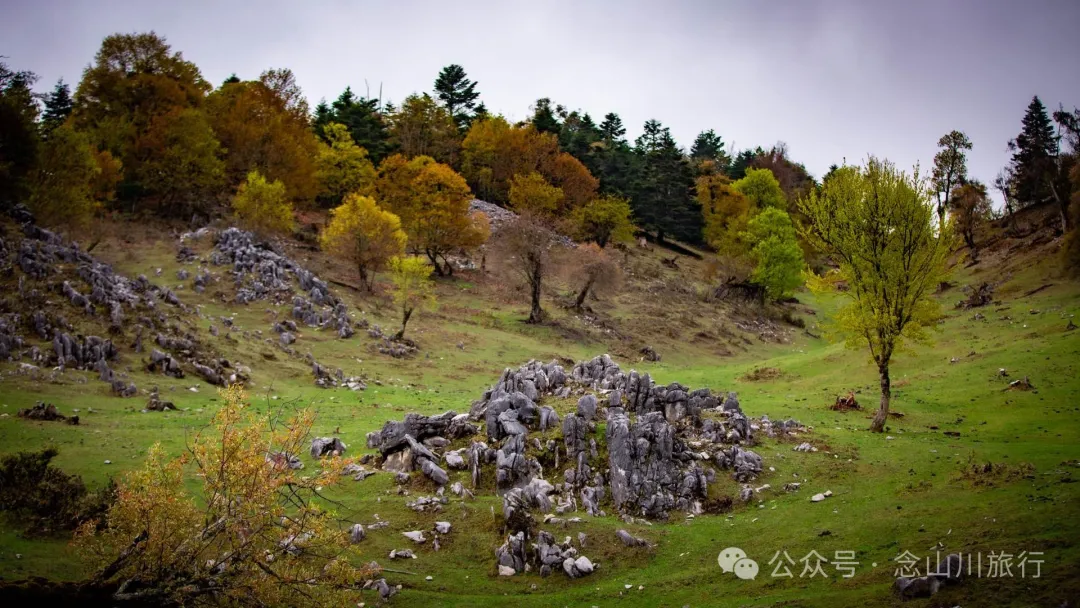
When we asked for directions, the villagers didn't understand what we meant by alpine meadows or prairies, but when we asked where the small stone forest was, every villager could point us in a general direction and tell us which route to take. Thus, we learned that the stone forest is the iconic scenery of this alpine meadow.
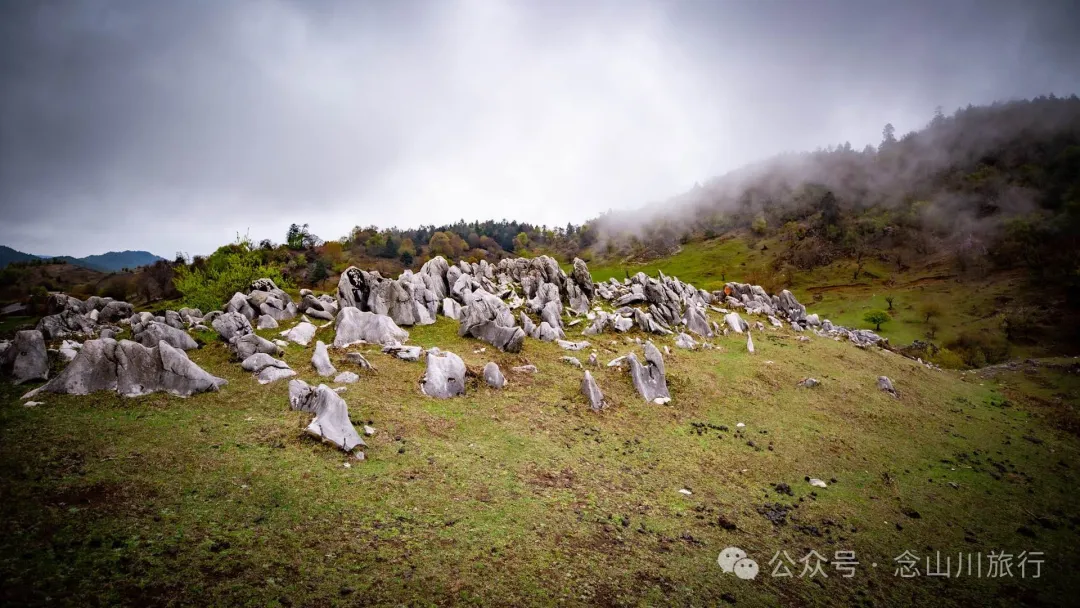
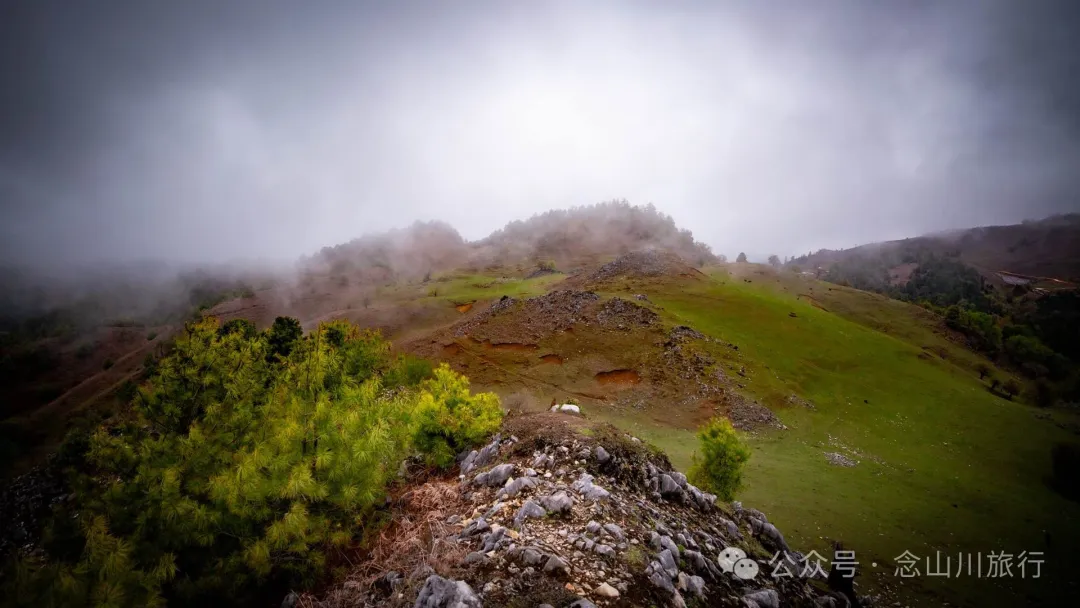
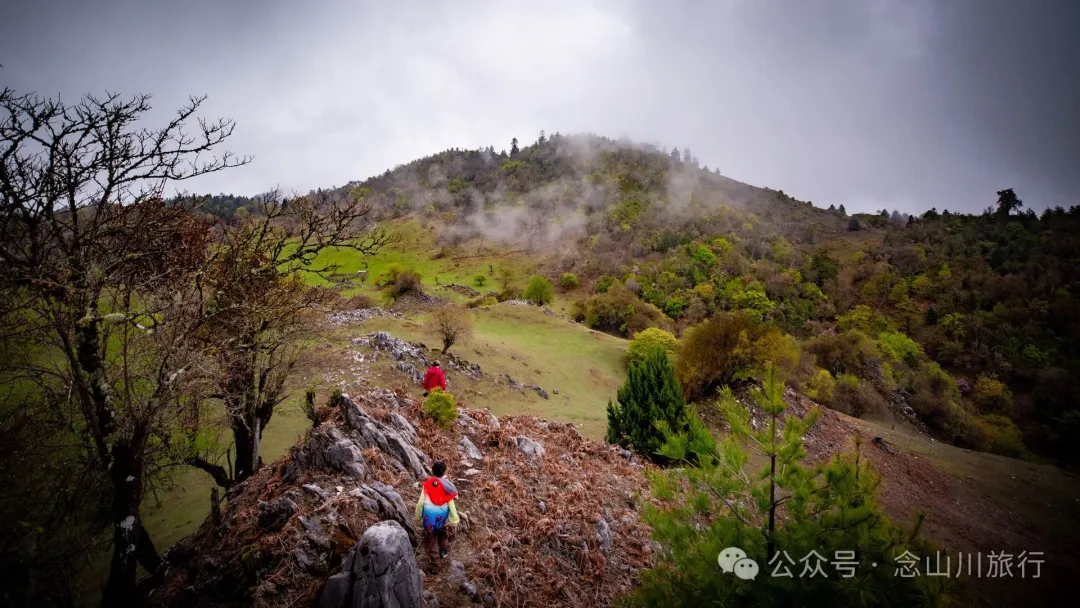
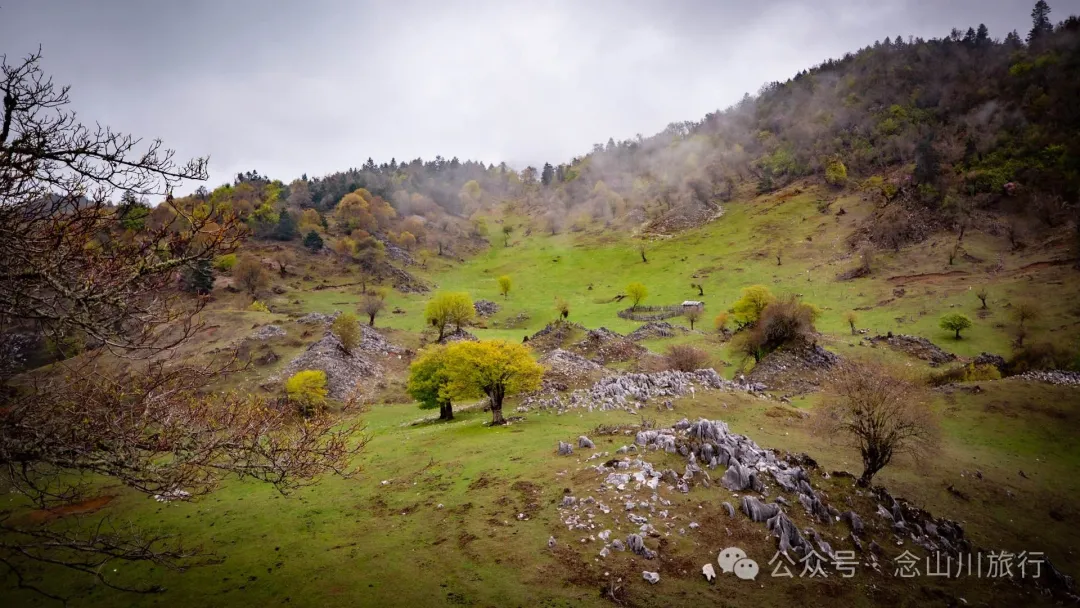
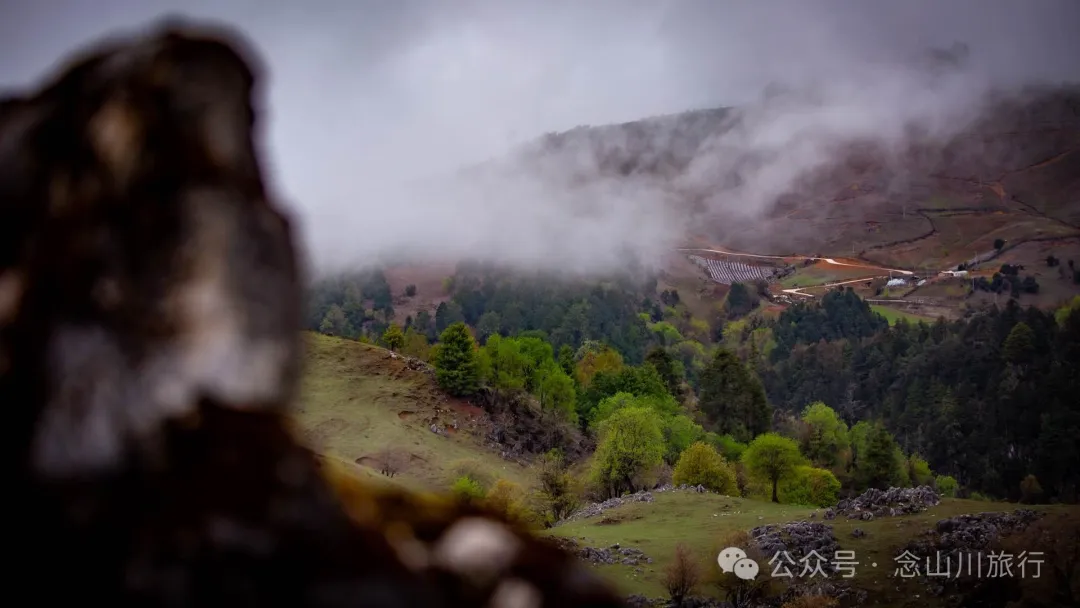
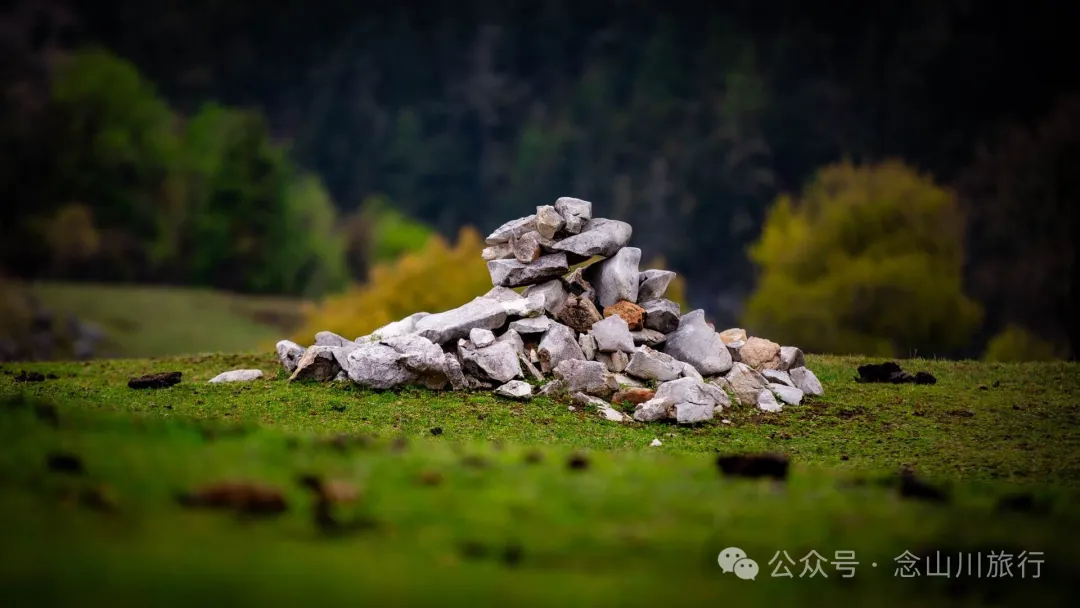
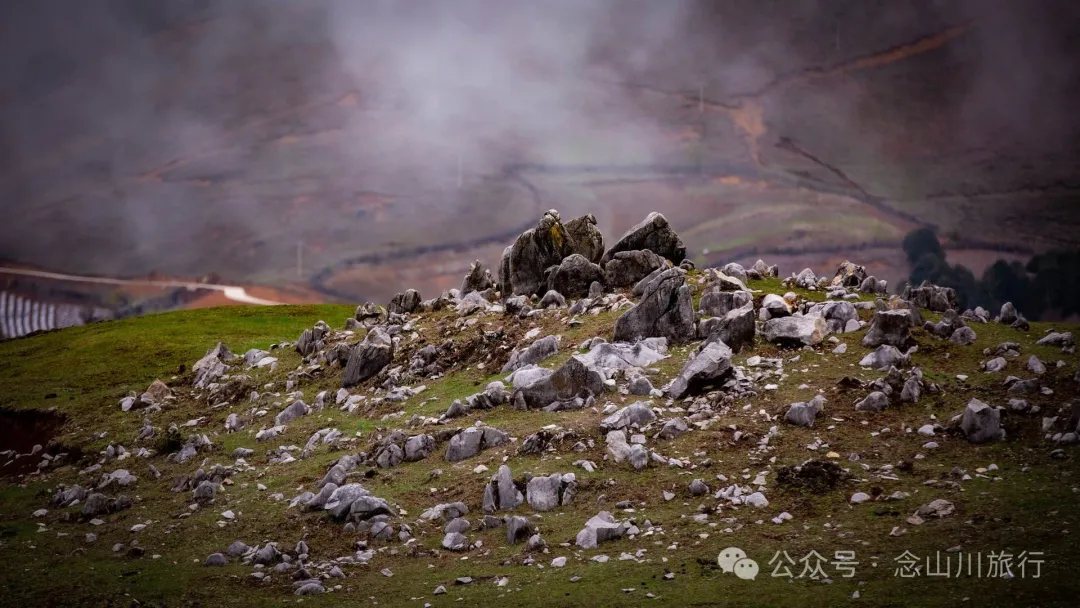
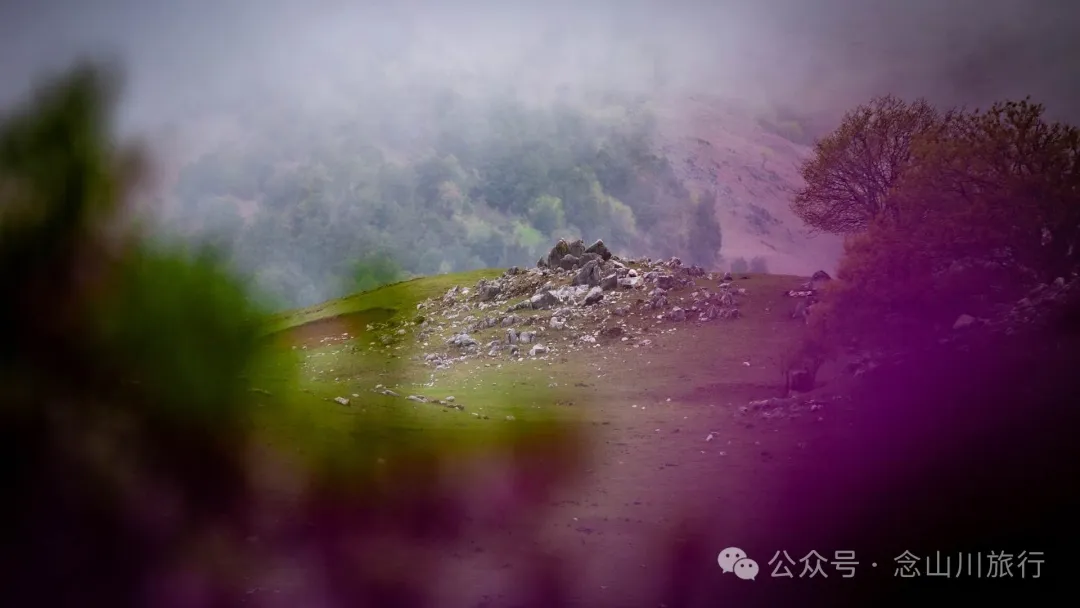
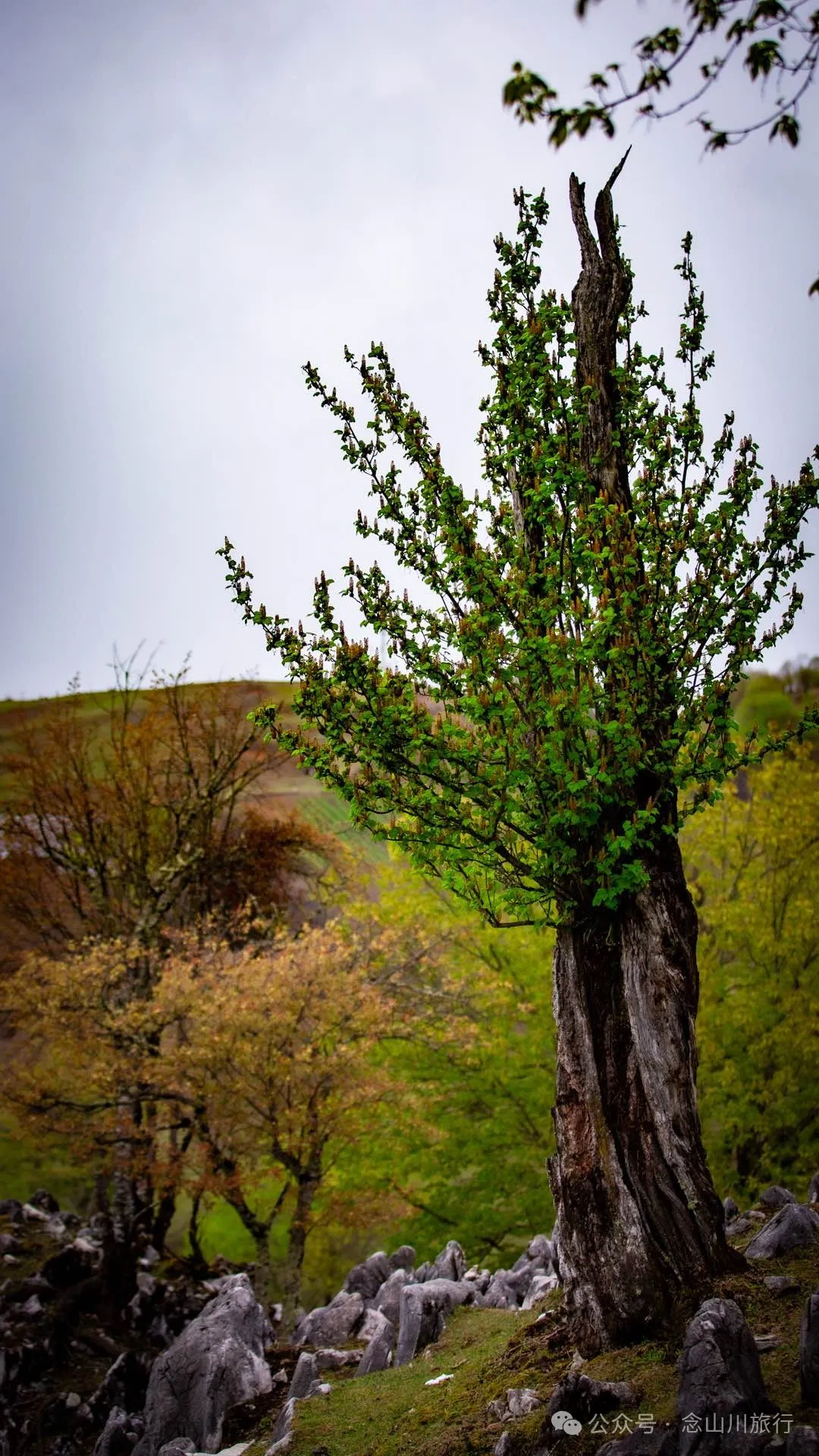
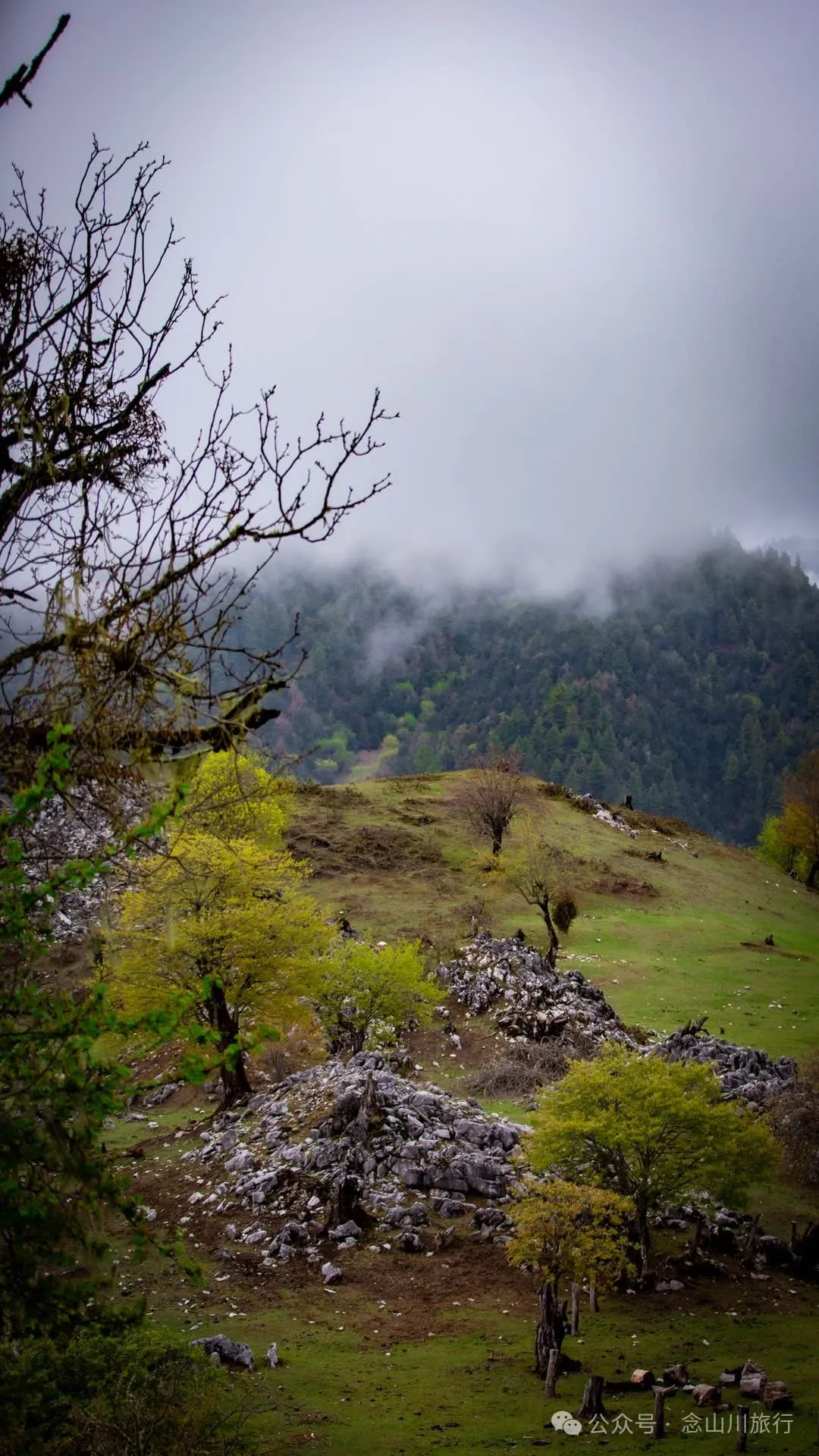
The gray-white rocks are like clouds scattered across this plain, with vegetation growing freely among them. Thorny shrubs and brown mosses take root on the rocks. Even a tiny grass-like plant, seeing a small crevice, can muster strength to root and bloom a pure white flower. Climb the nearby slope and look at the stone forest through the rhododendron bushes; they become stone houses on the prairie, shelters for shrubs and mosses.
Rhododendrons
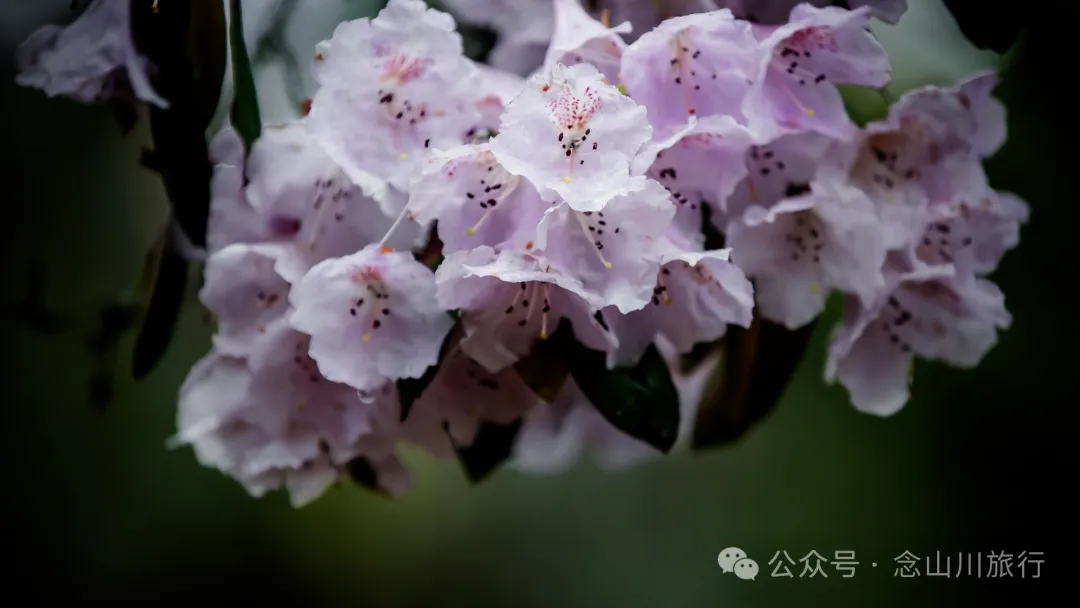
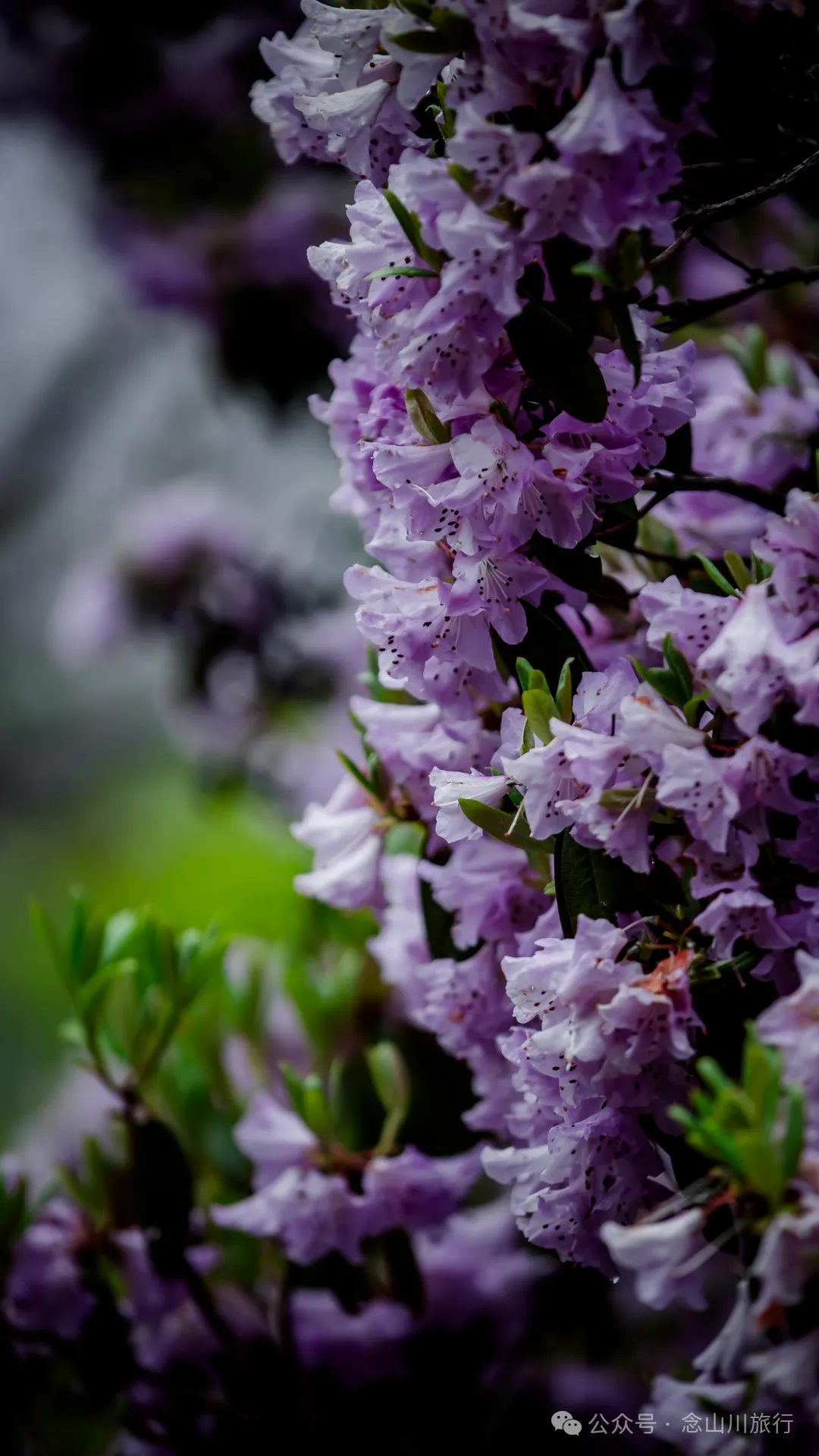
The rhododendrons we occasionally saw on the road grow in patches here. The slanting wind and drizzle, along with drifting mist, made us regret not seeing the scenery at its best. But when we excitedly rushed up the slope and into a primeval forest, the fully blooming alpine rhododendrons were satisfying enough. We were drawn from afar by a bright pink rhododendron. As we approached, more lightly or heavily made-up flower trees appeared behind ancient, thick trunks. Clusters of gorgeous rhododendrons, like street lamps, illuminated the dim mountain wilderness shrouded in mist. It was a lively flower festival, with every blossom performing perfectly.
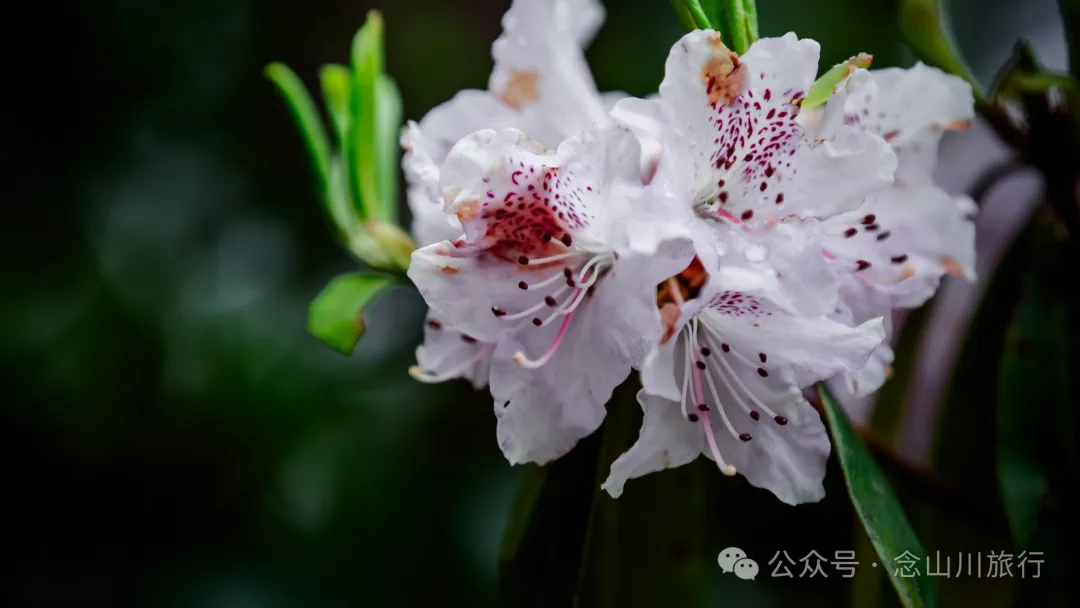
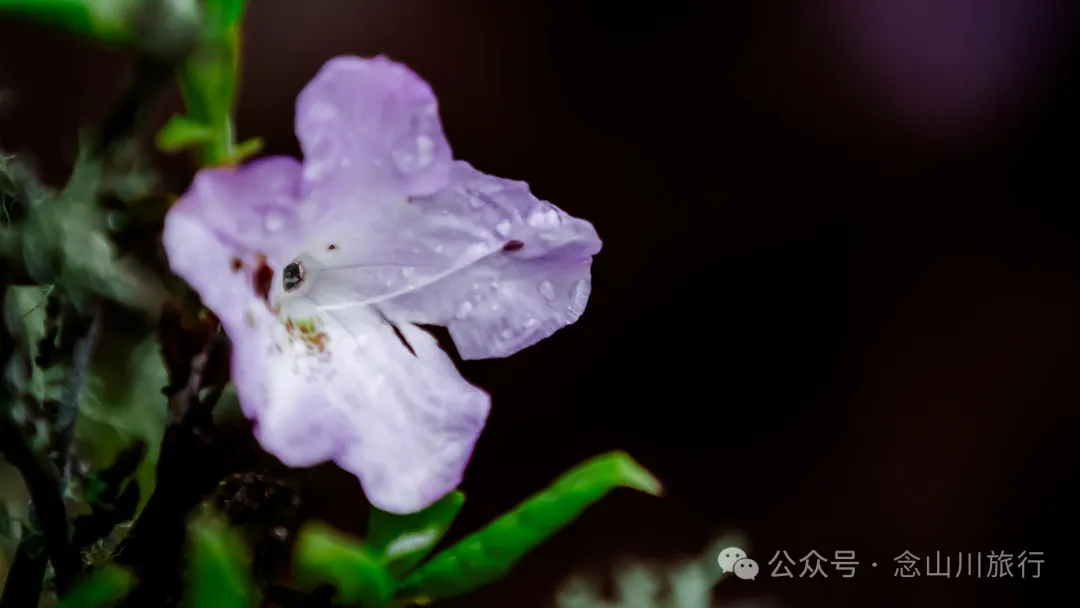
Mountain flowers in the rain are even more enchanting; the rain washes away dust, making the rhododendrons even more ethereal.
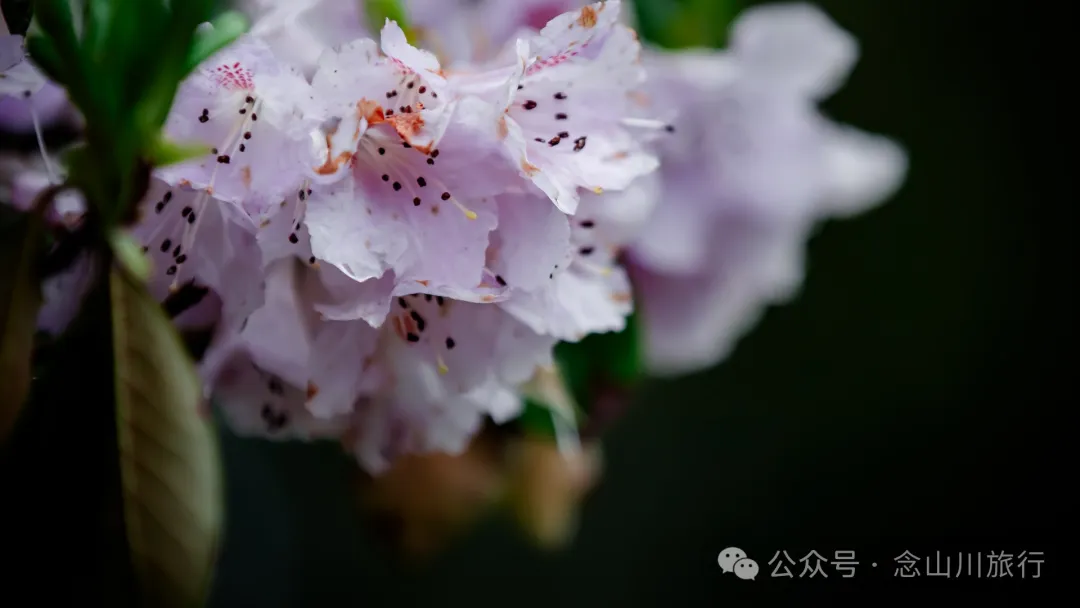
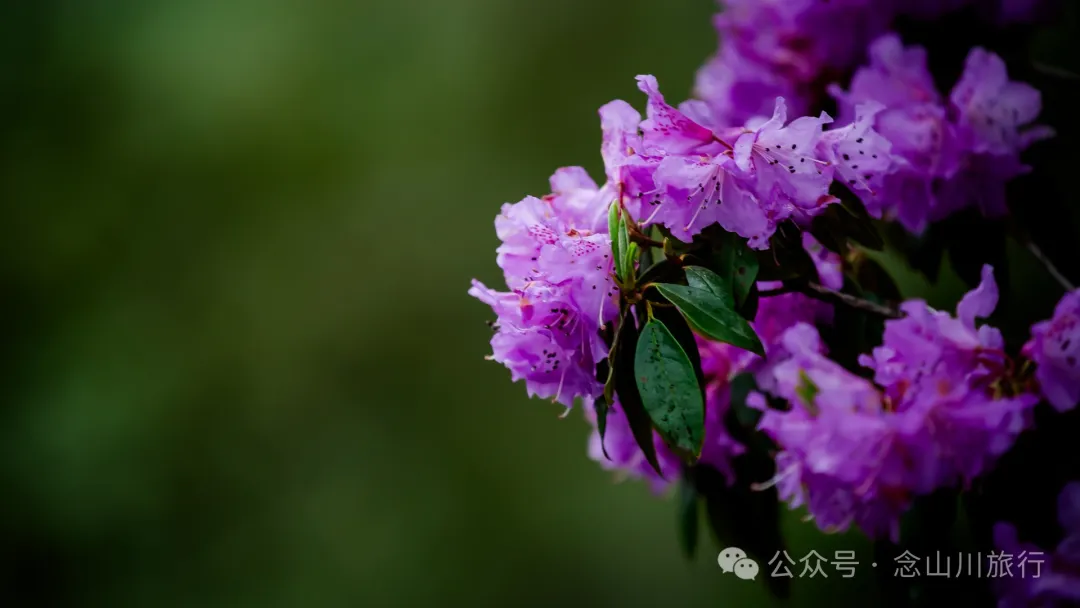
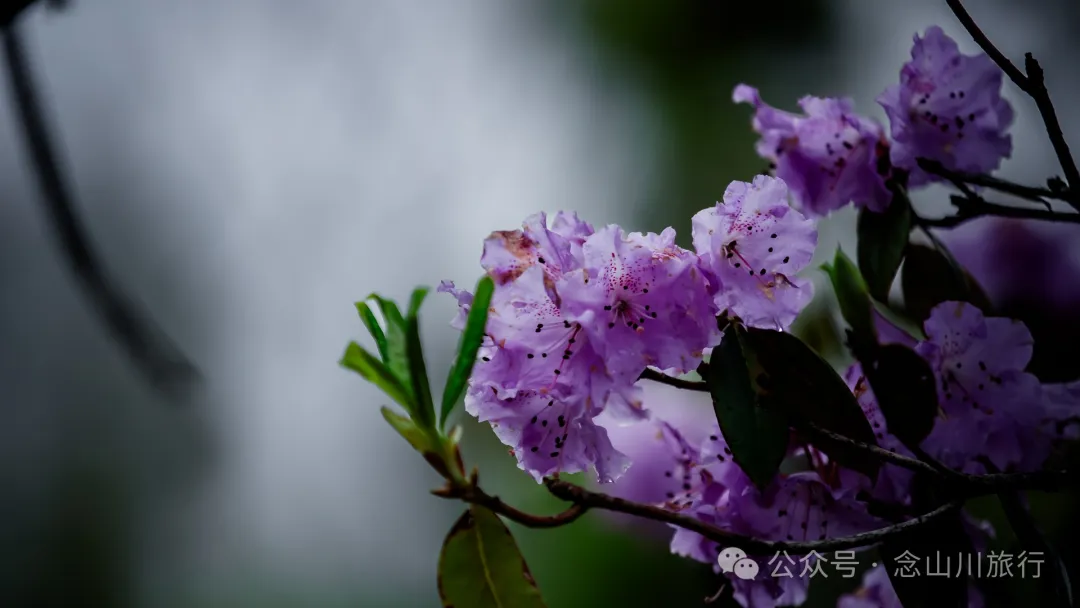
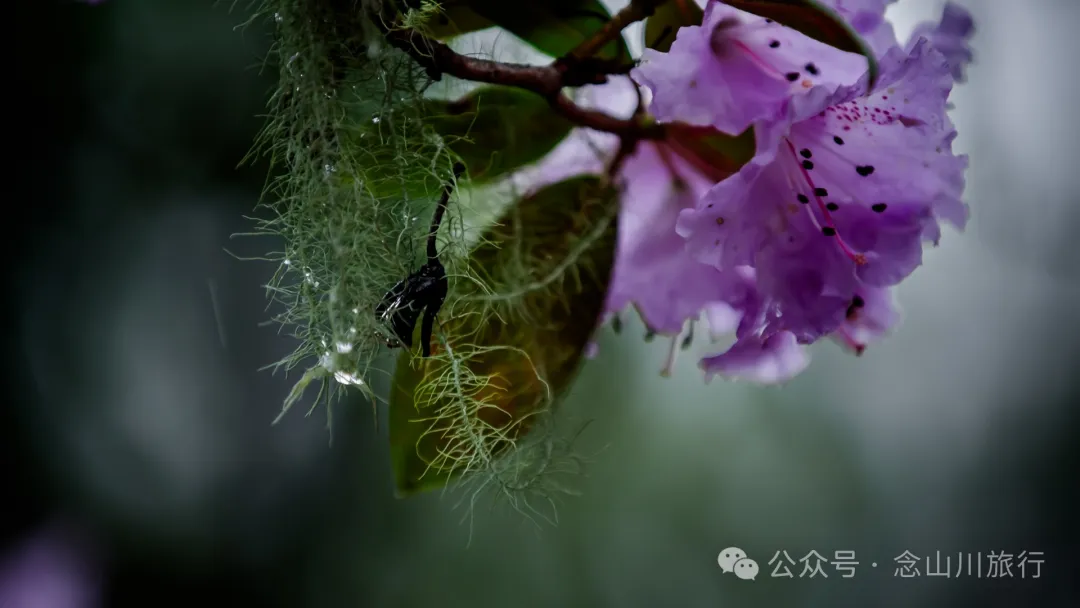
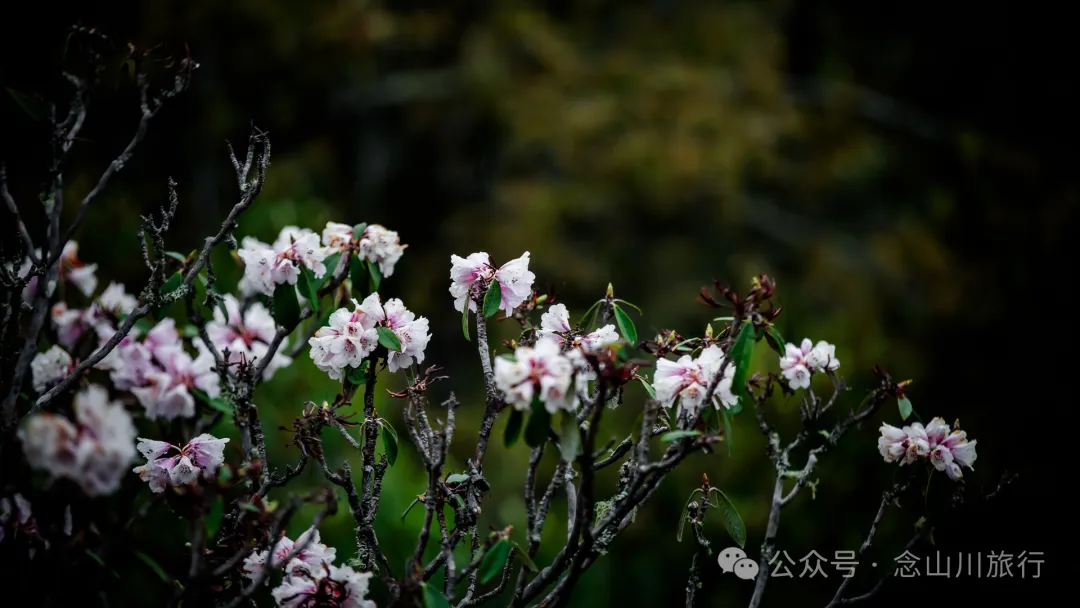
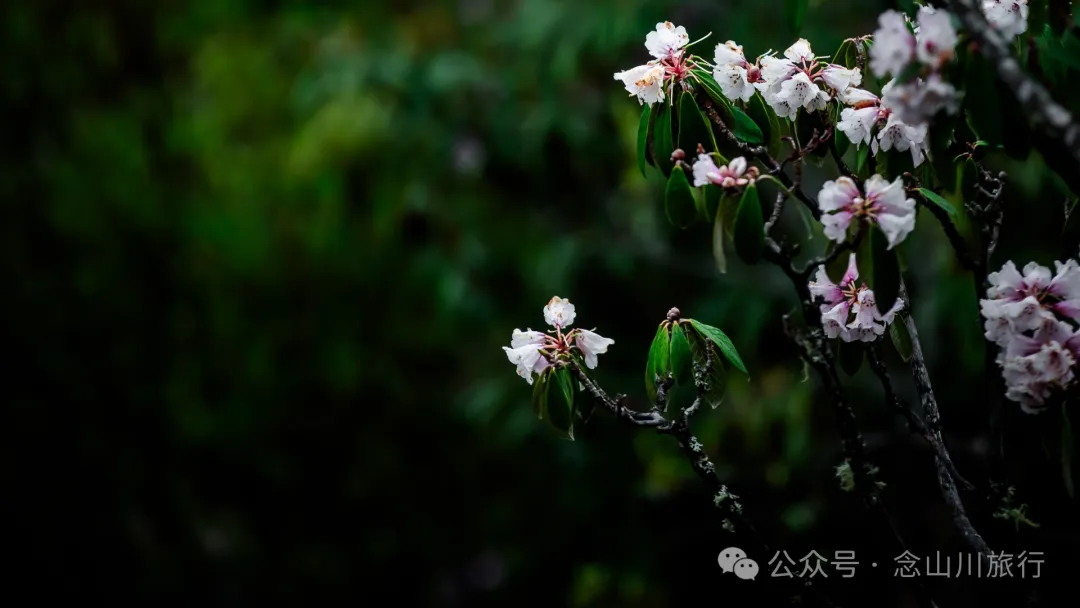
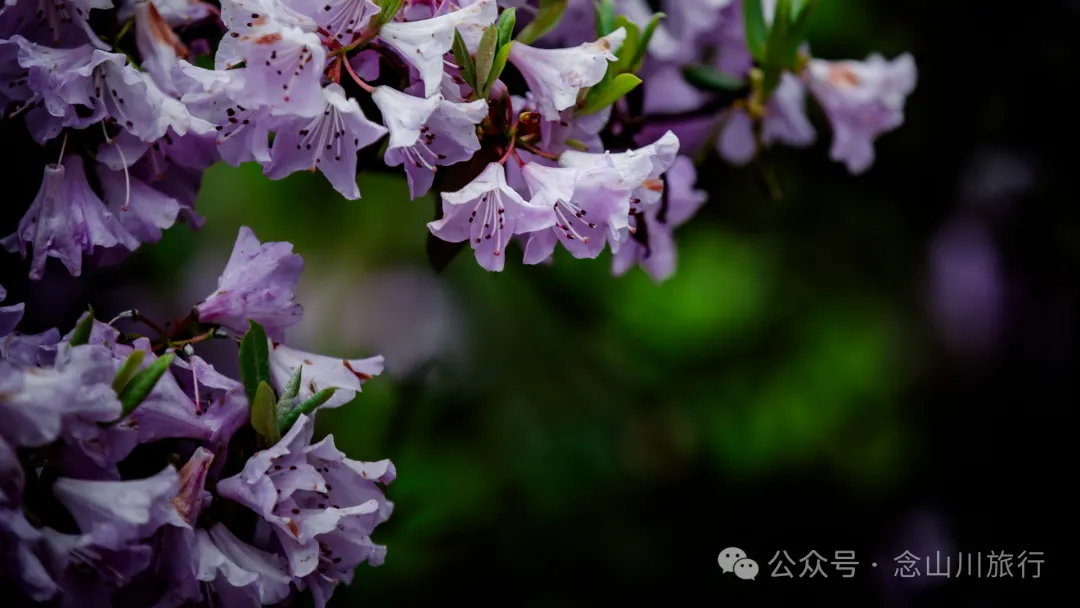
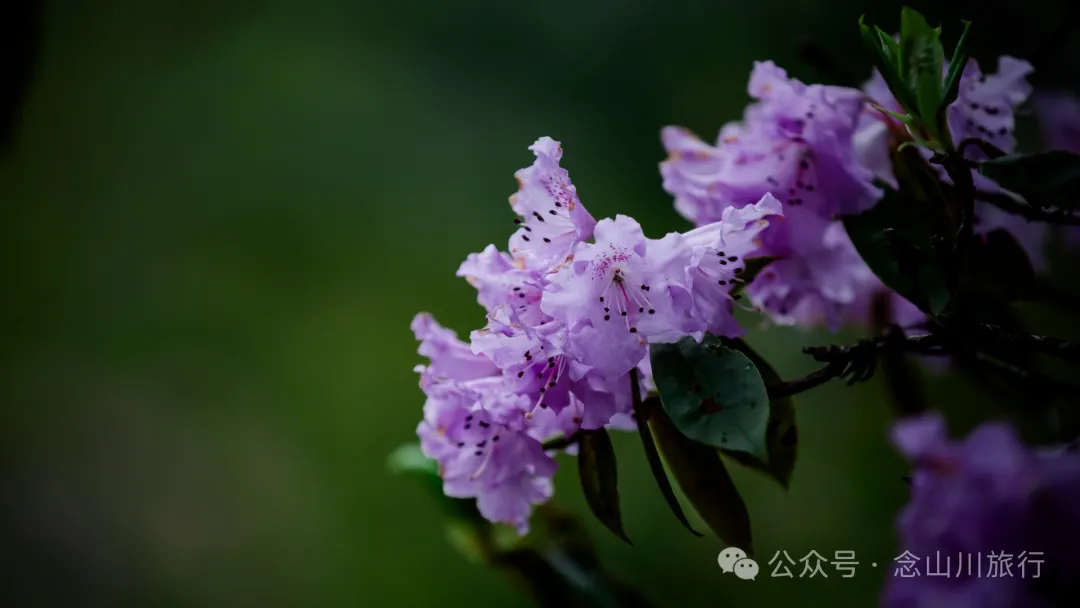
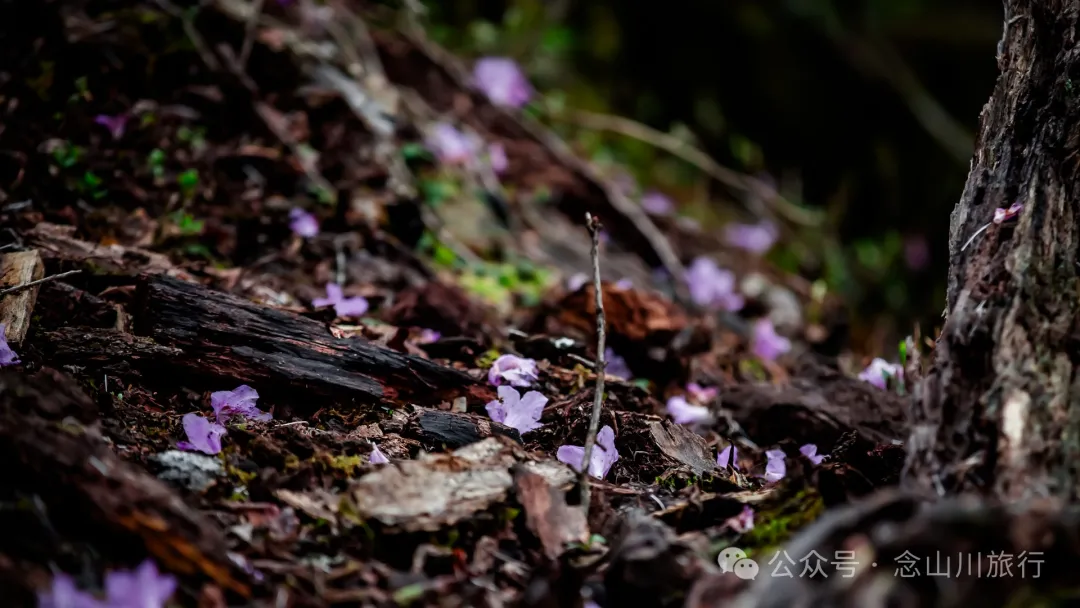
The azaleas on the branches bloom too densely. Some blossoms, averse to crowding, fall to the ground — finding solace in a piece of withered wood, plucking a verse as lingering as a distant melody.
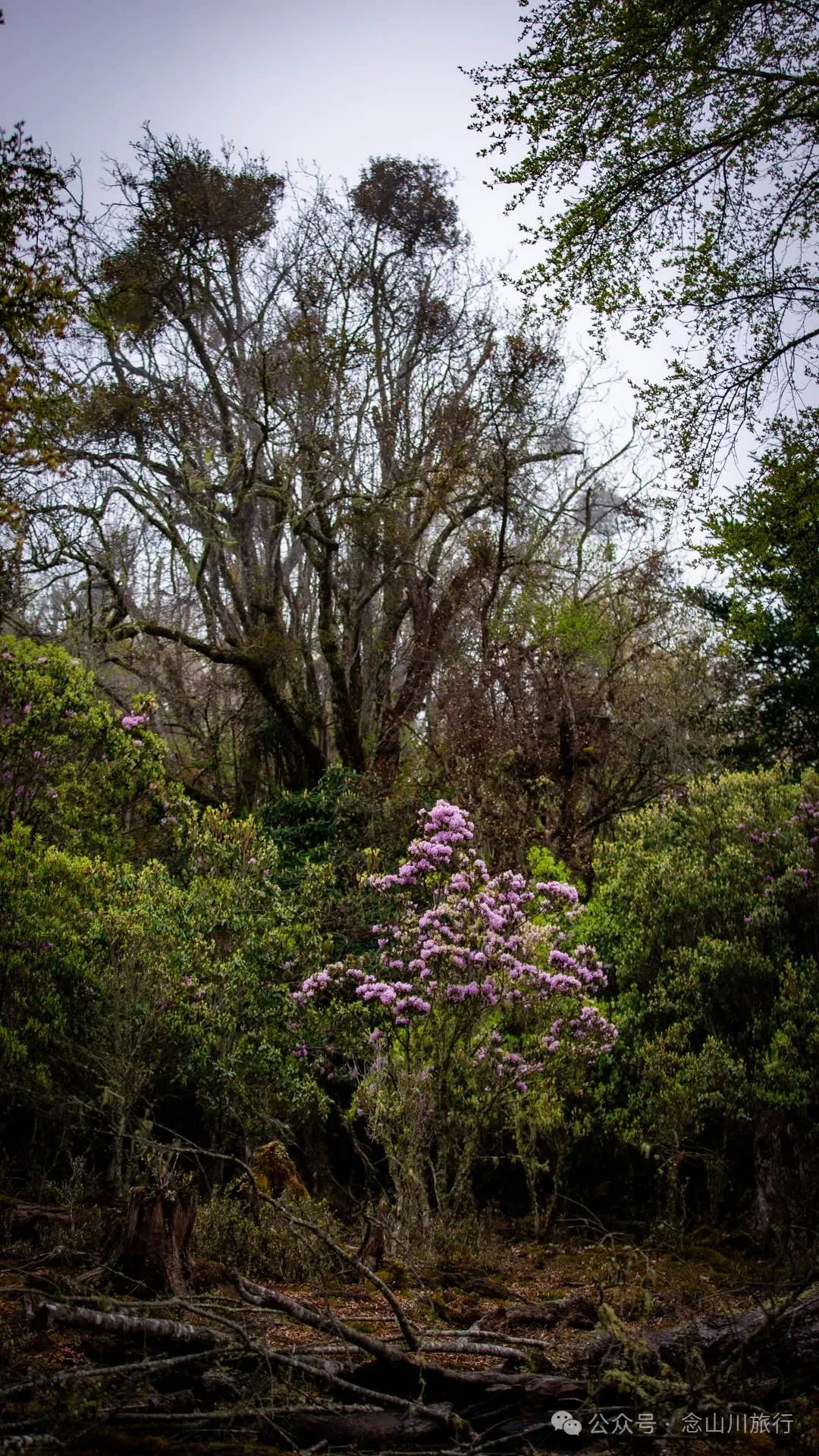
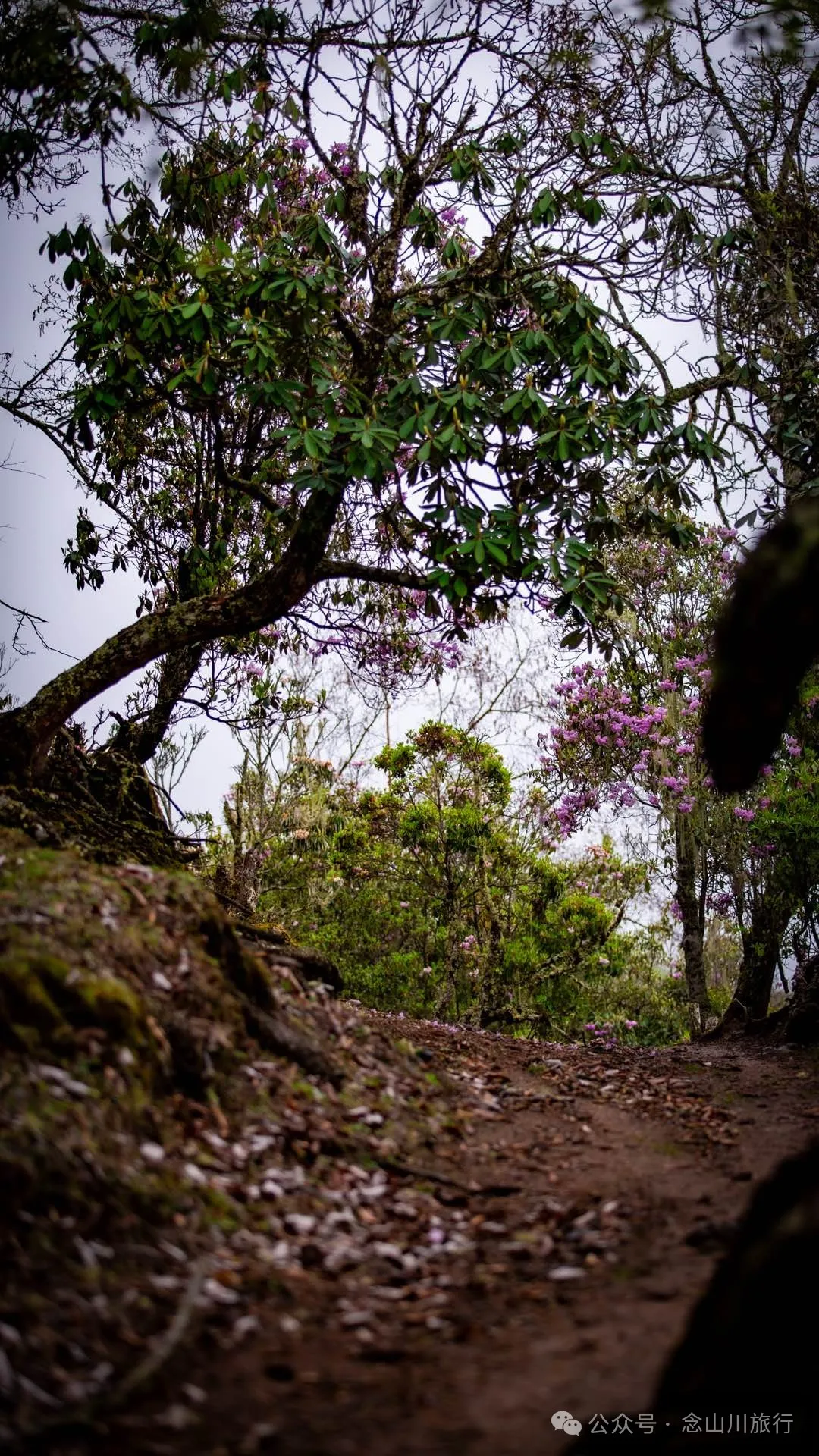
This is a mountain path leading to a sea of flowers. Following the path deeper into the mountains, more rhododendrons greet you, as if falling into a flower ocean.