
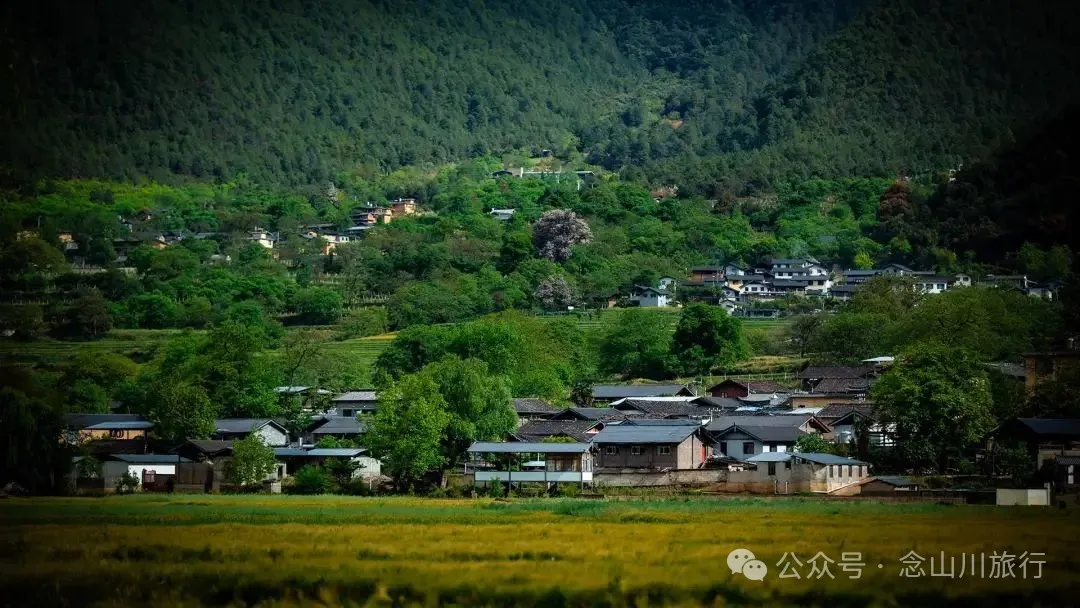
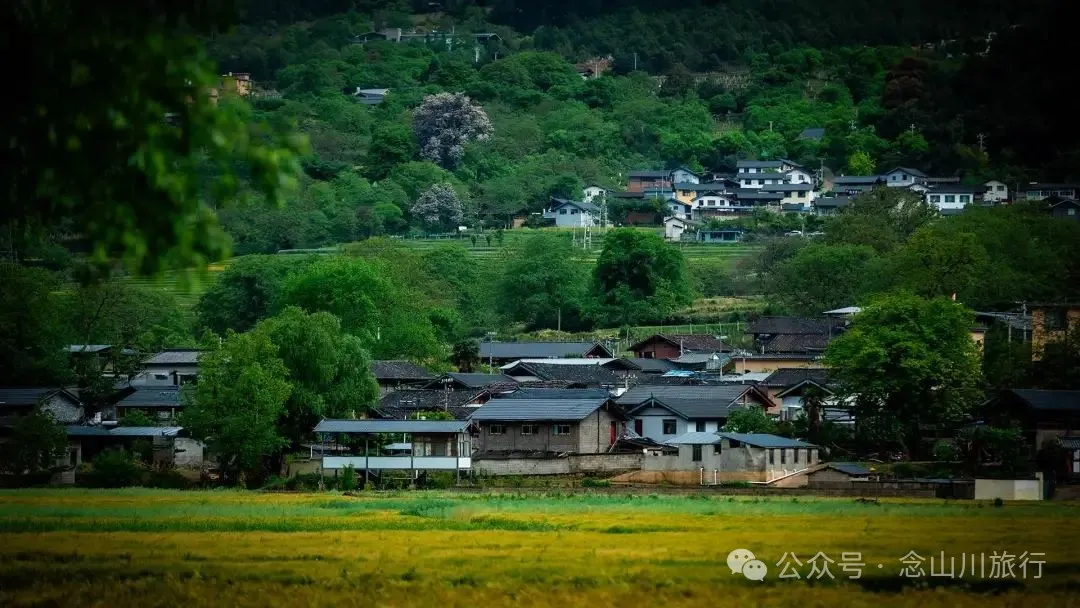
Nestled in the gentle embrace of the mountains lies a small village called Chongke, a village group of Qibie Village in Tacheng Town. Chongke's existence seems like a silent dialogue carefully arranged by nature—before the village stretches the vast wheat fields of the Lappu River valley; behind it stand the silent pine forests and high mountains pointing straight to the sky. Between the two lies this ideal home with curling smoke and faint human voices.
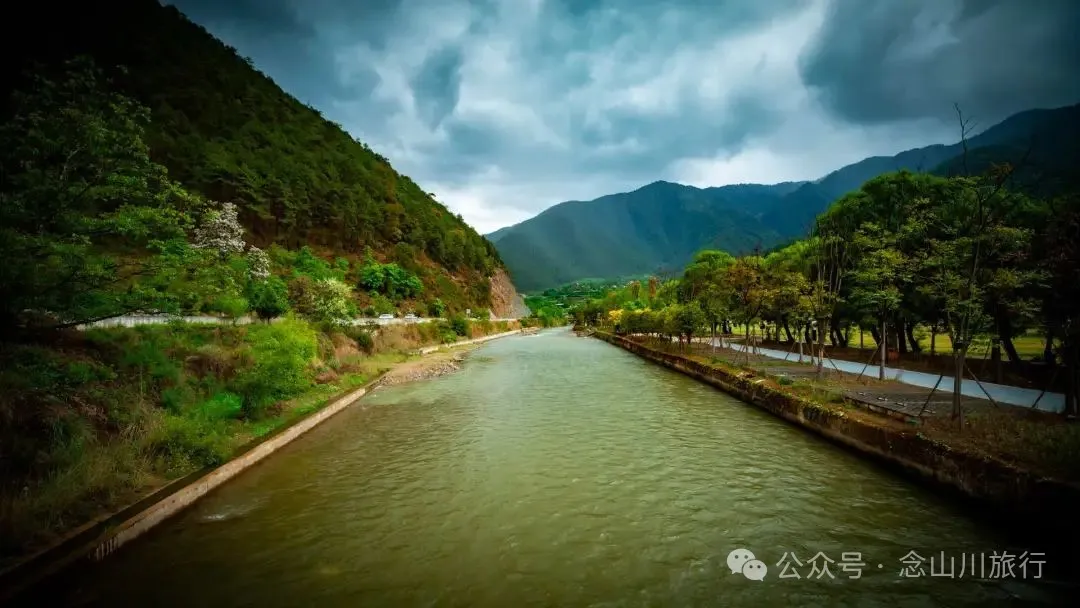
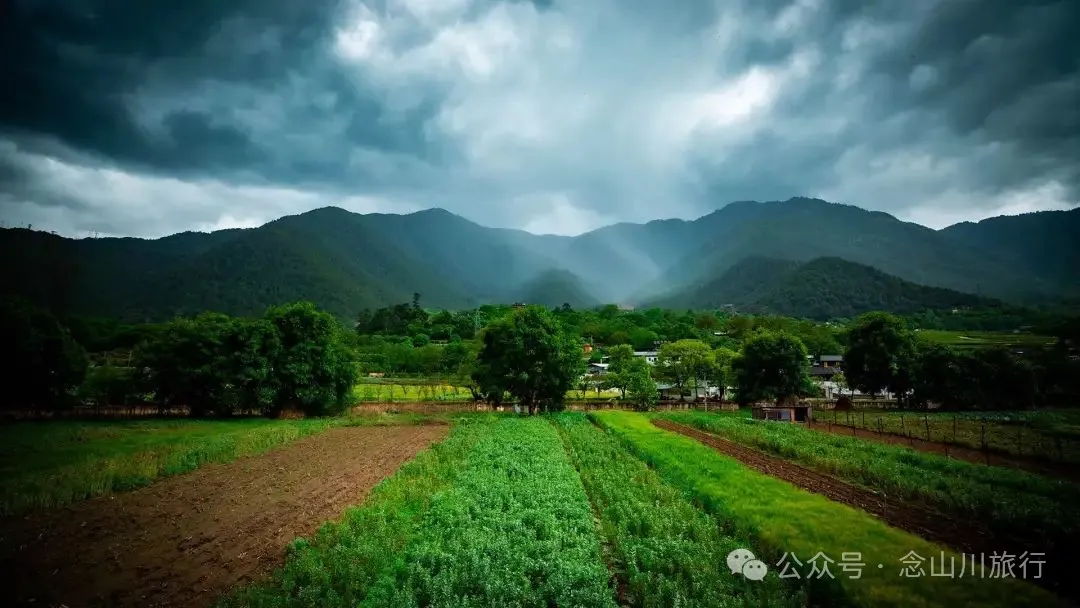
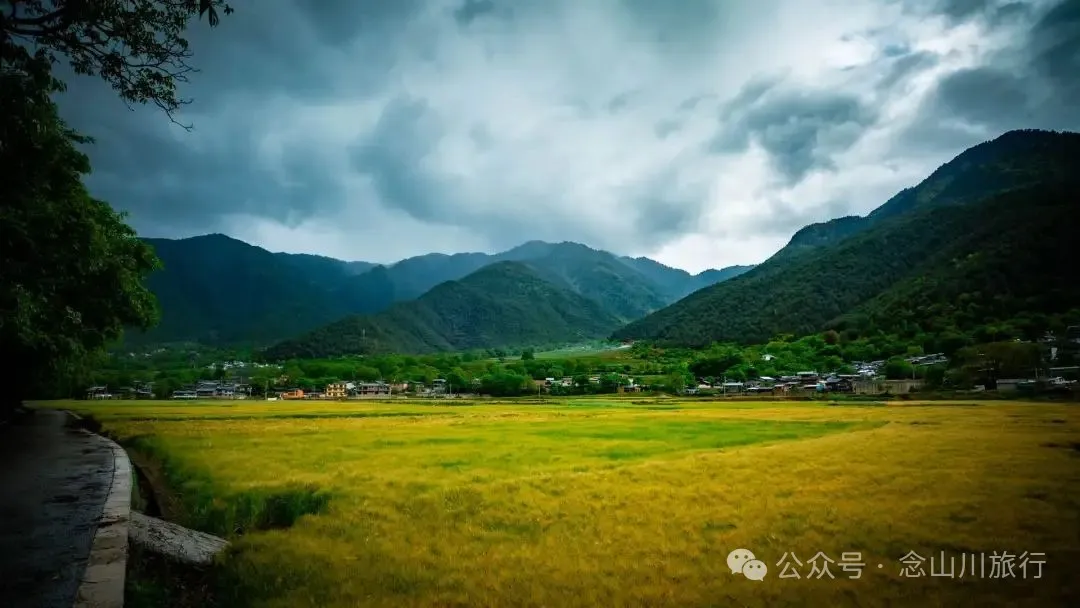
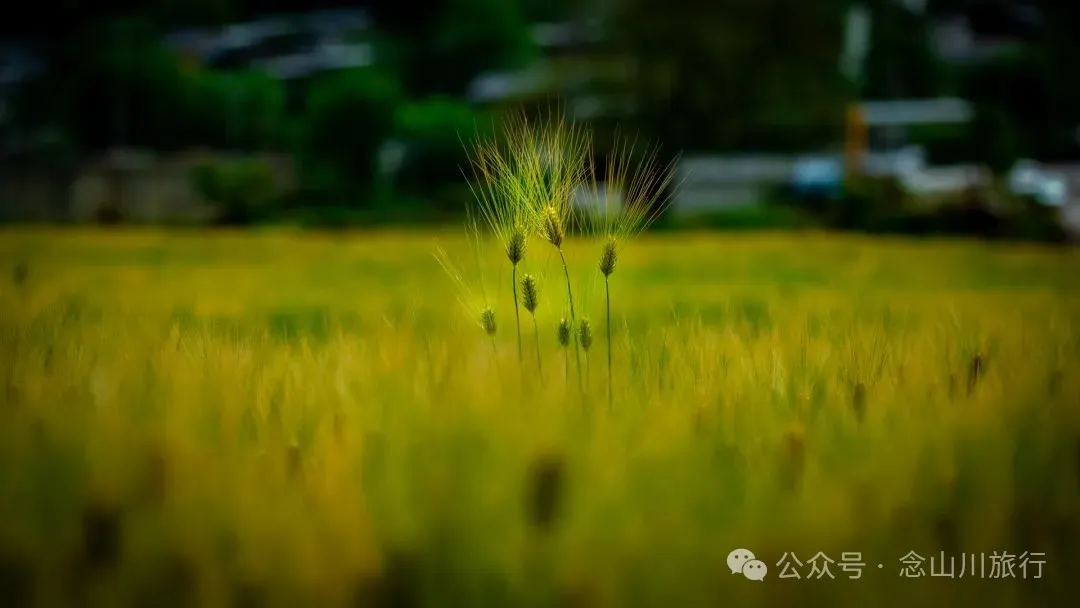
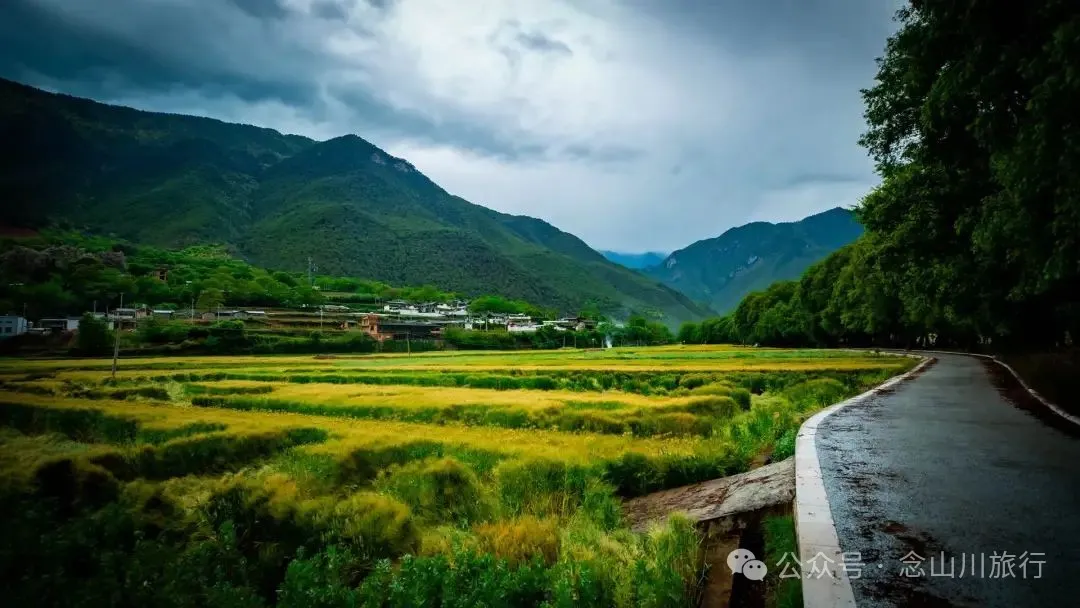
Before Chongke Village lies a generous scroll of land. After the rain, the earth becomes clearer and brighter. Looking from the Lappu River flowing in front of the village, the sight is instantly captured by a vast expanse of golden green. That is the wheat field—the breath of the village, the backdrop of life. In early summer, the wheat ears are full and heavy, bending the slender stalks. Under the clear plateau sunlight, they brew a nearly translucent greenish-yellow. The wind is the conductor of this golden ocean. It strolls from the distant col, gently brushes over, and the wheat waves surge layer upon layer, rustling softly, like the deep breath of the earth, or countless whispered secrets passing between leaves, drifting away to another distance.
The ridges are dotted with unknown wildflowers—purple, white, yellow—shyly swaying, adding a few jumping notes to this grand golden symphony. After the rain, sturdy figures of farmers occasionally appear among them, bending to inspect or walking slowly with hoes, like devout guardians of the wheat field. This wheat field is the foundation of the village's sustenance, the most faithful letter of the seasons' cycle, and the first touch of solidity and hope that rushes into the heart when opening the window each morning.
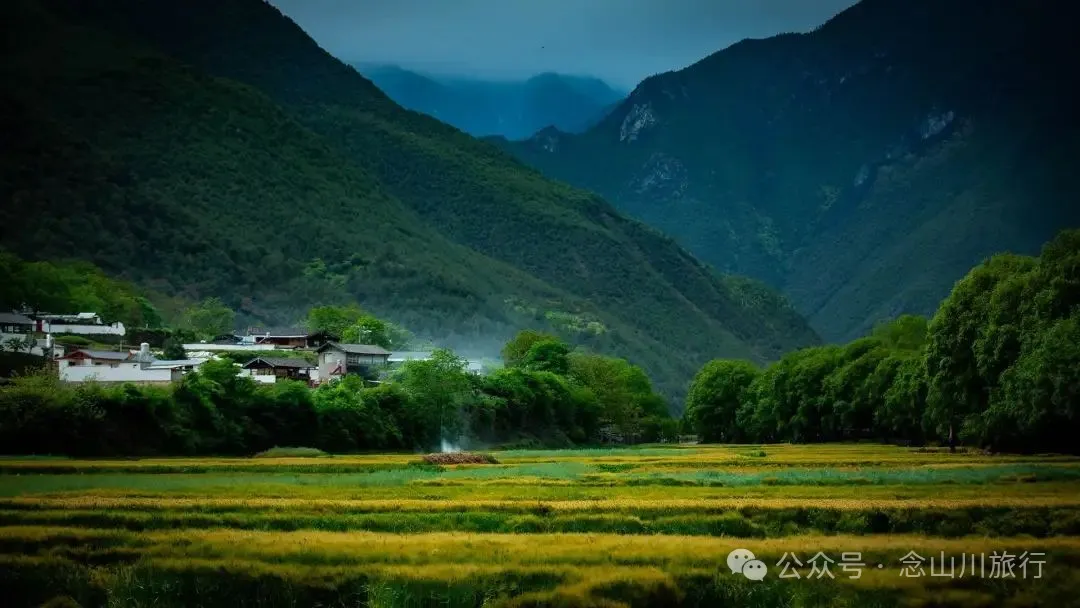
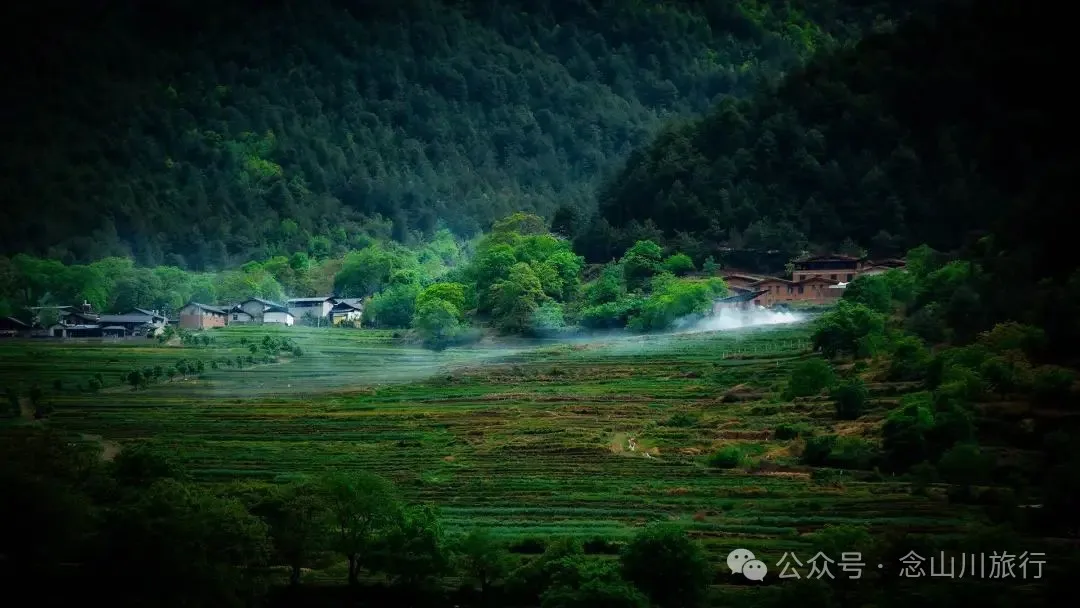
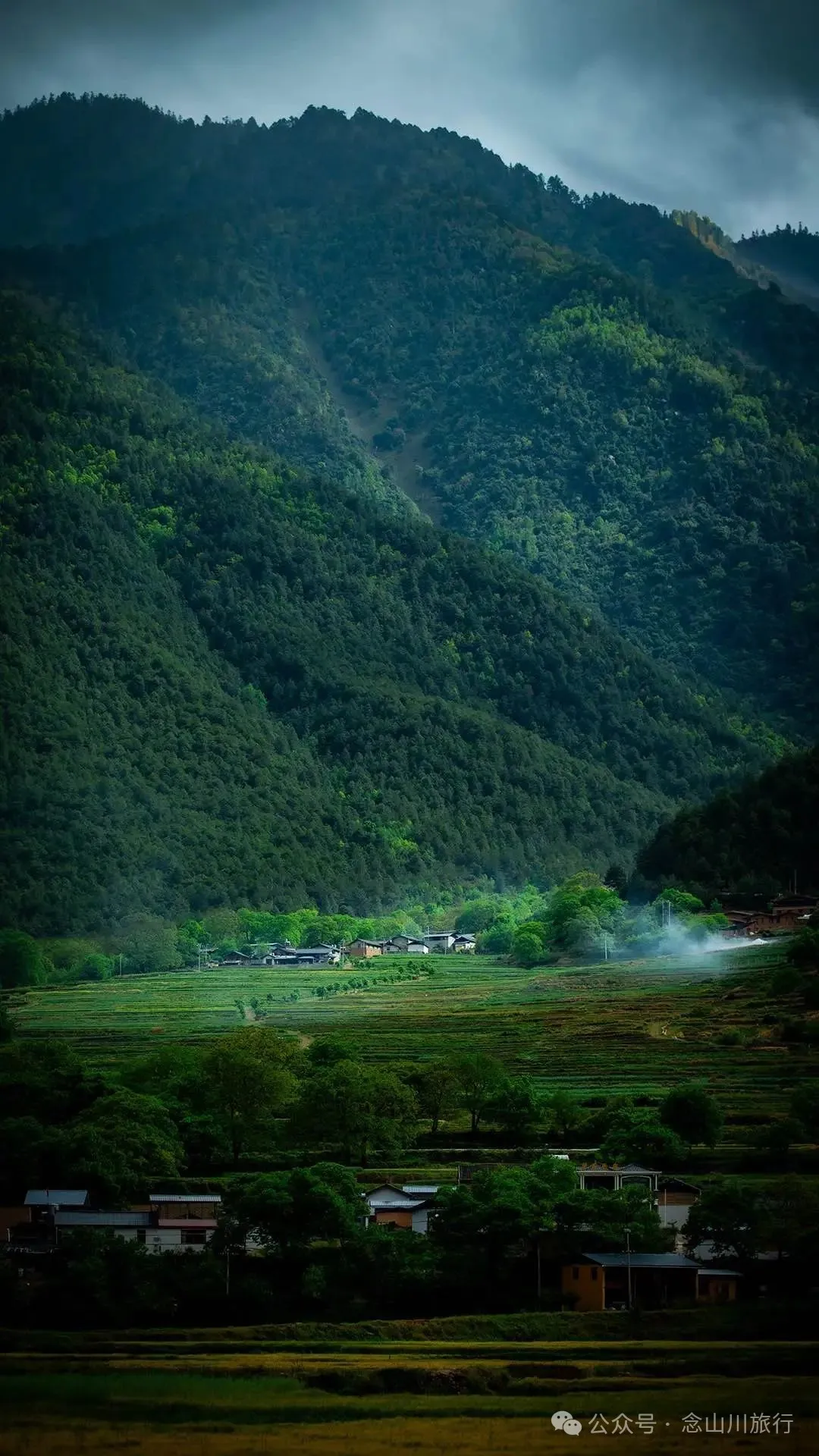
Behind the village, the silent pine forest and high mountains, like a solidified dark green giant wave, with eternal solemnity, plunge straight down from the clouds, gently yet firmly embracing the village in their arms. The terrain is steep, with jagged rocks occasionally revealing their ruggedness among the dense pines, telling of the hardness of time. The pine forest is deep and rich; the evergreen needles weave an immensely heavy curtain. That green is the gloom of fully absorbing heaven and earth's rain and dew, the vigor weathered by wind and frost. Walking into it, the fragrance of pine resin greets you, refreshing the heart. Underfoot are thick pine needles accumulated over years, soft and silent to step on, as if treading on a carpet of time. The light is dappled in the forest, birds chirp clearly, and occasionally a squirrel with a fluffy tail flashes through the branches, stirring a patch of silence.
When the mountain wind passes through the sea of pines, the pine soughs like the whispers of gods, low and majestic, slowly pouring down from the heights, covering the entire village, bringing an awe-inspiring coolness and tranquility. Whether in the silent, faint dawn or the night of shooting stars and wandering moon, bursts of pine soughs rise from the mountains behind the village, comforting the villagers. The mountain peaks are often shrouded in clouds and mist, a realm beyond mortal reach, mysterious and holy.
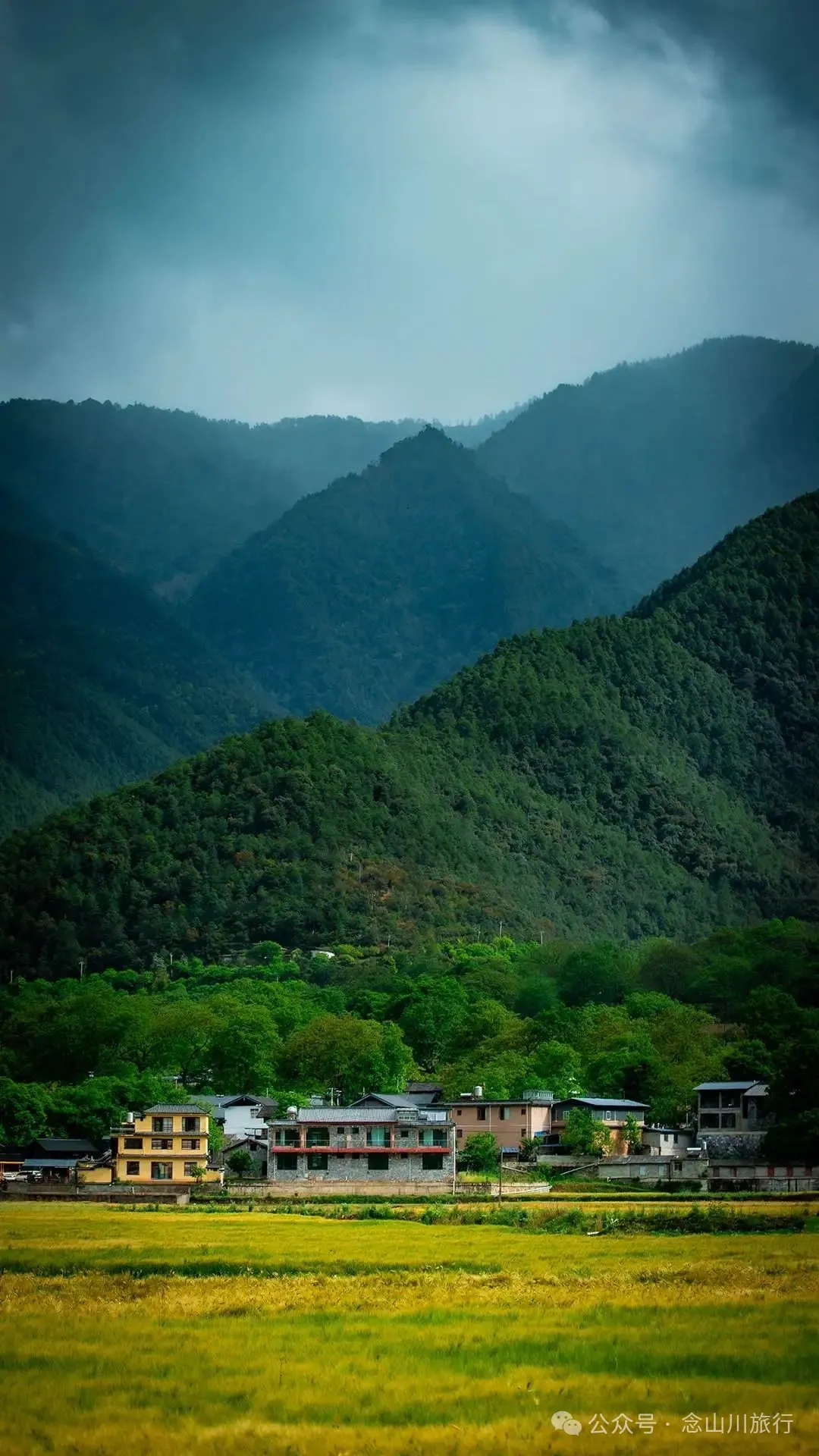
Chongke Village rests peacefully between this abundant gold and the eternal dark green. Low houses are scattered along the gentle slopes, mostly of simple stone walls and wooden beams, with blue tiles on the roofs shining warmly in the sun. In the early morning, thin mist veils the village like gauze, blending the freshness of the wheat fields with the chill of the pine forest. In the evening, the afterglow of the setting sun first dyes the towering pine tips red, then slowly flows down, gilding the wheat fields with a final brilliant edge, and finally gently caresses every roof and window of the village. The winding village paths record countless footsteps of the past. Old people sit at their courtyard gates, squinting at the wheat waves and the mountain scenery, wrinkles etched with stories of time; the laughter of children chasing and playing echoes in the fragrance of wheat and the lingering sound of pine soughs, crisp like splashing water in a mountain stream.
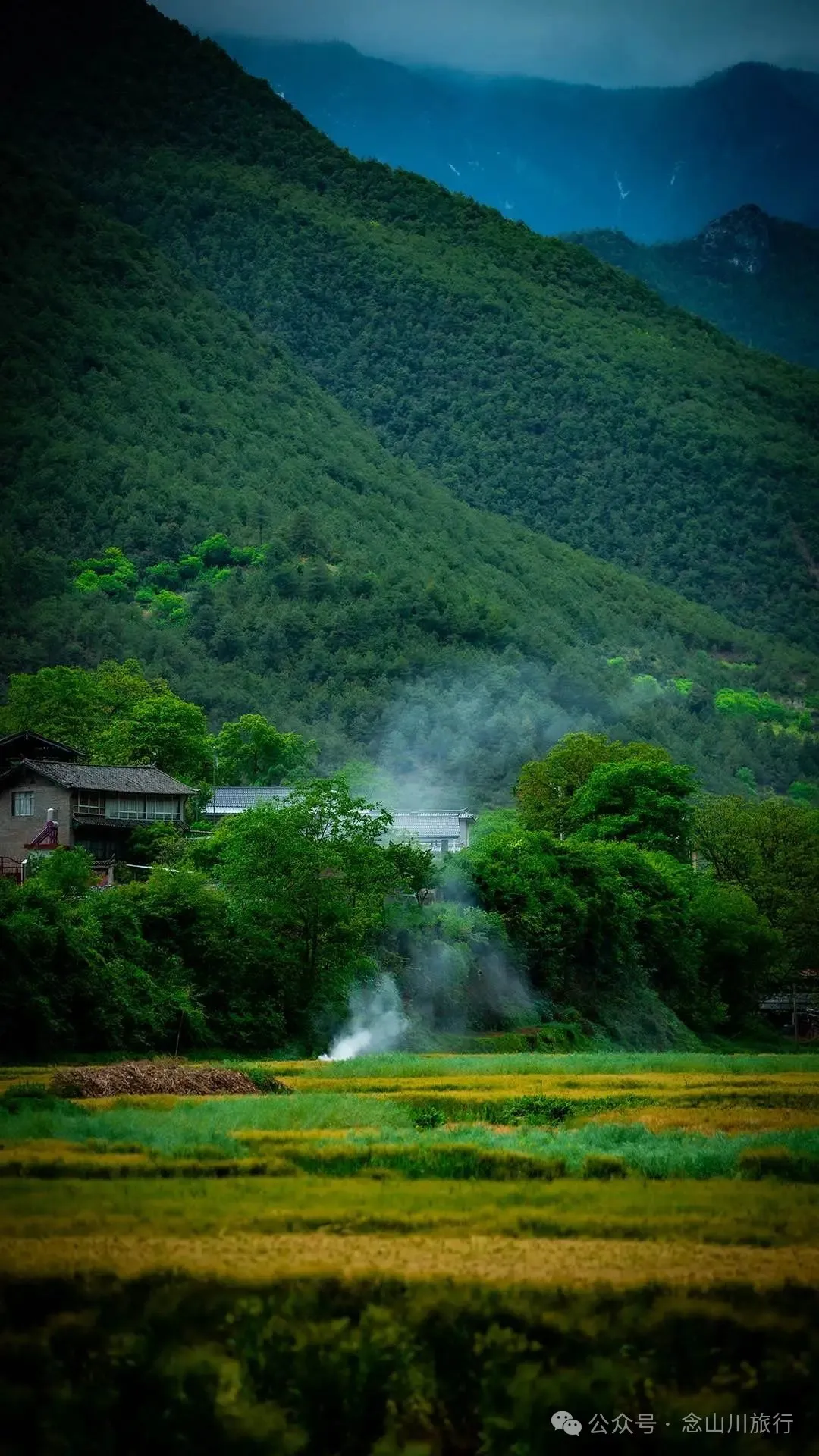
Here, time seems to take on a concrete form. The wheat field, from green to gold, is flowing, vibrant time; while the pine forest and high mountains stand unmoved, a solidified monument guarding time. The fragrance of wheat is the most solid taste of human life; the shadow of pines is the deep background where the soul can rest. Chongke Village, in the plump embrace of the wheat field and the solid arms of the high mountains, finds its most authentic and peaceful posture. It needs no words; the rise and fall of wheat waves are its breath, the roar of pine soughs its heartbeat, the flow of the river its song. It simply exists quietly, in the interweaving of wheat fragrance and pine shadow, telling a simplicity and eternity that coexists with heaven and earth and resonates with all things—an unfinished poem in the sound of wheat waves and pine soughs.