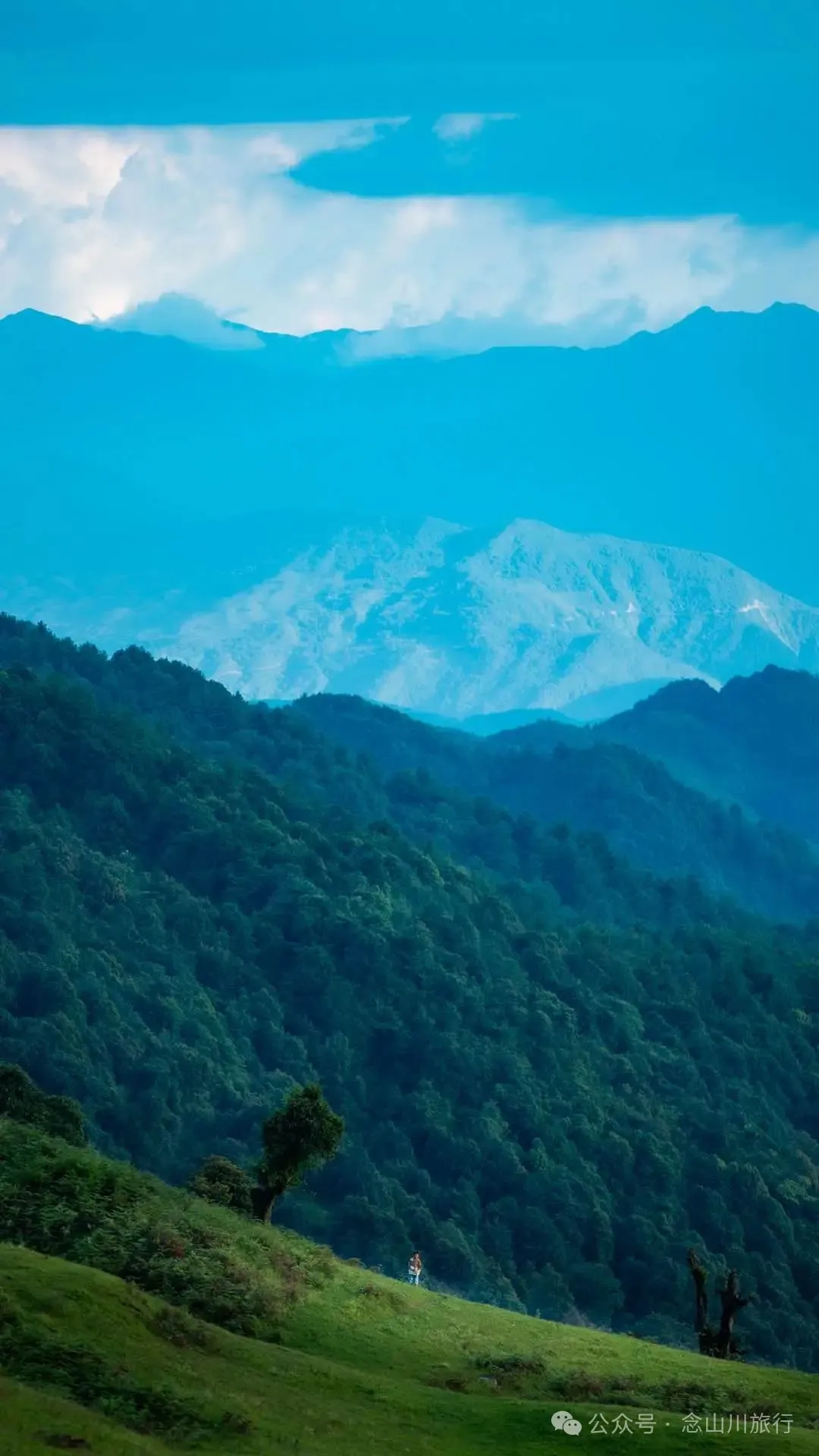

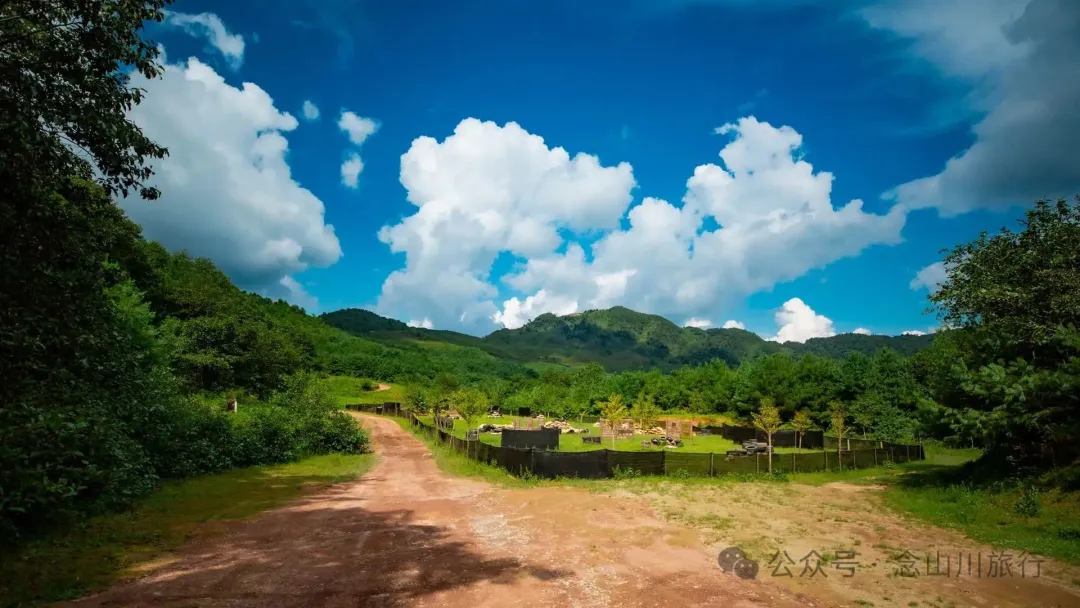
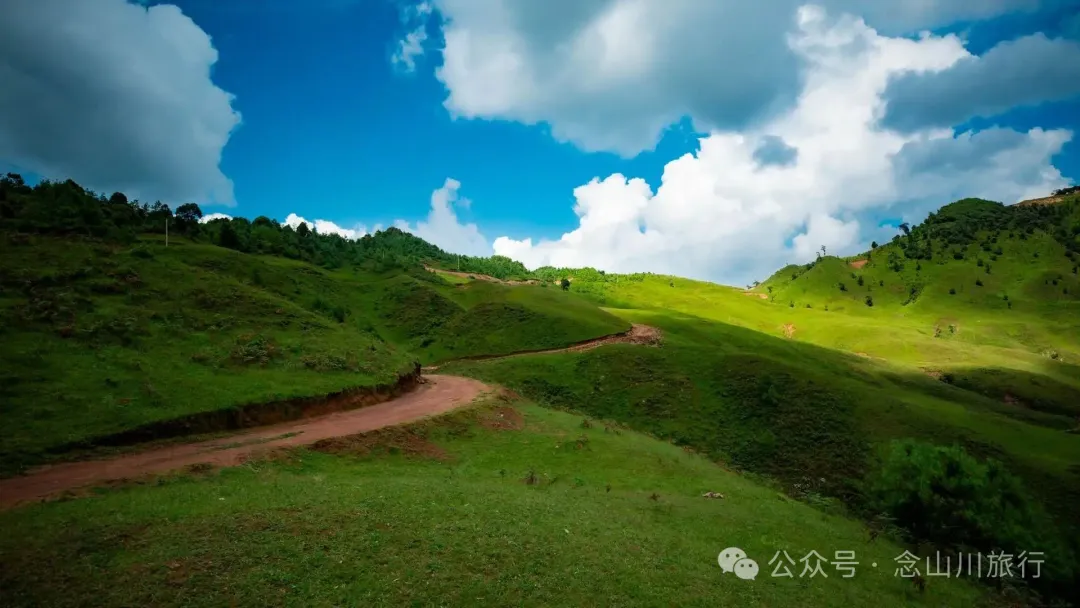
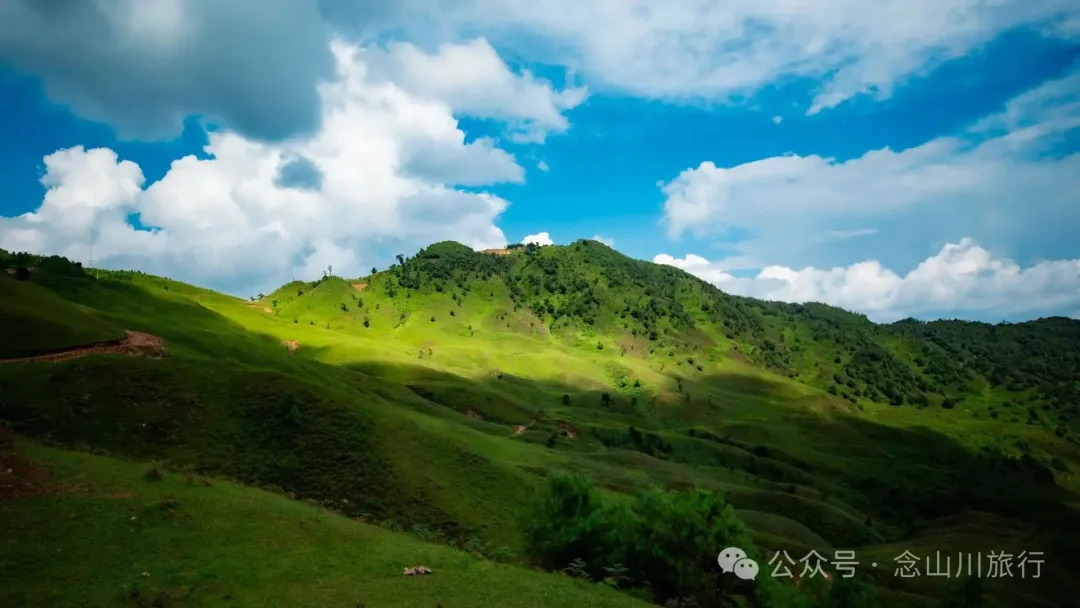
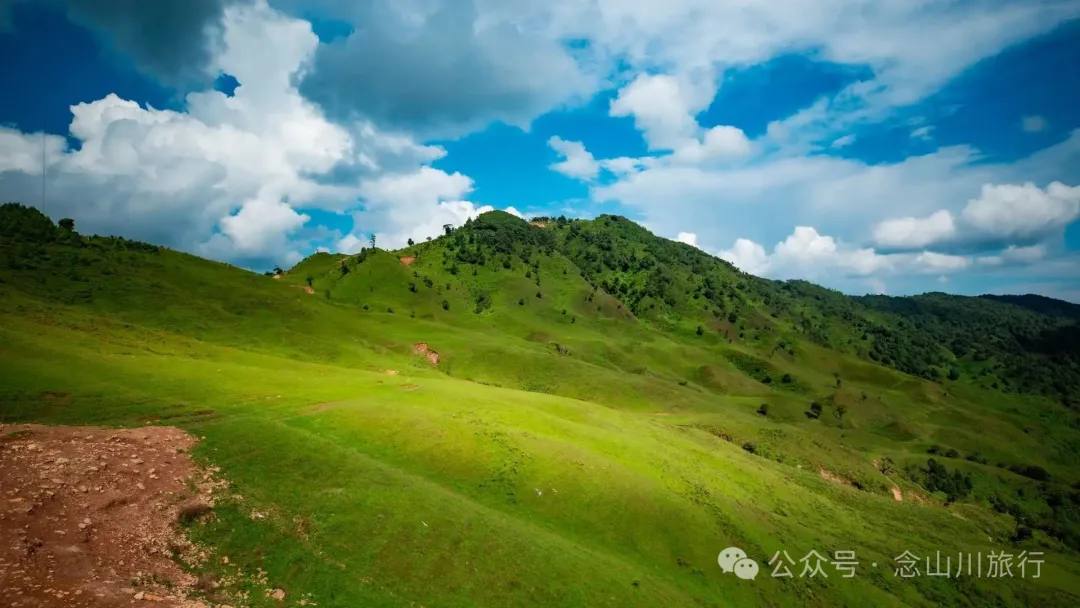
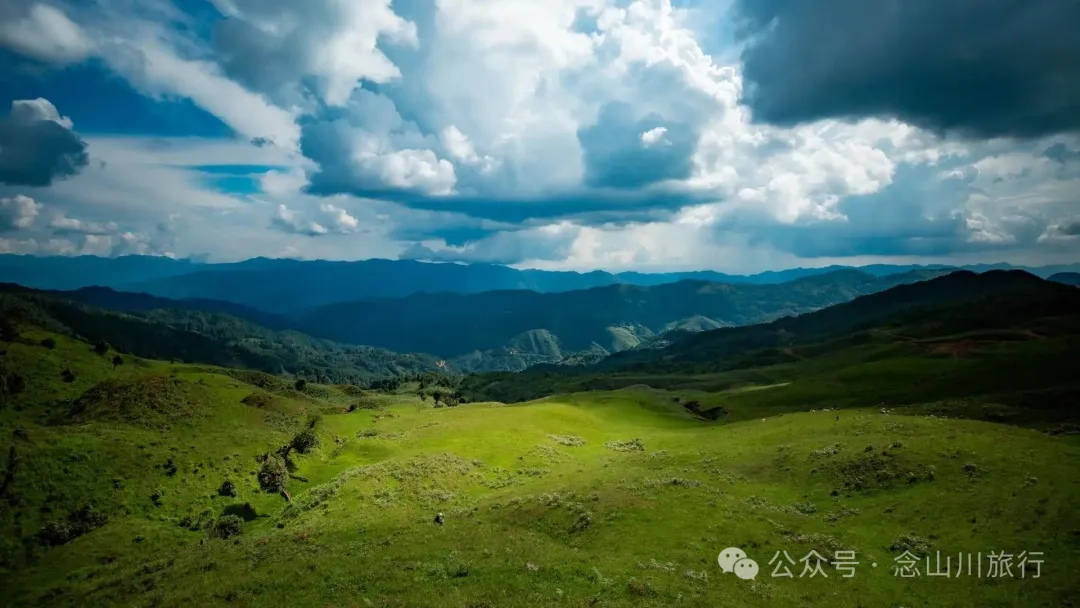
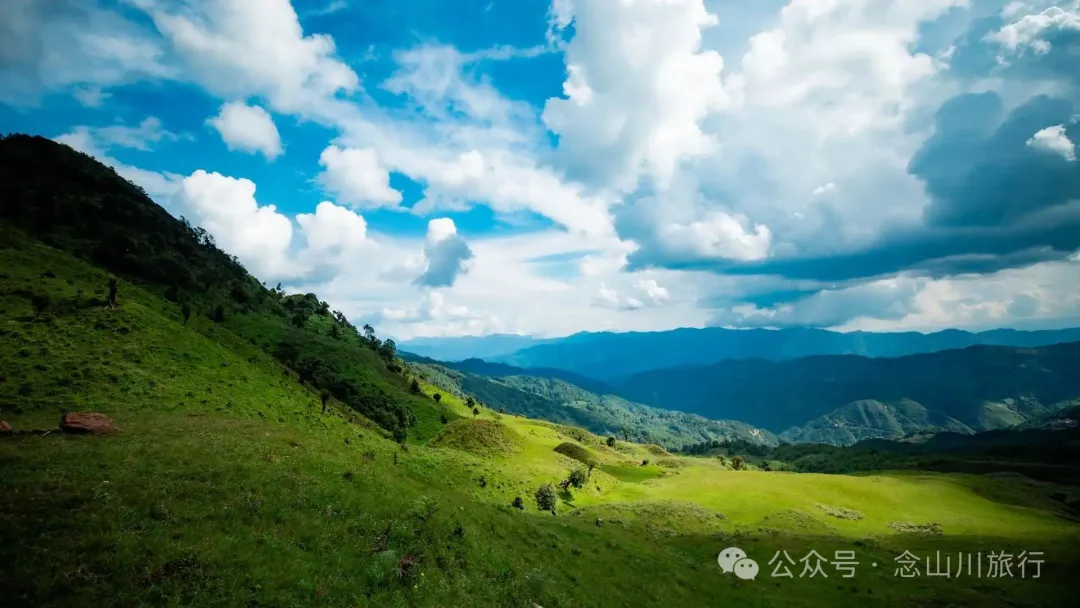
When we arrived at Baihua Village, the cumulonimbus cloud behind us had already stayed a few kilometers away. The sunlight above was shining brightly on the village, which resembled a small Alpine town. In the distance, the huge sloping meadow at the foot of Taiping Mountain was also bathed in the bright summer sunshine, blending seamlessly with the farther mountains, rivers, and clear sky, safe and sound.
Baihua Village seemed very mysterious. Apart from a row of small wooden houses serving as an inn, no other farmhouses were visible. We met a villager on a motorcycle carrying two piglets home to raise. He said he was from Baihua Village, which had over 60 households scattered in the surrounding mountains. However, only the Baihua Village Inn appeared on the map, and online information only related to this inn, not the village itself. Nearby, there were villages like Shangduozha, Xiaduozha, Gumula, and Erpudi. The Baihua Village Great Meadow we were heading to was located in a vast blank area between these villages. The nearest marked point on the map was Taiping Mountain Temple, and locals also called it Taiping Mountain Meadow.
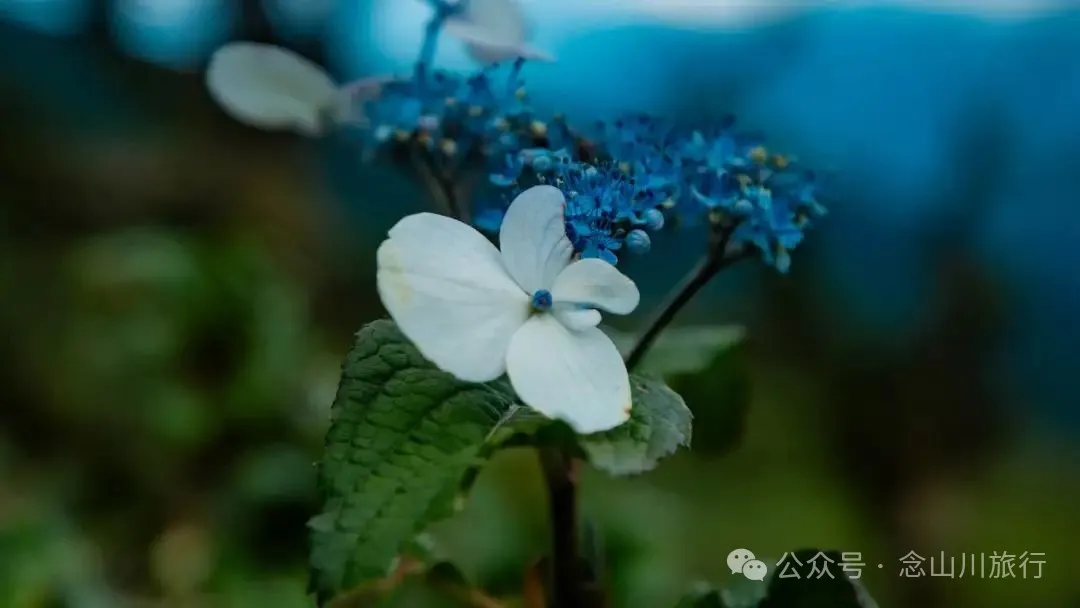
This was our second visit to the great meadow at the end of Baihua Village. The first time was in September last year, during the meadow's beautiful flowering season. At that time, the most abundant flowers were Halenia elliptica, but this time we didn't see a single one. However, to our surprise, we discovered another unfamiliar plant in the gullies: Hydrangea aspera. Hydrangea aspera is a very unique wild plant. Its arched corymbose inflorescences have 4 or 6 white sterile flowers on the outer edge, while the center is filled with small blue fertile flowers. Since it was my first time seeing Hydrangea aspera, in my ignorance, I initially mistook the tiny blue flowers for the stamens left behind after the large white flowers withered. Only after getting closer and observing carefully did I recognize them as tiny blue flowers, lightly perched on the branches, dreamlike and ethereal.
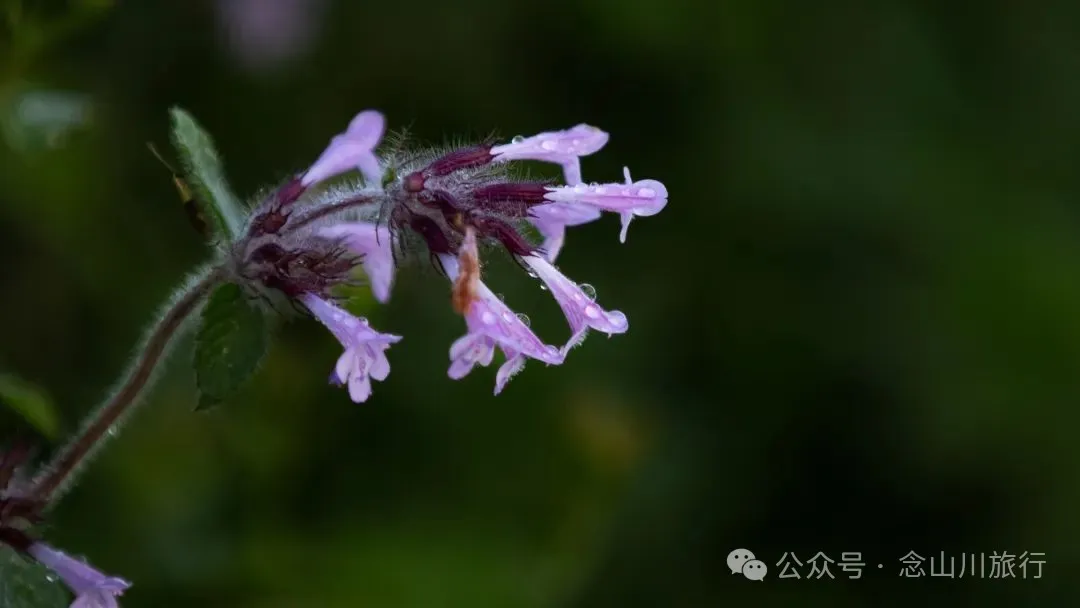
Apart from Hydrangea aspera, the regular residents of the meadow this season were the ubiquitous purple Clinopodium chinense, yellow Potentilla fulgens, and wild strawberries. The pea-sized wild strawberries lay on the grass, their pinkish-white fruits very tempting. Picking one and putting it in my mouth, it was sweet and sour, with a faint fragrance that delighted the senses.
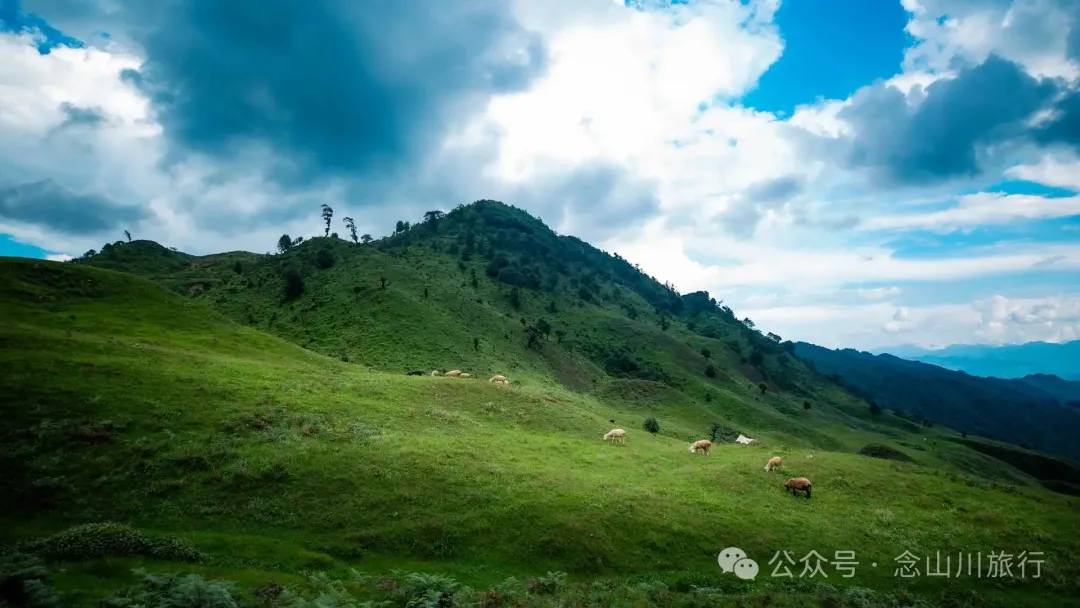
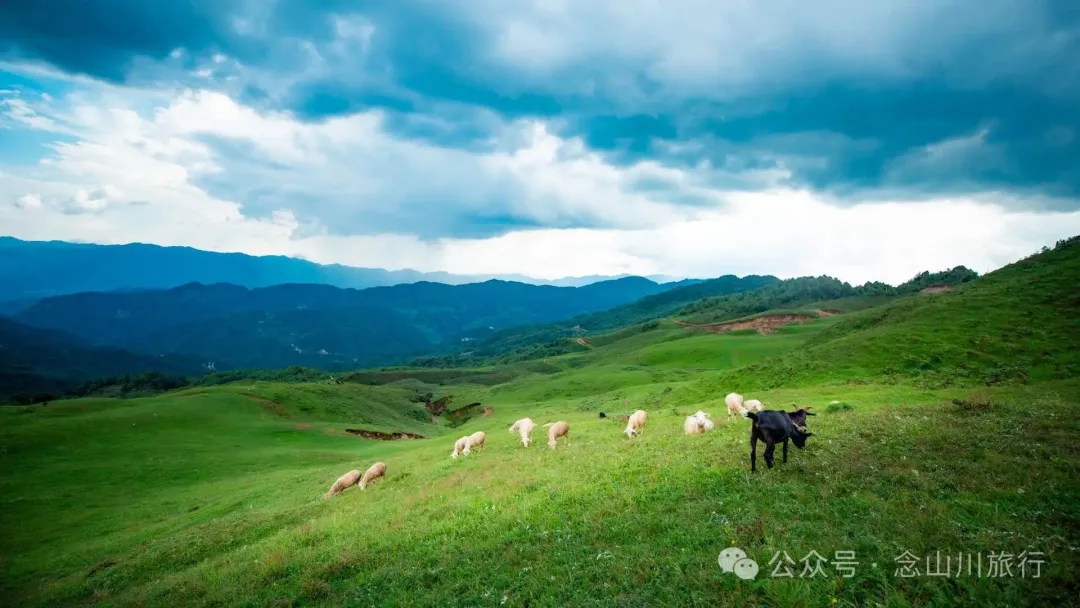
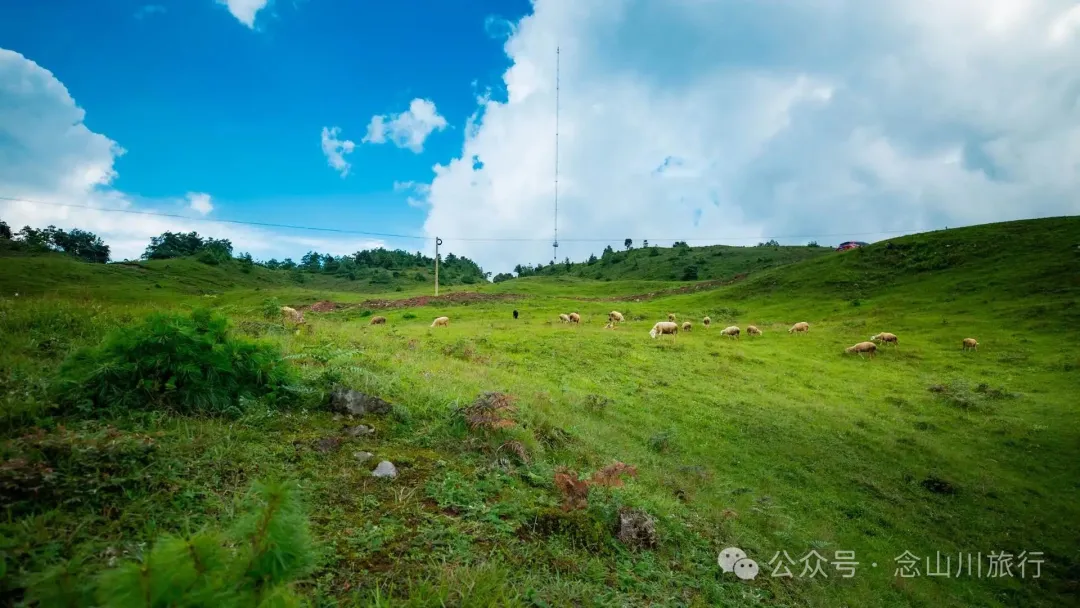
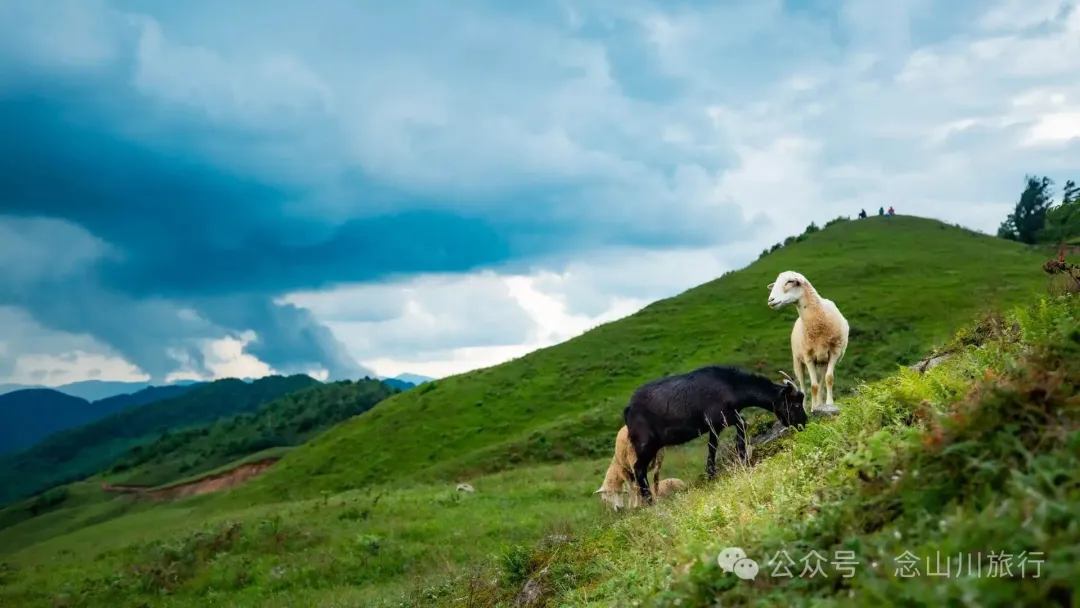
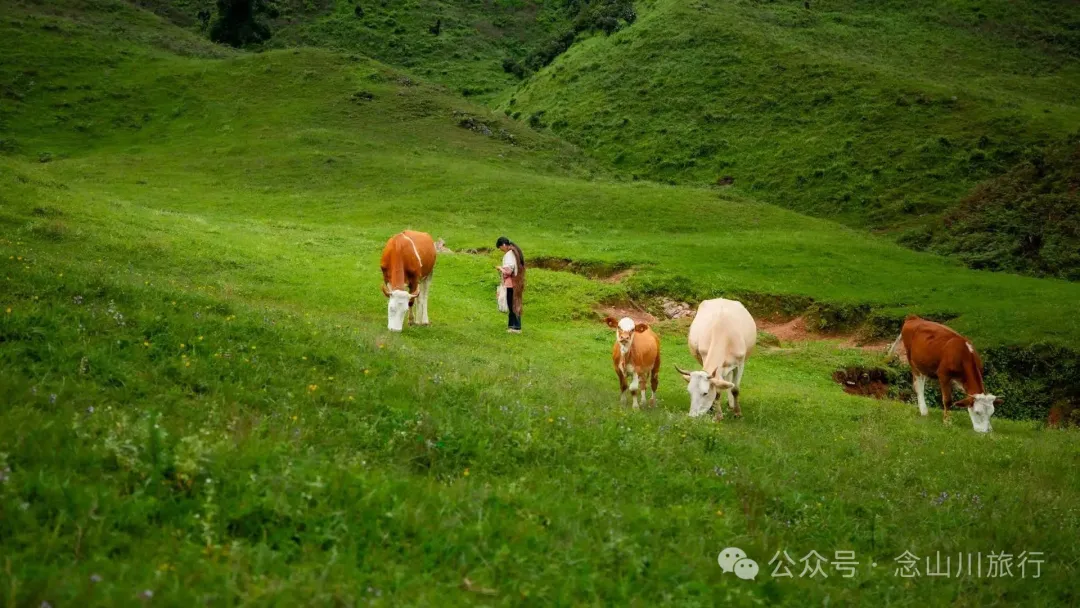
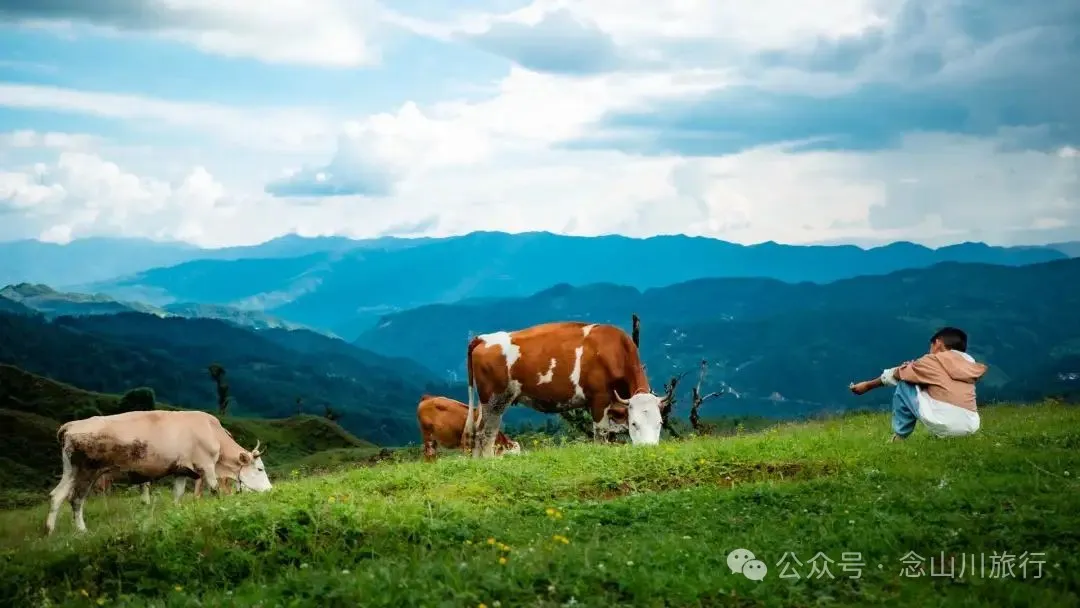
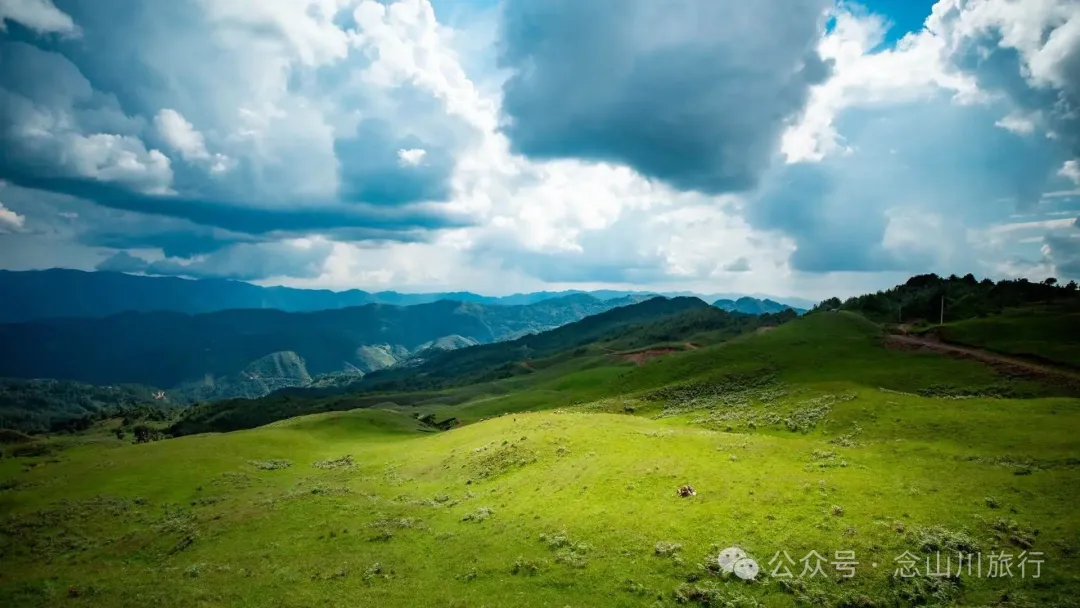
When we reached the campsite, the clear sky we had seen at the foot of the mountain quickly gathered many clouds. Thick, heavy clouds moved along the ridges, leaving only a narrow space between the sky and the earth. The great meadow became gloomy and dim. We stood in this narrow space, watching the undulating mountains in the distance and the dancing clouds in the sky. It was a bit disappointing; we had encountered bad weather last time too and missed the meadow's most beautiful moments.
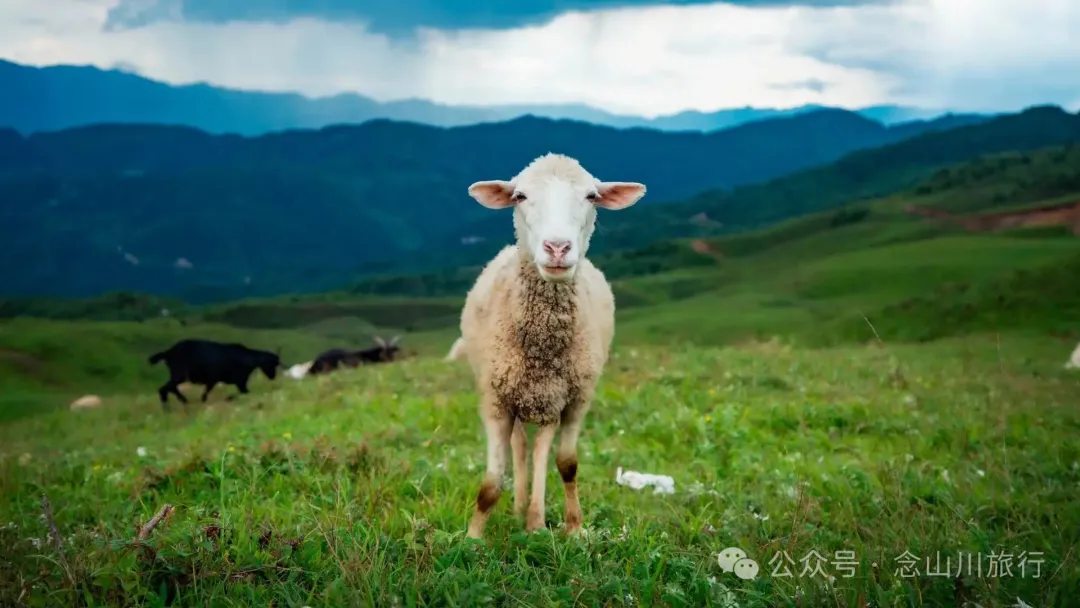
Cattle and sheep were passersby on this great meadow. Herds of cattle and sheep emerged from the farther mountains and came into our view. As for the shepherds, there were grandparents bringing their grandchildren to herd sheep, and a girl about to enter middle school following her grandfather to tend cattle. I walked up to a girl following four yellow cattle and chatted with her. Her family lived in the nearby Gumula Village. Pointing to the northwest ridge, she said the village was on the other side of the mountain, about half an hour's walk away. Her grandfather was driving a large flock of black goats up the grassy slope above us, while she followed the four cows wherever they went.
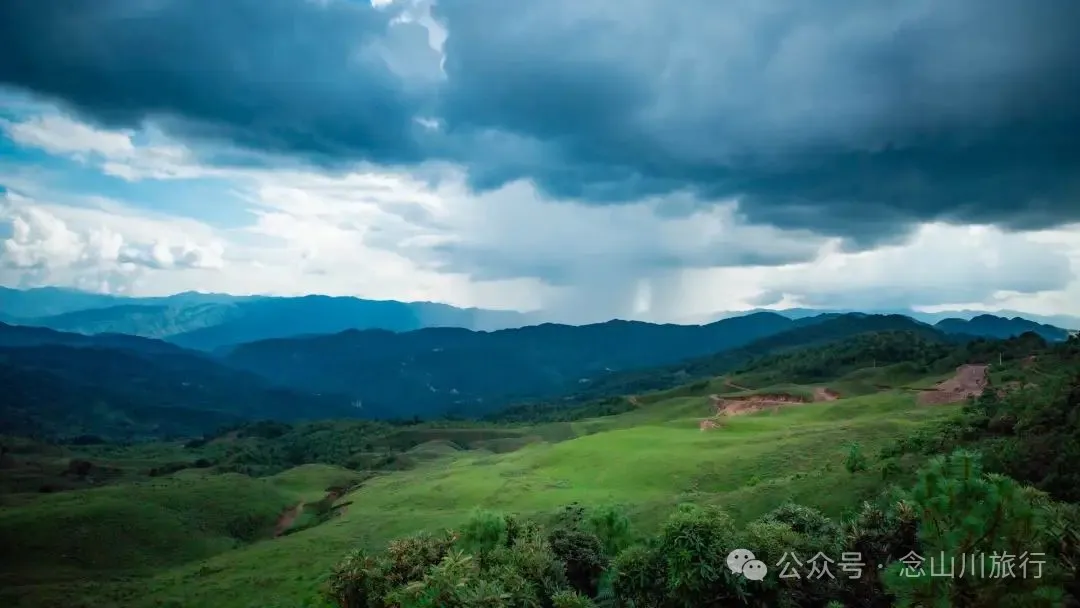
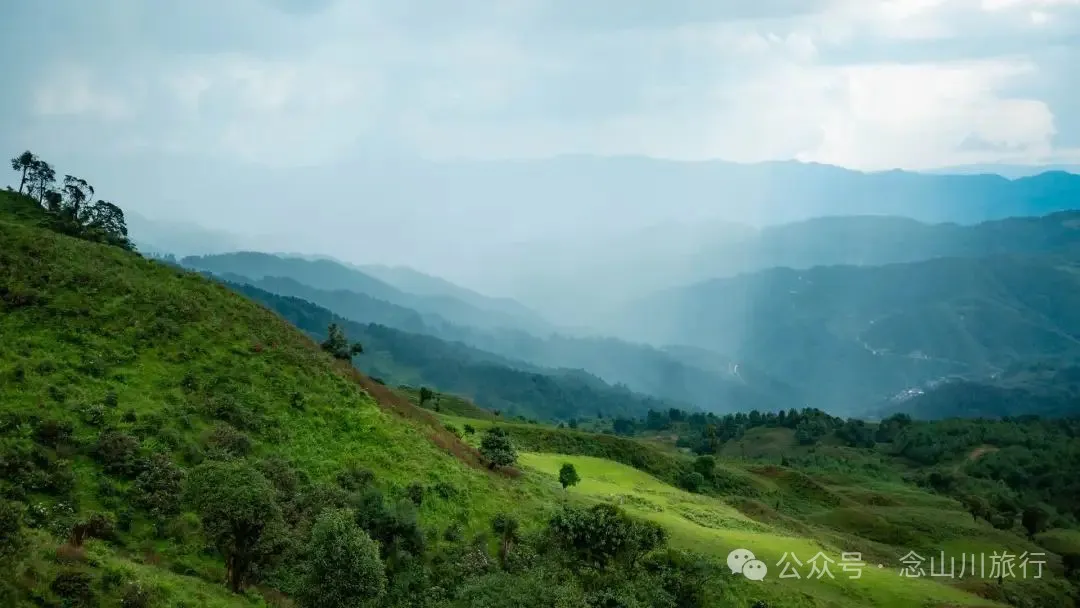
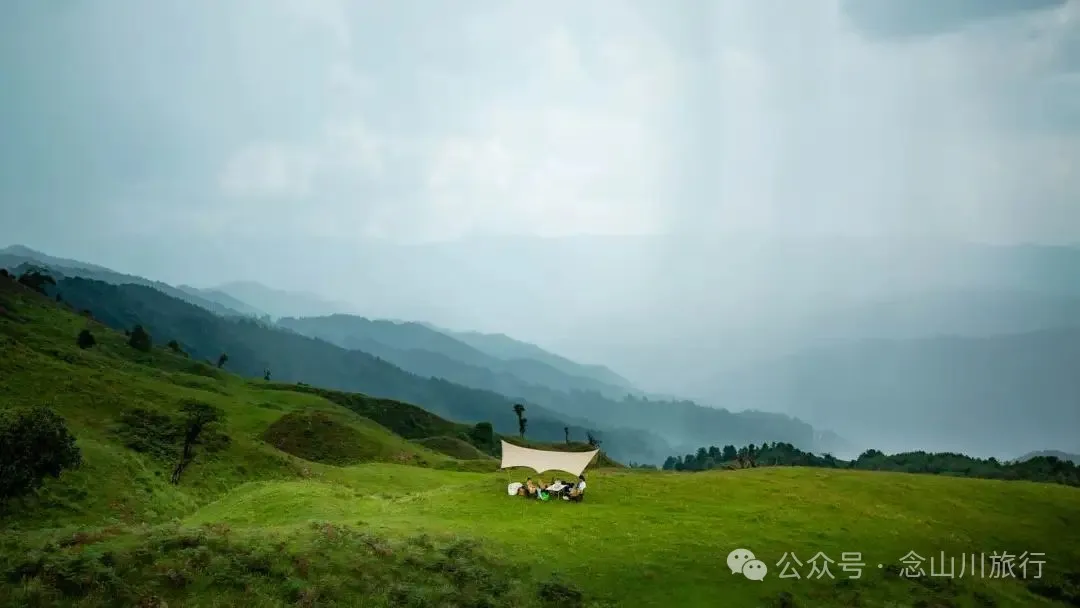
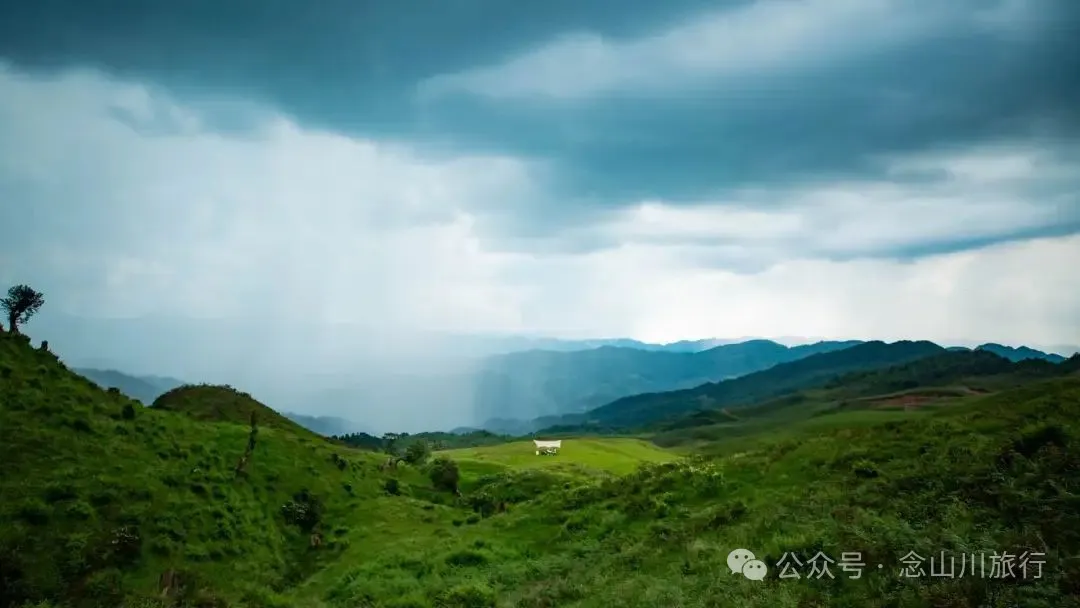
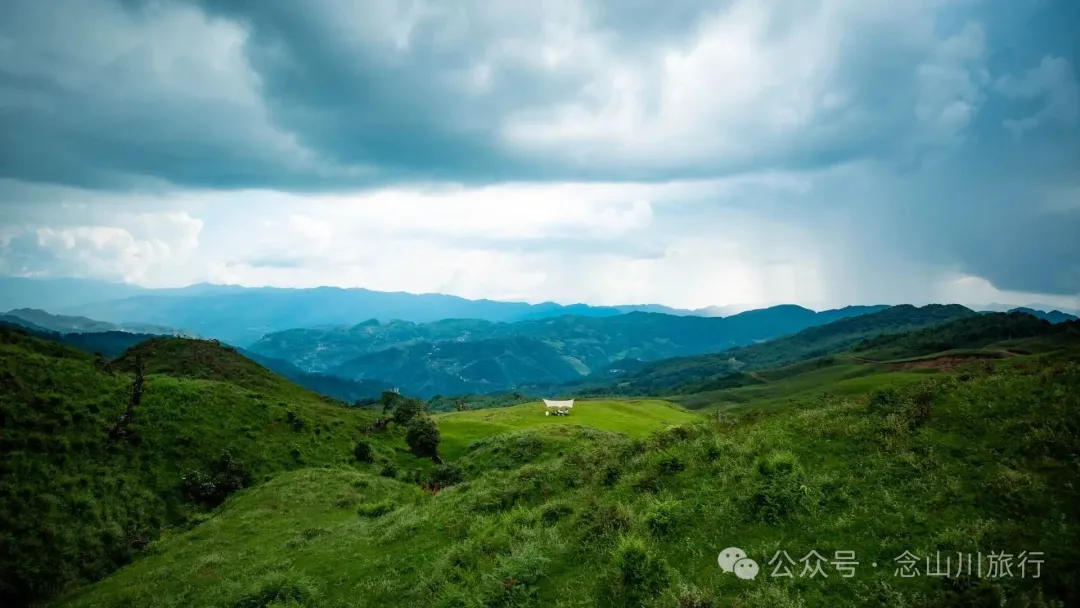
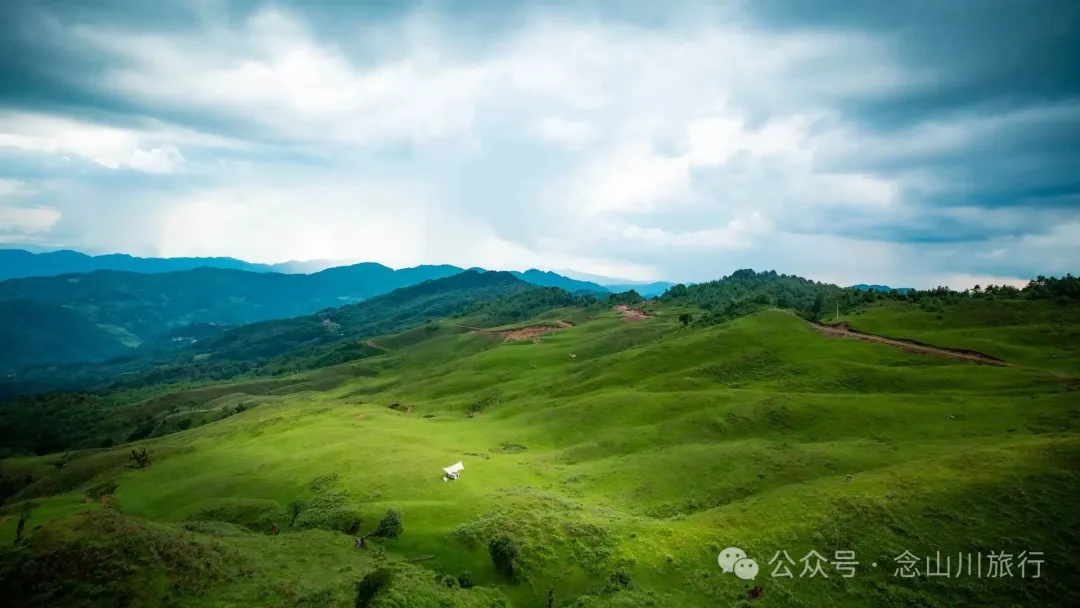
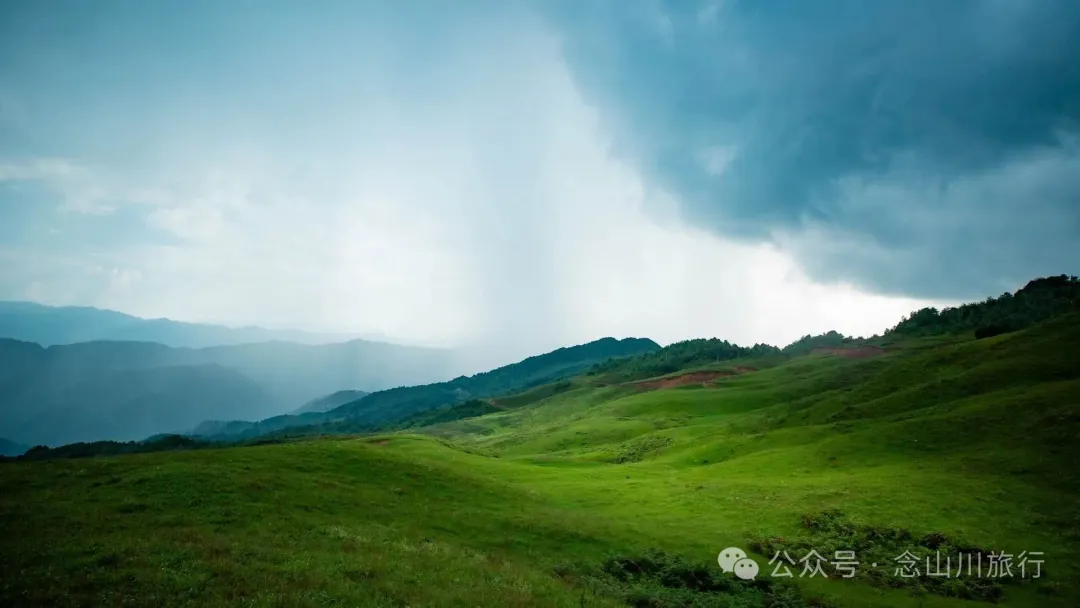
After setting up the canopy, the rain curtain began to wander around us. A heavy downpour finally came, but soon, accompanied by the fading thunder, the rain curtain drifted away. The clouds gradually moved away from the great meadow, and the space around us expanded, no longer a narrow patch of sky.
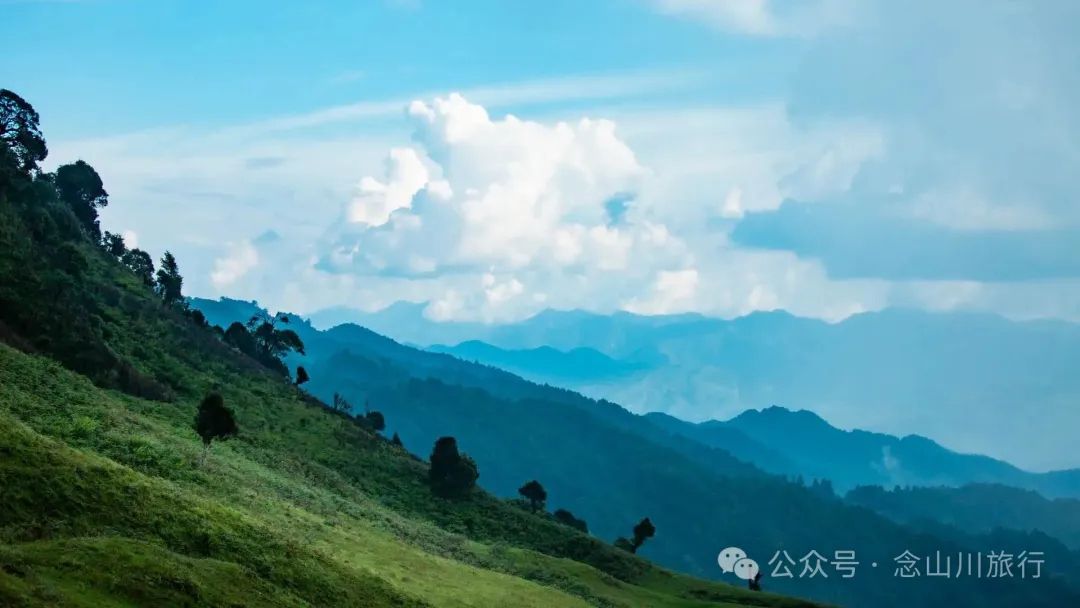
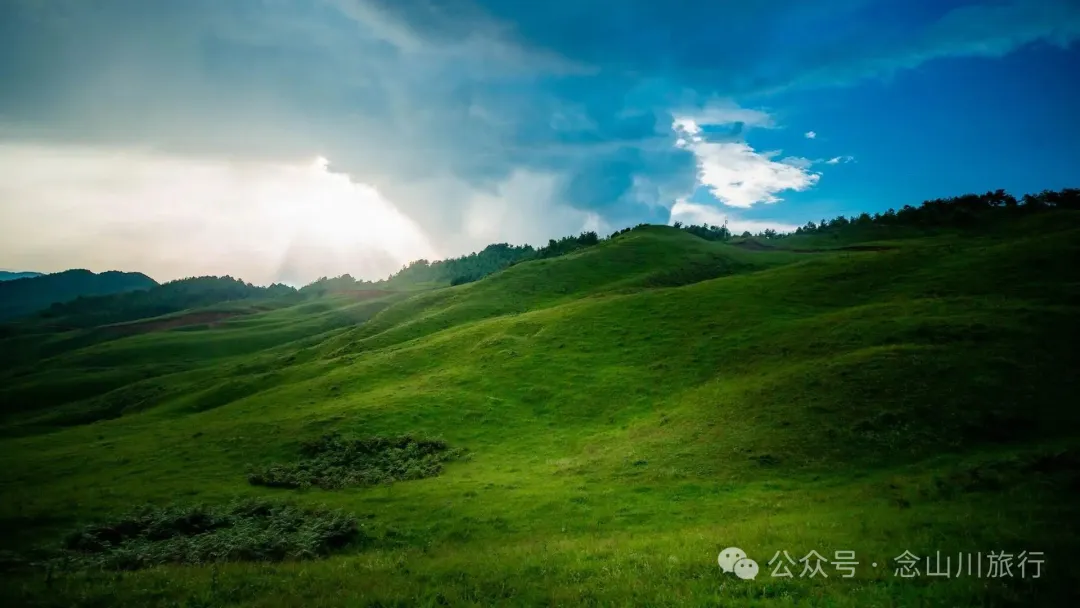
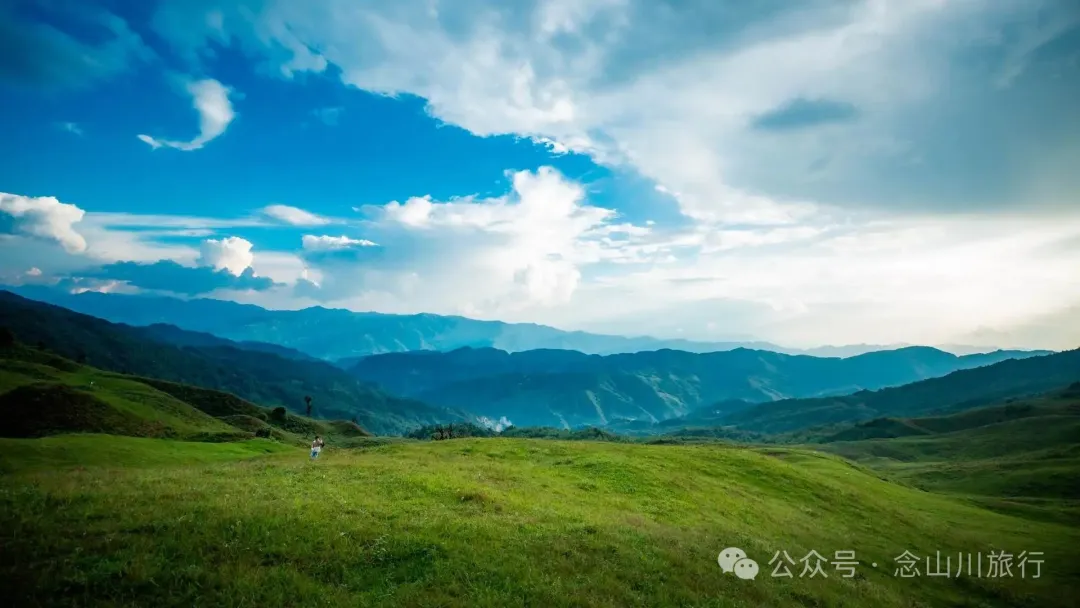
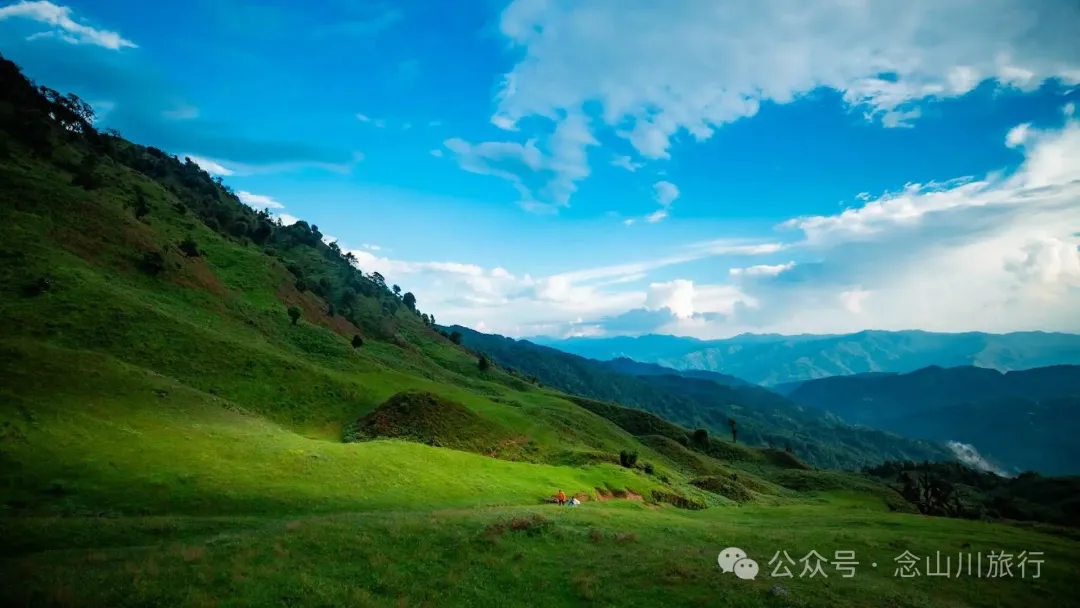
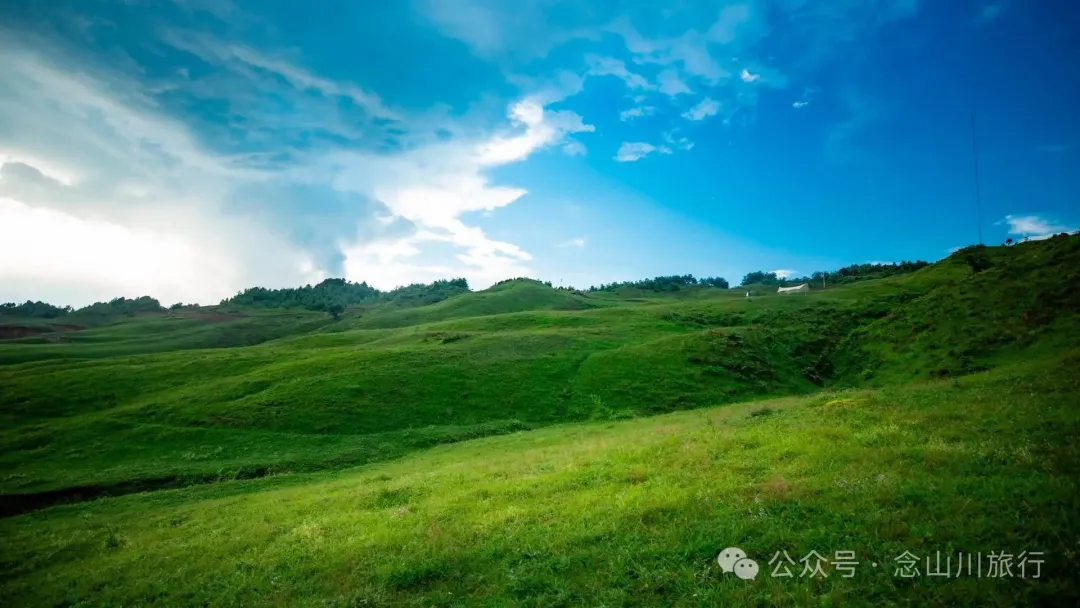
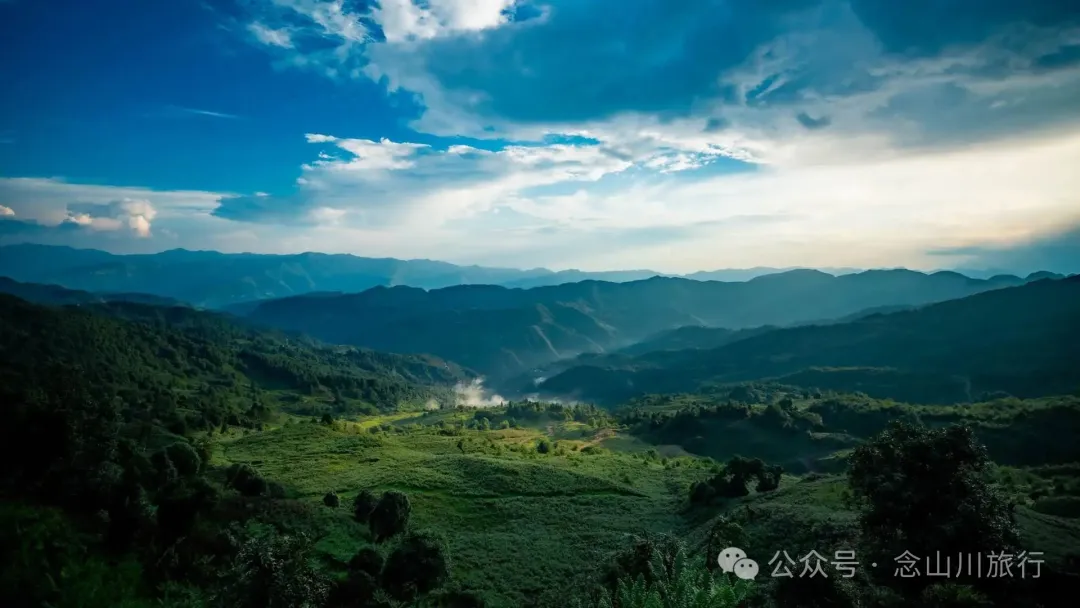
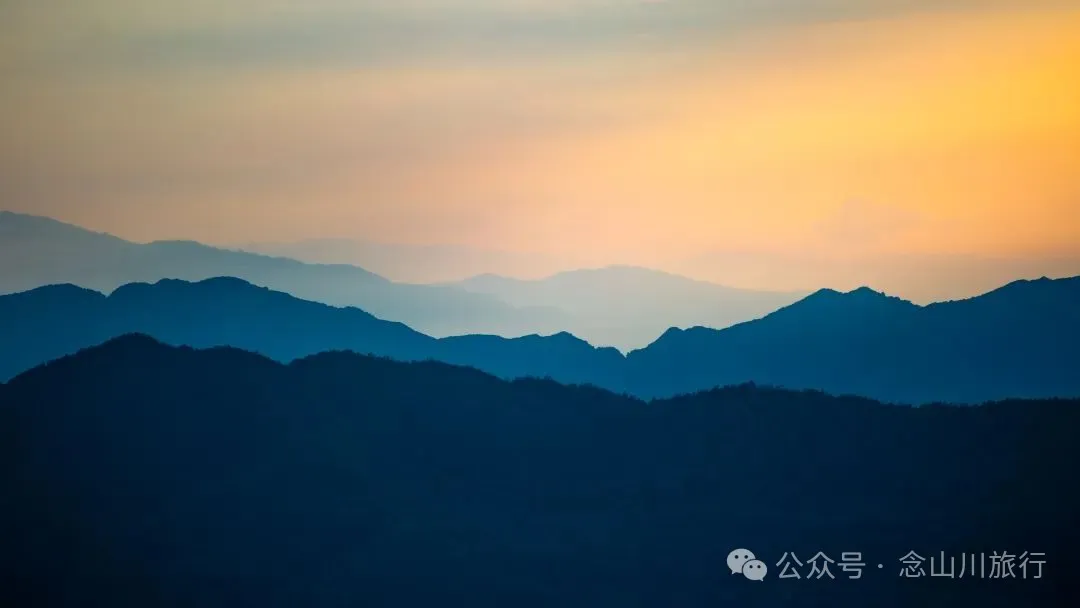
The sunset finally shone upon this great meadow. After the rain, clusters of white clouds rose from the village in the opposite col, like cooking smoke from the village. The sunset glow stretched for hundreds of miles, from the southernmost to the northernmost visible points, lingering until around 9:30 p.m., when the last trace of orange was drawn from the sky, becoming part of the night. A crisp crescent moon appeared in the northwest sky, overlooking the clear and bright summer mountain after the rain.
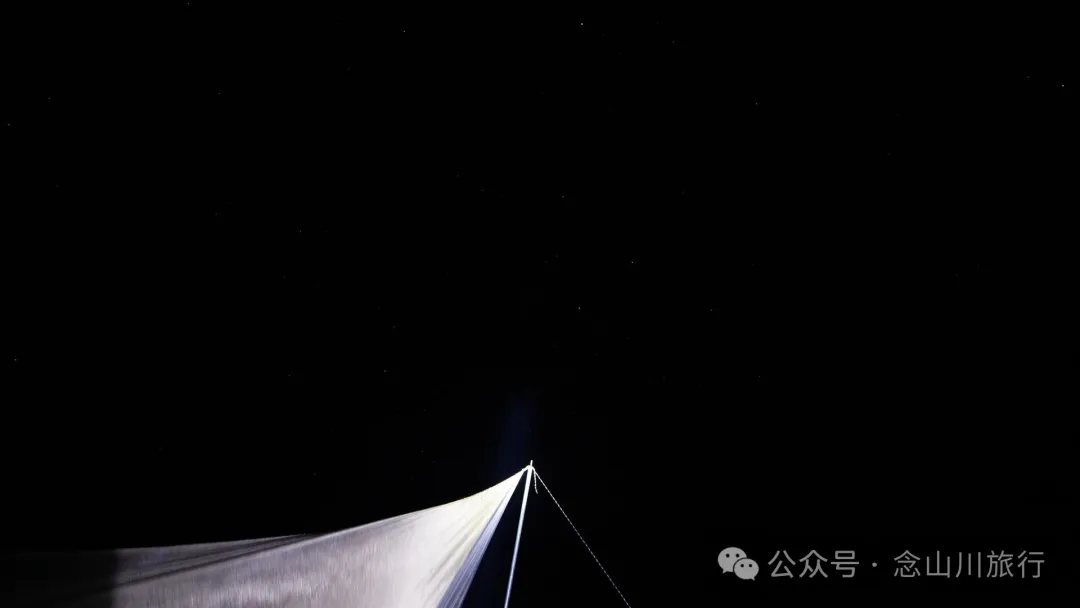
Night fell, and the herders led their cattle and sheep back to their villages. We began to enjoy the secluded mountain and starry sky of this hidden gem in Wuliang Mountain alone. Sitting outside the canopy, we watched the village slowly sink into boundless darkness and silence, while the starry sky above became lively. Except for a few stars around the moon, the entire sky was crowded with twinkling stars, as if whispering. The children had hidden in the tent, but upon hearing our exclamations, they happily brought out chairs and joined us on the grass, looking up at the vast, distant starry sky, trying to touch that mystery with a beam of light. We reveled in the rare night sky until the biting cold of the night forced us into the tent, waiting for the next day.