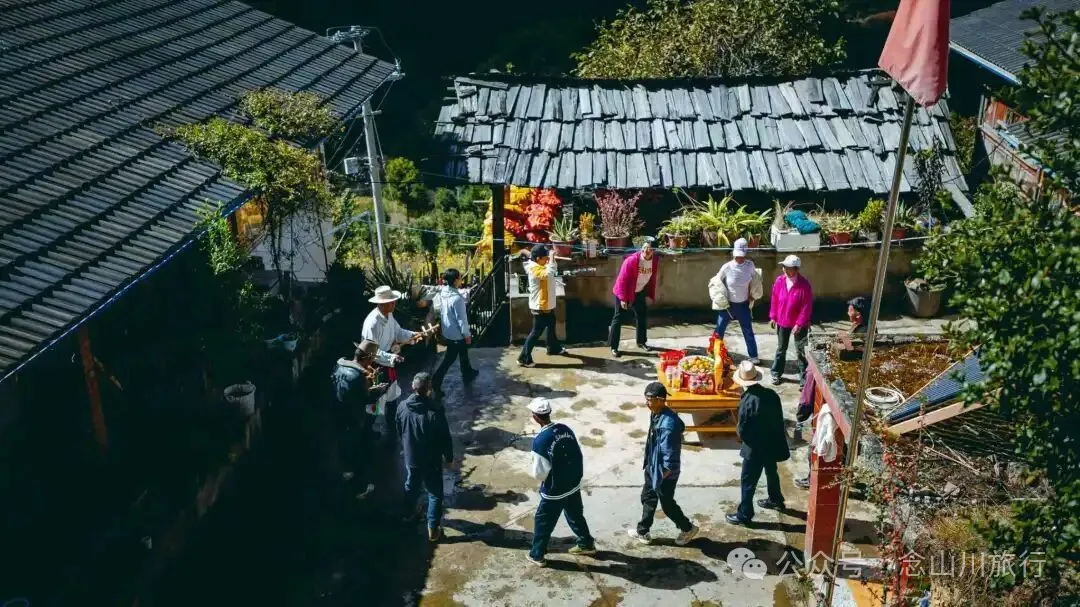

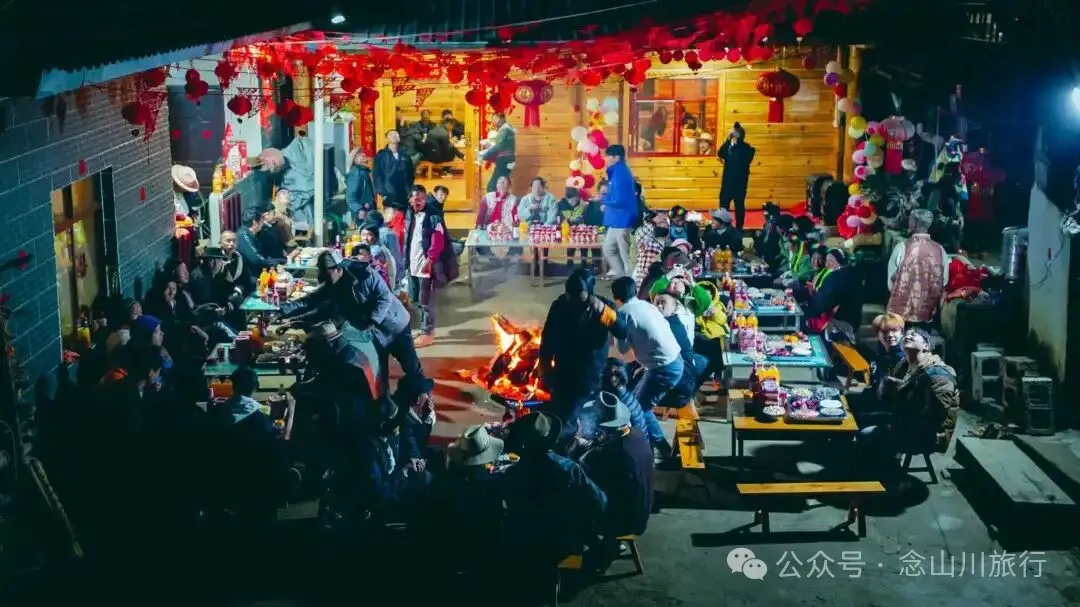

When all the guests have enjoyed the sumptuous feast, the relatives and friends who came to help the host form different work groups according to their division of labor, collaborating to complete all washing, cleaning, and tidying up. The messy scene is quickly transformed into an orderly and fresh one. Before the sun sets, they return to their own homes, as there is still farm work to be done. After feeding the livestock and settling everything at home, the villagers rush back to the wedding venue, where another form of celebration awaits them.
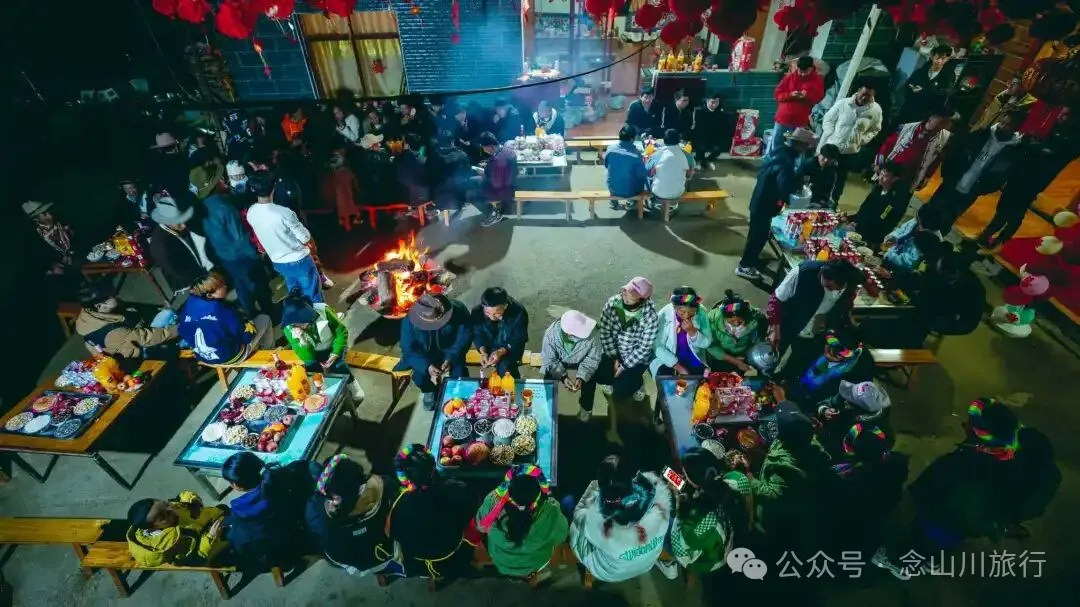
As night falls and the cold air gradually approaches the crowd, lighting a warm bonfire becomes urgent. The young men place a large iron pot in the center of the venue, stack a high pile of pinewood, and soon red flames shoot up high, emitting a rich fragrance of pine and scattering sparks. More young people join in. They bring out clean, shiny square tables and arrange them in a rectangle around the bonfire. The bride and groom sit at the head, opposite them are the respected elders of the village, and the other work groups sit along the two longer sides. The brotherhood gathering is about to begin.
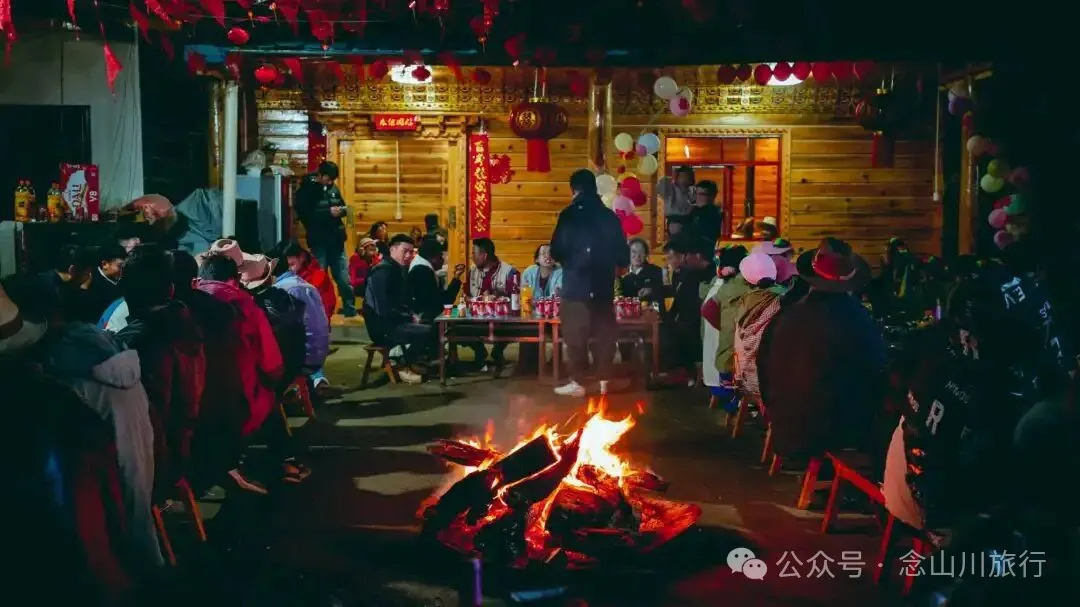
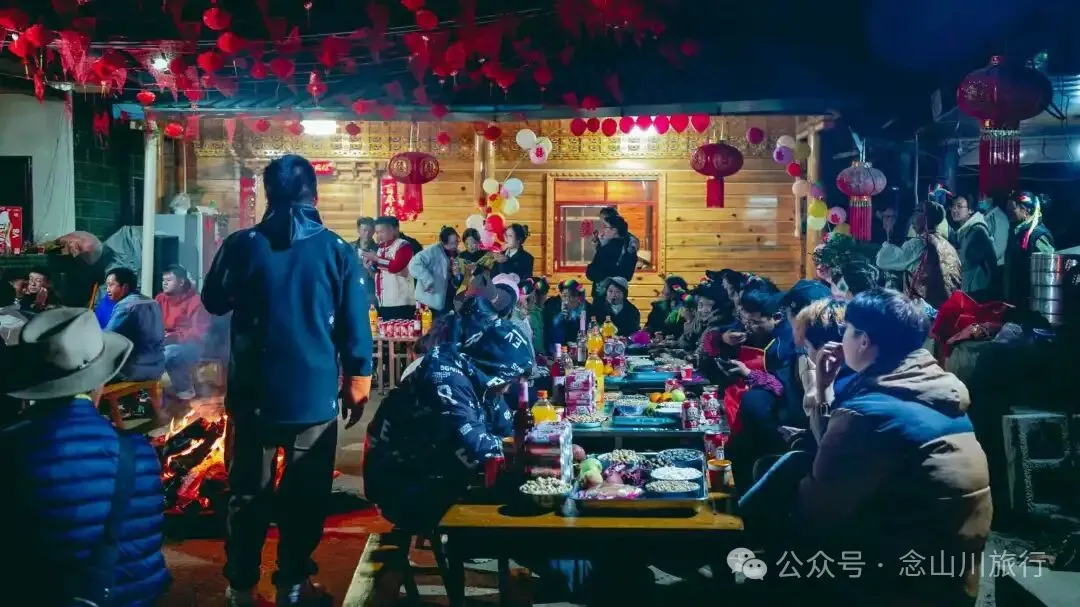
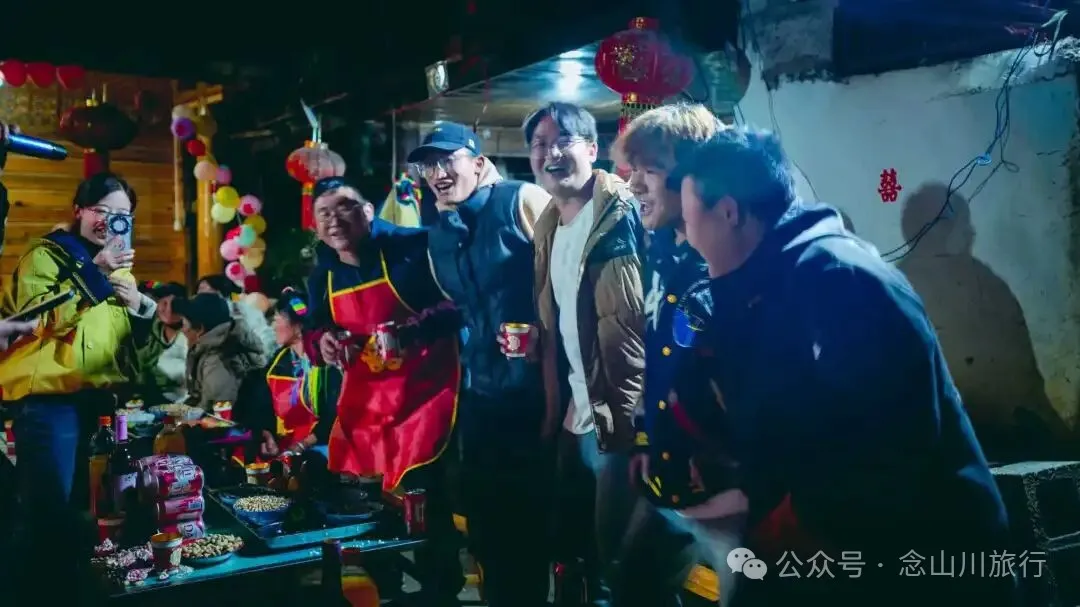
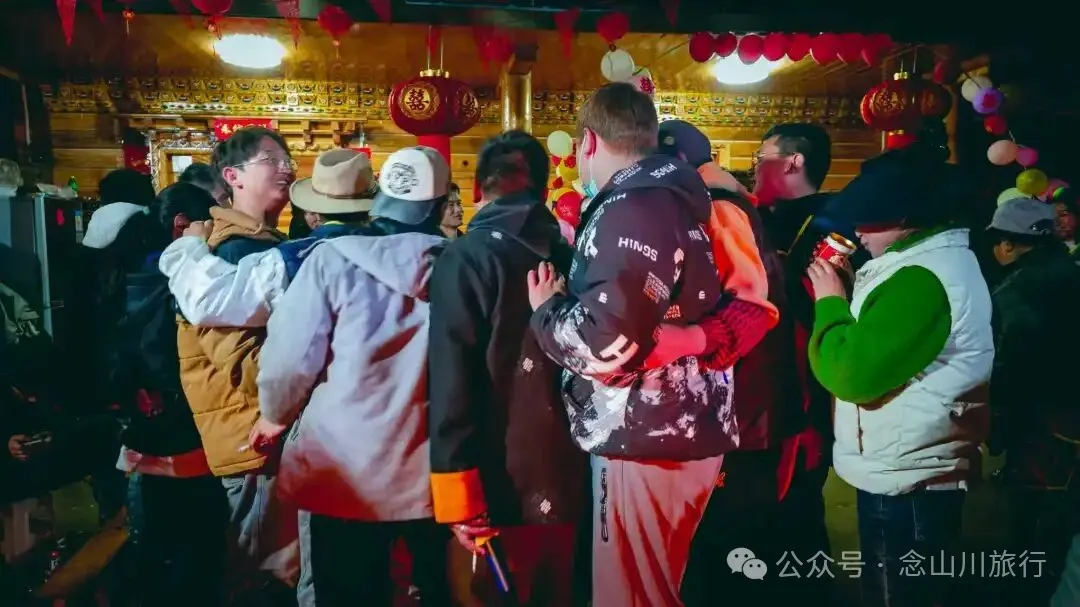
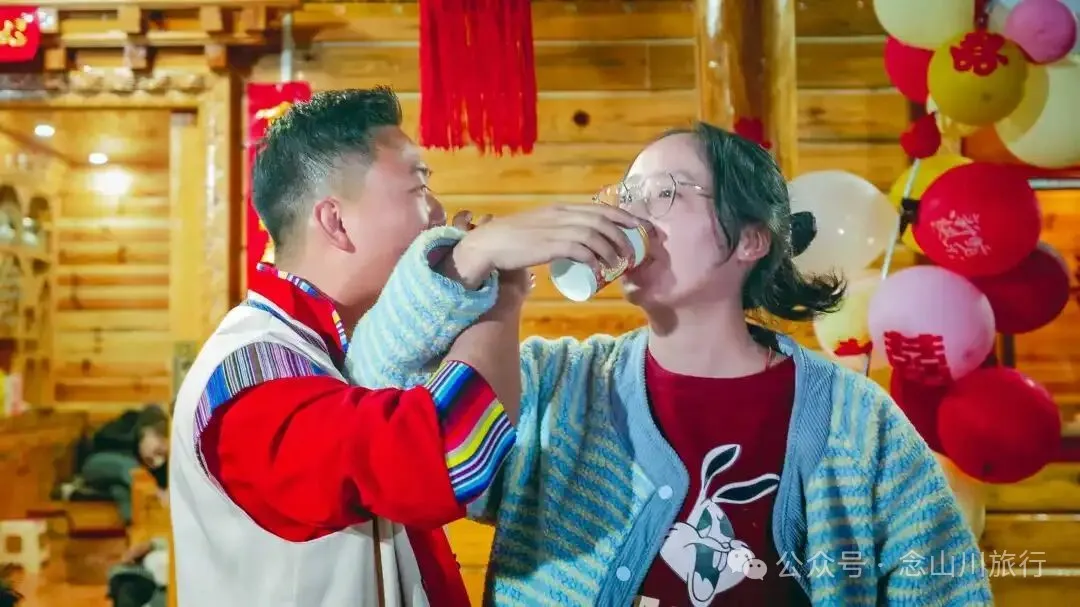
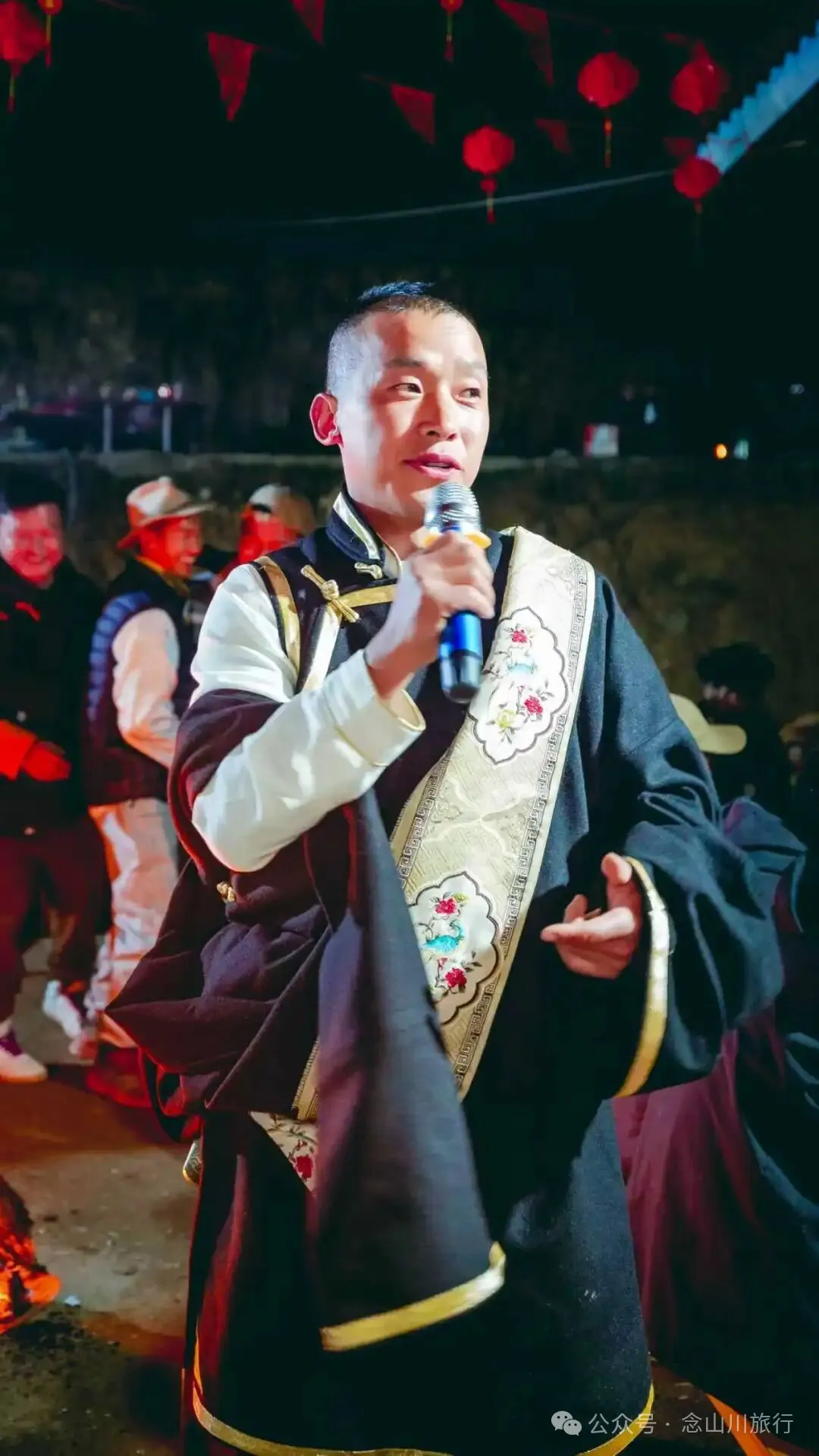
Acen is one of the bridesmaids, a native of Shijiaben, and a neighbor and childhood playmate of the bride. She told me that during large celebrations in the village, the young people almost take on all the tasks. No matter where they are, as long as they hear of a major event in the village, they will return and actively participate, becoming the main force of the celebration. This is a cohesion ingrained in their bones. On many occasions, you can see young people in aprons busy at work, their faces radiating infectious joy and vitality. From the faces of everyone at the wedding, you can feel that the wedding is not just the host family's wedding, but a wedding for all 13 households in the village group. No one sees themselves as a guest; they are all the bride's family. This is the meaning of the brotherhood gathering. At tonight's wedding, each work group will perform a show to offer blessings to the couple. To express their gratitude, the host family sets out a table full of fruits, melons, and drinks, and also sings a song in return. Blessings and gratitude are the themes of the brotherhood gathering.
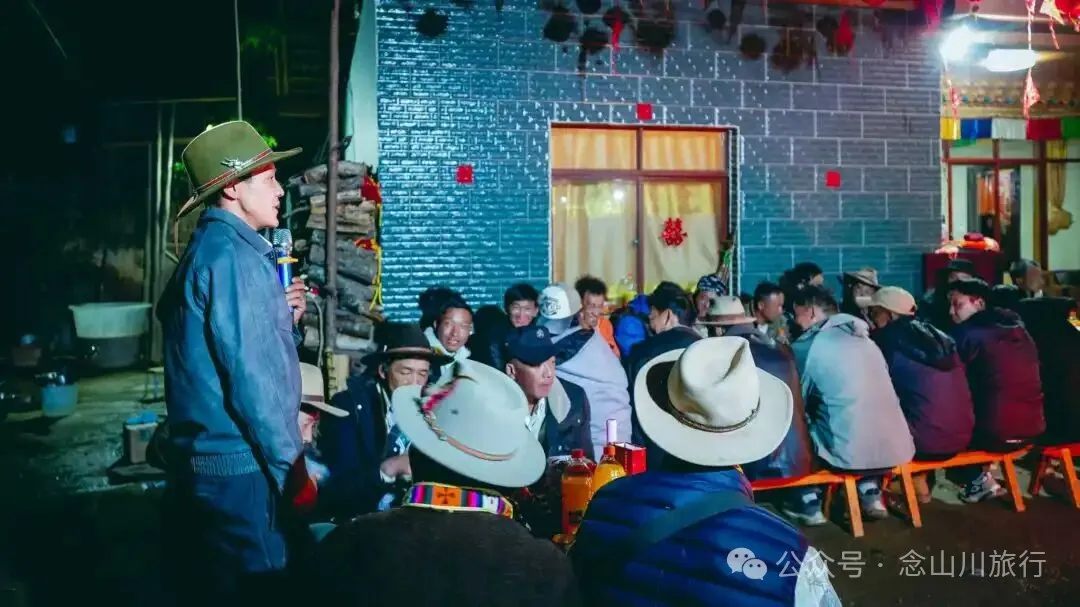
When the head chef is carried to the table amidst laughter by several strong men, the brotherhood gathering officially begins. Each work group selects a representative to sing a song, offering the most sincere and beautiful blessings to the couple. After finishing, they humbly pass the microphone to the next group, having sent their blessings without taking up others' time. Where young people gather, after the singing, they shout in unison in Tibetan, "Yoji yoji," meaning "encore," creating a lively atmosphere. Although Bazhu Village is far from the Qinghai-Tibet Plateau, their distant and high-pitched songs carry the unique timbre of the plateau. The sound seems like a genetic trait, already integrated into the blood of every Tibetan. Wherever they live, the sound is powerful, as if it can pierce the dim night and awaken the stars. Especially the chorus of the women's group, the sound is long and lingering, soaring into the sky. The stars have long been shining in the distant night sky, joyfully witnessing this delightful moment.
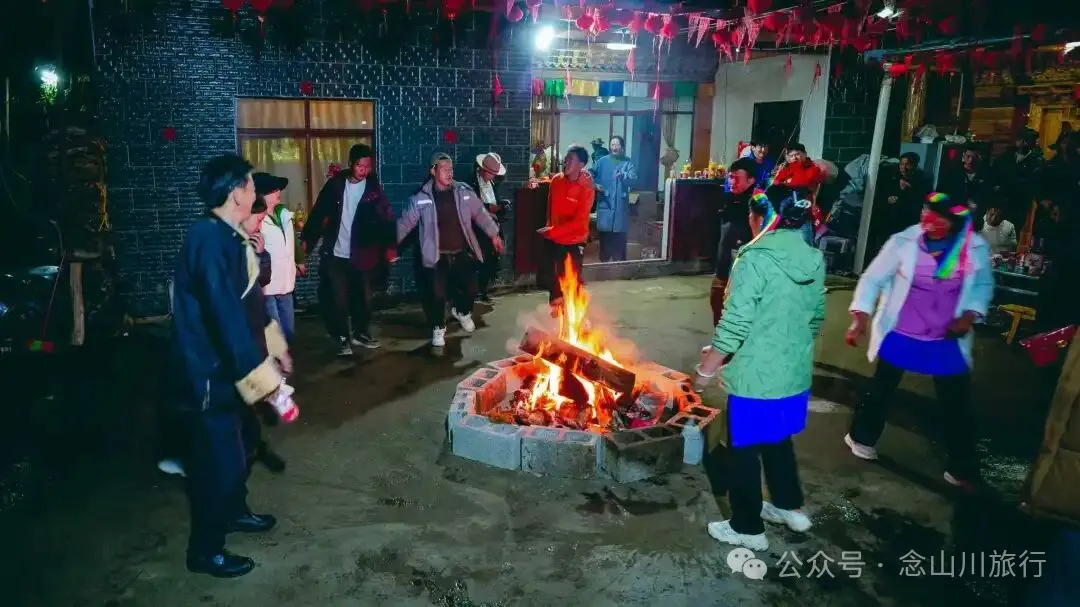
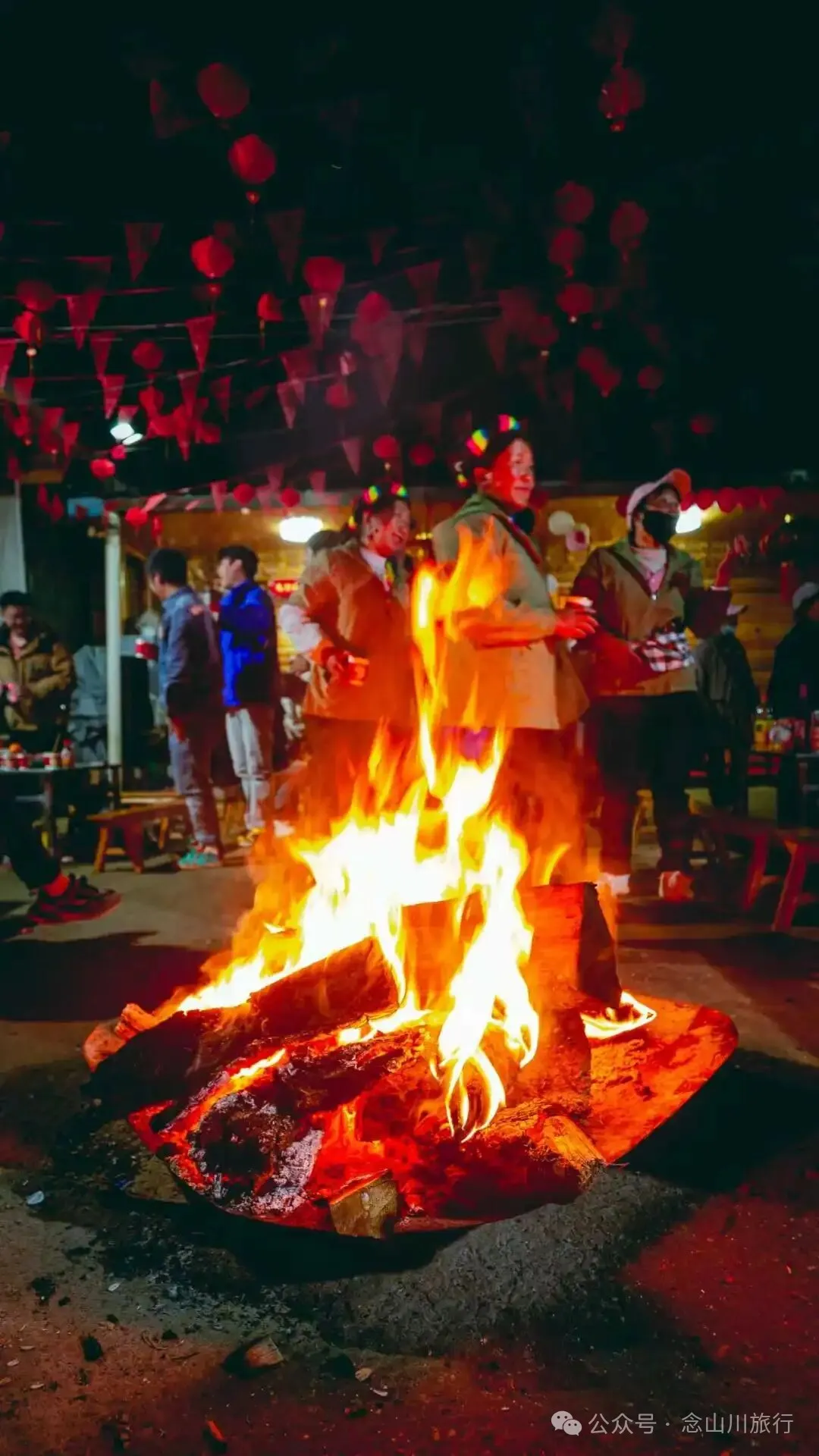
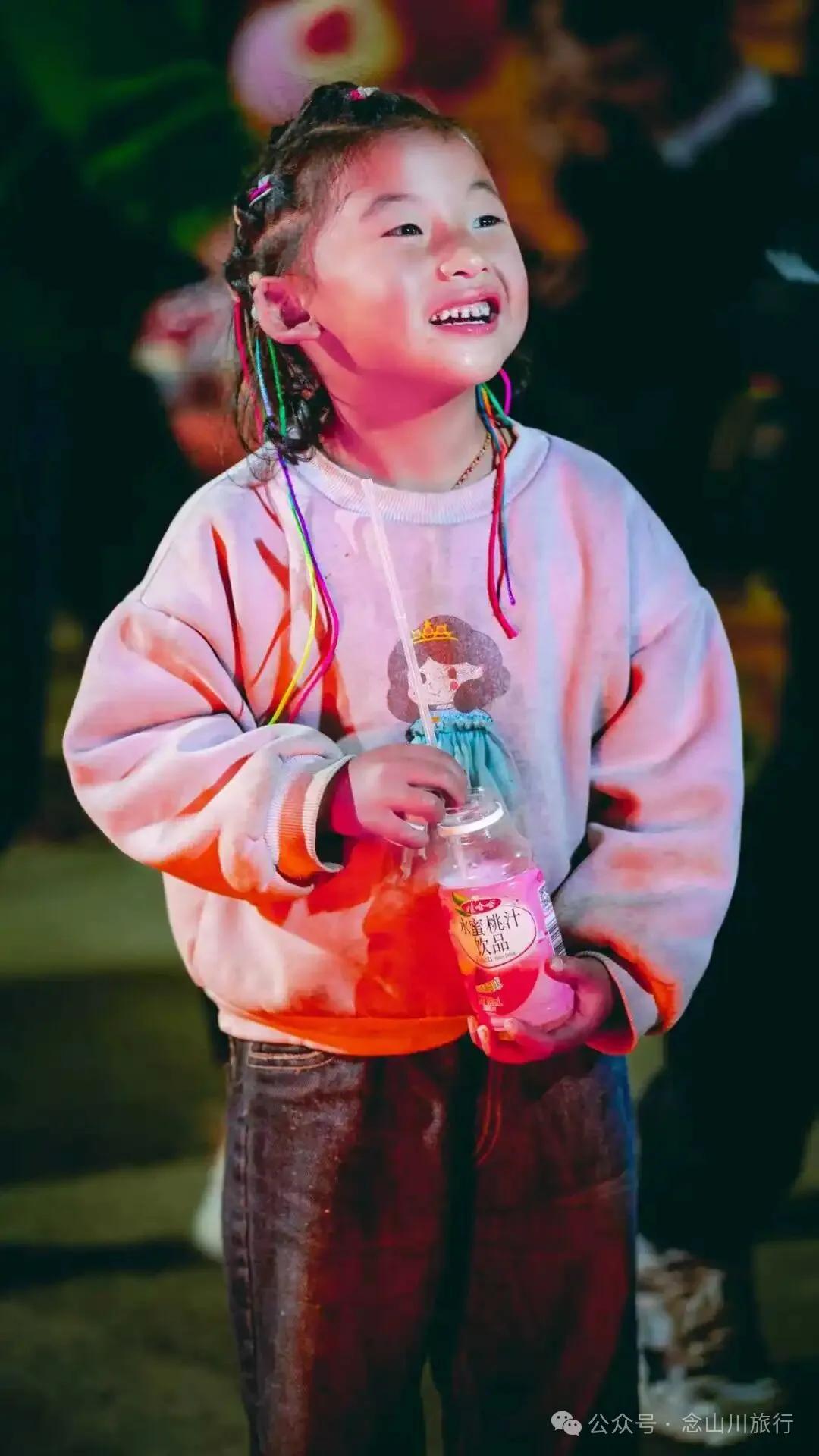
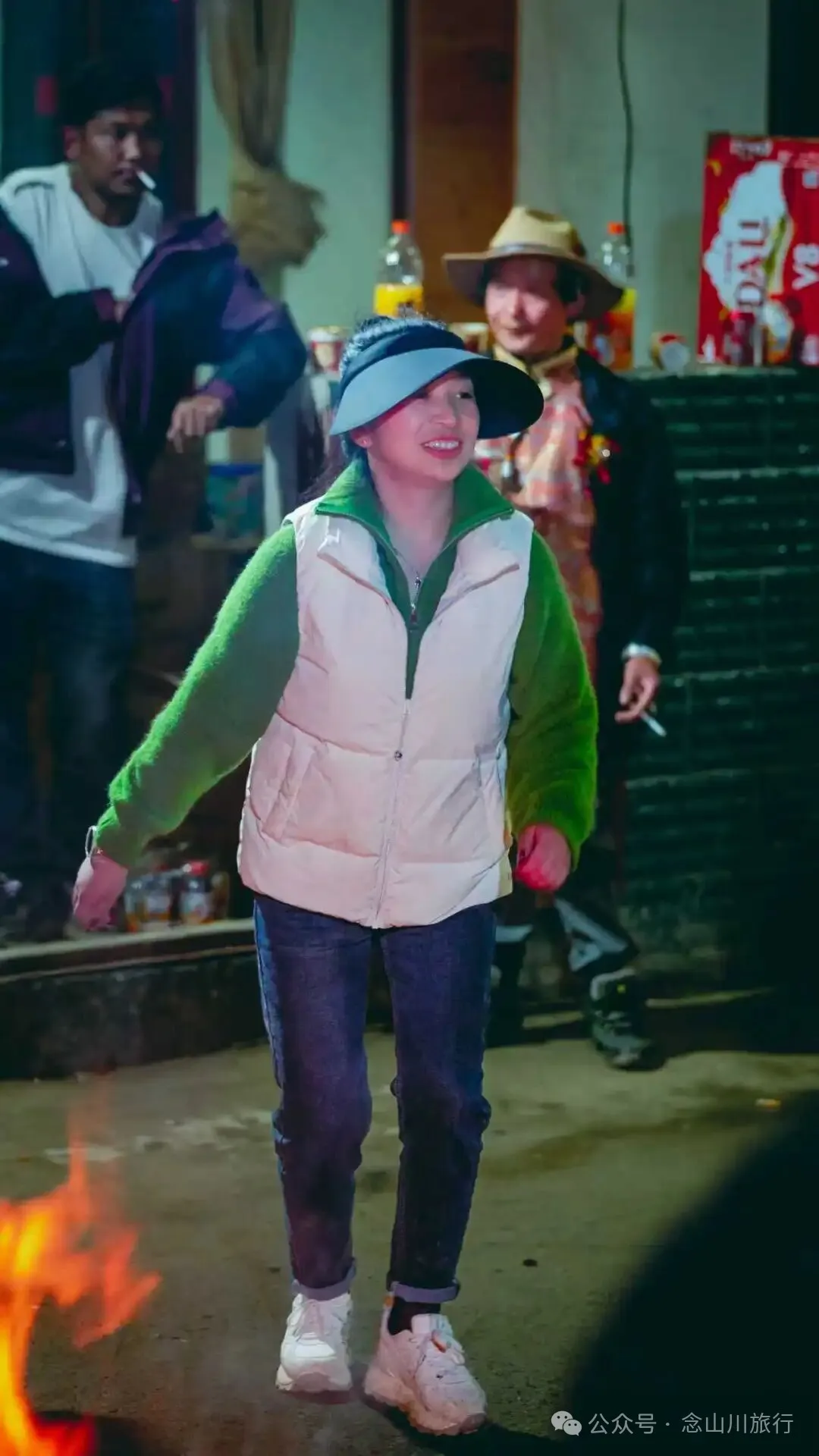
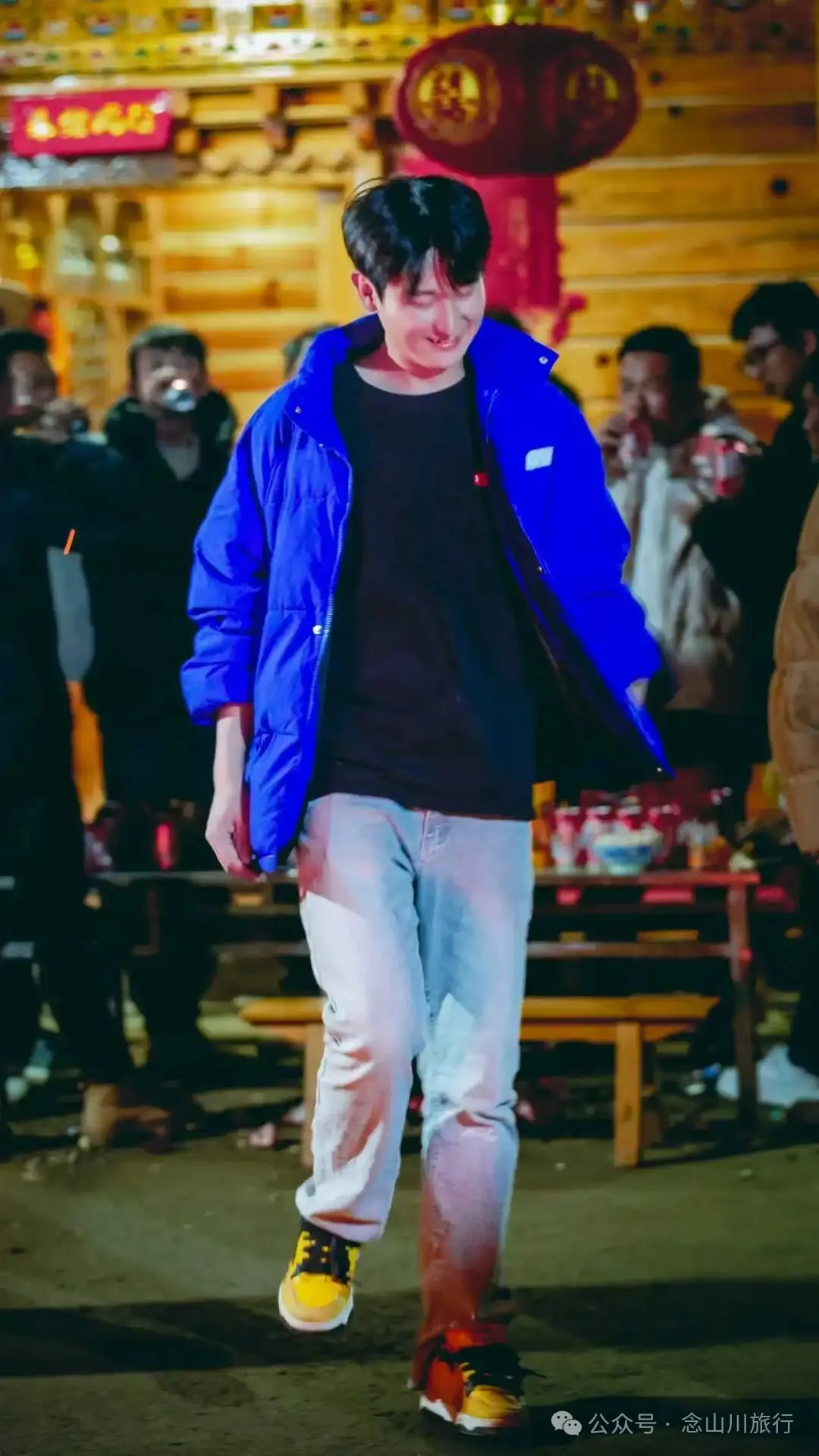

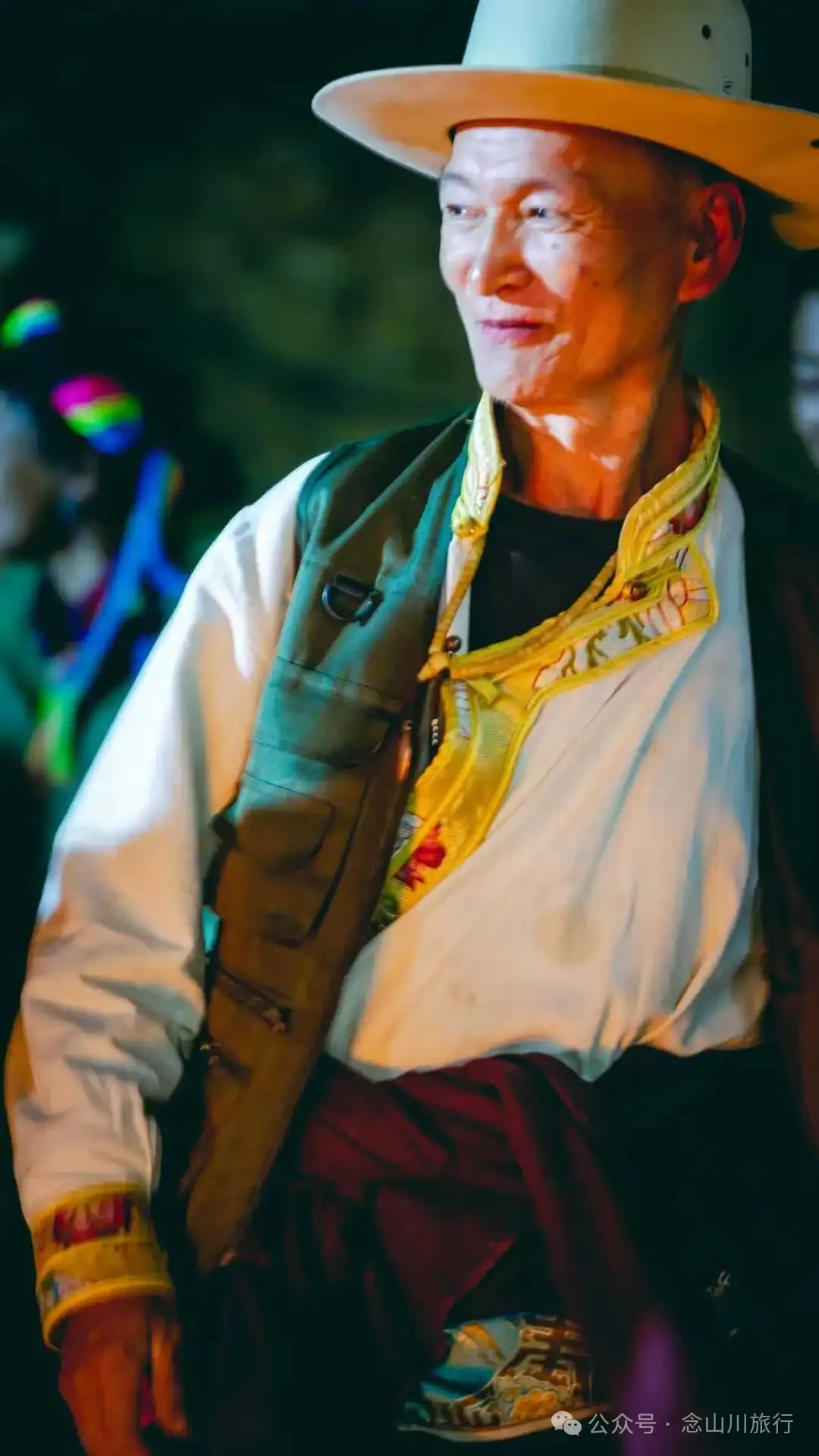
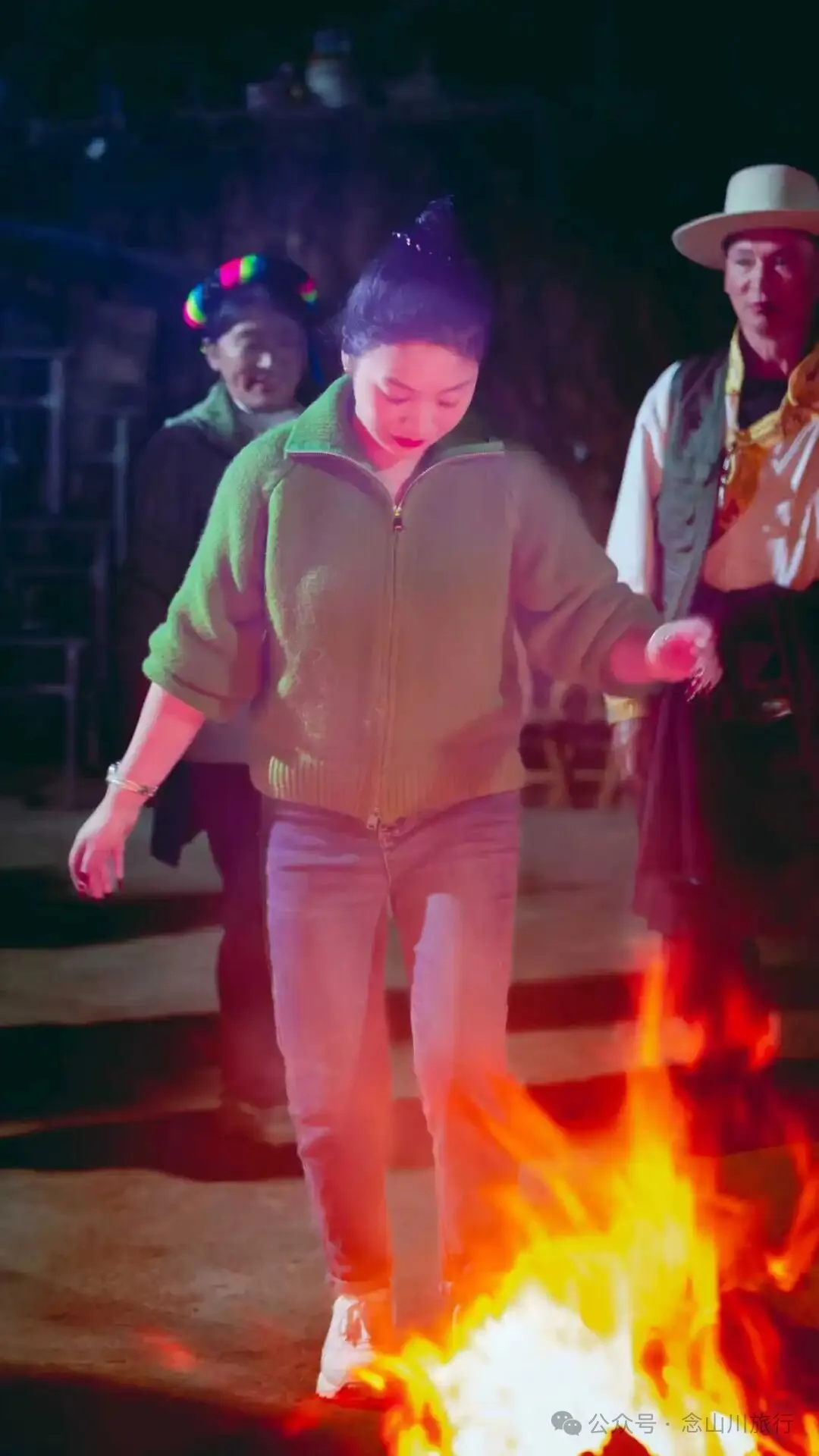
After the brotherhood gathering ends, people quickly remove all the tables and chairs, and the venue for the Guozhuang dance is instantly cleared. The Guozhuang dance is more like the climax of the wedding, with not only a large number of participants but also the longest duration and the most concentrated laughter. Regardless of age or gender, everyone in the village can join the circular dance around the bonfire, dancing joyfully and singing festive lyrics. When a song ends, another begins, accompanied by different dance moves, continuing until the cold night fades and the east turns pale. No one feels tired; the joy from within fills them with energy and vitality. The all-night singing and dancing are the most sincere and beautiful blessings from relatives and friends to the couple. When sunlight once again bathes this festive valley, and the last song and dance end, this unique Tibetan wedding is considered complete, witnessed by the sun, moon, stars, mountains, and rivers.