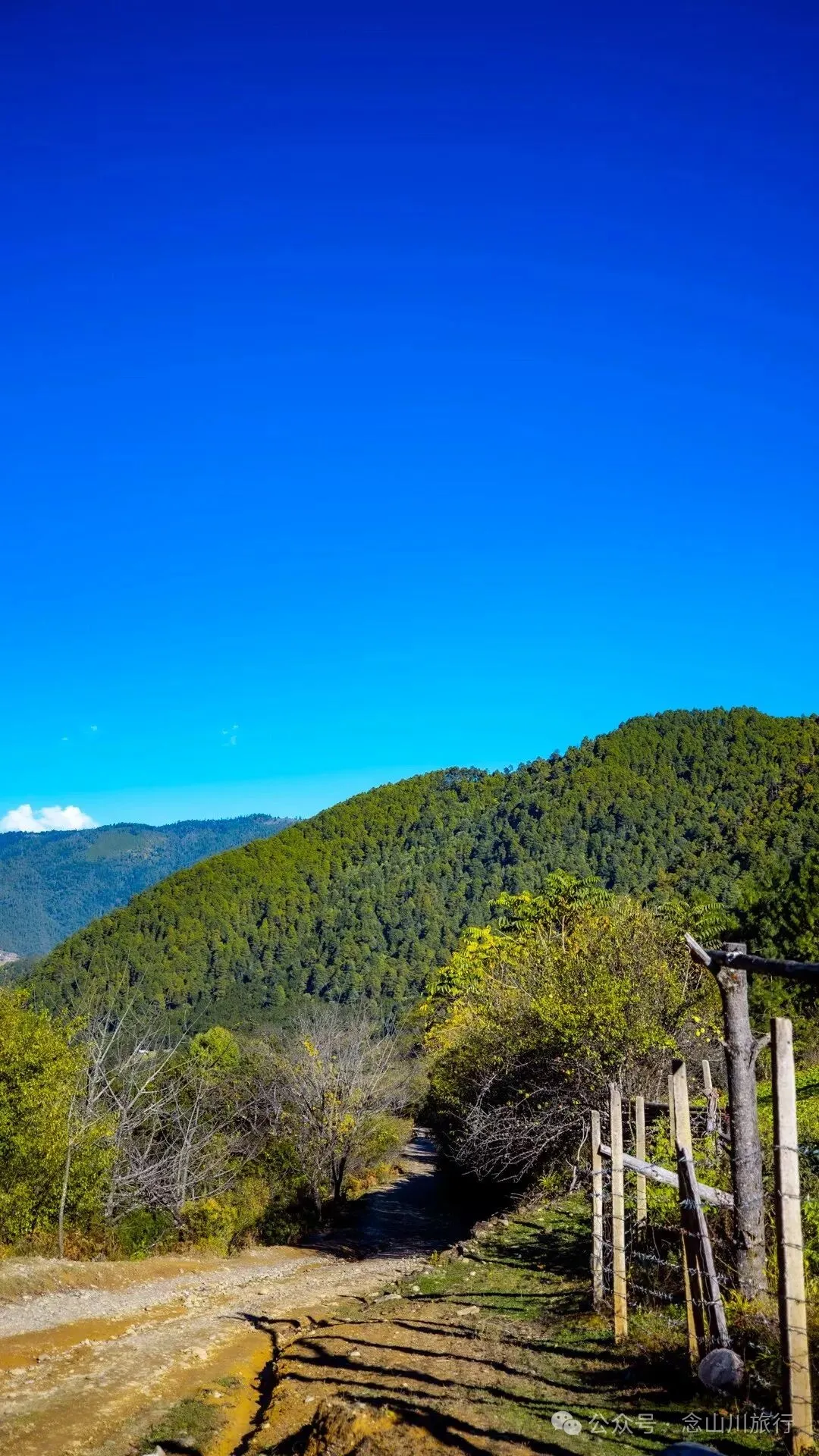

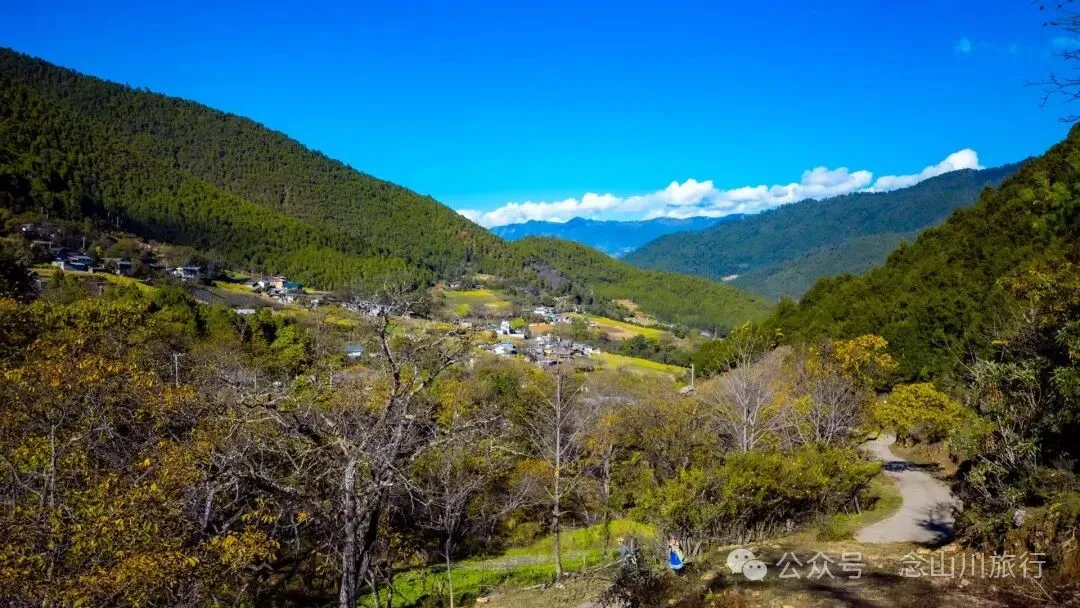
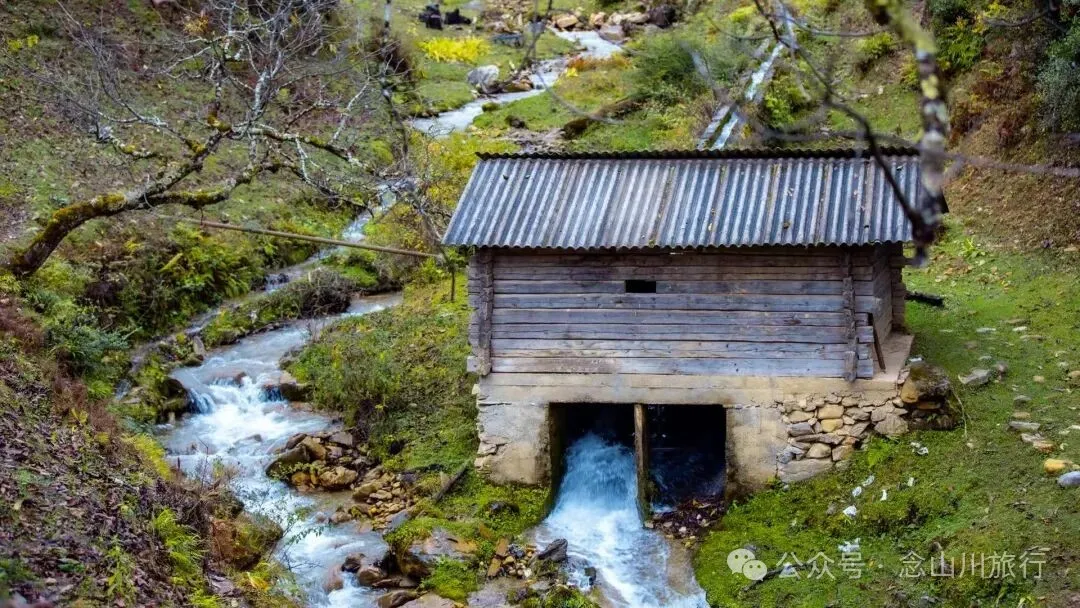
My first mountain hike during my long stay in Bazhu Village was guided by a stream in the valley. For unfamiliar travelers, the stream is the most faithful and reliable guide—silent, humming the true nature of the wilderness, always keeping a steady distance, and using the sound of flowing water to remind travelers not to stray off course.
In the mountains of Bazhu Village, there is more than one such trustworthy guide. In the deepest parts between two mountains, you can almost always find a clear, babbling mountain stream. Some have dried up due to climate change, but the pebble-strewn riverbeds are still visible and can be safely regarded as reliable guides—just don't go too far, for without the call of flowing water, unfamiliar travelers can easily get lost in the wilderness.
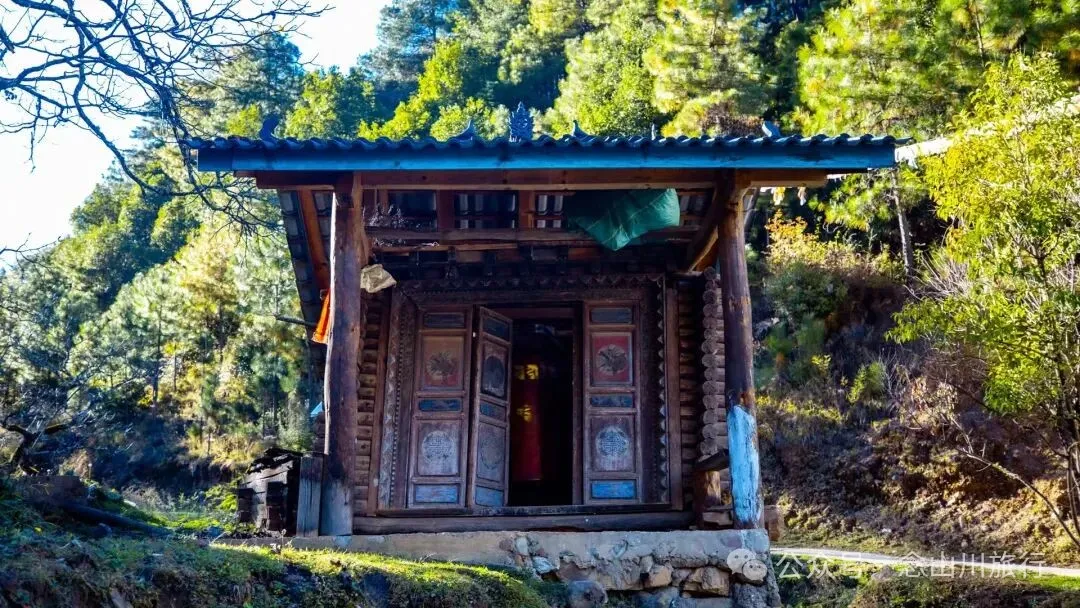
By the stream, there are several water-powered mills and prayer wheels that have existed for centuries, all driven by the flow of water. Pushing open the wooden door of one mill, a strong fragrance of grain wafts out, and the creaking sound of grinding still echoes slowly inside, instantly transporting you back to ancient times. As long as the water flows, the grinding never stops, day or night.
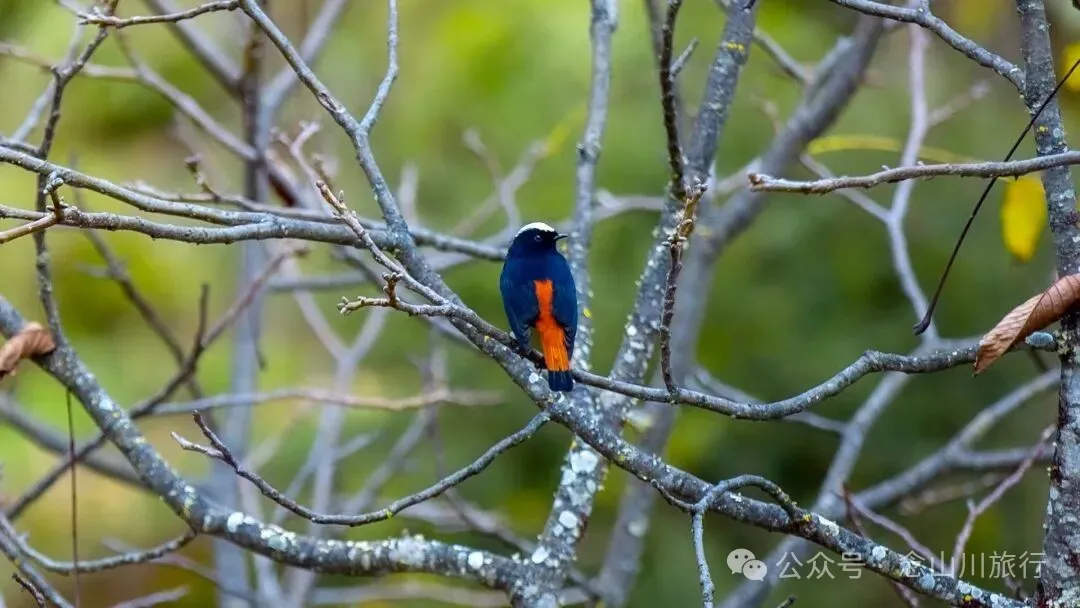
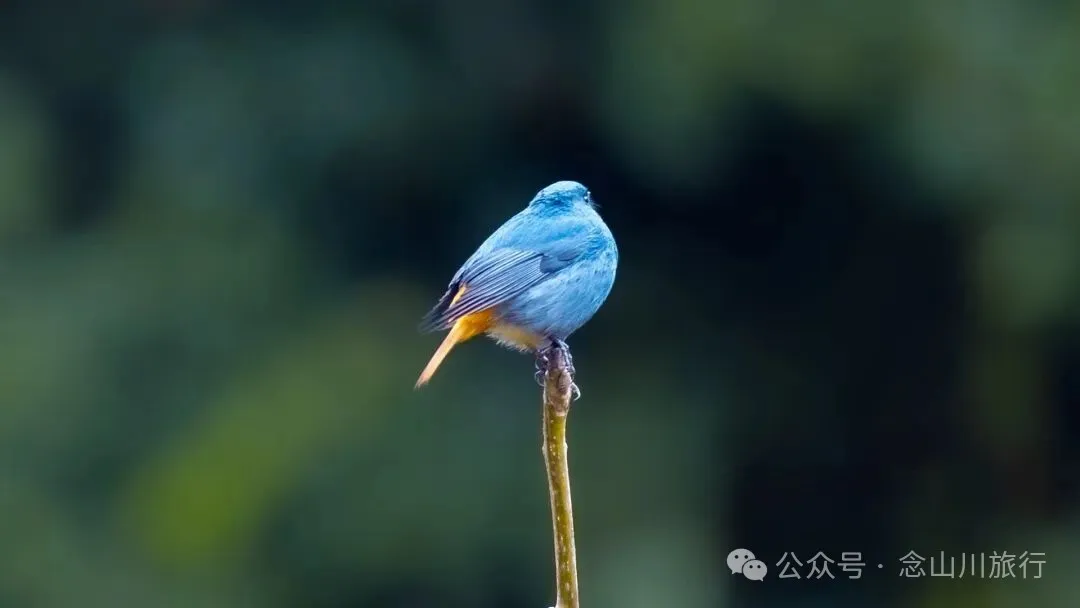
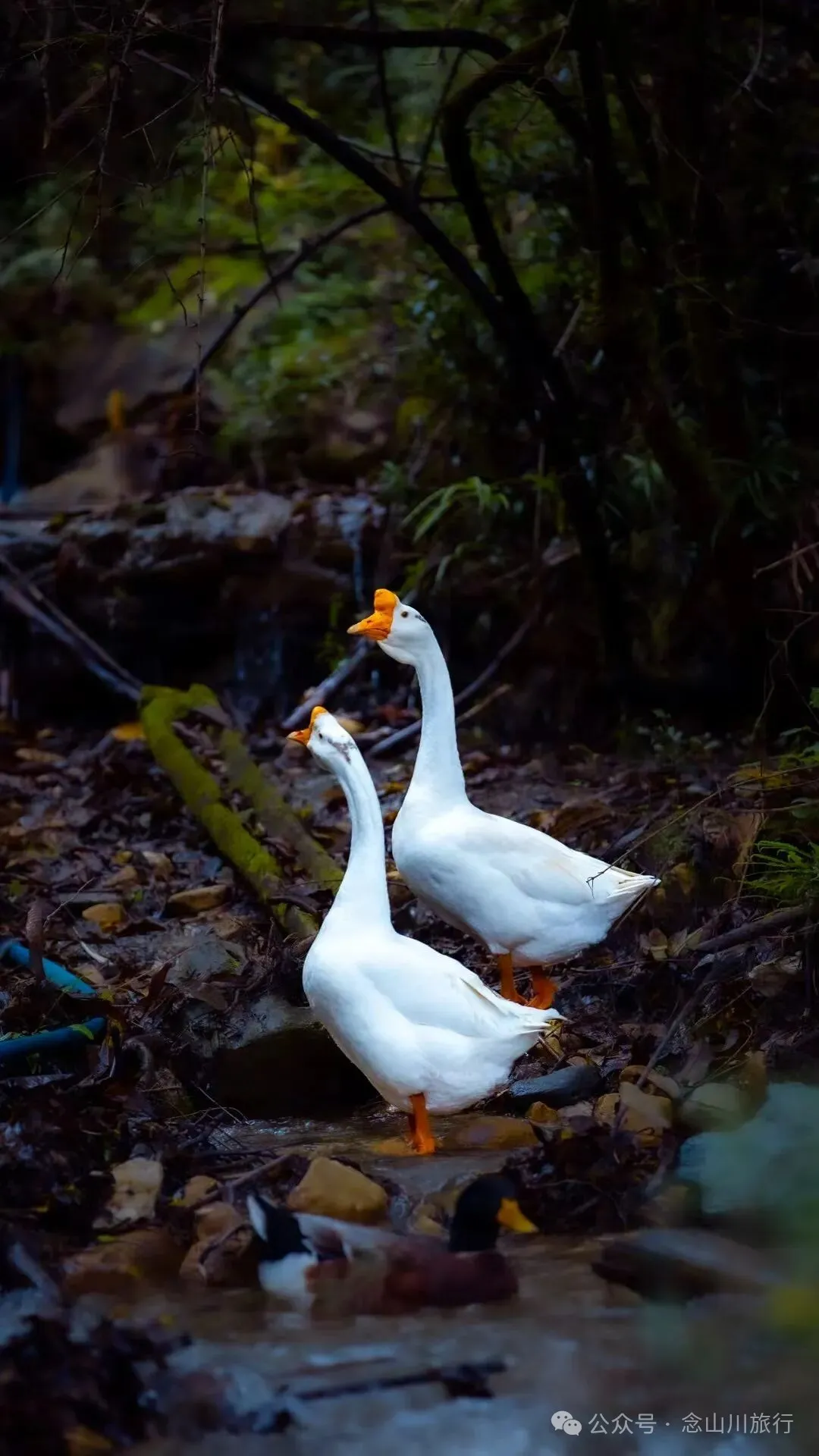
On both sides of the stream are narrow, primitive mountain paths—trails trodden by cattle and herders who once foraged in the mountains. Although roads have been built alongside them now, walking these paths is more interesting. White-capped redstarts and plumbeous water redstarts seem to prefer the damp environment of the valley, and their small, colorful figures are often seen. The white-capped redstart is timid and cautious; strangers can easily spot them by the white water, but getting close is not easy. They constantly shift positions between the rocks in the stream and the tall walnut trees on the slopes, playing a game of hide-and-seek with strangers. Chase them to the stream, and they fly to the branches of walnut trees; climb the slope to lock onto their figure on the branch, and they teasingly fly back to the stream, never letting you approach. The plumbeous water redstart, on the other hand, is graceful and unbothered by human proximity. Compared to these free birds, the white geese in the stream seem uneasy, sounding alarms from afar.
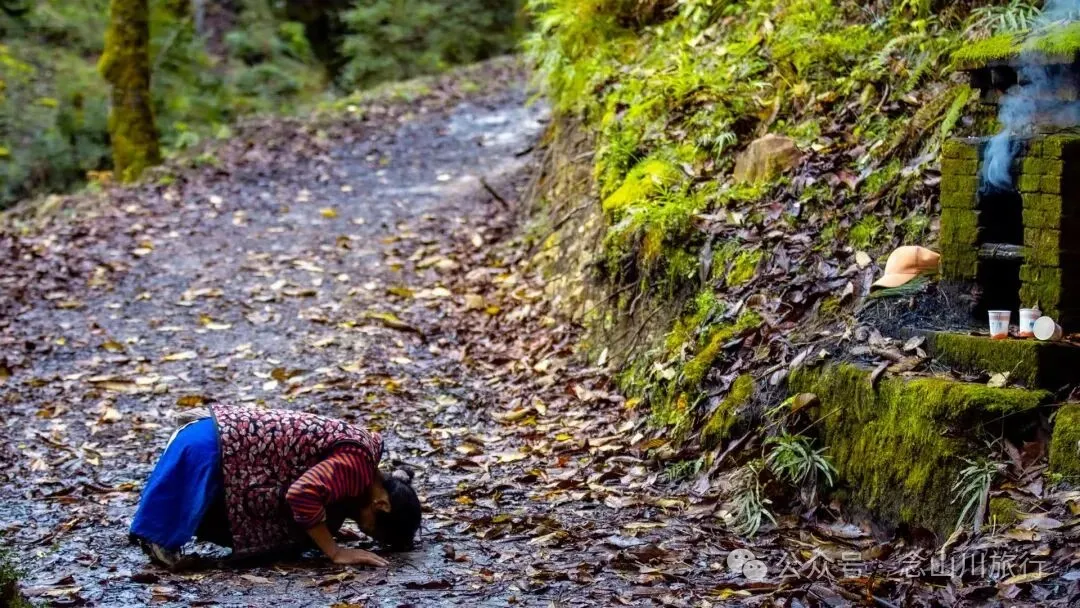
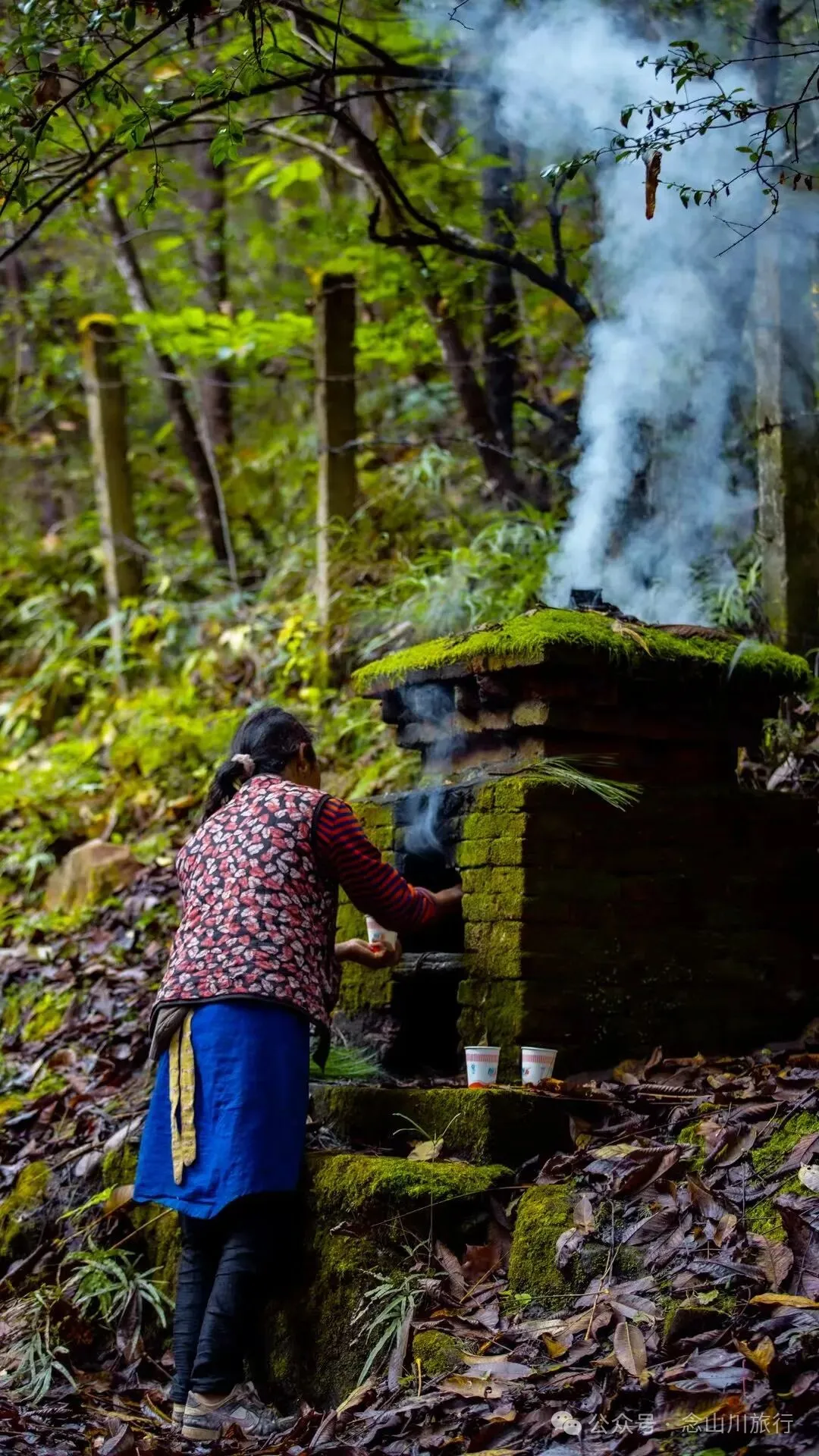
Passing by the sacred spring Nisulakang in Dalongnong, villagers were already burning incense there. It was the 15th day of the lunar month, and they brought pine branches, milk, and highland barley to worship the sacred spring. In Bazhu Village, reverence and awe for nature have never ceased. Several clear springs gushing from the ground are considered miracles. On the 1st, 10th, and 15th of each lunar month, people come to burn incense and pray. In times of drought, grand rain rituals are held. Villagers place pine branches into the incense burner and light them, then sprinkle milk and highland barley into the sacred spring, kneeling and prostrating. The elderly are even more devout, not only bowing to the incense burner, the sacred spring, and the stream behind, but also walking up the slope to another water outlet to kneel and worship, completing the entire ritual.
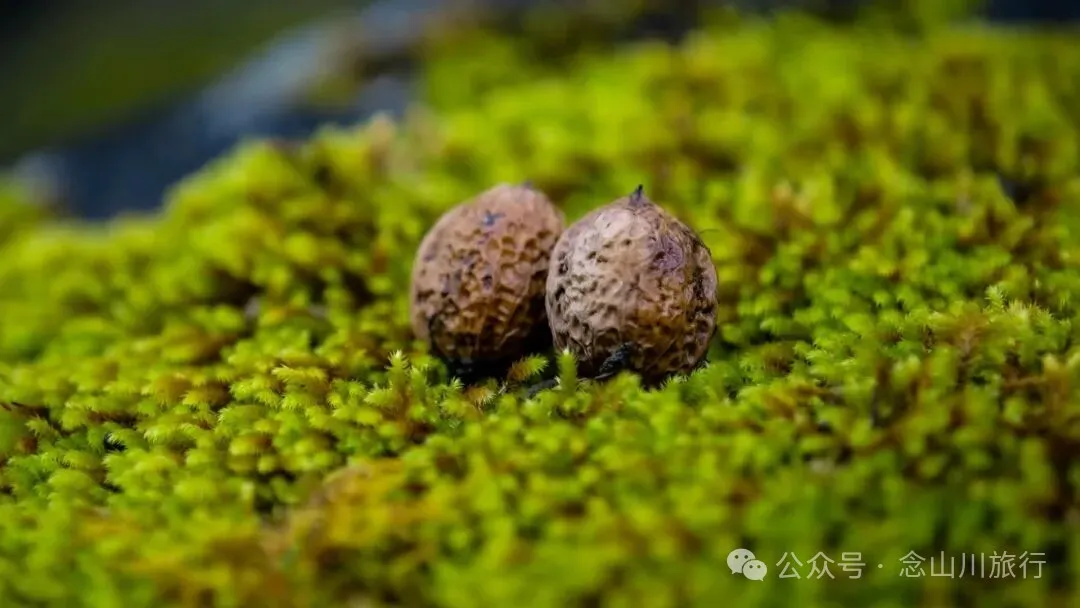
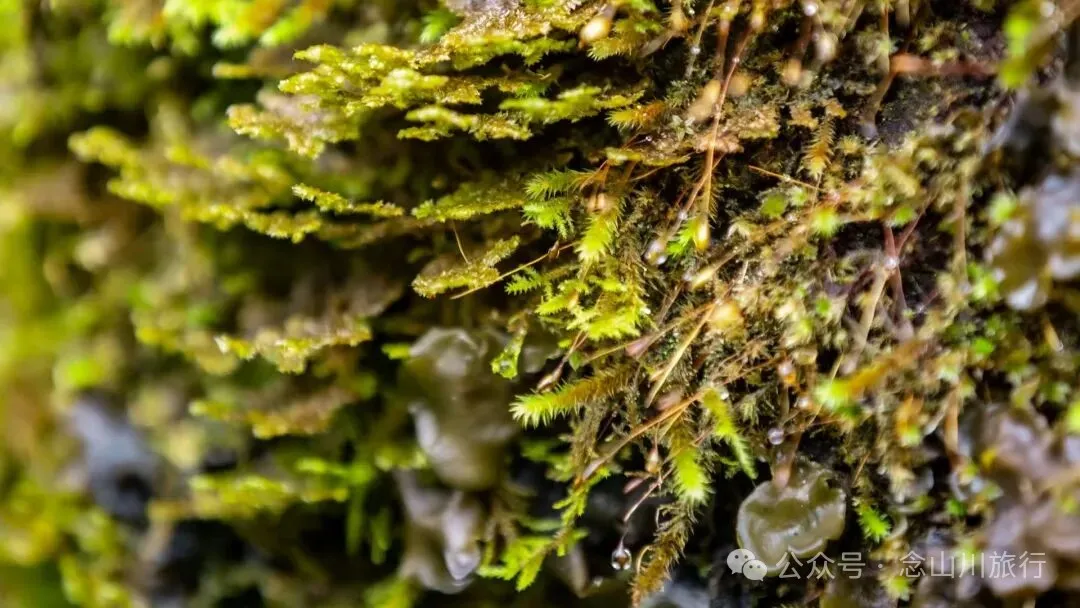
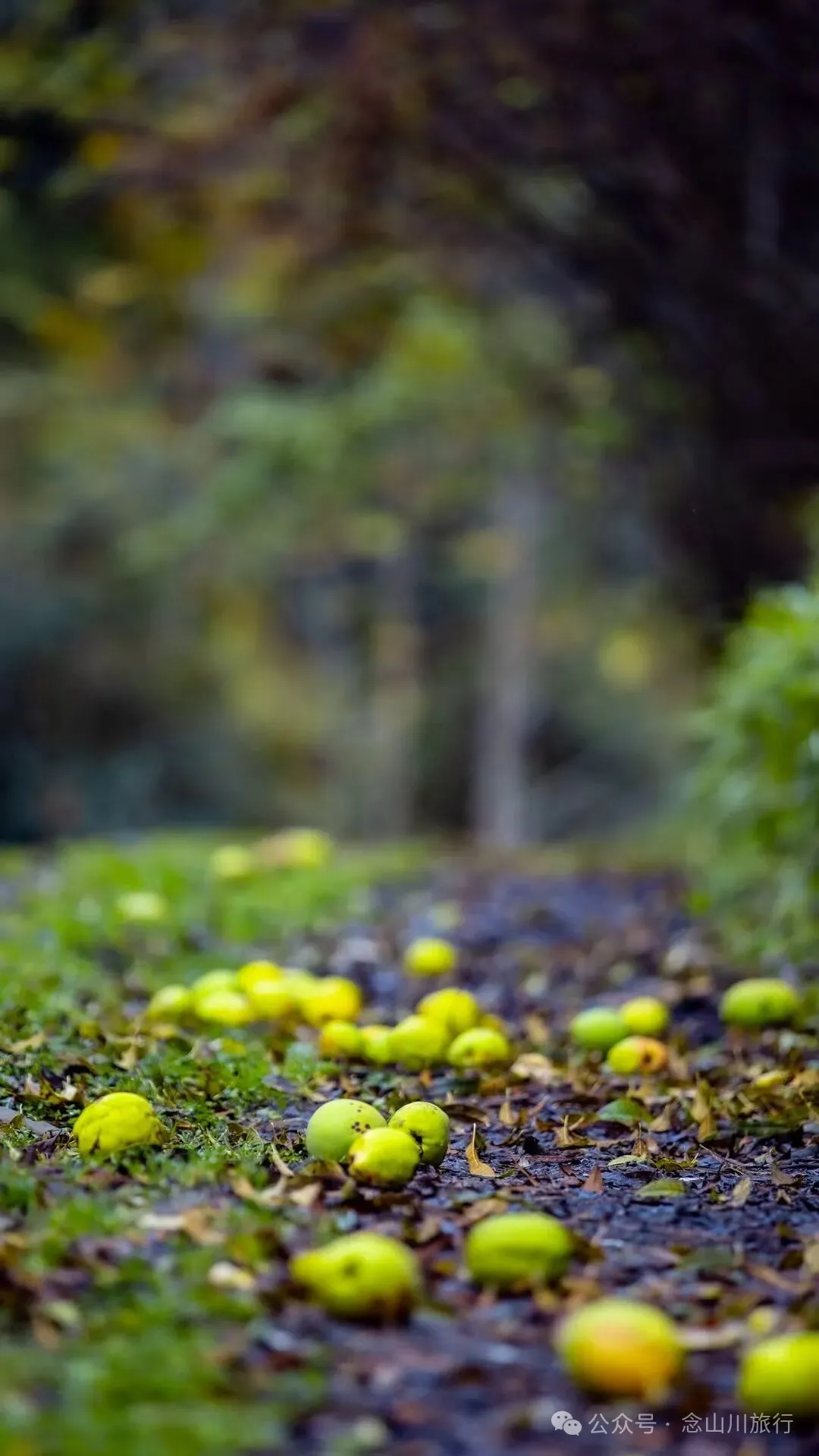
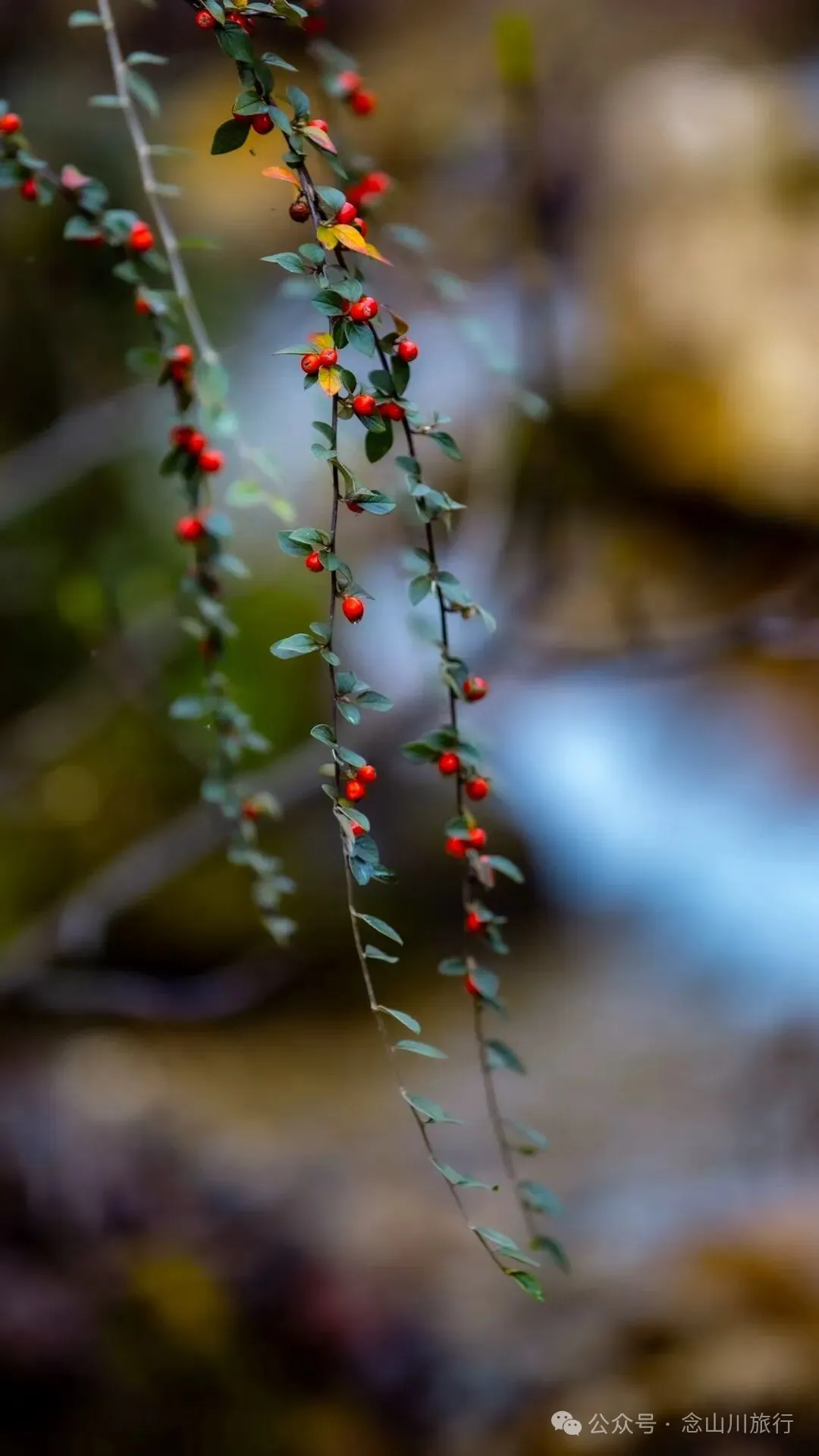
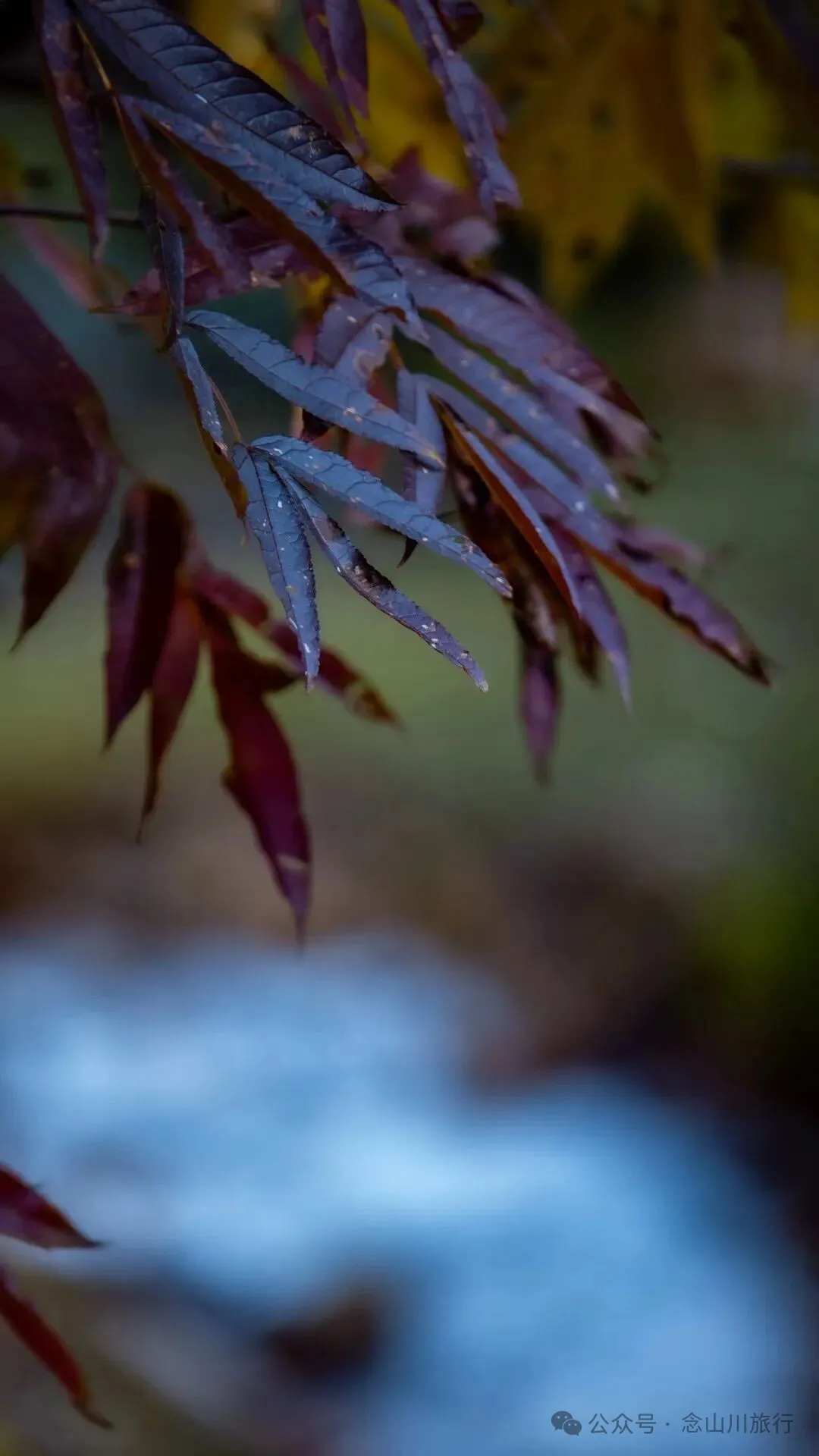
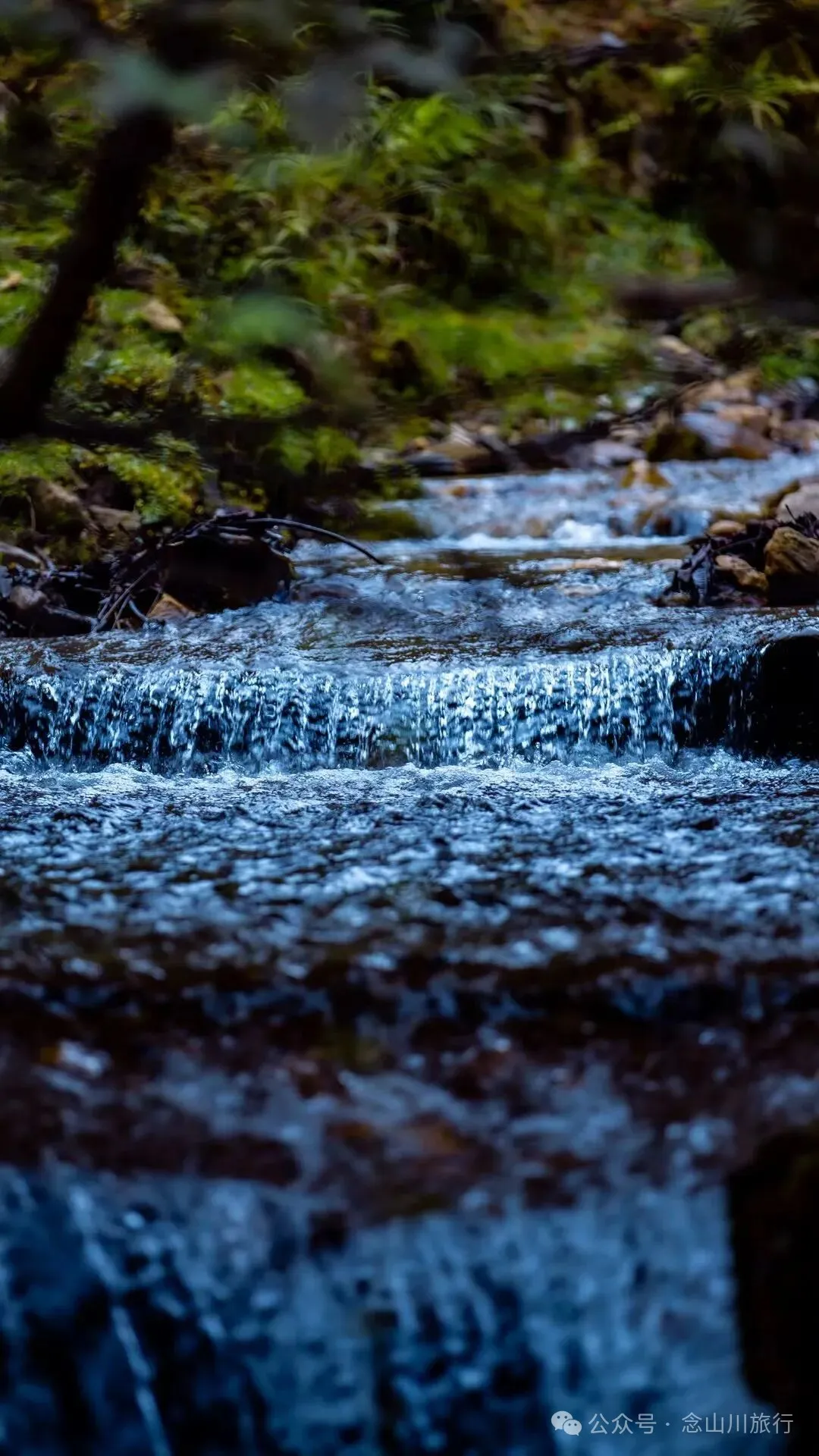
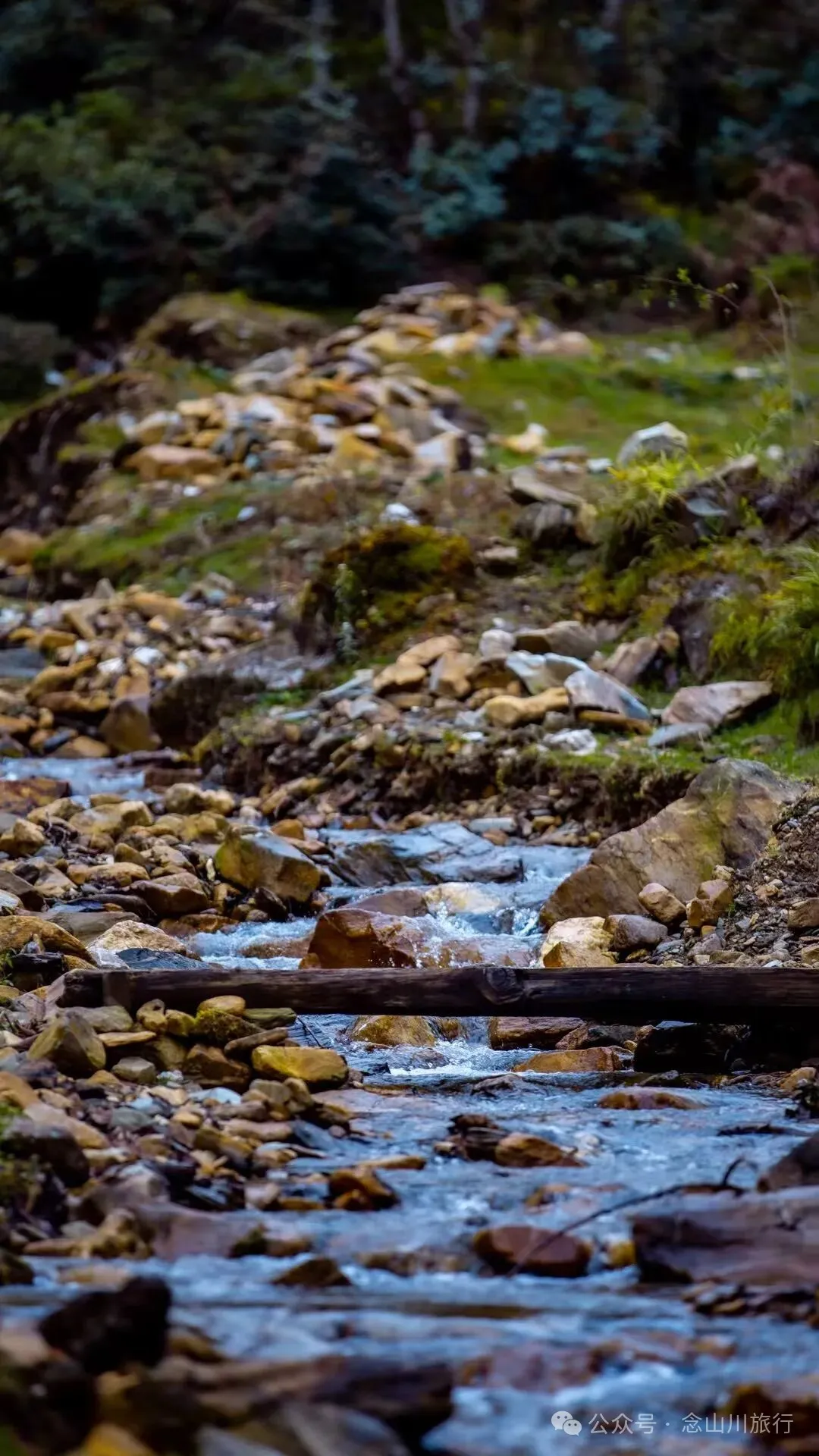
After a week of intermittent rain, the scenery along the stream path had subtly changed. "White stones emerge from the clear stream, red leaves are sparse in the cold weather. The mountain path is silent, but the green moss wets one's clothes." Every artistic conception in Wang Wei's poem can be found by the stream, and the mountain scenery is even richer. Walnuts fallen on moss, wild fungus growing symbiotically on tree trunks, papayas knocked down by rain and mountain wind, bright berries shimmering in the flowing water... If Wang Wei had lived in Bazhu Village, the poem "In the Mountains" might have been written in a more expansive style, like a song or ballad.
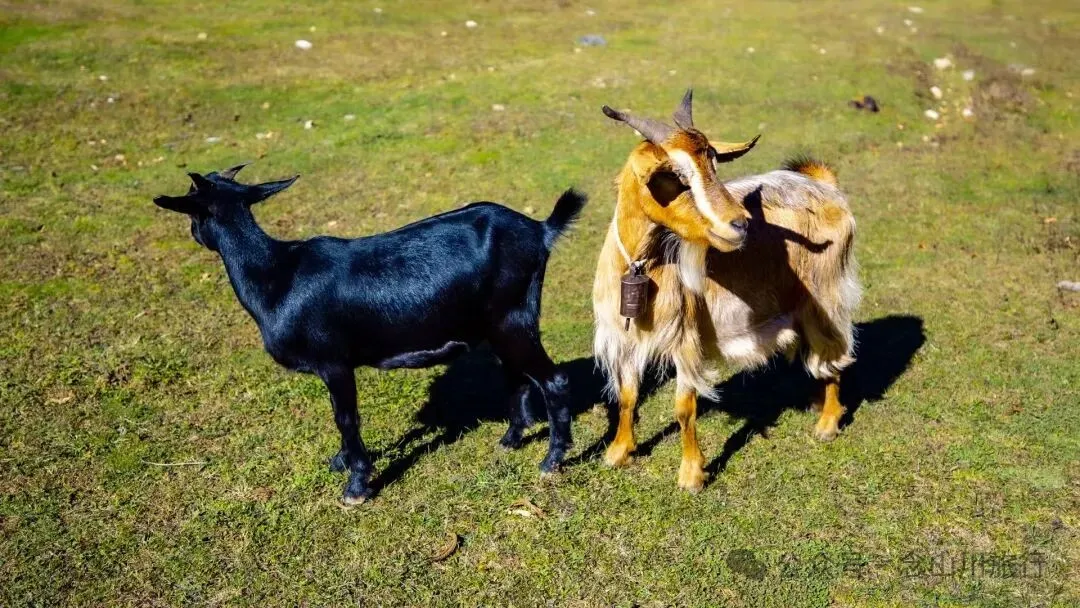
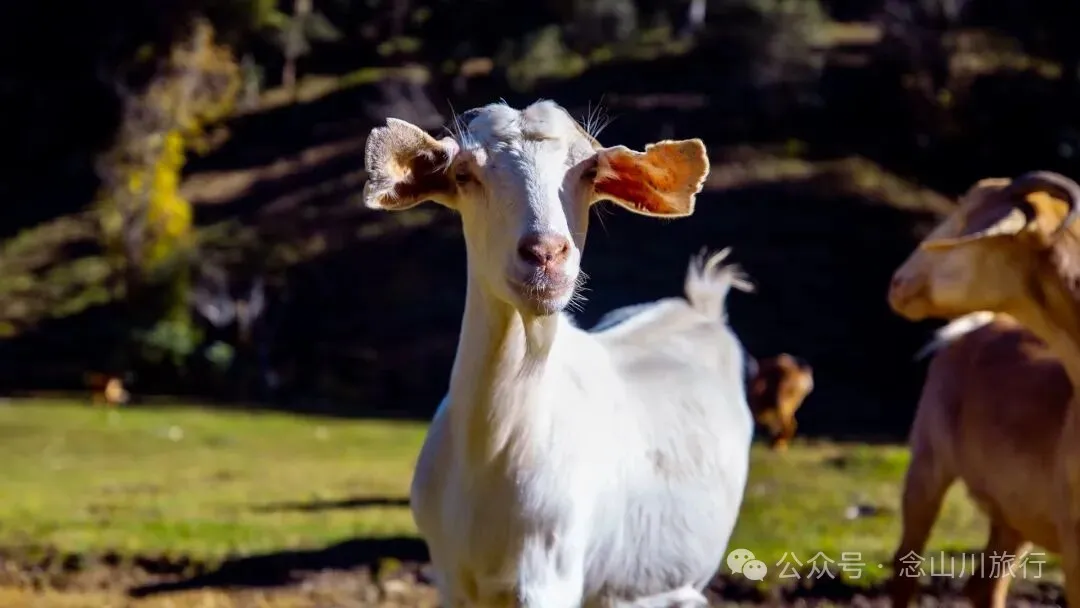
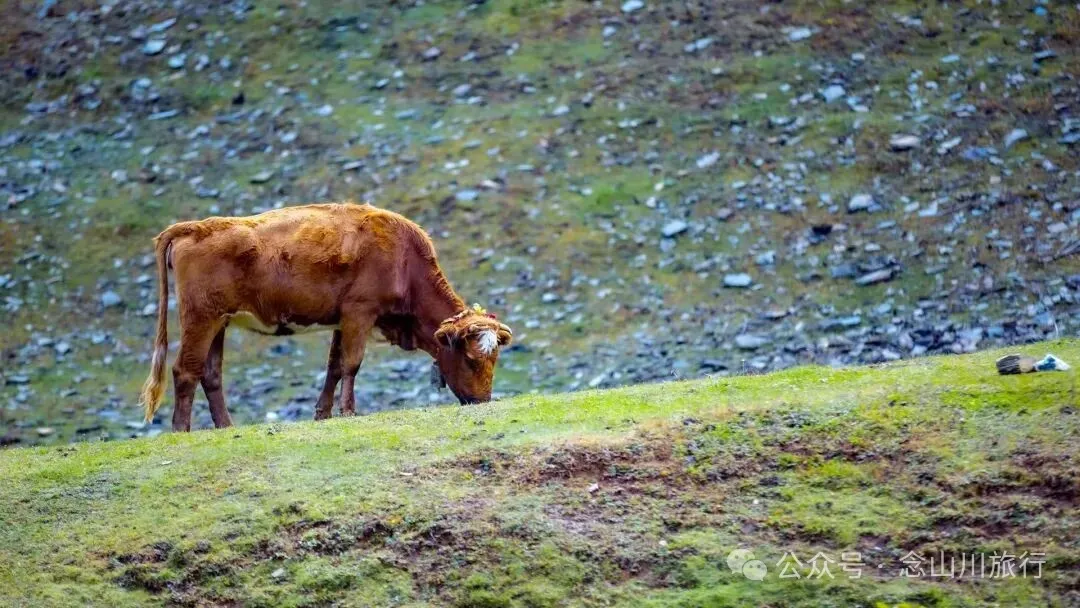
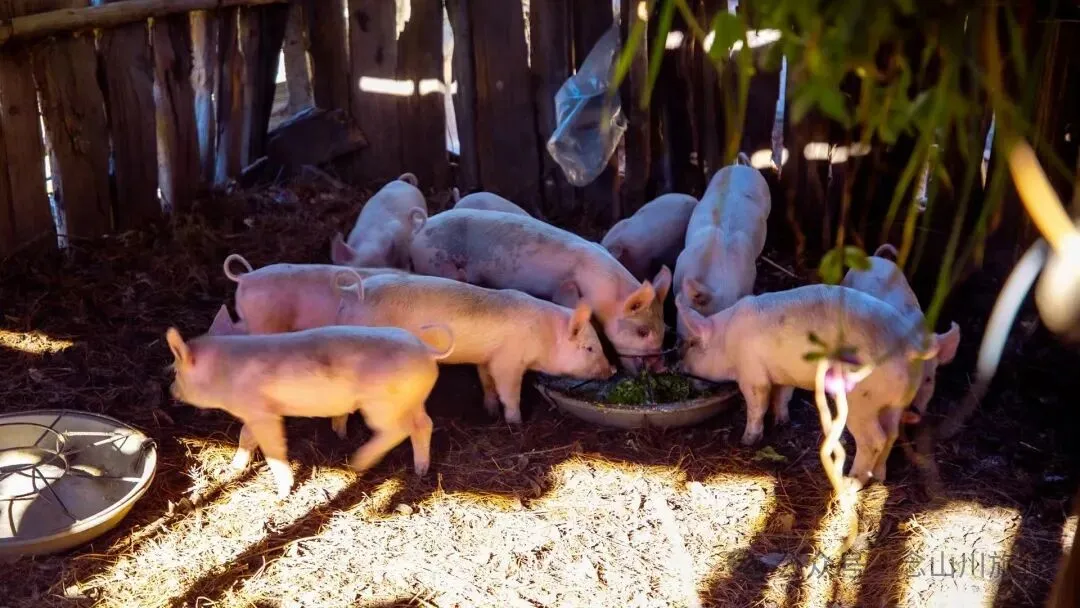
In late autumn and early winter, the cold rages through the mountains. Cattle and sheep, no longer adapted to the low temperatures, are driven back from high pastures to the village and kept in pens. But on small meadows scattered near the stream valley, a few herders still graze their animals, especially on warm, sunny days. Outside a pigsty, two little piglets lie in a spot without shade against the wooden wall, enjoying a warm afternoon nap.
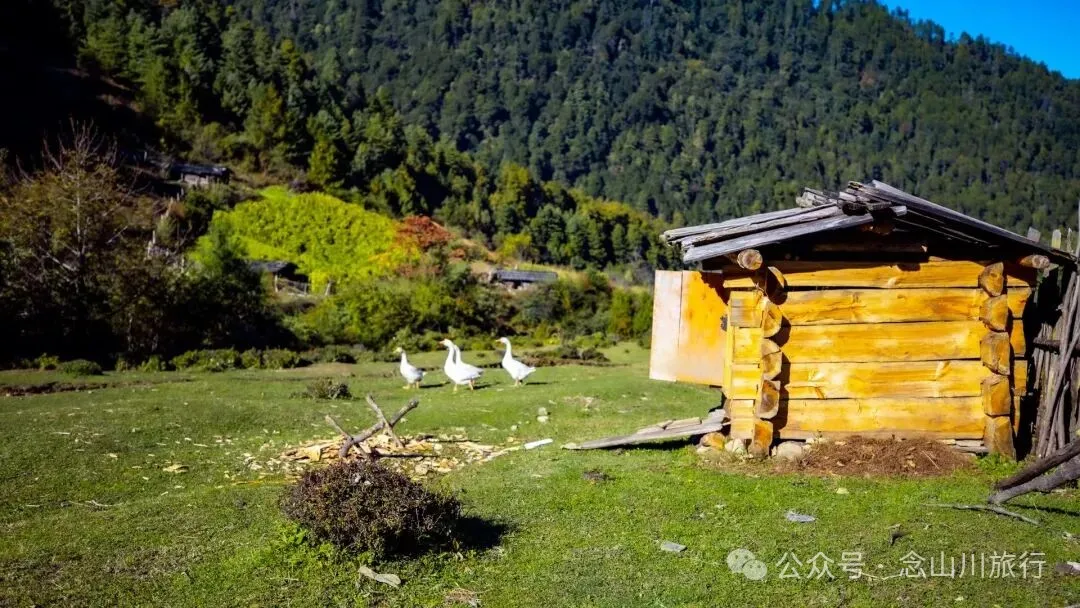
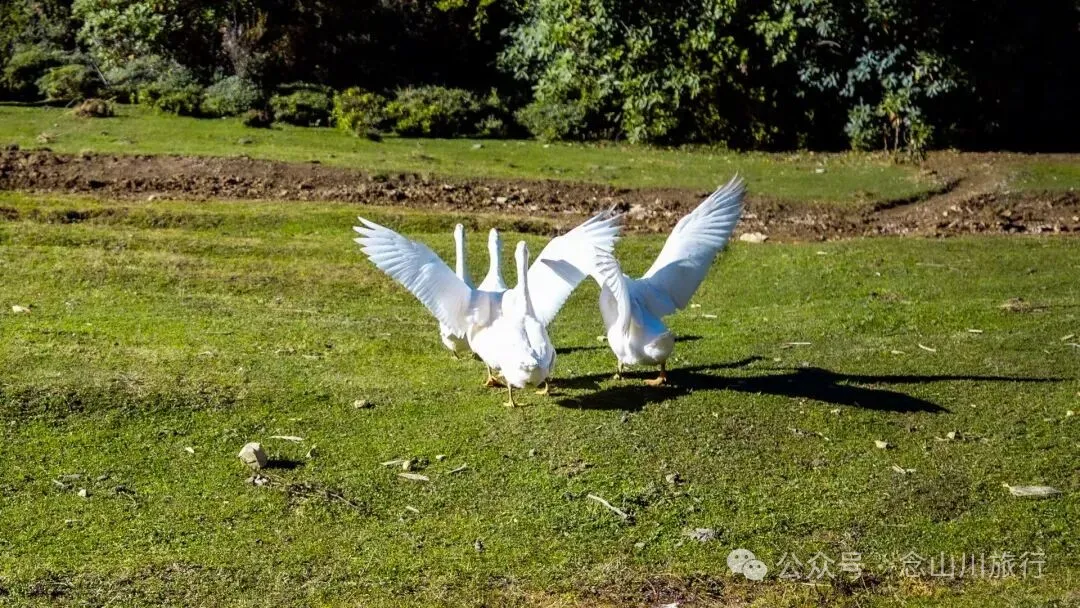
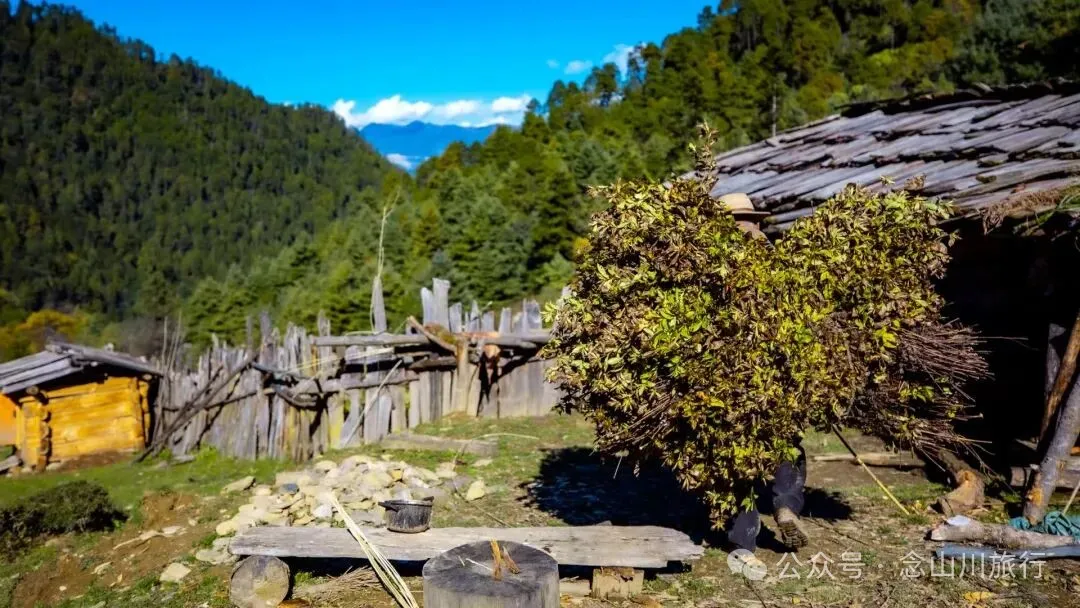
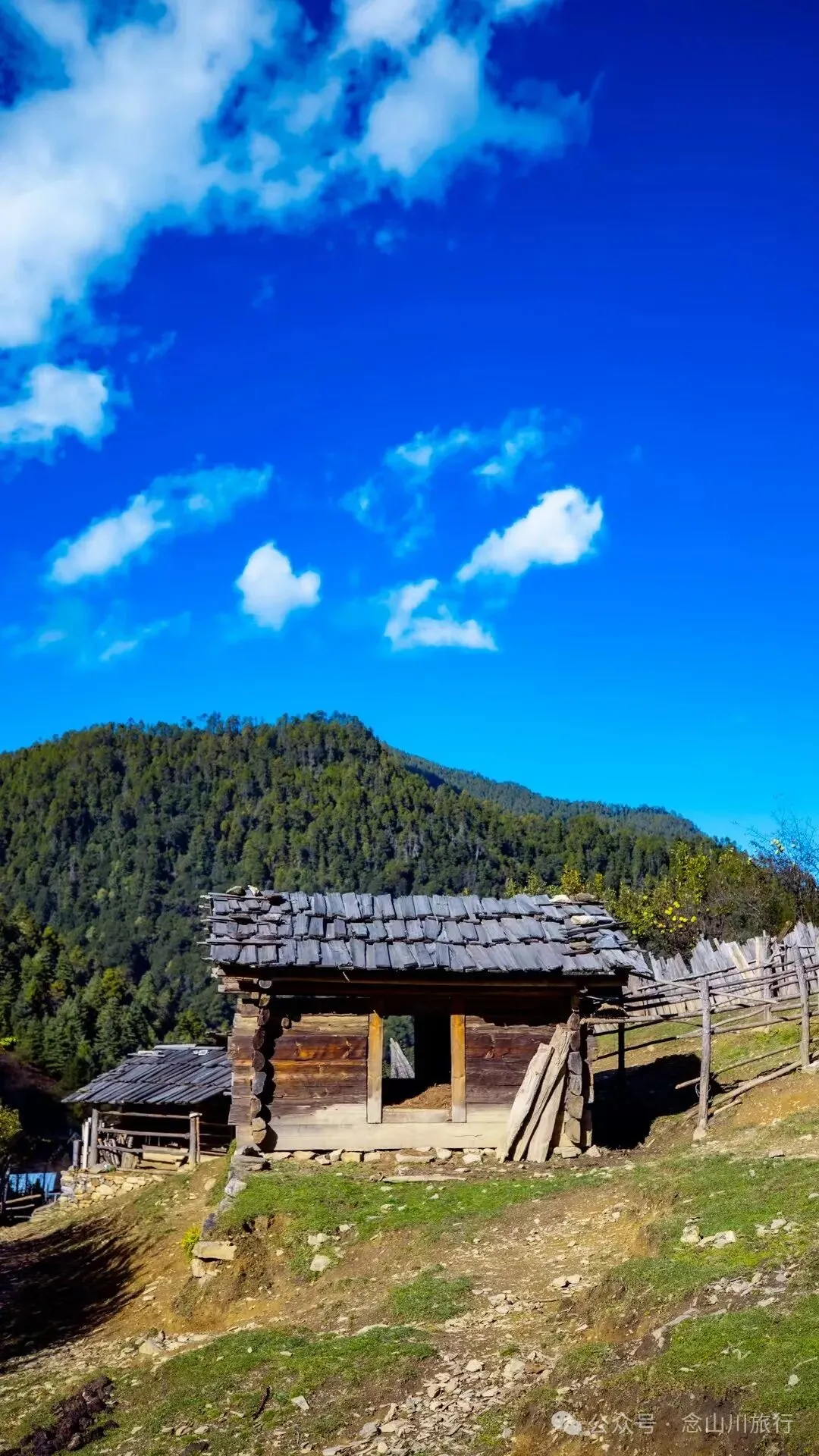
Every time I passed this meadow, I couldn't help but stop and look at the home of the four white geese—a beautiful little wooden house covered with a thick layer of pine needles. This time, I happened to meet the owner of the geese, a Tibetan elder. He was carrying a large bundle of atractylodes stalks he had cut from the field to feed the cattle. Hearing footsteps, the yellow cattle in the pen rushed to the door eagerly for food. The little wooden house was built by the elder himself for the geese, and they happily wandered nearby, seemingly loving their new home. The elder and his wife live in the old house next door. His wife had gone to a villager's home to chant scriptures and wouldn't return today, staying in the village house. But they prefer living here, regardless of weather—rain or shine, it's more comfortable here, the elder said. I looked back at the mountains behind him—who could argue with that?