
Wandering through the village, I followed a concrete road downhill to the Wulu group. The sun was still early, and most villagers were busy in the fields, with only a few elderly people sitting in their yards or by the roadside basking in the sun. I had no particular purpose for this trip, just wanting to relax. The sunlight here seemed magical; walking under the sun, I felt an invisible force pressing on my shoulders, and my sore legs experienced a strange pounding sensation, extremely comfortable.
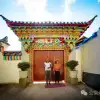
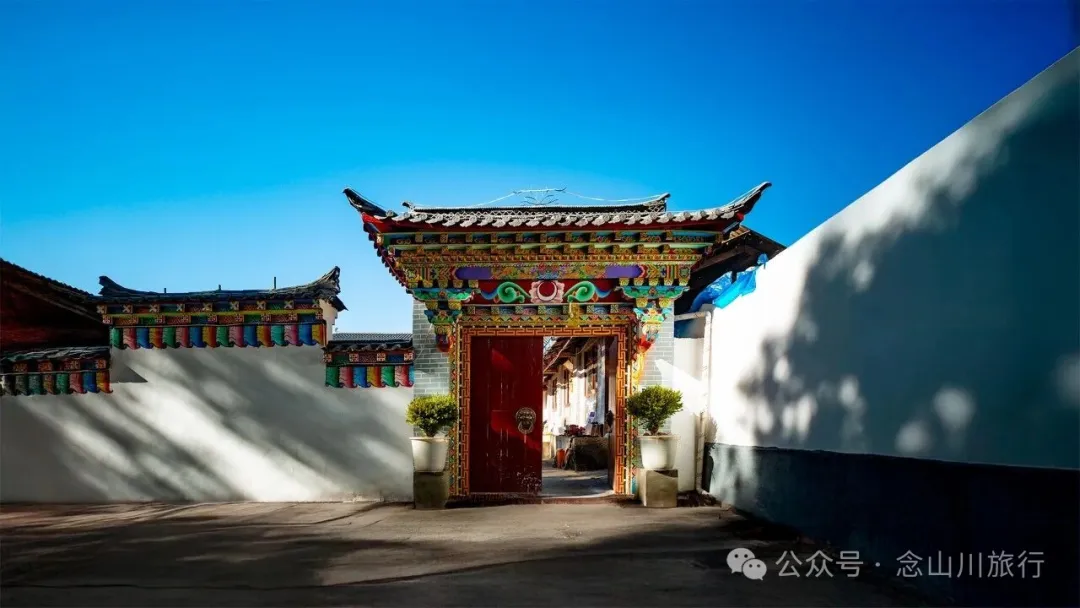
I intended to continue down the concrete road to the asphalt road by the Bazhu River, then circle back to the village committee to end this aimless outing. But the strikingly bright gate of Gongchu Ciding's house made me change my mind. I passed through a half-open wooden door into the yard. His wife, busy with something, saw me and immediately walked to the kitchen door, speaking Tibetan I couldn't understand while gesturing for me to come in. The host appeared from somewhere, smiling broadly, and explained his wife's invitation in Mandarin. Under their warm hospitality, I entered another Tibetan living room that was almost identical in layout yet distinctly different.
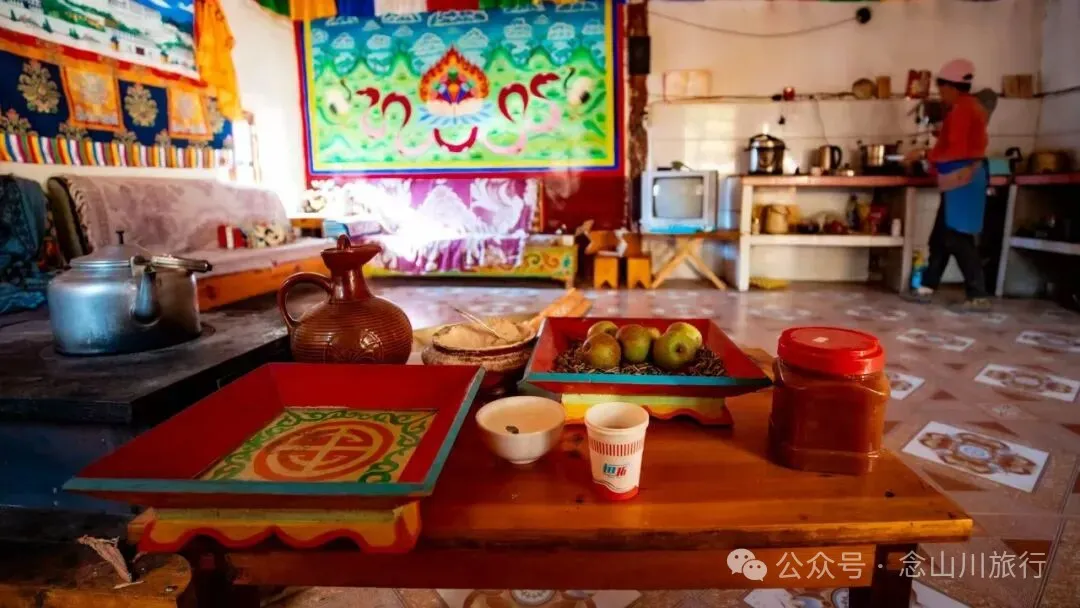
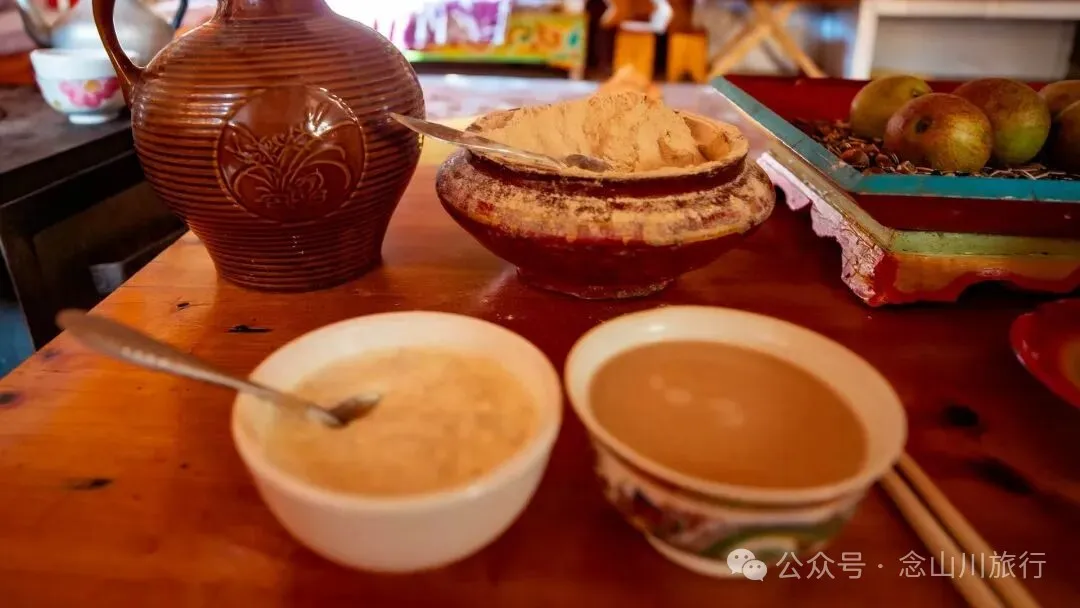
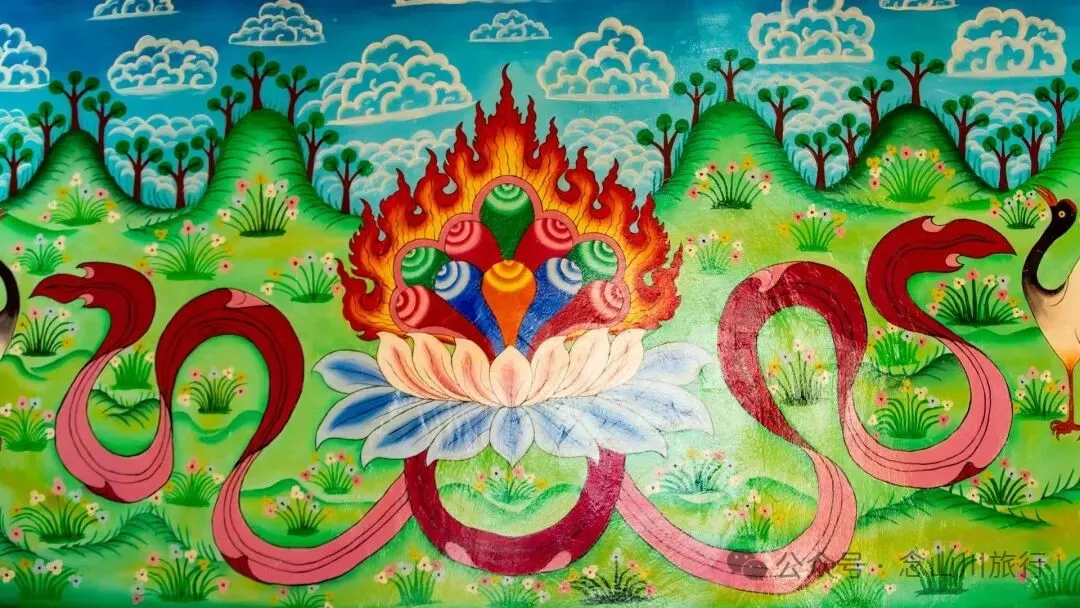
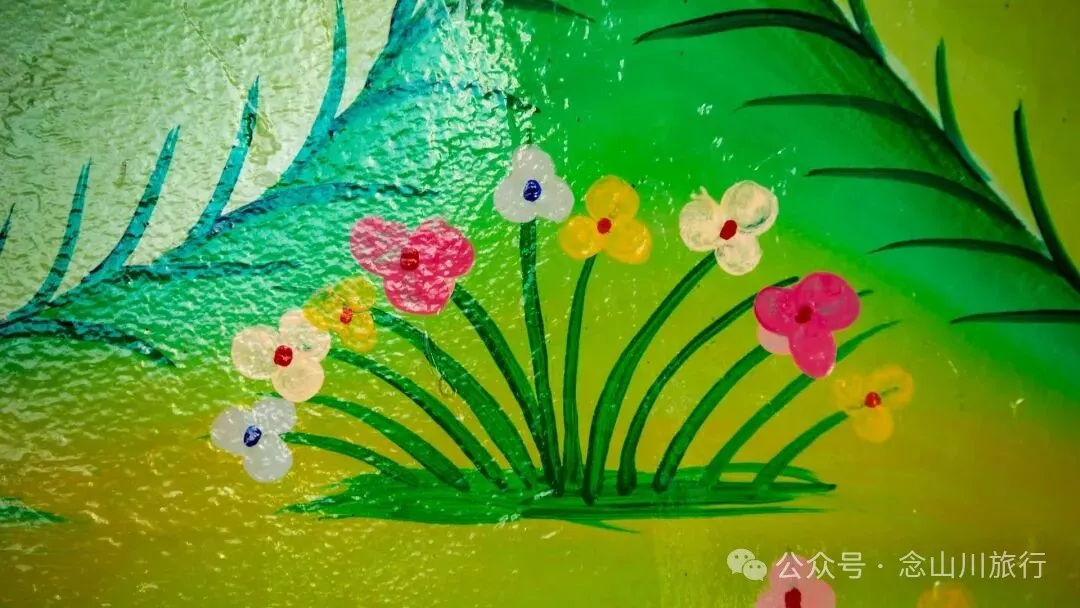
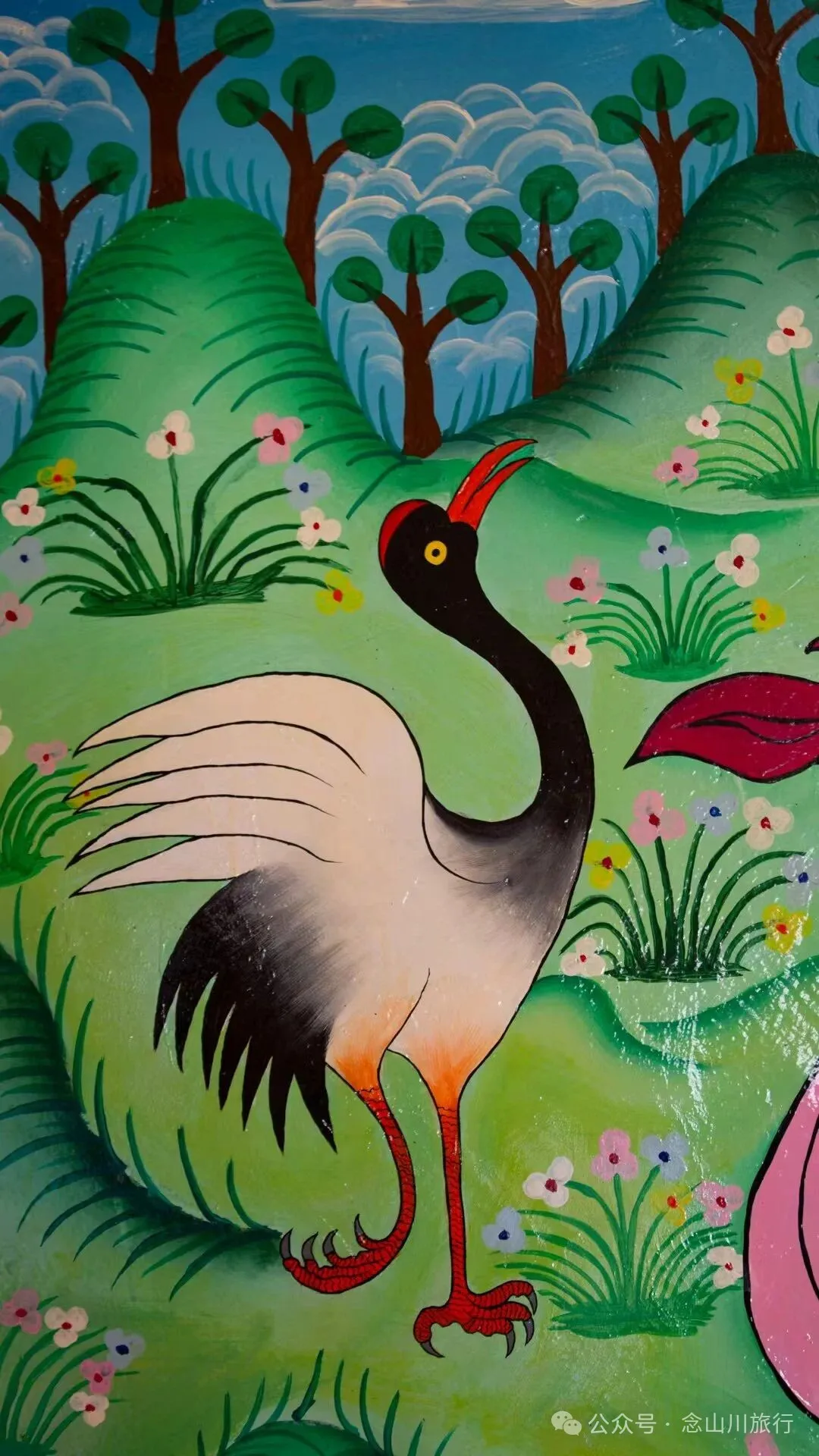
The hostess soon laid out afternoon tea on the small square table in front of me, but I was busy admiring the unique features of the living room. A huge thangka embroidery occupied almost an entire wall, depicting the Potala Palace, sharing the wall with a shrine. The host said it was bought. On the adjacent wall was a mural painted in watercolor on an early rammed earth wall. The mural had strong Tibetan Buddhist elements, with a Mani jewel at the center—a highly recognizable symbol in thangka art. Its shape and color scheme followed traditional religious imagery, embodying the wish for "auspiciousness and completeness" in Tibetan Buddhist culture. The fiery flames, the splendor of the treasure, and the natural background (mountains, flowers, birds) blended together, reflecting both the decorative nature of thangka art and the spiritual pursuit of "light, abundance, and purity" in religious culture. This was the first time I had seen such a mural in Bazhu Village, so I curiously asked who the creator was. The host humbly remained silent, just smiling, while the hostess pointed at him and revealed the truth, earning my deep respect. Through conversation, I learned that the host's name is Gongchu Ciding, a genuine farmer, and painting is one of his hobbies, self-taught. Not only this mural, but many paintings in the house were done by his hands.
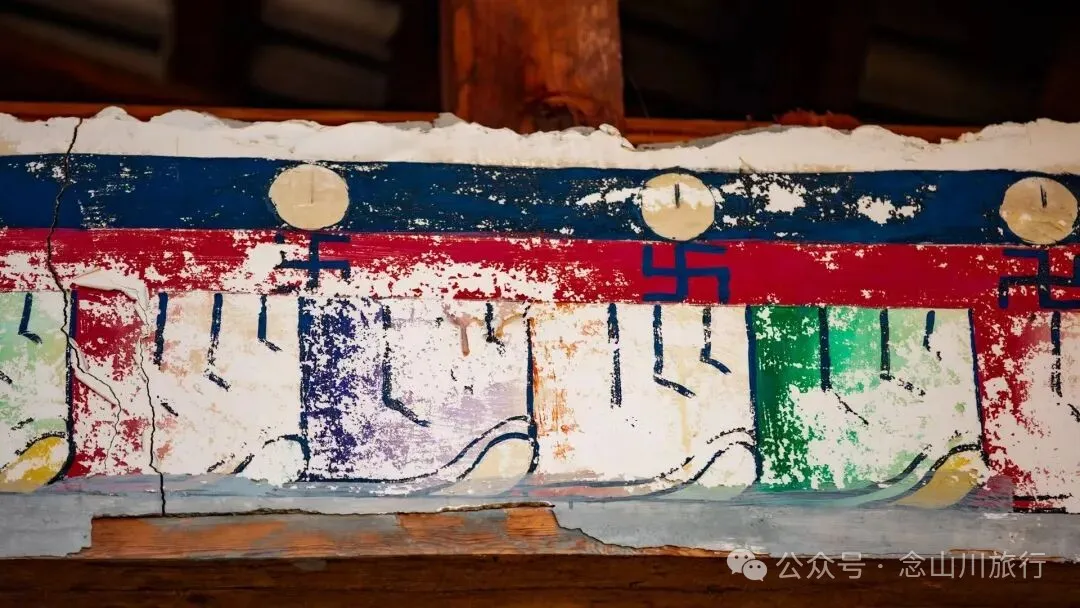
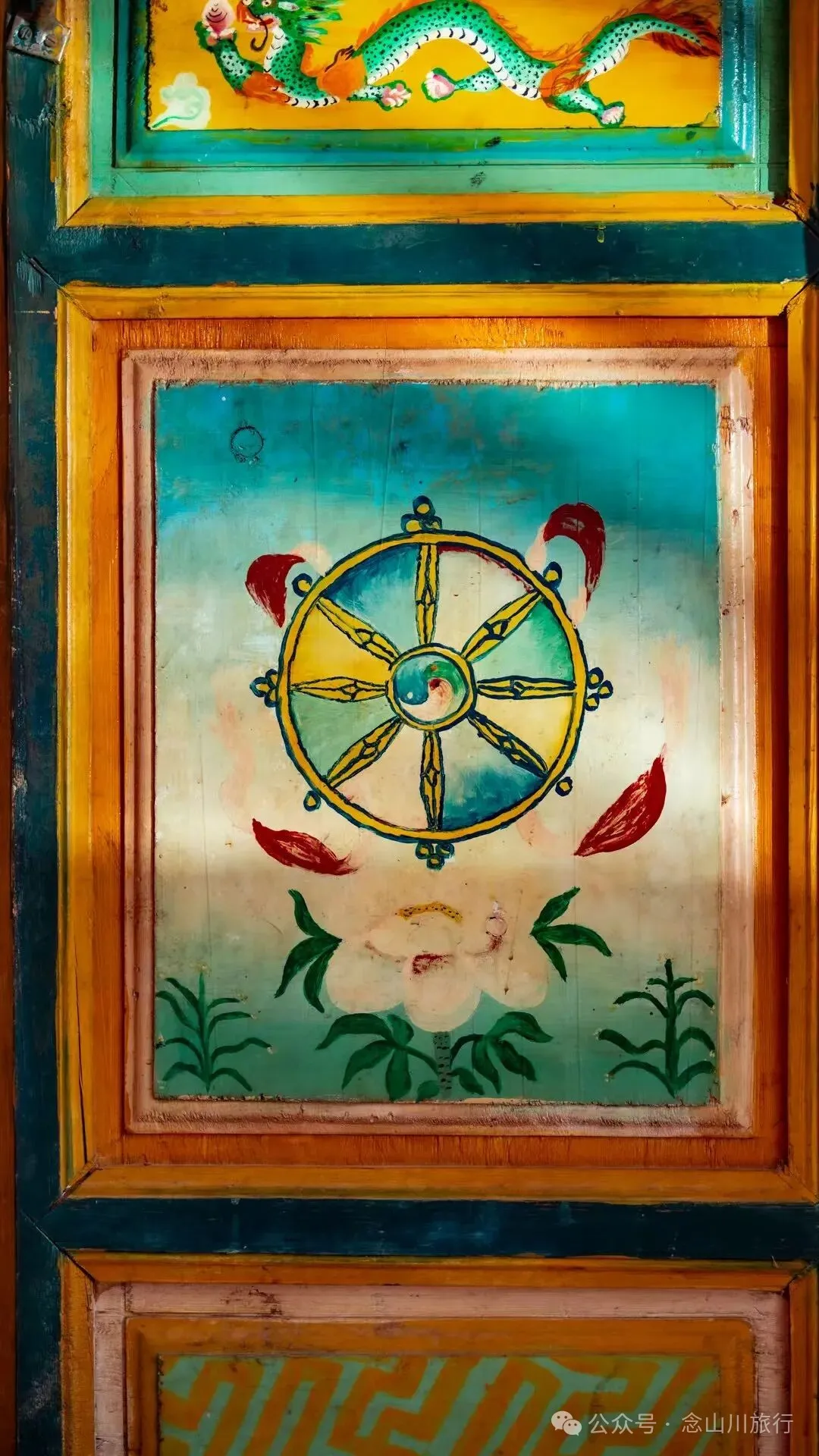
These are his early works, from over twenty years ago—the length of time he has been putting his painting hobby into practice. Clearly, the lines were simple and rough, the colors not delicate or distinct, but they are very meaningful.
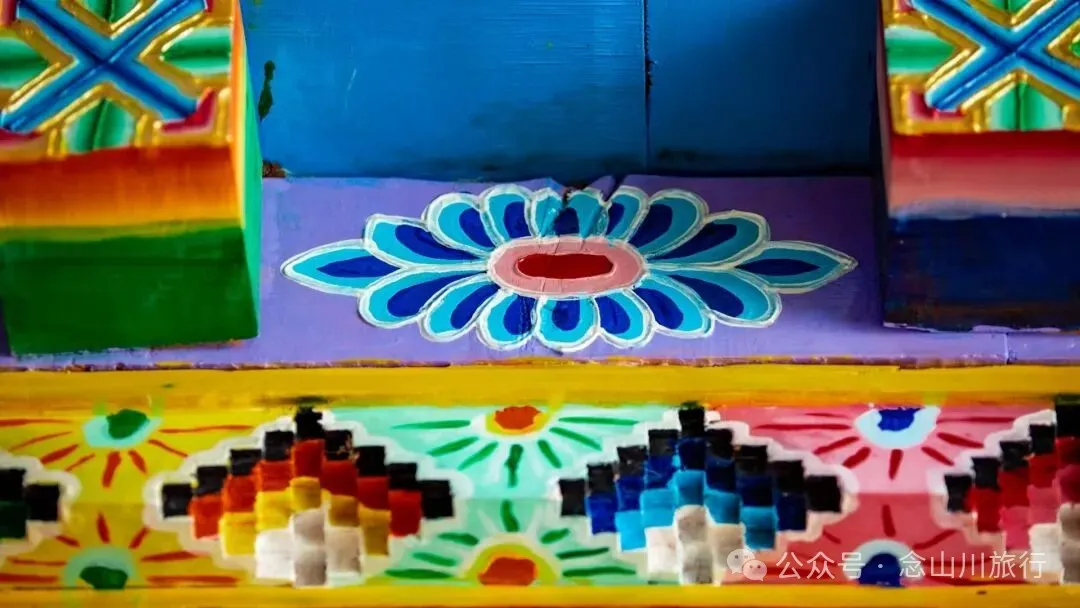
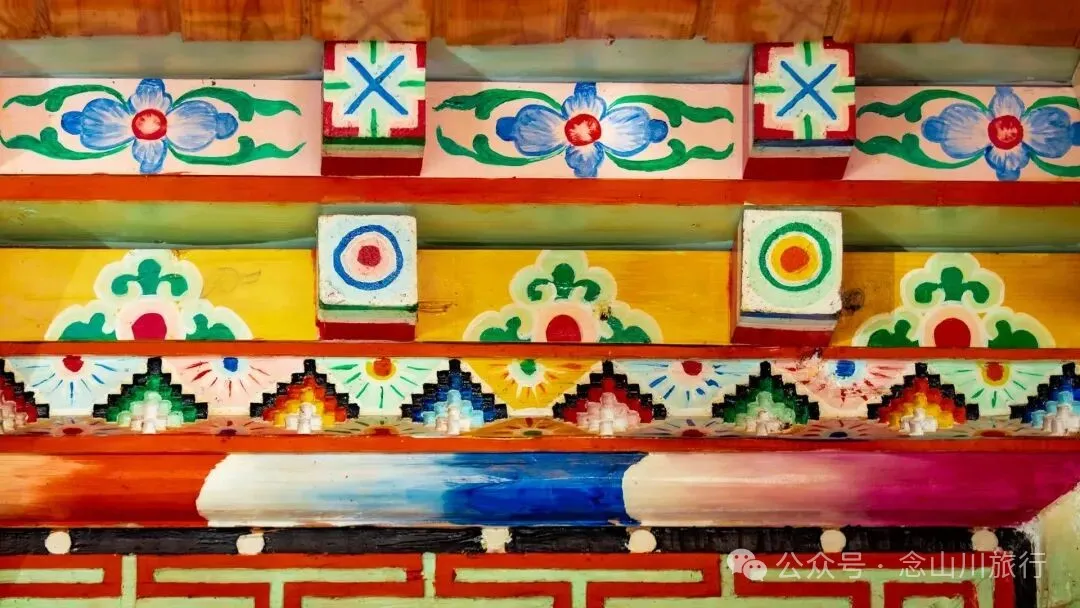
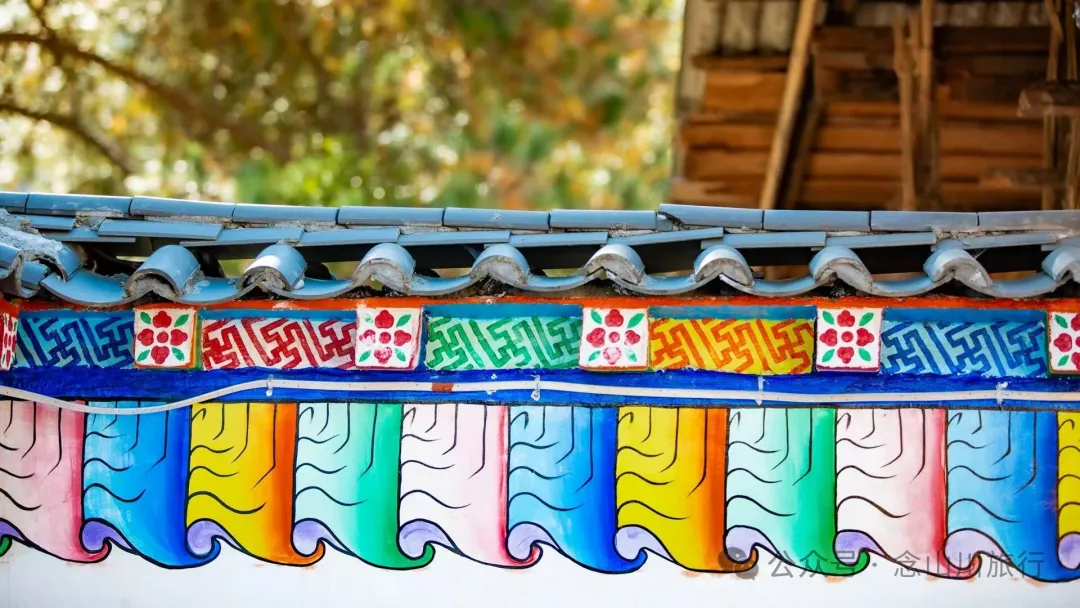
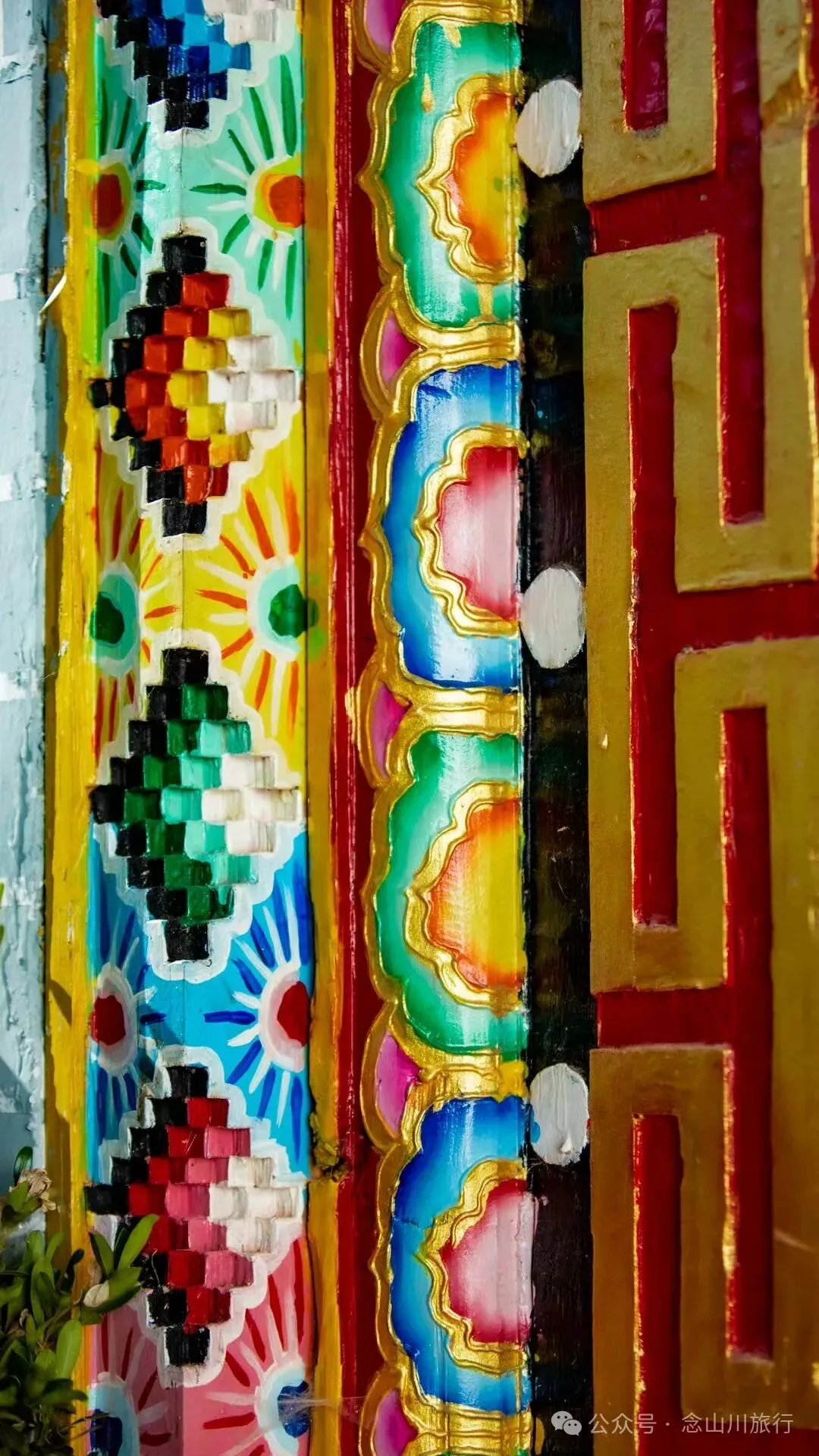
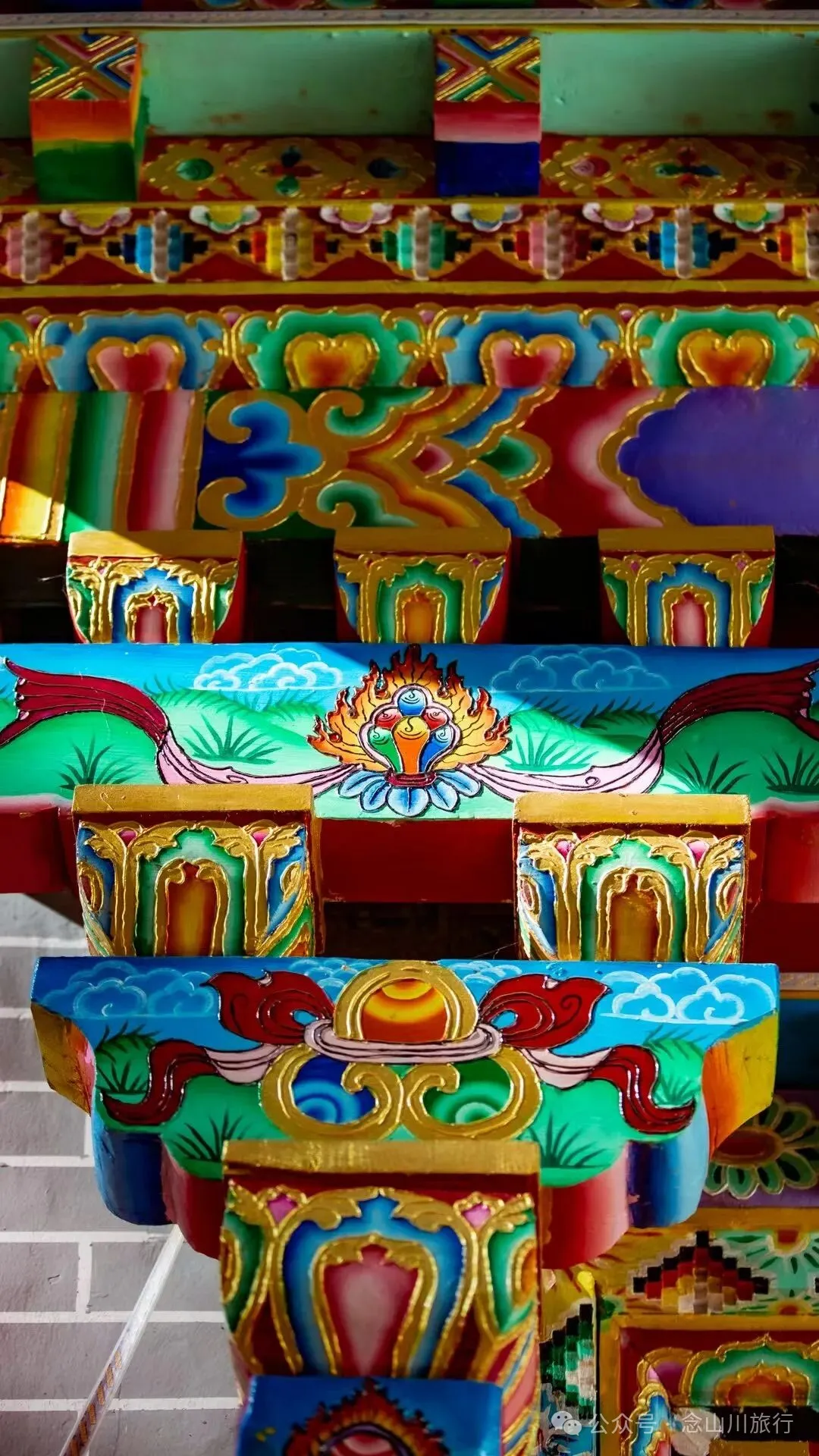
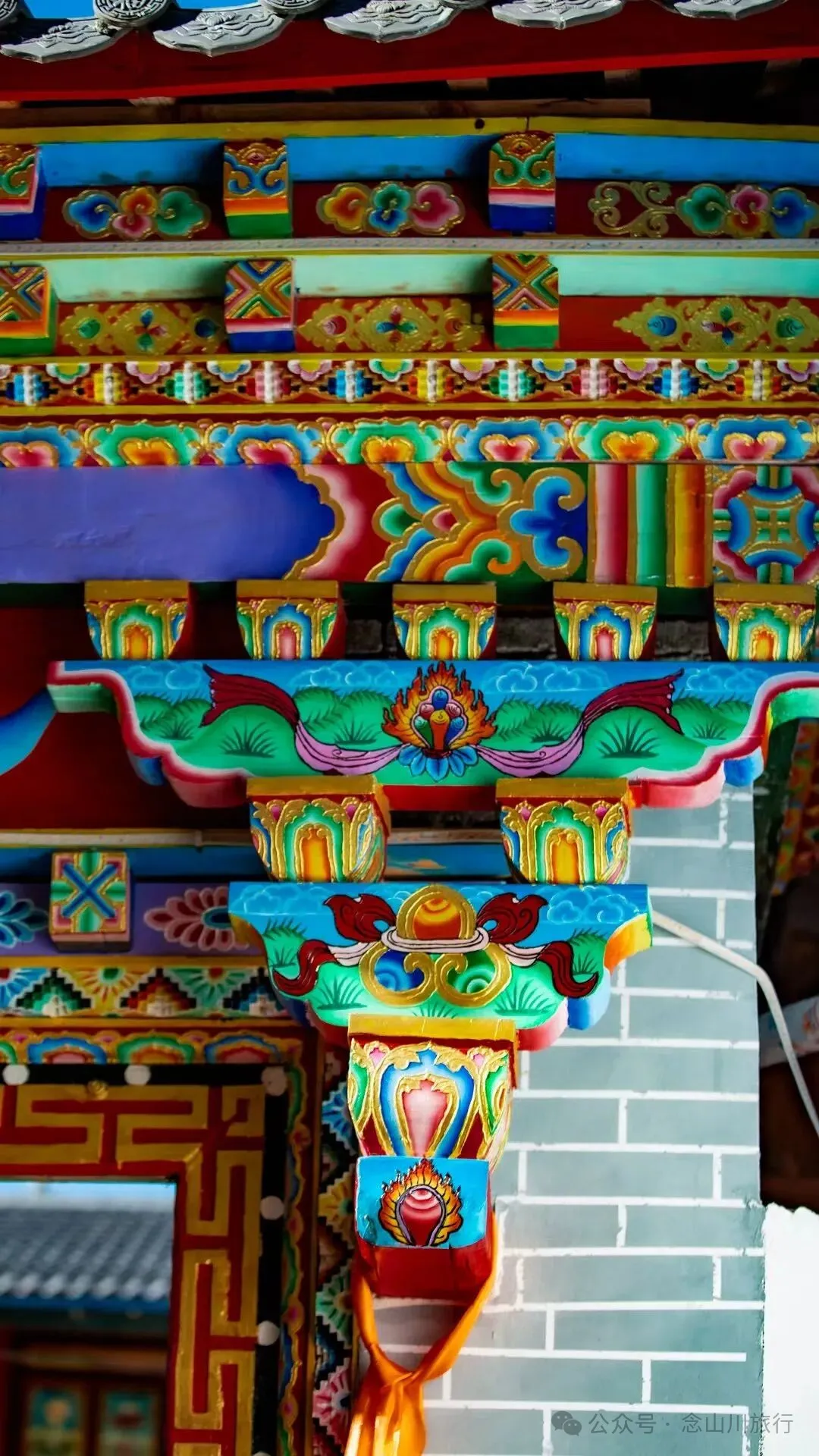
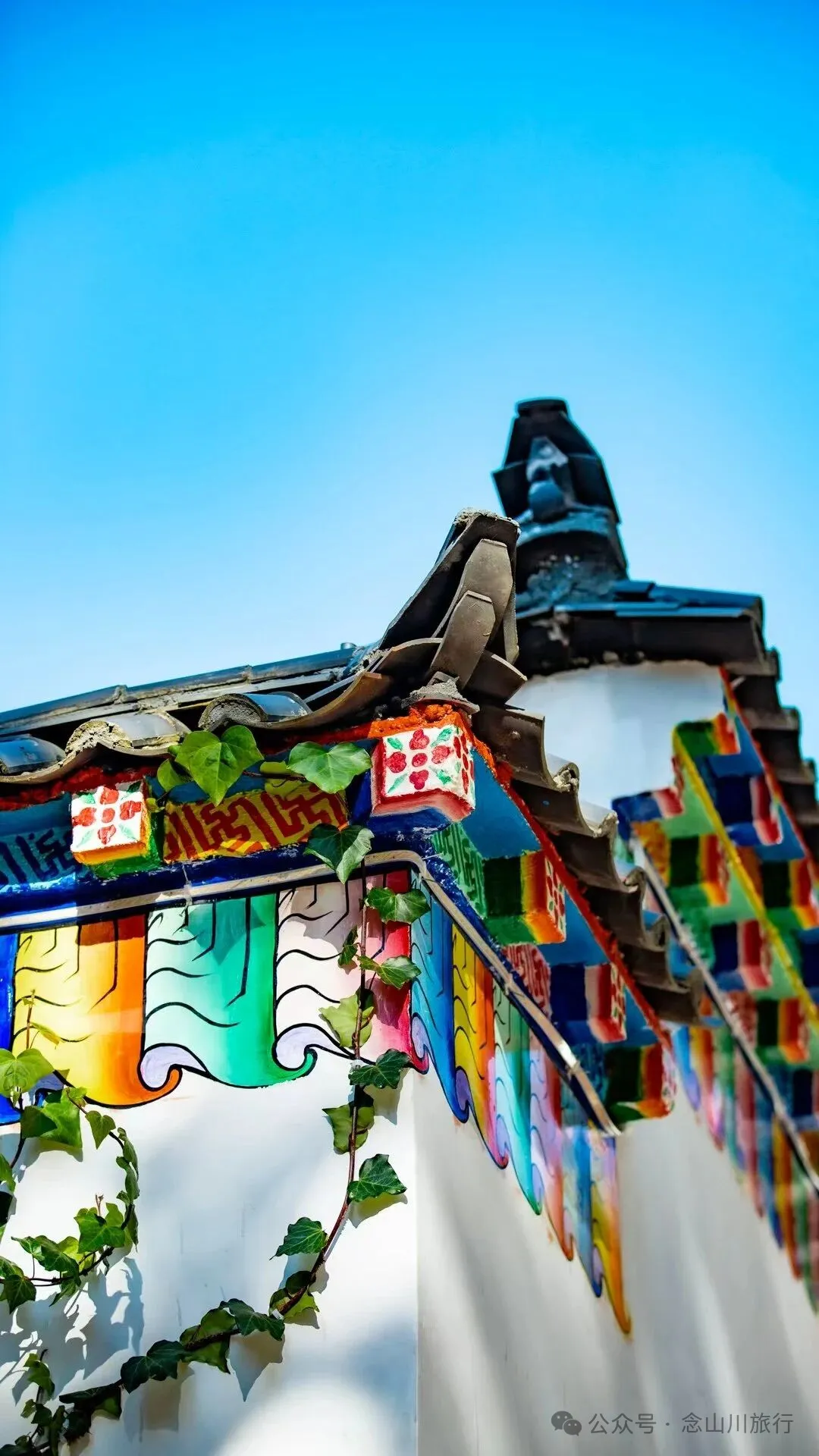
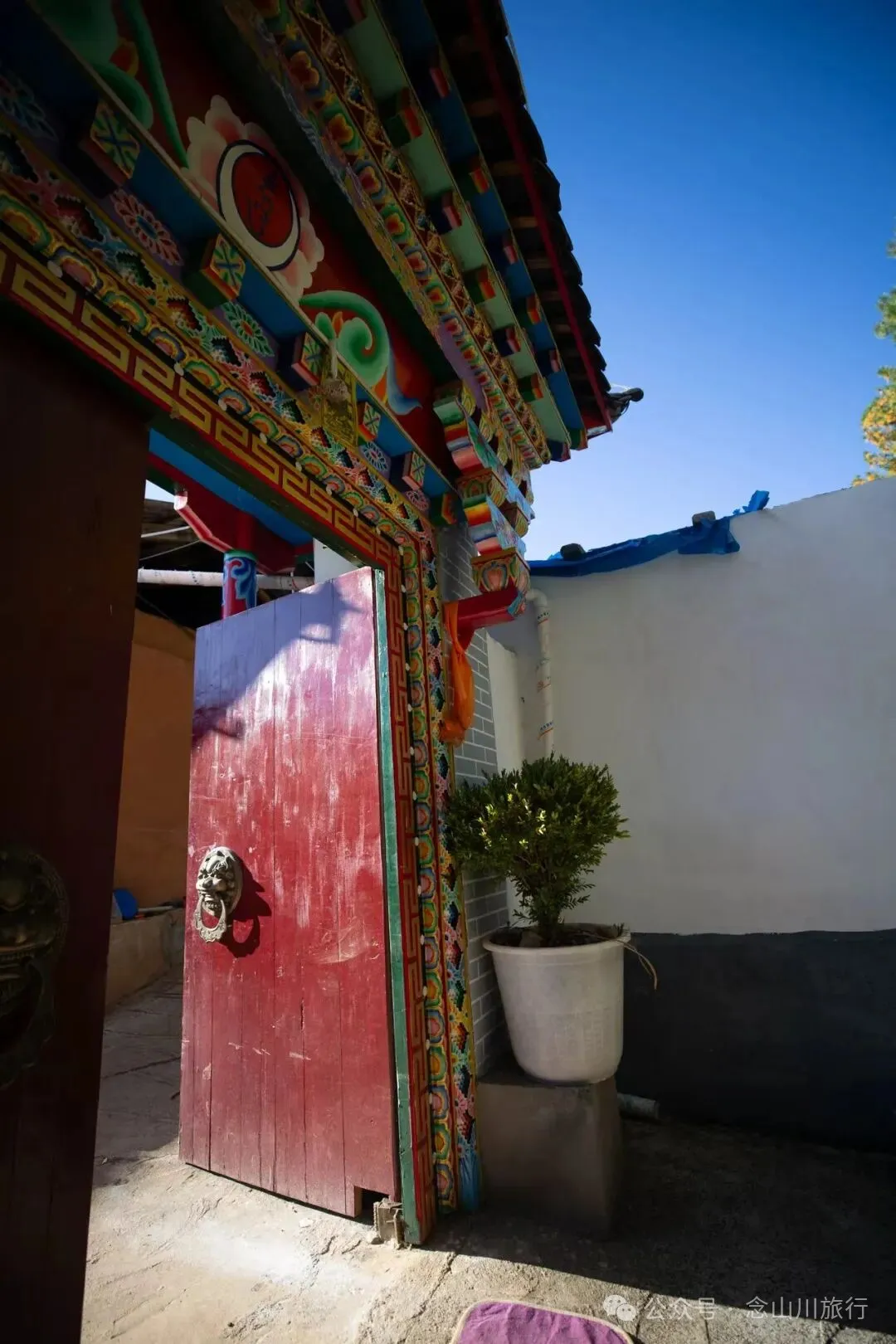
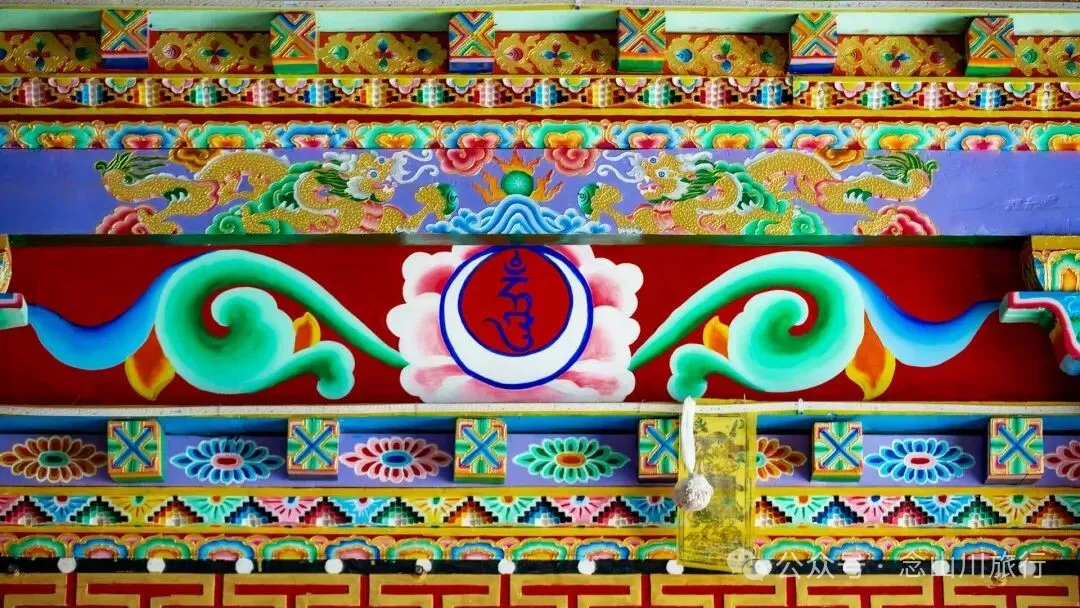
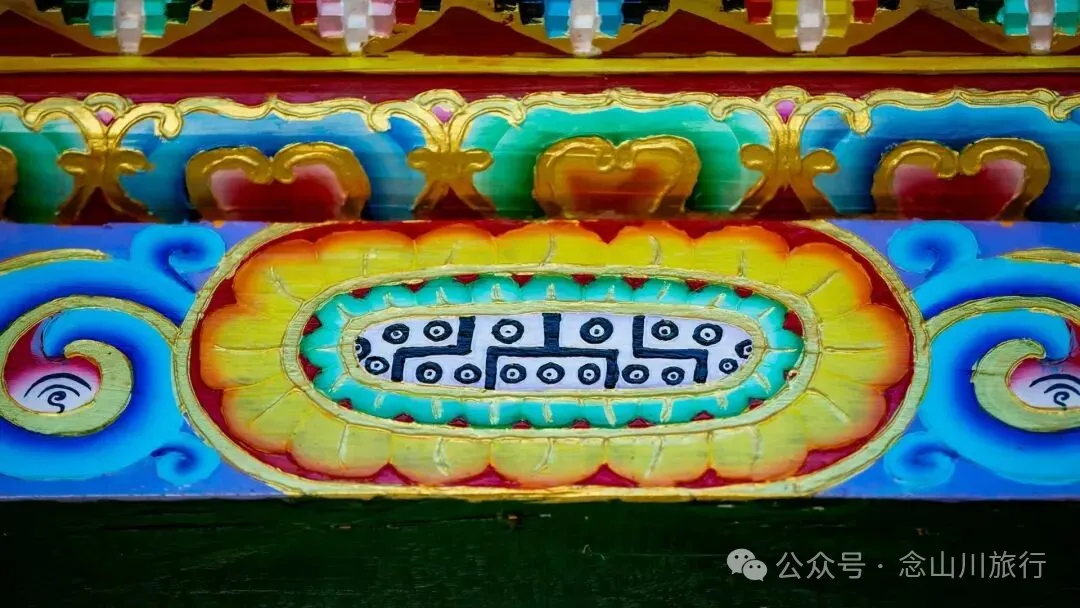
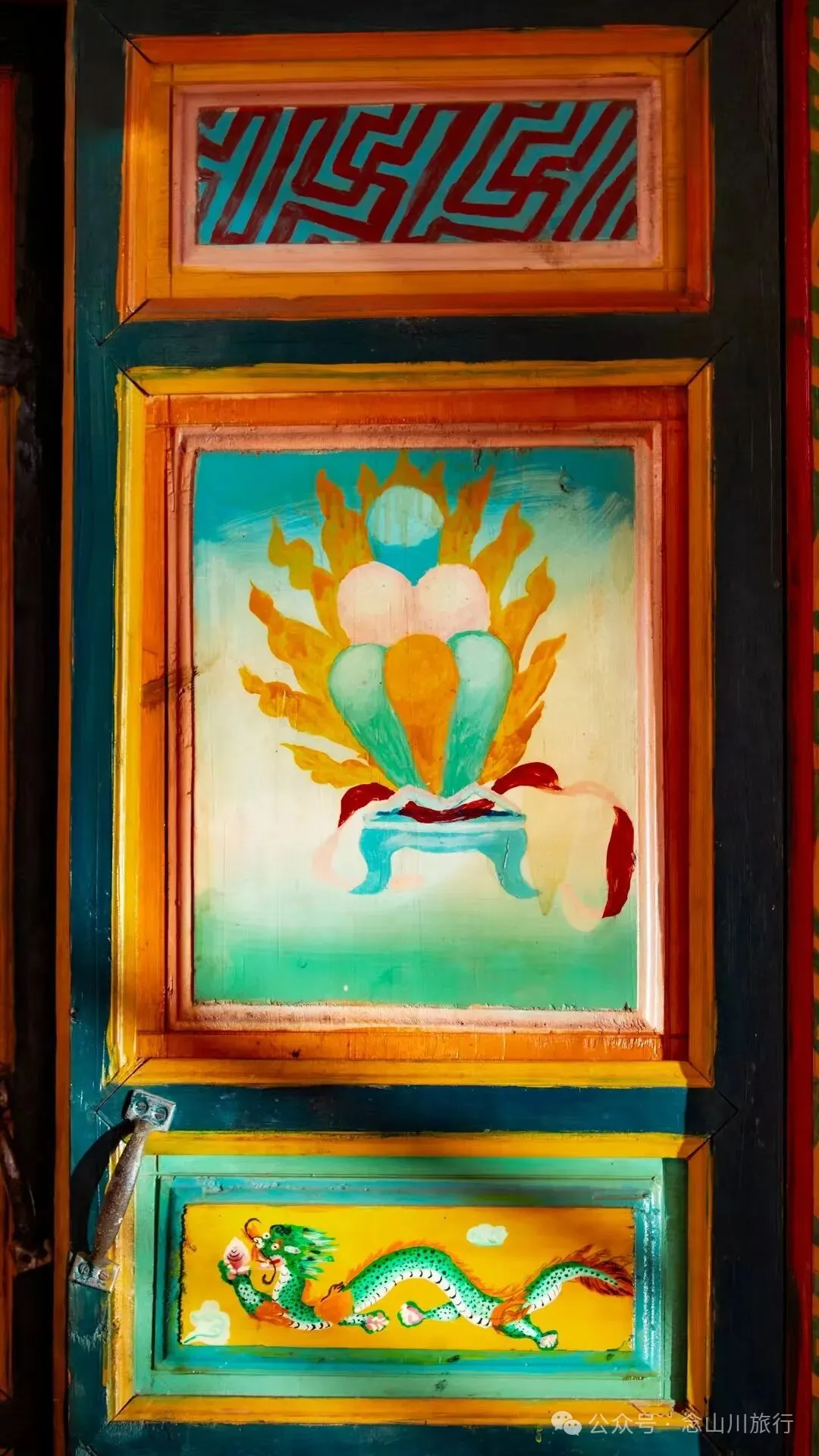
The resplendent carvings and paintings on the gate clearly show his dedication to this hobby over the past twenty years, and his skills have greatly improved. He said the wood carvings and paintings on the gate were all done by himself last year, taking four months in total, learned from videos. The patterns are auspicious decorative motifs from Tibetan Buddhism, including typical symbols of the "Eight Auspicious Symbols" (also known as the "Eight Glorious Emblems"), such as the Endless Knot (symbolizing the continuity of the Dharma and eternal auspiciousness), the Conch Shell (representing the Dharma spreading in all directions like the sound of a conch), and the Lotus (symbolizing purity rising from the mud). These symbols are iconic patterns in Tibetan Buddhism representing auspiciousness and completeness, often found in temple architecture, ritual objects, and decorative arts, and now also in residential buildings.
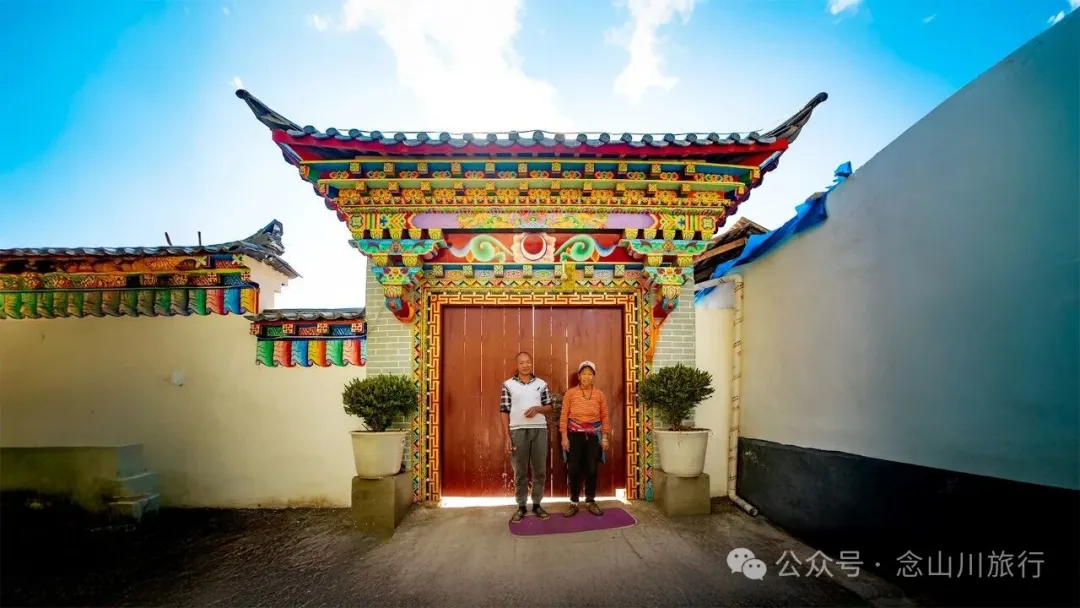
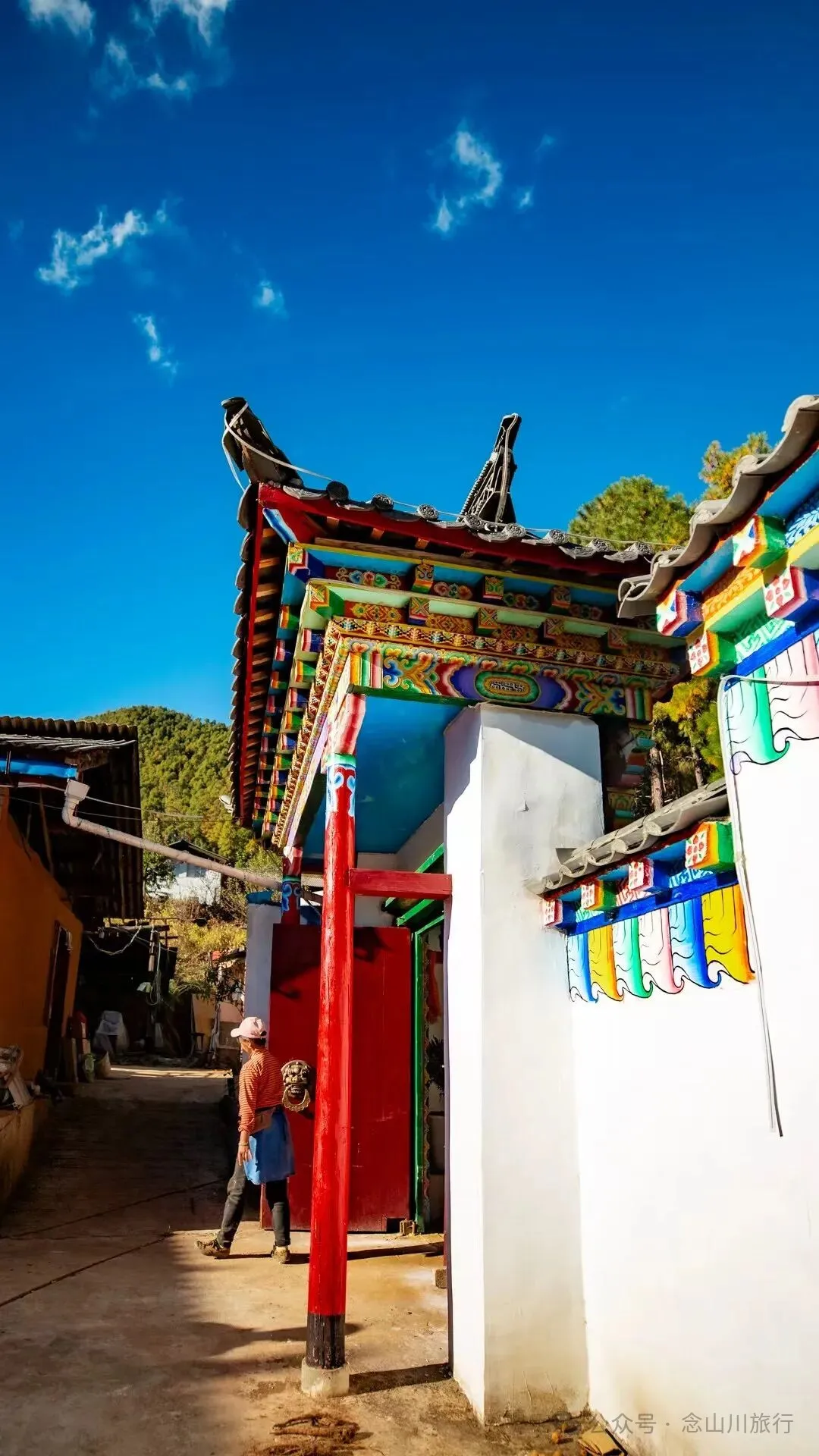
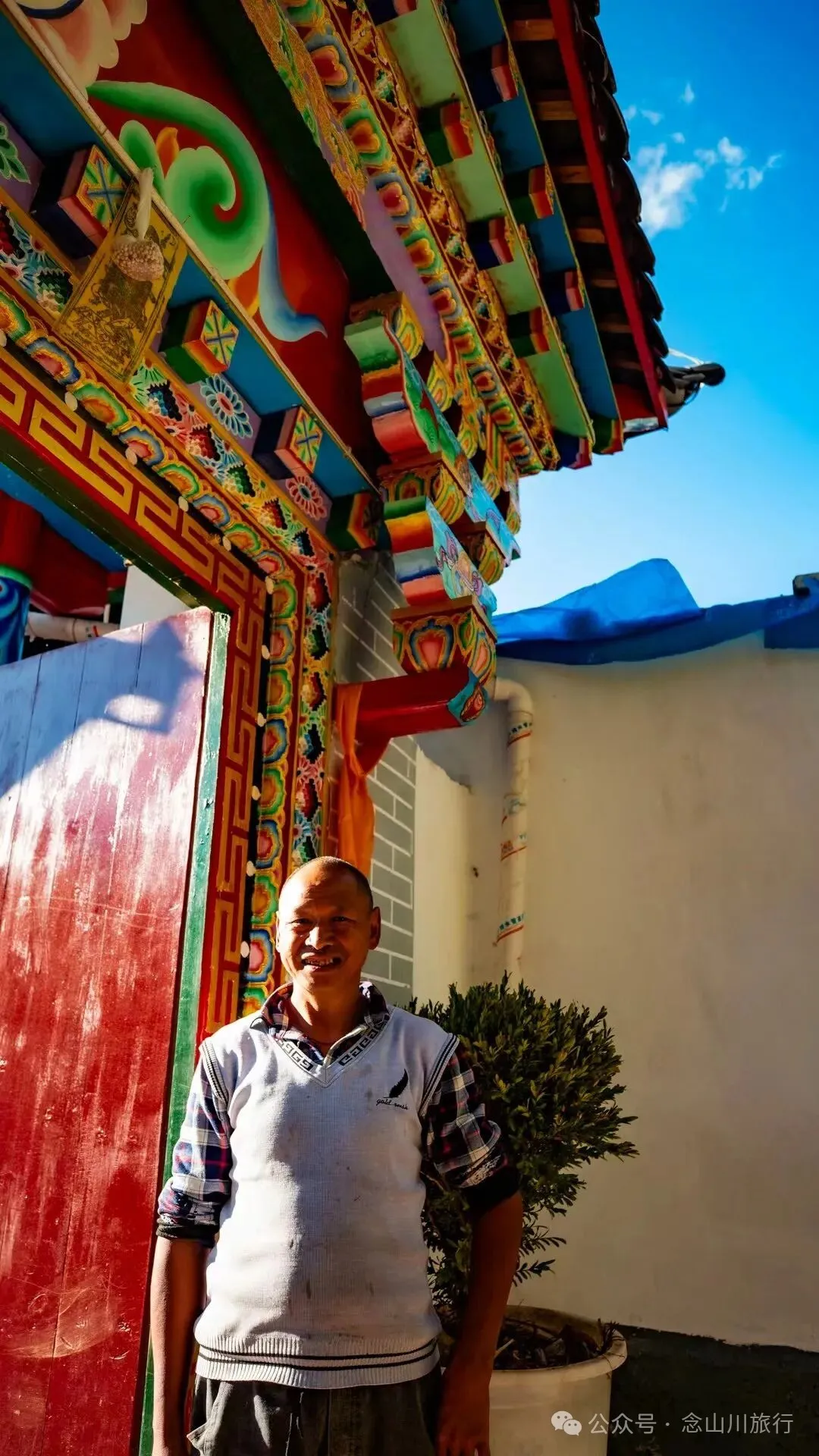
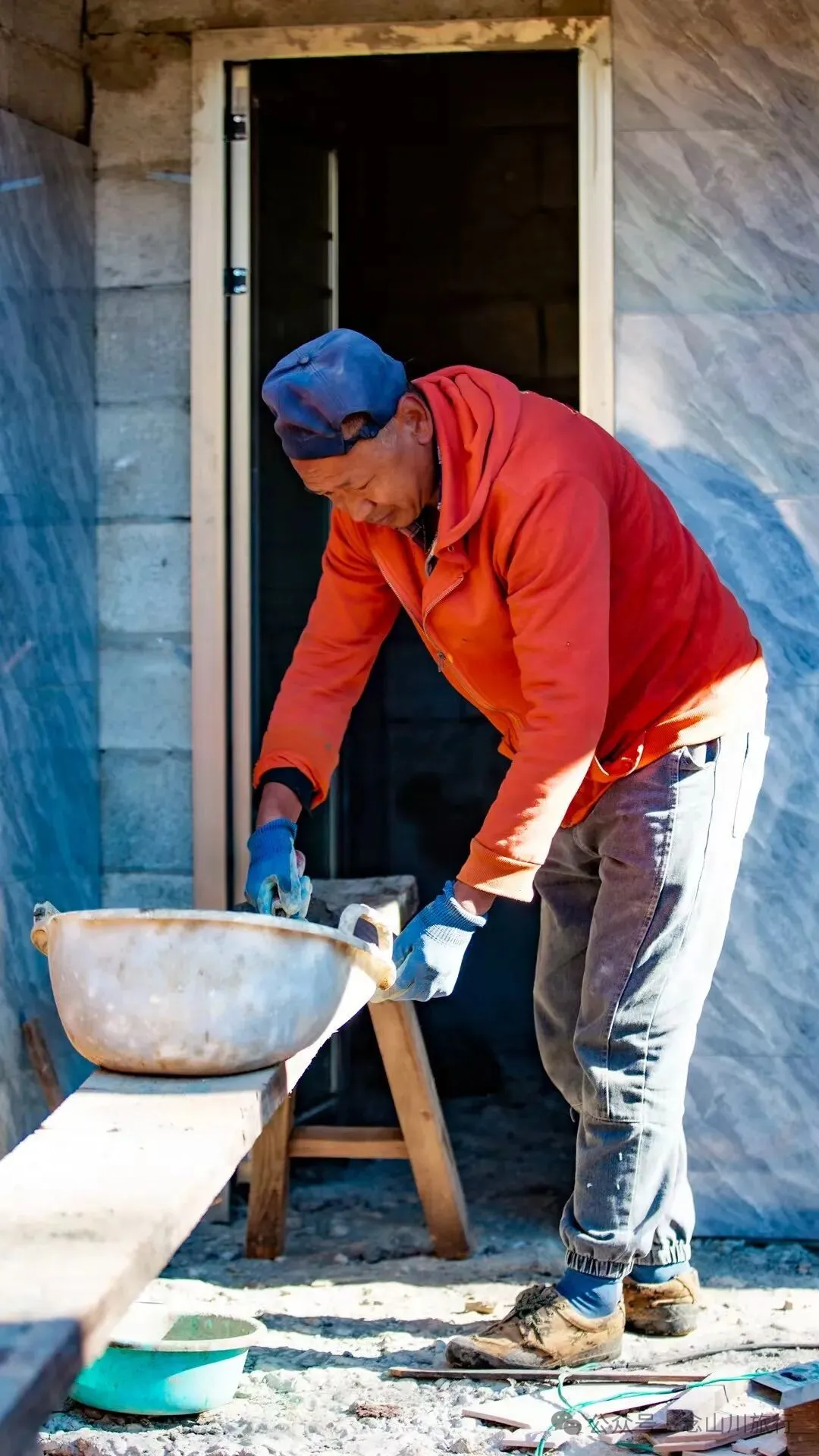
The next day, I returned with a different lens to capture details. Gongchu Ciding and his wife were still at home. His wife was drying buckwheat and soybeans in the yard, while he was tiling the exterior wall of a newly built shower room in a corner of the yard, his movements very skilled. Upon closer inquiry, besides painting and wood carving, he also knows how to lay water pipes and electrical wires, build walls, weld, and make tables, chairs, and fruit bowls from wood. When I asked how he learned so many skills, he couldn't answer, simply saying the family had no money. I asked him a question, and he was too slow to respond, so I rephrased it as a rhetorical question, and he repeated the rhetorical question as a statement, which served as his answer. Such a man, with extremely limited verbal ability but hands full of magic, as earthy as the soil, has carved his hobbies into his bones without realizing it, only telling outsiders it's due to life's pressures. But in the eyes of others, he is an ultimate artist of life. He dug out a welding certificate he received a few years ago to show me; under the education level column, it read: Primary School.