

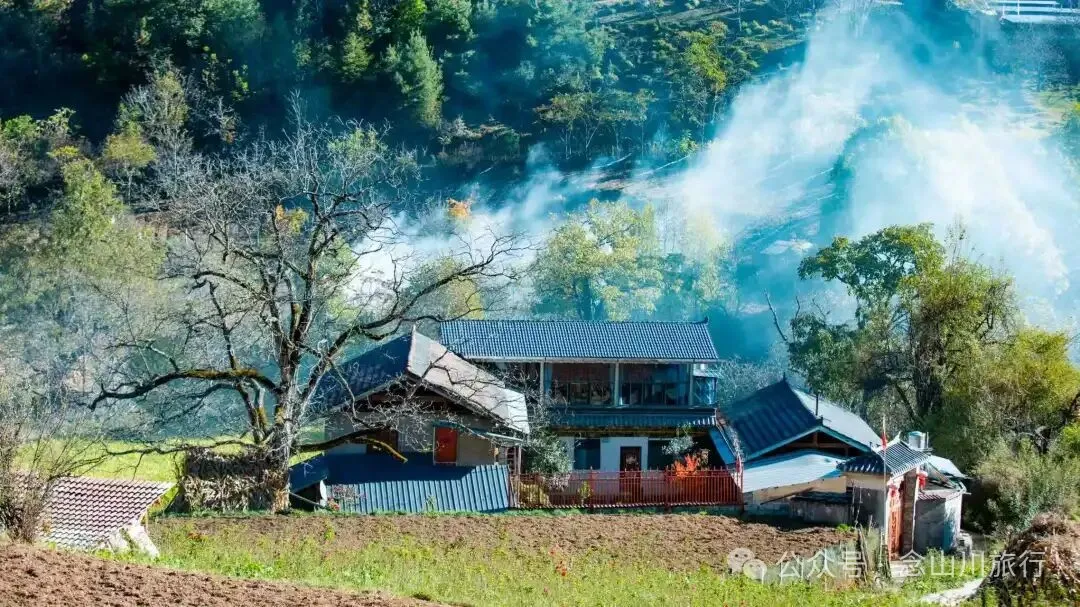
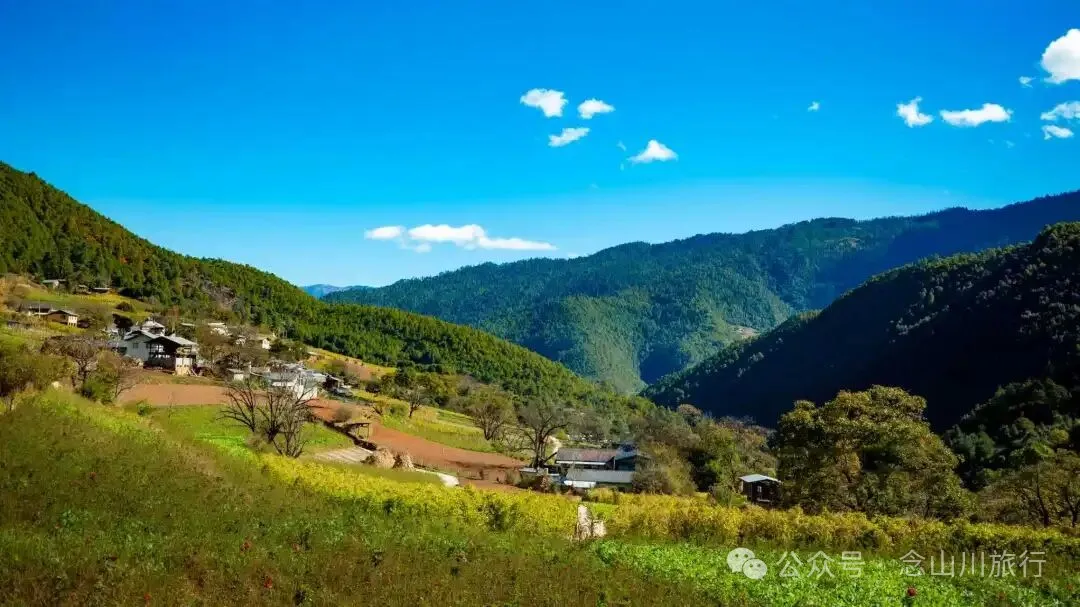

Bazhu Village is an isolated village, surrounded by numerous mountains and fields on gentle slopes. Only two newly built asphalt roads connect it to towns beyond the mountains. For most of the year, villagers live a simple, closed-off farming and herding life. Due to the high mountains and long distances, many of them, especially the elderly, have little chance to connect with the outside world, living in a narrow world.
Even so, after nearly two months in Bazhu Village, the optimism and good qualities of the villagers left a deep impression. The sincere smiles on their faces always give the illusion that their lives are not as they seem, but full of joy. No matter the occasion, you can always hear their cheerful songs and bursts of laughter, as if singing and laughing are the main themes of their lives. In Bazhu Village, everyone can sing and dance, and they love to do so. Pobuzhuoma is one of them. Her songs sing of simple rural life, a 'Book of Songs' belonging to the Bazhu people themselves.
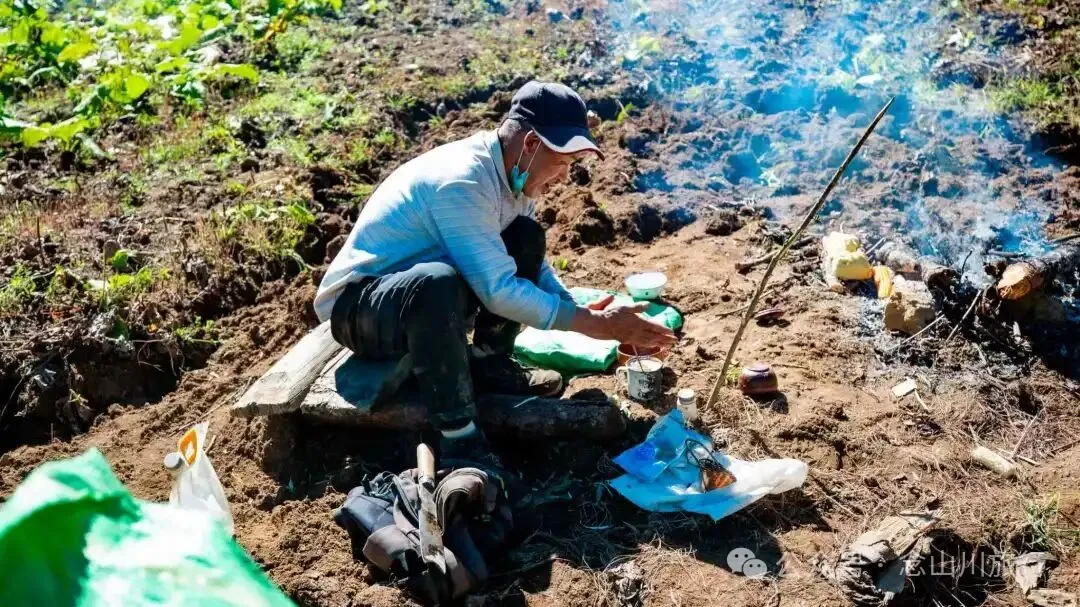

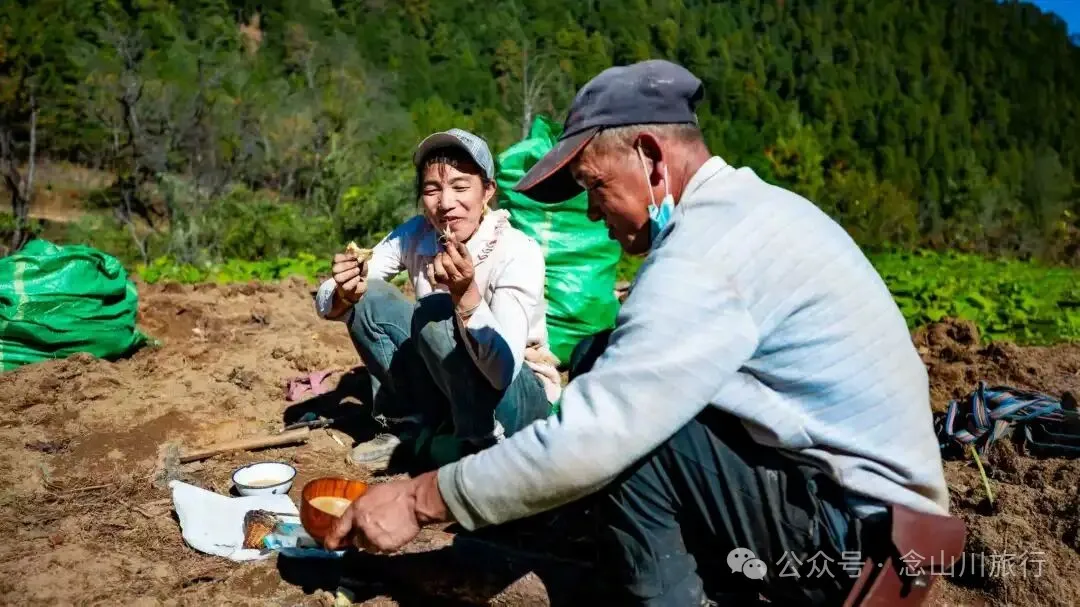


I first met Pobuzhuoma by chance while searching for herb-gathering scenes in the mountains. It was early winter, and warm sunlight bathed every corner of the mountains, exuding a charming warmth. I didn't find a large group digging costus on the hillside, but instead saw Zhuoma and her husband having lunch on a cleared patch of land behind a fence made of tall papaya trees. I first noticed the white cooking smoke rising from the clearing, then saw the two having a simple meal. Seeing me approach, Pobuzhuoma's husband immediately started brewing butter tea over the fire and handed me some smoky grilled bacon and homemade wheat cakes. Butter tea, bacon, cakes, and some appetizing pickles—these were their standard mountain lunch.
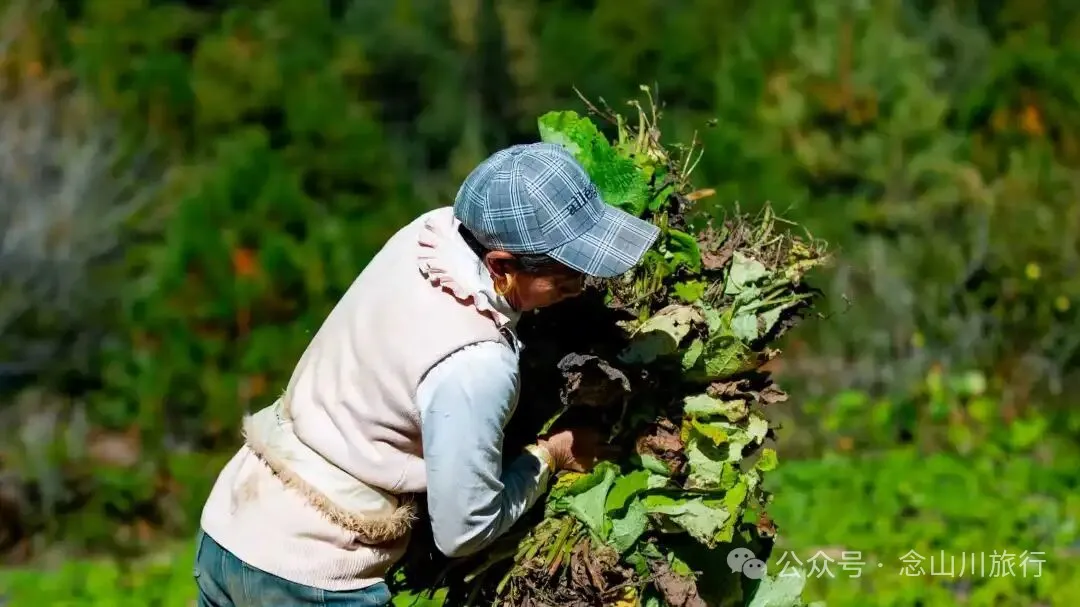
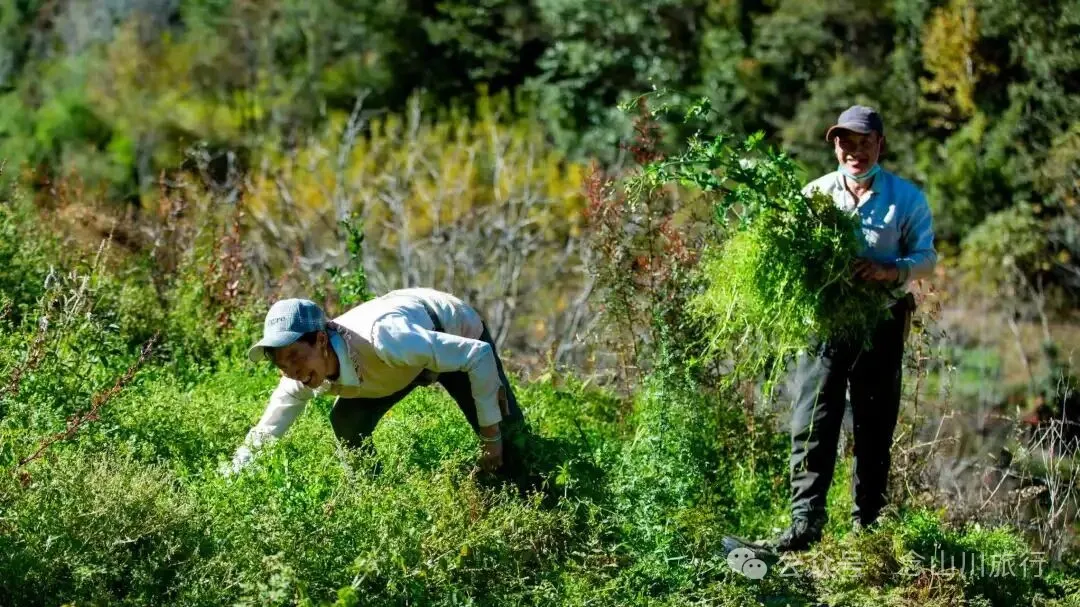
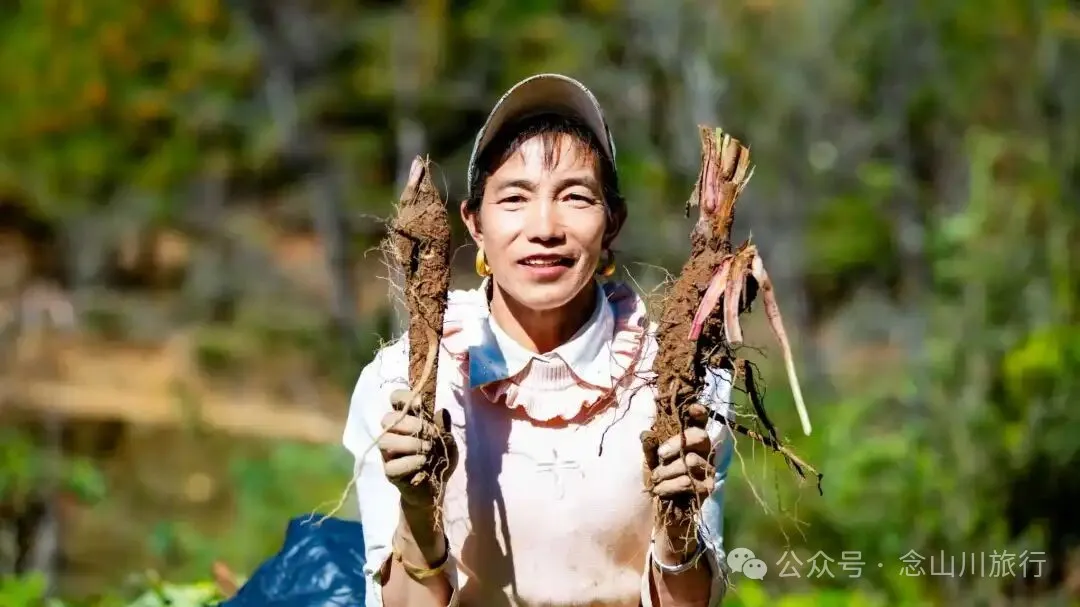
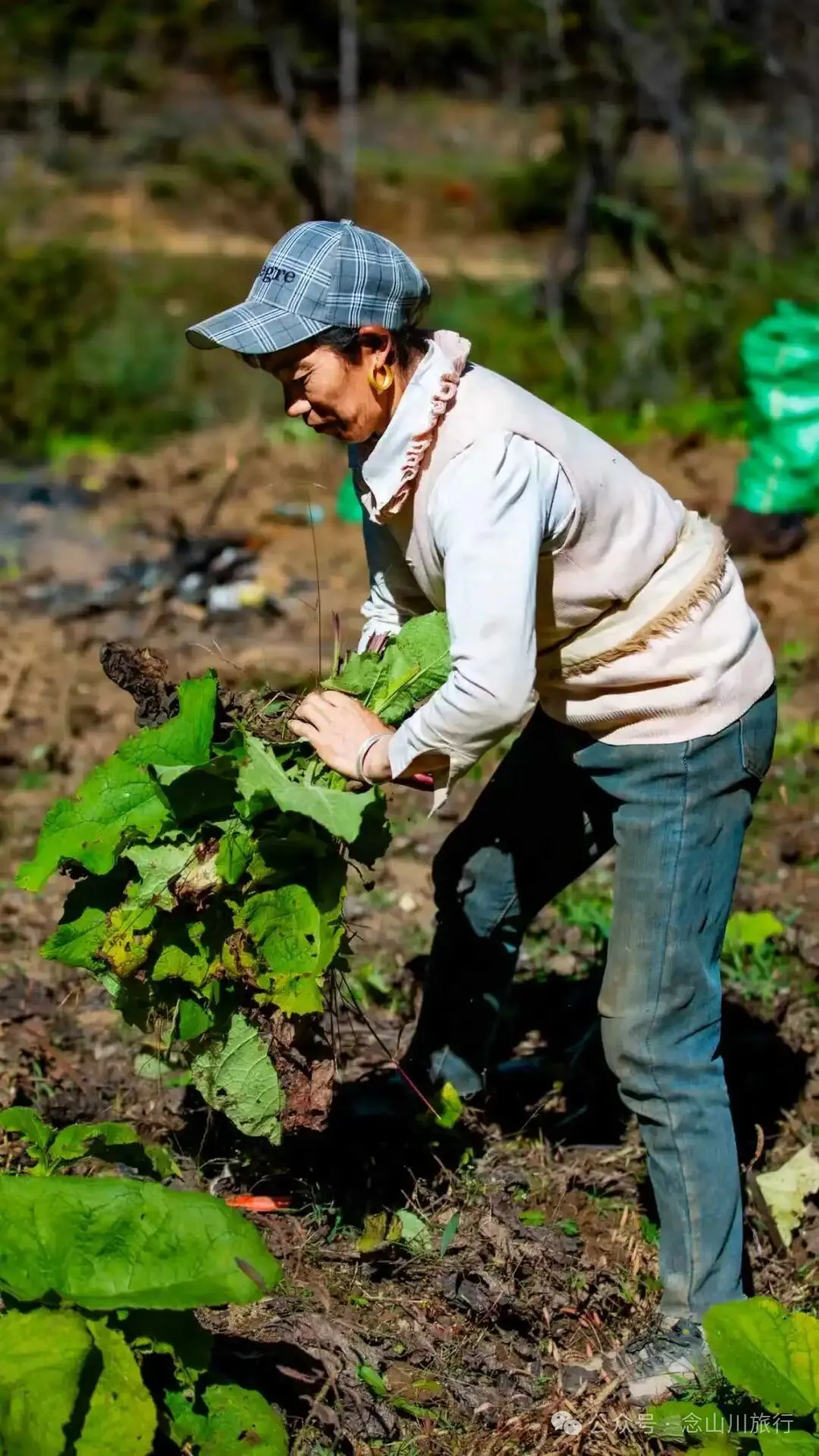
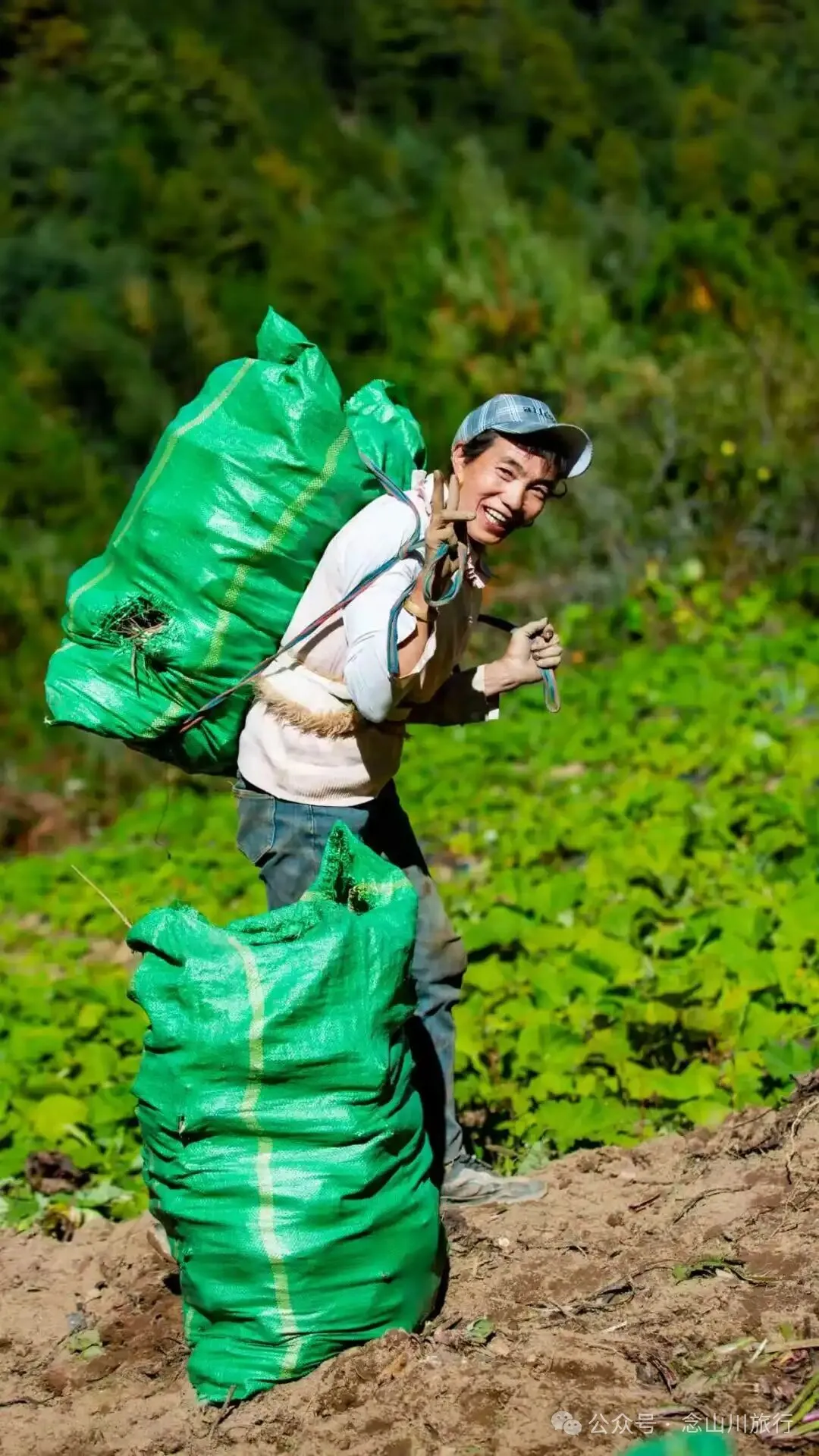
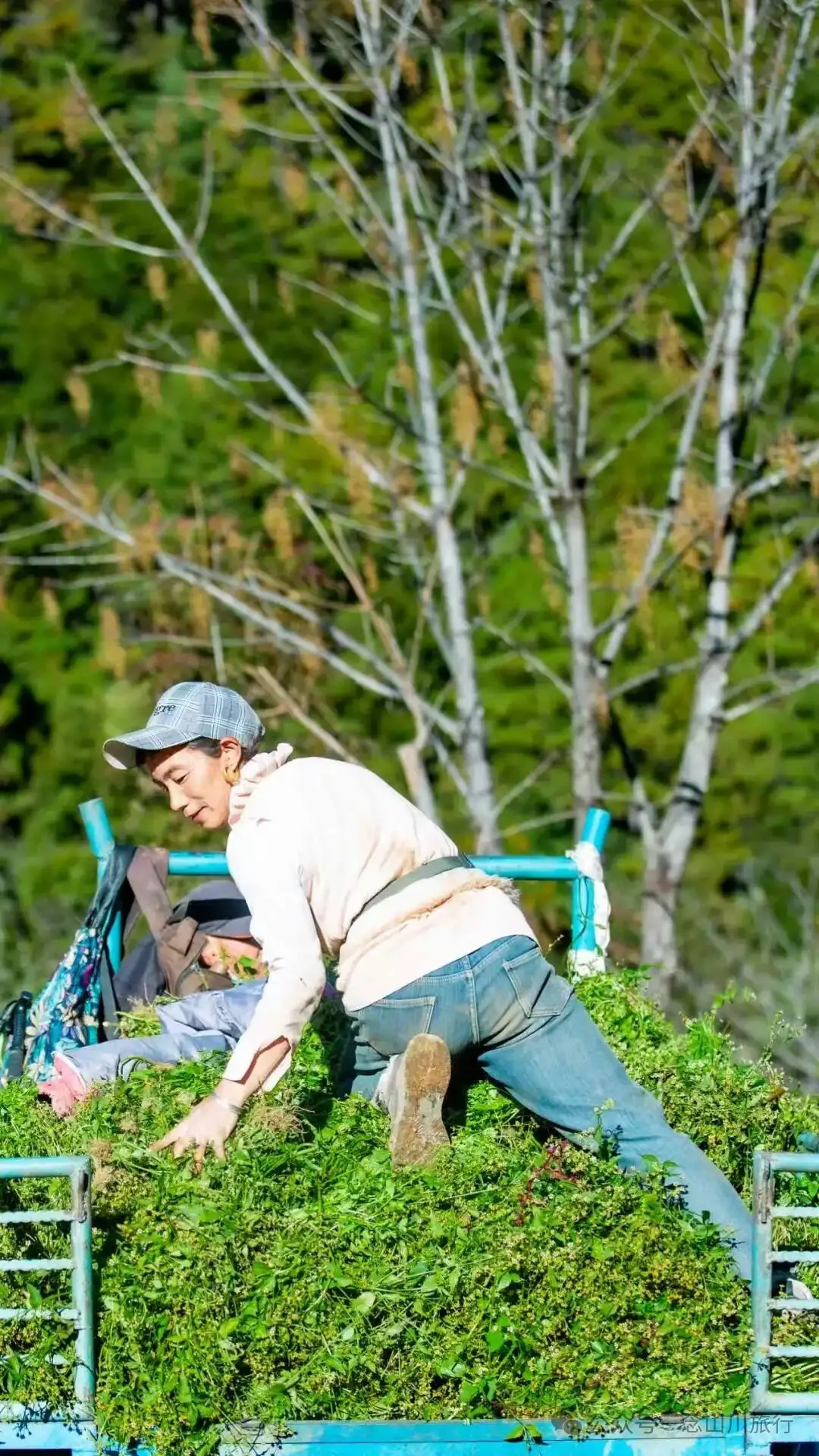
Pobuzhuoma quickly immersed herself in the afternoon's work. Whenever the camera focused on her and she noticed, she would sing a few lines in Tibetan while calmly and happily looking at the lens, then burst into shy laughter after the shot. In several candid shots, whether she was digging costus or cutting wild grass for pig feed at a relative's field, I could tell her songs mentioned the tasks she was doing—the words 'costus' and 'wild grass' were clear to me. So I asked her the specific lyrics, but she just smiled without answering, responding instead with more singing. I think most of what she sang was improvised on the spot. That whole afternoon, Pobuzhuoma was always cheerful, as if life had never treated her harshly or made her taste hardship.
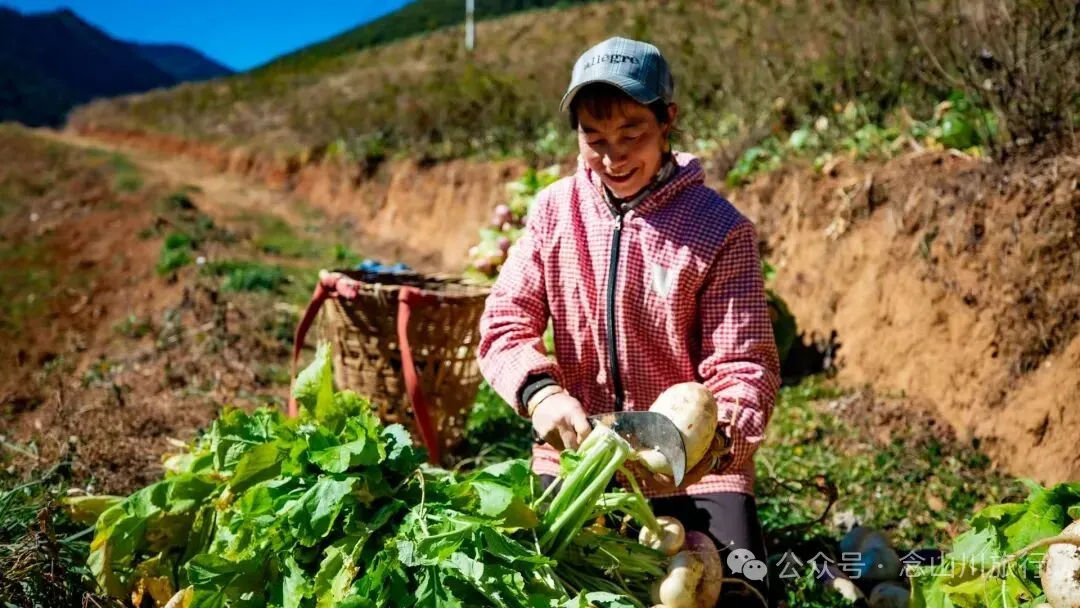
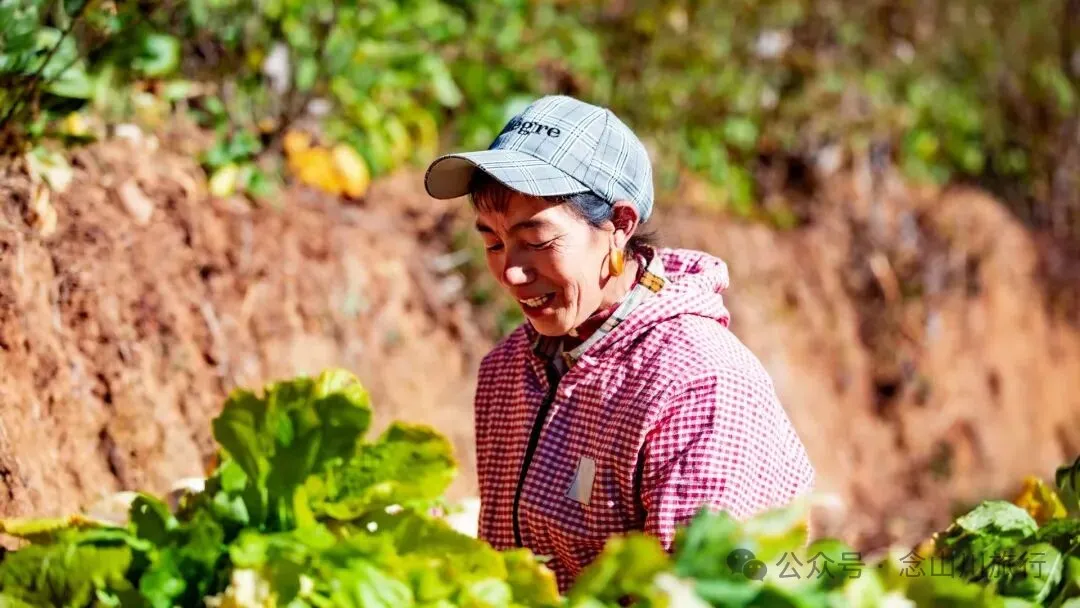
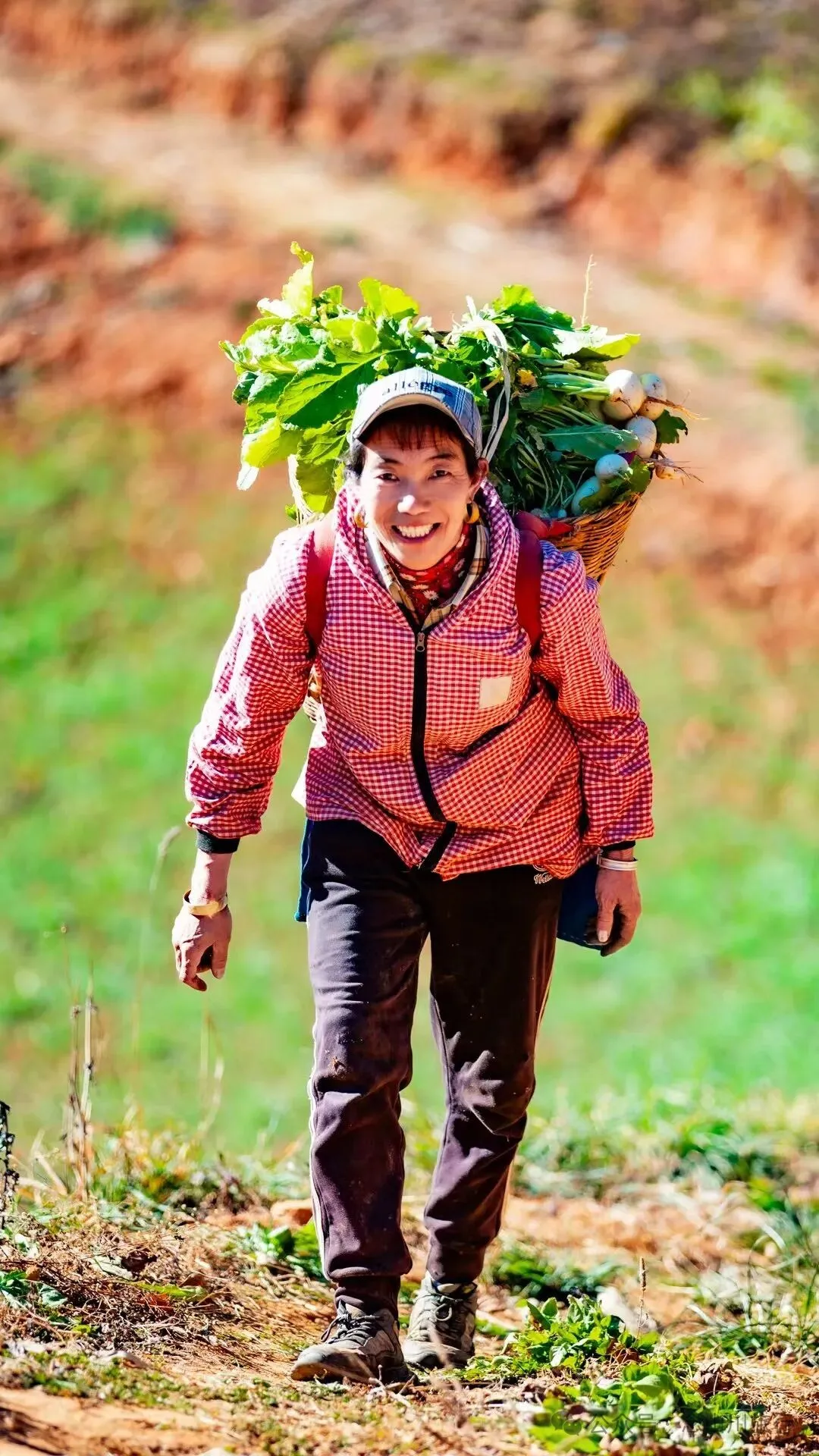
After a long time, I thought to visit her again. This time, perhaps because we were already familiar, she was less reserved than before, sang more, and after singing, she translated the lyrics for me in her simple language, answering my questions as best she could. I had a meal at her home during a pig slaughter. That day, her grandson, less than a year old, was also there. When the little boy was unhappy, she sang to him, and after listening, he jumped and danced with joy. The little boy must have fallen asleep to her lullabies many nights. This time, she sat in the sun, cutting turnips while still singing her charming, lingering tunes.
"Sour fruits look good on the outside; walnuts taste good on the inside." "A woman's heart is bitter, but others don't see it; when snow falls on the mountain, everyone sees it." "The sun in the sky shines on the earth, warm, like parents." "Missing my mother makes my heart ache; I walk far mountain roads to call out, but my mother cannot hear." "For ordinary parents, a child can walk or ride a horse—it's all fine." She said these were lyrics she heard from adults as a child, rich in content, covering all aspects of life and all human emotions. There are tunes for driving cattle, for milking, for singing about rain, for singing about falling leaves and sunshine—all kinds of songs.
When I asked her again if the songs she sang last time were partly her own compositions, she didn't answer immediately but sang another tune. I caught the word 'turnip,' which was the crop in her hands. She said, "I just sang, 'The turnips are big and good, I feel very comfortable, very happy.'" Then she pointed to the falling leaves behind her and sang, "The leaves on the tree are too heavy; when the wind blows, they fall." Though I don't understand music, I could tell the tunes for turnips and falling leaves were different. I smiled and told her that long, long ago, people also sang like this, and they compiled those lyrics into a book called the 'Book of Songs.'
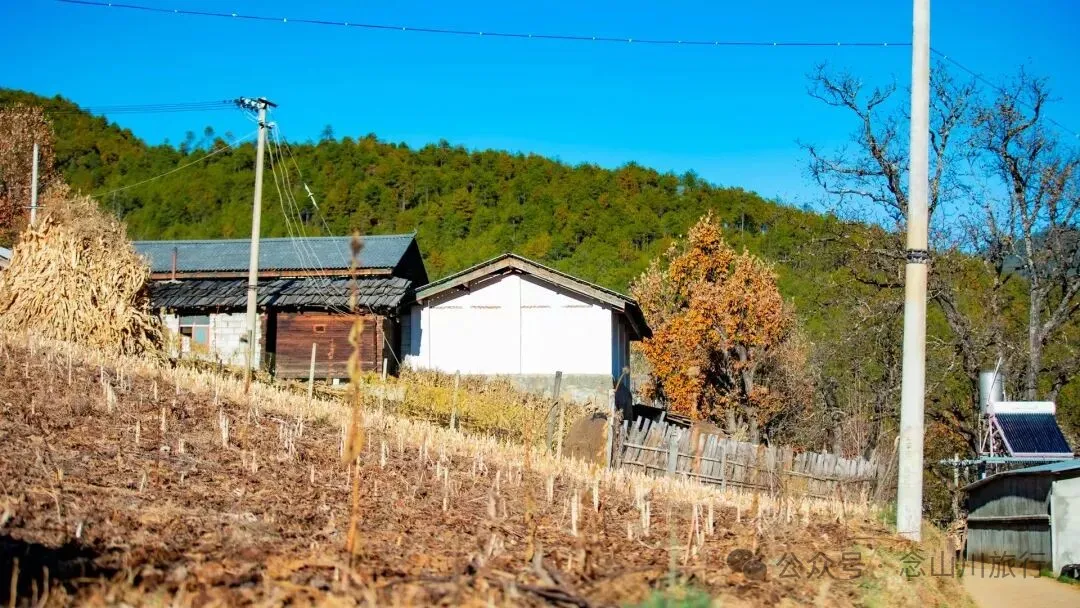
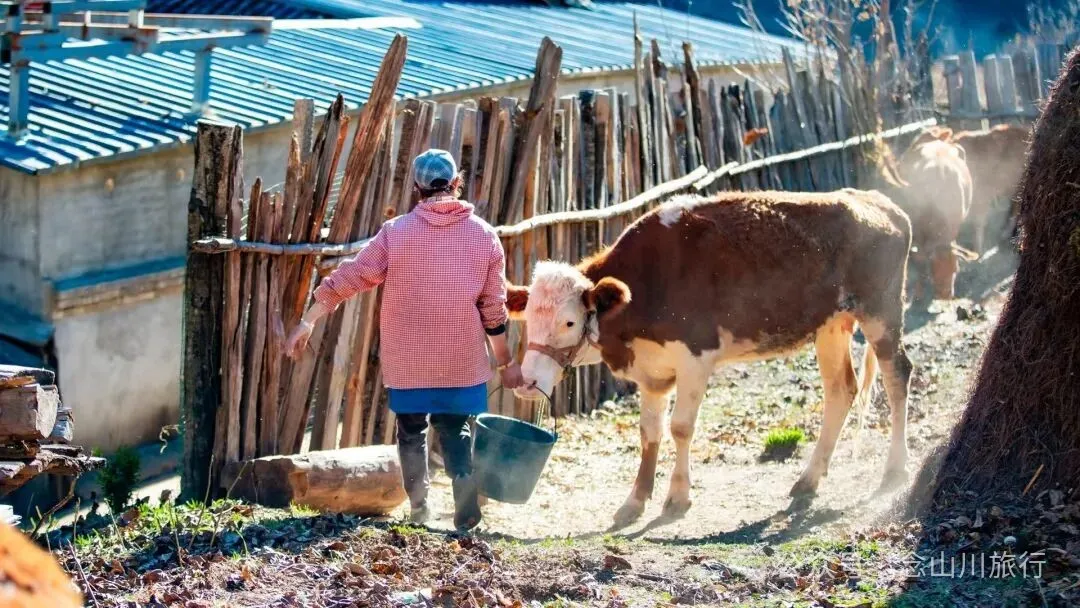
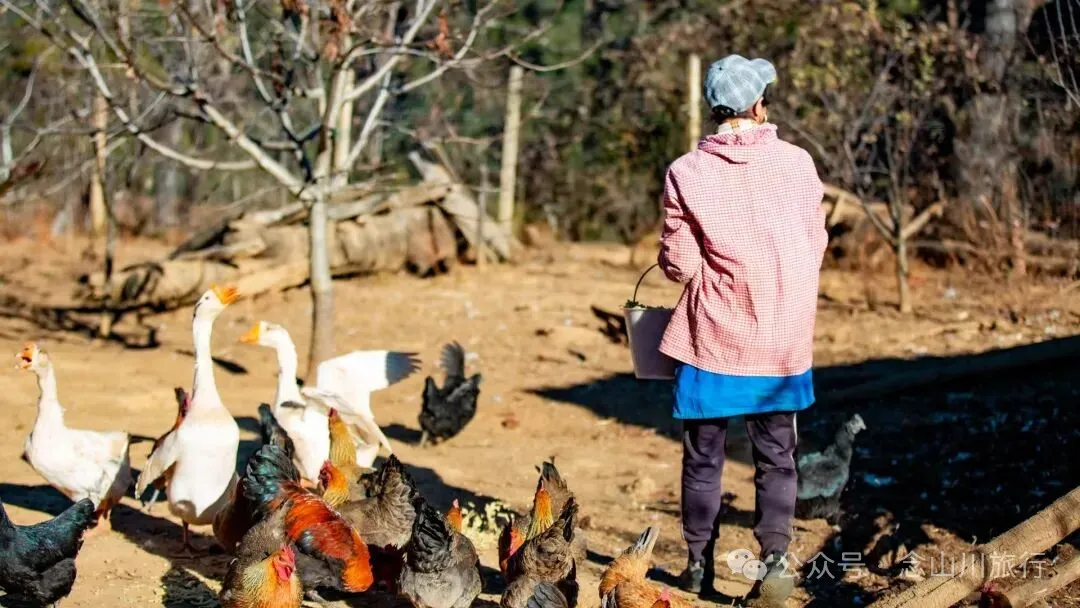

At dusk, I followed Pobuzhuoma back to her home by the Bazhu River. She was still busy—feeding the cows, pigs, chickens, and even tossing food to the cats in the yard. Whatever she was doing, she was always whistling cheerfully or humming softly. Her lyrics are straightforward, honest, without any artistic embellishment or lofty techniques. But her melodious, lingering, and drawn-out tones easily evoke empathy and immerse listeners—that is her artistic technique, no different from the 'fu, bi, xing' (narrative, metaphor, and evocative imagery) in the 'Book of Songs.'